
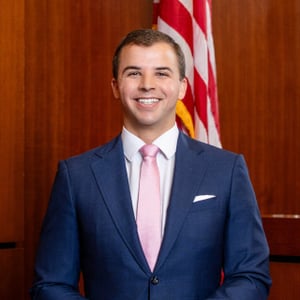
Law Clerk, U.S. Court of Appeals
Jeff Gurley currently serves as a Law Clerk to Judge E. Grady Jolly on the U.S. Court of Appeals for the Fifth Circuit. Prior to this role, he clerked for Judge Sean D. Jordan on the U.S District Court for the Eastern District of Texas.
Jeff received his J.D. from Michigan Law School. While in law school, he served as chapter president of the Federalist Society, research assistant to Professor Christopher J. Walker, and a judicial intern for Judge Joan L. Larsen on the U.S. Court of Appeals for the Sixth Circuit. He earned his B.A. from Washington University in St. Louis, where he studied political science and was an all-conference linebacker on the football team.

Thomas M. Siebel Senior Fellow, The Hoover Institution, Stanford University; Gary T. Schwartz Distinguished Professor of Law Emeritus, UCLA School of Law
Eugene Volokh is the Thomas M. Siebel Senior Fellow at the Hoover Institution (Stanford), as well as the Gary T. Schwartz Distinguished Professor of Law Emeritus and Distinguished Research Professor at UCLA School of Law. He recently retired from teaching at UCLA, after 30 years there, and is now focusing on research.
Volokh is the author of the textbooks The First Amendment and Related Statutes (8th ed. 2023), and Academic Legal Writing (5th ed. 2016), as well as over 100 academic law journal articles, mostly on First Amendment law. He is a member of The American Law Institute; the editor-in-chief of the Journal of Free Speech Law; and the creator and coauthor of The Volokh Conspiracy, a leading legal blog founded in 2002 (hosted at the Washington Post from 2014 to 2017 and now at Reason Magazine).

Professor of Law, Northwestern University Pritzker School of Law
Joshua Kleinfeld teaches and writes about political, legal, and moral philosophy, criminal law, and criminal procedure. He also practices law in Northwestern's Juvenile Criminal Defense Clinic. He is a full professor with tenure at the Northwestern Pritzker School of the Law and (by courtesy) in Northwestern’s philosophy department. In 2017-18, he was a visiting professor at Harvard and Stanford Law Schools. He is the recipient of the Bator Award, given annually to one American law professor under the age of 40 who has demonstrated "excellence in legal scholarship, a commitment to teaching, a concern for students, and who has made a significant public impact."
In philosophy, Kleinfeld's research focuses on the idea of "embodied ethical life," as developed in the socio-theoretic tradition of Hegel, Weber, and Durkheim. This tradition aims to understand and critique social life by bringing to light the normative ideas implicit in social practices and institutions. In law, this means that the most interesting philosophical concepts are often those reflected or actualized in legal practice – in the law as judges and lawyers think of it and wield it.
In criminal law and procedure, Kleinfeld has developed a theory known as "reconstructivism," which holds that the chief office of criminal law is not to dole out retributive justice, nor to optimize crime and cost control, but to reconstruct a violated normative order in the wake of a crime. This work, which draws on the thought of Hegel, Durkheim, Jean Hampton, and Antony Duff, develops an alternative to retributive and utilitarian theories of criminal law by focusing on the distinctive social function and sense of justice at work in the criminal system.
Kleinfeld is also involved in practical criminal justice reform. In this vein, he defends children accused of homicide in the Northwestern Juvenile Criminal Defense clinic and assists in litigation efforts meant to reform American criminal law through the courts. He has also developed a view of criminal justice reform known as "democratization," which holds that the root of the American criminal justice crisis is a set of bureaucratic attitudes, structures, and incentives divorced from the American public’s concerns and sense of justice, and that the primary solution is to make criminal justice more community-focused and responsive to lay influences. Working with others, he has developed a number of policy proposals meant to reform American criminal justice in a democratic direction.
Kleinfeld holds a JD from Yale Law School, a PhD in philosophy from the Goethe University of Frankfurt (supervised by Axel Honneth, Klaus Günther, and Rainer Forst), and a BA in philosophy from Yale College. He clerked for Judge J. Harvie Wilkinson on the United States Court of Appeals for the Fourth Circuit; Judge Janice Rogers Brown on the United States Court of Appeals for the D.C. Circuit; and President (chief justice) Aharon Barak of the Supreme Court of Israel. He worked as an Associate at Debevoise & Plimpton LLP in Frankfurt, Germany, in the area of corporate criminal law. Before law school, he worked as a Senior Research Analyst at the White House’s Council on Bioethics.
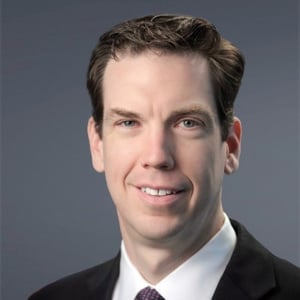
Partner, Fusion Law, PLLC
Paul is the founding partner of Fusion Law, PLLC. He has extensive experience with state, federal, and global regulators building coalitions and implementing policies to promote innovation in financial services. He is responsible for designing and implementing the first state (Arizona) and federal (CFPB) FinTech sandboxes in the United States. He also designed the CFPB no-action letter and trial disclosure policies. He helped found the first global regulatory innovation coalition (Global Financial Innovation Network) and led the founding of the first U.S. regulatory innovation coalition (American Consumer Financial Innovation Network). He served on the Financial Stability Oversight Council subcommittee on digital assets. He also has drafted state-level laws on blockchain and utility tokens.
Paul also has significant enforcement and litigation experience. He led many multi-state consumer protection enforcement matters as Civil Litigation Division Chief at the Arizona Attorney General’s Office.
Prior to his government service, Paul practiced law in the areas of securities litigation and transactional work for approximately six years at two well-known law firms. He also clerked on the U.S. Court of Appeals for the Fourth Circuit.
Associate, Maynard Nexsen
Danielle is an Associate in Maynard Nexsen’s Cybersecurity & Privacy practice group. She utilizes her background in legislative and regulatory policy to advise companies in the rapidly evolving landscape of data privacy.
Before joining Maynard Nexsen, Danielle served as Senior Counsel for the U.S. House of Representatives Committee on Financial Services’s Subcommittee on Digital Assets, Financial Technology and Inclusion, where she advanced legislation to regulate cryptocurrencies. She also worked for a consulting firm providing regulatory strategy and compliance services to clients in the financial services industry. While in law school, Danielle worked in the office of Commissioner Hester Peirce at the Securities and Exchange Commission.
Prior to attending law school, Danielle served as tax policy advisor to Senator Patrick Toomey and tax legislative assistant for the U.S. House of Representatives Committee on Ways and Means. She also worked as a Tax Associate for a Big Four accounting firm.
Danielle holds a J.D., cum laude, from Georgetown University Law Center. She earned her B.S., summa cum laude, in Commerce and Business Administration from the University of Alabama, where she also earned her Master of Tax Accounting. Danielle is a Certified Public Accountant licensed in Virginia.

Senior Adviser, Crito Capital
Dr. Oonagh McDonald, CBE is currently a senior adviser to Crito Capital, a private placement company based in New York.
A former British Member of Parliament, she became an international expert in financial regulation, after losing her seat in the General Election, 1987. She worked with the Asian Development Bank, advising regulatory authorities in a number of countries, including Sri Lanka and Indonesia. More recently, she has worked with USAID in Ukraine and Moldova. She has served as a non-executive director on the board of both financial services companies and regulatory authorities. In 1998, she was awarded the CBE (Commander of the British Empire), a national honor by the Queen for her work in financial regulation.
She is the author of numerous articles and seven books, of which the most recent are: “Holding bankers to account: A decade of market manipulation, regulatory failures and regulatory reforms” (Manchester University Press, 2019) and “Cryptocurrencies: Money, Trust and Regulation” (Agenda Publishing, 2021).
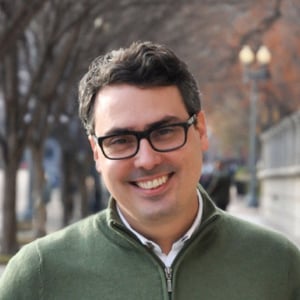
Executive Director, Coin Center
Jerry Brito is executive director of Coin Center, a non-profit research and advocacy center focused on the public policy issues facing cryptocurrency technologies such as Bitcoin.
Now, steel yourself for some serious signaling and credentialism:
Jerry lives in Annandale, Virginia, with his wife Kathleen, daughter Penny Lane, and their dog Jerkface.
Wayne A. Abernathy, Wild Bells
Wayne A. Abernathy is a former U.S. Treasury Assistant Secretary for Financial Institutions under President George W. Bush, receiving the Alexander Hamilton Award in recognition of his service. In that office he was also a member of the Board of Directors of the Securities Investor Protection Corporation. Prior to his work at the Treasury, Mr. Abernathy served as Staff Director of the Senate Banking Committee, under Chairman Phil Gramm.
Following his service at the Treasury, Mr. Abernathy worked for 15 years on the staff of the American Bankers Association, as Executive Vice President for Financial Institutions Policy and Regulatory Affairs.
Previous experience with the Senate Banking Committee includes serving as Staff Director of the Subcommittee on Securities during 1995-1998. From 1989 until 1994, Mr. Abernathy was a Republican economist for the committee. He previously worked as a senior legislative assistant for Senator Gramm during 1987-1989 and as an economist for the Banking Committee’s Subcommittee on International Finance and Monetary Policy during 1981-1986, under Chairman Jake Garn.
Mr. Abernathy earned his bachelor’s degree in International Studies from The Johns Hopkins University in 1978. In 1980, he received a master’s degree in International Studies from the School of Advanced International Studies of The Johns Hopkins University.
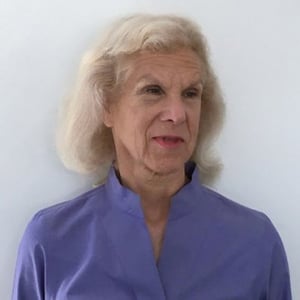
Managing Partner, Federal Financial Analytics, Inc.
Karen Shaw Petrou is the co-founder and Managing Partner of Federal Financial Analytics, Inc., a privately-held company that, since 1985, has provided analytical and advisory services on legislative, regulatory, and public-policy issues affecting financial services companies doing business in the U.S. and abroad. The firm’s practice is a unique blend of strategic advice and policy analysis that does not include lobbying or any other projects that would compromise its objectivity and independence. This, Petrou believes, gives boards of directors, senior management and regulators the best advice on emerging issues on which to base their own strategic planning and advocacy.
Ms. Petrou is a frequent speaker on topics affecting the financial services industry. In addition to presentations to Congress, foreign legislatures and government agencies, she has spoken before such organizations as the Japanese Diet, the Office of the Comptroller of the Currency, various Federal Reserve Banks, the Economist’s Buttonwood conference, the Securities Industry and Financial Markets Association, the American Bankers Association, The Clearing House, the Financial Services Roundtable, the Institute of International Bankers, the Conference of State Bank Supervisors, the American Bar Association, the Brookings Institution, the American Institute of Certified Public Accountants, the National Association of Manufacturers, and many other industry, academic and policy-maker audiences. She has also authored numerous articles in professional publications such as the American Banker and International Economy, as well as general-interest media like The New York Times and Wall Street Journal. Ms. Petrou appears frequently in the media as an expert on banking legislation and regulation.
Prior to founding her own firm in 1985, Ms. Petrou worked in Washington as an officer at Bank of America, where she began her career in 1977. She is an honors graduate in Political Science from Wellesley College and also was a special student in an honors program at the Massachusetts Institute of Technology. She earned an M.A. in that subject from the University of California at Berkeley, and was a doctoral candidate there. She has served on the boards of banking organizations and sits as a director on the board of the Foundation Fighting Blindness and the Fidelco Guide Dog Foundation. She is also an advisory member of the board of the Morin Center for Banking and Financial Law.

Topics
A Supreme Court Decision That Should Be Re-Heard
Last May, the Supreme Court issued a surprising and controversial decision in a case called Consumer...
Texas Supreme Court Clarifies Standard for Awarding Noneconomic Damages
Jeff Gurley
The case of Gregory v. Chohan arose out of a tragic highway accident that...
Topics
Who Will Guard the Fed?
This post was originally published at the New York Sun. The ancient Roman poet Juvenal...
Topics
Live and Let LIV?
This post was originally published at Lawfare. For more than a year, the most important...
Open Minds with Prof. Eugene Volokh & Prof. Joshua Kleinfeld, Part III
Eugene Volokh, Joshua Kleinfeld
Finally, we turn to the present moment and consider the current challenges to American free...
The Uniform Token Regulation Act: A Proposal for States to Lead on Regulatory Clarity for Digital Tokens
Paul N. Watkins, Danielle DuBose
Digital assets have the potential to transform financial services. They alter the status quo by...
Deep Dive Episode 210 – Cryptocurrencies: Money, Trust and Regulation
Oonagh Ann McDonald, Jerry Brito
Dr. Oonagh McDonald’s latest book, “Cryptocurrencies: Money, Trust and Regulation,” discusses the nature of money, the...
Engine of Inequality: The Fed and the Future of Wealth in America
Wayne A. Abernathy, Karen Shaw Petrou
In her landmark book, financial services doyenne Karen Petrou explains how, despite better intentions, Federal...
Topics
Questions about Money
A retired university professor, a veteran central bank watcher, the former head of a Federal...
Topics
Money and the Constitution: Money, Credit, and Interest Rates
In a previous post, I explained that at this year’s National Lawyers Convention, in November,...