
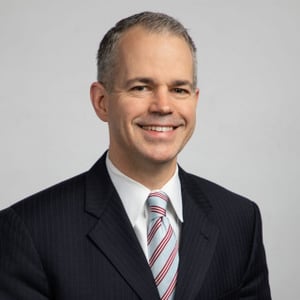
Senior Attorney, Institute for Justice
Michael Bindas is a senior attorney with the Institute for Justice (IJ) and leads IJ’s educational choice team. In this role, he oversees a talented group of IJ attorneys who help policymakers design constitutionally defensible educational choice programs and who defend educational choice programs in courtrooms nationwide. He joined IJ in 2005.
Michael was part of IJ’s litigation team in Espinoza v. Montana Department of Revenue, in which the U.S. Supreme Court held the exclusion of religious options from Montana’s educational choice program unconstitutional, and he led IJ’s defense of the Choice Scholarship Program for elementary and secondary students in Douglas County, Colorado. He also successfully challenged Washington’s denial of special education services to children in religious schools, as well as the state’s exclusion of sectarian options from its state work study program. Currently, he leads IJ’s team in Carson v. Makin, challenging Maine’s exclusion of religious options from its educational choice program.
Prior to leading IJ’s educational choice team, Michael litigated extensively to secure economic liberty, property rights, and freedom of speech throughout the nation. He was counsel of record at the U.S. Supreme Court for Kimbrough Fine Wine & Spirits in Tennessee Wine and Spirits Retailers Association v. Thomas, a successful challenge to Tennessee’s durational residency requirements for retail liquor licenses. He also led successful challenges to the municipal sign codes of St. Louis, Mo. and Norfolk, Va., after those cities attempted to silence protests of their abusive eminent domain practices.
Prior to joining IJ, Michael spent three years as an attorney with Perkins Coie LLP. He is a former law clerk to Judge Rhesa Hawkins Barksdale of the U.S. Court of Appeals for the Fifth Circuit and served as an engineer officer in the United States Army and Pennsylvania Army National Guard before beginning his legal career.
Michael received his law degree cum laude from the University of Pennsylvania Law School in 2001, where he served as Articles Editor for the Journal of Constitutional Law and was elected to the Order of the Coif. He received his undergraduate degree from the United States Military Academy at West Point in 1995.
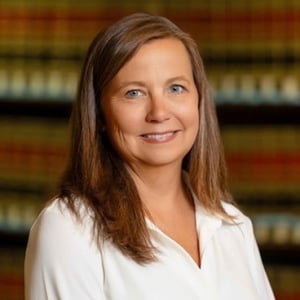
John P. Murphy Foundation Professor of Law and Associate Dean for External Engagement, University of Notre Dame Law School
Nicole Stelle Garnett is the John P. Murphy Foundation Professor of Law at Notre Dame Law School, where she also serves as the Associate Dean for External Engagement and directs the Notre Dame Education Law Project. Her teaching and research focus on education law and policy, religious liberty, and topics related to property law (especially land use and urban development policies). In addition to dozens of articles on these subjects, she is the author of Lost Classroom, Lost Community: Catholic Schools' Importance in Urban America (University of Chicago Press, 2014) and Ordering the City: Land Use, Policing and the Restoration of Urban America (Yale University Press, 2009).
Garnett received her B.A. with distinction in Political Science from Stanford University and her J.D. from Yale Law School. After law school, she clerked for the Honorable Morris S. Arnold of the United States Court of Appeals for the Eighth Circuit and for Associate Justice Clarence Thomas of the Supreme Court of the United States. Before joining the law school faculty in 1999, she worked for two years as a staff attorney at the Institute for Justice, a non-profit public-interest law firm in Washington, D.C., where she helped to defend the constitutionality of the nation's first private-school-choice programs.
At Notre Dame, Garnett is a faculty fellow in the Institute for Educational Initiatives, Kellogg Institute for International Studies, Fitzgerald Institute for Real Estate, and deNicola Center for Ethics and Culture. She also is an elected member of the American Law Institute and a Senior Fellow at the Manhattan Institute.
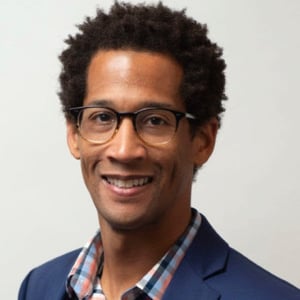
Senior Fellow, American Federation for Children
Shaka Mitchell serves as a Senior Fellow for the American Federation for Children.
He brings experience from several high-performing charter school networks, including Rocketship Education and LEAD Public schools, that serve over 2,500 students in Nashville.
Shaka began his career in education as the Associate Director of Policy and Planning at the D.C.-based Center for Education Reform. He then led outreach efforts at the Institute for Justice, a constitutional law firm based in Arlington, VA.
He is an alumnus of Belmont University where he teaches American Government and Constitutional Law as an adjunct faculty member. He earned his Juris Doctorate from the Wake Forest University School of Law where he sits on the Board of Advisors for the Journal of Law and Policy. Shaka is a co-founder of MoreMarrowDonors.org, a non-profit committed to providing scholarships to bone marrow donors who are matches for patients with various blood diseases. Shaka is the Chair of the Tennessee State Advisory Committee to the U.S. Commission on Civil Rights.
He is a member of the American Enterprise Institute’s Leadership Network and Aspen Institute Civil Society Fellowship. Shaka and his wife Stephanie are members of Edgefield Church in Nashville and are active in several non-profit organizations.
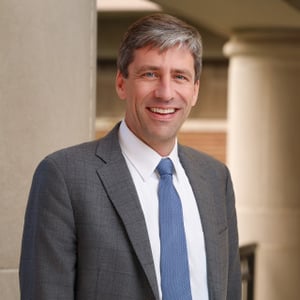
Associate Professor and C. Boyden Gray Distinguished Scholar, University of North Carolina School of Law
Mark Storslee joined the Carolina Law faculty in 2025 and serves as Associate Professor and C. Boyden Gray Distinguished Scholar. His teaching and research interests include constitutional law, civil procedure, administrative law, and federal courts. Among other topics, his scholarship focuses on constitutional history, religious freedom, and First Amendment law generally. Storslee’s work has appeared in publications such as the University of Chicago Law Review, the University of Pennsylvania Law Review, the University of Virginia Law Review, Vanderbilt University Law Review, and the Journal of Law & Religion.
Storslee holds a J.D. from Stanford Law School and a Ph.D. in Religious Studies (ethics) from the University of Virginia. He also holds masters degrees from Duke University and the University of Edinburgh and a B.A. from Furman University. After law school, Storslee clerked for Judge Diarmuid O’Scannlain on the United States Court of Appeals for the Ninth Circuit, and later for Associate Justice Neil Gorsuch on the United States Supreme Court. He previously taught at Penn State Law School and Emory Law School, and served as the Executive Director of the Constitutional Law Center at Stanford Law School. He also worked as an appellate litigator at Williams & Connolly LLP.
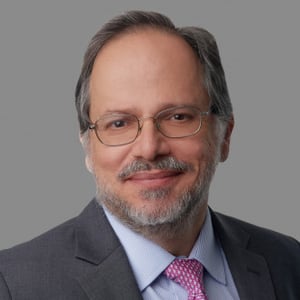
Director of Law & Policy, Environmental Integrity Project
Following Princeton and the University of Chicago Law School, David began practicing law at Paul, Weiss, Rifkind, Wharton & Garrison. Eventually tiring of litigation where the result was a wire transfer from Entity A to Entity B, in the early 1990’s David began his environmental law career at the Massachusetts Attorney General’s Office. Since then, he has litigated dozens of cases under all of the major environmental statutes including, as Sierra Club’s Chief Climate Counsel, initiating and managing Massachusetts v. EPA. Most recently, he has been busy challenging FERC’s permitting of natural gas pipelines and LNG export terminals. Apart from litigation, David has helped lead efforts on both greenhouse gas regulation and global warming legislation (and may be the only person ever invited to testify by both Barbara Boxer and James Inhofe).
He has drafted a range of federal climate legislation, advised states as to their greenhouse gas regulatory authority (and for many years has represented environmental groups defending state GHG regulations from dormant Commerce Clause challenges). David has designed and taught courses on “Environmental Litigation” at Georgetown University Law Center and “Environmental Law and Science” at the William and Mary Law School/Virginia Institute of Marine Science.

Managing Partner, Boyden Gray PLLC
Michael Buschbacher is the managing partner of Boyden Gray PLLC. He represents public and private companies, trade associations, non-profits, and individuals in high-stakes litigation and administrative proceedings, with a particular focus on environmental and energy matters.
In addition to trial-level work, Mr. Buschbacher maintains an active appellate practice, both as merits counsel and as counsel for amici curiae. He has written amicus briefs quoted by the Seventh and Ninth Circuits. And his Supreme Court advocacy has been cited by The New Yorker, The New York Times, and E&E News. Mr. Buschbacher’s commentary on legal issues has been published in The Wall Street Journal, Newsweek, and The American Conservative.
Before joining the firm, Mr. Buschbacher served at the U.S. Department of Justice as counsel to the Assistant Attorney General for the Environment and Natural Resources Division. There, he advised senior Department leadership, served as the lead attorney on several lawsuits, and helped draft policy memoranda for the Department on the proper scope and procedure for environmental enforcement. Prior to serving in the government, Mr. Buschbacher was an associate in the D.C. office of Sidley Austin.
Mr. Buschbacher is a former clerk to Judge Alice M. Batchelder of the U.S. Court of Appeals for the Sixth Circuit and to Magistrate Judge Paul R. Cherry of the U.S. District Court for the Northern District of Indiana.
Mr. Buschbacher holds a B.A. in Music and Germanic Studies from Indiana University and a J.D., magna cum laude, from Notre Dame Law School.
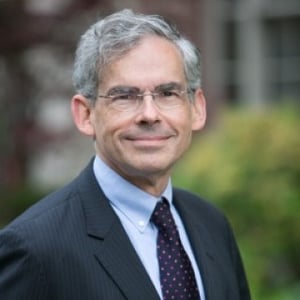
Andrew Sabin Professor of Professional Practice and Founder and Faculty Director of the Sabin Center for Climate Change Law, Columbia University Law School
The founder and faculty director of the groundbreaking Sabin Center for Climate Change Law and one of the foremost environmental lawyers in the nation, Michael Gerrard is an advocate, litigator, teacher, and scholar who has pioneered cutting-edge legal tools and strategies for addressing climate change. He writes and teaches courses on environmental law, climate change law, and energy regulation. He was the chair of the faculty of Columbia University’s renowned Earth Institute from 2015 to 2018 and now holds a joint appointment to the faculty of its successor, the Columbia Climate School.
For three decades, before joining the Columbia Law School faculty in 2009, Gerrard practiced law in New York, most recently as the partner in charge of the New York office of Arnold & Porter. As an environmental lawyer, he tried numerous cases and argued many appeals in federal and state courts and administrative tribunals. He also handled the environmental aspects of diverse transactions and development projects and provided regulatory compliance advice to an array of clients in the private and public sectors. Several publications rated him the leading environmental lawyer in New York and one of the leaders in the world.

Professor of Law and Executive Director, Law and Economics Center, Antonin Scalia Law School, George Mason University
Donald Kochan is Professor of Law and Executive Director of the Law & Economics Center (LEC). Professor Kochan is an elected member of the American Law Institute (ALI) and serves as an Adviser to ALI's Restatement of the Law Fourth, Property project. Professor Kochan is a Nonresident Scholar at the Center for the Constitution at Georgetown University Law Center, where he was a Visiting Scholar in residence during Fall 2018. Before joining the Antonin Scalia Law School faculty, he was the Parker S. Kennedy Professor in Law at Chapman University’s Dale E. Fowler School of Law from 2004 to 2020. From 2003 to 2004, Professor Kochan was an Olin Fellow at the University of Virginia School of Law. During 2002-2003, he was a Visiting Assistant Professor of Law at George Mason’s Scalia Law School.
Professor Kochan’s scholarship focuses on areas of property law, constitutional law, administrative law, local government law, natural resources and environmental law, and law & economics. He has published several books and more than 50 scholarly articles and essays in well-regarded law journals. His work has been cited in more than a dozen state and federal court opinions, in more than 75 briefs filed in state and federal courts including more than 25 filed in the U.S. Supreme Court, in dozens of books and treatises, and in more than 800 scholarly articles.
Professor Kochan received his JD from Cornell Law School, where he was a John M. Olin Scholar in Law and Economics and managing editor of the Cornell International Law Journal. During law school, he also served as editor and executive editor of the Harvard Journal of Law & Public Policy symposium issues in 1997 and 1998. He received his BA from Western Michigan University, magna cum laude, with majors in both political science and philosophy, where he studied as the John W. Gill Medallion Scholar and was honored as the Presidential Scholar (awarded to the top graduate in the political science department).
After graduating from law school, Professor Kochan was a law clerk to The Honorable Richard F. Suhrheinrich of the United States Court of Appeals for the Sixth Circuit. Following his clerkship, Professor Kochan was an associate with the firm of Crowell & Moring LLP in Washington, D.C., where he specialized in natural resources & environmental law as well as tort, products, and consumer civil litigation & legislative affairs.

Laurence H. Silberman Chair in Constitutional Governance, American Enterprise Institute; Executive Director, Antonin Scalia Law School’s C. Boyden Gray Center for the Study of the Administrative State
Adam J. White is the Laurence H. Silberman Chair in Constitutional Governance and senior fellow at the American Enterprise Institute, where he focuses on the Supreme Court and the administrative state. He also directs the Antonin Scalia Law School’s C. Boyden Gray Center for the Study of the Administrative State.
He writes on regulation and constitutional government for a variety of publications. He practiced law in Washington, D.C., after clerking for the D.C. Circuit's Judge David Sentelle. He also has been chairman of the ABA's Administrative Law Section.
In 2021, he served on the Presidential Commission on the Supreme Court of the United States, where he criticized “Court packing” and other efforts to restructure the Supreme Court.

Partner, Clement & Murphy, PLLC
Paul served as the 43rd Solicitor General of the United States from June 2005 until June 2008. Before his confirmation as Solicitor General, he served as Acting Solicitor General for nearly a year and as Principal Deputy Solicitor General for over three years.
Paul has argued over 100 cases before the United States Supreme Court, including McConnell v. FEC, Tennessee v. Lane, United States v. Booker, MGM v. Grokster, Hobby Lobby v. Burwell, Epic Systems Corp. v. Lewis, Rucho v. Common Cause, Facebook v. Duguid, and TransUnion v. Ramirez. Paul has argued more Supreme Court cases since 2000 than any lawyer in or out of government. He has also argued many important cases in the lower courts, including Walker v. Cheney, United States v. Moussaoui and NFL v. Brady.
Paul’s practice focuses on appellate matters, constitutional litigation and strategic counseling. He represents a broad array of clients in the Supreme Court and in federal and state appellate courts. Last year, for example, he successfully argued Supreme Court cases involving significant issues of energy regulation, statutory interpretation, state sovereign immunity and Article III standing, and successfully argued a trademark appeal in the Fourth Circuit, and a constitutional appeal before the en banc Eleventh Circuit.
Paul focuses on high-stakes appeals. In recent years, he successfully defended a $1.2 billion jury verdict for clients in a Tenth Circuit case, while securing the reversal of an over $2 billion jury verdict for another client in the Seventh Circuit and the approval of a nearly $1 billion dollar class action settlement in the Third Circuit. He has initiated major administrative law challenges and constitutional litigation against the federal government, such as the successful challenge to the HHS drug-pricing rule and threatened challenges that led to the withdrawal of the Treasury Department’s proposed cryptocurrency regulations. He also counsels clients on a variety of strategic legal questions, whether arising from pending legislation, government inquiries or ongoing litigation.
Paul has undertaken substantial pro bono engagements in the Supreme Court, such as twice successfully representing the defendant in Bond v. United States and successfully representing the Omaha Tribe in Nebraska v. Parker, the guardian ad litem in Adoptive Couple v. Baby Girl, the defendant in Sekhar v. United States, a high school football coach in Kennedy v. Bremerton, and the Little Sisters of the Poor. Paul’s pro bono representation also precipitated the federal government’s confession of error in United States v. Rojas.
Following law school, Paul clerked for Judge Laurence H. Silberman of the U.S. Court of Appeals for the D.C. Circuit and for Associate Justice Antonin Scalia of the U.S. Supreme Court. After his clerkships, he went on to serve as Chief Counsel of the U.S. Senate Subcommittee on the Constitution, Federalism and Property Rights.
Paul is a Distinguished Lecturer in Law at the Georgetown University Law Center, where he has taught in various capacities since 1998. He also serves as a Senior Fellow of the Law Center’s Supreme Court Institute. He is the Justice Joseph Story Distinguished Practitioner in Residence at the Gray Center at Scalia Law School.
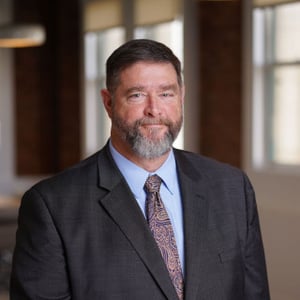
Partner, Briscoe Prows Kao Ivester & Bazel LLP
Tony Francois is experienced in Water and Real Property Law, Land Use and Zoning, Environmental Regulation, Natural Resources Development, Agricultural Law, and Constitutional Law. He has represented homeowners, builders, farmers and ranchers, trade associations, and water districts in administrative, civil, and criminal proceedings before state and federal administrative agencies and state and federal trial and appellate courts. He is a member of the California State Bar and the Northern, Eastern, and Central Districts of California and the Districts of New Mexico and North Dakota, and has litigated cases in federal courts in California, Oregon, Washington, Idaho, Montana, Nevada, Arizona, New Mexico, Colorado, North and South Dakota, Minnesota, Massachusetts, Maryland, South Carolina, and the District of Columbia, as well as the Sixth, Eighth, Ninth, and Tenth Circuit Courts of Appeals. He has appeared before the Supreme Courts of California, Idaho, Nevada, and the United States.
Prior to attending law school, he served as an infantry officer in the United States Army, and was stationed in the former West Germany during the fall of the Berlin Wall.
Tony was an Attorney at Pacific Legal Foundation from 2012 to 2021. He was a lobbyist for 10 years, first with California Farm Bureau Federation from 2003 to 2007, and then with KP Public Affairs from 2007 to 2012. He was an attorney at McQuaid, Bedford & Van Zandt in San Francisco from 1999 – 2003.
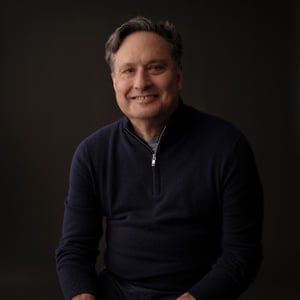
Chief Legal Officer, Airbnb
Ron Klain oversees Airbnb’s global legal and ethics functions and community policy team.
Ron served as the 30th White House Chief of Staff, from January 2021 to February 2023 – the longest tenure of any Democratic President’s first chief of staff.
Ron’s career in public service began as a law clerk to Supreme Court Justice Byron White for the Court’s 1987 and 1988 Terms. Following his time clerking at the Supreme Court, Ron was Chief Counsel of the Senate Judiciary Committee, Staff Director of the Senate Democratic Leadership Committees, Associate Counsel for Judicial Selection under President Clinton, Chief of Staff to Vice President Al Gore, Chief of Staff and Counselor to the US Attorney General, and Chief of Staff to Vice President Joe Biden. In the Obama administration, Ron served as White House Ebola Response Coordinator, to tackle the West African Ebola epidemic of 2014-15.
In the private sector, Ron has served as Partner and National Practice Group Chair at the law firm of O’Melveny & Myers, from 1999-2004 and again in 2023. Earlier he was General Counsel for the technology investment firm Revolution LLC from 2005 to 2020.
Professor of Law and Executive Director, Law and Economics Center, Antonin Scalia Law School, George Mason University
Donald Kochan is Professor of Law and Executive Director of the Law & Economics Center (LEC). Professor Kochan is an elected member of the American Law Institute (ALI) and serves as an Adviser to ALI's Restatement of the Law Fourth, Property project. Professor Kochan is a Nonresident Scholar at the Center for the Constitution at Georgetown University Law Center, where he was a Visiting Scholar in residence during Fall 2018. Before joining the Antonin Scalia Law School faculty, he was the Parker S. Kennedy Professor in Law at Chapman University’s Dale E. Fowler School of Law from 2004 to 2020. From 2003 to 2004, Professor Kochan was an Olin Fellow at the University of Virginia School of Law. During 2002-2003, he was a Visiting Assistant Professor of Law at George Mason’s Scalia Law School.
Professor Kochan’s scholarship focuses on areas of property law, constitutional law, administrative law, local government law, natural resources and environmental law, and law & economics. He has published several books and more than 50 scholarly articles and essays in well-regarded law journals. His work has been cited in more than a dozen state and federal court opinions, in more than 75 briefs filed in state and federal courts including more than 25 filed in the U.S. Supreme Court, in dozens of books and treatises, and in more than 800 scholarly articles.
Professor Kochan received his JD from Cornell Law School, where he was a John M. Olin Scholar in Law and Economics and managing editor of the Cornell International Law Journal. During law school, he also served as editor and executive editor of the Harvard Journal of Law & Public Policy symposium issues in 1997 and 1998. He received his BA from Western Michigan University, magna cum laude, with majors in both political science and philosophy, where he studied as the John W. Gill Medallion Scholar and was honored as the Presidential Scholar (awarded to the top graduate in the political science department).
After graduating from law school, Professor Kochan was a law clerk to The Honorable Richard F. Suhrheinrich of the United States Court of Appeals for the Sixth Circuit. Following his clerkship, Professor Kochan was an associate with the firm of Crowell & Moring LLP in Washington, D.C., where he specialized in natural resources & environmental law as well as tort, products, and consumer civil litigation & legislative affairs.
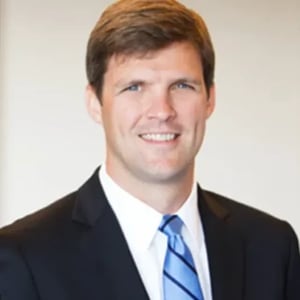
Judge, United States District Court for the Western District of Kentucky
Prior to joining the bench, Judge Beaton was a Partner at Squire Patton Boggs LLP, where he co-chaired the firm’s Appellate & Supreme Court practice group. Judge Beaton’s represented clients engaged in complex commercial litigation in Federal and State courts, and before administrative agencies. Judge Beaton also served as an adjunct professor at the University of Louisville Brandeis School of Law, where he taught constitutional interpretation. Before joining Squire Patton Boggs, Judge Beaton practiced in the Washington, D.C. office of Sidley Austin, LLP, and also served as a legal fellow with the International Justice Mission in Kampala, Uganda. Upon graduation from law school, Judge Beaton served as a law clerk to Justice Ruth Bader Ginsburg of the United States Supreme Court, and to Judge A. Raymond Randolph of the United States Court of Appeals for the D.C. Circuit. Judge Beaton earned his B.A., summa cum laude, from Centre College, and his J.D. from Columbia Law School, where he served as an Articles Editor on the Columbia Law Review.

Judge, United States Court of Appeals, Sixth Circuit
Amul R. Thapar serves as a judge on the United States Court of Appeals for the Sixth Circuit. His judicial career began in 2007 when President George W. Bush nominated him to serve on the Eastern District of Kentucky, making him the first South Asian Article III judge in American history. In 2017, he became President Donald J. Trump’s first appellate court nominee.
Before joining the bench, Judge Thapar served as the United States Attorney for the Eastern District of Kentucky. While United States Attorney, Judge Thapar worked on the Attorney General’s Advisory Committee (“AGAC”) and chaired the AGAC’s Controlled Substances and Asset Forfeiture subcommittee. He also served on the Terrorism and National Security subcommittee, the Violent Crime subcommittee, and the Child Exploitation working group.
Judge Thapar has worked in private practice, at Williams & Connolly in Washington, D.C., and Squire, Sanders & Dempsey in Cincinnati, Ohio. He also served as an Assistant United States Attorney in both the Southern District of Ohio and the District of Columbia.
Judge Thapar received his undergraduate degree from Boston College and his law degree from the University of California, Berkeley. After graduating, Judge Thapar worked as a law clerk to the Honorable S. Arthur Spiegel of the United States District Court for the Southern District of Ohio, and the Honorable Nathaniel R. Jones of the United States Court of Appeals for the Sixth Circuit.
Judge Thapar has also published in the Yale Law Journal, Michigan Law Review, and Catholic University Law Review. He teaches courses on originalism, the Federalists and Anti-Federalists, and legal writing at Notre Dame Law School, the University of Virginia School of Law, and Vanderbilt Law School.
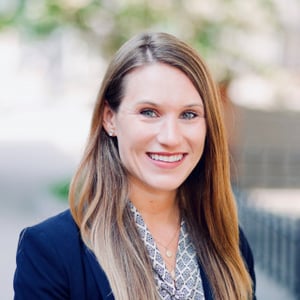
Counsel, Becket Fund for Religious Liberty
Amanda Salz is counsel at the Becket Fund for Religious Liberty, where her practice focuses on First Amendment litigation at both the trial and appellate levels. She is also a member of the Federalist Society’s Religious Liberties Executive Committee.
Before joining Becket, Amanda worked as an associate at Morgan, Lewis & Bockius LLP. As a member of the firm’s appellate group, Amanda litigated many cases involving constitutional and administrative issues. In addition to her experience in private practice, Amanda clerked for the Honorable Andrew S. Oldham of the U.S. Court of Appeals for the Fifth Circuit and the Honorable Reed C. O’Connor of the U.S. District Court for the Northern District of Texas.
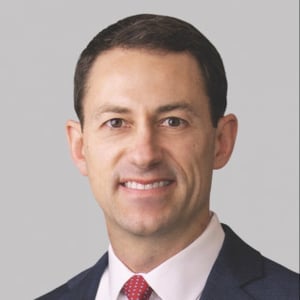
Partner, Foley & Lardner LLP
Matthew Krueger is a partner in the Government Enforcement Defense and Investigations practice group at Foley & Lardner LLP. Before joining Foley, Matt served as the United States Attorney for the Eastern District of Wisconsin after being recommended by a bipartisan nominating commission. As the district’s chief federal law enforcement officer, Matt supervised all criminal and civil litigation involving the United States in 28 counties. He also served for five years as an Assistant U.S. Attorney, prosecuting a broad array of federal crimes. Before serving in the U.S. Attorney’s Office, Matt practiced trial and appellate litigation at an international law firm in Washington, D.C. He clerked for the Hon. Paul V. Niemeyer on the U.S. Court of Appeals for the Fourth Circuit and served as a Bristow Fellow in the Solicitor General’s Office, helping represent the United States before the Supreme Court. Matt received his J.D., summa cum laude, from the University of Minnesota Law School.
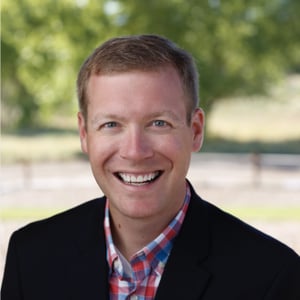
President, Center for American Rights
Daniel Suhr serves as president of the Center for American Rights, where he spends every day on the front lines of the fight to preserve our rights and liberties. The Center's mission is to advance free speech, free enterprise, and parental freedom in education through strategic, precedent-setting litigation.
Daniel formerly worked as policy director for Wisconsin Governor Scott Walker, as chief of staff for Wisconsin Lieutenant Governor Rebecca Kleefisch, and as a law clerk for Judge Diane Sykes of the U.S. Court of Appeals for the Seventh Circuit. He holds a B.A. and J.D. from Marquette University, and master’s degrees from Georgetown and the University of Missouri.

2026 Milwaukee Cocktail Reception
Milwaukee Lawyer Chapter and The Lynde and Harry Bradley Foundation
Milwaukee, WIMilwaukee Lawyers Chapter Summer Happy Hour
Milwaukee Lawyer Chapter
Brookfield, WIHow Did the Founders View the Role of Education?
Michael Bindas, Nicole Stelle Garnett, Shaka Laurence Mitchell, Mark Storslee
In this Federalist Society America 250 series, experts analyze modern legal and policy debates through...
Roles Reversed - Milwaukee
Milwaukee Lawyer Chapter
Milwaukee, WICan State Courts Set Global Climate Policy?
David Bookbinder, Michael Buschbacher, Michael Gerrard, Donald J. Kochan, Adam White
Climate change has been described as a “super wicked” policy problem. Policymakers face profound difficulties...
Property & Personal Rights: A Discussion of Short-Term Rental Regulations
Paul D. Clement, Tony Francois, Ron Klain, Donald J. Kochan
Short-term rentals—popularized by Airbnb and Vrbo—have been given modern platforms for the customary alternative to...
Analysis of Catholic Charities Case before SCOTUS
Milwaukee Lawyers Chapter
Milwaukee, WIMilwaukee Lawyer and Student Happy Hour
Milwaukee Lawyers Chapter
Milwaukee, WIThe Exercise of Federal Authority: When and to What Extent is it Constitutionally Permissible?
Milwaukee Lawyers Chapter
Milwaukee, WI2024 Milwaukee Christmas Party
Milwaukee Lawyers Chapter
Milwaukee, WI