
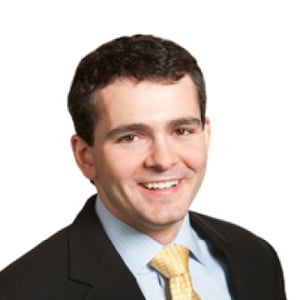
President, The Ethics and Public Policy Center
Ryan T. Anderson, Ph.D., is the President of the Ethics and Public Policy Center. In May 2025, Anderson was appointed by President Trump to the Religious Liberty Commission.
He is the author or co-author of five books, including the just-released Tearing Us Apart: How Abortion Harms Everything and Solves Nothing. Previous books include When Harry Became Sally: Responding to the Transgender Moment, Truth Overruled: The Future of Marriage and Religious Freedom, What Is Marriage? Man and Woman: A Defense, and Debating Religious Liberty and Discrimination. He is the co-editor of A Liberalism Safe for Catholicism? Perspectives from “The Review of Politics.”
Anderson’s research has been cited by two U.S. Supreme Court justices, Justice Samuel Alito and Justice Clarence Thomas, in two Supreme Court cases.
He received his bachelor of arts degree from Princeton University, graduating Phi Beta Kappa and magna cum laude, and he received his doctoral degree in political philosophy from the University of Notre Dame. His dissertation was titled: “Neither Liberal Nor Libertarian: A Natural Law Approach to Social Justice and Economic Rights.”
Anderson has made appearances on ABC, CNN, CNBC, MSNBC, and Fox News. His work has been published by the New York Times, the Washington Post, the Wall Street Journal, Oxford University Press, Cambridge University Press, the Harvard Journal of Law and Public Policy, the Harvard Health Policy Review, the Georgetown Journal of Law and Public Policy, First Things, the Claremont Review of Books, and National Review.
He is the John Paul II Teaching Fellow in Social Thought at the University of Dallas, a member of the James Madison Society at Princeton University, and a Fellow of the Institute for Human Ecology at the Catholic University of America, as well as the Founding Editor of Public Discourse, the online journal of the Witherspoon Institute of Princeton, New Jersey.
For 9 years he was the William E. Simon senior research fellow at The Heritage Foundation, and has served as an adjunct professor of philosophy and political science at Christendom College, and a Visiting Fellow at the Veritas Center at Franciscan University. He has also served as an assistant editor of First Things.
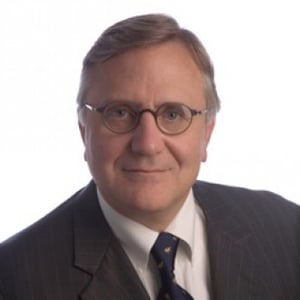
Reed Larson Professor of Labor Law, Ave Maria School of Law and, National Right To Work Legal Defense Foundation
John Raudabaugh is a labor lawyer and former Member of the U.S. National Labor Relations Board. He was a partner in law firms representing management concerning domestic and international labor law matters. Currently, he represents employees seeking relief from union and/or employer unfair labor practices. Mr. Raudabaugh has presented testimony to both Senate and House Committees regarding labor law reform. Professor Raudabaugh teaches Labor Law and a Labor Law Practicum at the Ave Maria School of Law. He is a graduate of the Wharton School of Finance and Commerce and New York State School of Industrial and Labor Relations with B.S. and M.S. degrees in labor economics and a J.D. degree from the University of Virginia Law School of Law.

Director, GW Regulatory Studies Center & Distinguished Professor of Practice, Trachtenberg School of Public Policy & Public Administration, The George Washington University
Susan Dudley is the Founder and Director of the George Washington University Regulatory Studies Center, established in 2009 to raise awareness of regulations’ effects and improve regulatory policy through research, education, and outreach. She is also a distinguished professor of practice in the Trachtenberg School of Public Policy and Public Administration. She is past-president of the Society for Benefit Cost Analysis, a senior fellow of the Administrative Conference of the United States, and on the Regulatory Transparency Project Regulatory Practice Working Group. Her book, Regulation: A Primer, with Jerry Brito, is available on Amazon.com.
From April 2007 through January 2009, Professor Dudley served as the Presidentially-appointed Administrator of the Office of Information and Regulatory Affairs in the U.S. Office of Management and Budget and was responsible for the review of draft executive branch regulations under Executive Order 12866, the collection of federal-government-wide information under the Paperwork Reduction Act, the development and implementation of government-wide policies in the areas of information policy, privacy, and statistical policy, and international regulatory cooperation efforts.
Prior to OIRA, she directed the Regulatory Studies Program at the Mercatus Center at George Mason University, and taught courses on regulation at the George Mason University School of Law. Earlier in her career, Professor Dudley served as an economist at OIRA, as well as the Environmental Protection Agency and the Commodity Futures Trading Commission. She was also a consultant to government and private clients at Economists Incorporated. She holds a Master of Science degree from the Sloan School of Management at MIT and a Bachelor of Science degree (summa cum laude) in Resource Economics from the University of Massachusetts, Amherst.
Senior Counsel and Head of Regulatory Advocacy, General Electric Company
Michael A. Fitzpatrick currently serves as Senior Counsel and Head of Regulatory Advocacy for General Electric Company. He previously served as the Associate Administrator of the Office of Management and Budget’s Office of Information and Regulatory Affairs, where he helped lead the development of regulatory policy and White House review of significant Executive Branch regulatory actions. He served as the Executive Branch liaison to the ABA’s Administrative Law Section and has led several U.S. delegations abroad for meetings with the European Union and Canada.
During the Presidential Transition, Fitzpatrick served as deputy lead of the Executive Office of the President and Government Operations Agency Review Teams. From 2001 to 2009, Fitzpatrick was in the Washington, D.C. office of Akin Gump Strauss Hauer & Feld LLP, where he was a partner in the Litigation Practice Group, specializing in white collar, complex civil, and regulatory matters. Before joining Akin Gump, Fitzpatrick served as an Assistant United States Attorney in Washington, D.C., and as a Senior Advisor to the Administrator of the Office of Information and Regulatory Affairs at the Office of Management and Budget.
Fitzpatrick clerked for Judge William Norris on the U.S. Court of Appeals for the Ninth Circuit after graduating from Stanford Law School.
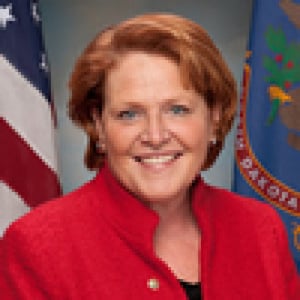
United States Senate, North Dakota
U.S. Senator Heidi Heitkamp is the first female Senator elected from North Dakota. She took the oath of office on January 3, 2013.
Already in her short time in the Senate, Senator Heitkamp has quickly become a proven Senator who works across the aisle to fight for North Dakotans. Senator Heitkamp has personally shown that if Senators work together, it can lead to real solutions.
As a former director of the one-of-a-kind Dakota Gasification synfuels plant, Senator Heitkamp has a long record of serving as a champion for North Dakota’s energy jobs and industry. She is continuing those efforts in the Senate, working to responsibly harness North Dakota’s energy resources, promoting the state’s all-of-the-above energy plan which she believes should serve as a model for the entire country, and fighting to lift the 40-year old ban on exporting U.S. crude oil.
Senator Heitkamp sits on the Senate Committee on Agriculture, Nutrition, and Forestry, where she has been fighting for North Dakota’s farmers and ranchers, and to make sure they get the resources and support they need to continue to feed North Dakota, the country, and the world. Starting on day one in the Senate, she helped write, negotiate, and pass a long-term, comprehensive Farm Bill which Congress passed in 2014.
As a member on the Senate Committee on Indian Affairs, Senator Heitkamp is continuing her pledge -- from her time as North Dakota’s Attorney General -- to stand up for Native American families and make sure the U.S. government lives up to its treaty and trust responsibilities. The first bill she introduced in the Senate would better protect Native children and make sure they have the economic and educational tools to thrive.
Through her leadership on the Senate Committee on Banking, Housing and Urban Affairs, Senator Heitkamp has worked to reform the nation’s housing finance system, make housing more affordable, address North Dakota’s housing shortage, and provide relief to small financial institutions.
Senator Heitkamp also serves on the Senate Committee on Homeland Security and Governmental Affairs and the Senate Committee on Small Business and Entrepreneurship.
Senator Heitkamp previously served as North Dakota’s Attorney General, battling drug dealers, protecting senior citizens from scams, and working to keep sexual predators off streets and away from kids, even after their prison terms were up.
During her time as North Dakota’s Attorney General, Senator Heitkamp brokered an agreement between 46 states and the tobacco industry, which forced the tobacco industry to tell the truth about smoking and health. The settlement resulted in the award of about $336 million to North Dakota taxpayers to date. It was one of the largest civil settlements in U.S. history. When very little of this funding was being sent to anti-tobacco programs as intended, Senator Heitkamp led a successful ballot initiative in 2008 that mandated significant increases.
Previously, Senator Heitkamp served as North Dakota’s Tax Commissioner. Under her tenure, the State of North Dakota attempted to make catalog retailers collect the sales tax the state and municipalities were already owed on sales. The debate went all the way to the Supreme Court in the caseQuill v. North Dakota.
Senator Heitkamp received a B.A. from the University of North Dakota and a law degree from Lewis and Clark Law School. She lives in Mandan, North Dakota with her husband, Dr. Darwin Lange, a family practitioner. They have two children, Ali and Nathan.

Executive Vice President, The Federalist Society
Dean Reuter is Executive Vice President at the Federalist Society for Law and Public Policy Studies. He has served in two federal government agency Offices of the Inspector General, as Counsel to the Inspector General and Deputy Inspector General, responsible for policing the use of federal funds granted and contracted through those agencies. As such, he helped conduct and oversee criminal investigations across the country. He is the principal author of the non-fiction book, The Hidden Nazi: The Untold Story of America's Deal with the Devil, and editor of Liberty’s Nemesis: The Unchecked Expansion of the State and Confronting Terror: 9/11 and the Future of American National Security. He was appointed by the President and served as Vice-Chairman of the Board of Directors of the Corporation for National and Community Service, and recently served as an appointee on the U.S. Commission on Presidential Scholars. He is a graduate of Hood College (BA with Honors) and the University of Maryland School of Law.
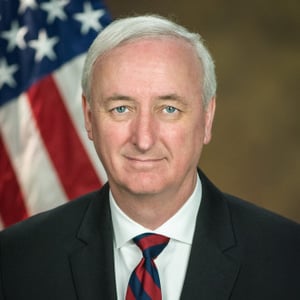
Former Acting Attorney General
Jeffrey A. Rosen is a member of the Investigations and Regulatory Enforcement Practice of Cravath, Swaine & Moore LLP. He previously served in the U.S. Department of Justice (DOJ) as Acting Attorney General and Deputy Attorney General, as well as Deputy Secretary and General Counsel at the U.S. Department of Transportation (DOT), and General Counsel and Senior Policy Advisor at the White House Office of Management and Budget (OMB).
With decades of both public and private sector executive leadership experience, including past service on the global management committee of one of the world’s leading law firms, he has built a career specializing in the management of complex, sensitive, and consequential matters.

Laurence H. Silberman Chair in Constitutional Governance, American Enterprise Institute; Executive Director, Antonin Scalia Law School’s C. Boyden Gray Center for the Study of the Administrative State
Adam J. White is the Laurence H. Silberman Chair in Constitutional Governance and senior fellow at the American Enterprise Institute, where he focuses on the Supreme Court and the administrative state. He also directs the Antonin Scalia Law School’s C. Boyden Gray Center for the Study of the Administrative State.
He writes on regulation and constitutional government for a variety of publications. He practiced law in Washington, D.C., after clerking for the D.C. Circuit's Judge David Sentelle. He also has been chairman of the ABA's Administrative Law Section.
In 2021, he served on the Presidential Commission on the Supreme Court of the United States, where he criticized “Court packing” and other efforts to restructure the Supreme Court.
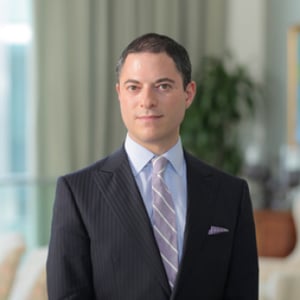
Partner, BakerHostetler, Adjunct Fellow, The Manhattan Institute
Andrew Grossman leads BakerHostetler’s Appellate and Major Motion team. He has appeared before the U.S. Supreme Court, nearly all the federal courts of appeals, as well as some state appellate courts, litigating high-profile and complex commercial, administrative and constitutional issues.
Andrew works with practice groups across BakerHostetler to identify and tackle complex issues, advise on administrative law and strategy, tee up issues for appeal and tackle appeals. He has developed and implemented litigation and administrative strategies for clients in several fields and industries.
In addition to his practice, Andrew advises members of Congress on matters of constitutional and administrative law, having testified more than a dozen times before the House and Senate Judiciary Committees. He has been a frequent legal commentator on radio and television, having appeared on Fox News, CNN, MSNBC, CNBC, NPR and its affiliates, CBN and elsewhere. His legal commentary has also appeared in dozens of magazines and newspapers, including The Wall Street Journal, USA Today, The Washington Post, The Washington Times and many others.
Andrew is a Senior Legal Fellow at the Buckeye Institute, an Adjunct Fellow the Manhattan Institute and a member of the leadership of the Federalist Society. He previously served as an adjunct scholar at the Cato Institute’s Robert A. Levy Center for Constitutional Studies and a legal fellow at the Heritage Foundation’s Meese Center for Legal and Judicial Studies. He clerked for Judge Edith H. Jones on the U.S. Court of Appeals for the Fifth Circuit.
Professor of Law, University of Michigan Law School
Prof. Samuel Bagenstos, who serves as professor of law, specializes in civil rights law, public law, and litigation. From 2009-2011, he was a political appointee in the U.S. Department of Justice, where he served as the Principal Deputy Assistant Attorney General for Civil Rights, the number-two official in the Civil Rights Division. His accomplishments included the promulgation of the 2010 Americans with Disabilities Act regulations—the first comprehensive update of those regulations since they were first promulgated in 1991—and the reinvigoration of the Civil Rights Division's enforcement of the Supreme Court's decision in Olmstead v. L.C., which guarantees people with disabilities the right to live and receive services in the most integrated setting appropriate. He led the negotiations of significant Olmstead v. L.C., which guarantees people with disabilities the right to live and receive services in the most integrated setting appropriate. He led the negotiations of significant Olmsteadsettlements with the states of Delaware and Georgia, which guarantee appropriate, community-based services to thousands of people with disabilities. He also personally argued major cases in federal district courts and courts of appeals.
As an academic, Prof. Bagenstos has published articles in journals such as the Yale Law Journal, the Columbia Law Review, the California Law Review, the Virginia Law Review, and many others. He also has published two books: Law and the Contradictions of the Disability Rights Movement (2009, Yale University Press); and Disability Rights Law: Cases and Materials (2010, Foundation Press). In his "spare time," Prof. Bagenstos remains an active appellate and Supreme Court litigator in civil rights and federalism cases. In one of the most notable cases he has argued, United States v. Georgia, 546 U.S. 151 (2006), the U.S. Supreme Court upheld, as applied to his client's case, the constitutionality of Title II of the Americans with Disabilities Act. Prof. Bagenstos has also testified before Congress on several occasions, including in support of the Fair Pay Restoration Act, the ADA Amendments Act, the Employment Non-Discrimination Act, and the Convention on the Elimination of All Forms of Discrimination Against Women, as well as on the application of the ADA to advancing technology and the problem of mental illness in prisons.
Prior to joining the Michigan Law faculty, Prof. Bagenstos was a professor of law, and, from 2007 to 2008, also associate dean for research and faculty development at Washington University School of Law. He has been on the faculty of Harvard Law School, and was a visiting professor at UCLA School of Law. He clerked for Judge Stephen Reinhardt on the Ninth Circuit for one year, and then joined the Civil Rights Division of the U.S. Department of Justice. Following that position, he served as law clerk for Justice Ruth Bader Ginsburg of the U.S. Supreme Court. In 1993, Prof. Bagenstos earned his JD, magna cum laude, from Harvard, where he received the Fay Diploma and was articles office co-chair for the Harvard Law Review.
Partner, BakerHostetler, Adjunct Fellow, The Manhattan Institute
Andrew Grossman leads BakerHostetler’s Appellate and Major Motion team. He has appeared before the U.S. Supreme Court, nearly all the federal courts of appeals, as well as some state appellate courts, litigating high-profile and complex commercial, administrative and constitutional issues.
Andrew works with practice groups across BakerHostetler to identify and tackle complex issues, advise on administrative law and strategy, tee up issues for appeal and tackle appeals. He has developed and implemented litigation and administrative strategies for clients in several fields and industries.
In addition to his practice, Andrew advises members of Congress on matters of constitutional and administrative law, having testified more than a dozen times before the House and Senate Judiciary Committees. He has been a frequent legal commentator on radio and television, having appeared on Fox News, CNN, MSNBC, CNBC, NPR and its affiliates, CBN and elsewhere. His legal commentary has also appeared in dozens of magazines and newspapers, including The Wall Street Journal, USA Today, The Washington Post, The Washington Times and many others.
Andrew is a Senior Legal Fellow at the Buckeye Institute, an Adjunct Fellow the Manhattan Institute and a member of the leadership of the Federalist Society. He previously served as an adjunct scholar at the Cato Institute’s Robert A. Levy Center for Constitutional Studies and a legal fellow at the Heritage Foundation’s Meese Center for Legal and Judicial Studies. He clerked for Judge Edith H. Jones on the U.S. Court of Appeals for the Fifth Circuit.
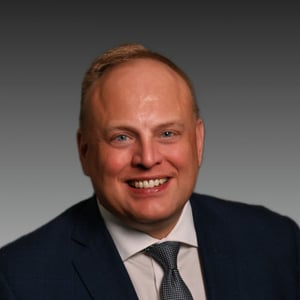
Executive Vice President and Director of Litigation, EdChoice Legal Advocates
Before founding a public interest law firm at EdChoice, Tom Fisher served as Indiana’s first Solicitor General from 2005-2023. Fisher has argued dozens of high-profile cases before both the Indiana Supreme Court and the Seventh Circuit U.S. Court of Appeals and five cases before the U.S. Supreme Court. A two-time recipient of the National Association of Attorneys General Best Brief Award, Fisher is a Fellow of the American Academy of Appellate Lawyers and a Sagamore of the Wabash. Fisher is a graduate of Wabash College and Indiana University Maurer School of Law, where he serves as an Adjunct Professor of Law.
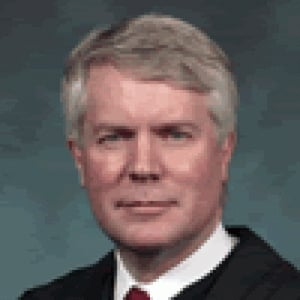
United States Court of Appeals, Seventh Circuit
David Frank Hamilton is a United States federal judge, currently serving on the United States Court of Appeals for the Seventh Circuit. He previously was the Chief Judge of the United States District Court for the Southern District of Indiana.

Judge, United States Court of Appeals, Seventh Circuit
Judge Sykes was nominated to the Seventh Circuit by President George W. Bush and confirmed by the Senate in 2004. Prior to her appointment to the federal bench, Judge Sykes served as a justice on the Wisconsin Supreme Court. Governor Tommy G. Thompson appointed her in September 1999 to fill a mid-term vacancy on the state supreme court, and she was elected to a full ten-year term in April 2000. From 1992-1999, Judge Sykes served on the state trial bench in Milwaukee County (elected in 1992 and re-elected in 1998). From 1985-1992, Judge Sykes practiced law with the Milwaukee firm of Whyte & Hirschboeck, S.C., and from 1984-1985, was a law clerk to Federal Judge Terence T. Evans.
Born and raised in the Milwaukee area, Judge Sykes earned a bachelor’s degree in journalism from Northwestern University in 1980 and a law degree from Marquette University Law School in 1984. Between college and law school, Judge Sykes worked as a reporter for The Milwaukee Journal.
Judge Sykes has two sons.

Co-Chairman, The Federalist Society for Law and Public Policy Studies
Leonard is Co-Chairman and former Executive Vice President of the Federalist Society, joining the organization over 25 years ago. Since that time he has been instrumental in helping the organization top 70,000, focusing on the growth of lawyers membership, operations and activities advancing limited, constitutional government. In addition to his work at the Society, Leonard has advised President Trump on judicial selection, assisted with the Gorsuch and Kavanaugh Supreme Court selection and confirmation process, and served as a member of the transition team. He also organized the outside coalition efforts in support of the Roberts and Alito U.S. Supreme Court confirmations. Leonard was appointed by President George W. Bush to three terms to the U.S. Commission on International Religious Freedom as chairman. He was also a U.S. Delegate to the UN Council and UN Commission on Human Rights during the Bush Administration. Leonard was the recipient of the 2009 Bradley Prize, along with the other founders and directors of the Federalist Society, for his work in advancing freedom and the rule of law. He is the coeditor of Presidential Leadership: Rating the Best and the Worst in the White House, as well as the author of opinion editorials in the New York Times,The Wall Street Journal, and Washington Post. Leonard holds degrees from Cornell University and Cornell Law School. He presently resides in Northern Virginia, where he and his wife Sally have raised their seven children.
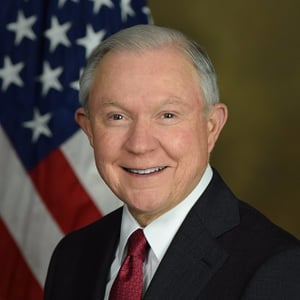
Former United States Attorney General
Jeff Sessions served as the 84th Attorney General of the United States from February 9, 2017 until November 7, 2018.
Prior to becoming Attorney General, Mr. Sessions served as a United States Senator for Alabama since 1996. As a United States Senator, he focused his energies on maintaining a strong military, upholding the rule of law, limiting the role of government, and providing tax relief to stimulate economic growth and to empower Americans to keep more of their hard-earned money.
Mr. Sessions was born in Selma, Alabama on December 24, 1946, and grew up in Hybart, the son of a country store owner. Growing up in the country, Sessions was instilled with certain core values – honesty, hard work, belief in God and parental respect – that define him today. In 1964, he became an Eagle Scout and thereafter received the Distinguished Eagle Scout Award. After attending school in nearby Camden, Sessions attended Huntingdon College in Montgomery, graduating with a Bachelor of Arts degree in 1969. He received a Juris Doctorate degree from the University of Alabama in 1973. Sessions served in the United States Army Reserve from 1973 to 1986, ultimately attaining the rank of Captain. He still considers that period to be one of the most rewarding chapters of his life.
Sessions’ interest in the law led to a distinguished legal career, first as a practicing attorney in Russellville, Alabama, and then in Mobile. Following a two-year stint as Assistant United States Attorney for the Southern District of Alabama (1975-1977), Sessions was nominated by President Reagan in 1981 and confirmed by the Senate to serve as the United States Attorney for the Southern District of Alabama, a position he held for 12 years. Sessions was elected Alabama Attorney General in 1995, serving as the State’s chief legal officer until 1996, when he entered the United States Senate.
Sessions and his wife, Mary Blackshear Sessions, originally of Gadsden, Alabama, have three children, Mary Abigail Reinhardt, Ruth Sessions Walk, and Sam. They have seven granddaughters, Jane Ritchie, Alexa, Gracie, Sophia, Hannah, Joanna, and Phoebe, and three grandsons, Jim Beau, Lewis, and Nicholas.
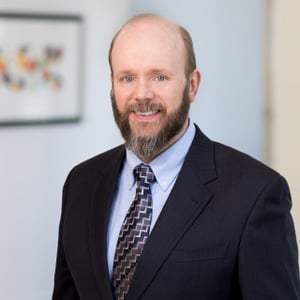
Partner, Crowell & Moring LLP, Crowell & Moring LLP
Trevor K. Copeland is a partner in the law firm of Crowell & Moring LLP (formerly Brinks Gilson & Lione PC).
His patent prosecution experience includes work on medical devices, sunglasses, footwear, sprinklers and irrigation equipment, decorative statuary and water gardens, biotechnology and general mechanical arts. He works closely with clients having products in these areas to develop intellectual property acquisition and management strategies, as well as to protect new ideas and products while respecting the rights of others.
Mr. Copeland's further practice includes design protection, whereby clients are able to protect the unique and valuable ornamental designs of their products using patent, copyright, and/or trademark. He has also litigated utility patents on clients' behalf, and has worked on preliminary injunction lawsuits for both design and utility patents, including winning a preliminary injunction against a foreign company preparing to launch an infringing laser-level device with a suction base.
Mr. Copeland has former experience as a high school biology and chemistry teacher, and as a visiting scientist with a Fungal Biochemistry and Molecular Genetics Laboratory Group.

Laurence A. Tisch Professor of Law and Director, Classical Liberal Institute, New York University School of Law; Senior Fellow, The Civitas Institute, University of Texas at Austin
Richard A. Epstein is the inaugural Laurence A. Tisch Professor of Law at NYU School of Law. Prior to his joining the faculty, he was a visiting law professor at NYU from 2007 through 2009. He served as the Peter and Kirstin Bedford Senior Fellow at the Hoover Institution from 2000 to 2024. Since 2024 to the present he is a senior lecturer at the Civitas Institute at the University of Texas—Austin. Epstein is also the James Parker Hall Distinguished Service Professor of Law Emeritus and a senior lecturer at the University of Chicago. His initial law school appointment was at the University of Southern California from 1968 to 1972. Epstein received an LL.D., h.c. from the University of Ghent, 2003. He has been a member of the American Academy of Arts and Sciences since 1985 and was a Senior Fellow of the Center for Clinical Medical Ethics at the University of Chicago Division of Biological Sciences, also from 1983. to 2022 He served as editor of the Journal of Legal Studies from 1981 to 1991, and of the Journal of Law and Economics from 1991-2001. From 2001 to 2010 he was a director of the John M. Olin Program in Law and Economics at the University of Chicago.
His newest book, The Myth of Birthright Citizenship: What the Fourteenth Amendment Really Says was published in 2026 (Encounter Books). Prior to that he has published many books including, The Dubious Morality of the Modern Administrative State (Roman & Littlefield 2020).Earlier he published th Classical Liberal Constitution: The Uncertain Quest for Limited Government (Harvard 2014) iHis previous books include Design for Liberty: Private Property, Public Administration and the Rule of Law (Harvard 2011); The Case Against the Employee Free Choice Act (Hoover 2009); Supreme Neglect: How to Revive the Constitutional Protection of Property Rights (Oxford 2008); Antitrust Decrees in Theory and Practice: Why Less is More (AEI 2007); Overdose: How Excessive Government Regulation Stifles Pharmaceutical Innovation (Yale University Press. 2006); How Progressives Rewrote the Constitution (Cato 2006); Cases and Materials on Torts (Aspen Law & Business; 8th ed. 2004); Skepticism and Freedom: A Modern Case for Classical Liberalism (University of Chicago, 2003); Torts (Aspen Law & Business 1999); Principles for a Free Society: Reconciling Individual Liberty with the Common Good (Perseus Books, 1998): Mortal Peril: Our Inalienable Rights to Health Care (Addison-Wesley, 1997); Simple Rules for a Complex World (Harvard, 1995); Bargaining With the State (Princeton, 1993); Forbidden Grounds: The Case Against Employment Discrimination Laws (Harvard , 1992); Takings: Private Property and the Power of Eminent Domain (Harvard, 1985); and Modern Products Liability Law (Greenwood Press, 1980). He has also edited(with Catherine M. Sharkey) Cases and Materials on the Law of Torts (10th edition 2012).
Professor Epstein has written numerous articles on a wide range of legal and interdisciplinary subjects. He has taught courses in administrative law, antitrust law, civil procedure, communications, constitutional law, contracts, corporations, criminal law, employment discrimination law, environmental law, food and drug law health law and policy, legal history, labor law, property, real estate development and finance, jurisprudence, labor law; land use planning, patents, individual, estate and corporate taxation, Roman Law; torts, and workers' compensation.
Professor Epstein also writes a regular column for Civitas Institute, which also sponsors his podcast, The Libertarian with Charles C.W. Cooke, and Law Talk, with Cooke and John Yoo. He also does a podcast with John Batchelor. And appears regularly on the Freedom File with Judge Andrew Napolitano.
Associate Professor of Law, New York Law School
James Grimmelmann is Associate Professor at New York Law School and a member of its Institute for Information Law and Policy. He received his J.D. from Yale Law School, where he was Editor-in-Chief of LawMeme and a member of the Yale Law Journal. Prior to law school, he received an A.B. in computer science from Harvard College and worked as a programmer for Microsoft. He has served as a Resident Fellow of the Information Society Project at Yale, as a legal intern for Creative Commons and the Electronic Frontier Foundation, and as a law clerk to the Honorable Maryanne Trump Barry of the United States Court of Appeals for the Third Circuit.
He studies how the law governing the creation and use of computer software affects individual freedom and the distribution of wealth and power in society. As a lawyer and technologist, he aims to help these two groups speak intelligibly to each other. He writes about intellectual property, virtual worlds, search engines, online privacy, and other topics in computer and Internet law. Recent publications include The Internet Is a Semicommons, 78 Fordham L. Rev. 2799 (2010), Saving Facebook, 94 Iowa L. Rev. 1137 (2009), and The Ethical Visions of Copyright Law, 77 Fordham L. Rev. 2005 (2009).
He has been blogging since 2000 at the Laboratorium (http://laboratorium.net/). His home page is at http://james.grimmelmann.net/.
Assistant Professor of Law, University of Chicago Law School
Jonathan Masur received a BS in physics and an AB in political science from Stanford University in 1999 and his JD from Harvard Law School in 2003. After graduating from law school, he clerked for Judge Richard Posner of the U.S. Court of Appeals for the Seventh Circuit and for Chief Judge Marilyn Hall Patel of the U.S. District Court for the Northern District of California. He taught at the Law School as a Bigelow Fellow and Lecturer in Law before joining the faculty in 2007.
His research and teaching interests include administrative law, legislation, behavioral law and economics, patent law, and criminal law.

President, TechFreedom
Berin Szoka serves as President of TechFreedom. Previously, he was a Senior Fellow and the Director of the Center for Internet Freedom at The Progress & Freedom Foundation. Before joining PFF, he was an Associate in the Communications Practice Group at Latham & Watkins LLP, where he advised clients on regulations affecting the Internet and telecommunications industries. Before joining Latham's Communications Practice Group, Szoka practiced at Lawler Metzger Milkman & Keeney, LLC, a boutique telecommunications law firm in Washington, and clerked for the Hon. H. Dale Cook, Senior U.S. District Judge for the Northern District of Oklahoma. Szoka received his Bachelor's degree in economics from Duke University and his juris doctor from the University of Virginia School of Law, where he served as Submissions Editor of the Virginia Journal of Law and Technology. He is admitted to practice law in the District of Columbia and California (inactive).
U.S. Court of Appeals, Seventh Circuit
Diane P. Wood received her BA in 1971 and her JD in 1975 from the University of Texas at Austin. After graduation, she clerked for Judge Irving L. Goldberg of the Fifth Circuit and for Justice Harry A. Blackmun of the U.S. Supreme Court. She then worked briefly for the U.S. State Department on international investment, antitrust, and transfer of technology issues. Moving on to Covington & Burling, Judge Wood continued a more general antitrust and commercial litigation practice until June 1980. In 1980–81, she was an assistant professor at the Georgetown University Law Center. In 1981, she joined the faculty of the Law School. She spent 1985–86 on leave as a Visiting Professor at Cornell Law School, and she was on leave during the fall quarter 1986, while she worked on the project to revise the Department of Justice Antitrust Guide for International Operations. She served as Associate Dean from 1989 through 1992. From 1993 until 1995, she was deputy assistant general in the Antitrust Division of the U.S. Department of Justice with responsibility for the Division's International, Appellate, and Legal Policy matters. Before becoming a judge of the U.S. Court of Appeals for the Seventh Circuit in 1995, Judge Wood was the Harold J. and Marion F. Green Professor of International Legal Studies.
Judge Wood's research interests include antitrust (both international and general), federal civil procedure, and international trade and business. She has taught in all three fields.

Professor Emeritus, Paul M. Hebert Law Center, Louisiana State University
In memoriam
Dr. John Baker is Professor Emeritus of Law, and previously the Dale E. Bennett Professor of Law, at Louisiana State University Law School. He is currently Visiting Professor at Peking University School of Transnational Law (via Zoom) and has been Visiting Professor at The Center for the Constitution, Georgetown Law School (2013-2020). He has also been a Visiting Fellow at Oriel College, the University of Oxford (2012-2014) and taught at Blackfriars Hall, Oxford in 2014. Dr. Baker has also been an adjunct Fellow at the Heritage Foundation (Spring, 2008) and a Distinguished Scholar at the Catholic University of America Law School (2011-12). He has taught at Tulane Law School, George Mason Law School, Pepperdine Law School, New York Law School, Hong Kong University, and the University of Dallas, School of Management and also taught and/or lectured in 17 foreign countries. Notable among his foreign visits are the
following: Visiting Professor at the University of Lyon III (France) (1999-2011); Visiting Professor at the Universidad de los Andes, Chile (2012), as a Fulbright Specialist (2006); and a Fulbright Scholar at various universities in the Philippines. Dr. Baker received his J.D., with honors, from the University of Michigan Law School and his B.A., magna cum laude, from the University of Dallas. He also earned a Ph.D. in Political Thought from the University of London. Baker has taught over a dozen different subjects, mostly courses in public law. His main areas of interest are Constitutional Law (particularly federalism and separation of powers), Criminal Law, Anti-Terrorism Law, International Law, Health Care Law, Mediation, and Comparative Law.
In addition to law review articles and book chapters, Dr. Baker’s academic publications include Hall's Criminal Law: Cases and Materials (with Benson, Force and George; 5th ed. Michie, 1993); An Introduction to the Law of the United States (ed. with Levasseur; University Press of America, 1992). He has also published on Forbes.com, FoxNews.com, in The Washington Times, and a number of times in The Wall Street Journal. He argues in federal court, including two oral arguments in the U.S. Supreme Court. For many years, he co-taught courses for the Federalist Society on separation of powers with the late Supreme Court Justice Antonin Scalia. In September 2016, he co-taught a Supreme Court seminar in China with Justice Samuel Alito. Following law school, he served as a law clerk in federal district court and as an assistant district attorney in New Orleans before joining LSU in 1975. While a professor, he has been as a consultant to USAID, USIA (since rolled into the State Department), the Justice Department, the U.S. Senate Judiciary Subcommittee on Separation of Powers, and the Office of Planning in the White House. He served on an ABA Task Force which issued the report, The Federalization of Crime (1998) and later as a consultant to the “Bi-Partisan Task Force on the Over- federalization of Crime” (2012-2014) created by the U.S. House Judiciary Subcommittee on Crime. Dr. Baker was a co-founder of the first iteration (1995) of Stratfor Inc., a global intelligence agency. He co-authored its first book: The Intelligence Edge (with Friedman, Friedman and Chapman; Crown Books/Random House 1997). In 2022, he began a short, weekly video podcast available on YouTube and Rumble, The Baker Brief.
Charles L. B. Lowndes Professor of Law, Duke Law School
Partner, Sidley Austin LLP
BRADFORD A. BERENSON is a litigator in the Washington, D.C., office whose practice focuses on the defense of white collar criminal cases, investigations by government agencies and congressional committees, and other civil or constitutional matters that present unusual legal, public relations, or political risks. He has defended criminal cases at every stage of development, from internal investigations and grand jury proceedings through trials, sentencings, and appeals. Mr. Berenson’s practice has included criminal matters in the fraud, environmental, health care, pharmaceutical, and public corruption areas. In addition, Mr. Berenson served as a consultant to Independent Counsel David M. Barrett in the prosecution of former HUD Secretary Henry Cisneros. He has also handled a variety of civil and appellate cases in federal court.
From January 2001 through January 2003, Mr. Berenson served as Associate Counsel to the President of the United States. In the White House, he worked on a wide variety of legal, legislative and policy issues associated with the Bush Administration’s relations with Congress, its justice and domestic policy initiatives, and the war on terrorism. These included judicial selection, responses to congressional oversight and investigations, the USA Patriot Act, the Military Order authorizing the use of military commissions, detainee and anti-terrorism litigation, presidential action against terrorist financing, and the creation of the new Department of Homeland Security.
Mr. Berenson has also provided commentary on legal matters in the mainstream media, publishing articles in the Wall Street Journal, Los Angeles Times and Washington Times and making appearances on news and public affairs programming on ABC, NBC, CBS, PBS, NPR, CNN and Fox News Channel. He was a consultant to ABC News in connection with the departures of Chief Justice Rehnquist and Justice O’Connor from the Supreme Court and the nominations of Chief Justice Roberts, Harriet Miers and Justice Alito.
Mr. Berenson holds a B.A., summa cum laude, from Yale University, and a J.D., magna cum laude, from Harvard Law School, where he was Supreme Court editor of the Harvard Law Review. Following graduation, he clerked for Judge Laurence H. Silberman of the U.S. Court of Appeals for the District of Columbia Circuit and Justice Anthony M. Kennedy of the United States Supreme Court.
Chief Counsel for Criminal Justice, Committee on the Judiciary, U.S. Senate
Noah Bookbinder serves as chief counsel for criminal justice to Senator Patrick Leahy on the Senate Judiciary Committee. In this position, he advises Senator Leahy on legislative issues including public corruption, criminal justice, detainee treatment and procedure, corrections, and juvenile justice. He also assists Senator Leahy in conducting oversight of the Department of Justice and evaluating judicial and executive nominations. He previously worked as a trial attorney for the Department of Justice's Public Integrity Section, where he investigated and prosecuted a wide variety of federal public corruption cases, ranging from bribery and contracting fraud to international immigration fraud schemes. He received a B.A. from Yale University and a J.D. from Stanford University and clerked for U.S. District Judge Douglas Woodlock in Boston, Massachusetts.

Vice President, Edwin Meese III Institute for the Rule of Law, Advancing American Freedom
John G. Malcolm oversees Advancing American Freedom’s work to increase understanding of the Constitution and the rule of law as Vice President of the organization’s Edwin Meese III Institute for the Rule of Law. Malcolm brings to the challenge a wealth of legal expertise and experience in both the public and private sectors.
Prior to joining Advancing American Freedom in 2025, Malcolm was the Vice President of the Institute for Constitutional Government and the Director of the Meese Center for Legal and Judicial Studies at the Heritage Foundation. Prior to joining Heritage in 2012, Malcolm was general counsel at the U.S. Commission on International Religious Freedom, as well as a distinguished practitioner in residence at Pepperdine Law School. From 2004 to 2009, Malcolm was executive vice president and director of worldwide anti-piracy operations for the Motion Picture Association.
Malcolm served as a deputy assistant attorney general in the Department of Justice’s Criminal Division from 2001 to 2004, where he oversaw sections on computer crime and intellectual property, domestic security, child exploitation and obscenity, and special investigations. Immediately prior to that, he was a founding partner in the Atlanta law firm of Malcolm & Schroeder, LLP.
From 1990 to 1997, Malcolm was an assistant U.S. attorney in Atlanta, assigned to the fraud and public corruption section, and also an associate independent counsel, investigating fraud and abuse in the Department of Housing and Urban Development. He was honored with the Director’s Award for Superior Performance for his work in connection with the successful prosecution of Walter Leroy Moody Jr., who assassinated an 11th Circuit judge and the head of the Savannah chapter of the NAACP.
A graduate of Harvard Law School and Columbia College, Malcolm began his career as a law clerk to a federal district court judge and a federal appellate court judge, and as an associate at the Atlanta-based law firm of Sutherland, Asbill & Brennan (new Eversheds Sutherland).
Malcolm, who resides in Washington, D.C., serves on the Board of Trustees of the Washington National Opera and is a Senate-confirmed member of the Board of Directors of the Legal Services Corporation, the largest funder of civil legal aid in the United States.

Ronald Reagan Distinguished Fellow Emeritus, The Heritage Foundation
Edwin Meese III, the prominent conservative leader, thinker and elder statesman, continues a quarter-century formal association with The Heritage Foundation as the leading think tank’s Ronald Reagan Distinguished Fellow Emeritus.
In that capacity, Meese oversees special projects and acts as an ambassador for Heritage within the conservative movement.
Meese was chairman of Heritage’s Center for Legal and Judicial Studies from its founding in 2001 until what he calls his “semi-retirement” on Feb. 1, 2013.
He joined Heritage in 1988 as the think tank's first Ronald Reagan Distinguished Fellow -- the only policy chair in the country to be officially named for the 40th president. His work focused on keeping President Reagan’s legacy of conservative principles alive in public debate and discourse.
The legal center now bears his name, in recognition of Meese’s contributions to the rule of law and the nation’s understanding of constitutional law. Its mission is to educate government officials, the media and the public about the Constitution and legal principles -- and how they affect public policy.
Perhaps best known as U.S. attorney general during Reagan’s second term, Meese’s service to the conservative icon stretched from the California governor’s mansion in 1966 to the White House in 1981 before he went to the Department of Justice four years later.
His Heritage “hats” kept Meese among the major conservative voices in national policy debates at an age when most men and women enjoyed quiet retirements.
In 2006, for example, Meese was named to the Iraq Study Group, a special presidential commission dedicated to examining the best resolutions for America's involvement in Iraq. In the past few years he wrote and spoke about constitutional topics ranging from religious liberty to the responsibility of Supreme Court justices.
Immediately after Reagan's death in 2004, and in the years since, Meese often agreed to major media appearances to discuss the lasting impact of his old friend, mentor and boss. He has summarized the Reagan legacy in three accomplishments: Reagan cut taxes and kept them low. He worked to defeat and end the Soviet Union and its worldwide push for communism. And he restored America's faith in itself after years of failure and "malaise."
"I admired him as a leader and cherish his friendship," Meese wrote in a 2004 essay for Heritage members and supporters. "Ronald Reagan had strong convictions. He was committed to the principles that had led to the founding of our nation. And he had the courage to follow his convictions against all odds." <[>Edwin Meese III was born Dec. 2, 1931, to Edwin Jr. and Leone Meese in Oakland, Calif. He graduated from Yale University in 1953 and holds a law degree from the University of California-Berkeley.
Meese spent much of his adult life working for Reagan, first after the former actor, sports announcer and athlete was elected as California’s governor in 1966 and then when he sought and won the presidency in 1980.
Reagan never forgot Meese's loyalty and hard work. During a press conference at which reporters questioned Meese's actions at the Justice Department, Reagan replied: "If Ed Meese is not a good man, there are no good men."
During the Reagan governorship, Meese served as executive assistant and chief of staff from 1969 through 1974 and as legal affairs secretary from 1967 through 1968. He previously was deputy district attorney in Alameda County, Calif.
From January 1981 to February 1985, Meese held the position of counsellor to the president -- the senior job on the White House staff -- and functioned as Reagan's chief policy adviser. In 1985, he received Government Executive magazine's annual award for excellence in management.
Meese served as the 75th attorney general of the United States from February 1985 to August 1988. As the nation's chief law enforcement officer, he directed the Justice Department and led international efforts to combat terrorism, drug trafficking and organized crime.
Meese’s relationship with Heritage began when he met with senior management to discuss the think tank's landmark policy guide, Mandate for Leadership, prepared for the incoming administration. Meese later recalled that Reagan personally handed out copies of the 1,093-page book to members of his Cabinet and asked them to read it. Nearly two-thirds of Mandate's 2,000 recommendations would be adopted or attempted by the Reagan administration.
More than a decade after joining Heritage, Meese assumed the chairmanship of its Center for Legal and Judicial Studies. Under his guidance, the center counseled White House staffers, Justice Department officials and Senate Judiciary Committee members on the importance of filling judicial vacancies with qualified men and women who are committed to interpreting the Constitution according to the founding document's original meaning.
The center became known for hosting "moot court" practice sessions to sharpen the arguments of attorneys slated to bring important cases before the Supreme Court. Those cases addressed constitutional issues ranging from property rights to racial preferences in primary and secondary schools to restrictions on free speech in campaign finance law.
Meese headed the legal center's Advisory Board for the writing and editing of the best-selling book, The Heritage Guide to the Constitution (Regnery, 2005). In it, 109 experts walked readers through a clause-by-clause analysis of the Constitution. Sen. Tom Coburn (R-Okla.) was among those keeping the reference work handy during Judiciary Committee hearings on Supreme Court nominees.
Meese's other books include “Leadership, Ethics and Policing” (Prentice Hall, 2004); “Making America Safer” (Heritage, 1997); and “With Reagan: The Inside Story” (Regnery Gateway, 1992).He wrote the Introduction to a well-received 2010 book on the “overcriminalization” trend, “One Nation Under Arrest,” by Heritage veterans Paul Rosenzweig and Brian W. Walsh.
He also is a distinguished visiting fellow at the Hoover Institution at Stanford University in California and lectures, writes and consults throughout the United States on a variety of subjects.
As both attorney general and counsellor to Reagan, Meese was a member of the Cabinet and the National Security Council. He served as chairman of the Domestic Policy Council and the National Drug Policy Board. After Reagan won the White House in the 1980 election, Meese headed the transition team. During the campaign, he was the Reagan-Bush Committee's senior official.
Meese had a career outside government and politics. From 1977 to 1981, he was a law professor at the University of San Diego, where he also directed the Center for Criminal Justice Policy and Management.
He was an executive in the aerospace and transportation industry as vice president for administration of Rohr Industries Inc. in Chula Vista, Calif. He left Rohr to return to the practice of law, doing corporate and general work in San Diego County.
A retired colonel in the Army Reserve, Meese remains active in numerous civic and educational organizations.
He and his wife, Ursula, have two grown children and reside in McLean, Va.
Professor of Law, Western New England College School of Law
Professor Gouvin has been a member of the Western New England College School of Law faculty since 1991. He was tenured and promoted to full professor in 1996. He served as Associate Dean for External Affairs during the 2003-2004 academic year and as Associate Dean for Academic Affairs from 2004-2009. He is currently the Director of the Law and Business Center for Advancing Entrepreneurship.
During his time on the faculty he has taught contracts, business organizations, banking regulation, secured transactions, and other business-related courses. In 2002 he founded the Small Business Clinicat Western New England College School of Law and was the moving force behind the creation of the Law and Business Center for Advancing Entrepreneurship, a collaborative effort with the Western New England College School of Business.
Prior to 1991, Professor Gouvin practiced corporate, banking, and commercial law with the firm of Bernstein, Shur, Sawyer and Nelson in Portland, Maine. At the firm Professor Gouvin helped to represent a diverse array of clients, from Fortune 500 companies to closely held businesses.
Professor Gouvin holds a bachelor’s degree from Cornell University, a master’s degree from Harvard’s Kennedy School of Government, and J.D. and LL.M. degrees from the Boston University School of Law. His scholarly writings focus on the intersection of corporate law and banking law. He is a co-author of the treatiseBlumberg on Corporate Groupswith Phillip Blumberg and Kurt Strasser at the University of Connecticut School of Law and Nicholas Georgakopoulos at the Indiana University (Indianapolis) School of Law. His contributions dealt primarily with corporate groups in the financial services sector. He has written numerous law review articles on a range of topics affecting financial services.
Vice President & Legal Director, National Right To Work Legal Defense Foundation
Raymond J. LaJeunesse, Jr., is Vice President and Legal Director of the National Right to Work Legal Defense Foundation, a non-profit legal aid organization. He was the first Staff Attorney employed by the Foundation and has more than forty-five years of experience helping workers in litigation in federal and state courts and administrative agencies over the abuses of compulsory unionism.
Mr. LaJeunesse has argued four cases in the United States Supreme Court. Those cases include Lehnert v. Ferris Faculty Ass’n, 500 U.S. 507 (1991), which limited the purposes for which compulsory union fees collected from public employees may lawfully be spent; Air Line Pilots Ass’n v. Miller, 523 U.S. 866 (1998), which established that unions cannot compel nonmembers to exhaust union-established remedies before going to court to challenge compulsory union fees; and Marquez v. Screen Actors Guild, 525 U.S. 33 (1998), in which the Court recognized that unions must notify employees that they can satisfy the “membership” requirement of “union shop” agreements by just paying fees for union bargaining activities and need not join and pay full dues to keep their jobs. He also was lead attorney in Hohe v. Casey, 956 F.2d 399 (3d Cir. 1992), in which more than $8.3 million in compulsory agency fees was recovered from the American Federation of State, County and Municipal Employees for a class of 57,000 nonmembers.
Mr. LaJeunesse is the author of several published articles about labor law, has testified before Congressional committees several times, and was an Advisor on the Transition Team for Labor- Related Agencies, Office of the President-Elect, in 1980-81 and a legislative aide to a member of the Virginia state legislature. He is a Vice Chairman of the Federalist Society’s Labor and Employment Law Practice Group and has spoken or debated at the Society’s National Lawyers Convention and at many Lawyers and Student Chapters on such topics as Right to Work laws, compulsory unionism arrangements, the misuse of union dues for politics, union organizing tactics (“card check” vs. secret-ballot elections), and the future of the union movement.
President, UAW 2322
Ron moved to Springfield 35 years ago after graduating high school and has lived in western Massachusetts ever since. Starting a pottery and stained glass business in 1986 at his home in the Maple High-Six Corners neighborhood and working in the hospitality industry he still made time to be involved in city politics. Ron was a member of his Neighbor Council and the Neighborhood Watch.
In 1993 Ron went to work in the healthcare field working at an area hospital as an alcohol and substance abuse counselor and mental health counselor, spending the next 12 years helping people learn to help themselves.
When their employer tried to cut their wages, increase their health insurance costs and make other changes to their wages, benefits and working conditions, Ron joined his coworkers and helped lead and win a campaign to join UAW 2322. He spent the next 6 years fighting for and winning better wages and benefits for his coworkers as chief steward of the union.
In 2004 Ron ran for and won the position of President of UAW Local 2322 and has worked tirelessly with the 3,200 workers they represent to fight for and win better wages, benefits and working conditions, so they and their families can enjoy a better life.
In 2006 Ron won the Pioneer Valley Labor Leader of the Year award for his efforts on behalf of working people and the community. Later that year Ron and the UAW worked on the campaign to elect Deval Patrick, Governor of the Commonwealth. The UAW was the second major union to endorse Deval due in no small part to Ron’s efforts. In recognition of Ron’s efforts for workers, Governor Patrick appointed him to the Commonwealth Corporation Board of Directors which oversees over $34 million annually in funding for job training in the Commonwealth.

Conscience Cases and Religious Liberty - Podcast
Ryan T. Anderson, Anthony Kreis
With the legalization of gay marriage, numerous cases have arisen in which private citizens have...
Full Board Decisions of the National Labor Relations Board: Fiscal Year 2016
John N. Raudabaugh
Note from the Editor: This article critically reflects on the most recent term of the National...
Congressional Regulatory Reform Proposals
Susan E. Dudley, Michael Fitzpatrick, Heidi Heitkamp, Dean Reuter, Jeffrey A. Rosen, Adam White
Modern statutes and executive orders are intended to ensure that new regulations do more good...
Harris v. Quinn - Post-Decision SCOTUScast
Andrew Grossman
On June 30, 2014, the Supreme Court heard oral argument in Harris v. Quinn. The...
Unionizing Domestic Workers?: Harris v. Quinn Decided - Podcast
Samuel R. Bagenstos, Andrew Grossman
Is Harris v. Quinn a landmark in labor law? The case asked the Court to decide...
The Death of Jurisprudence?
Thomas M. Fisher, David Hamilton, Diane S. Sykes
The Indianapolis Lawyers Chapter hosted this discussion on Judge J. Harvie Wilkinson III's book, Cosmic...
Welcome and Opening Address by Senator Jeff Sessions
Leonard A. Leo, Jefferson B. Sessions
United States Senator Jeff Sessions of Alabama opened the Federalist Society's 2011 National Lawyers Convention with an address...
The First Amendment Online: Search, Privacy & Personalization
Trevor K. Copeland, Richard A. Epstein, James Grimmelmann, Jonathan Masur, Berin Szóka, Diane P. Wood
Congress is aflutter with online privacy bills, while arguments for regulating search engines, social networks...
Criminal Law: Expansion of Federal Criminal Power: Too Much or Too Little?
John S. Baker, Sara Sun Beale, Bradford A. Berenson, Noah D. Bookbinder, John G. Malcolm, Edwin Meese
Prof. John S. Baker, Jr., Dale E. Bennett Professor of Law, Paul M. Hebert Law...
Forced Unionism and the 1st Amendment
Eric J. Gouvin, Raymond J. LaJeunesse, Isaac Mass, Ron Patenaude
On October 13, 2010, the Western New England Student Chapter of the Federalist Society hosted...