
District Judge, United States District Court for the Eastern District of New York
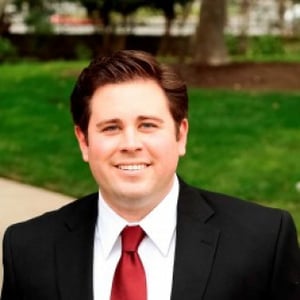
Managing Partner, Bigley Ranish, LLP
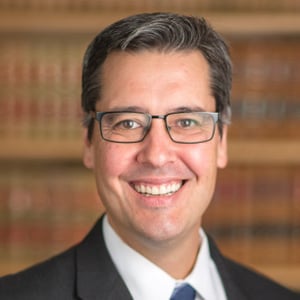
Sean M. Bigley is a national security attorney and managing partner of Bigley Ranish, LLP. Mr. Bigley’s practice primarily encompasses defending federal employees and contractors in security clearance denial cases. He also provides personnel security consulting to major international defense and aerospace corporations, and prosecutes intelligence community whistle-blower retaliation cases.
Since first opening his firm in 2013, Mr. Bigley has grown it from a solo practice to a five-attorney partnership with employees in three states. Bigley Ranish, LLP attorneys regularly appear before administrative tribunals at agencies ranging from the CIA to the Department of State, representing in excess of 200 American intelligence officers, diplomats, armed forces personnel, and other security clearance holders each year around the world. In 2016 alone, Mr. Bigley and his colleagues represented clients in roughly forty states and a dozen countries.
The idea for this unique practice was borne out of Mr. Bigley’s prior service as a federal background investigator. Prior to and during law school, Mr. Bigley was an investigator for the U.S. Office of Personnel Management, where he conducted some of that agency’s most sensitive security investigations in the Los Angeles metropolitan area. Mr. Bigley has also served on the faculty of Chapman University, teaching national security and criminal justice courses with an emphasis in U.S.-European security cooperation. Earlier in his career, Mr. Bigley worked for several years in the White House and Department of Homeland Security under President George W. Bush.
A recognized expert in national security law, Mr. Bigley’s commentary on the topic is frequently sought by major media outlets such as Fox News, The New York Times, and CNN. He is a contributing writer for Clearancejobs.com and GovExec.com.
Mr. Bigley earned his Juris Doctorate from Chapman University School of Law. He holds a Bachelor’s Degree from Washington D.C.’s American University and a Master’s Degree from Boston University.
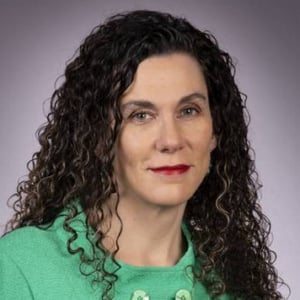
Associate Professor of Law, Center for Intellectual Property and Entrepreneurship, University of Missouri School of Law
Professor Lietzan researches, writes, and teaches primarily in the areas of food and drug regulation, intellectual property, and administrative law. Some of her recent scholarship has focused on the nature and purpose of the new drug approval system, federal regulation of fecal microbiota transplantation, federal regulation of products derived from cannabis, the political economy of the Hatch-Waxman (generic drug) statute, and incentives to study already approved drugs for new uses. She is an award-winning teacher, and she has been an elected member of the American Law Institute since 2006.
Professor Lietzan brings to her scholarship and teaching eighteen years of private practice experience, eight of them as a partner in the food and drug group at Covington & Burling in Washington, DC. In practice, she handled a wide range of complex legal problems and broader legislative and regulatory policy questions affecting FDA-regulated companies. This work included lifecycle management and strategy issues, regulatory strategy and advocacy, white collar defense, congressional investigations, briefing in products liability cases, and international regulatory policy work. She was involved in every major amendment to the Federal Food, Drug, and Cosmetic Act (FDCA) between 1997 and 2014 and was deeply immersed for more than a decade in the development of the Biologics Price Competition and Innovation Act of 2010. She has been consistently identified by her peers in private practice as a “Best Lawyer in America” in the categories of FDA law (since 2013) and Biotechnology Law (since 2007).
Professor Lietzan has held one leadership position or another at the Food and Drug Law Institute (FDLI) since 2004, including a stint on its Board of Directors from 2008 to 2012. She also held leadership positions in the American Bar Association’s Section of Science and Technology Law for fourteen years.
Professor Lietzan received a bachelor’s degree from the University of North Carolina, where she graduated with honors in history. She holds a master’s degree in history from UCLA and a law degree with high honors from Duke Law School.
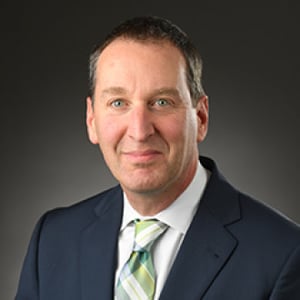
Professor of Law, Fordham University School of Law
Howard Erichson is one of the nation's leading experts on the procedure and ethics of complex litigation. Professor Erichson teaches Civil Procedure, Complex Litigation, Professional Responsibility, and Torts. He has published widely on such topics as class actions, mass tort litigation, aggregate settlements, and coordination among lawyers. He is the past chair of the Civil Procedure Section of the Association of American Law Schools and was an Advisor to the American Law Institute’s Principles of the Law of Aggregate Litigation. He is the author of the book Inside Civil Procedure and co-author of Complex Litigation. His articles have appeared in the Cornell Law Review, Michigan Law Review, University of Pennsylvania Law Review, and many other leading publications. Professor Erichson graduated from Harvard University and from New York University School of Law, where he was editor-in-chief of the Law Review. After law school, he clerked for the New Jersey Supreme Court and for the U.S. Court of Appeals for the Second Circuit, and he practiced as a litigator with Cleary Gottlieb Steen and Hamilton in New York City. In 1995, he joined the faculty of Seton Hall Law School, where he was elected Professor of the Year and was named the John J. Gibbons Professor of Law. He has been a Visiting Professor at Columbia Law School and a Visiting Scholar at NYU Law School. He joined the Fordham Law School faculty as Professor of Law in 2008, and was elected Teacher of the Year in 2012.
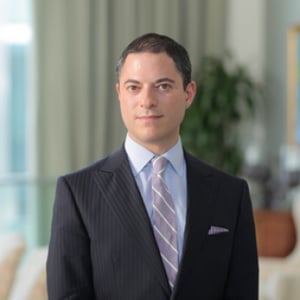
Partner, BakerHostetler, Adjunct Fellow, The Manhattan Institute
Andrew Grossman leads BakerHostetler’s Appellate and Major Motion team. He has appeared before the U.S. Supreme Court, nearly all the federal courts of appeals, as well as some state appellate courts, litigating high-profile and complex commercial, administrative and constitutional issues.
Andrew works with practice groups across BakerHostetler to identify and tackle complex issues, advise on administrative law and strategy, tee up issues for appeal and tackle appeals. He has developed and implemented litigation and administrative strategies for clients in several fields and industries.
In addition to his practice, Andrew advises members of Congress on matters of constitutional and administrative law, having testified more than a dozen times before the House and Senate Judiciary Committees. He has been a frequent legal commentator on radio and television, having appeared on Fox News, CNN, MSNBC, CNBC, NPR and its affiliates, CBN and elsewhere. His legal commentary has also appeared in dozens of magazines and newspapers, including The Wall Street Journal, USA Today, The Washington Post, The Washington Times and many others.
Andrew is a Senior Legal Fellow at the Buckeye Institute, an Adjunct Fellow the Manhattan Institute and a member of the leadership of the Federalist Society. He previously served as an adjunct scholar at the Cato Institute’s Robert A. Levy Center for Constitutional Studies and a legal fellow at the Heritage Foundation’s Meese Center for Legal and Judicial Studies. He clerked for Judge Edith H. Jones on the U.S. Court of Appeals for the Fifth Circuit.
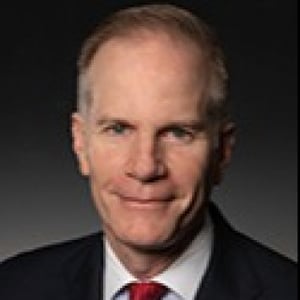
Partner, Duane Morris LLP
William M. (Bill) McSwain practices in the area of litigation with a focus on white-collar criminal matters, internal investigations and complex business litigation. Bill is the immediate past U.S. Attorney for the Eastern District of Pennsylvania (EDPA), which is one of the nation’s most populous districts, with nearly six million people residing within Philadelphia and its eight surrounding counties. As U.S. Attorney, he served as the chief federal law enforcement officer in the EDPA, responsible for all federal criminal prosecutions, investigations and civil litigation involving the United States. He supervised a staff of approximately 300, including more than 140 Assistant U.S. Attorneys, at offices in Philadelphia and Allentown, PA.
Most importantly, Bill is a fighter who knows how to win. For example, as U.S. Attorney, he personally served as lead counsel in United States v Safehouse, in which he challenged Philadelphia’s plan to be the first city in the country to open supervised heroin injection sites. He argued and won the case in the U.S. Court of Appeals for the Third Circuit, which ruled that such sites would violate the federal Controlled Substances Act.
A former U.S. Marine Corps infantry officer and scout/sniper platoon commander, Bill brings an aggressive and creative approach to private practice, representing clients involved in government investigations and high stakes litigation. In particular, he enjoys taking on the challenge of winning seemingly “impossible” cases. He has lived that mindset from the very outset of his legal career.
For example, prior to his service as U.S. Attorney, Bill took on the case of an Iranian immigrant, Ken Hamidi, who was locked in a battle with Intel over emails that Mr. Hamidi has sent to Intel employees. After Mr. Hamidi had lost his case in the trial and intermediate appellate courts with other counsel, Bill took over and argued the case in front of the Supreme Court of California. In Intel Corp. v. Hamidi, 30 Cal.4th 1342 (2003), he won a 4-3 decision that established the legal rules for trespass liability on the Internet, one of the most significant cyberlaw rulings in the United States. Soon thereafter, Bill represented Chester County, Pennsylvania in its dispute regarding the attempted removal of an historic Ten Commandments plaque hanging on the façade of the County Courthouse. After the County lost at trial with other counsel, Bill stepped in and argued the case in front of the U.S. Court of Appeals for the Third Circuit. In Chester County, PA v. Freethought Society, et al., 334 F.3d 247 (3d Cir. 2003), he won a 3-0 decision that preserved the plaque, which is hanging on the Courthouse to this day. In one of his most challenging assignments, Bill began representing the Boy Scouts in 2008 in its dispute with the City of Philadelphia. Facing eviction from its historic headquarters building, the Scouts sued the City, alleging a violation of their First Amendment rights. In Cradle of Liberty Council, Boy Scouts of America v. City of Philadelphia, No. 2:08-cv-02429-RB (E.D. Pa.), Bill won a nationally publicized, three-week jury trial, and even secured a court ruling that the City had to pay the Scouts’ attorney’s fees.
Bill understands that, in a very real sense, anybody or any organization squaring off against the government – especially against the federal government – is an underdog. Bill has a long record of success advocating for clients in those situations. For example, in United States v. Bruno, No. 2:13-cr-00039-LS-6 (E.D. Pa.), he represented a Pennsylvania judge against federal conspiracy, wire fraud and mail fraud charges and won a full acquittal after a two-month jury trial. In United States. v. Brown, No. 2:12-cr-00367-RBS-1 (E.D. Pa.), Bill represented a nationally renowned charter school educator who faced a massive 67-count indictment alleging conspiracy, wire fraud, obstruction of justice and witness tampering. After a two-month trial, the jury acquitted Bill’s client on several counts and deadlocked on the others. The government eventually withdrew all of the deadlocked charges.
His record in the courtroom notwithstanding, Bill is also a thoughtful, intellectually curious strategist who has resolved numerous contentious matters out of court on terms his clients found favorable. He is a graduate of Yale University (B.A., cum laude, 1991) and the Harvard Law School (J.D., 2000), where he was an editor of the Harvard Law Review, won the Ames Moot Court Competition and received the George Leisure Award as the Best Oralist in the Ames Competition. He is an adjunct lecturer in law at the University of Pennsylvania Law School. He began his legal career by clerking for the Hon. Marjorie O. Rendell, U.S. Circuit Judge of the U.S. Court of Appeals for the Third Circuit.
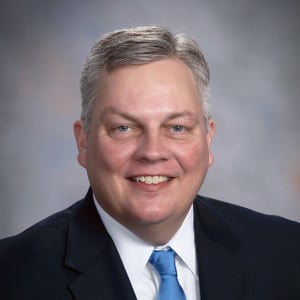
University Professor of Law and Religion and Director of the Eleanor H. McCullen Center for Law, Religion and Public Policy, Villanova University Charles Widger School of Law
Michael P. Moreland was appointed University Professor of Law and Religion and Director of the Eleanor H. McCullen Center for Law, Religion and Public Policy at Villanova University in 2017. Professor Moreland joined the Villanova faculty in 2006 and served as Vice Dean from 2012 to 2015. His research is primarily in the areas of torts, law and religion, constitutional law, and Catholic social thought, and he regularly teaches Torts, First Amendment, seminars in law and religion, and undergraduate courses in ethics.
Professor Moreland is the co-editor of Christianity and Private Law (Routledge, 2021), and his most recent publications include: “The Authority of Tradition: John Henry Newman and Legal Theory” in Christianity and the Making of Irish Law (Routledge, 2025); “Christianity and Torts” in The Oxford Handbook on Christianity and Law, (Oxford University Press, 2023); “Germaneness and Religious Liberty” in the Notre Dame Law Review (2023); “Contingency and Contestation in Christianity and Liberalism” in the Notre Dame Law Review (2023); “Friendship as the Primary Purpose of Law” in The American Journal of Jurisprudence 279 (2022); and “The Moral of Torts” (with Jeffrey Pojanowski) in Christianity and Private Law (Routledge, 2021).
Professor Moreland was a Visiting Professor of Law at the University of Notre Dame and the Mary Ann Remick Senior Visiting Fellow at the Notre Dame Center for Ethics and Culture from 2015 to 2017. He was the Forbes Visiting Fellow at Princeton University in the James Madison Program during academic year 2010-11. He has served as the project leader for grants from the John Templeton Foundation and the Charles Koch Foundation. He serves as the Chair of the Federalist Society’s Religious Liberties Practice Group Executive Committee and the Chair of the Board of Trustees of the Institute for Advanced Catholic Studies at the University of Southern California.
Professor Moreland received his BA in philosophy from the University of Notre Dame, his MA and PhD in theological ethics from Boston College, and his JD from the University of Michigan Law School. Following law school, Professor Moreland clerked for the Honorable Paul J. Kelly Jr., of the United States Court of Appeals for the Tenth Circuit and was an associate at Williams & Connolly LLP in Washington, DC, where he represented clients in First Amendment, professional liability, and products liability matters. Before coming to Villanova, he served as Associate Director for Domestic Policy at the White House under President George W. Bush, where he worked on a range of legal policy issues, including criminal justice, immigration, civil rights, and liability reform.
Temple University James E. Beasley School of Law

Senior Fellow and Director of Constitutional Studies, Manhattan Institute
Ilya Shapiro is a senior fellow and director of constitutional studies at the Manhattan Institute and a contributing editor of City Journal. Previously he was executive director and senior lecturer at the Georgetown Center for the Constitution, and before that a vice president of the Cato Institute.
Shapiro is the author of Lawless: The Miseducation of America’s Elites (2025) and Supreme Disorder: Judicial Nominations and the Politics of America’s Highest Court (2020), coauthor of Religious Liberties for Corporations? (2014), and editor of 11 volumes of the Cato Supreme Court Review (2008-18). He has contributed to a variety of academic, popular, and professional publications, including the Wall Street Journal, Harvard Journal of Law & Public Policy, Washington Post, Los Angeles Times, USA Today, National Review, and Newsweek. He also regularly provides commentary for various media outlets, writes the Shapiro’s Gavel newsletter on Substack, and once appeared on the Colbert Report.
Shapiro has testified many times before Congress and state legislatures and has filed more than 500 amicus curiae “friend of the court” briefs in the Supreme Court. He lectures regularly on behalf of the Federalist Society, is a member of the board of fellows of the Jewish Policy Center, was an inaugural Washington Fellow at the National Review Institute, and has been an adjunct law professor at the George Washington University and University of Mississippi. He is also the chairman of the board of advisers of the Mississippi Justice Institute, a barrister in the Edward Coke Appellate Inn of Court, and a former member of the Virginia Advisory Committee to the U.S. Commission on Civil Rights.
Earlier in his career, Shapiro was a special assistant/adviser to the Multi-National Force in Iraq on rule-of-law issues and practiced at Patton Boggs and Cleary Gottlieb. Before entering private practice, he clerked for Judge E. Grady Jolly of the U.S. Court of Appeals for the Fifth Circuit. He holds an AB from Princeton University, an MSc from the London School of Economics, and a JD from the University of Chicago Law School.
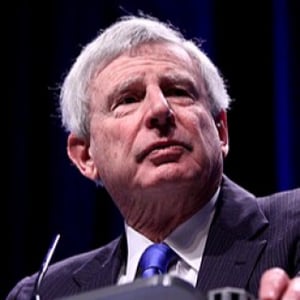
Senior Scholar, The Fund for American Studies
Donald J. Devine (born 1937) is an American political scientist and former government official, who has popularized fusionism as taught by Frank Meyer. He is associated to The Fund for American Studies and The Heritage Foundation. He is also a trustee of the Philadelphia Society.
Devine served as the Office of Personnel Management director of Ronald Reagan's first administration. During his tenure, he helped cut 100,000 federal jobs, and over $6 billion in benefits. He was labeled by The Washington Post as a "terrible swift sword of the civil service", by The New York Times as "the Grinch", and by Federal Times as the "Rasputin of the reduction in force".
Devine taught government and politics at the University of Maryland, and Western civilization at Bellevue University. He has written more than ten libertarian conservative books, and was a contributor to Project 2025.
Professor of Law, Case Western Reserve University School of Law
Professor Dent taught law at New York University, Cardozo, and the New York Law School before joining the faculty in 1990. Earlier he had clerked for Judge Paul R. Hays of the U.S. Court of Appeals, Second Circuit, and practiced corporate law in New York with Debevoise, Plimpton, Lyons & Gates. He teaches Business Associations, Mergers and Acquisitions, and Business Planning and is the faculty supervisor for the Business Organizations Concentration. He has published many articles on corporate and securities law, including “Academics in Wonderland: The Team Production and Director Primacy Models of Corporate Governance,” Houston Law Review (2008); “Corporate Governance: Still Broke, No Fix in Sight,” Journal of Corporation Law (2005); “Lawyers and Trust in Business Alliances,” Business Lawyer (2002); and “Gap Fillers and Fiduciary Duties in Strategic Alliances,” The Business Lawyer (2001). He also writes on law and religion, as in “Civil Rights for Whom: Gay Rights Versus Religious Freedom,” University of Kentucky Law Journal (2006-07); and “How Does Same-Sex Marriage Threaten You?,” Rutgers Law Review (2007). Mr. Dent serves as a director of the National Association of Scholars and as president of the Ohio Association of Scholars. He serves as an officer of Cleveland Chapter of the Federalist Society. He heads the Law Section of the Association for the Study of Free Institutions. He is chairman of the Ohio State Advisory Committee to the U.S. Commission on Civil Rights.
Associate Dean for Faculty; Charles W. Ebersold and Florence Whitcomb Ebersold Professor of Constitutional Law, The Ohio State University Mortiz College of Law
Professor Daniel Tokaji is an authority on the law of elections and democracy. He teaches courses on Election Law, Civil Rights, Civil Procedure, Comparative Law, Constitutional Law, Federal Courts, Legislation and Regulation, and the U.S. Legal System. His scholarship addresses questions of voting rights, racial justice, free speech, and the role of the courts in American democracy.
Professor Tokaji is the author of Election Law in a Nutshell (2d ed. 2016), and co-author of Election Law: Cases and Materials (6th ed. 2017) and The New Soft Money (2014). He has written numerous articles and book chapters on a wide variety of election and voting issues, including voting rights, voter ID, voter registration, redistricting, campaign finance regulation. Recent articles include “Gerrymandering and Association,” 59 William & Mary Law Review 2159 (2018), and “Denying Systemic Equality: The Last Words of the Kennedy Court,” 13 Harvard Law & Policy Review 539 (2019). His current research focuses on the challenges facing democracies around the globe, including the free speech issues surrounding digital disinformation and the need for trustworthy electoral institutions.
Media outlets frequently seek Professor Tokaji’s expertise on election and voting issues. He has been quoted in The New York Times, Los Angeles Times, The Columbus Dispatch, USA TODAY, and appeared on TODAY, FOX News, NBC News, and National Public Radio and many other media outlets.
A graduate of Harvard College and the Yale Law School, Professor Tokaji clerked for the Honorable Stephen Reinhardt of the U.S. Court of Appeals for the Ninth Circuit. Before arriving at Ohio State, he was a staff attorney with the ACLU Foundation of Southern California and Chair of California Common Cause.
Professor Tokaji has litigated many civil rights, civil liberties, and election law cases. He was lead counsel in a case that struck down an Ohio law requiring naturalized citizens to produce a certificate of naturalization when challenged at the polls. He also served as counsel in litigation challenging the state’s voting purges. He was also an attorney for plaintiffs in cases that kept open the window for simultaneous registration and early voting in Ohio’s 2008 general election, and that challenged punch-card voting systems in Ohio and California after the 2000 election.

A Modest Proposal for the Reduction of the Size of the Federal Judiciary by Two-Thirds
Brian M. Cogan
Note from the Editor: This is the first article in a new Commentary section in...
Fairness in Class Litigation Act
TeleforumTopics
Should Bar Disciplinary Committees Conduct Political Fact-Checking?
On February 20, fifteen law professors submitted a complaint to the D.C. bar seeking discipline...
Executive Power in the Age of Trump
Philadelphia, PennsylvaniaLunch with Ilya Shapiro
Montgomery, AlabamaPresidential Nominees and Foreign Influence: Mitigating National Security Risks
Sean M. Bigley
Note from the Editor: This article describes the procedures involved in determining whether to grant...
Lunch with Dr. Devine
Montgomery, AlabamaRegulating Attorney Speech: A Debate
Columbus, OhioJudicial Candidate Event
Seattle, WashingtonA Second Look at the CREATES Act: What’s Not Being Said
Erika Lietzan
Note from the Editor: This article critically discusses the CREATES Act, which is currently pending...