

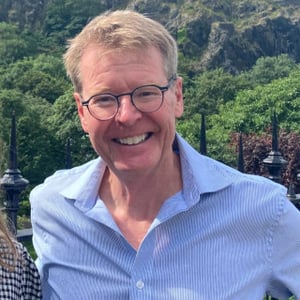
Dr. John Eastman is the former Henry Salvatori Professor of Law & Community Service and former Dean at Chapman University's Dale E. Fowler School of Law, where he had been a member of the faculty since 1999, specializing in Constitutional Law, Legal History, and Property. He is a founding director of the Center for Constitutional Jurisprudence, a public interest law firm affiliated with the Claremont Institute that he founded in 1999. He has a Ph.D. in Government from the Claremont Graduate School and a J.D. from the University of Chicago Law School, and a B.A. in Politics and Economics from the University of Dallas. He serves as the Chairman of the Board of the National Organization for Marriage.
Prior to joining the Chapman law faculty, Dr. Eastman served as a law clerk to the Honorable Clarence Thomas, Associate Justice, Supreme Court of the United States, and to the Honorable J. Michael Luttig, Judge, United States Court of Appeals for the Fourth Circuit and practiced law with the national law firm of Kirkland & Ellis. Dr. Eastman has also represented numerous clients in important constitutional law matters and has argued before the Supreme Court. On behalf of the Claremont Institute Center for Constitutional Jurisprudence, he has participated as amicus curiae before the Supreme Court of the United States, U.S. Courts of Appeals, and State Supreme Courts in more than one hundred cases of constitutional significance, including Boy Scouts of America v. Dale, Zelman v. Simmons-Harris (the school vouchers case), Kelo v. New London, Ct. (eminent domain), and Van Orden v. Perry (the 10 Commandments case). He has also appeared as an expert legal commentator on numerous television and radio programs, including C-SPAN, Fox News, PBS, NewsHour, and The O'Reilly Factor.
Distinguished University Chair and Professor of Law, University of St. Thomas School of Law
Michael Stokes Paulsen is Distinguished University Chair & Professor of Law at the University of St. Thomas, where he has taught since 2007. Professor Paulsen was previously the McKnight Presidential Professor of Law & Public Policy and Associate Dean at the University of Minnesota Law School, where he taught from 1991-2007. He is a graduate of Northwestern University, Yale Law School, and Yale Divinity School. He has served as a federal prosecutor, as Attorney-Advisor in the Office of Legal Counsel of the U.S. Department of Justice, and as counsel for the Center for Law & Religious Freedom.
Paulsen has taught as a visiting professor at Princeton University, Pepperdine University, Georgetown University, Bethel University, Uppsala University (Sweden), Daystar University (Kenya), and University of the Andes (Chile). He has been a guest lecturer at universities around the nation, including Harvard, Yale, Columbia, Princeton, Penn, NYU, Georgetown, Virginia, Stanford, Berkeley, Michigan, University of Chicago, and Northwestern.
Professor Paulsen is the author of more than ninety scholarly articles and book chapters on a wide variety of constitutional law topics, published in law journals including the Harvard Law Review, the Yale Law Journal, the Stanford Law Review, the University of Chicago Law Review, the Michigan Law Review, the Georgetown Law Journal, and the Northwestern University Law Review. He is the author or co-author of three books, including The Constitution: An Introduction (Basic Books, 2015) (co-authored with Luke Paulsen) and the casebook The Constitution of the United States, now in its fifth edition with Foundation Press, co-authored with Michael McConnell, Samuel Bray, and Will Baude.
Knights of Columbus Professor of Law and the Catholic Tradition, The Catholic University of America Columbus School of Law
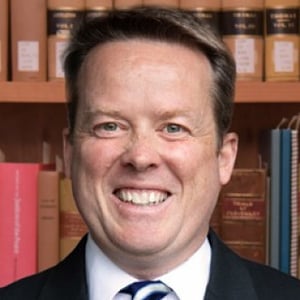
Kevin C. Walsh teaches and writes in the areas of federal jurisdiction, constitutional law, and the U.S. Supreme Court. His scholarship explores the doctrines that define—and delimit—the scope of federal judicial power.
Professor Walsh graduated from Harvard Law School, where he was Articles Chair for Volume 115 of the Harvard Law Review. After graduation, he clerked for Judge Paul V. Niemeyer of the United States Court of Appeals for the Fourth Circuit and Associate Justice Antonin Scalia of the Supreme Court of the United States. He then practiced law at Hunton & Williams LLP and taught as a visiting assistant professor at Villanova University School of Law. Walsh received his A.B. from Dartmouth College, and an M.A. in Theological Studies from the University of Notre Dame. He taught at the University of Richmond School of Law for thirteen years prior to joining The Catholic University of America, where he currently resides.
In early 2011, Professor Walsh filed two amicus curiae briefs addressing jurisdictional issues in the State challenges to the individual mandate in the federal healthcare reform legislation: a brief in Virginia v. Sebelius (United States Court of Appeals for the Fourth Circuit), and a brief in Florida v. HHS (United States Court of Appeals for the Eleventh Circuit).

Founding Partner, Boyden Gray & Associates
Ambassador C. Boyden Gray is the founding partner of Boyden Gray & Associates, a law and strategy firm in Washington, D.C., focused on constitutional and regulatory issues.
Mr. Gray worked in the White House for twelve years, first as counsel to the Vice President during the Reagan administration and then as White House Counsel to President George H.W. Bush. In the Reagan administration, he was Counsel to the Presidential Task Force on Regulatory Relief, for which he wrote the original Executive Order 12291 requiring cost-benefit analysis and White House review of regulations (later renumbered as current EO 12866). In the George H.W. Bush Administration, Mr. Gray was in charge of judicial selection and was also instrumental in the enactment of the Clean Air Act Amendments of 1990, the Energy Policy Act of 1992, and a cap-and-trade system for acid rain emissions. In 1993, he received the Presidential Citizens Medal. Under President George W. Bush, Mr. Gray was U.S. Ambassador to the European Union and U.S. Special Envoy to Europe for Eurasian Energy.
Mr. Gray practiced law for 25 years at the law firm of Wilmer, Cutler & Pickering and was chairman of the Administrative Law and Regulatory Practice Section of the American Bar Association from 2000 to 2002. Early in his career, Mr. Gray helped to develop the Business Roundtable and served as its first counsel. He is an adjunct professor at Antonin Scalia Law School and a former adjunct professor at NYU Law School (teaching energy and environmental law). Mr. Gray is on the Board of Directors of the Atlantic Council, the Federalist Society, Reason Foundation, and the Trust for the National Mall.
Mr. Gray earned his A.B. magna cum laude from Harvard, where he was an editor of the Crimson, and his J.D. with high honors from the University of North Carolina at Chapel Hill, where he was editor-in-chief of the Law Review. Mr. Gray served in the United States Marine Corps, and after law school, he clerked for Earl Warren, Chief Justice of the United States Supreme Court.
Harlan Fiske Stone Professor of Constitutional Law, Columbia Law School
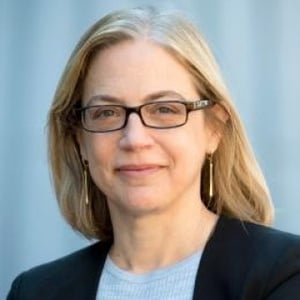
A leading administrative and constitutional law scholar, Gillian Metzger ’96 writes and teaches in the areas of administrative law, constitutional law, and federal courts, with an emphasis on federalism and privatization. In 2023-2024, she served as Acting Assistant Attorney General and Deputy Assistant Attorney General in the Office of Legal Counsel in the Department of Justice.
Metzger's recent work covers topics ranging from constitutional attacks on the administrative state to appropriations, administrative law under the Roberts Court, and the role of administrative agencies in a polarized world. In 2015, Metzger won the American Bar Association Administrative Law Section Annual Scholarship Award for “The Constitutional Duty to Supervise,” which examined presidential control and oversight of the modern administrative state. She is a co-editor of Gellhorn & Byse’s Administrative Law: Cases and Comments, 13th ed. (Foundation Press, 2023), a seminal administrative law casebook.
Professor Metzger was recently elected to the American Academy of Arts & Sciences and is a Senior Fellow of the Administrative Conference of the United States. In 2020, she was awarded Columbia University's Faculty Mentorship Award and in 2014, the Law School’s graduating class awarded Metzger the Willis L.M. Reese Prize for Excellence in Teaching, recognizing, among many other accomplishments, her commitment to mentoring new generations of law students.
In 2012, Metzger helped launch Columbia Law School’s Center for Constitutional Governance (CCG)—where she now serves as faculty director—a nonpartisan legal and policy organization devoted to the study of constitutional structure and authority. CCG brings together a diverse group of constitutional scholars to explore policy areas such as health care, civil rights, immigration, financial regulation, and national security.
Metzger also has co-authored and filed numerous amicus briefs in major constitutional and administrative law challenges before the Supreme Court and other courts. Most recently, Metzger filed a brief in Seila Law Center v. CFPB, a separation of powers challenge, and in Kisor v. Wilkie, a case involving judicial deference to agencies. She has also filed briefs in cases involving reproductive rights and the Affordable Care Act, among others.
Previously, Metzger served as vice dean of intellectual life at Columbia Law School. Before joining the Law School, she worked as an attorney with the Brennan Center for Justice. Metzger also clerked for U.S. Supreme Court Justice Ruth Bader Ginsburg ’59 and Judge Patricia M. Wald of the U.S. Circuit Court of Appeals for the District of Columbia. In 2018, Metzger moderated a panel discussion with Justice Ginsburg on impact litigation at Columbia Law School.

Partner, Baker Hostetler LLP
David Rivkin is a member of the firm's litigation, international and environmental teams and is co-leader of the firm's national appellate practice. He has extensive experience in constitutional, administrative and international law litigation and has been involved in numerous high-profile cases. With his prior experience in the government sector, David draws on a wealth of knowledge when providing compliance advice to companies and handling enforcement proceedings before government agencies on issues arising out of multilateral and unilateral sanctions, the Foreign Corrupt Practices Act (FCPA), anti-boycott issues, bankruptcy and financial fraud matters, and environmental and energy issues.
David has developed and implemented legislative, regulatory and litigation initiatives for two presidential administrations. Over the years, he has published hundreds of articles, op-eds, book reviews and book chapters on a variety of international, legal, constitutional, defense, arms control, foreign policy, environmental and energy issues for various newspapers and magazines, including The Wall Street Journal, The Washington Post, The New York Times, USA Today and The Los Angeles Times, and has been a frequent commentator and guest on TV and radio shows including ABC, CBS, NBC, CNN, Fox News, NPR and PBS.
Senior US District Judge, US District Court for the Southern District of New York

Laurence H. Silberman Chair in Constitutional Governance, American Enterprise Institute; Executive Director, Antonin Scalia Law School’s C. Boyden Gray Center for the Study of the Administrative State
Adam J. White is the Laurence H. Silberman Chair in Constitutional Governance and senior fellow at the American Enterprise Institute, where he focuses on the Supreme Court and the administrative state. He also directs the Antonin Scalia Law School’s C. Boyden Gray Center for the Study of the Administrative State.
He writes on regulation and constitutional government for a variety of publications. He practiced law in Washington, D.C., after clerking for the D.C. Circuit's Judge David Sentelle. He also has been chairman of the ABA's Administrative Law Section.
In 2021, he served on the Presidential Commission on the Supreme Court of the United States, where he criticized “Court packing” and other efforts to restructure the Supreme Court.

Agnes Williams Sesquicentennial Professor of Federal Courts, Georgetown Law
Stephen I. Vladeck is a professor of law at the Georgetown University Law Center, and is a nationally recognized expert on the federal courts; the Supreme Court; national security law; and military justice.
Vladeck is author of the New York Times bestselling book, “The Shadow Docket: How the Supreme Court Uses Stealth Rulings to Amass Power and Undermine the Republic,” which won the 2023 Writers’ League of Texas Book Award for Non-Fiction and was a finalist for the 2024 ABA Silver Gavel Award for Media and the Arts. Vladeck is also a highly regarded appellate advocate, having argued three cases before the U.S. Supreme Court and over a dozen before various lower federal civilian and military courts. He has received numerous awards for his influential and widely cited legal scholarship, his prolific popular writing, his teaching, and his service to the legal profession—including the 2024 University of Texas President’s Research Impact Award and his selection by the Order of the Coif to serve as its Distinguished Visiting Professor for 2025.
Vladeck is CNN’s Supreme Court analyst and editor and author of “One First,” a popular weekly newsletter about the Supreme Court. Together with Bobby Chesney, Vladeck co-hosts the popular and award-winning “National Security Law Podcast.” He is also a co-author of Aspen Publishers’ leading national security law and counterterrorism law casebooks. And he is a member of the Board of Trustees of EarthJustice—the nation’s premier nonprofit public interest environmental law organization.
Vladeck graduated from Yale Law School in 2004—where he was executive editor of the Yale Law Journal and won the Harlan Fiske Stone Prize for outstanding moot court oralist and shared the Potter Stewart Prize for best moot court team performance. After law school, he clerked for the Honorable Marsha S. Berzon on the U.S. Court of Appeals for the Ninth Circuit and the Honorable Rosemary Barkett on the U.S. Court of Appeals for the Eleventh Circuit. He earned a B.A. summa cum laude with Highest Distinction in History and Mathematics from Amherst College in 2001—where he wrote his senior thesis on “Leipzig’s Shadow: The War Crimes Trials of the First World War and Their Implications from Nuremberg to the Present.” A native New Yorker and hopeless Mets fan, Vladeck lives in the District with his wife, Karen (Founder and Managing Partner of Risepoint Search Partners); their daughters, Madeleine and Sydney; and their eleven-year-old pug, Roxanna.
Distinguished University Chair and Professor of Law, University of St. Thomas School of Law
Michael Stokes Paulsen is Distinguished University Chair & Professor of Law at the University of St. Thomas, where he has taught since 2007. Professor Paulsen was previously the McKnight Presidential Professor of Law & Public Policy and Associate Dean at the University of Minnesota Law School, where he taught from 1991-2007. He is a graduate of Northwestern University, Yale Law School, and Yale Divinity School. He has served as a federal prosecutor, as Attorney-Advisor in the Office of Legal Counsel of the U.S. Department of Justice, and as counsel for the Center for Law & Religious Freedom.
Paulsen has taught as a visiting professor at Princeton University, Pepperdine University, Georgetown University, Bethel University, Uppsala University (Sweden), Daystar University (Kenya), and University of the Andes (Chile). He has been a guest lecturer at universities around the nation, including Harvard, Yale, Columbia, Princeton, Penn, NYU, Georgetown, Virginia, Stanford, Berkeley, Michigan, University of Chicago, and Northwestern.
Professor Paulsen is the author of more than ninety scholarly articles and book chapters on a wide variety of constitutional law topics, published in law journals including the Harvard Law Review, the Yale Law Journal, the Stanford Law Review, the University of Chicago Law Review, the Michigan Law Review, the Georgetown Law Journal, and the Northwestern University Law Review. He is the author or co-author of three books, including The Constitution: An Introduction (Basic Books, 2015) (co-authored with Luke Paulsen) and the casebook The Constitution of the United States, now in its fifth edition with Foundation Press, co-authored with Michael McConnell, Samuel Bray, and Will Baude.
Knights of Columbus Professor of Law and the Catholic Tradition, The Catholic University of America Columbus School of Law
Kevin C. Walsh teaches and writes in the areas of federal jurisdiction, constitutional law, and the U.S. Supreme Court. His scholarship explores the doctrines that define—and delimit—the scope of federal judicial power.
Professor Walsh graduated from Harvard Law School, where he was Articles Chair for Volume 115 of the Harvard Law Review. After graduation, he clerked for Judge Paul V. Niemeyer of the United States Court of Appeals for the Fourth Circuit and Associate Justice Antonin Scalia of the Supreme Court of the United States. He then practiced law at Hunton & Williams LLP and taught as a visiting assistant professor at Villanova University School of Law. Walsh received his A.B. from Dartmouth College, and an M.A. in Theological Studies from the University of Notre Dame. He taught at the University of Richmond School of Law for thirteen years prior to joining The Catholic University of America, where he currently resides.
In early 2011, Professor Walsh filed two amicus curiae briefs addressing jurisdictional issues in the State challenges to the individual mandate in the federal healthcare reform legislation: a brief in Virginia v. Sebelius (United States Court of Appeals for the Fourth Circuit), and a brief in Florida v. HHS (United States Court of Appeals for the Eleventh Circuit).

Special Counsel, Hunton Andrews Kurth
After serving on the United State Court of Appeals for the D. C. Circuit from 2005, Judge Griffith stepped down from the bench in 2020. Currently he is a Lecturer on Law at Harvard Law School, a Fellow at the Wheatley Institute at Brigham Young University, and Special Counsel in the Washington, DC office of the law firm of Hunton Andrews Kurth. Most recently, he was a member of President Biden's Commission on the Supreme Court. He is the author of Civic Charity and the Constitution , and the co-author, along with former judges Michael Luttig and Michael McConnell, of Lost, Not Stolen: The Conservative Case that Trump Lost and Biden Won the 2020 Presidential Election. https://lostnotstolen.org/ . Before being appointed to the D. C. Circuit, Judge Griffith was the General Counsel at BYU; Senate Legal Counsel, the non-partisan chief legal officer of the U. S. Senate; and a partner at Wiley, Rein & Fielding. Long active in rule-of-law programs in former communist nations, Judge Griffith is a member of the international advisory board of the CEELI Institute in Prague. He is a graduate of BYU and the University of Virginia School of Law and is a member of the American Law Institute.
Senior Fellow, Manhattan Institute
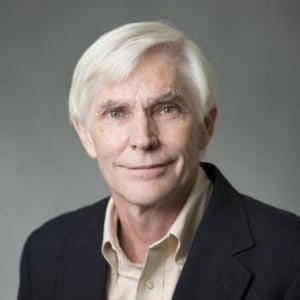
Peter Huber, who died in 2021, was a senior fellow at the Manhattan Institute, where he wrote on drug development, energy, technology, and the law. He was the author of The Cure in the Code: How 20th Century Law Is Undermining 21st Century Medicine (2013); The Bottomless Well: The Twilight of Fuel, the Virtue of Waste, and Why We Will Never Run Out of Energy (2005), coauthored with Mark P. Mills, which Bill Gates said “is the only book I’ve ever seen that really explains energy, its history and what it will be like going forward”; and Hard Green: Saving the Environment from the Environmentalists (2000), which William F. Buckley, Jr., called “the richest contribution ever made to the greening of the political mind” and which set out a new conservative manifesto on the environment that advocates a return to conservation and environmental policy based on sound science and market economics.
Huber’s other books included Judging Science: Scientific Knowledge and the Federal Courts (1999), Law and Disorder in Cyberspace: Abolish the FCC and Let Common Law Rule the Telecosm (1997), Orwell’s Revenge: The 1984 Palimpsest (1994), Galileo’s Revenge: Junk Science in the Courtroom (1991), and Liability: The Legal Revolution and Its Consequences (1988). He published articles in scholarly journals, such as the Harvard Law Review and Yale Law Journal, and in such publications as Science, Wall Street Journal, Reason, Regulation, and National Review. He appeared on numerous TV and radio programs, including Face the Nation and The NewsHour with Jim Lehrer.
Before joining MI, Huber was an associate professor at MIT. He clerked on the D.C. Circuit Court of Appeals for Ruth Bader Ginsburg and on the U.S. Supreme Court for Sandra Day O’Connor. Huber was a partner at the Washington, D.C., law firm Kellogg, Huber, Hansen and Todd. He held a J.D. from Harvard University and a Ph.D. in mechanical engineering from MIT.

Special Counsel, Irell & Manella LLP
Lindsay Kelly is Special Counsel in the Los Angeles office of Irell & Manella LLP. Ms. Kelly's practice encompasses complex commercial litigation, including patent litigation, at both the trial court and appellate levels, as well as government investigations and white collar criminal defense.
Prior to joining Irell, Ms. Kelly was an Assistant United States Attorney in the Eastern District of Virginia, where she specialized in intellectual property and computer crimes. During her time as a prosecutor, Ms. Kelly served as lead counsel or co-counsel on five trials, including four jury trials, was lead author of several appellate briefs, and argued before the U.S. Court of Appeals for the Fourth Circuit. Ms. Kelly also presented on trademark counterfeiting at training sessions for federal agents and prosecutors, and received awards from the heads of several government agencies and Inspectors General offices.
Previously, Ms. Kelly practiced at Kellogg, Huber, Hansen, Todd, Evans & Figel PLLC in Washington, D.C., where she worked on complex commercial litigation, internal corporate investigations, and matters before the U.S. Supreme Court. At her previous firm, Ms. Kelly served as co-counsel on two trials and was a team member on a large patent infringement jury trial.
Ms. Kelly served as a law clerk to Chief Judge Paul R. Michel of the U.S. Court of Appeals for the Federal Circuit. Prior to law school, Ms. Kelly worked as a strategic management consultant. Ms. Kelly is also a Chartered Financial Analyst (CFA).
Partner, Covington & Burling LLP
Gerald Masoudi is a partner in the firm’s Washington, DC office and co-chair of the Food and Drug practice group.
Before joining Covington in 2009, Mr. Masoudi served as Chief Counsel of the Food and Drug Administration. In that capacity he was responsible for supervising FDA’s involvement in civil and criminal litigation and investigations; providing legal review of warning letters, guidances and regulations; and providing advice to the FDA commissioner and senior leadership on matters relating to the products regulated by FDA. Before joining the FDA, Mr. Masoudi served as Deputy Assistant Attorney General for international, policy and appellate matters in the Antitrust Division at the Department of Justice. He also served as Principal Deputy Chief Counsel for the FDA in 2004 and 2005. Before entering government service, Mr. Masoudi had a decade of experience in private practice in the areas of antitrust, telecommunications, patent law and energy.

Thomas M. Siebel Senior Fellow, The Hoover Institution, Stanford University; Gary T. Schwartz Distinguished Professor of Law Emeritus, UCLA School of Law
Eugene Volokh is the Thomas M. Siebel Senior Fellow at the Hoover Institution (Stanford), as well as the Gary T. Schwartz Distinguished Professor of Law Emeritus and Distinguished Research Professor at UCLA School of Law. He recently retired from teaching at UCLA, after 30 years there, and is now focusing on research.
Volokh is the author of the textbooks The First Amendment and Related Statutes (8th ed. 2023), and Academic Legal Writing (5th ed. 2016), as well as over 100 academic law journal articles, mostly on First Amendment law. He is a member of The American Law Institute; the editor-in-chief of the Journal of Free Speech Law; and the creator and coauthor of The Volokh Conspiracy, a leading legal blog founded in 2002 (hosted at the Washington Post from 2014 to 2017 and now at Reason Magazine).

Judge, United States Court of Appeals, Ninth Circuit
Judge Carlos Bea serves as a judge on the United States Court of Appeals for the Ninth Circuit. He received his Bachelor's Degree from Stanford University in 1956 and his J.D. from Stanford Law School in 1958. Judge Bea was born in San Sebastian, Spain, and immigrated with his family to Cuba in 1939. In 1952, he represented Cuba on the Cuban National basketball team in the Helsinki Olympics. Judge Bea became a naturalized citizen of the United States in 1958. He engaged in private practice in San Francisco, principally in the area of civil trials (jury and non-jury), from 1959-75 at Dunne, Phelps & Mills and from 1975-90 at Carlos Bea, A Law Corporation. He taught courses in civil litigation advocacy at Hastings College of Law and Stanford Law School. From 1990 to 2003, Judge Bea served as a judge of the San Francisco Superior Court. He was nominated by President George W. Bush to the United States Court of Appeals for the Ninth Circuit and was confirmed in 2003.
Judge Bea and his wife Louise reside in San Francisco, where they raised their four sons, Sebastian, Alexander, Nicholas, and Dominic.
Member, NLRB
Bill works with a broad range of clients, including trade associations, hospitals and other health care institutions, school districts, transportation and logistics companies and manufacturing companies.
He is a member of Littler Mendelson's Traditional Labor Practice Group and editor of the firm's traditional labor blog, Labor Relations Counsel. He also authored several amicus curiae briefs on behalf of trade associations in cases challenging state laws that allow labor unions to trespass on the private property of employers, including a landmark case now pending at the California Supreme Court.
Chief Economist and Head of Analytics, Trulia
As chief economist and head of analytics, Jed oversees Trulia’s research programs. Applying a background in economic development and research methods, he transforms real estate data, economic trends and public policy debate into digestible insights for home buyers, sellers and renters.
In Jed’s prior role as associate director and research fellow at the Public Policy Institute of California, he led research projects and advised policymakers and business leaders on economic, housing and technology policies. Before his work at PPIC, Jed directed Forrester Research’s consumer-technology market research, advising corporate executives on technology adoption and demand. Jed has also held positions at the Office of Federal Housing Enterprise Oversight (now FHFA), the World Bank and the Progressive Policy Institute.
Jed earned his bachelor’s degree in social studies and his doctorate in economics at Harvard University.

Co-Chairman, The Federalist Society for Law and Public Policy Studies
Leonard is Co-Chairman and former Executive Vice President of the Federalist Society, joining the organization over 25 years ago. Since that time he has been instrumental in helping the organization top 70,000, focusing on the growth of lawyers membership, operations and activities advancing limited, constitutional government. In addition to his work at the Society, Leonard has advised President Trump on judicial selection, assisted with the Gorsuch and Kavanaugh Supreme Court selection and confirmation process, and served as a member of the transition team. He also organized the outside coalition efforts in support of the Roberts and Alito U.S. Supreme Court confirmations. Leonard was appointed by President George W. Bush to three terms to the U.S. Commission on International Religious Freedom as chairman. He was also a U.S. Delegate to the UN Council and UN Commission on Human Rights during the Bush Administration. Leonard was the recipient of the 2009 Bradley Prize, along with the other founders and directors of the Federalist Society, for his work in advancing freedom and the rule of law. He is the coeditor of Presidential Leadership: Rating the Best and the Worst in the White House, as well as the author of opinion editorials in the New York Times,The Wall Street Journal, and Washington Post. Leonard holds degrees from Cornell University and Cornell Law School. He presently resides in Northern Virginia, where he and his wife Sally have raised their seven children.
Attorney, Spiro Moss LLP
Mr. Leviant is a civil litigation attorney with over 11 years of experience (10 as an attorney) handling complex and class action matters. Over the last five years, Mr. Leviant litigated class actions at several large plaintiffs' firms. Before that, Mr. Leviant worked at the small civil litigation firm Stanbury & Fishelman, Inc., where he handled increasingly sophisticated matters, including complex commercial litigations, class actions, appellate matters and civil trials.
Mr. Leviant has obtained several published appellate decisions, including Ghazaryan v. Diva Limousine, Ltd. 169 Cal. App. 4th 1524 (2009), which reversed a denial of class certification and obtained an Order of the Court of Appeal directing certification of the proposed class, Laliberte v. Pacific Mercantile Bank, 147 Cal. App. 4th 1 (2007), which reversed an adverse trial court ruling and reaffirmed the expansive nature of the “community of interest” concept in California class actions, andJohnson v. Glaxosmithkline, Inc., 166 Cal. App. 4th 1497 (2008), as modified (October 14, 2008), rev. denied, which reversed an adverse trial court ruling and questioned the rationale and viability of Alvarez v. May Dept. Stores Co., 143 Cal. App. 4th 1223 (2006).
Mr. Leviant is also the founder, primary author and Editor-in-Chief of The Complex Litigator, a legal blog focusing on developments in the areas of class action practice, complex litigation, and technology for small firms. In addition to his blog, Mr. Leviant has authored or co-authored various published articles.
Mr. Leviant is in his third year of service on the Board of Governors for the Consumer Attorneys of California.
Mr. Leviant is admitted to practice before the United States Supreme Court, the United States Court of Appeals for the Eighth and Ninth Circuits, the United States District Courts for the Central, Southern and Northern Districts of California and all California Courts.
Mr. Leviant received his undergraduate degree from Occidental College. Graduating cum laude, Mr. Leviant majored in economics and received a “minor” emphasis in mathematics. Along with his study of economics and mathematics, he also had an emphasis in physics. This combination of scientific and economic education has been of assistance during his litigation of complex civil actions. Mr. Leviant received his law degree from the University of Southern California Law Center.
Partner, Irell & Manella LLP
David Schwarz is a member of the litigation practice group. Although he has represented clients in a broad range of complex commercial disputes and internal investigations, a primary focus of Mr. Schwarz's practice has been the defense of class actions, with emphasis on securities and shareholder claims against public corporations and parallel SEC investigations and enforcement actions. He has litigated a wide range of federal and state class actions alleging anti-discrimination claims, unfair labor practices, wage-and-hour disputes, anti-trust and unfair business claims.
Mr. Schwarz’s appellate experience in state and federal courts is extensive, and includes two matters now before the California Supreme Court, as well as numerous appeals pending in the U.S. Court of Appeals for the Ninth Circuit and in the California Courts of Appeal. His current representations include the successful defense of Gerawan Farming, Inc., the nation’s largest grower of peaches, in two precedent-setting constitutional challenges to the compulsory arbitration procedures under the California Agricultural Labor Relations Act (ALRA). He also represents the City of San Jose in appellate proceedings challenging the constitutionality of the City’s 2012 landmark pension reform referendum.
Recognized as a leading trade secrets litigator by The Legal 500, Mr. Schwarz has litigated numerous cases involving idea submission and trade secret mis-appropriation in industries ranging from avionics and rocket propulsion systems to consumer goods and food processing techniques. Prior representations include Space Exploration Technologies Corporation ("SpaceX"), Eclipse Aviation, Pacific Scientific Aerospace, Marquez Brothers International, Williams-Sonoma, and Pottery Barn.
Mr. Schwarz also represents clients in matters relating to IP disputes, involving patent infringement and patent licensing, trademarks and copyright. In the area of trademarks, recent representative matters include KFC National Council and Advertising Cooperative, Inc. v. KFC Corporation (Delaware Court of Chancery), in which Mr. Schwarz successfully defended KFC Corp.'s right to maintain control over brand advertising funded through a Delaware corporation jointly managed by KFC franchisees and the company.
Mr. Schwarz has written on a variety of topics relating to securities litigation, securities reform legislation, white-collar criminal defense, and the defense of attorneys, accountants, and other professionals in securities class actions. Past speaking engagements include the Practicing Law Institute, the California Society of CPAs, and the Class and Derivative Litigation Institute. He served as a member of the Advisory Board of the Duke University Global Capital Markets Center and was a featured panelist at the Directors' Education Institute at Duke University and the Smith School of Business Corporate Governance Program (University of Maryland).
Mr. Schwarz also served as the Special Assistant to the Staff Director of the United States Commission on Civil Rights. Following graduation from Duke University School of Law, Mr. Schwarz clerked for the Honorable Alex Kozinski, former Chief Judge of the United States Court of Appeals for the Ninth Circuit, after which he served as Special Assistant to the Honorable Morris B. Abram, the United States Permanent Representative to the European Office of the United Nations and Other International Organizations. In that capacity, Mr. Schwarz advised U.S. delegations on a wide range of public international law issues. He also served as U.S. Delegate to a number of International and United Nations conferences, including the United Nations Human Rights Commission, the World Intellectual Property Conference, and the International Labor Conference.
Mr. Schwarz was appointed in 2001 by President George W. Bush as U.S. Delegate to the United Nations Human Rights Commission. He is also a former Trustee of the Washington Institute for Near East Policy.
Mr. Schwarz served two terms (2007-2016) as a gubernatorial appointee and Vice-Chairman of the Milton Marks "Little Hoover" Commission on California State Government Organization and Economy, an independent, bi-partisan government oversight board.
Mr. Schwarz is former chair and currently a member of the Firm's Pro Bono Committee. Public Counsel named him its "Advocate of the Year" for his work in the area of elder law advocacy. Mr. Schwarz is also a member of the Board of Directors of the Los Angeles Metropolitan Debate League, which is focused on bringing competitive debate to inner-city schools, and serves on the board of LDOS Media Lab, a non-profit whose mission is the development of science curriculum in public schools.
Executive Director of Advocacy, First Liberty Institute

Robert E. Scott Distinguished Professor of Law Emeritus, University of Virginia School of Law; Alice McKean Young Regents Chair in Law Emeritus, University of Texas
Douglas Laycock is perhaps the nation’s leading authority on the law of religious liberty and also on the law of remedies. He has taught and written about these topics for more than four decades at the University of Chicago, the University of Texas, the University of Michigan and the University of Virginia. He retired from teaching at UVA Law School in May 2023.
Laycock has testified frequently before Congress and has argued many cases in the courts, including the U.S. Supreme Court, where he has served as lead counsel in six cases and has also filed influential amicus briefs. He is the author (co-author in the most recent edition) of the leading casebook Modern American Remedies, the award-winning monograph The Death of the Irreparable Injury Rule and many articles in leading law reviews. He co-edited a collection of essays, Same-Sex Marriage and Religious Liberty.
His many writings on religious liberty have been republished in a five-volume collection:
Laycock resigned from the council and as first vice president of the American Law Institute to become co-reporter for the Restatement (Third) of Torts: Remedies. He is a fellow of the American Academy of Arts and Sciences. He earned his B.A. from Michigan State University and his J.D. from the University of Chicago.
Executive Director, Americans United for Separation of Church and State
Senior Legal Counsel, Alliance Defense fund
Dean and Professor of Law, University of Maryland Francis King Carey School of Law

The October 2015 Term of the Supreme Court and the Legacy of Justice Antonin Scalia
Jacksonville, FloridaArticle III Standing and the Texas Immigration Case - Podcast
Adam White, Stephen I. Vladeck
The Supreme Court will soon decide whether to hear a challenge by Texas (and 25...
The Constitution: An Introduction - Podcast
Michael Stokes Paulsen, Kevin C. Walsh
In their new book, The Constitution: An Introduction, constitutional scholar Michael Stokes Paulsen and his...
The Constitution: An Introduction
TeleforumPanel III: Innovation and Health Care
Thomas B. Griffith, Peter Huber, Lindsay Kelly, Gerald Masoudi
Given that everyone is getting older and more prone to disease, medical innovation is one...
Reception with Boyden Gray
Washington, District of ColumbiaWriting Law Review Articles
Eugene Volokh
On March 3, 2012, Prof. Eugene Volokh of UCLA School of Law delivered a lecture...
California in Crisis: Are People and Jobs Leaving for Better Pastures?
Carlos T. Bea, William J. Emanuel, Jed Kolko, Leonard A. Leo, Scott Leviant, David A. Schwarz, Kate Comerford Todd
Much has been written lately about companies’ unwillingness to invest or create new jobs in...
Is Government Health Care Constitutional?
New York City Lawyers Chapter
New York, NYPolitics in the Pulpit
Benjamin W. Bull, Steffen N. Johnson, Douglas Laycock, Barry W. Lynn, Erik Stanley, Donald B. Tobin
In 1954, Senator Lyndon B. Johnson of Texas introduced legislative language that changed the IRS...