

Tammy McCutchen is a leading authority on federal and state wage-hour laws and prevailing wage laws. She counsels businesses on wage-hour compliance, including conducting internal audits on independent contractor status, overtime exemptions, and other pay practices. She also represents employers during investigations by the U.S. Department of Labor and serves as an expert witness in wage-hour class actions. She was a founding officer of ComplianceHR, a law and technology company, where she created AI-based applications to evaluate independent contractor and overtime exempt status.
Ms. McCutchen served as Administrator of the U.S. Department of Labor’s Wage and Hour Division, appointed by President Bush and confirmed by the Senate in 2001. She was the primary architect of the 2004 revisions to the overtime exemption regulations, the first major changes to the regulations in 55 years.
Before joining DOL, she was senior counsel for the Hershey Company in Hershey, Pennsylvania.
Ms. McCutchen has been a volunteer leader of the Federalist Society since 1989. She served in leadership roles for the Northwestern Student Chapter and Chicago Lawyers Chapter. She currently serves in leadership for the Labor & Employment Practice Group, the Regulatory Transparency Project, and the Knoxville, TN Lawyers Chapter. She served on the Editorial Advisory Board of Law360, the Labor Committee of the U.S. Chamber of Commerce, the Small Business Legal Advisory Board of the National Federation of Independent Business, and a Policy Fellow at the ACU Foundation.
Ms. McCutchen is a graduate of Western Illinois University and Northwestern University School of Law. She clerked for the Hon. Daniel Manion on the U.S. Court of Appeals for the Seventh Circuit.
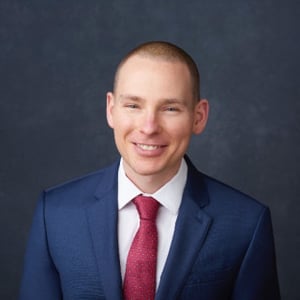
Shareholder & Co-Chair of the Workplace Policy Institute, Littler Mendelson P.C.
Alexander T. MacDonald advises employers on all aspects of the employment and labor landscape, focusing on emerging legislation and regulation. He has extensive experience advising businesses on worker classification, arbitration, the administrative and regulatory process, and the future of work. He frequently writes, publishes, and speaks on these subjects. His work has been cited by scholars and appellate courts. He is a recognized voice for the management perspective.
Alexander is a co-chair of the Workplace Policy Institute (WPI) team. With WPI, he advises employers on legislative, administrative, and regulatory developments at the state and federal level. He advocates for employers in the regulatory and administrative process. He also helps employers protect their businesses by understanding and anticipating cutting-edge legal developments.
Alexander also has extensive experience in traditional labor law. He represents management in all aspects of labor-management relations, including unfair labor practice charges, grievance arbitrations, representation elections, contract negotiations, and related litigation, including litigation in the U.S. courts of appeals.
Before joining Littler, Alexander served as the director, future of work, for a major technology company. He also worked in a national labor and employment law firm and a major public-sector general counsel’s office. He was a law clerk to the senior judges in the District of Columbia Court of Appeals.
He is also a veteran of the U.S. Air Force. He served in Operations Enduring Freedom and Iraqi Freedom. In law school, he graduated first in his class
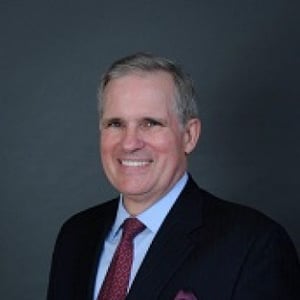
Mr. Fortney is a co-founder of Fortney & Scott, LLC, a Washington, D.C.-based law firm counseling and advising clients on the full spectrum of work-place related matters, including employment discrimination and labor matters, compliance programs, government contracting, international dispute resolution and counseling matters, and developing strategies for avoiding or responding to workplace-related crises.
Mr. Fortney has a broad-based practice representing and counseling employers and executives in employment and labor matters, including equal employment opportunity requirements, wage and hour matters, federal contractor's affirmative action and non-discrimination obligations, collective bargaining, and workplace health and safety. He brings experience from the public and private sectors in advising clients on these issues, and he frequently represents clients before federal and state agencies, including the U.S. Department of Labor's agencies, the Equal Employment Opportunity Commission, and the National Labor Relations Board.
Mr. Fortney has been widely recognized for his professional accomplishments, including being named one of the leading employment lawyers in Washington, D.C. by the CHAMBERS USAsurvey of America’s Leading Lawyers for Business in all years from 2005 through 2015. He was selected for inclusion in the 2008 through present editions of The Best Lawyers in America, Washington D.C.’s, Washington D.C.’s Best Lawyers, and Super Lawyers. Mr. Fortney was also awarded an AV rating (the highest level) by Martindale-Hubbell.
Before co-founding the firm, Mr. Fortney previously served as the chief legal officer of the U.S. Department of Labor in Washington, D.C. during the term of President George H.W. Bush. As Acting Solicitor of Labor, he was responsible for enforcing over 140 laws regulating the nation's workplaces and managing an agency with 800 attorneys and support staff. He advised Secretaries of Labor Elizabeth Dole and Lynn Martin and the Department of Labor agencies on a broad range of legal, policy, legislative, regulatory and enforcement issues.
Mr. Fortney has testified before the U.S. Congress on several occasions and a state legislative committee on wage and hour matters.
Mr. Fortney is a frequent lecturer and writer on employment-related topics, including appearances on CNN, CBS and Fox News. Mr. Fortney is the co-editor of the Federal Employment Law Insider monthly newsletter, Chapter Editor of The Family and Medical Leave Act (2006) published by BNA Books, co-author of the Military Leave Compliance Kit (2001), published by M. Lee Smith Publishers, and lead author of the Guide to Employee Leave(1997), published by Warren, Gorham & Lamont.
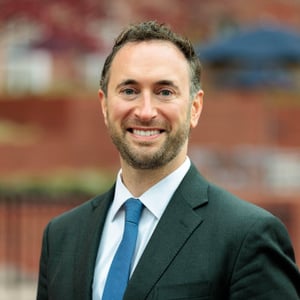
Associate Dean for Academic Affairs, The George Washington University Law School
Aram A. Gavoor is the Associate Dean for Academic Affairs and an internationally recognized scholar in American administrative law, national security, and federal courts. His co-authored work was cited by the U.S. Supreme Court in Department of Commerce v. New York (2019). His scholarship has earned placement in the Florida Law Review, Indiana Law Journal, Ohio State Law Journal, and other law journals. He has briefed and argued over a dozen high-profile public law cases before a majority of the U.S. Courts of Appeals and numerous cases before almost a third of the 94 U.S. District Courts. Associate Dean Gavoor frequently shares his national security, artificial intelligence policy, and federal courts expertise with international news media, including CNN, BBC World News, Wall Street Journal, NBC News, and ABC (Australia) World News. In 2021, the National Law Journal named Associate Dean Gavoor a Rising Star (top 40 under 40) honoree.
Earlier in his career, Associate Dean Gavoor served as Senior Counsel for National Security in the Civil Division of the U.S. Department of Justice, as third-in-rank Counselor to the Administrator of the Office of Information and Regulatory Affairs in the White House Office of Management and Budget, and in private practice. He received the Attorney General's Award for Distinguished Service in 2019, the Civil Division Special Commendation Award in 2020, 2019, and 2018, and a Commendation from the Human Rights and Special Prosecutions Section of the Criminal Division in 2018.
Associate Dean Gavoor previously served on the law school’s part-time faculty from 2008-2017 before accepting a term-limited position as Visiting Associate Professor from 2017-2019. He received GW Law’s Distinguished Adjunct Faculty Teaching Award from the 2020 and 2017 graduating classes. He currently teaches Constitutional Law II, Administrative Law, National Security Law, and Federal Courts.
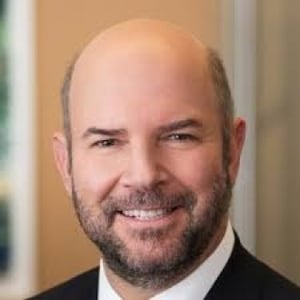
Partner, Morgan, Lewis & Bockius LLP
Philip A. Miscimarra is the former Chairman of the National Labor Relations Board (NLRB). Phil leads the firm’s NLRB special appeals practice and is co-leader of Morgan Lewis Workforce Change, which manages all employment, labor, benefits, and related issues arising from mergers, acquisitions, startups, workforce reductions, and other types of business restructuring. He represents clients on a wide range of labor and employment issues, with a focus on labor-management relations, business acquisitions and restructuring, and employment litigation. Phil is also a Senior Fellow at the University of Pennsylvania's Wharton School and the Wharton Center for Human Resources. He is admitted in Illinois only, and his practice is supervised by DC Bar members.
Phil was named Chairman of the NLRB by President Donald J. Trump on April 24, 2017, after previously serving as Acting Chairman and a Board Member. He was appointed to the NLRB by President Barack Obama on April 9, 2013, and was approved unanimously by the Senate Committee on Health, Education, Labor, and Pensions on May 22, 2013. He was confirmed by voice vote in the US Senate on July 30, 2013, and served from August 7, 2013, to December 16, 2017. Upon the completion of his term, Phil served on the NLRB longer than 26 other board members over the past 30 years.
Phil is the author or co-author of several books involving labor law issues, including The NLRB and Managerial Discretion: Subcontracting, Relocations, Closings, Sales, Layoffs, and Technological Change (2d ed. 2010) (by Miscimarra, Turner, Friedman, Callahan, Conrad, Lignowski and Scroggins); The NLRB and Secondary Boycotts (3d ed. 2002) (by Miscimarra, Berkowitz, Wiener and Ditelberg); and Government Protection of Employees Involved in Mergers and Acquisitions (1989 and 1997 supp.) (by Northrup and Miscimarra); and other publications. He has also testified on labor and employment law issues in the United States Congress.
Chambers USA named Phil one of the leading lawyers for employment law in the United States from 2004 to 2012, based on the views of clients, peers, and other industry professionals. He has been described as a "fantastic lawyer" and "prolific writer," with clients admiring his "multilayered abilities and business savvy" and his "high level of integrity."
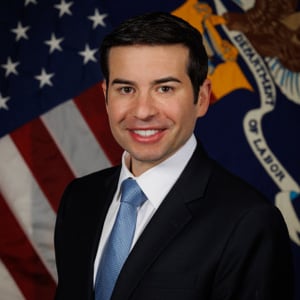
Deputy Secretary of Labor, U.S. Department of Labor
Keith E. Sonderling was confirmed by the U.S. Senate on March 12, 2025 to be the 38th United States Deputy Secretary of Labor.
As the United States Deputy Secretary of Labor, Sonderling is the second-highest-ranking official and serves as the Department's Chief Operating Officer, overseeing the agency’s $14 billion dollar budget and 16,000 employees. The Deputy Secretary oversees key operational functions such as: strategic planning; budget formulation; financial management; information technology; and human resource management. Additionally, the Deputy Secretary provides the leadership and management of DOL’s agencies necessary to support the Secretary and the Department’s mission.
Prior to becoming Deputy Secretary, he was previously confirmed by the United States Senate to serve as the Commissioner of the U.S. Equal Employment Opportunity Commission (EEOC) from September 2020 until August 2024. He also served as the Commission’s Vice-Chair from 2020-2021.
During his tenure at the EEOC, one of Sonderling’s highest priorities was ensuring that artificial intelligence and workplace technologies are designed and deployed consistent with long-standing laws. He published numerous articles on the benefits and potential harms of using artificial intelligence-based technology in the workplace and spoke globally on artificial intelligence’s impact on the workplace.
Sonderling previously served at the US Department of Labor as the Acting and Deputy Administrator of the U.S. Department of Labor’s Wage and Hour Division from 2017-2020. During his tenure, the Division accomplished back-to-back record-breaking enforcement collections and educational outreach events. Sonderling also oversaw the development and publication of large-scale deregulatory rules and authored numerous Opinion Letters, Field Assistance Bulletins, and All Agency Memorandums. Additionally, he was instrumental in developing the Division’s first comprehensive self-audit program, which collected more than $7 million for nearly eleven thousand workers.
Before his government service, Sonderling was a partner at one of Florida’s oldest and largest law firms, Gunster. At Gunster, he counseled employers and litigated labor and employment disputes. In 2012, then-Governor Rick Scott appointed Sonderling to serve as the Chair of the Judicial Nominating Committee for appellate courts in South Florida. Sonderling was also active in the community, serving on the Board of Directors for Morse Life Health System, the Boca Raton Chamber of Commerce, and Leadership Florida.
Sonderling also serves as a Professional Lecturer in the Law (Adjunct Professor) at George Washington University Law School, teaching employment discrimination.
Sonderling received his B.S., magna cum laude, from the University of Florida and his J.D., magna cum laude, from Nova Southeastern University.
Mr. Fortney is a co-founder of Fortney & Scott, LLC, a Washington, D.C.-based law firm counseling and advising clients on the full spectrum of work-place related matters, including employment discrimination and labor matters, compliance programs, government contracting, international dispute resolution and counseling matters, and developing strategies for avoiding or responding to workplace-related crises.
Mr. Fortney has a broad-based practice representing and counseling employers and executives in employment and labor matters, including equal employment opportunity requirements, wage and hour matters, federal contractor's affirmative action and non-discrimination obligations, collective bargaining, and workplace health and safety. He brings experience from the public and private sectors in advising clients on these issues, and he frequently represents clients before federal and state agencies, including the U.S. Department of Labor's agencies, the Equal Employment Opportunity Commission, and the National Labor Relations Board.
Mr. Fortney has been widely recognized for his professional accomplishments, including being named one of the leading employment lawyers in Washington, D.C. by the CHAMBERS USAsurvey of America’s Leading Lawyers for Business in all years from 2005 through 2015. He was selected for inclusion in the 2008 through present editions of The Best Lawyers in America, Washington D.C.’s, Washington D.C.’s Best Lawyers, and Super Lawyers. Mr. Fortney was also awarded an AV rating (the highest level) by Martindale-Hubbell.
Before co-founding the firm, Mr. Fortney previously served as the chief legal officer of the U.S. Department of Labor in Washington, D.C. during the term of President George H.W. Bush. As Acting Solicitor of Labor, he was responsible for enforcing over 140 laws regulating the nation's workplaces and managing an agency with 800 attorneys and support staff. He advised Secretaries of Labor Elizabeth Dole and Lynn Martin and the Department of Labor agencies on a broad range of legal, policy, legislative, regulatory and enforcement issues.
Mr. Fortney has testified before the U.S. Congress on several occasions and a state legislative committee on wage and hour matters.
Mr. Fortney is a frequent lecturer and writer on employment-related topics, including appearances on CNN, CBS and Fox News. Mr. Fortney is the co-editor of the Federal Employment Law Insider monthly newsletter, Chapter Editor of The Family and Medical Leave Act (2006) published by BNA Books, co-author of the Military Leave Compliance Kit (2001), published by M. Lee Smith Publishers, and lead author of the Guide to Employee Leave(1997), published by Warren, Gorham & Lamont.
Associate Dean for Academic Affairs, The George Washington University Law School
Aram A. Gavoor is the Associate Dean for Academic Affairs and an internationally recognized scholar in American administrative law, national security, and federal courts. His co-authored work was cited by the U.S. Supreme Court in Department of Commerce v. New York (2019). His scholarship has earned placement in the Florida Law Review, Indiana Law Journal, Ohio State Law Journal, and other law journals. He has briefed and argued over a dozen high-profile public law cases before a majority of the U.S. Courts of Appeals and numerous cases before almost a third of the 94 U.S. District Courts. Associate Dean Gavoor frequently shares his national security, artificial intelligence policy, and federal courts expertise with international news media, including CNN, BBC World News, Wall Street Journal, NBC News, and ABC (Australia) World News. In 2021, the National Law Journal named Associate Dean Gavoor a Rising Star (top 40 under 40) honoree.
Earlier in his career, Associate Dean Gavoor served as Senior Counsel for National Security in the Civil Division of the U.S. Department of Justice, as third-in-rank Counselor to the Administrator of the Office of Information and Regulatory Affairs in the White House Office of Management and Budget, and in private practice. He received the Attorney General's Award for Distinguished Service in 2019, the Civil Division Special Commendation Award in 2020, 2019, and 2018, and a Commendation from the Human Rights and Special Prosecutions Section of the Criminal Division in 2018.
Associate Dean Gavoor previously served on the law school’s part-time faculty from 2008-2017 before accepting a term-limited position as Visiting Associate Professor from 2017-2019. He received GW Law’s Distinguished Adjunct Faculty Teaching Award from the 2020 and 2017 graduating classes. He currently teaches Constitutional Law II, Administrative Law, National Security Law, and Federal Courts.
Partner, Morgan, Lewis & Bockius LLP
Philip A. Miscimarra is the former Chairman of the National Labor Relations Board (NLRB). Phil leads the firm’s NLRB special appeals practice and is co-leader of Morgan Lewis Workforce Change, which manages all employment, labor, benefits, and related issues arising from mergers, acquisitions, startups, workforce reductions, and other types of business restructuring. He represents clients on a wide range of labor and employment issues, with a focus on labor-management relations, business acquisitions and restructuring, and employment litigation. Phil is also a Senior Fellow at the University of Pennsylvania's Wharton School and the Wharton Center for Human Resources. He is admitted in Illinois only, and his practice is supervised by DC Bar members.
Phil was named Chairman of the NLRB by President Donald J. Trump on April 24, 2017, after previously serving as Acting Chairman and a Board Member. He was appointed to the NLRB by President Barack Obama on April 9, 2013, and was approved unanimously by the Senate Committee on Health, Education, Labor, and Pensions on May 22, 2013. He was confirmed by voice vote in the US Senate on July 30, 2013, and served from August 7, 2013, to December 16, 2017. Upon the completion of his term, Phil served on the NLRB longer than 26 other board members over the past 30 years.
Phil is the author or co-author of several books involving labor law issues, including The NLRB and Managerial Discretion: Subcontracting, Relocations, Closings, Sales, Layoffs, and Technological Change (2d ed. 2010) (by Miscimarra, Turner, Friedman, Callahan, Conrad, Lignowski and Scroggins); The NLRB and Secondary Boycotts (3d ed. 2002) (by Miscimarra, Berkowitz, Wiener and Ditelberg); and Government Protection of Employees Involved in Mergers and Acquisitions (1989 and 1997 supp.) (by Northrup and Miscimarra); and other publications. He has also testified on labor and employment law issues in the United States Congress.
Chambers USA named Phil one of the leading lawyers for employment law in the United States from 2004 to 2012, based on the views of clients, peers, and other industry professionals. He has been described as a "fantastic lawyer" and "prolific writer," with clients admiring his "multilayered abilities and business savvy" and his "high level of integrity."
Deputy Secretary of Labor, U.S. Department of Labor
Keith E. Sonderling was confirmed by the U.S. Senate on March 12, 2025 to be the 38th United States Deputy Secretary of Labor.
As the United States Deputy Secretary of Labor, Sonderling is the second-highest-ranking official and serves as the Department's Chief Operating Officer, overseeing the agency’s $14 billion dollar budget and 16,000 employees. The Deputy Secretary oversees key operational functions such as: strategic planning; budget formulation; financial management; information technology; and human resource management. Additionally, the Deputy Secretary provides the leadership and management of DOL’s agencies necessary to support the Secretary and the Department’s mission.
Prior to becoming Deputy Secretary, he was previously confirmed by the United States Senate to serve as the Commissioner of the U.S. Equal Employment Opportunity Commission (EEOC) from September 2020 until August 2024. He also served as the Commission’s Vice-Chair from 2020-2021.
During his tenure at the EEOC, one of Sonderling’s highest priorities was ensuring that artificial intelligence and workplace technologies are designed and deployed consistent with long-standing laws. He published numerous articles on the benefits and potential harms of using artificial intelligence-based technology in the workplace and spoke globally on artificial intelligence’s impact on the workplace.
Sonderling previously served at the US Department of Labor as the Acting and Deputy Administrator of the U.S. Department of Labor’s Wage and Hour Division from 2017-2020. During his tenure, the Division accomplished back-to-back record-breaking enforcement collections and educational outreach events. Sonderling also oversaw the development and publication of large-scale deregulatory rules and authored numerous Opinion Letters, Field Assistance Bulletins, and All Agency Memorandums. Additionally, he was instrumental in developing the Division’s first comprehensive self-audit program, which collected more than $7 million for nearly eleven thousand workers.
Before his government service, Sonderling was a partner at one of Florida’s oldest and largest law firms, Gunster. At Gunster, he counseled employers and litigated labor and employment disputes. In 2012, then-Governor Rick Scott appointed Sonderling to serve as the Chair of the Judicial Nominating Committee for appellate courts in South Florida. Sonderling was also active in the community, serving on the Board of Directors for Morse Life Health System, the Boca Raton Chamber of Commerce, and Leadership Florida.
Sonderling also serves as a Professional Lecturer in the Law (Adjunct Professor) at George Washington University Law School, teaching employment discrimination.
Sonderling received his B.S., magna cum laude, from the University of Florida and his J.D., magna cum laude, from Nova Southeastern University.

Vice President & Assistant General Counsel, Boeing

Laurence A. Tisch Professor of Law and Director, Classical Liberal Institute, New York University School of Law; Senior Fellow, The Civitas Institute, University of Texas at Austin
Richard A. Epstein is the inaugural Laurence A. Tisch Professor of Law at NYU School of Law. Prior to his joining the faculty, he was a visiting law professor at NYU from 2007 through 2009. He served as the Peter and Kirstin Bedford Senior Fellow at the Hoover Institution from 2000 to 2024. Since 2024 to the present he is a senior lecturer at the Civitas Institute at the University of Texas—Austin. Epstein is also the James Parker Hall Distinguished Service Professor of Law Emeritus and a senior lecturer at the University of Chicago. His initial law school appointment was at the University of Southern California from 1968 to 1972. Epstein received an LL.D., h.c. from the University of Ghent, 2003. He has been a member of the American Academy of Arts and Sciences since 1985 and was a Senior Fellow of the Center for Clinical Medical Ethics at the University of Chicago Division of Biological Sciences, also from 1983. to 2022 He served as editor of the Journal of Legal Studies from 1981 to 1991, and of the Journal of Law and Economics from 1991-2001. From 2001 to 2010 he was a director of the John M. Olin Program in Law and Economics at the University of Chicago.
His newest book, The Myth of Birthright Citizenship: What the Fourteenth Amendment Really Says was published in 2026 (Encounter Books). Prior to that he has published many books including, The Dubious Morality of the Modern Administrative State (Roman & Littlefield 2020).Earlier he published th Classical Liberal Constitution: The Uncertain Quest for Limited Government (Harvard 2014) iHis previous books include Design for Liberty: Private Property, Public Administration and the Rule of Law (Harvard 2011); The Case Against the Employee Free Choice Act (Hoover 2009); Supreme Neglect: How to Revive the Constitutional Protection of Property Rights (Oxford 2008); Antitrust Decrees in Theory and Practice: Why Less is More (AEI 2007); Overdose: How Excessive Government Regulation Stifles Pharmaceutical Innovation (Yale University Press. 2006); How Progressives Rewrote the Constitution (Cato 2006); Cases and Materials on Torts (Aspen Law & Business; 8th ed. 2004); Skepticism and Freedom: A Modern Case for Classical Liberalism (University of Chicago, 2003); Torts (Aspen Law & Business 1999); Principles for a Free Society: Reconciling Individual Liberty with the Common Good (Perseus Books, 1998): Mortal Peril: Our Inalienable Rights to Health Care (Addison-Wesley, 1997); Simple Rules for a Complex World (Harvard, 1995); Bargaining With the State (Princeton, 1993); Forbidden Grounds: The Case Against Employment Discrimination Laws (Harvard , 1992); Takings: Private Property and the Power of Eminent Domain (Harvard, 1985); and Modern Products Liability Law (Greenwood Press, 1980). He has also edited(with Catherine M. Sharkey) Cases and Materials on the Law of Torts (10th edition 2012).
Professor Epstein has written numerous articles on a wide range of legal and interdisciplinary subjects. He has taught courses in administrative law, antitrust law, civil procedure, communications, constitutional law, contracts, corporations, criminal law, employment discrimination law, environmental law, food and drug law health law and policy, legal history, labor law, property, real estate development and finance, jurisprudence, labor law; land use planning, patents, individual, estate and corporate taxation, Roman Law; torts, and workers' compensation.
Professor Epstein also writes a regular column for Civitas Institute, which also sponsors his podcast, The Libertarian with Charles C.W. Cooke, and Law Talk, with Cooke and John Yoo. He also does a podcast with John Batchelor. And appears regularly on the Freedom File with Judge Andrew Napolitano.
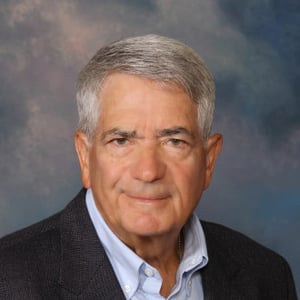
Professor Emeritus of Law, Indiana University; Co-Author, The Law of Lawyering
After graduating with honors from Harvard College in 1966, and from Rutgers Law School with highest honors in 1969, W. William Hodes began practice in a small civil rights and personal injury firm in New Orleans, where he had lived as a child. During the next eight years, he worked in Newark, New Jersey, first for the Kenneth Gibson administration, and then as senior staff attorney for the Education Law Center, a public interest law firm funded by the Ford Foundation.
In 1979, Hodes returned to the legal academy, first as a Bigelow Teaching Fellow at the University of Chicago Law School, and then as a Professor of Law at the Indiana University School of Law in Indianapolis. For the next twenty years, Professor Hodes taught in the areas of Civil Procedure, Constitutonal Law, Federal Courts, Administrative Law, and Professional Responsibility. He gained a national reputation as a scholar, consultant, and expert witness in the areas of Legal Ethics and Professional Responsbility, as they were then known.
Beginning in 1985 however, those subjects began to be known as "The Law of Lawyering," after a book of that name was published, co-authored by Professor Hodes and Professor Geoffrey C. Hazard, Jr., who had served as the Reporter to the Kutak Commission that developed the Model Rules of Professional Conduct. The treatise, which is now in its fourth edition and updated twice a year by Hodes and new co-author Peter R. Jarvis of Portland, Oregon, has become a mainstay resource for both the practicing bar and the academic community, and is often cited in court and ethics committee opinions.
While in the academy, Professor Hodes took two unusual sabbatical leaves. In the Spring of 1989, Hodes, who had spent his junior high school years in Beijing and is still fluent in Chinese, was a Visiting Scholar and Lecturer at the China University of Politics and Law, teaching a course in American Civil Procedure and conducting research into Chinese People's Mediation. (The course was suspended in April, when the events leading to the June 4th Tiananmen Massacre began to unfold, and Professor Hodes began to accompany his students on protest marches.)
During the October 1996 Term of the United States Supreme Court, Professor Hodes served as law clerk to Justice Ruth Bader Ginsburg, who had been his Civil Procedure and Conflicts of Law professor some thirty years earlier, during her Rutgers days. According to knowledgeable sources, Hodes was the oldest person to have served as a law clerk since the early 19th Century.
In 1999, W. William Hodes retired from law teaching (at age 56) in order to establish the William Hodes Professional Corporation, which was later renamed The William Hodes Law Firm; he became Professor Emeritus of Law at Indiana University as the new century began. Through this solo practice, Hodes can now devote full time to providing representation, consultation, expert testimony, legal opinions, and other counsel and assistance to lawyers in the areas of The Law of Lawyering, and Constitutional, Appellate, Supreme Court, and other complex litigation.
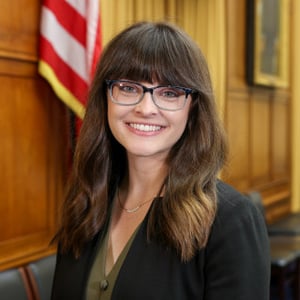
Senior Counsel, U.S. House of Representatives Judiciary Committee
Tessa E. Shurr serves as Senior Counsel to the U.S. House of Representatives Judiciary Committee (Majority).
Prior to joining the Judiciary Committee staff, Tessa served as a Litigation Associate at the Fairness Center, a non-profit law firm, where she represented clients who had been harmed by their public-sector union. Before that, she counseled high-level leadership at the U.S. Department of Justice’s Office of Legal Policy on legislative and regulatory matters, assisted the U.S. Department of Defense with procurement of supplies and services, and worked on both civil and criminal cases at the U.S. Attorney’s Office for the Middle District of Pennsylvania.
Tessa graduated from Penn State Dickinson Law in Carlisle, Pennsylvania. There, she served as Managing Editor of the Dickinson Law Review, one of the oldest legal journals in the United States. During her time in law school, Tessa earned CALI Excellence for the Future Awards in Advanced Federal Income Tax; Congressional Investigations; and Blockchain, Cryptocurrency, & Law. She also published an academic comment proposing a new regulatory scheme for digital assets and cryptocurrency.
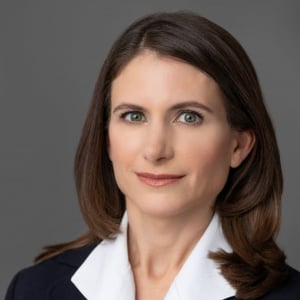
President and General Counsel, Hamilton Lincoln Law Institute
Anna St. John is an attorney with the Hamilton Lincoln Law Institute. She began working with the Center for Class Action Fairness, which has since moved to HLLI, in March 2015. She has argued appeals before the Second, Seventh, Ninth, and D.C. Circuits and state courts in New York and California, and presented argument to over a dozen federal and state trial courts. Her work has led to the return of over $100 million in settlement funds to class members.
Previously, she clerked for the Honorable Rhesa H. Barksdale on the Fifth Circuit Court of Appeals and was an attorney with Covington & Burling LLP.
St. John is a graduate of Columbia Law School, where she was named a James Kent Scholar. She is a member of the state bars of New York and Louisiana and the District of Columbia Bar. She has spoken on topics of class action fairness, government overreach and regulatory abuses, the First Amendment, and the U.S. Supreme Court.
She resides in New Orleans, Louisiana.
Laurence A. Tisch Professor of Law and Director, Classical Liberal Institute, New York University School of Law; Senior Fellow, The Civitas Institute, University of Texas at Austin
Richard A. Epstein is the inaugural Laurence A. Tisch Professor of Law at NYU School of Law. Prior to his joining the faculty, he was a visiting law professor at NYU from 2007 through 2009. He served as the Peter and Kirstin Bedford Senior Fellow at the Hoover Institution from 2000 to 2024. Since 2024 to the present he is a senior lecturer at the Civitas Institute at the University of Texas—Austin. Epstein is also the James Parker Hall Distinguished Service Professor of Law Emeritus and a senior lecturer at the University of Chicago. His initial law school appointment was at the University of Southern California from 1968 to 1972. Epstein received an LL.D., h.c. from the University of Ghent, 2003. He has been a member of the American Academy of Arts and Sciences since 1985 and was a Senior Fellow of the Center for Clinical Medical Ethics at the University of Chicago Division of Biological Sciences, also from 1983. to 2022 He served as editor of the Journal of Legal Studies from 1981 to 1991, and of the Journal of Law and Economics from 1991-2001. From 2001 to 2010 he was a director of the John M. Olin Program in Law and Economics at the University of Chicago.
His newest book, The Myth of Birthright Citizenship: What the Fourteenth Amendment Really Says was published in 2026 (Encounter Books). Prior to that he has published many books including, The Dubious Morality of the Modern Administrative State (Roman & Littlefield 2020).Earlier he published th Classical Liberal Constitution: The Uncertain Quest for Limited Government (Harvard 2014) iHis previous books include Design for Liberty: Private Property, Public Administration and the Rule of Law (Harvard 2011); The Case Against the Employee Free Choice Act (Hoover 2009); Supreme Neglect: How to Revive the Constitutional Protection of Property Rights (Oxford 2008); Antitrust Decrees in Theory and Practice: Why Less is More (AEI 2007); Overdose: How Excessive Government Regulation Stifles Pharmaceutical Innovation (Yale University Press. 2006); How Progressives Rewrote the Constitution (Cato 2006); Cases and Materials on Torts (Aspen Law & Business; 8th ed. 2004); Skepticism and Freedom: A Modern Case for Classical Liberalism (University of Chicago, 2003); Torts (Aspen Law & Business 1999); Principles for a Free Society: Reconciling Individual Liberty with the Common Good (Perseus Books, 1998): Mortal Peril: Our Inalienable Rights to Health Care (Addison-Wesley, 1997); Simple Rules for a Complex World (Harvard, 1995); Bargaining With the State (Princeton, 1993); Forbidden Grounds: The Case Against Employment Discrimination Laws (Harvard , 1992); Takings: Private Property and the Power of Eminent Domain (Harvard, 1985); and Modern Products Liability Law (Greenwood Press, 1980). He has also edited(with Catherine M. Sharkey) Cases and Materials on the Law of Torts (10th edition 2012).
Professor Epstein has written numerous articles on a wide range of legal and interdisciplinary subjects. He has taught courses in administrative law, antitrust law, civil procedure, communications, constitutional law, contracts, corporations, criminal law, employment discrimination law, environmental law, food and drug law health law and policy, legal history, labor law, property, real estate development and finance, jurisprudence, labor law; land use planning, patents, individual, estate and corporate taxation, Roman Law; torts, and workers' compensation.
Professor Epstein also writes a regular column for Civitas Institute, which also sponsors his podcast, The Libertarian with Charles C.W. Cooke, and Law Talk, with Cooke and John Yoo. He also does a podcast with John Batchelor. And appears regularly on the Freedom File with Judge Andrew Napolitano.
Professor Emeritus of Law, Indiana University; Co-Author, The Law of Lawyering
After graduating with honors from Harvard College in 1966, and from Rutgers Law School with highest honors in 1969, W. William Hodes began practice in a small civil rights and personal injury firm in New Orleans, where he had lived as a child. During the next eight years, he worked in Newark, New Jersey, first for the Kenneth Gibson administration, and then as senior staff attorney for the Education Law Center, a public interest law firm funded by the Ford Foundation.
In 1979, Hodes returned to the legal academy, first as a Bigelow Teaching Fellow at the University of Chicago Law School, and then as a Professor of Law at the Indiana University School of Law in Indianapolis. For the next twenty years, Professor Hodes taught in the areas of Civil Procedure, Constitutonal Law, Federal Courts, Administrative Law, and Professional Responsibility. He gained a national reputation as a scholar, consultant, and expert witness in the areas of Legal Ethics and Professional Responsbility, as they were then known.
Beginning in 1985 however, those subjects began to be known as "The Law of Lawyering," after a book of that name was published, co-authored by Professor Hodes and Professor Geoffrey C. Hazard, Jr., who had served as the Reporter to the Kutak Commission that developed the Model Rules of Professional Conduct. The treatise, which is now in its fourth edition and updated twice a year by Hodes and new co-author Peter R. Jarvis of Portland, Oregon, has become a mainstay resource for both the practicing bar and the academic community, and is often cited in court and ethics committee opinions.
While in the academy, Professor Hodes took two unusual sabbatical leaves. In the Spring of 1989, Hodes, who had spent his junior high school years in Beijing and is still fluent in Chinese, was a Visiting Scholar and Lecturer at the China University of Politics and Law, teaching a course in American Civil Procedure and conducting research into Chinese People's Mediation. (The course was suspended in April, when the events leading to the June 4th Tiananmen Massacre began to unfold, and Professor Hodes began to accompany his students on protest marches.)
During the October 1996 Term of the United States Supreme Court, Professor Hodes served as law clerk to Justice Ruth Bader Ginsburg, who had been his Civil Procedure and Conflicts of Law professor some thirty years earlier, during her Rutgers days. According to knowledgeable sources, Hodes was the oldest person to have served as a law clerk since the early 19th Century.
In 1999, W. William Hodes retired from law teaching (at age 56) in order to establish the William Hodes Professional Corporation, which was later renamed The William Hodes Law Firm; he became Professor Emeritus of Law at Indiana University as the new century began. Through this solo practice, Hodes can now devote full time to providing representation, consultation, expert testimony, legal opinions, and other counsel and assistance to lawyers in the areas of The Law of Lawyering, and Constitutional, Appellate, Supreme Court, and other complex litigation.
Senior Counsel, U.S. House of Representatives Judiciary Committee
Tessa E. Shurr serves as Senior Counsel to the U.S. House of Representatives Judiciary Committee (Majority).
Prior to joining the Judiciary Committee staff, Tessa served as a Litigation Associate at the Fairness Center, a non-profit law firm, where she represented clients who had been harmed by their public-sector union. Before that, she counseled high-level leadership at the U.S. Department of Justice’s Office of Legal Policy on legislative and regulatory matters, assisted the U.S. Department of Defense with procurement of supplies and services, and worked on both civil and criminal cases at the U.S. Attorney’s Office for the Middle District of Pennsylvania.
Tessa graduated from Penn State Dickinson Law in Carlisle, Pennsylvania. There, she served as Managing Editor of the Dickinson Law Review, one of the oldest legal journals in the United States. During her time in law school, Tessa earned CALI Excellence for the Future Awards in Advanced Federal Income Tax; Congressional Investigations; and Blockchain, Cryptocurrency, & Law. She also published an academic comment proposing a new regulatory scheme for digital assets and cryptocurrency.
President and General Counsel, Hamilton Lincoln Law Institute
Anna St. John is an attorney with the Hamilton Lincoln Law Institute. She began working with the Center for Class Action Fairness, which has since moved to HLLI, in March 2015. She has argued appeals before the Second, Seventh, Ninth, and D.C. Circuits and state courts in New York and California, and presented argument to over a dozen federal and state trial courts. Her work has led to the return of over $100 million in settlement funds to class members.
Previously, she clerked for the Honorable Rhesa H. Barksdale on the Fifth Circuit Court of Appeals and was an attorney with Covington & Burling LLP.
St. John is a graduate of Columbia Law School, where she was named a James Kent Scholar. She is a member of the state bars of New York and Louisiana and the District of Columbia Bar. She has spoken on topics of class action fairness, government overreach and regulatory abuses, the First Amendment, and the U.S. Supreme Court.
She resides in New Orleans, Louisiana.
Vice President & Assistant General Counsel, Boeing

2023 Education Law & Policy Conference
Co-Sponsored by the Defense of Freedom Institute for Policy Studies
Washington, DCThe War on Independent Work: Why Some Regulators Want to Abolish Independent Contracting, Why They Keep Failing, & Why We Should Declare Peace
Tammy Dee McCutchen, Alexander T. MacDonald
There is a war on independent contracting. Martial metaphors are often overworked in the law....
Deep Dive Episode 259 - AI & Antidiscrimination: AI Entering the Arena of Labor & Employment Law [Panel Discussion]
David Fortney, Aram A. Gavoor, Philip A. Miscimarra, Keith E. Sonderling
Artificial Intelligence (AI), once the stuff of science fiction, is now more than ever a...
Deep Dive Episode 258 - AI & Antidiscrimination: AI Entering the Arena of Labor & Employment Law [Keynote Address]
Keith E. Sonderling
Artificial Intelligence (AI), once the stuff of science fiction, is now more than ever a...
AI & Antidiscrimination: AI Entering the Arena of Labor & Employment Law
David Fortney, Aram A. Gavoor, Philip A. Miscimarra, Keith E. Sonderling
Artificial Intelligence (AI), once the stuff of science fiction, is now more than ever a...
The FTC’s Foray Into Non-Compete Agreements
Atlanta Lawyers Chapter
Atlanta, GAPG-15 FedSoc Study Break: Labor Employment & Regs, Oh My!
Kate S. O'Scannlain
The Federalist Society's Labor & Employment Law Practice Group, Student Division & Duke Law School Chapter present Labor...
PG-15 FedSoc Study Break: Labor Employment & Regs, Oh My!
30 Minutes. Your Questions. Their Answers.
A Seat at the Sitting - January 2023
Richard A. Epstein, William Hodes, Tessa Shurr Levensohn, Anna St. John
Each month, a panel of constitutional experts convenes to discuss the Court’s upcoming docket sitting...
A Seat at the Sitting - January 2023
Richard A. Epstein, William Hodes, Tessa Shurr Levensohn, Anna St. John
Each month, a panel of constitutional experts convenes to discuss the Court’s upcoming docket sitting...