

Vice President for Legal Affairs, Goldwater Institute

Senior Fellow and Director of Constitutional Studies, Manhattan Institute
Ilya Shapiro is a senior fellow and director of constitutional studies at the Manhattan Institute and a contributing editor of City Journal. Previously he was executive director and senior lecturer at the Georgetown Center for the Constitution, and before that a vice president of the Cato Institute.
Shapiro is the author of Lawless: The Miseducation of America’s Elites (2025) and Supreme Disorder: Judicial Nominations and the Politics of America’s Highest Court (2020), coauthor of Religious Liberties for Corporations? (2014), and editor of 11 volumes of the Cato Supreme Court Review (2008-18). He has contributed to a variety of academic, popular, and professional publications, including the Wall Street Journal, Harvard Journal of Law & Public Policy, Washington Post, Los Angeles Times, USA Today, National Review, and Newsweek. He also regularly provides commentary for various media outlets, writes the Shapiro’s Gavel newsletter on Substack, and once appeared on the Colbert Report.
Shapiro has testified many times before Congress and state legislatures and has filed more than 500 amicus curiae “friend of the court” briefs in the Supreme Court. He lectures regularly on behalf of the Federalist Society, is a member of the board of fellows of the Jewish Policy Center, was an inaugural Washington Fellow at the National Review Institute, and has been an adjunct law professor at the George Washington University and University of Mississippi. He is also the chairman of the board of advisers of the Mississippi Justice Institute, a barrister in the Edward Coke Appellate Inn of Court, and a former member of the Virginia Advisory Committee to the U.S. Commission on Civil Rights.
Earlier in his career, Shapiro was a special assistant/adviser to the Multi-National Force in Iraq on rule-of-law issues and practiced at Patton Boggs and Cleary Gottlieb. Before entering private practice, he clerked for Judge E. Grady Jolly of the U.S. Court of Appeals for the Fifth Circuit. He holds an AB from Princeton University, an MSc from the London School of Economics, and a JD from the University of Chicago Law School.
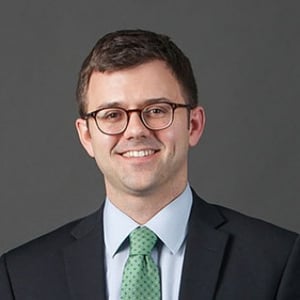
Partner, Consovoy McCarthy Park PLLC
Mr. Connolly represents clients in discovery, motions practice, trials, and appeals in state and federal courts across the country. He has litigated in a diverse range of subject areas, including civil rights litigation, challenges to administrative actions, contractual and employment disputes, and election law. Mr. Connolly has particular expertise in litigation involving the Federal Arbitration Act, the Voting Rights Act, the Communications Act, the Civil Rights Act, and the Freedom of Information Act. Mr. Connolly recently argued in the U.S. Court of Appeals for the D.C. Circuit on behalf of a trade industry and served on the trial team in a high-profile, three-week trial in the U.S. District Court for the District of Massachusetts.
Mr. Connolly is a former law clerk to Judge Jerome A. Holmes of the United States Court of Appeals for the Tenth Circuit. Mr. Connolly is also the director of the Free Speech Clinic at the Antonin Scalia Law School at George Mason University.
Mr. Connolly earned his B.A. from the University of Kansas, where he graduated with distinction and his J.D. from New York University School of Law. Mr. Connolly is a member of the Virginia and District of Columbia bars.

Senior Legal Fellow, Edwin Meese III Institute for the Rule of Law, Advancing American Freedom
Partner, Sullivan & Cromwell LLP
Garrard Beeney is co-head of the Firm’s Intellectual Property and Technology Group and a member of the Firm’s Managing Partners Committee. Mr. Beeney has been inducted as a Fellow of the American College of Trial Lawyers. He is counsel in the two major patent cases to be argued before the U.S. Supreme Court in 2016.
Mr. Beeney has litigated intellectual property and licensing cases throughout the country in both federal and state courts. Mr. Beeney also represents clients before U.S. and European competition law authorities, particularly in the area of the intersection between intellectual property and competition laws. In addition to trying patent and antitrust cases, Mr. Beeney has argued appellate cases in various courts, including in the U.S. Supreme Court, the Federal Circuit and the Second Circuit Courts of Appeal, and the Supreme Court of Arkansas. He represents both plaintiffs and defendants in infringement actions, and advises plaintiffs on patent selection in pre-suit due diligence. Mr. Beeney also frequently advises on licensing issues and IP monetization, and has represented patent holders in the formation of licensing pools, including those related to the AVC, MPEG-2, MPEG-4, DVD, LTE, ATSC, VC-9, IEEE 1394 and other technologies.
In addition to the “Litigator of the Week” award noted below, Mr. Beeney has been recognized as one of the “Top 10 Oral Advocates of the Year” in the Federal Circuit Court of Appeals, as an “Innovative U.S. Lawyer” by the Financial Times and in IAM Patent 1000 – The World’s Leading Patent Practitioners (2014, 2015), which commented that Mr. Beeney is “one of the best in the business.” IAM added that peers comment, “When there is something you can’t do, you send it to him.” The 2014 edition of IAM added that Mr. Beeney is “one of the best trial lawyers on the planet”, and he “sounds the part, looks the part, is always prepared and persuasive, with especially brilliant opening and closing presentations.” He is a recipient of the Burton Award for legal scholarship, and has received the Adele Warnock and other awards for his community service.
Mr. Beeney also is regularly recognized as a leading lawyer in the intellectual property and antitrust fields, among others, by leading industry publications, including The Best Lawyers in America, The Legal 500 United States and New York Super Lawyers.
Mr. Beeney has been a speaker at various professional associations, including the American Intellectual Property Law Association, the American Bar Association, the Licensing Executives Society and Law Seminars International. He has written and contributed chapters to several books, including Business and Commercial Litigation in Federal Courts, Commercial Litigation in New York State Courts and On the Merits: Current Issues in Competition Law and Policy. Mr. Beeney has taught various trial advocacy courses, including serving as a member of the faculty at the National Trial Skills Program of the National Institute for Trial Advocacy. He is also a member of Law360’s 2013 Intellectual Property Editorial Advisory Board.
Mr. Beeney’s public service activities include having served for more than a decade as the deputy mayor of Irvington, New York. He is chairman of the board of Mercado Global, a not-for-profit working to improve the lives of impoverished artisans in Central America, and he regularly represents clients in pro bono litigation, including in a recent successful First Amendment trial and in a matter involving child adoption in Arkansas, the latter of which he successfully argued before the Supreme Court of Arkansas in March 2011.
Partner, Jenner & Block
Matthew S. Hellman is a litigator. He has been lead counsel in dozens of appellate matters, and has presented arguments in the U.S. Supreme Court, the U.S. Courts of Appeals, and in state appellate courts. In addition, he routinely presents arguments in the trial courts. Mr. Hellman’s cases involve a variety of issues such as commercial law, intellectual property and administrative law. He has argued important cases for corporations like Marriott, GE and General Dynamics.
In 2010, Law360 recognized Mr. Hellman as a “Rising Legal Star” in the practice of Appellate Law. In 2007, Jenner & Block recognized Mr. Hellman with the Albert E. Jenner, Jr. Pro Bono Award, which annually recognizes attorneys in the Firm with a strong commitment to pro bono or public service work. He has argued or supervised more than a dozen pro bono cases in the courts of appeals, including two capital cases.
Mr. Hellman is member of the firm’s Appellate and Supreme Court Practice. He is also a member of the Edward Coke Appellate Inn of Court, and an Associate Trustee for the Washington Lawyer’s Committee for Civil Rights and Urban Affairs. He serves as the Co-Chair of the DC Hiring and the Hiring Executive Committees and is also a member of the Associate Development and Evaluation Committee and the Finance Committee.
Co-Director, Center for Intellectual Property & Entrepreneurship, University of Missouri School of Law
Professor Crouch is Associate Professor of Law at the University of Missouri School of Law. Prior to joining the MU Law Faculty, he was a patent attorney at McDonnell Boehnen Hulbert & Berghoff LLP in Chicago, Illinois, and taught at Boston University Law School. He has worked on cases involving various technologies including computer memory and hardware, circuit design, software, networking, mobile and internet telephony, automotive technologies, lens design, bearings, HVAC systems, and business methods. He is also the editor of the popular patent law weblog: Patently-O .
Professor Crouch received his BSE in mechanical engineering cum laude from Princeton University, where he also earned a certificate in engineering management systems. He then earned his JD cum laude from the University of Chicago Law School. While at the University of Chicago, he was a Microsoft, Merck, & Pfizer scholar and a member of the Olin program in law and economics.
Prior to attending law school, Professor Crouch worked as a technical consultant for manufacturing firms in New England, as a research fellow at NASA’s Glenn Research Center, as a software developer at the Mayo Clinic’s department of biomedical imaging, and as a Peace Corps Volunteer in Ghana, West Africa. Dennis Crouch grew up on a farm near Pittsburg, Kansas.
Dean and Mabie-Apallas Professor of Public Interest Law and Chic, School of Law
Kevin R. Johnson is Dean, Mabie-Apallas Professor of Public Interest Law, and Professor of Chicana/o Studies. He joined the UC Davis law faculty in 1989 and was named Associate Dean for Academic Affairs in 1998. Johnson became Dean in 2008. He has taught a wide array of classes, including immigration law, civil procedure, complex litigation, Latinos and Latinas and the law, and Critical Race Theory. In 1993, he was the recipient of the law school's Distinguished Teaching Award.
Dean Johnson has published extensively on immigration law and civil rights. Published in 1999, his book How Did You Get to Be Mexican? A White/Brown Man's Search for Identity was nominated for the 2000 Robert F. Kennedy Book Award. Dean Johnson’s latest book, Immigration Law and the US-Mexico Border (2011), received the Latino Literacy Now’s International Latino Book Awards – Best Reference Book. Dean Johnson blogs at ImmigrationProf, and is a regular contributor on immigration on SCOTUSblog.
A regular participant in national and international conferences, Dean Johnson has also held leadership positions in the Association of American Law Schools and is the recipient of an array of honors and awards. He is quoted regularly by the New York Times, Los Angeles Times, and other national and international news outlets.
A magna cum laude graduate of Harvard Law School, where he served as an editor of the Harvard Law Review, Dean Johnson earned an A.B. in economics from UC Berkeley, graduating Phi Beta Kappa. After law school, he clerked for the Honorable Stephen Reinhardt of the U.S. Court of Appeals for the Ninth Circuit and worked as an attorney at the international law firm of Heller Ehrman White & McAuliffe. Dean Johnson has served on the board of directors of Legal Services of Northern California since 1996 and currently is President of the board. From 2006-11, he served on the board of directors of the Mexican American Legal Defense and Education Fund, the leading Mexican-American civil rights organization in the United States.
Dean Johnson is the recipient of many awards and honors, including the Association of American Law Schools Minority Groups Section Clyde Ferguson Award (2004), the Hispanic National Bar Association Law Professor of the Year award (2006), the National Association of Chicana and Chicano Studies Scholar of the Year award (2008), the Central American Resource Center (CARECEN) Romero Vive Award (2012), and the Centro Legal de la Raza Outstanding Achievements in the Law Award (2015). In 2003, he was elected to the American Law Institute.

Dr. John Eastman is the former Henry Salvatori Professor of Law & Community Service and former Dean at Chapman University's Dale E. Fowler School of Law, where he had been a member of the faculty since 1999, specializing in Constitutional Law, Legal History, and Property. He is a founding director of the Center for Constitutional Jurisprudence, a public interest law firm affiliated with the Claremont Institute that he founded in 1999. He has a Ph.D. in Government from the Claremont Graduate School and a J.D. from the University of Chicago Law School, and a B.A. in Politics and Economics from the University of Dallas. He serves as the Chairman of the Board of the National Organization for Marriage.
Prior to joining the Chapman law faculty, Dr. Eastman served as a law clerk to the Honorable Clarence Thomas, Associate Justice, Supreme Court of the United States, and to the Honorable J. Michael Luttig, Judge, United States Court of Appeals for the Fourth Circuit and practiced law with the national law firm of Kirkland & Ellis. Dr. Eastman has also represented numerous clients in important constitutional law matters and has argued before the Supreme Court. On behalf of the Claremont Institute Center for Constitutional Jurisprudence, he has participated as amicus curiae before the Supreme Court of the United States, U.S. Courts of Appeals, and State Supreme Courts in more than one hundred cases of constitutional significance, including Boy Scouts of America v. Dale, Zelman v. Simmons-Harris (the school vouchers case), Kelo v. New London, Ct. (eminent domain), and Van Orden v. Perry (the 10 Commandments case). He has also appeared as an expert legal commentator on numerous television and radio programs, including C-SPAN, Fox News, PBS, NewsHour, and The O'Reilly Factor.
Former Judge, United States Court of Appeals, Ninth Circuit
Judge Kozinski served as a United States Circuit Judge for the Ninth Circuit from November 1985 until December 2017. He served as Chief Judge from 2007 to 2014. He graduated from UCLA, receiving an A.B. degree in 1972, and from UCLA Law School, receiving a J.D. degree in 1975.
Prior to his appointment to the appellate bench, Judge Kozinski served as Chief Judge of the United States Claims Court, 1982-85; Special Counsel, Merit Systems Protection Board, 1981-82; Assistant Counsel, Office of Counsel to the President, 1981; Deputy Legal Counsel, Office of President-Elect Reagan, 1980-81; Attorney, Covington & Burling, 1979-81; Attorney, Forry Golbert Singer & Gelles, 1977-79; Law Clerk to Chief Justice Warren E. Burger, 1976-77; and Law Clerk to Circuit Judge Anthony M. Kennedy, 1975-76.
Judge Kozinski is married to Marcy Jane Tiffany and has three children: Yale, Wyatt and Clayton, and three grandchildren: Quinn, Owen and Anna.
Former Adjunct Professor of Law; former Special Counsel to the President; former federal prosecutor, Georgetown Law (ret.)
Bill Otis is a former Adjunct Professor of Law at Georgetown University, a one-time federal prosecutor, and a former Special White House Counsel for President George H. W. Bush. After graduating from Stanford Law School, he started his career in the Criminal Division of the Justice Department, then became chief of appeals for the US Attorney's Office for the Eastern District of Virginia. In the 1980's he served on the Department's "Train the Trainer" team, which taught US Attorneys Offices across the county how to implement the then-new Sentencing Reform Act. He has held several posts in the federal government, including Special Assistant to the Secretary of Energy and Counselor to the head of the Drug Enforcement Administration, in addition to the White House post. He has testified before Congress on issues in criminal procedure, illegal drugs, the US Sentencing Commission, and the death penalty, and has given numerous media interviews on those and other subjects. He currently teaches a seminar at Georgetown Law titled "Conservatism in Law in America" with his wife, Federalist Society co-founder Lee Liberman Otis.

President, Harned Strategies LLC
Karen Harned is President at Harned Strategies LLC. Previously, she served as Executive Director of the National Federation of Independent Business Small Business Legal Center, a post she held from 2002-2022. Prior to joining the Legal Center, Ms. Harned was an attorney at a Washington, D.C. law firm specializing in food and drug law, where she represented several small and large businesses and their respective trade associations before Congress and federal agencies. She also served as Assistant Press Secretary to U.S. Senator Don Nickles of Oklahoma from August of 1989 to March of 1993. Ms. Harned received her B.A. from the University of Oklahoma in 1989 and her J.D. from The George Washington University National Law Center in 1995. She is admitted to practice in the District of Columbia.
As Executive Director of the NFIB Small Business Legal Center, Ms. Harned commented regularly on small business cases before federal and state courts, as well as the U.S. Supreme Court. She has appeared on Fox News, Fox Business, NBC Nightly News, CNN, CNBC and MSNBC, as well as National Public Radio, CBS Radio, and radio outlets across the country. Her opinion editorials and articles regarding healthcare, lawsuit abuse, regulation, and other issues important to small business have been published in newspapers and other publications nationwide.
Ms. Harned has testified before Congress on the small business impact of regulation and the civil justice system. Additionally, she has conducted numerous webinars and legal compliance seminars for small business owners across the country on issues relating to employment law, including unionization and immigration.
Professor, The University of Texas at Austin
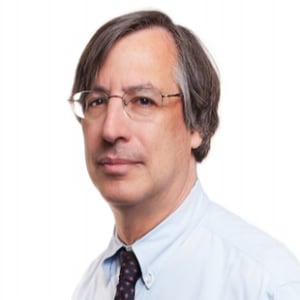
Levin, Mabie & Levin Professor of Law, University of Florida Levin College of Law
Professor Gary Lawson joined the University of Florida Levin College of Law faculty on July 1, 2024, after twenty-four years at Boston University School of Law and eleven years at Northwestern University School of Law. While at Boston University, he was named a William Fairfield Warren Distinguished Professor in 2022 – the highest faculty honor within the university. He has authored or co-authored nine editions of a textbook on administrative law, a textbook on constitutional law, five university press books, one popular press book, and more than one hundred scholarly articles on topics ranging from aspects of constitutional theory and history to the proof of legal propositions. His works have been cited in more than twenty opinions of United States Supreme Court justices. He is a founding member, and serves on the Board of Directors, of the Federalist Society for Law and Public Policy Studies and is on the Editorial Advisory Board of the Heritage Guide to the Constitution.

Partner, Wiley Rein, LLP
Megan L. Brown is a partner at Wiley Rein LLP. She has significant litigation, appellate and regulatory experience before state and federal courts and agencies.
Ms. Brown helps businesses respond to federal, state and local regulation and investigations raising administrative law, statutory interpretation, and constitutional issues, including the First Amendment.
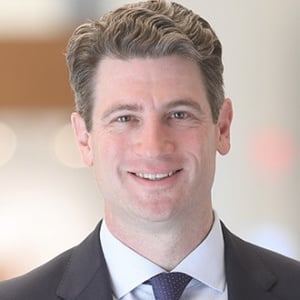
General Counsel and Corporate Secretary, Citigroup
Brent McIntosh joined Citi as General Counsel and Corporate Secretary in October 2021. Brent leads Citi's global legal team, including Citi security and investigative services, and oversees Citi’s independent compliance risk management function.
Brent served as Under Secretary of the Treasury for International Affairs from 2019 to 2021. He led the Treasury Department’s engagement in the G7 and G20, represented the United States on the Financial Stability Board, and managed U.S. participation at the IMF and World Bank. He oversaw Treasury’s international economic and financial policy work, including significant engagements on investment security and regulation of digital currencies. During 2020, he coordinated initiatives to alleviate the COVID-19 pandemic’s economic consequences.
From 2017 to 2019, Brent served as Treasury’s General Counsel, leading the department’s approximately 2,000 lawyers and spearheading its regulatory reform efforts. Prior to that, he was a partner in the law firm of Sullivan & Cromwell, where his practice focused on complex disputes involving financial institutions and multinational corporations.
Brent served in the White House from 2006 until 2009, first as Associate Counsel to the President and then as Deputy Assistant to the President and Deputy Staff Secretary. Before that, he was a Deputy Assistant Attorney General at the Justice Department, where his work focused on national security matters.
A Michigan native, Brent holds an A.B. in economics and political science from the University of Michigan and a J.D. from Yale Law School. Following law school, he was a law clerk to two federal appellate judges, Dennis Jacobs of the Second Circuit and Laurence H. Silberman of the D.C. Circuit. Brent serves on the Board of Directors of the Alexander Hamilton Society, the Board of Advisors for the National Security Institute at George Mason University’s Antonin Scalia Law School, and the Advisory Council of the Official Monetary and Financial Institutions Forum. He is a member of the Council on Foreign Relations, where he previously served as an Adjunct Senior Fellow for International Economics and Finance, as well as the Bretton Woods Committee and the International Institute for Strategic Studies.
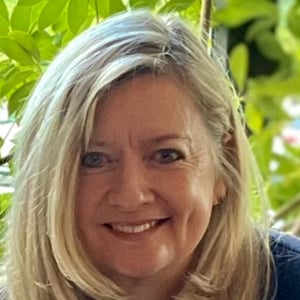
Rebecca Seidel currently resides in Louisville, Kentucky and in 2023 recently joined the state office of Senator Rand Paul, M.D, as Grant Coordinator. In this position, Ms. Seidel tracks grant opportunities, both public and private, that could aid constituents and works to provide support and helpful information to those in need who can benefit.
Prior to moving to Kentucky in 2016 Rebecca Seidel was General Counsel of the Senate Commerce Committee in Washington D.C. In that role, Ms. Seidel handled cybersecurity, privacy, data security, vehicle safety and consumer protections issues. She also oversaw committee investigations and oversight of the executive branch and private sector companies. Prior to joining the Commerce Committee, Ms. Seidel held positions in the Senate, the Executive Branch and in private sector law practice.
Immediately prior to the Commerce Committee, Ms. Seidel was counsel to the Senate Impeachment Trial Committee, formed for the trial of Judge G. Thomas Porteous. Before that Ms. Seidel was Deputy Assistant Attorney General for Legislative Affairs at the Department of Justice. Previously she served as senior counsel on the Senate Judiciary Committee handling legal reform issues including asbestos and class action. Prior to that she started her government career as counsel to then Senator George V. Voinovich.
Ms. Seidel’s time in private law practice was spent in the Boston, Massachusetts area where she was a litigator for five years practicing federal and state civil litigation defense in complex product liability, premises liability, liquor liability, and ERISA cases. She received her undergraduate degree from the University of Notre Dame and her law degree from the University of Dayton.

Senior Litigation Counsel, New Civil Liberties Alliance
Throughout his 40-year career in private law practice in Washington, D.C., Richard Samp has specialized in appellate litigation with a focus on constitutional law. He served as Chief Counsel of the Washington Legal Foundation for more than 30 years. He has participated directly in more than 200 cases before the U.S. Supreme Court. Mr. Samp is a graduate of Harvard College and the University of Michigan Law School and clerked for a federal judge in Detroit.

The New Trail of Tears: How Washington Is Destroying American Indians - Podcast
Timothy Sandefur
Native Americans on reservations suffer higher rates of crime, addiction, alcoholism, and poverty than any...
Protecting Eligible Voters: Evenwel v. Abbott and the Future of Redistricting - Podcast
Ilya Shapiro, J. Michael Connolly
In Evenwel v. Abbott, the Supreme Court held that the Constitution’s one-person, one-vote rule allows...
Packing Districts?: Supreme Court Decides Harris v. Arizona Independent Redistricting Commission - Podcast
Hans A. Von Spakovsky
On April 20, the United States Supreme Court issued a unanimous opinion in Harris v....
Intellectual Property in the Supreme Court - Podcast
Garrard R. Beeney, Matthew S. Hellman, Dennis Crouch
Continuing the trend of recent years, this Term the Supreme Court is hearing a number...
U.S. v. Texas - Podcast
Kevin W. Johnson, John C. Eastman
All eyes are on the United States Supreme Court as it prepares to hear oral argument in...
Pros and Cons: Our Criminal Justice System at Work - Podcast
Alex Kozinski, William G. Otis
Our panelists will discuss the criminal justice system generally, and the role of the prosecutor...
On Again, Off Again - Class Actions and Donning and Doffing: Tysons v. Bouaphakeo - Podcast
Karen Harned
On November 10 the Supreme Court heard oral arguments in the case of Tyson Foods,...
Judicial Review in an Objective Legal System - Podcast
Tara A. Smith, Gary Lawson
At a time when some argue that the Rule of Law seems to be deteriorating...
Cybersecurity: Private Sector Faces Increasing Regulatory Risk From Agency Enforcement and Informal “Guidance” Becoming Standard of Care - Podcast
Megan L. Brown, Brent J. McIntosh, Rebecca Seidel
After Target, Anthem, Sony, and Ashley Madison, cybersecurity is at the top of every company...
The Court's Case on Texting and Class Actions: Campbell-Ewald Company v. Gomez - Podcast
Richard A. Samp
Advertising agency Campbell-Ewald sent recruitment texts to Jose Gomez on behalf of the US Navy,...