
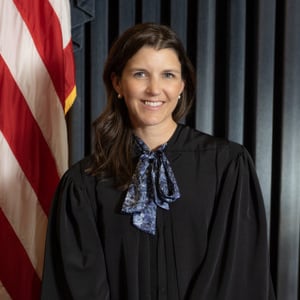
Judge, United States Court of Appeals, Sixth Circuit
The Honorable Whitney Hermandorfer is a judge on the United States Court of Appeals for the Sixth Circuit. She was nominated to the court by President Donald Trump (R) on May 12, 2025, and confirmed by the United States Senate on July 14, 2025.
Prior to her appointment, she worked in the Office of the Tennessee Attorney General as Director of the Strategic Litigation Unit. In that role, Whitney focused on leading constitutional, statutory, and administrative-law challenges to federal agency action, as well as on defending the State in complex matters at the trial and appellate level.
Whitney previously worked at Williams & Connolly LLP in Washington, DC, where she focused on appellate and administrative-law litigation. Whitney clerked for Justice Samuel Alito in the OT 2018 Supreme Court term and for Justice Amy Coney Barrett during her inaugural OT 2020 term. Prior to that, Whitney clerked for then-Judge Kavanaugh on the D.C. Circuit, and Judge Richard Leon on the U.S. District Court for D.C. Whitney is a graduate of Princeton University and George Washington University Law School.
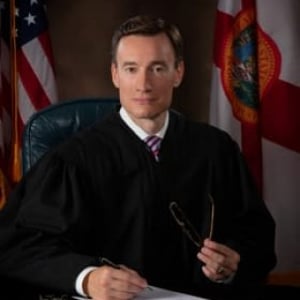
Judge, Florida First District Court of Appeal
Judge Robert “Bobby” E. Long, Jr., was appointed to the First District Court of Appeal on June 10th, 2020, by Governor Ron DeSantis. Prior to joining the Court of Appeal, Judge Long served as a trial court judge on Florida’s Second Judicial Circuit Court. He was appointed to the Circuit Court on June 26th, 2016, by Governor Rick Scott.
Prior to joining the Circuit Court, he was the General Counsel and a Major on the Executive Command Staff at the Leon County Sheriff’s Office. A law enforcement officer and an attorney, he oversaw the operations of the Legal and Professional Service Division at the Sheriff’s Office. In that capacity he ran internal affairs, all law enforcement and corrections professional training, supervised all litigation, managed legislative affairs, handled employment matters, and provided counsel to the Office of the Sheriff. Prior to that, he worked in private practice at a statewide law firm where he handled diverse civil litigation matters.
Judge Long started his legal career as an active duty Judge Advocate with the United States Navy. He is a veteran of the war in Afghanistan. He also served as a Naval Officer in the pacific area of operations. He currently serves as a Commander in the United States Navy Reserves.
As an attorney, his civil and criminal litigation experience ranged from wrongful death to murder. Prior to attending law school, Judge Long worked as a law enforcement officer at the Leon County Sheriff’s Office.
Judge Long has served on the Boards of Directors for the Legal Aid Foundation, the Rotary Club of Tallahassee, and the American Inn of Court. He is a member of the Economic Club of Florida, the American Legion, the Veterans of Foreign Wars, and Leadership Tallahassee.
Judge Long and his wife have four sons. He is a volunteer coach for their baseball, soccer, basketball, and football teams. He and his wife lead children’s Sunday School at their church. He is the Chairman of his sons’ Cub Scout Pack and an Assistant Scoutmaster with their Boy Scout Troop.
Judge Long holds a law degree from the University of Florida, College of Law, and a Bachelor of Science in Finance from the Florida State University, College of Business.
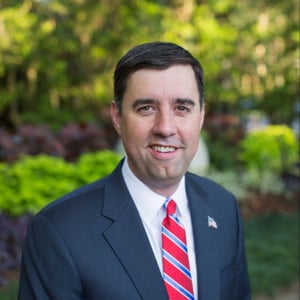
Associate Justice, Alabama Supreme Court
James L. “Jay” Mitchell was elected to the Alabama Supreme Court in 2018.
Prior to serving on the Supreme Court, Justice Mitchell was an accomplished litigation attorney with Maynard, Cooper & Gale, P.C. During his time in private practice, he tried a number of complex cases to verdict, successfully handled appeals, and obtained favorable settlements for clients. He was rated as one of the top litigators in the United States and Alabama, and received the highest possible rating for professional ethics. He also served on Maynard, Cooper & Gale’s executive committee, helping to lead strategic and growth initiatives for the firm.
Justice Mitchell was born in Mobile and grew up in South Alabama and in Homewood. He is a graduate of Homewood High School and received his Bachelor of Arts with honors from Birmingham-Southern College, where he graduated Phi Beta Kappa, served as president of the student body, and played forward on the school’s 1995 national championship basketball team. He holds a Master of Arts from University College in Dublin, Ireland, and received his law degree from the University of Virginia School of Law.
Justice Mitchell has long been active in organizations that benefit the community and enhance the legal profession. In addition to his service with other organizations, he is a member of the Rotary Club of Birmingham and serves on the board of directors at Cornerstone School, an inner city Christian school. He is also a member of the Federalist Society.
Justice Mitchell and his wife, Elizabeth, have been married for 20 years and have four children. They reside in Homewood and are longtime members of Church of the Highlands.
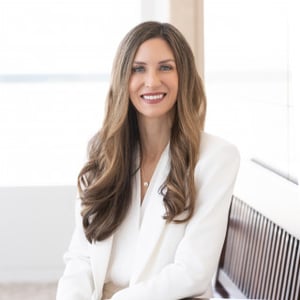
United States District Judge, United States District Court for the Middle District of Florida
In November 2020, the Senate confirmed Kathryn Kimball Mizelle as a United States District Judge for the Middle District of Florida. At age 33, she became the youngest Article III judge in the country. Prior to her confirmation, Judge Mizelle was in private practice at Jones Day, where she focused on complex civil and criminal litigation and appeals. Judge Mizelle previously served at the United States Department of Justice in the Office of the Associate Attorney General, in the Southern Criminal Enforcement Section of the Tax Division, and in the United States Attorney’s Office for the Eastern District of Virginia. Judge Mizelle has also taught as an adjunct professor of law at the University of Florida Levin College of Law and at George Mason University’s Antonin Scalia Law School.
Judge Mizelle earned her B.A., summa cum laude, from Covenant College, and her J.D., summa cum laude, from the University of Florida Levin College of Law. After graduation, Judge Mizelle served as a law clerk at every level of the federal judiciary: at the Supreme Court for Justice Clarence Thomas, at the D.C. Circuit for Judge Gregory G. Katsas, at the Eleventh Circuit for Chief Judge William H. Pryor Jr., and at the Middle District of Florida for Judge James S. Moody Jr.
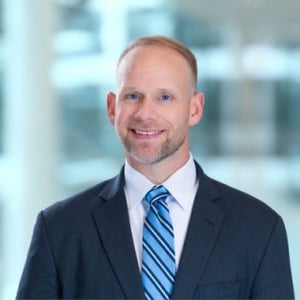
Partner, Holtzman Vogel Baran Torchinsky & Josefiak PLLC
Ed Wenger, a partner at Holtzman Vogel and Florida Bar board certified in appellate law, has successfully handled every stage of litigation, from the initial complaint-drafting stage all the way through United States Supreme Court review. Experienced in skills covering, among other things, state-court administrative hearings to expert-witness cross-examination, Ed has focused the bulk of his career on appellate and constitutional litigation, as well as critical motions practice.
His appellate experience began, first, as a law clerk for the Honorable Edward C. Prado of the United States Court of Appeals for the Fifth Circuit, and it continued as a law clerk for the Honorable Karen LeCraft Henderson of the United States Court of Appeals for the District of Columbia Circuit. He has since served as the Chief Deputy Solicitor General for the State of Florida (the number two appellate litigator for the State) and the General Counsel to the West Virginia Attorney General.
Drawing on the work ethic that once earned him a two-year stint as captain of FIU’s football team, Ed has presented oral argument in state and federal courts throughout the country, submitted scores of briefs in courts throughout the nation (and roughly two dozen with the Supreme Court of the United States), and represented, among others, the Office of Governor Ron DeSantis and Former United States Attorney General Edwin Meese III.
When Ed isn’t writing briefs, he can be found studying political philosophy and American statesmanship at Hillsdale College or boxing for charity (no wins yet, but we’re optimistic)!
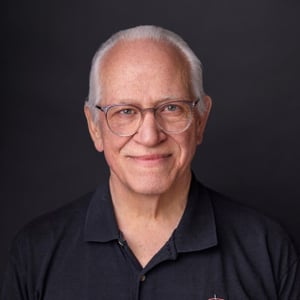
Chief Counsel, FIRE
Robert Corn-Revere joined FIRE from the law firm of Davis Wright Tremaine where he was a partner for 20 years specializing in freedom of expression and communications law. Before his time at DWT, he was a partner at Hogan & Hartson and served as legal advisor and later chief counsel to Federal Communications Commission Chairman James H. Quello.
Corn-Revere is a prominent writer, thinker, and advocate on free expression issues. In 2021, Cambridge University Press published his book, “The Mind of the Censor and the Eye of the Beholder: The First Amendment and the Censor’s Dilemma,” which explores how free expression became a part of America’s identity. He also co-authored the three-volume treatise, “Modern Communication Law,” published by West Group. In 2003, he successfully petitioned Governor George E. Pataki to grant the first posthumous pardon in New York history to the late comedian Lenny Bruce, who was convicted for “obscene” comedy routines.
Before joining FIRE full-time, Corn-Revere was a volunteer on FIRE’s Advisory Council. He also served as outside counsel for FIRE’s Stand Up For Speech Litigation Project, successfully litigating on behalf of college students and faculty whose First Amendment rights were violated.
He is regularly listed as a leading First Amendment and media law practitioner by The Best Lawyers in America, SuperLawyers Washington, D.C., and by Chambers USA. Best Lawyers in America named him as Washington, D.C.’s 2017 “Lawyer of the Year” in the areas of First Amendment Law and Litigation – First Amendment. He was again named as Best Lawyers’ “Lawyer of the Year” for First Amendment Law for 2019 and 2021, and in Media Law for 2022.
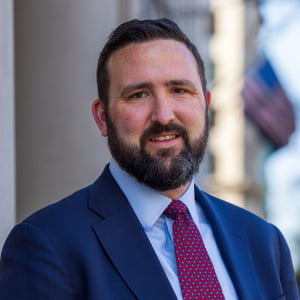
Partner, First & Fourteenth PLLC
Michael Francisco is a public and commercial litigator with extensive appellate experience who often serves as a strategic advisor to clients facing acute legal challenges. He has represented clients nationally for public impact litigation, bet-the-company lawsuits, and in defense of constitutional rights. Michael served as a law clerk to Supreme Court Justice Neil Gorsuch and Judge Timothy Tymkovich of the United States Court of Appeals for the Tenth Circuit.
Michael regularly takes on challenging matters where citizens must rely on the judiciary to vindicate their rights. His experience runs the gambit from successfully seeking injunctive relief, winning critical legal motions, defending judgments on appeal, overturning multi-million-dollar judgments, and obtaining discretionary high court review. He relishes the opportunity to develop a well-crafted legal strategy to solve the most novel and complex problems that may arise.
Michael has deep experience with political litigation representing candidates, voters, political parties, and advocacy organizations for ballot access, election administration, campaign finance, and for the unfortunate trend of criminalization of political activity.
After deciding to pursue a legal career to defend religious liberty, Michael has regularly engaged in constitutional litigation under the religion clauses and the free speech clause. He has been involved in many recent U.S. Supreme Court cases involving these core freedoms, including Groff v. DeJoy, 303 Creative v. Elenis, Masterpiece Cakeshop v. Colorado Civil Rights Commission, National Institute of Family & Life Advocates v. Becerra, Trinity Lutheran Church v. Pauley, and similar cases in lower courts on topics ranging from the ministerial exception, church property disputes, to religious land use disputes.
As an appellate advocate Michael frequently handles matters before the U.S. Supreme Court, federal courts of appeals, and Colorado appellate courts. He has argued four times before the Colorado Supreme Court and briefed 19 cases before the U.S. Supreme Court.
Michael also frequently advises clients on strategic public matters challenging federal government authority and overreach. He has regularly litigated business disputes, employment matters, as well as represented clients before state and federal administrative agencies or arbitration panels.
Prior to joining First & Fourteenth, Michael was a partner at McGuireWoods, LLP in Washington D.C., representing litigation, white collar, and government investigation clients.
At home Michael is married with four children and he enjoys many outdoor activities, ranging from competitive shooting to fixing his jeep.
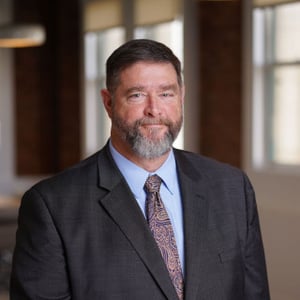
Partner, Briscoe Prows Kao Ivester & Bazel LLP
Tony Francois is experienced in Water and Real Property Law, Land Use and Zoning, Environmental Regulation, Natural Resources Development, Agricultural Law, and Constitutional Law. He has represented homeowners, builders, farmers and ranchers, trade associations, and water districts in administrative, civil, and criminal proceedings before state and federal administrative agencies and state and federal trial and appellate courts. He is a member of the California State Bar and the Northern, Eastern, and Central Districts of California and the Districts of New Mexico and North Dakota, and has litigated cases in federal courts in California, Oregon, Washington, Idaho, Montana, Nevada, Arizona, New Mexico, Colorado, North and South Dakota, Minnesota, Massachusetts, Maryland, South Carolina, and the District of Columbia, as well as the Sixth, Eighth, Ninth, and Tenth Circuit Courts of Appeals. He has appeared before the Supreme Courts of California, Idaho, Nevada, and the United States.
Prior to attending law school, he served as an infantry officer in the United States Army, and was stationed in the former West Germany during the fall of the Berlin Wall.
Tony was an Attorney at Pacific Legal Foundation from 2012 to 2021. He was a lobbyist for 10 years, first with California Farm Bureau Federation from 2003 to 2007, and then with KP Public Affairs from 2007 to 2012. He was an attorney at McQuaid, Bedford & Van Zandt in San Francisco from 1999 – 2003.
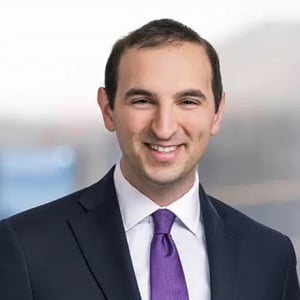
Associate, Covington & Burling LLP
Eli Nachmany is an associate at Covington & Burling LLP in the Washington, DC, office. He clerked for Judge Steven J. Menashi of the U.S. Court of Appeals for the Second Circuit. Eli graduated magna cum laude from Harvard Law School, where he was Editor-in-Chief of the Harvard Journal of Law & Public Policy. Prior to law school, Eli served as the speechwriter to the U.S. Secretary of the Interior and as a domestic policy aide in the White House Office of American Innovation. He graduated summa cum laude from New York University with a B.S. in Sports Management. Eli’s scholarship on administrative law and executive power has appeared in the BYU Law Review, George Mason Law Review, Wake Forest Law Review, and Yale Law Journal Forum.
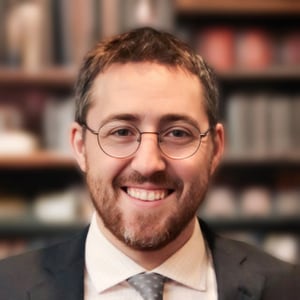
Senior Attorney, Institute for Free Speech
Brett Nolan is a Senior Attorney at the Institute for Free Speech, a public interest law firm that defends the First Amendment rights of those engaged in political speech and advocacy around the country.
Before joining the Institute, Brett served as the Principal Deputy Solicitor General of Kentucky, where he represented the Commonwealth in a wide variety of high-stakes litigation at every level of state and federal court. In that role, Brett led a successful challenge against the Department of Treasury over the constitutionality of a federal law limiting the ability of states to modify their tax codes, and he helped secure a U.S. Supreme Court victory that upheld a state’s constitutional right to defend its interests in federal court.
Prior to that, Brett served as the Deputy General Counsel to the former Governor of Kentucky, where he advised the governor and other executive branch officials on legal and policy issues and represented them in litigation. Brett clerked for Judge John Nalbandian of the U.S. Court of Appeals for the Sixth Circuit and Judge Karen K. Caldwell of the U.S. District Court for the Eastern District of Kentucky. Between clerkships, he worked in private practice. Brett received his law degree from the University of Chicago Law School, where he graduated with High Honors and was an editor of The University of Chicago Law Review.
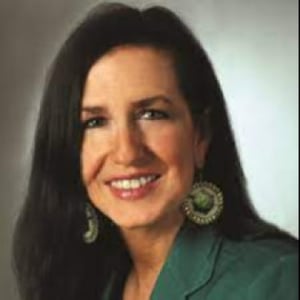
Shareholder, Greenberg Traurig
Jennifer Weddle is the Co-Chair of Greenberg Traurig's American Indian Law Practice and has wide-ranging experience in complex regulatory and jurisdictional issues, with a focus in Indian law, handling a variety of matters for tribal and non-tribal clients. She has a dynamic, inter-disciplinary practice that centers on providing strategies for resolving complex jurisdictional problems. Much of her practice focuses in the areas of tribal economic development and natural resources development. Jennifer also has U.S. Supreme Court experience, including serving as one of the attorneys for the respondent in Nevada v. Hicks (2001) and representing the petitioners in Ute Mountain Ute Tribe v. Padilla (2012) and Grand Canyon Skywalk Development, LLC v. Grand Canyon Resort Corporation (2013) and cert stage amici in Saginaw-Chippewa Tribe v. NLRB (2016) and United States v. Cooley (2020) and amici on the merits in Lewis v. Clarke (2017), U.S. v. Washington (2018), Carpenter v. Murphy (2018), McGirt v. Oklahoma (2020), and United States v. Cooley (2021).
Jennifer's work also includes negotiations for mineral leasing employment matters and representation before federal agencies. She has also been involved in civil litigation, working on numerous complex federal, state and tribal litigation matters, including class action tort litigation and large commercial disputes. Her transactional experience includes oil and gas renewables projects throughout the west, as well as Endangered Species Act work. Jennifer frequently assists tribes, banks and non-bank entities with financing and regulatory matters with Indian law components. Jennifer has wide-ranging project siting experience, including the application of NEPA, NHPA, and other environmental laws on tribal and public lands, including with respect to large linear multi-state energy and infrastructure projects. Jennifer has deep transactional, regulatory and litigation experience involving very complex matters with both legal and policy components.
Jennifer is past President of the National Native American Bar Association and past two-term Chair of the Federal Bar Association Indian Law Section. She currently serves as the Tenth Circuit Representative on the American Bar Association Standing Committee on the Federal Judiciary, a role she has held since 2018, spanning the evaluations for more than two dozen federal judicial nominees at every level of the federal courts. She is a ’00 graduate of Harvard Law School and a ’97 graduate of the University of Michigan (Classical Languages and Literature).
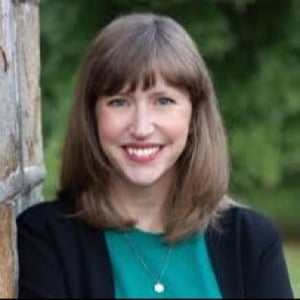
Partner, Donahue & Goldberg LLP
Megan M. Herzog is a Massachusetts-based attorney whose practice is focused on environmental, natural resources, and energy litigation and administrative advocacy. She is a member of the bar of the Commonwealth of Massachusetts, and practices in state and federal appellate courts.
Megan is a 2011 graduate of Stanford Law School, where she was Co-Editor-in-Chief of the Journal of Law, Science & Policy. She also holds an M.S. in Environment and Resources from Stanford University. Megan began her legal career with fellowships at the Environmental Law Institute in Washington, D.C. and at UCLA Law School's Emmett Institute on Climate Change and the Environment, where she advised state and local governments on climate change mitigation and adaptation policy. From 2016 to 2018, she served as staff attorney at Conservation Law Foundation's Boston office, where she worked on clean energy, ocean, and fisheries matters, including litigation in federal courts and before state public utilities commissions. Megan then spent nearly five years in the Massachusetts Office of the Attorney General, Energy and Environment Bureau, advocating before federal agencies and litigating cases concerning state and federal air, climate, energy, and natural resources laws. She led state government coalitions in several actions in the U.S. Supreme Court and the U.S. Court of Appeals for the D.C. Circuit, and before the Federal Energy Regulatory Commission.
Megan has published on a variety of environmental law topics, including climate change adaptation and federal regulation of greenhouse gas emissions. She has taught courses in environmental law, climate law, and ocean and coastal law at UCLA Law School and Tufts University. She has testified before legislative committees and given dozens of presentations on critical issues in environmental law, including for the American Law Institute, Energy Bar Association, California State Bar Association Environmental Law Section, and multiple law review symposia.
Solicitor General of Kentucky
Matt Kuhn serves as the Solicitor General of Kentucky. As Solicitor General, he oversees the office's civil and criminal appellate litigation and supervises the office's filing of amicus briefs. Since joining the Attorney General's office, he has argued in the Supreme Court of the United States, the United States Court of Appeals for the Sixth Circuit, and the Supreme Court of Kentucky. Before joining the Attorney General's office, he served as Chief Deputy General Counsel to the Governor of Kentucky. He also worked in private practice at Jones Day in Washington, D.C. and Stoll Keenon Ogden in Louisville, and served as a law clerk for Judge Raymond Gruender of the United States Court of Appeals for the Eighth Circuit. He is a graduate of Furman University and Columbia Law School.
Partner, Hunton Andrews Kurth
Mr. Leopold is a Partner with the law firm of Hunton Andrews Kurth in Washington, DC. He is the former Senate-confirmed general counsel of the U.S. EPA from 2018-2020, and he previously was a litigator at the U.S. Department of Justice, Environment and Natural Resources Division form 2007-2013. As EPA General Counsel, he counseled on the development and defense of EPA’s most significant rulemakings, including the Affordable Clean Energy Rule, the Navigable Waters Protection Rule, and the Safe Affordable Fuel‐Efficient (SAFE) Vehicles Rule, as well as several pesticide actions. He was personally involved in defending EPA in litigation, including the County of Maui v. Hawaii Wildlife Fund in the U.S. Supreme Court. Mr. Leopold’s prior government service also includes working in Florida as general counsel of the Florida Department of Environmental Protection. He now represents clients in regulatory advocacy before federal agencies, litigates federal environmental actions, and defends clients with EPA enforcement issues.
Regulatory Affairs Director, National Rural Electric Cooperative Association
Viktoria Seale is a regulatory affairs director for the National Rural Electric Cooperative Association (NRECA) which represents nearly 900 not-for-profit electric cooperatives and other rural electric utilities. She advocates before the federal government for NRECA members on environmental, permitting, and other regulatory issues.
Viktoria has extensive federal government experience and has worked on a wide range of complex legal, regulatory, legislative and policy matters. Prior to joining NRECA, she served as general counsel and chief of staff for the White House Council on Environmental Quality (CEQ) and helped lead significant initiatives including the comprehensive update and modernization of CEQ’s National Environmental Policy Act regulations in 2020. Viktoria also has worked for two chairmen of the U.S. House of Representatives Committee on Small Business. In addition, she has served as director of regional affairs and special assistant to the chief counsel for the U.S. Small Business Administration Office of Advocacy.
Viktoria received a B.A. in international studies from Rhodes College and a J.D. from Chicago-Kent College of Law, Illinois Institute of Technology. She is admitted to practice law in Texas. Viktoria resides in Alexandria, Virginia with her husband and daughter.
Solicitor, U.S. Department of Labor
Jonathan Berry is Solicitor at the U.S. Department of Labor, in service to President Trump’s agenda to put American workers first. He leads the Department’s lawyers in advising the Secretary and agency leadership on all aspects of law and in representing the Department in court. He was previously managing partner at Boyden Gray PLLC, where he provided strategic counsel and litigated on issues at the intersection of law, politics, and public policy. Earlier, he headed the regulatory office at Labor, and also served at the Department of Justice, in the first Trump Administration. Mr. Berry served as a law clerk to Judge Jerry E. Smith of the United States Court of Appeals for the Fifth Circuit, and to Associate Justice Samuel A. Alito, Jr., of the Supreme Court of the United States.

Founder & CEO, Edelson PC
Jay Edelson is the founder of Edelson PC. He is considered one of the nation’s leading plaintiff’s lawyers, with his firm having helped secure over $45 billion in settlements and verdicts on behalf of classes, individuals, and governmental entities. Law360 described Jay as a “Titan of the Plaintiff’s Bar.” Jay has been recognized as one of “America’s top trial lawyers” in the mass action arena. LawDragon named him one of the top Plaintiff Financial Lawyers in the country. He has been called “probably the best known, and most innovative, consumer privacy lawyer on the planet,” with he and his firm holding records for the largest trial verdict in a consumer privacy case ($925m), the largest consumer privacy settlement ($650m) and the largest TCPA settlement ($76m).
Jay has been appointed to represent state and local regulators on some of the largest issues of the day, ranging from opioids suits against pharmaceutical companies, to environmental actions against polluters, to breaches of trust against energy companies and for-profit hospitals, to privacy suits against Google, Facebook, and others.
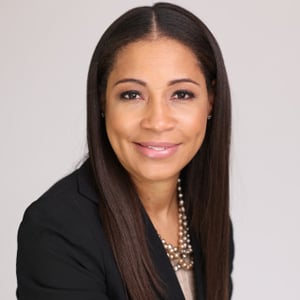
Professor of Law, Rutgers Law School
Stacy Hawkins is a frequent writer and sought-after speaker on the issue of employment law and diversity. She’s served on the Philadelphia Diversity Law Group and the Pennsylvania Bar Association Commission on Women in the Profession Diversity Task Force. She worked as a senior labor and employment attorney and as the director of diversity for major law firms.

Judge, United States Court of Appeals, District of Columbia Circuit
Judge Katsas was appointed to the D.C. Circuit in December 2017. He graduated from Princeton University and Harvard Law School, where he was an executive editor on the Harvard Law Review. Between 1989 and 1992, he served as a law clerk to Judge Edward Becker on the Third Circuit, to then-Judge Clarence Thomas on the D.C. Circuit, and to Justice Thomas on the Supreme Court. Between 1992 and 2001, he was an associate and then partner in the Washington office of Jones Day, where he specialized in appellate and complex civil litigation. Between 2001 and 2009, he served in many senior positions in the Department of Justice, including as Assistant Attorney General for the Civil Division and as Acting Associate Attorney General. In 2009, he returned to Jones Day. From January to December 2017, he served as Deputy Assistant to the President and Deputy Counsel to the President.
Before joining the bench, Judge Katsas argued more than 75 appeals, including three cases in the Supreme Court, 13 cases in the D.C. Circuit, and cases in every other federal court of appeals. By appointment of the Chief Justice, he served on the Advisory Committee on Appellate Rules from 2013 to 2017. In 2016, he was elected to membership in the American Academy of Appellate Lawyers.

Partner, Gibson Dunn & Crutcher
Jason C. Schwartz is a litigation partner in the Washington, D.C. office of Gibson Dunn, co-chair of the Labor & Employment Practice Group, General Counsel of the law firm and a member of the firm’s Executive Committee. Jason was recognized as an MVP in employment law five times, awarded by Law360 to “attorneys whose achievements in major litigation or transactions have set a new standard for accomplishment in corporate law.” Law360 referred to Jason as “an expert dismantler of worker class actions.”
Jason is ranked in Band 1 in Labor & Employment by Chambers USA, which stated, “He is a whip-smart, results-oriented and zealous advocate who is really committed to the client. His judgment is impeccable.” According to Chambers USA, “[c]lients note: He’s an excellent litigator with a good sense of the client’s needs in a business environment. He’s just a pleasure to work with. He’s disciplined, a great writer and gets great results.” Jason has been recognized as a Top 20 Labor & Employment Litigator in the U.S. by Benchmark Litigation; on the Top 100 list of the Nation’s Most Powerful Employment Attorneys by Human Resource Executive magazine; as a Top Lawyer in Employment Defense by Washingtonian Magazine; as a Leading Lawyer in Labor & Employment Disputes by The Legal 500 US; by Lawdragon 500 Leading Corporate Employment Lawyers for Labor & Employment (Litigation); in The Best Lawyers in America in the Employment Law-Management category; as a Super Lawyer by Washington, D.C. Super Lawyers; and as an Am Law Litigation Daily “Litigator of the Week” for his win in an independent contractor misclassification/wage-and-hour class action. He is a Fellow of the College of Labor & Employment Lawyers.
The practice group Jason co-leads was named by The American Lawyer as the Labor & Employment Litigation Department of the Year in its most recent competition. The American Lawyer noted, “with novel labor and employment issues swirling, Gibson Dunn’s litigators set standards and settle the law,” and that a case “typical for Gibson Dunn’s labor and employment team” is “high-profile,” “cutting-edge,” and “a victory.” The group was also recognized ten times as a Law360 Employment Practice Group of the Year and won The National Law Journal’s D.C. Labor & Employment Litigation Department of the Year competition for the last seven years in a row.
Jason’s practice includes sensitive workplace investigations, high-profile trade secret and non-compete matters, wage-hour and discrimination class actions, Sarbanes-Oxley and other whistleblower protection claims, executive and other significant employment disputes, labor union controversies, and workplace safety litigation.
Recent representative matters include:
Jason has also successfully tried several sensitive whistleblower matters for major national employers, and he prevailed in a precedent-setting Labor Department appeal of one of the first Sarbanes-Oxley whistleblower cases to proceed to trial. He prevailed for Enterprise Rent-A-Car in a case of first impression in which the U.S. Court of Appeals for the Third Circuit created a new joint employer test (the Enterprise test) and affirmed summary judgment for a parent corporation in a series of wage-hour class actions, defeating the plaintiffs’ effort to form a nationwide class (In re Enterprise Rent-A-Car Wage & Hour Employment Practices Litig. (3rd Cir. 2012)). In another case of first impression, he successfully argued in the Utah Supreme Court against the recognition of a tort for spoliation of evidence. In addition, he served as lead trial counsel for a retailer in a highly-publicized OSHA enforcement action relating to crowd control at a day-after-Thanksgiving sale.
Jason also has significant experience in administrative law and rulemakings. He served as counsel to the Fair Labor Standards Reform Coalition, and he played a leading role in preparing comments on behalf of the business community relating to the U.S. Department of Labor’s overtime exemption regulations.
Jason served for many years as the Secretary of the Retail Litigation Center, and he testified before Congress regarding OSHA enforcement programs on behalf of the U.S. Chamber. He frequently speaks and writes on employment law and trade secret related topics. He is the co-author of the treatise Whistleblower Law: A Practitioner’s Guide, published by American Lawyer Media/Law Journal Press, and he previously authored the annual “Trade Secrets Litigation Round-Up” published by Bloomberg BNA.
Jason earned his law degree magna cum laude from Georgetown University Law Center, where he was elected to the Order of the Coif and received the George Brent Mickum III Prize and the Charles A. Keigwin Award for the best academic record in first year courses. From 1995 to 1996, he worked as a Legislative Assistant to Congressman Jon D. Fox. Jason received a B.A. degree in international affairs cum laude in 1994 from The George Washington University.
Jason is admitted to practice in the District of Columbia, Virginia and Maryland, as well as in numerous federal courts. He served for many years as an officer and board member of the Charles E. Smith Jewish Day School, currently serves as a member of the Washington Lawyers Committee of the U.S. Holocaust Memorial Museum, and provides pro bono employment counsel to numerous community organizations.

Samuel H. McCoy II Professor of Law, University of Virginia School of Law
John F. Duffy is the Samuel H. McCoy II Professor of Law and Class of 1966 Research Professor of Law at the University of Virginia School of Law, where he teaches administrative law, torts and intellectual property. Professor Duffy has published articles on a wide range of administrative law and regulatory issues in journals such as University of Chicago Law Review, Yale Law Journal, Stanford Law Review, Virginia Law Review, Columbia Law Review, Texas Law Review, Northwestern University Law Review, NYU Law Review, University of Pennsylvania Law Review and the Supreme Court Review. His 1998 article Administrative Common Law in Judicial Review, 77 Tex. L. Rev. 113 (1998), was one of the first articles to criticize the Chevron doctrine as being irreconcilable with § 706 of the APA; it won the American Bar Association’s Scholarship Award in Administrative Law. His 2008 article “Are Administrative Patent Judges Unconstitutional?” was covered on National Public Radio), in the New York Times (Adam Liptak, In One Flaw, Questions on Validity of 46 Judges, May 6, 2008), and in the Wall Street Journal (Dan Slater, Patently Unconstitutional, May 6, 2008). The NYT and WSJ agreed that he was “a different kind of law professor,” “one of the lucky few” whose “writings actually wind up changing the law.”
As an attorney in the courts, Duffy has twice successfully convinced the Supreme Court to overturn lower court doctrines that had been applied in many cases over decades but that were unanimously held to be irreconcilable with Supreme Court precedents. See TC Heartland v. Kraft Foods Group Brands, 581 U.S. 258 (2017); KSR v. Teleflex, 550 U.S. 398 (2007).
Prior to entering legal academics, Duffy clerked on the D.C. Circuit for Stephen Williams and on the Supreme Court for Antonin Scalia. While clerking, he became known as Justice Scalia’s “hapless law clerk,” who had been tasked with unearthing three-quarters of a century of legislative history that made “no difference” to the outcome in an otherwise forgettable case. See Conroy v. Aniskoff, 507 U.S. 511, 527-28 (1993) (Scalia, J., concurring in the judgment).
In earlier days, Duffy enjoyed being a professional blackjack player unwelcome in all Atlantic City casinos and a semi-professional road runner (best marathon time 2:24:33). He holds an A.B. in physics from Harvard and a J.D. from the University of Chicago.

Maurice and Hilda Friedman Professor of Law, Columbia Law School; CEO, New Civil Liberties Alliance
Philip Hamburger is the Maurice and Hilda Friedman Professor of Law at Columbia Law School, and Chief Executive Officer at the New Civil Liberties Alliance. Before coming to Columbia, he was the John P. Wilson Professor at the University of Chicago Law School.
He writes on constitutional law and its history—with particular emphasis on religious liberty, freedom of speech and the press, judicial office, administrative power, and unconstitutional conditions.
His books are Separation of Church and State (Harvard 2002), Law and Judicial Duty (Harvard 2008), Is Administrative Law Unlawful? (Chicago 2014), The Administrative Threat (Encounter 2017), and Liberal Suppression: Section 501(c)(3) and the Taxation of Speech (Chicago 2018). A forthcoming book is Purchasing Submission: Conditions, Power, and Freedom (Harvard 2021).
He is a member of the American Academy of Arts and Sciences, and he has served on the board of directors of the American Society for Legal History. He has twice received the Sutherland Prize for the most significant contribution to English legal history, and has been awarded the Henry Paolucci - Walter Bagehot Book Award, the Hayek Book Prize, and the Bradley Prize.

Associate Dean for Research and Intellectual Life, McKnight Presidential Professor in Law, Distinguished McKnight University Professor, Harlan Albert Rogers Professor in Law, Associate Director, Corporate Institute, University of Minnesota Law School
Professor Kristin E. Hickman is the McKnight Presidential Professor in Law, a Distinguished McKnight University Professor, and Harlan Albert Rogers Professor in Law at the University of Minnesota Law School. She also has taught at Harvard Law School and Northwestern University School of Law. Professor Hickman teaches and writes primarily in the areas of administrative law, tax administration, and statutory interpretation. Her articles on these topics have appeared in the Columbia Law Review, Cornell Law Review, Virginia Law Review, Duke Law Journal, and other publications. She also co-authors the Administrative Law Treatise with Richard J. Pierce, Jr., and a casebook on federal administrative law with Pierce and Christopher J. Walker. Her scholarly work has been cited several times in opinions of the United States Supreme Court as well as regularly in lower court judicial opinions and court briefs.
In 2018-19, Professor Hickman served as Special Adviser to the Administrator of the Office of Information and Regulatory Affairs in Washington, D.C. She presently serves as a Senior Fellow, and previously served as a public member and chair of the judicial review committee, for the Administrative Conference of the United States. She also is a Fellow of the American College of Tax Counsel.
Professor Hickman received her B.S. degree in business administration with a concentration in accounting and a secondary major in history from Trinity University in San Antonio, Texas. After practicing for several years as a certified public accountant, Professor Hickman earned her J.D. degree, magna cum laude, from Northwestern University School of Law, where she was awarded the Raoul Berger Prize and the Lowden Wigmore Prize for her scholarly writings. Following law school, Professor Hickman clerked for The Honorable David B. Sentelle of the United States Court of Appeals for the District of Columbia Circuit and practiced law as an associate with the Chicago office of Skadden, Arps, Slate, Meagher & Flom, concentrating on corporate and international tax transactions and matters.

Deputy Secretary of Agriculture, U.S. Department of Agriculture
Judge Stephen Alexander Vaden was appointed as the Deputy Secretary of the U.S. Department of Agriculture on July 7, 2025. Alongside Secretary Brooke L. Rollins, Deputy Secretary Vaden leads the Department’s operations and implements policies that support America’s food and farm systems. A native of Union City, Tennessee, Deputy Secretary Vaden brings expertise in agricultural policy, law, and rural development. Previously, he served as a judge on the U.S. Court of International Trade and as General Counsel of USDA. Throughout Deputy Secretary Vaden’s time as General Counsel, he led successful Supreme Court litigation, advanced regulatory reform, and supported the implementation of the 2018 Farm Bill. He is a graduate of Yale Law School and Vanderbilt University. A public servant with strong agricultural roots, Deputy Secretary Vaden is committed to revitalizing rural America and ensuring an abundant, affordable, and safe U.S. food supply.
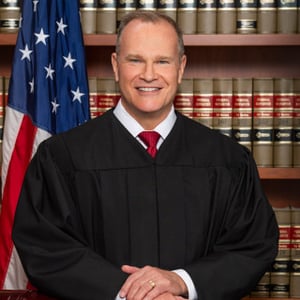
Judge, U.S. District Court for the Central District of California
John W. Holcomb is a U.S. District Judge for the Central District of California, Southern Division, in Santa Ana, California. Judge Holcomb was nominated for that position by President Donald J. Trump in November 2019 and was confirmed by the U.S. Senate in September 2020.
Judge Holcomb earned his S.B. in civil engineering from the Massachusetts Institute of Technology in 1984. For the next five years, Judge Holcomb served as a commissioned officer in the United States Navy, including assignments aboard the battleship U.S.S. New Jersey (BB62) and with the Joint Staff at the Pentagon. In 1993, Judge Holcomb received his M.B.A. from Harvard Business School and his J.D., cum laude, from Harvard Law School. Judge Holcomb then served as a law clerk for Judge Ronald Barliant of the U.S. Bankruptcy Court for the Northern District of Illinois.
Thereafter, Judge Holcomb joined Irell & Manella LLP as an associate, practicing bankruptcy law and general civil litigation. In 1997, Judge Holcomb joined the intellectual property law firm of Knobbe, Martens, Olson & Bear, LLP, and he was elevated to partner in 2002. As a partner at Knobbe Martens, Judge Holcomb participated in several speaking engagements regarding the intersection of intellectual property and bankruptcy law. In 2014, Judge Holcomb co-authored the chapter on U.S. Law in Licenses and Insolvency, A Practical Guide to the Effects of Insolvency on IP License Agreements, which was published by the International Bar Association. Judge Holcomb retired from Knobbe Martens in 2018, and he briefly practiced as a bankruptcy and litigation sole-practitioner before joining the firm Greenberg Gross LLP as a partner in 2019.

U.S. Court of Federal Claims and Jurist-In-Residence Professor of Law, The University of Akron School of Law
Judge Ryan T. Holte was sworn in as a judge on the United States Court of Federal Claims in July 2019. Prior to confirmation he served as the David L. Brennan Professor of Law and Director of the Center for Intellectual Property Law and Technology at The University of Akron School of Law (2017-2019) and an assistant professor of law at Southern Illinois University School of Law (2013-2017). Judge Holte has written and presented widely on patent law subjects and empirical legal studies of Federal Circuit and district court patent law cases. His most recent articles were published in the Iowa Law Review (2019), George Mason Law Review (2018), and Washington Law Review (2017).
In practice, Judge Holte served for six years as general counsel and partner of an electrical engineering technology company and is co-inventor of multiple patents related to Systems and Methods for Countering Satellite-Navigated Munitions. Prior to entering academia, Judge Holte practiced as a litigation attorney at the Federal Trade Commission and an associate in the Intellectual Property Practice Group at Jones Day. Prior to practice, he served as a law clerk to Judge Stanley F. Birch, Jr. on the United States Court of Appeals for the Eleventh Circuit and as a law clerk to Judge Loren A. Smith on the United States Court of Federal Claims.
Judge Holte received his JD from the University of California Davis School of Law and his BS, magna cum laude, in engineering from the California Maritime Academy where he was a First Class graduate of the Corps of Cadets Third Engineering Division and sailed as a U.S. Merchant Marine oiler.

Associate Dean for Academic Affairs, Austin E. Owen Research Scholar & Professor of Law, The University of Richmond School of Law
Dean Kristen Jakobsen Osenga teaches and writes in the areas of patent law, antitrust, and legislation and regulation. Some of her recent scholarship focuses on standard development organizations, patent eligible subject matter, patent licensing firms, litigation and remedies for patent infringement, and patent law reform. She has written numerous law review articles on these and other topics, as well as book chapters and op eds on various aspects of patent law. Additionally, she has spoken on these issues at many academic conferences and bar events. Dean Osenga is Chief Policy Counselor for the Inventors Defense Alliance, as well as an active member of the Federal Circuit Bar Association and the American Intellectual Property Law Association.
Dean Osenga received a B.S. degree in Biomedical Engineering from the University of Iowa, an M.S. degree in Electrical Engineering from Southern Illinois University – Carbondale, and a J.D. from the University of Illinois College of Law, where she graduated magna cum laude. After law school, she practiced at the law firm of Finnegan, Henderson, Farabow, Garrett, & Dunner LLP, (now Finnegan) where she did patent prosecution and litigation. She then clerked for the Judge Richard Linn of the U.S. Court of Appeals for the Federal Circuit. After clerking, she entered academia, teaching first at Chicago-Kent College of Law and then at the University of Richmond, where she has been since 2006. She has also been a Visiting Professor at Emory University School of Law and at William & Mary School of Law.
Vice President and Counsel of Government Affairs, QUALCOMM Incorporated
Laurie Self is Vice President and Counsel of Government Affairs at Qualcomm Incorporated, where she specializes in U.S. patent policy matters at the federal and state level. Based in Washington, D.C., Ms. Self also supports Qualcomm’s government affairs initiatives to promote strong intellectual property rights in emerging markets. Ms. Self’s particular focus is to ensure that U.S. intellectual property laws and policies provide the necessary protections and incentives to support the Company’s R&D-driven business model. Prior to her arrival at Qualcomm in July 2012, Ms. Self was a partner at the law firm Covington & Burling where she chaired the firm’s intellectual property practice group.

Head of Patent Policy, Google
Laura Sheridan is Head of Patent Policy at Google, advocating for an effective patent examination process, a patent litigation system that operates fairly for all participants, and transparency in these areas. She has shared her views on patent issues in numerous policy dialogues, including testifying before Congress on the intersection of AI and patents. Her patent policy work is shaped by years of private practice experience in patent prosecution, litigation, due diligence, and post-grant practice before the Patent Office.
An active member of the IP community, Laura is part of the Intellectual Property Owners Association delegation to IP5 Industry, a group which engages on procedural harmonization matters with the IP5 Offices (the Offices of China, Europe, Japan, Korea, and the US). Laura also helped to form the New York chapter of ChIPs and is a member of the Advisory Board for the NYU Law Engelberg Center on Innovation Law & Policy. Laura studied mechanical engineering at Cornell University and received her J.D. from Fordham Law School.
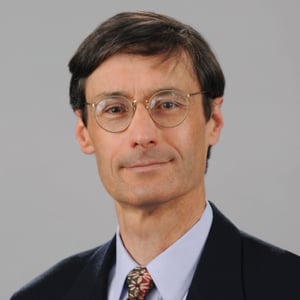
General Counsel, American Federation of Labor–Congress of Industrial Organizations
Craig Becker is General Counsel to the AFL-CIO. Before assuming that position, Craig was a Member of the National Labor Relations Board having been appointed by President Obama in March 2010 and serving until January 2012.
Before joining the Board, Craig served as Associate General Counsel to both the SEIU and the AFL-CIO. After law school Craig clerked for the Honorable Donald P. Lay, Chief Judge of the United States Court of Appeals for the Eighth Circuit and then became a partner in a Washington, D.C. law firm that was counsel to the American Federation of State, County and Municipal Employees.
Craig was a Professor of Law at the UCLA School of Law between 1989 and 1994 and has also taught at Yale, the University of Chicago and Georgetown Law Schools. Craig has published numerous articles on labor and employment law in scholarly journals as well as in the popular press and has argued labor and employment cases in virtually every federal court of appeals and before the United States Supreme Court.
Craig graduated Yale College in 1978 and received his J.D. in 1981 from Yale Law School where he was an Editor of the Yale Law Journal.
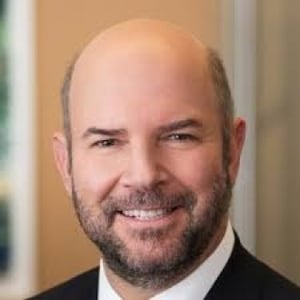
Partner, Morgan, Lewis & Bockius LLP
Philip A. Miscimarra is the former Chairman of the National Labor Relations Board (NLRB). Phil leads the firm’s NLRB special appeals practice and is co-leader of Morgan Lewis Workforce Change, which manages all employment, labor, benefits, and related issues arising from mergers, acquisitions, startups, workforce reductions, and other types of business restructuring. He represents clients on a wide range of labor and employment issues, with a focus on labor-management relations, business acquisitions and restructuring, and employment litigation. Phil is also a Senior Fellow at the University of Pennsylvania's Wharton School and the Wharton Center for Human Resources. He is admitted in Illinois only, and his practice is supervised by DC Bar members.
Phil was named Chairman of the NLRB by President Donald J. Trump on April 24, 2017, after previously serving as Acting Chairman and a Board Member. He was appointed to the NLRB by President Barack Obama on April 9, 2013, and was approved unanimously by the Senate Committee on Health, Education, Labor, and Pensions on May 22, 2013. He was confirmed by voice vote in the US Senate on July 30, 2013, and served from August 7, 2013, to December 16, 2017. Upon the completion of his term, Phil served on the NLRB longer than 26 other board members over the past 30 years.
Phil is the author or co-author of several books involving labor law issues, including The NLRB and Managerial Discretion: Subcontracting, Relocations, Closings, Sales, Layoffs, and Technological Change (2d ed. 2010) (by Miscimarra, Turner, Friedman, Callahan, Conrad, Lignowski and Scroggins); The NLRB and Secondary Boycotts (3d ed. 2002) (by Miscimarra, Berkowitz, Wiener and Ditelberg); and Government Protection of Employees Involved in Mergers and Acquisitions (1989 and 1997 supp.) (by Northrup and Miscimarra); and other publications. He has also testified on labor and employment law issues in the United States Congress.
Chambers USA named Phil one of the leading lawyers for employment law in the United States from 2004 to 2012, based on the views of clients, peers, and other industry professionals. He has been described as a "fantastic lawyer" and "prolific writer," with clients admiring his "multilayered abilities and business savvy" and his "high level of integrity."

Judge, United States Court of Appeals, Sixth Circuit
Judge Readler earned his undergraduate and law degrees from the University of Michigan. After graduating, he served as a law clerk to Judge Alan Norris of the United States Court of Appeals for the Sixth Circuit. Judge Readler then began practicing law in the Columbus office of the international law firm Jones Day, eventually spending ten years as a partner in the firm’s Issues and Appeals Practice Group. While at Jones Day, Judge Readler appeared in state and federal trial and appellate courts around the country, most frequently the Supreme Court of Ohio and the Sixth Circuit. Judge Readler also successfully argued before the United States Supreme Court in McQuiggin v. Perkins on behalf of an inmate claiming actual innocence. His other pro bono representations include representing capital defendants before the Tenth Circuit and the Supreme Court of Ohio, as well as representing defendants sentenced to life in prison before the Sixth Circuit. While at Jones Day, Judge Readler traveled to Nairobi with Lawyers Without Borders to train Kenyan lawyers in prosecuting domestic violence cases, and he was also a recipient of the American Marshall Memorial Fellowship awarded by the German Marshall Fund of the United States. Following his career in private practice, Judge Readler served as Acting Assistant Attorney General for the Civil Division of the United States Department of Justice from 2017 to 2019. In that role, Judge Readler led and supervised over 1,000 lawyers in the Department’s largest litigating division, briefing and arguing several cases on behalf of the United States in federal courts across the country, including high-profile cases significant to the Administration and the Department. In March 2019, Judge Readler was confirmed to serve as a Circuit Judge on the Sixth Circuit. He resides in Columbus.
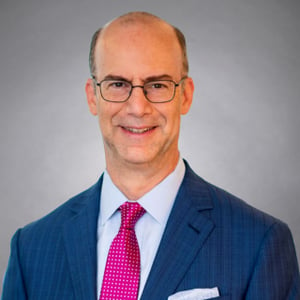
Managing Director & Head of Global Policy and Public Investment, DigitalBridge Investment Management
Jonathan S. Adelstein is a Managing Director and Head of Global Policy and Public Investment at DigitalBridge Investment Management. In this role, Mr. Adelstein works with all DigitalBridge portfolio companies on public policy and strategic regulatory matters and reviews policy impacts on potential investments.
Prior to joining DigitalBridge, Mr. Adelstein was President and CEO of the Wireless Infrastructure Association (WIA), where he represented over 200 businesses that build, own, and operate wireless infrastructure, including infrastructure owners, developers, carriers, and professional service firms.
Prior to WIA, Mr. Adelstein was nominated to positions by both President Barack Obama and President George W. Bush and confirmed unanimously for each by the U.S. Senate. Under President Obama, Mr. Adelstein headed the U.S. Department of Agriculture’s Rural Utilities Service as Administrator. There, he led the investment of nearly $7 billion under the Recovery Act in rural broadband and water infrastructure and oversaw a $60 billion loan portfolio in rural electric, telecommunications, and water infrastructure. Under President Obama, Mr. Adelstein was appointed to the White House National Science and Technology Council, which coordinates science and technology policy across the Federal government, and the White House Business Council, leading Council meetings with business leaders across America.
Mr. Adelstein was nominated by President Bush and served as Commissioner of the Federal Communications Commission (FCC) from 2002 to 2009. At the FCC, he worked to achieve bipartisan progress on issues including spectrum auctions, broadband expansion, widening access to the Internet and media diversity.
Before the FCC, Mr. Adelstein served at the U.S. Senate, in a number of legislative staff positions, culminating as a senior policy advisor to the Senate Majority Leader.
Mr. Adelstein received an M.A. in History and a B.A., with Distinction, in Political Science from Stanford University. He instructed undergraduates in history as a Teaching Fellow at Harvard University and a Teaching Assistant at Stanford University. He is a graduate of Phillips Academy, Andover.
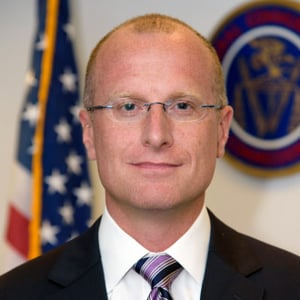
Chairman, Federal Communications Commission
Brendan Carr is the Chairman of the Federal Communications Commission. He previously served as the senior Republican Commissioner and as the FCC’s General Counsel. Nominated by both President Trump and President Biden, Carr has been confirmed unanimously by the Senate three times.
Described by Axios as “the FCC’s 5G crusader,” Carr has led the FCC’s work to modernize its infrastructure rules and accelerate the buildout of high-speed networks. His reforms cut billions of dollars in red tape, enabled the private sector to construct high-speed networks in communities across the country, and extended America’s global leadership in 5G.
Chairman Carr is also focused on expanding America’s skilled workforce—the tower climbers and construction crews needed to build next-gen networks. His jobs initiative promotes community colleges and apprenticeships as a pipeline for good-paying 5G jobs. He is recognizing America’s talented tower crews through a series of “5G Ready” Hard Hat presentations.
Chairman Carr leads a groundbreaking telehealth initiative at the FCC. The Connected Care Pilot Program supports the delivery of high-quality care to low-income Americans and veterans.
Chairman Carr’s time outside of Washington helps inform his approach to the job. He regularly hits the road to hear directly from community members and learn how changes in federal policies could help improve their lives.
Chairman Carr brings nearly 20 years of private and public sector experience in communications and tech policy to his position. Before joining the FCC as a staffer back in 2012, he worked as an attorney at Wiley Rein LLP in the firm’s appellate, litigation, and telecom practices. Previously, Chairman Carr clerked on the U.S. Court of Appeals for the Fourth Circuit for Judge Dennis Shedd. After attending Georgetown University for his undergrad, Chairman Carr earned his J.D. magna cum laude from the Catholic University of America’s Columbus School of Law where he served as an editor of the Catholic University Law Review.
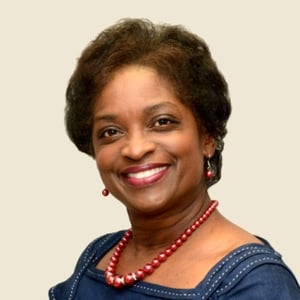
Principal, MLC Strategies
Mignon Clyburn spent nearly nine years at the Federal Communications Commission (FCC) affirming her commitment to closing persistent digital and opportunity divides that challenge rural, Native and low wealth communities.
She pushed for the modernization of the FCC’s Lifeline Program, which assists low income consumers in defraying the cost of voice and broadband service; championed diversity in media ownership; initiated Inmate Telephone Calling Services reforms; brokered a technical solution that eliminated long-standing bottlenecks that prevented small, rural telecommunications carriers from expanding their network services nationwide; emphasized diversity and inclusion in the STEM fields; and fought to preserve a free and open internet (Net Neutrality).
Her government service began with an election to the South Carolina Public Service Commission (SCPSC) in 1998. Prior to serving 11 years on the SCPSC, Clyburn's interest in the fields of media and (tele)communications gained traction during a 14 year journey as the publisher and general manager of The Coastal Times, a family-founded, Charleston-based weekly newspaper focusing on issues affecting the African American community.
The desire to close persistent economic divides continued with the award of a Leadership in Government Fellowship from the Open Society Foundations (OSF) in the summer of 2018. That support allowed Clyburn to continue making the business case for the elimination of the predatory telephone calling rates that burden families and legal counsel that make calls to and from American detention, jail and prison facilities.
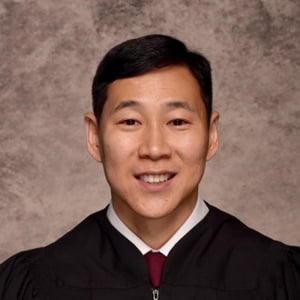
Circuit Judge, United States Court of Appeals for the Second Circuit
Michael H. Park was appointed to the U.S. Court of Appeals for the Second Circuit in May 2019. He earned his A.B. magna cum laude from Princeton University and his J.D. from Yale Law School, where he served as Managing Editor of the Yale Law Journal. Upon graduation from law school in 2001, Judge Park served as a law clerk to then-Judge Samuel A. Alito, Jr. on the Third Circuit, for whom he also clerked on the Supreme Court during the 2008 Term. Judge Park was an associate in the New York office of the Wilmer Hale law firm from 2002 to 2006, and he served as an Attorney-Adviser in the U.S. Department of Justice, Office of Legal Counsel from 2006 to 2008. Judge Park worked in the New York office of the Dechert law firm, first as counsel (2009-2011) and then as a partner (2012-2015). In 2015, Judge Park joined the law firm Consovoy McCarthy Park as a name partner, where he specialized in appellate and complex civil litigation. During that time, he also served as an adjunct professor at the Antonin Scalia Law School at George Mason University.
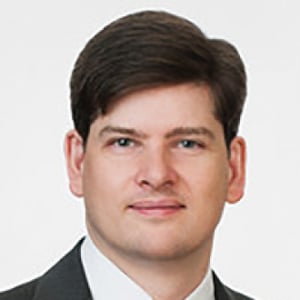
Commissioner, Federal Communications Commission
Nathan Simington was nominated to serve as a Commissioner of the FCC by President Donald J. Trump. He was confirmed by the United States Senate in 2020.
Commissioner Simington brings both private and public-sector experience to the Commission. Previously, he served as Senior Advisor at the National Telecommunications and Information Administration (NTIA.) In this role, he worked on many aspects of telecommunications policy, including spectrum allocation and planning, broadband access, and the US Government’s role in the Internet. Prior to joining the Commission, he was senior counsel to Brightstar Corp., an international mobile device services company. In this capacity, he led and negotiated telecommunications equipment and services transactions with leading providers in over twenty countries. Prior to joining Brightstar, he worked as an attorney in private practice.
Commissioner Simington is a graduate of the University of Michigan Law School. He also holds degrees from the University of Rochester and Lawrence University.
Commissioner Simington grew up in Saskatchewan, Canada. He became a United States citizen and now lives in McLean, Virginia with his wife and three children.

Judge, United States Court of Appeals, Fifth Circuit
Judge Duncan received his B.A. from Louisiana State University in 1994, his J.D. from the Paul M. Hebert Law Center at Louisiana State University in 1997, and his LL.M. from Columbia Law School in 2004.
After graduating from law school, he clerked for Louisiana-based Circuit Judge John Malcolm Duhé Jr. of the United States Court of Appeals for the Fifth Circuit.
From 2008–2012, Duncan served as Appellate Chief for Louisiana's Attorney General's office. From 2012–2014, he served as general counsel of the Becket Fund for Religious Liberty. From 2004-2008, he was an assistant professor of law at the University of Mississippi School of Law.
Before becoming a judge, Duncan practiced at the Washington, D.C. firm of Schaerr Duncan LLP, where he was a founding partner. He was appointed by President Trump to the United States Court of Appeals for the Fifth Circuit on May 1, 2018.
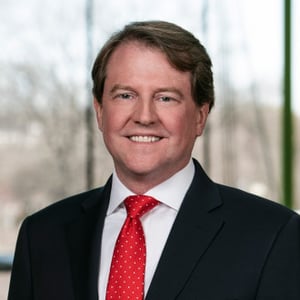
Partner, Jones Day
Don McGahn represents clients before government agencies, in enforcement matters, and in court disputes arising from government regulation or action. He handles litigation, crisis management, regulatory compliance, and political issues.
Prior to rejoining Jones Day in 2019, Don served as Counsel to the President of the United States, advising Donald J. Trump on all legal issues concerning the President and his administration, including constitutional and statutory authority, executive orders, international agreements, tariffs, trade, administrative law, and national security. Don also managed the judicial selection process for the President. During Don's tenure, a historic number of judges were appointed to the federal bench, including two Supreme Court justices. In addition, he spearheaded President Trump's deregulation efforts, which resulted in deregulation at record rates. Following Don's departure from the White House, the President appointed him to the Council of the Administrative Conference of the United States, a nonpartisan, independent agency dedicated to promoting improvement to administrative agency processes.
Don's accomplishments have been recognized at the highest levels of government. Senate Majority Leader Mitch McConnell stated that Don concluded his tenure "not only as the best White House Counsel I've seen on the job, but more broadly, as one of the most successful and consequential aides to any President in recent memory."
Don was nominated by President George W. Bush in 2008, and confirmed in the Senate by unanimous consent, to serve as a member of the Federal Election Commission. He also served as outside Counsel to the Committee on House Administration during the 113th and 114th Congresses and as general counsel to the National Republican Congressional Committee.

Solicitor General of Missouri
Lou Capozzi is the Solicitor General of Missouri. In that role, he oversees all appeals for the State of Missouri. He is also the Director of Special Litigation and litigates high-stakes cases at trial.
Lou previously worked at Jones Day, where he specialized in administrative and election law. At Jones Day, he helped lead a six-week bench trial in federal court, during which he cross-examined important expert and fact witnesses, delivered closing argument, asserted evidentiary objections, and argued several motions, including a motion for a directed verdict. He has also authored briefs at all phases of litigation--from evidentiary motions to dispositive motions and appeals.
Lou is also Lecturer in Law at the University of Pennsylvania Carey Law School and a Public Member of the Administrative Conference of the United States. He has published several academic articles focusing on administrative law.
Lou clerked for Justice Neil Gorsuch at the United States Supreme Court in the 2021 Term, as well as for Judges J. Harvie Wilkinson III of the United States Court of Appeals for the Fourth Circuit and Anthony Scirica of the United States Court of Appeals for the Third Circuit. He gradated as the valedictorian from the University of Pennsylvania Law School in 2019.
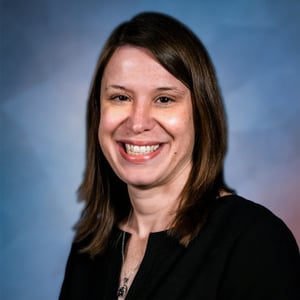
Senior Director of Strategic Partnerships, First Liberty Institute
Lisa Budzynski Ezell is the former Vice President and Director of the Federalist Society’s Lawyers Chapters. In this role, she managed a growing network of over 90 lawyers chapters nationwide, including oversight of leadership recruitment, chapter programming, state conferences, civics education outreach, and young lawyers activities. She holds a Bachelor of Arts degree from Saint Mary’s College in Political Science and History and a Master of Public Policy from George Mason University.
Associate, Covington & Burling LLP
Eli Nachmany is an associate at Covington & Burling LLP in the Washington, DC, office. He clerked for Judge Steven J. Menashi of the U.S. Court of Appeals for the Second Circuit. Eli graduated magna cum laude from Harvard Law School, where he was Editor-in-Chief of the Harvard Journal of Law & Public Policy. Prior to law school, Eli served as the speechwriter to the U.S. Secretary of the Interior and as a domestic policy aide in the White House Office of American Innovation. He graduated summa cum laude from New York University with a B.S. in Sports Management. Eli’s scholarship on administrative law and executive power has appeared in the BYU Law Review, George Mason Law Review, Wake Forest Law Review, and Yale Law Journal Forum.
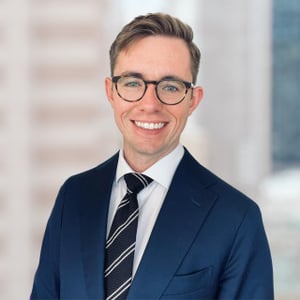
Deputy General Counsel, CRC Advisors

Young Lawyers Special Session: Making Winning Arguments
Whitney D. Hermandorfer, Robert E. Long, Jay Mitchell, Kathryn Kimball Mizelle, Edward Mark Wenger
The state and federal bench has transformed in recent years, with more textualist/originalist judges appointed...
A Seat at the Sitting - March 2024
Robert Corn-Revere, Michael Francisco, Tony Francois, Eli Nachmany, Brett Nolan, Jennifer H. Weddle
Each month, a panel of constitutional experts convenes to discuss the Court’s upcoming docket sitting...
When Life Gives You Lemons: A Conversation with Hon. Kyle Duncan & Don McGahn
DC Young Lawyers Chapter
Washington, DCSaturday Breakout Session 1: Introduction to the Lawyers Division
2024 National Student Symposium
Cambridge, MACourthouse Steps Oral Argument: Ohio v. Environmental Protection Agency
Megan Herzog, Matthew Kuhn, Matthew Z. Leopold, Viktoria Z. Seale
On February 21, 2024, the Supreme Court will hear oral argument in Ohio v. Environmental...
Race at Work: Can Businesses Treat People Differently on the Basis of Race?
Jonathan Berry, Jay Edelson, Stacy Hawkins, Gregory G. Katsas, Jason C. Schwartz
In June of last year, the Supreme Court held that consideration of applicants’ race in...
Chevron Under Review: Courthouse Steps Preview: Loper Bright & Relentless
John F. Duffy, Philip A. Hamburger, Kristin E. Hickman, Stephen Alexander Vaden
Chevron v. NRDC (1984) and subsequent precedents held that courts should defer to agency interpretations...
The Injunction Function: Is IP Law Promoting Markets for Innovators and Creators?
John W. Holcomb, Ryan T. Holte, Kristen Osenga, Laurie Self, Laura Sheridan
In patent and copyright law, injunctions are now a subject of significant policy debate. Innovators...
Nightmare on Half Street? Free Speech and the NLRB
Craig Becker, Philip A. Miscimarra, Chad A. Readler
Is the National Labor Relations Board doing more than any other federal agency to impose...
Originalism and the Communications Act of 1934
Jonathan Adelstein, Brendan Carr, Mignon Clyburn, Michael H. Park, Nathan Simington
In recent months, the U.S. Senate confirmed a third Democratic Commissioner at the Federal Communications...