
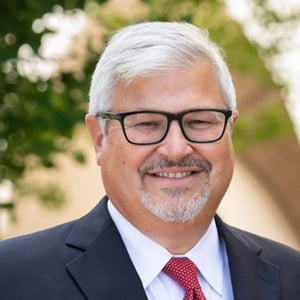
Learned Hand Professor of Law, Harvard Law School
Jack Goldsmith is the Learned Hand Professor of Law at Harvard Law School, a non-resident Senior Fellow at the American Enterprise Institute, and co-founder of Lawfare. He teaches and writes about presidential power, national security law, federal courts, conflict of laws, international law, and internet law. Before coming to Harvard, Professor Goldsmith served as Assistant Attorney General, Office of Legal Counsel from 2003-2004, and Special Counsel to the Department of Defense from 2002-2003. He was a Professor at the University of Chicago Law School from 1997-2002, and at the University of Virginia School of Law from 1994-1997. Before entering the academy, Professor Goldsmith was an associate at Covington & Burling in Washington, D.C., from 1992-1994. He clerked for Supreme Court Justice Anthony M. Kennedy from 1990-1991, for Court of Appeals Judge J. Harvie Wilkinson from 1989-1990, and for Judge George Aldrich on the Iran-U.S. Claims Tribunal from 1991-1992. Professor Goldsmith received a B.A. from Washington and Lee University, a B.A. and M.A. from Oxford University, and a J.D. from Yale Law School.
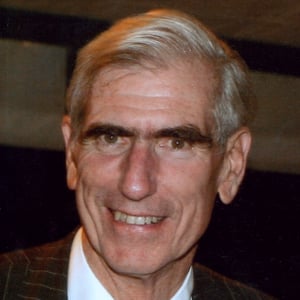
Founding Partner, Boyden Gray & Associates
Ambassador C. Boyden Gray is the founding partner of Boyden Gray & Associates, a law and strategy firm in Washington, D.C., focused on constitutional and regulatory issues.
Mr. Gray worked in the White House for twelve years, first as counsel to the Vice President during the Reagan administration and then as White House Counsel to President George H.W. Bush. In the Reagan administration, he was Counsel to the Presidential Task Force on Regulatory Relief, for which he wrote the original Executive Order 12291 requiring cost-benefit analysis and White House review of regulations (later renumbered as current EO 12866). In the George H.W. Bush Administration, Mr. Gray was in charge of judicial selection and was also instrumental in the enactment of the Clean Air Act Amendments of 1990, the Energy Policy Act of 1992, and a cap-and-trade system for acid rain emissions. In 1993, he received the Presidential Citizens Medal. Under President George W. Bush, Mr. Gray was U.S. Ambassador to the European Union and U.S. Special Envoy to Europe for Eurasian Energy.
Mr. Gray practiced law for 25 years at the law firm of Wilmer, Cutler & Pickering and was chairman of the Administrative Law and Regulatory Practice Section of the American Bar Association from 2000 to 2002. Early in his career, Mr. Gray helped to develop the Business Roundtable and served as its first counsel. He is an adjunct professor at Antonin Scalia Law School and a former adjunct professor at NYU Law School (teaching energy and environmental law). Mr. Gray is on the Board of Directors of the Atlantic Council, the Federalist Society, Reason Foundation, and the Trust for the National Mall.
Mr. Gray earned his A.B. magna cum laude from Harvard, where he was an editor of the Crimson, and his J.D. with high honors from the University of North Carolina at Chapel Hill, where he was editor-in-chief of the Law Review. Mr. Gray served in the United States Marine Corps, and after law school, he clerked for Earl Warren, Chief Justice of the United States Supreme Court.
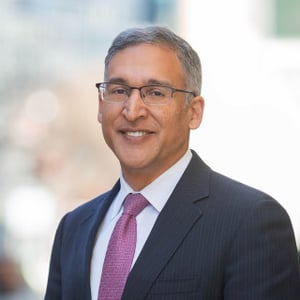
Partner, Millbank LLP
Mr. Katyal, the former Acting Solicitor General of the United States, focuses on appellate and complex litigation. He has argued 54 cases before the Supreme Court of the United States.
He has extensive experience in matters of antitrust, corporate, constitutional, securities, technology, criminal, patent, copyright, trademark, ERISA, products liability, labor, employment and tribal law. In the 2022-23 Supreme Court term, he argued five separate cases (nearly 10% of the docket), including winning the landmark voting case Moore v. Harper, which Judge Michael Luttig described as “the most important case for American democracy in the almost two and a half centuries since America’s founding.” Judge Luttig also said Mr. Katyal’s argument “was the single best oral argument I have ever heard made in the Supreme Court of the United States.” His cases include successfully striking down the Guantanamo military tribunals, successfully defending the constitutionality of the Voting Rights Act and successfully defending the Peace Cross in Maryland. His 2017 win in Bristol Myers Squibb v. Superior Court was a landmark victory for personal jurisdiction law and his 2006 win in Hamdan v. Rumsfeld was described by former Acting Solicitor General Walter Dellinger as “simply the most important decision on presidential power and the rule of law ever. Ever.”
From 2010 to 2011, Mr. Katyal served as Acting Solicitor General of the United States, where he argued several major Supreme Court cases involving a variety of issues, such as his successful defense of the constitutionality of the Voting Rights Act of 1965, his victorious defense of former Attorney General John Ashcroft for alleged abuses in the war on terror, his unanimous victory against eight states who sued the nation's leading power plants for contributing to global warming, and a variety of other matters. As Acting Solicitor General, he was responsible for representing the federal government of the United States in all appellate matters before the US Supreme Court and the Courts of Appeals throughout the nation. He served as Counsel of Record hundreds of times in the US Supreme Court. He was also the only head of the Solicitor General's office to argue a case in the US Court of Appeals for the Federal Circuit, on the important question of whether certain aspects of the human genome were patentable.
After graduating from Yale Law School, Mr. Katyal clerked for The Honorable Guido Calabresi of the US Court of Appeals for the Second Circuit as well as for The Honorable Justice Stephen G. Breyer of the US Supreme Court. He also served in the Deputy Attorney General's Office at the Justice Department as National Security Advisor and as Special Assistant to the Deputy Attorney General during 1998-1999.
Mr. Katyal is a best-selling New York Times author and has published dozens of scholarly articles in law journals (including several in the Harvard Law Review and Yale Law Journal), as well as many op-ed articles in publications such as the New York Times and the Washington Post. He has testified numerous times before various committees of both the US House of Representatives and the US Senate.
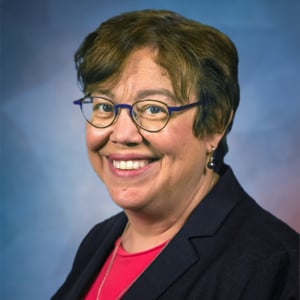
Executive Vice President and Senior Counselor to the President, The Federalist Society for Law and Public Policy Studies
B.A., Yale; J.D., University of Chicago. Lee Liberman Otis is the Executive Vice President and Senior Counselor to the President at the Federalist Society. She also serves as a member of the American Law Institute (ALI), a senior fellow of the Administrative Conference (ACUS), and as the co-chair of the National Constitution Center's Coalition of Freedom Advisory Board. She previously was a special assistant and an Associate Deputy Attorney General at the U.S. Department of Justice, General Counsel of the Department of Energy, an associate in the appellate section of Jones, Day, Reavis & Pogue, an associate counsel to President George H.W. Bush, and a law clerk to Associate Justice Antonin Scalia. She also served as an assistant professor of law at George Mason, where she taught legislation, federal jurisdiction, constitutional law, civil procedure, and appellate advocacy. Ms. Otis has been an important member of the Federalist Society team since the organization’s beginnings. Together with David McIntosh, she led the effort to start what became the Chicago chapter of the Society. She also helped organize the Society’s first conference at Yale, its second conference at Chicago, and its first Lawyers Division chapter in Washington DC, as well as the effort to incorporate the Society, recruit its permanent staff, and obtain its early funding. She was a Founding Director of the Federalist Society.
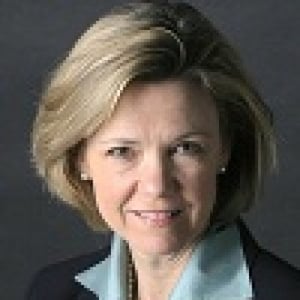
Staff Writer, The Washington Post
Dana Priest is a national security reporter whose work focuses on intelligence and counterterrorism. She started at the Post as an intern, then moved to the Foreign desk as an editor. She has since worked as a reporter on Metro (Virginia), National (fed page, health care, defense for six years, intelligence for six years) and spent a year on the Investigative team. She likes to experiment with how digital media can deepen investigative journalism. She is currently on leave working on a book, “Top Secret America: The Rise of the New American Security State.” Her last book, “The Mission: Waging War and Keeping Peace with America’s Military” was published in March, 2003. Born and raised in California, she lives in the District with her husband and two children.
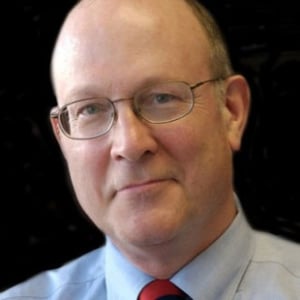
Professor Emeritus of Law, Antonin Scalia Law School, George Mason University
Jeremy A. Rabkin is a Professor Emeritus of Law at the Antonin Scalia Law School, George Mason University. Before joining the faculty in June 2007, he was for over two decades a professor in the Department of Government at Cornell University. Professor Rabkin serves on the board of directors of the Center for Individual Rights, a public interest law firm based in Washington, D.C. Previously he was a board member of the U.S. Institute of Peace and the board of academic advisors of the American Enterprise Institute.
Professor Rabkin’s books include Law Without Nations? (Princeton University Press, 2005). He authored “If You Need a Friend, Don’t Call a Cosmopolitan,” a chapter in Varieties of Sovereignty and Citizenship (Sigal R. Ben-Porath & Rogers M. Smith eds., University of Pennsylvania Press, 2012). His articles have appeared in major law reviews and political science journals and his journalistic contributions in a range of magazines and newspapers, including the Washington Post and the Wall Street Journal.
Professor Emeritus of Law, Antonin Scalia Law School, George Mason University
Jeremy A. Rabkin is a Professor Emeritus of Law at the Antonin Scalia Law School, George Mason University. Before joining the faculty in June 2007, he was for over two decades a professor in the Department of Government at Cornell University. Professor Rabkin serves on the board of directors of the Center for Individual Rights, a public interest law firm based in Washington, D.C. Previously he was a board member of the U.S. Institute of Peace and the board of academic advisors of the American Enterprise Institute.
Professor Rabkin’s books include Law Without Nations? (Princeton University Press, 2005). He authored “If You Need a Friend, Don’t Call a Cosmopolitan,” a chapter in Varieties of Sovereignty and Citizenship (Sigal R. Ben-Porath & Rogers M. Smith eds., University of Pennsylvania Press, 2012). His articles have appeared in major law reviews and political science journals and his journalistic contributions in a range of magazines and newspapers, including the Washington Post and the Wall Street Journal.
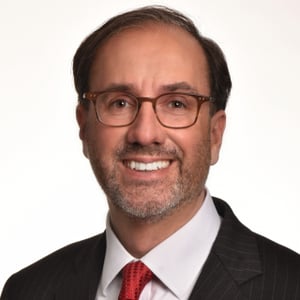
President and CEO, The Buckeye Institute
Robert Alt is the President and Chief Executive Officer of The Buckeye Institute where he has catalyzed exponential growth since he took the organization’s helm in 2012. He has since founded Buckeye’s renowned Economic Research Center and established its impactful Legal Center.
Alt is a distinguished scholar and attorney with particular expertise in legal policy, criminal justice, national security, and constitutional law. He previously worked for former U.S. Attorney General Edwin Meese III, regularly provides commentary on television and radio programs, and his writings have appeared in countless outlets.
In 2004, Alt spent five months in Iraq as an embedded war correspondent.
Alt has testified before Congress multiple times—including at the confirmation hearings for U.S. Supreme Court Justice Elena Kagan—the Federal Election Commission regarding matters of constitutional and administrative law, and numerous state legislatures.
Alt serves as an officer on the boards of The Philadelphia Society and the Federalist Society’s Columbus Lawyers Chapter. He taught national security law, criminal law, and legislation at Case Western Reserve University School of Law, as well as constitutional law and political parties and interest groups at Ashland University.
Alt earned his Doctor of Law degree from The University of Chicago Law School, where he was Symposium Editor and the winner of the Mulroy Prize for Excellence in Appellate Advocacy as well as research assistant to Professor Richard Epstein. Following law school, he clerked for Judge Alice Batchelder on the U.S. Court of Appeals for the Sixth Circuit. Alt graduated with his Bachelor of Arts in philosophy and political science magna cum laude from Azusa Pacific University where he also won the Outstanding Senior Award in Political Science.
Alt is an accomplished high-altitude alpinist and endurance athlete who has successfully climbed 6.75 of the famed Seven Summits of the World including Mount Everest. He is the creator of PROFOUND CLIMBING™ and a frequent speaker across the country and around the world on legal and public policy topics as well as effective leadership, management, decision-making, and teamwork in contexts ranging from extraordinary life/death situations to ordinary professional/business settings.
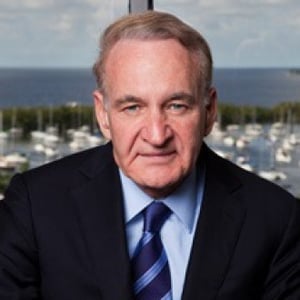
Partner, Coffey Burlington PL
Mr. Coffey is a former U.S. Attorney, Southern District of Florida (1993-1996); and most recently Chair, Southern District Conference, Florida Federal Judicial Nominating Commission (April 2009 – present). He is annually recognized as one of Florida Trend’s Legal Elite, Florida “Super Lawyer,” and South Florida Legal Guide’s “Top Lawyers”, recognized by the National Law Journal as one of its Lawyers of the Year for 2000, as Member of Gore Legal Team. He concentrates on complex litigation at trial and appellate levels, in state and federal court.
A frequent teacher and guest lecturer, he has been Guest Legal Analyst providing legal commentary for international networks: CNN International, Telemundo, Univision, Canadian Broadcasting Company; national networks: CNBC, CNN, CNN Headline News, FOX, MSNBC and NBC; and local television: ABC-10, CBS-4, América TeVe, Telemundo-51, Univision-23, TeleMiami. As a teacher, Mr. Coffey is adjunct faculty member for University of Miami School of Law, Florida Constitutional Law (2008 – present), Florida International University (Administrative Law 2011), and Trial Advocacy Program (1991 – 1993); and a Lecturer in trial skills and substantive law for The Florida Bar, The Academy of Florida Trial Lawyers, Dade County Bar Association, University of Miami School of Law, Professional Education Systems, Inc., National Business Institute, Inc. and CLE International, Inc.
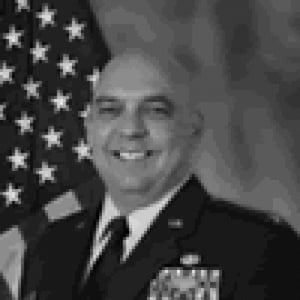
Former Staff Judge Advocate, United States Southern Command (SOUTHCOM)
Colonel Rodger A. Drew, Jr., was the Staff Judge Advocate for the United States Southern Command (SOUTHCOM), located in Miami, Florida, which is one of ten unified Combatant Commands in the Department of Defense. It is responsible for providing contingency planning, operations, and security cooperation for Central and South America, and parts of the Caribbean, including Cuba; as well as for the force protection of U.S. military resources at these locations. SOUTHCOM is also responsible for ensuring the defense of the Panama Canal and canal area. SOUTHCOM is a joint command comprised of more than 1,200 military and civilian personnel representing the Army, Navy, Air Force, Marine Corps, Coast Guard, and several other federal agencies.
Colonel Drew was born in Merced, California, and, as a military dependent, was raised primarily in San Antonio, Texas. A member of the Texas A&M University Corps of Cadets, he received his Bachelor of Arts degree in history and was commissioned in the United States Air Force in 1984. During an educational delay he attended the University of Houston School of Law, graduating in 1987. He entered extended active duty as a judge advocate in December 1987. He has served as a trial counsel, area defense counsel, circuit defense counsel, civil litigation attorney, staff judge advocate, and military judge.
Colonel Drew has taught on various litigation, judicial methodology, courtroom technology, human rights, and international humanitarian law topics as an adjunct faculty member of The Judge Advocate General’s School, United States Air Force; The Judge Advocate General’s Legal Center and School, United States Army; the National Judicial College, and the Defense Institute of International Legal Studies.
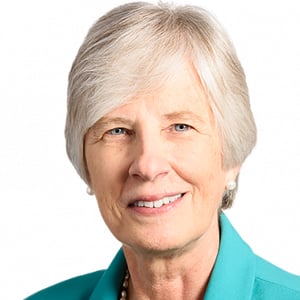
Ronald Reagan Distinguished Fellow, The Heritage Foundation
Becky Norton Dunlop, a prominent leader, strategist, and counselor in the conservative movement, is The Heritage Foundation’s Ronald Reagan Distinguished Fellow.
Dunlop, who joined the leading think tank in 1998, holds the only policy chair in the country to be officially named for the 40th president. She succeeds Ed Meese, the U.S. attorney general under Reagan, who assumed emeritus status.
Dunlop oversees special projects, travels as an ambassador for Heritage, and works tirelessly to assure that the legacy of principles, policies, and practices represented by the life and service of Ronald Reagan remain in the hearts and minds of Americans.
Previously, Dunlop was Heritage’s vice president for external relations from 1998 until May 2016. She served on the Trump Transition team.
Dunlop was a senior official in the Reagan administration from 1981-1989 inside the White House, at the Justice Department, and at the Interior Department.
She served from 1994-1998 as Secretary of Natural Resources for the Commonwealth of Virginia in the Cabinet of then-Virginia Gov. George Allen.
As political director for the American Conservative Union from 1973- 1977, she was instrumental in organizing grass-roots activists for Reagan’s unsuccessful 1976 race for the Republican nomination and advised his successful 1980 nomination and general election campaigns.
From Reagan’s first inauguration in 1981 to 1985, her White House posts included Deputy Assistant to the President for Presidential Personnel and Special Assistant to the President and Director of his Cabinet office. During Reagan’s second term, Dunlop served as senior special assistant to Meese, then attorney general, in charge of managing Cabinet-level domestic policy issues. She oversaw major policy reports on the environment, the family, federalism, tort reform, privatization, and welfare reform.
She completed her service in the Reagan administration as deputy undersecretary of the Interior Department and as assistant interior secretary for fish, wildlife, and parks.
Dunlop is one of the few of the insiders from the beginnings of the Reagan era who remain active in public policy leadership.
As Virginia’s natural resources chief, Dunlop worked to streamline, decentralize, and down-size agencies while protecting and improving the environment. She is one of the few “free-market environmentalists” to have headed a state agency and put ideas into action. Her book, “Clearing the Air” (Alexis de Tocqueville Institute, 2000), chronicles some of her experiences in advancing those principles.
In 2002, President George W. Bush appointed her to a part-time post as chairwoman of the Federal Service Impasses Panel. The seven-member panel resolves disputes between federal agencies management and labor unions. Under her leadership, it took on several hundred cases and eliminated backlogs.
Other current leadership roles include the boards of the Virginia Institute for Public Policy, the Reagan Ranch Board of Governors, the Reagan Alumni Association, the Association for American Educators and the AAE Foundation, the Council for National Policy and the American Conservative Union.
In addition to topics addressing conservative principles and their roots in the nation’s founding, Dunlop is a sought-after public speaker on the idea that personnel is policy; on energy, natural resources and the environment (including free market environmentalism); on federalism as a former member of a governor’s Cabinet; Capitalism and the Rule of Law, and on the Reagan administration (including the 40th president’s effective leadership style).
A graduate of Miami University in Ohio, she currently resides in Arlington, Virginia, with her husband, George S. Dunlop. The Dunlops are members of Oakland Baptist Church in Alexandria, Virginia.
Director, Center for Health and Homeland Security, University of Maryland School of Law
Michael Greenberger is the Founder and Director of the Center for Health and Homeland Security (CHHS) at the University of Maryland and a professor at the School of Law. CHHS works on a broad range of homeland security and emergency response issues for federal, state and local governmental agencies, as well as medical researchers. CHHS has a staff of more than 70 professionals, many of whom are recent graduates of the School of Law. More information about CHHS can be found at www.mdchhs.com.
Professor Greenberger designed and teaches two courses focused on counterterrorism and emergency response: "Homeland Security and The Law of Counterterrorism;" and "Law and Policy of Emergency Public Health Response Seminar/Course," which brings students and faculty from the various university professional schools together to study effective governmental policies pertaining to catastrophic public health emergencies. Professor Greenberger also teaches a seminar on Futures, Options and Derivatives at the School of Law.
Professor Greenberger currently serves as the Chair of the Maryland Governor's Emergency Management Advisory Council (GEMAC). He was recently appointed by President of the American Bar Association to the Advisory Committee of the Standing Committee on Law and National Security.
In 1999, Professor Greenberger began service as Counselor to the United States Attorney General, and then became the Justice Department's Principal Deputy Associate Attorney General. In the latter capacity, Professor Greenberger assisted the United States Attorney General and Associate Attorney General in supervising the work of the Justice Department's Civil, Civil Rights, Environmental, Antitrust, and Tax Divisions. Also within his portfolio of responsibilities were several counterterrorism projects concerning both law enforcement and public health policy, including organizing a nationwide counterterrorism war game ("TOPOFF I").
In 1997, Professor Greenberger left private practice to become the Director of the Division of Trading and Markets at the Commodity Futures Trading Commission (CFTC) where he served under CFTC Chairperson Brooksley Born. In that capacity, he was responsible for supervising exchange traded futures and derivatives. He also served on the Steering Committee of the President's Working Group on Financial Markets, and as a member of the International Organization of Securities Commissions' Hedge Fund Task Force. Professor Greenberger has frequently been asked to testify before Congressional committees on issues pertaining to dysfunctions within the United States economy caused by complex and unregulated financial derivatives.
Professor Greenberger has recently served as the Technical Advisor to the United Nations Commission of Experts on Reforms of the International Monetary and Financial System and the International Energy Forum's Independent Expert Group on reducing world-wide energy price volatility. He also participated on an expert panel advising The University Center for Disaster Preparedness and Emergency Response at Robert Wood Johnson University Hospital (RWJUH) on "Best Practices for Explosive/Incendiary Incidents."
Professor Greenberger has recently appeared both in the media and at academic gatherings to discuss financial regulation, including appearances on CNN, ABC's "World News Tonight," the CBS Evening News, the NBC Evening News, CNBC, MSNBC, The Jim Lehrer News Hour, NPR's "Fresh Air," PBS's "Frontline," BBC Radio, and C-SPAN. Professor Greenberger's recent testimony and related media can be found at www.michaelgreenberger.com.
Prior to entering government service, Professor Greenberger was a partner for over 20 years in the Washington, D.C. law firm of Shea & Gardner, where he served as lead litigation counsel before courts of law nationwide, including the United States Supreme Court.
Professor Greenberger is a Phi Beta Kappa graduate of Lafayette College and the University of Pennsylvania Law School, where he served as editor-in-chief of the Law Review. He is a Life Member of the American Law Institute and he has served on the Board of Governors of the D.C. Bar and as a board member of three nonprofit public interest organizations. Professor Greenberger has also served on the D.C. Circuit Advisory Committee on Procedures and as a mediator for the United States Courts for the District of Columbia.
Ella A. and Ernest H. Fisher Professor of Law, Ohio Northern University Claude W. Pettit College of Law
Professor Lewis joined the Ohio Northern faculty in August, 2006. Lewis flew F-14's for the United States Navy in Operation Desert Shield, conducted strike planning for Desert Storm and was deployed to the Persian Gulf to enforce the no-fly zone over Iraq. He was a Topgun graduate in 1992 and was featured in a NOVA documentary on Topgun and aircraft carriers.
After his naval service, Lewis graduated from Harvard Law School, cum laude, was a management consultant with McKinsey and Company, and served as a litigation associate with McGuireWoods, LLP, in Norfolk, Virginia.
Professor Lewis published more than a dozen articles and essays on various aspects of the law of war and the conflict between the US and al Qaeda. His work has been cited by the Seventh, Ninth and Eleventh Circuit Courts of Appeals. He has testified before Congress on the legality of drone strikes in Pakistan and Yemen and on the civil liberties tradeoffs associated with trying some Al Qaeda members or terrorist suspects before military commissions. His op-eds have appeared in numerous media outlets including the LA Times and the New York Post and he has appeared on Public Radio International to discuss the increasing use of armed drones in warfare. He delivered scores of presentations and panel presentations before military and law school audiences alike including presentations to the international Military Operations Law conference in Queensland, Australia, the US Army's JAG School in Charlottesville, VA and law school events at Stanford, Chicago, Columbia, Penn, Duke, Texas and Northwestern among others.
Professor Lewis received the Award for Excellence in Classroom Teaching for the 2007-08 academic year.
He taught Commercial Law, International Law, a Law of War Seminar and Torts. He also taught Corporate Finance and Accounting for Lawyers. His other teaching interests included Civil Procedure and Contracts.
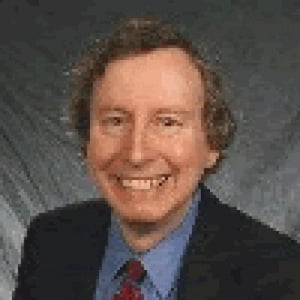
Professor of Law, Roger Williams University School of Law
As an expert in National Security Law, Professor Peter Margulies focuses on the delicate balance between liberty, equality, and security in issues involving law and terrorism. Professor Margulies has written almost a dozen articles discussing the War on Terror. He currently works with RWU Law Professor Jared Goldstein, along with litigators from the law firm Edwards Angell Palmer & Dodge, in representing two Afghan detainees. Professor Margulies led a national conference entitled “Legal Dilemmas in A Dangerous World: Law, Terrorism and National Security” held at RWU.
Professor Margulies also has an extensive background in immigration law and has represented Haitian refugees and conducted outreach to community legal service providers.
Peter Marguiles teaches Immigration Law, National Security Law and Professional Responsibility. He has filed amicus briefs in high-visibility cases with the U.S. Supreme Court and has been frequently cited in the New York Times, the National Law Journal and other media outlets.
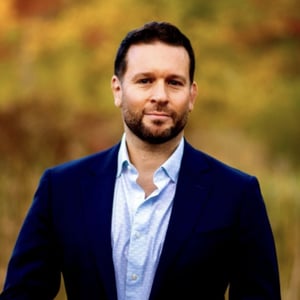
Professor of Law and Public Policy, Pepperdine University Caruso School of Law
Greg McNeal is an award winning entrepreneur, professor, and investor. He co-founded AirMap, a multinational aerospace and defense company honored as one of the “World’s Most Innovative Companies” by Fast Company and ranked as an Inc.com 25 Most Disruptive Company. The company also received a Los Angeles Business Journal Innovation Award, and a Consumer Electronics Show “Innovation Award.” The company was acquired in 2021.
He invests in and advises companies and entrepreneurs in SAAS, Defense, AI, and entertainment. The companies he founded or serves on the corporate board of have raised over $100 million in funding with his direct participation in the process. Those investors include Microsoft, Flexport, Sony, Qualcomm, Rakuten, Baidu, Airbus, and top global financial services and venture capital funds including Greycroft, Social Capital, General Catalyst, Lux Capital, Bullpen Capital, Bay Bridge Ventures, Teamworthy Ventures, Operate Studio, TenOneTen, Temasek, Macquarie Group, Graph Ventures and many others. The companies he advises have raised substantially more funding, in part due to his advice and mentorship.
He is a tenured Professor of Law and Public Policy at Pepperdine University and a faculty member with the Palmer Center for Entrepreneurship and the Law and teaches courses in technology, public policy, internet, and privacy law.
As a public policy and legal expert, Greg has worked with the White House, the Department of Defense, the State Department, and independent regulatory agencies on matters related to technology, law and policy. He has on multiple occasions testified before Congress and state legislatures about entrepreneurship and emerging technology and has aided state legislators, cities, municipalities, and executive branch officials in drafting legislation and ordinances related to technological advances and has been appointed by Cabinet officials to serve on Federal Rulemaking Committees.
He is a frequent keynote speaker at industry events and academic conferences related to technology, law, and public policy. He advises venture capital firms and other investors, start-ups, law enforcement, consulting firms, and Fortune 500 companies about the legal and regulatory issues associated with emerging technologies.
He regularly appears on television and radio to discuss technology and business, wrote a column on business and technology for Forbes and has authored Op-Eds for the New York Times, the Washington Post, and The Washington Times, among others. In his early career he worked on national security, international criminal law and counterterrorism matters and served as an Army officer.
Professor Emeritus of Law, Antonin Scalia Law School, George Mason University
Jeremy A. Rabkin is a Professor Emeritus of Law at the Antonin Scalia Law School, George Mason University. Before joining the faculty in June 2007, he was for over two decades a professor in the Department of Government at Cornell University. Professor Rabkin serves on the board of directors of the Center for Individual Rights, a public interest law firm based in Washington, D.C. Previously he was a board member of the U.S. Institute of Peace and the board of academic advisors of the American Enterprise Institute.
Professor Rabkin’s books include Law Without Nations? (Princeton University Press, 2005). He authored “If You Need a Friend, Don’t Call a Cosmopolitan,” a chapter in Varieties of Sovereignty and Citizenship (Sigal R. Ben-Porath & Rogers M. Smith eds., University of Pennsylvania Press, 2012). His articles have appeared in major law reviews and political science journals and his journalistic contributions in a range of magazines and newspapers, including the Washington Post and the Wall Street Journal.
Director, European Union Research Center, George Washington University
Scheherazade Rehman is the Director of the European Union Research Center and Professor of International Finance/Business and International Affairs at The George Washington University. She is a Senior Research Fulbright Scholar and an expert on international financial markets, financial crises management, and the eurozone. Prior to GWU she served as a foreign exchange and money market trader in the Middle East. She has advised OPIC, USAID, U.S. State Department, World Bank, IMF, and various central banks/finance ministries. Dr. Rehman regularly guests on various national and international televised programs on financial matters on PBS Newshour, BBC World News, CNBC, Voice of America, C-Span Washington Journal, Colbert Report, among others and has appeared several times before U.S. Congress, and regularly at the Brookings Institute to discuss the current financial crisis. Dr. Rehman has written over 80 scholarly articles, book chapters, conference papers, and published 7 books, including The Path To European Economic and Monetary Union, Financial Crisis Management in Regional Blocs, The Quest For Exchange Rate Stability in the Next Millennium, and the latest (co-authored) titled Corruption and Its Manifestation in the Persian Gulf (2010).
Professor of Political Science and Law, Florida International University College of Law
Professor Stack holds a joint appointment as Professor of Political Science and Law. He is Director of the Jack D. Gordon Institute for Public Policy and Citizenship Studies at Florida International University, and Director of the Ethnic Studies Certificate Program. He twice served as chair of the Department of Political Science, and has been editor of the Florida International University Press. He has also served as chair of the board of directors of the Institute for the Study of Public Policy and Citizenship, and as chair of the University Research Council. He was instrumental in the founding of the College of Law, and chaired the search and screen committees for many of the top administrative positions in the law school. A highly respected teacher, Professor Stack is the recipient of several university teaching awards, including most recently a Professorial Excellence Program Award by the State University System of Florida. Professor Stack's teaching interests include American Constitutional Law, Comparative and International Law, and Administrative Law. He is the author and/or editor of nine books and more than 30 articles and chapters in edited books.
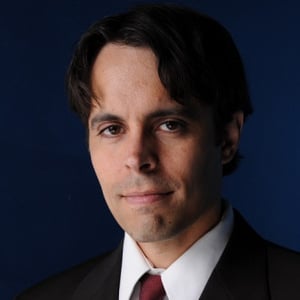
Professor of Law, Florida International University College of Law
Hannibal Travis teaches and conducts research in the fields of cyberlaw, intellectual property, antitrust, international and comparative law, and human rights. He joined FIU after several years practicing intellectual property and Internet law at O’Melveny & Myers in San Francisco, California, and at Debevoise & Plimpton in New York. He has also served as the Irving Cypen Visiting Professor of Law at the University of Florida, a Visiting Associate Professor of Law at Villanova University, and a Visiting Fellow at Oxford. He graduated summa cum laude in philosophy from Washington University, where he was named to Phi Beta Kappa. He graduated magna cum laude from Harvard Law School, where he served as a teaching assistant in philosophy classes taught at Harvard College. After law school, Professor Travis clerked for the United States District Court in Los Angeles, California. Professor Travis has published articles on copyright, trademark, and antitrust law in a variety of journals and books. He has also published works on antitrust law, telecommunications law, and net neutrality in American University Law Review, Hofstra Law Review, and Santa Clara Law Review.
His works have focused on the intellectual property implications of new technologies and user-generated content, as well as antitrust law as applied to broadband and Wi-Fi Internet access markets. He has contributed to symposia and edited volumes on the international and comparative law of copyright and performers’ rights, including a piece on software contracts and copyright that was selected by West Group as one of the best articles relating to intellectual property law that was published in 2010. Professor Travis has also published widely on genocide, cultural survival, and human rights. He is currently an editorial advisory board member of Genocide Studies International (University of Toronto Press), and has served as a peer reviewer for manuscripts submitted to Cambridge University Press, Oxford University Press, Edinburgh University Press, Routledge, and Genocide Studies and Prevention (the journal of the International Association of Genocide Scholars). He has coached FIU’s Jessup International Law Moot Court team, Lefkowitz Trademark Law Moot Court team, and BMI Copyright Law Moot Court team. He is a member of the Copyright Society of the USA and the American Law and Economics Association.
Assistant Professor, Queen's University Faculty of Law
Noah Weisbord is an Associate Professor at Queen's Law. His research focuses on the role of the criminal law in managing, reflecting or exacerbating intergroup conflict. A current project examines self-defence in Canadian criminal law from historical, comparative, and conceptual perspectives. Noah is a leading expert on the crime of aggression—individual criminal responsibility for aggressive war—and he assisted diplomatic delegations to define the crime. His monograph on the crime of aggression was published with Princeton University Press in June 2019.
Noah’s scholarly articles have appeared in the Harvard International Law Journal, the Columbia Journal of Transnational Law, the Duke Journal of Comparative and International Law, Law and Contemporary Problems and other publications. Noah’s opinion and editorial commentary has been published in the New York Times, the International Herald Tribune, the Globe and Mail and the National Post.
Noah received his S.J.D. from Harvard Law School under the supervision of Dean Martha Minow. In addition to an S.J.D., Noah holds LL.B. and B.C.L. degrees, a Master of Social Work (M.S.W.) as well as undergraduate degrees in Psychology (B.Sc.) and Social Work (B.S.W.) from McGill University. Prior to joining Queen’s Law, Noah was an Associate Professor at Florida International University College of Law and a visiting Assistant Professor at Duke Law School.
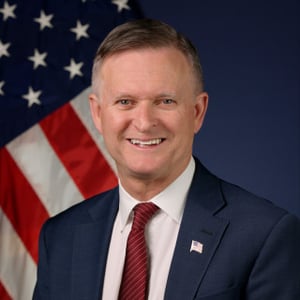
Deputy Secretary of Transportation, US Department of Transportation
Steven G. Bradbury was sworn in as the Deputy Secretary of Transportation on March 13, 2025, following his confirmation by the U.S. Senate on March 11, 2025. In this role, he oversees the Department’s operating administrations and spearheads initiatives to ensure a safe, efficient, and modern transportation system that strengthens economic productivity and global competitiveness. Deputy Secretary Bradbury also assists Secretary Duffy in managing the Department’s activities, including its workforce of over 58,000 employees and an annual budget exceeding $109 billion.
Bradbury previously served as the 23rd General Counsel of the Department of Transportation from 2017 to 2021, as the Acting Deputy Secretary from 2019, and as Acting Secretary of Transportation in 2021. As General Counsel, he was the chief legal officer, advising on all legal matters and ensuring the integrity and compliance of the Department’s policies and programs.
Before rejoining DOT, Bradbury was a Distinguished Fellow at The Heritage Foundation from December 2022 to March 2025. He has extensive experience in the public and private sector, having served as Principal Deputy and Acting Assistant Attorney General at the U.S. Department of Justice and as a partner at Kirkland & Ellis LLP and Dechert LLP. Earlier in his career, he clerked for Justice Clarence Thomas and Judge James L. Buckley.
Bradbury holds a J.D., magna cum laude, from the University of Michigan Law School and a B.A. in English from Stanford University.
Staff Judge Advocate, United States Cyber Command, U.S. Air Force
Colonel Gary Brown is the staff judge advocate of the United States Cyber Command.
Col Brown was called to the Nebraska Bar in 1987 and he has since remained a member in good standing. He was commissioned a first lieutenant in the Air Force in November, 1988. Col Brown is married to Joan Culling Brown of Omaha, Nebraska. He and Joan have four sons, Edmund, Andrew, Thomas and Philip
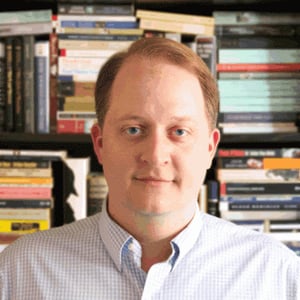
Senior Correspondent, The Daily Beast, and ASU Future of War Fel, New America
Shane Harris is an author and journalist who has written extensively about intelligence and national security. His new book, @War: The Rise of the Military Internet Complex, explores the frontlines of America's new cyber war (Eamon Dolan/Houghton Mifflin Harcourt, 2014). Mr. Harris' first book, The Watchers: The Rise of America's Surveillance, tells the story of five men who played central roles in the creation of a vast national security apparatus and the rise of surveillance in America (Penguin Press, 2010). The Watchers won the New York Public Library's Helen Bernstein Book Award for Excellence in Journalism, and the Economist named it one of the best books of 2010. Mr. Harris is the winner of the 2010 Gerald R. Ford Prize for Distinguished Reporting on National Defense. He has four times been named a finalist for the Livingston Awards for Young Journalists, which honor the best journalists in America under the age of 35.
Mr. Harris is currently a senior correspondent at The Daily Beast, where he covers national security, intelligence, and cyber security. He is also an ASU Future of War Fellow at New America. His work has appeared in The New York Times, The Wall Street Journal, Slate, TheAtlantic.com, National Journal, The Washington Post, The Bulletin of the Atomic Scientists, and the U.S. Naval Institute's Proceedings. He has provided analysis and commentary for CNN, NPR, the BBC, The History Channel, National Geographic, several foreign media organizations and many local public radio stations.
Prior to joining The Daily Beast, Mr. Harris was a senior writer at Foreign Policy magazine and, before that, at the Washingtonian magazine, where he was part of the team that won the publication its 2011 award for Excellence in Writing from the City and Regional Magazine Association. In 2012, Washingtonian won the coveted General Excellence award for the print magazine and web site, where Mr. Harris wrote a blog on national security called ADead Drop.
From 2005 to 2010, Mr. Harris was a staff correspondent for National Journal, where he wrote about intelligence and homeland security. Before that post, he was the technology editor and a staff correspondent at Government Executive magazine. Mr. Harris also was the managing editor for Movieline magazine in Los Angeles. He began his journalism career in 1999, as the research coordinator and a writer for Governing magazine in Washington.
Mr. Harris graduated from Wake Forest University with a B.A. in Politics in 1998. He is also a fiction writer. While living in Los Angeles, he helped found and served as the artistic director of a sketch comedy troupe. Mr. Harris is a Sundance Film Festival screenwriting finalist.
Professor Emeritus of Law, Antonin Scalia Law School, George Mason University
Jeremy A. Rabkin is a Professor Emeritus of Law at the Antonin Scalia Law School, George Mason University. Before joining the faculty in June 2007, he was for over two decades a professor in the Department of Government at Cornell University. Professor Rabkin serves on the board of directors of the Center for Individual Rights, a public interest law firm based in Washington, D.C. Previously he was a board member of the U.S. Institute of Peace and the board of academic advisors of the American Enterprise Institute.
Professor Rabkin’s books include Law Without Nations? (Princeton University Press, 2005). He authored “If You Need a Friend, Don’t Call a Cosmopolitan,” a chapter in Varieties of Sovereignty and Citizenship (Sigal R. Ben-Porath & Rogers M. Smith eds., University of Pennsylvania Press, 2012). His articles have appeared in major law reviews and political science journals and his journalistic contributions in a range of magazines and newspapers, including the Washington Post and the Wall Street Journal.
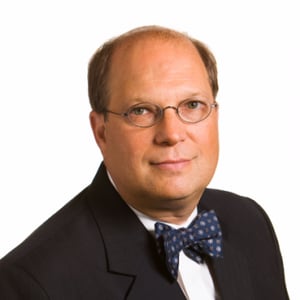
Professorial Lecturer in Law, The George Washington University
Paul Rosenzweig is an accomplished writer and speaker with a national reputation in cyber security and homeland security. He is the founder of Red Branch Consulting PLLC, a homeland security consulting company. He is also a Senior Advisor to The Chertoff Group. Mr. Rosenzweig formerly served as Deputy Assistant Secretary for Policy in the Department of Homeland Security.
He is a Professorial Lecturer in Law at George Washington University, and a Senior Fellow in the Tech, Law & Security Program at the American University, Washington College of Law. He serves as an advisor to and former member of the American Bar Association Standing Committee on Law and National Security, and a Contributing Editor of the Lawfare blog. He is a member of the ABA Cybersecurity Legal Task Force and of the United States Court of Appeals for the District of Columbia Circuit Advisory Committee on Admissions and Grievances. He serves, as well, as a Hearing Committee Member of the District of Columbia Board of Professional Responsibility. In 2011 he was a Carnegie Fellow in National Security Journalism at the Medill School of Journalism, Northwestern University.
Mr. Rosenzweig is a cum laude graduate of the University of Chicago Law School. He has an M.S. in Chemical Oceanography from the Scripps Institution of Oceanography, University of California at San Diego and a B.A from Haverford College. Following graduation from law school he served as a law clerk to the Honorable R. Lanier Anderson, III of the United States Court of Appeals for the Eleventh Circuit.
He is the author of Cyber Warfare: How Conflicts in Cyberspace are Challenging America and Changing the World and of three video lecture series from The Great Courses, Thinking About Cybersecurity: From Cyber Crime to Cyber Warfare; The Surveillance State: Big Data, Freedom, and You; and Investigating American Presidents.
He is the co-author (with James Jay Carafano) of Winning the Long War: Lessons from the Cold War for Defeating Terrorism and Preserving Freedom and co-editor (with Jill D. Rhodes and Robert S. Litt) of the Cybersecurity Handbook (3rd ed.). He is also co-editor (with Timothy McNulty and Ellen Shearer) of two books, Whistleblowers, Leaks and the Media: The First Amendment and National Security, and National Security Law in the News: A Guide for Journalists, Scholars, and Policymakers. Mr. Rosenzweig is a member of the Literary Society of Washington.
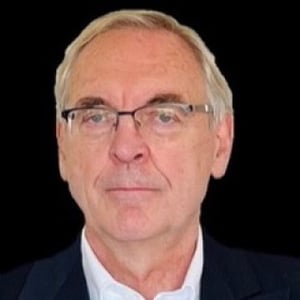
Fellow, National Security Institute, Antonin Scalia Law School, George Mason University
Vince Vitkowsky chaired the Executive Committee of the Federalist Society’s International and National Security Law and Policy Practice Group for over a decade. He is also a Fellow at the National Security Institute of George Mason University Law School. Vince spent 45 years in private practice, primarily in AmLaw 100/200 firms and their spin-offs. His practice included domestic and international commercial arbitration and litigation, as well as cyber risks and liabilities. Vince's current focus is on national security policy, artificial intelligence, cybersecurity, and counterterrorism. He has often written and spoken on national security and other public policy issues. Among other affiliations, Vince has been an Adjunct Fellow at the Center for Law and Counterterrorism of the Foundation for the Defense of Democracies, a member of the Executive Committee of the American Branch of the International Law Association, and Co-Chair of the Committee on Interventions and Trial Observations of the International Bar Association’s Human Rights Institute. He received his B.A. from Northwestern University and his J.D. from Cornell Law School.

Associate Justice, Supreme Court of the United States
Associate Justice Brett Kavanaugh was born in Washington, D.C., on February 12, 1965. He married Ashley Estes in 2004, and they have two daughters - Margaret and Liza. He received a B.A. from Yale College in 1987 and a J.D. from Yale Law School in 1990. He served as a law clerk for Judge Walter Stapleton of the U.S. Court of Appeals for the Third Circuit from 1990-1991, for Judge Alex Kozinski of the U.S. Court of Appeals for the Ninth Circuit from 1991-1992, and for Justice Anthony M. Kennedy of the U.S. Supreme Court during the 1993 Term. In 1992-1993, he was an attorney in the Office of the Solicitor General of the United States. From 1994 to 1997 and for a period in 1998, he was Associate Counsel in the Office of Independent Counsel. He was a partner at a Washington, D.C., law firm from 1997 to 1998 and again from 1999 to 2001. From 2001 to 2003, he was Associate Counsel and then Senior Associate Counsel to President George W. Bush. From 2003 to 2006, he was Assistant to the President and Staff Secretary for President Bush. He was appointed a Judge of the United States Court of Appeals for the District of Columbia Circuit in 2006. President Donald J. Trump nominated him as an Associate Justice of the Supreme Court, and he took his seat on October 6, 2018.
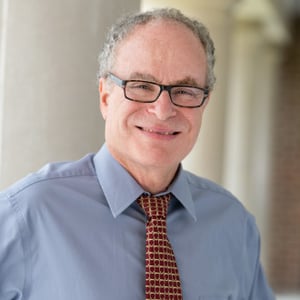
William Rand Kenan, Jr. Distinguished Professor of Law, University of North Carolina School of Law
William (Bill) Marshall joined the Carolina Law faculty in 2001 and serves as the William R. Kenan Jr. Distinguished Professor of Law. His teaching and research interests include the first amendment, presidential power, election law, federal jurisdiction, federal judicial selection, civil procedure, and media law. Marshall is the author of numerous book chapters, articles, and essays on free speech, separation of powers, the Establishment Clause, and the Free Exercise Clause. His work has appeared in the Harvard Law Review, the Yale Law Journal, the Supreme Court Review, and the University of Chicago Law Review, among others.
Marshall received his law degree from the University of Chicago and his undergraduate degree from the University of Pennsylvania. Marshall was Deputy Counsel to the President and Deputy Assistant to the President during the Clinton Administration and also served as the Solicitor General for the State of Ohio. He has taught at the Northwestern, Boston University, Vanderbilt, Ohio State, DePaul, Case Western Reserve, William and Mary, and the University Connecticut law schools. Prior to beginning his teaching career, Marshall was a Special Assistant Attorney General for the State of Minnesota.
Professor Emeritus of Law, Antonin Scalia Law School, George Mason University
Jeremy A. Rabkin is a Professor Emeritus of Law at the Antonin Scalia Law School, George Mason University. Before joining the faculty in June 2007, he was for over two decades a professor in the Department of Government at Cornell University. Professor Rabkin serves on the board of directors of the Center for Individual Rights, a public interest law firm based in Washington, D.C. Previously he was a board member of the U.S. Institute of Peace and the board of academic advisors of the American Enterprise Institute.
Professor Rabkin’s books include Law Without Nations? (Princeton University Press, 2005). He authored “If You Need a Friend, Don’t Call a Cosmopolitan,” a chapter in Varieties of Sovereignty and Citizenship (Sigal R. Ben-Porath & Rogers M. Smith eds., University of Pennsylvania Press, 2012). His articles have appeared in major law reviews and political science journals and his journalistic contributions in a range of magazines and newspapers, including the Washington Post and the Wall Street Journal.
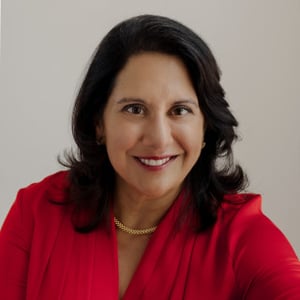
Judge, United States Court of Appeals, District of Columbia Circuit
Judge Rao was appointed to the United States Court of Appeals for the District of Columbia Circuit in March 2019. She graduated from Yale College in 1995 and the University of Chicago Law School in 1999. Following graduation, she served as a law clerk to Judge J. Harvie Wilkinson III of the U.S. Court of Appeals for the Fourth Circuit and, in the 2001 October Term, as law clerk to Justice Clarence Thomas of the U.S. Supreme Court. Between her clerkships, Judge Rao served as counsel for nominations and constitutional law to the U.S. Senate Committee on the Judiciary. In 2002, she joined the international arbitration group of Clifford Chance LLP in London, England. From 2005-2006, she served as Special Assistant and Associate White House Counsel to President George W. Bush. From 2006 to 2017, Judge Rao was a professor at the Antonin Scalia Law School at George Mason University, where she taught constitutional law, legislation and statutory interpretation, and the history and foundations of the administrative state. In 2014, she founded the Center for the Study of the Administrative State, a non-profit Center that promotes academic scholarship and public policy debates about administrative law. In July 2017, she was appointed to serve as the Administrator of the Office of Information and Regulatory Affairs in the Office of Management Budget. She served in this position until her appointment to the D.C. Circuit.
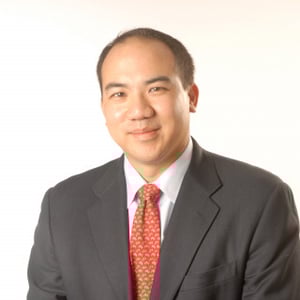
Maurice A. Deane Distinguished Professor of Constitutional Law and Faculty Director of International Programs, Hofstra University School of Law
Professor Ku’s primary research interest is the relationship of international law to constitutional law. He has also conducted academic research on a wide range of topics including international dispute resolution, international criminal law, and China’s relationship with international law. He teaches courses such as U.S. constitutional law, U.S. foreign affairs law, transnational law, and international trade and business law. Since 2014, he has served as the faculty director of international programs, overseeing Hofstra Law’s study abroad, exchange and LL.M. programs. Professor Ku also teaches Constitutional Law in our online degree programs: Master of Laws in American Law and Master of Arts in American Legal Studies. He has also been selected as the John DeWitt Gregory Research Scholar and as a Hofstra Law Research Fellow. He is a member of the American Law Institute.
He is the co-author, with John Yoo, of Taming Globalization: International Law, the U.S. Constitution, and the New World Order (Oxford University Press 2012). He also has published more than 40 law review articles, book chapters and symposia essays. He has given dozens of academic lectures and workshops at major universities and conferences in the United States, Europe and Asia.
He co-founded the leading international law weblog Opinio Juris, which is read daily by thousands worldwide. His essays and op-eds have been published in major news publications such as the Wall Street Journal, the Los Angeles Times, and the NYTimes.com. He has been frequently interviewed for television news programs and quoted in print and electronic media. He has also signed or submitted amicus briefs to national and international courts and served as an expert witness in both domestic and international proceedings.
Before joining the Hofstra Law faculty, Professor Ku served as a law clerk to the Honorable Jerry E. Smith of the U.S. Court of Appeals for the Fifth Circuit and as an Olin Fellow and Lecturer in Law at the University of Virginia Law School. Professor Ku also practiced as an associate at the New York City law firm of Debevoise & Plimpton, specializing in litigation and arbitration arising out of international disputes. He has been a visiting professor at the College of William & Mary Marshall- Wythe School of Law in Williamsburg, Virginia; a Fulbright Distinguished Lecturer in Law at East China University of Political Science and Law in Shanghai, China; and a Taiwan Fellow at National Taiwan University in Taipei, Taiwan. He is a member of the New York Bar and a graduate of Yale College and Yale Law School.
Professor Emeritus of Law, Antonin Scalia Law School, George Mason University
Jeremy A. Rabkin is a Professor Emeritus of Law at the Antonin Scalia Law School, George Mason University. Before joining the faculty in June 2007, he was for over two decades a professor in the Department of Government at Cornell University. Professor Rabkin serves on the board of directors of the Center for Individual Rights, a public interest law firm based in Washington, D.C. Previously he was a board member of the U.S. Institute of Peace and the board of academic advisors of the American Enterprise Institute.
Professor Rabkin’s books include Law Without Nations? (Princeton University Press, 2005). He authored “If You Need a Friend, Don’t Call a Cosmopolitan,” a chapter in Varieties of Sovereignty and Citizenship (Sigal R. Ben-Porath & Rogers M. Smith eds., University of Pennsylvania Press, 2012). His articles have appeared in major law reviews and political science journals and his journalistic contributions in a range of magazines and newspapers, including the Washington Post and the Wall Street Journal.
Judge, United States Court of Appeals, District of Columbia Circuit
Judge Rao was appointed to the United States Court of Appeals for the District of Columbia Circuit in March 2019. She graduated from Yale College in 1995 and the University of Chicago Law School in 1999. Following graduation, she served as a law clerk to Judge J. Harvie Wilkinson III of the U.S. Court of Appeals for the Fourth Circuit and, in the 2001 October Term, as law clerk to Justice Clarence Thomas of the U.S. Supreme Court. Between her clerkships, Judge Rao served as counsel for nominations and constitutional law to the U.S. Senate Committee on the Judiciary. In 2002, she joined the international arbitration group of Clifford Chance LLP in London, England. From 2005-2006, she served as Special Assistant and Associate White House Counsel to President George W. Bush. From 2006 to 2017, Judge Rao was a professor at the Antonin Scalia Law School at George Mason University, where she taught constitutional law, legislation and statutory interpretation, and the history and foundations of the administrative state. In 2014, she founded the Center for the Study of the Administrative State, a non-profit Center that promotes academic scholarship and public policy debates about administrative law. In July 2017, she was appointed to serve as the Administrator of the Office of Information and Regulatory Affairs in the Office of Management Budget. She served in this position until her appointment to the D.C. Circuit.
Deputy Secretary of Transportation, US Department of Transportation
Steven G. Bradbury was sworn in as the Deputy Secretary of Transportation on March 13, 2025, following his confirmation by the U.S. Senate on March 11, 2025. In this role, he oversees the Department’s operating administrations and spearheads initiatives to ensure a safe, efficient, and modern transportation system that strengthens economic productivity and global competitiveness. Deputy Secretary Bradbury also assists Secretary Duffy in managing the Department’s activities, including its workforce of over 58,000 employees and an annual budget exceeding $109 billion.
Bradbury previously served as the 23rd General Counsel of the Department of Transportation from 2017 to 2021, as the Acting Deputy Secretary from 2019, and as Acting Secretary of Transportation in 2021. As General Counsel, he was the chief legal officer, advising on all legal matters and ensuring the integrity and compliance of the Department’s policies and programs.
Before rejoining DOT, Bradbury was a Distinguished Fellow at The Heritage Foundation from December 2022 to March 2025. He has extensive experience in the public and private sector, having served as Principal Deputy and Acting Assistant Attorney General at the U.S. Department of Justice and as a partner at Kirkland & Ellis LLP and Dechert LLP. Earlier in his career, he clerked for Justice Clarence Thomas and Judge James L. Buckley.
Bradbury holds a J.D., magna cum laude, from the University of Michigan Law School and a B.A. in English from Stanford University.
Staff Judge Advocate, United States Cyber Command, U.S. Air Force
Colonel Gary Brown is the staff judge advocate of the United States Cyber Command.
Col Brown was called to the Nebraska Bar in 1987 and he has since remained a member in good standing. He was commissioned a first lieutenant in the Air Force in November, 1988. Col Brown is married to Joan Culling Brown of Omaha, Nebraska. He and Joan have four sons, Edmund, Andrew, Thomas and Philip
Senior Correspondent, The Daily Beast, and ASU Future of War Fel, New America
Shane Harris is an author and journalist who has written extensively about intelligence and national security. His new book, @War: The Rise of the Military Internet Complex, explores the frontlines of America's new cyber war (Eamon Dolan/Houghton Mifflin Harcourt, 2014). Mr. Harris' first book, The Watchers: The Rise of America's Surveillance, tells the story of five men who played central roles in the creation of a vast national security apparatus and the rise of surveillance in America (Penguin Press, 2010). The Watchers won the New York Public Library's Helen Bernstein Book Award for Excellence in Journalism, and the Economist named it one of the best books of 2010. Mr. Harris is the winner of the 2010 Gerald R. Ford Prize for Distinguished Reporting on National Defense. He has four times been named a finalist for the Livingston Awards for Young Journalists, which honor the best journalists in America under the age of 35.
Mr. Harris is currently a senior correspondent at The Daily Beast, where he covers national security, intelligence, and cyber security. He is also an ASU Future of War Fellow at New America. His work has appeared in The New York Times, The Wall Street Journal, Slate, TheAtlantic.com, National Journal, The Washington Post, The Bulletin of the Atomic Scientists, and the U.S. Naval Institute's Proceedings. He has provided analysis and commentary for CNN, NPR, the BBC, The History Channel, National Geographic, several foreign media organizations and many local public radio stations.
Prior to joining The Daily Beast, Mr. Harris was a senior writer at Foreign Policy magazine and, before that, at the Washingtonian magazine, where he was part of the team that won the publication its 2011 award for Excellence in Writing from the City and Regional Magazine Association. In 2012, Washingtonian won the coveted General Excellence award for the print magazine and web site, where Mr. Harris wrote a blog on national security called ADead Drop.
From 2005 to 2010, Mr. Harris was a staff correspondent for National Journal, where he wrote about intelligence and homeland security. Before that post, he was the technology editor and a staff correspondent at Government Executive magazine. Mr. Harris also was the managing editor for Movieline magazine in Los Angeles. He began his journalism career in 1999, as the research coordinator and a writer for Governing magazine in Washington.
Mr. Harris graduated from Wake Forest University with a B.A. in Politics in 1998. He is also a fiction writer. While living in Los Angeles, he helped found and served as the artistic director of a sketch comedy troupe. Mr. Harris is a Sundance Film Festival screenwriting finalist.
Professor Emeritus of Law, Antonin Scalia Law School, George Mason University
Jeremy A. Rabkin is a Professor Emeritus of Law at the Antonin Scalia Law School, George Mason University. Before joining the faculty in June 2007, he was for over two decades a professor in the Department of Government at Cornell University. Professor Rabkin serves on the board of directors of the Center for Individual Rights, a public interest law firm based in Washington, D.C. Previously he was a board member of the U.S. Institute of Peace and the board of academic advisors of the American Enterprise Institute.
Professor Rabkin’s books include Law Without Nations? (Princeton University Press, 2005). He authored “If You Need a Friend, Don’t Call a Cosmopolitan,” a chapter in Varieties of Sovereignty and Citizenship (Sigal R. Ben-Porath & Rogers M. Smith eds., University of Pennsylvania Press, 2012). His articles have appeared in major law reviews and political science journals and his journalistic contributions in a range of magazines and newspapers, including the Washington Post and the Wall Street Journal.
Professorial Lecturer in Law, The George Washington University
Paul Rosenzweig is an accomplished writer and speaker with a national reputation in cyber security and homeland security. He is the founder of Red Branch Consulting PLLC, a homeland security consulting company. He is also a Senior Advisor to The Chertoff Group. Mr. Rosenzweig formerly served as Deputy Assistant Secretary for Policy in the Department of Homeland Security.
He is a Professorial Lecturer in Law at George Washington University, and a Senior Fellow in the Tech, Law & Security Program at the American University, Washington College of Law. He serves as an advisor to and former member of the American Bar Association Standing Committee on Law and National Security, and a Contributing Editor of the Lawfare blog. He is a member of the ABA Cybersecurity Legal Task Force and of the United States Court of Appeals for the District of Columbia Circuit Advisory Committee on Admissions and Grievances. He serves, as well, as a Hearing Committee Member of the District of Columbia Board of Professional Responsibility. In 2011 he was a Carnegie Fellow in National Security Journalism at the Medill School of Journalism, Northwestern University.
Mr. Rosenzweig is a cum laude graduate of the University of Chicago Law School. He has an M.S. in Chemical Oceanography from the Scripps Institution of Oceanography, University of California at San Diego and a B.A from Haverford College. Following graduation from law school he served as a law clerk to the Honorable R. Lanier Anderson, III of the United States Court of Appeals for the Eleventh Circuit.
He is the author of Cyber Warfare: How Conflicts in Cyberspace are Challenging America and Changing the World and of three video lecture series from The Great Courses, Thinking About Cybersecurity: From Cyber Crime to Cyber Warfare; The Surveillance State: Big Data, Freedom, and You; and Investigating American Presidents.
He is the co-author (with James Jay Carafano) of Winning the Long War: Lessons from the Cold War for Defeating Terrorism and Preserving Freedom and co-editor (with Jill D. Rhodes and Robert S. Litt) of the Cybersecurity Handbook (3rd ed.). He is also co-editor (with Timothy McNulty and Ellen Shearer) of two books, Whistleblowers, Leaks and the Media: The First Amendment and National Security, and National Security Law in the News: A Guide for Journalists, Scholars, and Policymakers. Mr. Rosenzweig is a member of the Literary Society of Washington.
Fellow, National Security Institute, Antonin Scalia Law School, George Mason University
Vince Vitkowsky chaired the Executive Committee of the Federalist Society’s International and National Security Law and Policy Practice Group for over a decade. He is also a Fellow at the National Security Institute of George Mason University Law School. Vince spent 45 years in private practice, primarily in AmLaw 100/200 firms and their spin-offs. His practice included domestic and international commercial arbitration and litigation, as well as cyber risks and liabilities. Vince's current focus is on national security policy, artificial intelligence, cybersecurity, and counterterrorism. He has often written and spoken on national security and other public policy issues. Among other affiliations, Vince has been an Adjunct Fellow at the Center for Law and Counterterrorism of the Foundation for the Defense of Democracies, a member of the Executive Committee of the American Branch of the International Law Association, and Co-Chair of the Committee on Interventions and Trial Observations of the International Bar Association’s Human Rights Institute. He received his B.A. from Northwestern University and his J.D. from Cornell Law School.
Deputy Secretary of Transportation, US Department of Transportation
Steven G. Bradbury was sworn in as the Deputy Secretary of Transportation on March 13, 2025, following his confirmation by the U.S. Senate on March 11, 2025. In this role, he oversees the Department’s operating administrations and spearheads initiatives to ensure a safe, efficient, and modern transportation system that strengthens economic productivity and global competitiveness. Deputy Secretary Bradbury also assists Secretary Duffy in managing the Department’s activities, including its workforce of over 58,000 employees and an annual budget exceeding $109 billion.
Bradbury previously served as the 23rd General Counsel of the Department of Transportation from 2017 to 2021, as the Acting Deputy Secretary from 2019, and as Acting Secretary of Transportation in 2021. As General Counsel, he was the chief legal officer, advising on all legal matters and ensuring the integrity and compliance of the Department’s policies and programs.
Before rejoining DOT, Bradbury was a Distinguished Fellow at The Heritage Foundation from December 2022 to March 2025. He has extensive experience in the public and private sector, having served as Principal Deputy and Acting Assistant Attorney General at the U.S. Department of Justice and as a partner at Kirkland & Ellis LLP and Dechert LLP. Earlier in his career, he clerked for Justice Clarence Thomas and Judge James L. Buckley.
Bradbury holds a J.D., magna cum laude, from the University of Michigan Law School and a B.A. in English from Stanford University.
Staff Judge Advocate, United States Cyber Command, U.S. Air Force
Colonel Gary Brown is the staff judge advocate of the United States Cyber Command.
Col Brown was called to the Nebraska Bar in 1987 and he has since remained a member in good standing. He was commissioned a first lieutenant in the Air Force in November, 1988. Col Brown is married to Joan Culling Brown of Omaha, Nebraska. He and Joan have four sons, Edmund, Andrew, Thomas and Philip
Senior Correspondent, The Daily Beast, and ASU Future of War Fel, New America
Shane Harris is an author and journalist who has written extensively about intelligence and national security. His new book, @War: The Rise of the Military Internet Complex, explores the frontlines of America's new cyber war (Eamon Dolan/Houghton Mifflin Harcourt, 2014). Mr. Harris' first book, The Watchers: The Rise of America's Surveillance, tells the story of five men who played central roles in the creation of a vast national security apparatus and the rise of surveillance in America (Penguin Press, 2010). The Watchers won the New York Public Library's Helen Bernstein Book Award for Excellence in Journalism, and the Economist named it one of the best books of 2010. Mr. Harris is the winner of the 2010 Gerald R. Ford Prize for Distinguished Reporting on National Defense. He has four times been named a finalist for the Livingston Awards for Young Journalists, which honor the best journalists in America under the age of 35.
Mr. Harris is currently a senior correspondent at The Daily Beast, where he covers national security, intelligence, and cyber security. He is also an ASU Future of War Fellow at New America. His work has appeared in The New York Times, The Wall Street Journal, Slate, TheAtlantic.com, National Journal, The Washington Post, The Bulletin of the Atomic Scientists, and the U.S. Naval Institute's Proceedings. He has provided analysis and commentary for CNN, NPR, the BBC, The History Channel, National Geographic, several foreign media organizations and many local public radio stations.
Prior to joining The Daily Beast, Mr. Harris was a senior writer at Foreign Policy magazine and, before that, at the Washingtonian magazine, where he was part of the team that won the publication its 2011 award for Excellence in Writing from the City and Regional Magazine Association. In 2012, Washingtonian won the coveted General Excellence award for the print magazine and web site, where Mr. Harris wrote a blog on national security called ADead Drop.
From 2005 to 2010, Mr. Harris was a staff correspondent for National Journal, where he wrote about intelligence and homeland security. Before that post, he was the technology editor and a staff correspondent at Government Executive magazine. Mr. Harris also was the managing editor for Movieline magazine in Los Angeles. He began his journalism career in 1999, as the research coordinator and a writer for Governing magazine in Washington.
Mr. Harris graduated from Wake Forest University with a B.A. in Politics in 1998. He is also a fiction writer. While living in Los Angeles, he helped found and served as the artistic director of a sketch comedy troupe. Mr. Harris is a Sundance Film Festival screenwriting finalist.
Professor Emeritus of Law, Antonin Scalia Law School, George Mason University
Jeremy A. Rabkin is a Professor Emeritus of Law at the Antonin Scalia Law School, George Mason University. Before joining the faculty in June 2007, he was for over two decades a professor in the Department of Government at Cornell University. Professor Rabkin serves on the board of directors of the Center for Individual Rights, a public interest law firm based in Washington, D.C. Previously he was a board member of the U.S. Institute of Peace and the board of academic advisors of the American Enterprise Institute.
Professor Rabkin’s books include Law Without Nations? (Princeton University Press, 2005). He authored “If You Need a Friend, Don’t Call a Cosmopolitan,” a chapter in Varieties of Sovereignty and Citizenship (Sigal R. Ben-Porath & Rogers M. Smith eds., University of Pennsylvania Press, 2012). His articles have appeared in major law reviews and political science journals and his journalistic contributions in a range of magazines and newspapers, including the Washington Post and the Wall Street Journal.
Professorial Lecturer in Law, The George Washington University
Paul Rosenzweig is an accomplished writer and speaker with a national reputation in cyber security and homeland security. He is the founder of Red Branch Consulting PLLC, a homeland security consulting company. He is also a Senior Advisor to The Chertoff Group. Mr. Rosenzweig formerly served as Deputy Assistant Secretary for Policy in the Department of Homeland Security.
He is a Professorial Lecturer in Law at George Washington University, and a Senior Fellow in the Tech, Law & Security Program at the American University, Washington College of Law. He serves as an advisor to and former member of the American Bar Association Standing Committee on Law and National Security, and a Contributing Editor of the Lawfare blog. He is a member of the ABA Cybersecurity Legal Task Force and of the United States Court of Appeals for the District of Columbia Circuit Advisory Committee on Admissions and Grievances. He serves, as well, as a Hearing Committee Member of the District of Columbia Board of Professional Responsibility. In 2011 he was a Carnegie Fellow in National Security Journalism at the Medill School of Journalism, Northwestern University.
Mr. Rosenzweig is a cum laude graduate of the University of Chicago Law School. He has an M.S. in Chemical Oceanography from the Scripps Institution of Oceanography, University of California at San Diego and a B.A from Haverford College. Following graduation from law school he served as a law clerk to the Honorable R. Lanier Anderson, III of the United States Court of Appeals for the Eleventh Circuit.
He is the author of Cyber Warfare: How Conflicts in Cyberspace are Challenging America and Changing the World and of three video lecture series from The Great Courses, Thinking About Cybersecurity: From Cyber Crime to Cyber Warfare; The Surveillance State: Big Data, Freedom, and You; and Investigating American Presidents.
He is the co-author (with James Jay Carafano) of Winning the Long War: Lessons from the Cold War for Defeating Terrorism and Preserving Freedom and co-editor (with Jill D. Rhodes and Robert S. Litt) of the Cybersecurity Handbook (3rd ed.). He is also co-editor (with Timothy McNulty and Ellen Shearer) of two books, Whistleblowers, Leaks and the Media: The First Amendment and National Security, and National Security Law in the News: A Guide for Journalists, Scholars, and Policymakers. Mr. Rosenzweig is a member of the Literary Society of Washington.
Fellow, National Security Institute, Antonin Scalia Law School, George Mason University
Vince Vitkowsky chaired the Executive Committee of the Federalist Society’s International and National Security Law and Policy Practice Group for over a decade. He is also a Fellow at the National Security Institute of George Mason University Law School. Vince spent 45 years in private practice, primarily in AmLaw 100/200 firms and their spin-offs. His practice included domestic and international commercial arbitration and litigation, as well as cyber risks and liabilities. Vince's current focus is on national security policy, artificial intelligence, cybersecurity, and counterterrorism. He has often written and spoken on national security and other public policy issues. Among other affiliations, Vince has been an Adjunct Fellow at the Center for Law and Counterterrorism of the Foundation for the Defense of Democracies, a member of the Executive Committee of the American Branch of the International Law Association, and Co-Chair of the Committee on Interventions and Trial Observations of the International Bar Association’s Human Rights Institute. He received his B.A. from Northwestern University and his J.D. from Cornell Law School.
Associate Justice, Supreme Court of the United States
Associate Justice Brett Kavanaugh was born in Washington, D.C., on February 12, 1965. He married Ashley Estes in 2004, and they have two daughters - Margaret and Liza. He received a B.A. from Yale College in 1987 and a J.D. from Yale Law School in 1990. He served as a law clerk for Judge Walter Stapleton of the U.S. Court of Appeals for the Third Circuit from 1990-1991, for Judge Alex Kozinski of the U.S. Court of Appeals for the Ninth Circuit from 1991-1992, and for Justice Anthony M. Kennedy of the U.S. Supreme Court during the 1993 Term. In 1992-1993, he was an attorney in the Office of the Solicitor General of the United States. From 1994 to 1997 and for a period in 1998, he was Associate Counsel in the Office of Independent Counsel. He was a partner at a Washington, D.C., law firm from 1997 to 1998 and again from 1999 to 2001. From 2001 to 2003, he was Associate Counsel and then Senior Associate Counsel to President George W. Bush. From 2003 to 2006, he was Assistant to the President and Staff Secretary for President Bush. He was appointed a Judge of the United States Court of Appeals for the District of Columbia Circuit in 2006. President Donald J. Trump nominated him as an Associate Justice of the Supreme Court, and he took his seat on October 6, 2018.
William Rand Kenan, Jr. Distinguished Professor of Law, University of North Carolina School of Law
William (Bill) Marshall joined the Carolina Law faculty in 2001 and serves as the William R. Kenan Jr. Distinguished Professor of Law. His teaching and research interests include the first amendment, presidential power, election law, federal jurisdiction, federal judicial selection, civil procedure, and media law. Marshall is the author of numerous book chapters, articles, and essays on free speech, separation of powers, the Establishment Clause, and the Free Exercise Clause. His work has appeared in the Harvard Law Review, the Yale Law Journal, the Supreme Court Review, and the University of Chicago Law Review, among others.
Marshall received his law degree from the University of Chicago and his undergraduate degree from the University of Pennsylvania. Marshall was Deputy Counsel to the President and Deputy Assistant to the President during the Clinton Administration and also served as the Solicitor General for the State of Ohio. He has taught at the Northwestern, Boston University, Vanderbilt, Ohio State, DePaul, Case Western Reserve, William and Mary, and the University Connecticut law schools. Prior to beginning his teaching career, Marshall was a Special Assistant Attorney General for the State of Minnesota.
Professor Emeritus of Law, Antonin Scalia Law School, George Mason University
Jeremy A. Rabkin is a Professor Emeritus of Law at the Antonin Scalia Law School, George Mason University. Before joining the faculty in June 2007, he was for over two decades a professor in the Department of Government at Cornell University. Professor Rabkin serves on the board of directors of the Center for Individual Rights, a public interest law firm based in Washington, D.C. Previously he was a board member of the U.S. Institute of Peace and the board of academic advisors of the American Enterprise Institute.
Professor Rabkin’s books include Law Without Nations? (Princeton University Press, 2005). He authored “If You Need a Friend, Don’t Call a Cosmopolitan,” a chapter in Varieties of Sovereignty and Citizenship (Sigal R. Ben-Porath & Rogers M. Smith eds., University of Pennsylvania Press, 2012). His articles have appeared in major law reviews and political science journals and his journalistic contributions in a range of magazines and newspapers, including the Washington Post and the Wall Street Journal.
Judge, United States Court of Appeals, District of Columbia Circuit
Judge Rao was appointed to the United States Court of Appeals for the District of Columbia Circuit in March 2019. She graduated from Yale College in 1995 and the University of Chicago Law School in 1999. Following graduation, she served as a law clerk to Judge J. Harvie Wilkinson III of the U.S. Court of Appeals for the Fourth Circuit and, in the 2001 October Term, as law clerk to Justice Clarence Thomas of the U.S. Supreme Court. Between her clerkships, Judge Rao served as counsel for nominations and constitutional law to the U.S. Senate Committee on the Judiciary. In 2002, she joined the international arbitration group of Clifford Chance LLP in London, England. From 2005-2006, she served as Special Assistant and Associate White House Counsel to President George W. Bush. From 2006 to 2017, Judge Rao was a professor at the Antonin Scalia Law School at George Mason University, where she taught constitutional law, legislation and statutory interpretation, and the history and foundations of the administrative state. In 2014, she founded the Center for the Study of the Administrative State, a non-profit Center that promotes academic scholarship and public policy debates about administrative law. In July 2017, she was appointed to serve as the Administrator of the Office of Information and Regulatory Affairs in the Office of Management Budget. She served in this position until her appointment to the D.C. Circuit.
Associate Justice, Supreme Court of the United States
Associate Justice Brett Kavanaugh was born in Washington, D.C., on February 12, 1965. He married Ashley Estes in 2004, and they have two daughters - Margaret and Liza. He received a B.A. from Yale College in 1987 and a J.D. from Yale Law School in 1990. He served as a law clerk for Judge Walter Stapleton of the U.S. Court of Appeals for the Third Circuit from 1990-1991, for Judge Alex Kozinski of the U.S. Court of Appeals for the Ninth Circuit from 1991-1992, and for Justice Anthony M. Kennedy of the U.S. Supreme Court during the 1993 Term. In 1992-1993, he was an attorney in the Office of the Solicitor General of the United States. From 1994 to 1997 and for a period in 1998, he was Associate Counsel in the Office of Independent Counsel. He was a partner at a Washington, D.C., law firm from 1997 to 1998 and again from 1999 to 2001. From 2001 to 2003, he was Associate Counsel and then Senior Associate Counsel to President George W. Bush. From 2003 to 2006, he was Assistant to the President and Staff Secretary for President Bush. He was appointed a Judge of the United States Court of Appeals for the District of Columbia Circuit in 2006. President Donald J. Trump nominated him as an Associate Justice of the Supreme Court, and he took his seat on October 6, 2018.
William Rand Kenan, Jr. Distinguished Professor of Law, University of North Carolina School of Law
William (Bill) Marshall joined the Carolina Law faculty in 2001 and serves as the William R. Kenan Jr. Distinguished Professor of Law. His teaching and research interests include the first amendment, presidential power, election law, federal jurisdiction, federal judicial selection, civil procedure, and media law. Marshall is the author of numerous book chapters, articles, and essays on free speech, separation of powers, the Establishment Clause, and the Free Exercise Clause. His work has appeared in the Harvard Law Review, the Yale Law Journal, the Supreme Court Review, and the University of Chicago Law Review, among others.
Marshall received his law degree from the University of Chicago and his undergraduate degree from the University of Pennsylvania. Marshall was Deputy Counsel to the President and Deputy Assistant to the President during the Clinton Administration and also served as the Solicitor General for the State of Ohio. He has taught at the Northwestern, Boston University, Vanderbilt, Ohio State, DePaul, Case Western Reserve, William and Mary, and the University Connecticut law schools. Prior to beginning his teaching career, Marshall was a Special Assistant Attorney General for the State of Minnesota.
Professor Emeritus of Law, Antonin Scalia Law School, George Mason University
Jeremy A. Rabkin is a Professor Emeritus of Law at the Antonin Scalia Law School, George Mason University. Before joining the faculty in June 2007, he was for over two decades a professor in the Department of Government at Cornell University. Professor Rabkin serves on the board of directors of the Center for Individual Rights, a public interest law firm based in Washington, D.C. Previously he was a board member of the U.S. Institute of Peace and the board of academic advisors of the American Enterprise Institute.
Professor Rabkin’s books include Law Without Nations? (Princeton University Press, 2005). He authored “If You Need a Friend, Don’t Call a Cosmopolitan,” a chapter in Varieties of Sovereignty and Citizenship (Sigal R. Ben-Porath & Rogers M. Smith eds., University of Pennsylvania Press, 2012). His articles have appeared in major law reviews and political science journals and his journalistic contributions in a range of magazines and newspapers, including the Washington Post and the Wall Street Journal.
Judge, United States Court of Appeals, District of Columbia Circuit
Judge Rao was appointed to the United States Court of Appeals for the District of Columbia Circuit in March 2019. She graduated from Yale College in 1995 and the University of Chicago Law School in 1999. Following graduation, she served as a law clerk to Judge J. Harvie Wilkinson III of the U.S. Court of Appeals for the Fourth Circuit and, in the 2001 October Term, as law clerk to Justice Clarence Thomas of the U.S. Supreme Court. Between her clerkships, Judge Rao served as counsel for nominations and constitutional law to the U.S. Senate Committee on the Judiciary. In 2002, she joined the international arbitration group of Clifford Chance LLP in London, England. From 2005-2006, she served as Special Assistant and Associate White House Counsel to President George W. Bush. From 2006 to 2017, Judge Rao was a professor at the Antonin Scalia Law School at George Mason University, where she taught constitutional law, legislation and statutory interpretation, and the history and foundations of the administrative state. In 2014, she founded the Center for the Study of the Administrative State, a non-profit Center that promotes academic scholarship and public policy debates about administrative law. In July 2017, she was appointed to serve as the Administrator of the Office of Information and Regulatory Affairs in the Office of Management Budget. She served in this position until her appointment to the D.C. Circuit.

Power and Constraint: The Accountable Presidency After 9/11
Faculty Division and the American Enterprise Institute
Washington, DCJudicial Reliance on Foreign Law
What the Future Holds: Balancing Law, Liberty, and National Security
Panel One: National Security
Steven Gill Bradbury, Gary D. Brown, Shane Harris, Jeremy A. Rabkin, Paul Rosenzweig, Vincent Vitkowsky
Both President Bush and President Obama directed comprehensive reviews of America's cyber security strategy. The...
Panel One: National Security
Steven Gill Bradbury, Gary D. Brown, Shane Harris, Jeremy A. Rabkin, Paul Rosenzweig, Vincent Vitkowsky
Both President Bush and President Obama directed comprehensive reviews of America's cyber security strategy. The...
Panel One: National Security
Cyber Security, National Security and Economic Security
Washington, DCPanel III: The Welfare State and American Exceptionalism
Matthew Glover, Brett M. Kavanaugh, William P. Marshall, Jeremy A. Rabkin, Neomi Rao
With the recent passage of President Barack Obama's health care legislation, it is time to...
Panel III: The Welfare State and American Exceptionalism
Matthew Glover, Brett M. Kavanaugh, William P. Marshall, Jeremy A. Rabkin, Neomi Rao
With the recent passage of President Barack Obama's health care legislation, it is time to...
Panel III: The Welfare State and American Exceptionalism
2011 National Student Symposium
Charlottesville, VAResponsibility to Protect: The Relationship between Human Dignity and State Sovereignty