
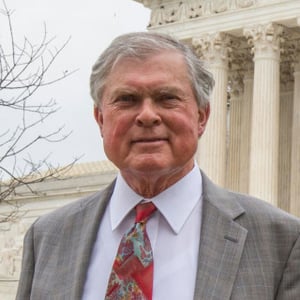
Senior Fellow, Independent Institute
Dr. Stephen P. Halbrook is a Senior Fellow at the Independent Institute. He has taught legal and political philosophy at George Mason University, Howard University, and Tuskegee Institute, and he received his J.D. from the Georgetown University Law Center and Ph.D. in social philosophy from Florida State University.
The winner of three cases before the U.S. Supreme Court (Printz v. United States, United States v. Thompson/Center Arms Company, and Castillo v. United States), he has testified before the Subcommittee on the Constitution of the Senate Judiciary Committee, Senate Subcommittee on the Constitution, Subcommittee on Crime of the House Judiciary Committee, Senate Governmental Affairs Committee, and House Committee on the District of Columbia.
A contributor to numerous scholarly volumes, he is the author of the books, Gun Control in Nazi-Occupied France: Tyranny and Resistance; Gun Control in the Third Reich: Disarming the Jews and “Enemies of the State”; The Founders’ Second Amendment: Origins of the Right to Bear Arms; That Every Man Be Armed: Evolution of a Constitutional Right; A Right to Bear Arms; Firearms Law Deskbook: Federal and State Criminal Practice; Securing Civil Rights: Freedmen, the Fourteenth Amendment, and the Right to Bear Arms; State and Federal Bills of Rights and Constitutional Guarantees; and Target Switzerland: Swiss Armed Neutrality in World War II. Dr. Halbrook’s scholarly articles have appeared in such journals as the Arizona Journal of International and Comparative Law, Drug Law Report, George Mason University Law Review, Journal of Air Law and Commerce, Journal of Law and Policy, Law & Contemporary Problems, National Law Journal, Northern Kentucky Law Review, St. John’s Journal of Legal Commentary; Seton Hall Constitutional Law Journal, Tennessee Law Review, University of Dayton Law Review, Valparaiso University Law Review, Vermont Law Review, and William & Mary Bill of Rights Journal.
Dr. Halbrook's popular articles have appeared in such publications as the Wall Street Journal, Newsday, San Francisco Chronicle, National Review, Investor’s Business Daily, Kansas City Star, Washington Examiner, Shreveport Times, Sacramento Bee, Providence Journal, Tampa Tribune, Pittsburgh Tribune-Review, History News Network, San Antonio Express-News, The Daily Caller, Detroit News, Honolulu Star Advertiser, Birmingham News, Environmental Forum, USA Today, and Washington Times. He has also appeared on numerous national TV/radio programs on CNN, Fox News Channel, Fox Business Network, Court TV, NewsMax TV, CBN, Voice of America, and C-SPAN.

Anne Fleming Research Professor and Professor of Law, Georgetown University Law Center; Faculty Director, Georgetown Center for the Constitution
Stephanie Barclay is a Professor of Law at Georgetown Law School, and the Faculty Director of the Georgetown Center for the Constitution. Her research focuses on the role our different democratic institutions play in protecting minority rights, particularly at the intersection of free speech and religious exercise. Barclay‘s work is published or is forthcoming in leading journals such as the Harvard Law Review, the Chicago Law Review, the University of Pennsylvania Law Review, and the Yale Law Journal Forum. One of her articles was also selected for the 2020 Stanford/Harvard/Yale Junior Faculty Forum. Her work has been featured in many media outlets, including The New York Times, The Wall Street Journal, The Washington Post, USA Today, Bloomberg BNA, The Hill, and Law 360. And her work has also been cited by the U.S. Supreme Court.
Prior to joining Georgetown, Barclay was twice voted Professor of the Year. Barclay has also litigated constitutional cases at both the trial and appellate level, including before the U.S. Supreme Court. Barclay served as a law clerk to Judge N. Randy Smith on the U.S. Court of Appeals for the Ninth Circuit, and to Justice Neil M. Gorsuch of the U.S. Supreme Court.
Barclay is a Faculty Affiliate at the Constitutional Law Center at Stanford Law School; and she is a Nootbaar Fellow at the Nootbaar Institute on Law, Religion, and Ethics at Pepperdine University. She currently serves as the Chair for the AALS Law and Religion Section and as a Member of the Executive Committee for the AALS Constitutional Law Section. She graduated summa cum laude from BYU Law School, where she was elected to the Order of the Coif. She is completing a Ph.D. in Law at Oxford University as a Clarendon Scholar and a Tang Scholar.

Patrick Hotung Professor of Constitutional Law, Georgetown University Law Center; Faculty Director, Georgetown Center for the Constitution
Randy E. Barnett is the Patrick Hotung Professor of Constitutional Law at the Georgetown University Law Center and is the Faculty Director of the Georgetown Center for the Constitution. After graduating from Northwestern University and Harvard Law School, he tried many felony cases as a prosecutor in the Cook County States’ Attorney’s Office in Chicago. A recipient of a Guggenheim Fellowship in Constitutional Studies and the Bradley Prize, Professor Barnett has been a visiting professor at Penn, Northwestern and Harvard Law School.
Professor Barnett’s publications includes thirteen books, more than one hundred articles and reviews, as well as numerous op-eds. His most recent book is Felony Review: Tales of True Crime and Corruption in Chicago (2026). His other books on the Constitution include: A Life for Liberty: The Making of an American Originalist (2024); The Original Meaning of the Fourteenth Amendment: Its Letter and Spirit (2021) (with Evan Bernick); An Introduction to Constitutional Law: 100 Supreme Court Cases Everyone Should Know (2019) (with Josh Blackman); Restoring the Lost Constitution: The Presumption of Liberty (2nd ed. 2013); Our Republican Constitution: Securing the Liberty and Sovereignty of We the People (2016); and Constitutional Law: Cases in Context (5th ed. forthcoming 2027) (with Josh Blackman). His books on contracts are The Oxford Introductions to U.S. Law: Contracts (2010) and Contracts: Cases and Doctrine (7th ed. 2021) (with Nate Oman). And he is the author of The Structure of Liberty: Justice and the Rule of Law (2nd ed. 2014).
In 2004, he argued the medical marijuana case of Gonzalez v. Raich before the U.S. Supreme Court. In 2012, he was one of the lawyers representing the National Federation of Independent Business in its constitutional challenge to the Affordable Care Act in NFIB v. Sebelius. He’s appeared in numerous documentaries and portrayed a prosecutor in the 2010 science-fiction feature film, InAlienable: The Movie. On X he is @RandyEBarnett
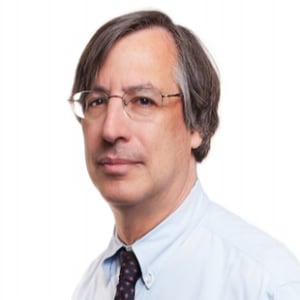
Levin, Mabie & Levin Professor of Law, University of Florida Levin College of Law
Professor Gary Lawson joined the University of Florida Levin College of Law faculty on July 1, 2024, after twenty-four years at Boston University School of Law and eleven years at Northwestern University School of Law. While at Boston University, he was named a William Fairfield Warren Distinguished Professor in 2022 – the highest faculty honor within the university. He has authored or co-authored nine editions of a textbook on administrative law, a textbook on constitutional law, five university press books, one popular press book, and more than one hundred scholarly articles on topics ranging from aspects of constitutional theory and history to the proof of legal propositions. His works have been cited in more than twenty opinions of United States Supreme Court justices. He is a founding member, and serves on the Board of Directors, of the Federalist Society for Law and Public Policy Studies and is on the Editorial Advisory Board of the Heritage Guide to the Constitution.

Richard and Frances Mallery Professor of Law and Faculty Director, Constitutional Law Center, Stanford Law School
Michael W. McConnell is the Richard and Frances Mallery Professor and Faculty Director of the Constitutional Law Center at Stanford Law School, and a Senior Fellow at the Hoover Institution. From 2002 to 2009, he served as a Circuit Judge on the United States Court of Appeals for the Tenth Circuit. He was nominated by President George W. Bush, a Republican, and confirmed by a Democratic Senate by unanimous consent. McConnell has previously held chaired professorships at the University of Chicago and the University of Utah, and visiting professorships at Harvard and NYU. He teaches courses on constitutional law, constitutional history, First Amendment, and interpretive theory. He has published widely in the fields of constitutional law and theory, especially church and state, equal protection, and separation of powers. His book, “The President Who Would Not Be King: Executive Power Under the Constitution,” was published by Princeton University Press in 2020, based on the Tanner Lectures in Human Values, which he delivered at Princeton in 2019. His latest book, co-authored with Nathan Chapman, “Agreeing to Disagree: How the Establishment Clause Protects Religious Diversity and Freedom of Conscience,” was published by Oxford University Press in mid-2023. McConnell has argued sixteen cases in the United States Supreme Court, most recently Carney v. Adams (2020). defending a provision of the Delaware Constitution requiring political balance on that state’s courts. More recently, he was co-counsel in Gonzalez v. Google. He earned his B.A. from Michigan State University and his J.D. from the University of Chicago, and has received honorary degrees from Notre Dame University and Michigan State. He served as law clerk to Supreme Court Justice William J. Brennan, Jr. and D.C. Circuit Chief Judge J. Skelly Wright. He has been Assistant General Counsel of the Office of Management & Budget, Assistant to the Solicitor General of the Department of Justice, and a member of the President’s Intelligence Oversight Board. He is Senior of Counsel to the law firm Wilson, Sonsini, Goodrich & Rosati, and is co-chair of Meta’s Oversight Review Board.
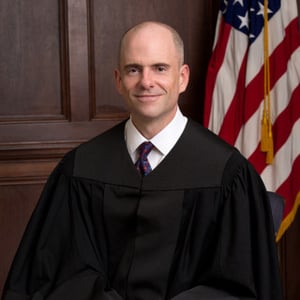
Judge, United States Court of Appeals, Eleventh Circuit
Judge Kevin C. Newsom is a member of the United States Court of Appeals for the Eleventh Circuit. He sits in Birmingham, Alabama.
Before his appointment to the bench, Judge Newsom was the head of the appellate practice group at Bradley Arant Boult Cummings LLP and, before that, the Solicitor General of Alabama. As a practicing lawyer, Judge Newsom argued four cases in the Supreme Court of the United States, and nearly 40 more in the United States Courts of Appeals and state supreme and appellate courts.
Judge Newsom graduated summa cum laude from Samford University and magna cum laude from Harvard Law School, where he was an articles editor on the Harvard Law Review. Following law school, Judge Newsom clerked for Judge Diarmuid F. O’Scannlain of the United States Court of Appeals for the Ninth Circuit and Justice David H. Souter of the Supreme Court of the United States.
Judge Newsom teaches at Harvard Law School, Yale Law School, Stanford Law School, and the University of Chicago Law School. His published work has appeared in the Yale Law Journal and the Harvard Law Review.

Executive Vice President, The Federalist Society
Dean Reuter is Executive Vice President at the Federalist Society for Law and Public Policy Studies. He has served in two federal government agency Offices of the Inspector General, as Counsel to the Inspector General and Deputy Inspector General, responsible for policing the use of federal funds granted and contracted through those agencies. As such, he helped conduct and oversee criminal investigations across the country. He is the principal author of the non-fiction book, The Hidden Nazi: The Untold Story of America's Deal with the Devil, and editor of Liberty’s Nemesis: The Unchecked Expansion of the State and Confronting Terror: 9/11 and the Future of American National Security. He was appointed by the President and served as Vice-Chairman of the Board of Directors of the Corporation for National and Community Service, and recently served as an appointee on the U.S. Commission on Presidential Scholars. He is a graduate of Hood College (BA with Honors) and the University of Maryland School of Law.
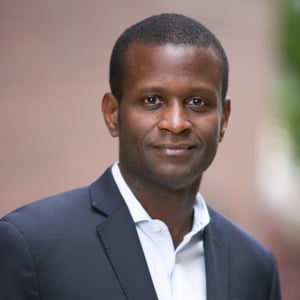
Dwight Professor of Law, Columbia Law School
JAMAL GREENE is the Dwight Professor of Law at Columbia Law School, where he teaches courses in constitutional law, comparative constitutional law, and the law of the political process. He is the author of How Rights Went Wrong: Why Our Obsession With Rights Is Tearing America Apart, as well as numerous articles and book chapters on constitutional law and theory. He is also a co-chair of the Oversight Board, an independent body that reviews content moderation decisions on Facebook and Instagram. He served as a law clerk to the Hon. Guido Calabresi on the U.S. Court of Appeals for the Second Circuit and for the Hon. John Paul Stevens on the U.S. Supreme Court. He earned his J.D. from Yale Law School in 2005 and his A.B. from Harvard College in 1999.
Patrick Hotung Professor of Constitutional Law, Georgetown University Law Center; Faculty Director, Georgetown Center for the Constitution
Randy E. Barnett is the Patrick Hotung Professor of Constitutional Law at the Georgetown University Law Center and is the Faculty Director of the Georgetown Center for the Constitution. After graduating from Northwestern University and Harvard Law School, he tried many felony cases as a prosecutor in the Cook County States’ Attorney’s Office in Chicago. A recipient of a Guggenheim Fellowship in Constitutional Studies and the Bradley Prize, Professor Barnett has been a visiting professor at Penn, Northwestern and Harvard Law School.
Professor Barnett’s publications includes thirteen books, more than one hundred articles and reviews, as well as numerous op-eds. His most recent book is Felony Review: Tales of True Crime and Corruption in Chicago (2026). His other books on the Constitution include: A Life for Liberty: The Making of an American Originalist (2024); The Original Meaning of the Fourteenth Amendment: Its Letter and Spirit (2021) (with Evan Bernick); An Introduction to Constitutional Law: 100 Supreme Court Cases Everyone Should Know (2019) (with Josh Blackman); Restoring the Lost Constitution: The Presumption of Liberty (2nd ed. 2013); Our Republican Constitution: Securing the Liberty and Sovereignty of We the People (2016); and Constitutional Law: Cases in Context (5th ed. forthcoming 2027) (with Josh Blackman). His books on contracts are The Oxford Introductions to U.S. Law: Contracts (2010) and Contracts: Cases and Doctrine (7th ed. 2021) (with Nate Oman). And he is the author of The Structure of Liberty: Justice and the Rule of Law (2nd ed. 2014).
In 2004, he argued the medical marijuana case of Gonzalez v. Raich before the U.S. Supreme Court. In 2012, he was one of the lawyers representing the National Federation of Independent Business in its constitutional challenge to the Affordable Care Act in NFIB v. Sebelius. He’s appeared in numerous documentaries and portrayed a prosecutor in the 2010 science-fiction feature film, InAlienable: The Movie. On X he is @RandyEBarnett

E. Claiborne Robins Distinguished Chair in Law, University of Richmond School of Law
Professor Kurt Lash teaches and writes about constitutional law. Founder and director of the Richmond Program on the American Constitution, Professor Lash has published widely on the subjects of constitutional law and constitutional history, including The Fourteenth Amendment and the Privileges or Immunities of American Citizenship (Cambridge University Press, 2014), The Lost History of the Ninth Amendment (Oxford University Press, 2009), and The American First Amendment in the Twenty-first Century: Cases and Materials(with William W. Van Alstyne) (5th ed., Foundation Press, 2014). An elected member of the American Law Institute, Professor Lash’s work has appeared in numerous legal journals including the Stanford Law Journal, Georgetown Law Journal, Virginia Law Review, andNotre Dame Law Review. He has been a visiting professor at Northwestern University School of Law and is the former director of the University of Illinois College of Law Program in Constitutional Theory, History, and Law.

Judge, United States Court of Appeals, Sixth Circuit
Amul R. Thapar serves as a judge on the United States Court of Appeals for the Sixth Circuit. His judicial career began in 2007 when President George W. Bush nominated him to serve on the Eastern District of Kentucky, making him the first South Asian Article III judge in American history. In 2017, he became President Donald J. Trump’s first appellate court nominee.
Before joining the bench, Judge Thapar served as the United States Attorney for the Eastern District of Kentucky. While United States Attorney, Judge Thapar worked on the Attorney General’s Advisory Committee (“AGAC”) and chaired the AGAC’s Controlled Substances and Asset Forfeiture subcommittee. He also served on the Terrorism and National Security subcommittee, the Violent Crime subcommittee, and the Child Exploitation working group.
Judge Thapar has worked in private practice, at Williams & Connolly in Washington, D.C., and Squire, Sanders & Dempsey in Cincinnati, Ohio. He also served as an Assistant United States Attorney in both the Southern District of Ohio and the District of Columbia.
Judge Thapar received his undergraduate degree from Boston College and his law degree from the University of California, Berkeley. After graduating, Judge Thapar worked as a law clerk to the Honorable S. Arthur Spiegel of the United States District Court for the Southern District of Ohio, and the Honorable Nathaniel R. Jones of the United States Court of Appeals for the Sixth Circuit.
Judge Thapar has also published in the Yale Law Journal, Michigan Law Review, and Catholic University Law Review. He teaches courses on originalism, the Federalists and Anti-Federalists, and legal writing at Notre Dame Law School, the University of Virginia School of Law, and Vanderbilt Law School.

Julius E. Davis Professor of Law, University of Minnesota Law School
Ilan Wurman is the Julius E. Davis Professor of Law at the University of Minnesota, where he teaches administrative law and constitutional law. He previously taught at Arizona State University. He writes primarily on the Fourteenth Amendment, administrative law, separation of powers, and constitutionalism. His academic writing has appeared in the Yale Law Journal, the Stanford Law Review, the University of Chicago Law Review, the University of Pennsylvania Law Review, the Virginia Law Review, the Duke Law Journal, the Minnesota Law Review, the Notre Dame Law Review, and the Texas Law Review among other journals.
Professor Wurman is the author of the new book The Constitution of 1789: A New Introduction (Cambridge 2026). His previous books include A Debt Against the Living: An Introduction to Originalism (Cambridge 2017), and The Second Founding: An Introduction to the Fourteenth Amendment (Cambridge 2020). He is also the author of the casebook, Administrative Law Theory and Fundamentals: An Integrated Approach (Foundation Press 3d ed. 2025).
Professor Wurman practices law with the firm Tully Bailey. He has litigated a variety of administrative law and constitutional law cases, including cases involving COVID-19 restrictions, transmission lines, and Appointments Clause challenges. He also devised winning public nuisance theories to force city governments to address the increasingly challenging public camping crises throughout the country.

Charles W. Fornoff Professor of Law and Values, University of Toledo College of Law
Rebecca E. Zietlow is Charles W. Fornoff Professor of Law and Values at the University of Toledo College of Law, where she teaches Constitutional Law, Federal Courts, and Constitutional Litigation. She received her B.A. from Barnard College, and her J.D. from Yale Law School. In 2012, she received the University of Toledo Outstanding Faculty Research Award.
Professor Zietlow’s scholarly interest is in the study of the Reconstruction Era, including the meaning and history of the Thirteenth and Fourteenth Amendments. Professor Zietlow is also an expert on constitutional theory, examining constitutional interpretation outside of the courts. Her book, Enforcing Equality: Congress, the Constitution and the Protection of Individual Rights, studies the history of congressional protection of rights, and the implications of that history for constitutional theory. Her work has been published in the Columbia Law Review, Boston University Law Review, Ohio State Law Journal, Florida Law Review, the Wake Forest Law Journal, and the University of Pennsylvania Journal of Constitutional Law, amongst other publications.

James Madison Distinguished Professor of Law and Class of 1941 Research Professor of Law, University of Virginia School of Law
Professor John C. Harrison is the James Madison Distinguished Professor of Law and Class of 1941 Research Professor of Law at the University of Virginia School of Law. He joined the faculty at University of Virginia in 1993 as an associate professor of law after a distinguished career with the U.S. Department of Justice. His teaching subjects include constitutional history, federal courts, remedies, corporations, civil procedure, legislation and property. In 2008 he was on leave from the Law School to serve as counselor on international law in the Office of the Legal Adviser at the U.S. Department of State.
A 1977 graduate of the University of Virginia, Harrison earned his law degree in 1980 at Yale, where he served as editor of the Yale Law Journal and editor and articles editor of the Yale Studies in World Public Order. He was an associate at Patton Boggs & Blow in Washington, D.C., and clerked for Judge Robert Bork on the U.S. Court of Appeals for the District of Columbia Circuit. He worked with the Department of Justice from 1983-93, serving in numerous capacities, including deputy assistant attorney general in the Office of Legal Counsel (1990-93).
E. Claiborne Robins Distinguished Chair in Law, University of Richmond School of Law
Professor Kurt Lash teaches and writes about constitutional law. Founder and director of the Richmond Program on the American Constitution, Professor Lash has published widely on the subjects of constitutional law and constitutional history, including The Fourteenth Amendment and the Privileges or Immunities of American Citizenship (Cambridge University Press, 2014), The Lost History of the Ninth Amendment (Oxford University Press, 2009), and The American First Amendment in the Twenty-first Century: Cases and Materials(with William W. Van Alstyne) (5th ed., Foundation Press, 2014). An elected member of the American Law Institute, Professor Lash’s work has appeared in numerous legal journals including the Stanford Law Journal, Georgetown Law Journal, Virginia Law Review, andNotre Dame Law Review. He has been a visiting professor at Northwestern University School of Law and is the former director of the University of Illinois College of Law Program in Constitutional Theory, History, and Law.

Professor of Law, Georgetown University Law Center
Nicholas Quinn Rosenkranz teaches constitutional law and federal jurisdiction, and he writes articles for the Harvard Law Review and the Stanford Law Review.
He is currently developing a new theory of constitutional interpretation and judicial review. The first installment, entitledThe Subjects of the Constitution, was published in the Stanford Law Review in May of 2010, and it is among the most downloaded articles about constitutional interpretation, judicial review, and/or federal courts in the history of SSRN. The second installment, The Objects of the Constitution, was published in May of 2011, also in the Stanford Law Review. And the comprehensive version is forthcoming as a book by Oxford University Press.
Rosenkranz has served and advised the federal government in a variety of capacities. He clerked for Judge Frank H. Easterbrook on the U.S. Court of Appeals for the Seventh Circuit (1999-2000) and for Justice Anthony M. Kennedy at the U.S. Supreme Court (October Term 2001). He served as an Attorney-Advisor at the Office of Legal Counsel in the U.S. Department of Justice (November 2002 - July 2004). He often testifies before Congress as a constitutional expert—most recently before the House Financial Services Oversight Subcommittee, regarding the Obama Administration's use of bank settlement agreements to circumvent the Appropriations Clause. He has also filed briefs and presented oral argument before the U.S. Supreme Court. His most recent Supreme Court brief, in Los Angeles v. Patel, was cited by Justice Alito in dissent.
Rosenkranz is a member of the New York Bar and the U.S. Supreme Court Bar. He is a Senior Fellow at the Cato Institute. He serves on the Board of Directors of the Foundation for Individual Rights in Education (FIRE). He is a founding member of Heterodox Academy and a member of its Executive Committee. He also serves on the Board of Directors of the Federalist Society and as the faculty advisor to the Georgetown chapter.
Judge, United States Court of Appeals, Seventh Circuit
Judge Sykes was nominated to the Seventh Circuit by President George W. Bush and confirmed by the Senate in 2004. Prior to her appointment to the federal bench, Judge Sykes served as a justice on the Wisconsin Supreme Court. Governor Tommy G. Thompson appointed her in September 1999 to fill a mid-term vacancy on the state supreme court, and she was elected to a full ten-year term in April 2000. From 1992-1999, Judge Sykes served on the state trial bench in Milwaukee County (elected in 1992 and re-elected in 1998). From 1985-1992, Judge Sykes practiced law with the Milwaukee firm of Whyte & Hirschboeck, S.C., and from 1984-1985, was a law clerk to Federal Judge Terence T. Evans.
Born and raised in the Milwaukee area, Judge Sykes earned a bachelor’s degree in journalism from Northwestern University in 1980 and a law degree from Marquette University Law School in 1984. Between college and law school, Judge Sykes worked as a reporter for The Milwaukee Journal.
Judge Sykes has two sons.
President, Constitutional Accountability Center
Elizabeth is Constitutional Accountability Center’s President. From 2008-2016, she served as CAC's Chief Counsel, representing the Center as well as clients including preeminent constitutional scholars and historians, state and local government organizations, and groups such as the League of Women Voters and the AARP. She frequently participates in Supreme Court litigation and her legal brief writing has been recognized as “exemplary” by the Green Bag Almanac & Reader. Elizabeth has also argued several important cases in the federal courts of appeals on a range of issues, including immigration law, habeas corpus, and sovereign immunity. She joined CAC from private practice at Quinn Emanuel Urquhart & Sullivan in San Francisco, where she was an attorney working with former Stanford Law School Dean Kathleen Sullivan in the firm’s Supreme Court/appellate practice. Previously, Elizabeth was a supervising attorney and teaching fellow at the Georgetown University Law Center appellate litigation clinic, a law clerk for Judge James R. Browning of the U.S. Court of Appeals for the Ninth Circuit, and a lawyer at Pillsbury Winthrop Shaw Pittman, a law firm in Washington. She has appeared as a legal expert for NBC, ABC, PBS, CNN, Fox News, the BBC, Current TV, and NPR, among other outlets. Elizabeth has been quoted extensively in the print media and is a regular contributor to the ABA’s Preview of United States Supreme Court Cases. Her writings have appeared in The New York Times, Reuters, USA Today, Politico, CNN.com, Slate, and on numerous political and legal blogs, such as Huffington Post, SCOTUSblog, and ACSblog. She has also published in the UCLA Journal of Environmental Law & Policy, Syracuse Law Review, The Cato Institute’s Supreme Court Review, and the Yale Journal of International Law. Elizabeth is a graduate of Yale Law School.

Sterling Professor of Law and Political Science, Yale Law School
Akhil Reed Amar is Sterling Professor of Law and Political Science at Yale University, where he teaches constitutional law in both Yale College and Yale Law School. After graduating from Yale College, summa cum laude, in 1980 and from Yale Law School in 1984, and clerking for Judge (later Justice) Stephen Breyer, Amar joined the Yale faculty in 1985 at the age of 26. He is Yale’s only living professor to have won the University’s unofficial triple crown — the Sterling Chair for scholarship, the DeVane Medal for teaching, and the Lamar Award for alumni service.
Amar’s work has won awards from both the American Bar Association and the Federalist Society, and he has been cited by Supreme Court justices across the spectrum in more than 50 cases — tops among scholars under age 70. According to both Fred Shapiro’s landmark 2021 study of lifetime scholarly citations and Heinonline’s most recent tabulation of lifetime law-review citations, Amar is America’s second most-cited legal scholar still under age 70. He is a member of the American Academy of Arts and Sciences and has written widely for popular publications, including The New York Times, The Washington Post, The Wall Street Journal, Time, and The Atlantic. He was an informal consultant to the popular TV show The West Wing and his scholarship has been showcased on many broadcasts, including The Colbert Report, Morning Joe, AC360, Velshi, Fox News @ Night with Shannon Bream, Fareed Zakaria GPS, Erin Burnett Outfront, and Constitution USA with Peter Sagal.
He is the author of more than a hundred law review articles and several books, including The Bill of Rights (1998 — winner of the Yale University Press Governors’ Award), America’s Constitution (2005 — winner of the ABA’s Silver Gavel Award), America’s Unwritten Constitution (2012 — named one of the year’s 100 best nonfiction books by The Washington Post), and The Constitution Today (2016 — named one of the year’s top ten nonfiction books by Time magazine). The first volume of his ambitious trilogy on American constitutional history from the Founding to the present, The Words That Made Us: America’s Constitutional Conversation, 1760-1840, came out in May 2021. The second volume, Born Equal: Remaking America’s Constitution, 1840-1920, will be published in September 2025 and is already available for pre-order. All together, his nonfiction books have won two starred reviews from Publishers Weekly and three starred reviews from Kirkus—tops, it is believed, among legal scholars under age 70. Together with Vikram David Amar (YLS ’88), he has a bi-weekly column on the Supreme Court on the distinguished website SCOTUSblog. Along with Andy Lipka, he co-hosts a popular and free weekly podcast, Amarica’s Constitution, whose listeners are eligible for CLE credit in most American jurisdictions. A wide assortment of his articles and op-eds and video links to many of his public lectures and free online courses may be found at akhilamar.com.
Patrick Hotung Professor of Constitutional Law, Georgetown University Law Center; Faculty Director, Georgetown Center for the Constitution
Randy E. Barnett is the Patrick Hotung Professor of Constitutional Law at the Georgetown University Law Center and is the Faculty Director of the Georgetown Center for the Constitution. After graduating from Northwestern University and Harvard Law School, he tried many felony cases as a prosecutor in the Cook County States’ Attorney’s Office in Chicago. A recipient of a Guggenheim Fellowship in Constitutional Studies and the Bradley Prize, Professor Barnett has been a visiting professor at Penn, Northwestern and Harvard Law School.
Professor Barnett’s publications includes thirteen books, more than one hundred articles and reviews, as well as numerous op-eds. His most recent book is Felony Review: Tales of True Crime and Corruption in Chicago (2026). His other books on the Constitution include: A Life for Liberty: The Making of an American Originalist (2024); The Original Meaning of the Fourteenth Amendment: Its Letter and Spirit (2021) (with Evan Bernick); An Introduction to Constitutional Law: 100 Supreme Court Cases Everyone Should Know (2019) (with Josh Blackman); Restoring the Lost Constitution: The Presumption of Liberty (2nd ed. 2013); Our Republican Constitution: Securing the Liberty and Sovereignty of We the People (2016); and Constitutional Law: Cases in Context (5th ed. forthcoming 2027) (with Josh Blackman). His books on contracts are The Oxford Introductions to U.S. Law: Contracts (2010) and Contracts: Cases and Doctrine (7th ed. 2021) (with Nate Oman). And he is the author of The Structure of Liberty: Justice and the Rule of Law (2nd ed. 2014).
In 2004, he argued the medical marijuana case of Gonzalez v. Raich before the U.S. Supreme Court. In 2012, he was one of the lawyers representing the National Federation of Independent Business in its constitutional challenge to the Affordable Care Act in NFIB v. Sebelius. He’s appeared in numerous documentaries and portrayed a prosecutor in the 2010 science-fiction feature film, InAlienable: The Movie. On X he is @RandyEBarnett

Former President & CEO, The Federalist Society for Law and Public Policy Studies
Eugene B. Meyer, former President and CEO of the Federalist Society, has served as Executive Director, CEO, and/or President of the organization for more than 40 years. He is responsible for shepherding the organization from a small group of law students to a community of 90,000 lawyers, law students, academics, judges, and others interested in the rule of law. The Society now includes a Student Chapter at nearly every ABA-accredited law school in the country and Lawyers Chapters in 220 major cities across the nation. Gene earned his B.A. in history at Yale in 1975 and his M.A. in political science from the London School of Economics in 1976. Gene currently serves on the boards of the U.S. Chess Center, the Holman Foundation, the Sarah Scaife Foundation, and the advisory board of the Adam Smith Society. He holds the title of International Chess Master.
Professor of Law, Georgetown University Law Center
Nicholas Quinn Rosenkranz teaches constitutional law and federal jurisdiction, and he writes articles for the Harvard Law Review and the Stanford Law Review.
He is currently developing a new theory of constitutional interpretation and judicial review. The first installment, entitledThe Subjects of the Constitution, was published in the Stanford Law Review in May of 2010, and it is among the most downloaded articles about constitutional interpretation, judicial review, and/or federal courts in the history of SSRN. The second installment, The Objects of the Constitution, was published in May of 2011, also in the Stanford Law Review. And the comprehensive version is forthcoming as a book by Oxford University Press.
Rosenkranz has served and advised the federal government in a variety of capacities. He clerked for Judge Frank H. Easterbrook on the U.S. Court of Appeals for the Seventh Circuit (1999-2000) and for Justice Anthony M. Kennedy at the U.S. Supreme Court (October Term 2001). He served as an Attorney-Advisor at the Office of Legal Counsel in the U.S. Department of Justice (November 2002 - July 2004). He often testifies before Congress as a constitutional expert—most recently before the House Financial Services Oversight Subcommittee, regarding the Obama Administration's use of bank settlement agreements to circumvent the Appropriations Clause. He has also filed briefs and presented oral argument before the U.S. Supreme Court. His most recent Supreme Court brief, in Los Angeles v. Patel, was cited by Justice Alito in dissent.
Rosenkranz is a member of the New York Bar and the U.S. Supreme Court Bar. He is a Senior Fellow at the Cato Institute. He serves on the Board of Directors of the Foundation for Individual Rights in Education (FIRE). He is a founding member of Heterodox Academy and a member of its Executive Committee. He also serves on the Board of Directors of the Federalist Society and as the faculty advisor to the Georgetown chapter.
Patrick Hotung Professor of Constitutional Law, Georgetown University Law Center; Faculty Director, Georgetown Center for the Constitution
Randy E. Barnett is the Patrick Hotung Professor of Constitutional Law at the Georgetown University Law Center and is the Faculty Director of the Georgetown Center for the Constitution. After graduating from Northwestern University and Harvard Law School, he tried many felony cases as a prosecutor in the Cook County States’ Attorney’s Office in Chicago. A recipient of a Guggenheim Fellowship in Constitutional Studies and the Bradley Prize, Professor Barnett has been a visiting professor at Penn, Northwestern and Harvard Law School.
Professor Barnett’s publications includes thirteen books, more than one hundred articles and reviews, as well as numerous op-eds. His most recent book is Felony Review: Tales of True Crime and Corruption in Chicago (2026). His other books on the Constitution include: A Life for Liberty: The Making of an American Originalist (2024); The Original Meaning of the Fourteenth Amendment: Its Letter and Spirit (2021) (with Evan Bernick); An Introduction to Constitutional Law: 100 Supreme Court Cases Everyone Should Know (2019) (with Josh Blackman); Restoring the Lost Constitution: The Presumption of Liberty (2nd ed. 2013); Our Republican Constitution: Securing the Liberty and Sovereignty of We the People (2016); and Constitutional Law: Cases in Context (5th ed. forthcoming 2027) (with Josh Blackman). His books on contracts are The Oxford Introductions to U.S. Law: Contracts (2010) and Contracts: Cases and Doctrine (7th ed. 2021) (with Nate Oman). And he is the author of The Structure of Liberty: Justice and the Rule of Law (2nd ed. 2014).
In 2004, he argued the medical marijuana case of Gonzalez v. Raich before the U.S. Supreme Court. In 2012, he was one of the lawyers representing the National Federation of Independent Business in its constitutional challenge to the Affordable Care Act in NFIB v. Sebelius. He’s appeared in numerous documentaries and portrayed a prosecutor in the 2010 science-fiction feature film, InAlienable: The Movie. On X he is @RandyEBarnett
Associate Professor of Law, Notre Dame Law School
Professor and D’Alemberte Chair in Constitutional Law, Florida State University College of Law
Alexander Tsesis is the D’Alemberte chair in constitutional law at the Florida State University College of Law. He is also the general editor of the Cambridge Studies on Civil Rights and Civil Liberties and the Oxford Theoretical Foundations in Law. Tsesis’ scholarship and teaching focus on a breadth of subjects, including constitutional law, civil rights, constitutional reconstruction, interpretive methodology, free speech theory, and legal history.
Tsesis’ most recent book is Free Speech in the Balance (Cambridge University Press 2020). His previous books include Constitutional Ethos: Liberal Equality for the Common Good (Oxford University Press 2017) and For Liberty and Equality: The Life and Times of the Declaration of Independence (Oxford University Press 2012), We Shall Overcome: A History of Civil Rights and the Law (Yale University Press 2008), The Thirteenth Amendment and American Freedom (New York University Press 2004), and Destructive Messages: How Hate Speech Paved the Way for Harmful Social Movements (New York University Press 2002). He also edited a collection of essays in Promises of Liberty (Columbia University Press 2010). The subjects of his articles range from cyber speech, constitutional interpretation, civil rights law, and human rights. They have appeared or will appear in a variety of law reviews across the country, including the Boston University Law Review, Columbia Law Review, Cornell Law Review, Minnesota Law Review, Northwestern University Law Review, Southern California Law Review, Stanford Law Review, and Vanderbilt Law Review.
Associate Professor of Law,, St. Thomas University College of Law
Former Inspector General of the Corporation for National and Community Service
Gerald Walpin, the new Inspector General of the Corporation for National and Community Service, has vowed a vigorous effort to investigate and prosecute all persons who betray the public’s trust by defrauding the Corporation and its programs.
A prominent New York attorney, Walpin was nominated by President George W. Bush, confirmed by the U.S. Senate and sworn into office on January 8, 2007. He leads the Office of Inspector General (OIG), an independent Federal agency charged with oversight over the taxpayer-supported Corporation and its service programs, including AmeriCorps, Volunteers in Service to America (VISTA)and Senior Corps.
“My major objective is to expand upon the good work of this office by preventing, detecting and prosecuting all thefts and frauds,” said Walpin. “The reality is that such misconduct takes precious resources away from deserving people, the same way the theft of a welfare check hurts a single mother who needs that money to buy milk for her children. For that reason, this office will seek out and ensure sanctions for all wrongdoing involving Corporation funds.”
Walpin said his other major goal is to “assist the Corporation in making its services efficient and accessible for all national service stakeholders.”
A New York City native, Walpin graduated from College of the City of New York in 1952. He earnedhis law degree, cum laude, in 1955 from Yale Law School, where he was managing editor of the Yale Law Journal. From 1957-60, he served as a lieutenant in the United States Air Force Judge Advocate General.
His career included a five-year stint as Chief of Prosecutions for the United States Attorney for the Southern District of New York, where he successfully prosecuted a number of high-profile cases. He spent more than 40 years as senior partner and, more recently, of counsel to New York-based Katten Muchin Rosenman LLP.
Mr. Walpin has represented a wide range of clients, including large public corporations, securities brokerage firms, accounting firms, law firms, banks in lender liability claims, and individuals, both American and foreign, in securities litigations, employment litigations, criminal prosecutions, and investigations by the United States Securities and Exchange Commission. Both as an Assistant U.S. Attorney and in his law firm, he was frequently called upon to investigate fraudulent conduct.
Included in the published compilation “The Best Lawyers in America,” Mr. Walpin served from 2002-2004 as president of the Federal Bar Council, the association of attorneys practicing in the Second Circuit Federal courts. In 2003, he was honored with the American Inns of Court Professionalism Award for outstanding professionalism as an attorney and for mentoring younger lawyers.
Walpin and his wife Sheila, married for almost 50 years, have three children and six grandchildren.
Inspector General of the Corporation for National and Community Service
Chief of Prosecutions in the New York U.S. Attorney's Office.
President of the Federal Bar council
Senior Partner of and Council to Katten Muchin Rosenman LLP
Chief of Prosectutions for the US Attornery for the Southern District of New York
Lieutenant in the US Air Force Judge Advocate General
B.A., College of the City of New York, 1952
J.D., Yale Law School

Partner, Baker Hostetler LLP
David Rivkin is a member of the firm's litigation, international and environmental teams and is co-leader of the firm's national appellate practice. He has extensive experience in constitutional, administrative and international law litigation and has been involved in numerous high-profile cases. With his prior experience in the government sector, David draws on a wealth of knowledge when providing compliance advice to companies and handling enforcement proceedings before government agencies on issues arising out of multilateral and unilateral sanctions, the Foreign Corrupt Practices Act (FCPA), anti-boycott issues, bankruptcy and financial fraud matters, and environmental and energy issues.
David has developed and implemented legislative, regulatory and litigation initiatives for two presidential administrations. Over the years, he has published hundreds of articles, op-eds, book reviews and book chapters on a variety of international, legal, constitutional, defense, arms control, foreign policy, environmental and energy issues for various newspapers and magazines, including The Wall Street Journal, The Washington Post, The New York Times, USA Today and The Los Angeles Times, and has been a frequent commentator and guest on TV and radio shows including ABC, CBS, NBC, CNN, Fox News, NPR and PBS.

Emanuel S. Heller Professor of Law, University of California at Berkeley; Thomas Smith Senior Research Fellow, The Civitas Institute, University of Texas at Austin
John Yoo is the Emanuel Heller Professor of Law at the University of California at Berkeley. He is also the Thomas Smith Senior Research Fellow, Civitas Institute, at the University of Texas at Austin. He is also a Nonresident Senior Fellow at the American Enterprise Institute.
His most recent book, The Politically Incorrect Guide to the Supreme Court, co-authored with Robert Delahunty, was published in 2023. Professor Yoo’s other books include Defender-in-Chief: Trump’s Fight for Presidential Power; Striking Power: How Cyber, Robots, and Space Weapons Change the Rules for War; Point of Attack: Preventive War, International Law, and Global Welfare; and Crisis and Command: A History of Executive Power from George Washington to George Bush.
He is a co-author of volumes 1 and 2 of R. Rossum, G. Tarr, V. Munoz & J. Yoo American Constitution Law (Routledge, 2026), and a co-editor of the eight-volume series on the 250th anniversary of the American Revolution, We Hold These Truths, with Yuval Levin and Adam White of the American Enterprise Institute.
Professor Yoo has published more than 100 articles in academic journals on subjects including national security, constitutional law, international law, and the Supreme Court. He also regularly contributes to the editorial pages of the Wall Street Journal, New York Times, Washington Post, Los Angeles Times, and National Review, among others.
Professor Yoo has served in all three branches of government. He was an official in the U.S. Department of Justice, where he worked on national security and terrorism issues after the 9/11 attacks. He served as general counsel of the U.S. Senate Judiciary Committee. He has been a law clerk for Supreme Court Justice Clarence Thomas and federal appeals Judge Laurence Silberman. He has been a visiting professor at the University of Texas at Austin’s School of Civic Leadership, Seoul National University, the Interdisciplinary Center Herzliya, Keio University, Trento University, the University of Chicago, and the Free University of Amsterdam.
Professor Yoo supervises the Public Law and Policy Program and the California Constitution Center. He also serves on the boards of Founding Forward, the Washington Legal Foundation, the Pacific Legal Foundation, the Ulysses Grant Institute, the Federalist Society’s Separation of Powers and Federalism Division, the Universidad Cientifica del Sur Law School, and the Asia-Pacific Law Institute at Seoul National University. He is a winner of the Federalist Society’s Paul Bator award and the Heritage Foundation’s Edwin Meese III Originalism Lectureship.
Professor Yoo graduated from Yale Law School and summa cum laude from Harvard College.

Dr. John Eastman is the former Henry Salvatori Professor of Law & Community Service and former Dean at Chapman University's Dale E. Fowler School of Law, where he had been a member of the faculty since 1999, specializing in Constitutional Law, Legal History, and Property. He is a founding director of the Center for Constitutional Jurisprudence, a public interest law firm affiliated with the Claremont Institute that he founded in 1999. He has a Ph.D. in Government from the Claremont Graduate School and a J.D. from the University of Chicago Law School, and a B.A. in Politics and Economics from the University of Dallas. He serves as the Chairman of the Board of the National Organization for Marriage.
Prior to joining the Chapman law faculty, Dr. Eastman served as a law clerk to the Honorable Clarence Thomas, Associate Justice, Supreme Court of the United States, and to the Honorable J. Michael Luttig, Judge, United States Court of Appeals for the Fourth Circuit and practiced law with the national law firm of Kirkland & Ellis. Dr. Eastman has also represented numerous clients in important constitutional law matters and has argued before the Supreme Court. On behalf of the Claremont Institute Center for Constitutional Jurisprudence, he has participated as amicus curiae before the Supreme Court of the United States, U.S. Courts of Appeals, and State Supreme Courts in more than one hundred cases of constitutional significance, including Boy Scouts of America v. Dale, Zelman v. Simmons-Harris (the school vouchers case), Kelo v. New London, Ct. (eminent domain), and Van Orden v. Perry (the 10 Commandments case). He has also appeared as an expert legal commentator on numerous television and radio programs, including C-SPAN, Fox News, PBS, NewsHour, and The O'Reilly Factor.
Emanuel S. Heller Professor of Law, University of California at Berkeley; Thomas Smith Senior Research Fellow, The Civitas Institute, University of Texas at Austin
John Yoo is the Emanuel Heller Professor of Law at the University of California at Berkeley. He is also the Thomas Smith Senior Research Fellow, Civitas Institute, at the University of Texas at Austin. He is also a Nonresident Senior Fellow at the American Enterprise Institute.
His most recent book, The Politically Incorrect Guide to the Supreme Court, co-authored with Robert Delahunty, was published in 2023. Professor Yoo’s other books include Defender-in-Chief: Trump’s Fight for Presidential Power; Striking Power: How Cyber, Robots, and Space Weapons Change the Rules for War; Point of Attack: Preventive War, International Law, and Global Welfare; and Crisis and Command: A History of Executive Power from George Washington to George Bush.
He is a co-author of volumes 1 and 2 of R. Rossum, G. Tarr, V. Munoz & J. Yoo American Constitution Law (Routledge, 2026), and a co-editor of the eight-volume series on the 250th anniversary of the American Revolution, We Hold These Truths, with Yuval Levin and Adam White of the American Enterprise Institute.
Professor Yoo has published more than 100 articles in academic journals on subjects including national security, constitutional law, international law, and the Supreme Court. He also regularly contributes to the editorial pages of the Wall Street Journal, New York Times, Washington Post, Los Angeles Times, and National Review, among others.
Professor Yoo has served in all three branches of government. He was an official in the U.S. Department of Justice, where he worked on national security and terrorism issues after the 9/11 attacks. He served as general counsel of the U.S. Senate Judiciary Committee. He has been a law clerk for Supreme Court Justice Clarence Thomas and federal appeals Judge Laurence Silberman. He has been a visiting professor at the University of Texas at Austin’s School of Civic Leadership, Seoul National University, the Interdisciplinary Center Herzliya, Keio University, Trento University, the University of Chicago, and the Free University of Amsterdam.
Professor Yoo supervises the Public Law and Policy Program and the California Constitution Center. He also serves on the boards of Founding Forward, the Washington Legal Foundation, the Pacific Legal Foundation, the Ulysses Grant Institute, the Federalist Society’s Separation of Powers and Federalism Division, the Universidad Cientifica del Sur Law School, and the Asia-Pacific Law Institute at Seoul National University. He is a winner of the Federalist Society’s Paul Bator award and the Heritage Foundation’s Edwin Meese III Originalism Lectureship.
Professor Yoo graduated from Yale Law School and summa cum laude from Harvard College.
E. Claiborne Robins Distinguished Chair in Law, University of Richmond School of Law
Professor Kurt Lash teaches and writes about constitutional law. Founder and director of the Richmond Program on the American Constitution, Professor Lash has published widely on the subjects of constitutional law and constitutional history, including The Fourteenth Amendment and the Privileges or Immunities of American Citizenship (Cambridge University Press, 2014), The Lost History of the Ninth Amendment (Oxford University Press, 2009), and The American First Amendment in the Twenty-first Century: Cases and Materials(with William W. Van Alstyne) (5th ed., Foundation Press, 2014). An elected member of the American Law Institute, Professor Lash’s work has appeared in numerous legal journals including the Stanford Law Journal, Georgetown Law Journal, Virginia Law Review, andNotre Dame Law Review. He has been a visiting professor at Northwestern University School of Law and is the former director of the University of Illinois College of Law Program in Constitutional Theory, History, and Law.
Milton R. Underwood Professor of Law Emeritus and Professor of History Emeritus, Vanderbilt University
James Ely is a renowned legal historian and property rights expert whose career accomplishments were recognized with both the Brigham-Kanner Property Rights Prize and the Owner's Counsel of American Crystal Eagle Award in 2006. He is the author of several books that have received widespread critical acclaim from legal scholars and historians, including The Guardian of Every Other Right: A Constitutional History of Property Rights, The Fuller Court: Justices, Rulings and Legacy in which he examines the work of the Supreme Court between 1888 and 1910, Railroads and American Law in which he systematically explores the way that the rise of the railroad shaped American legal culture, and The Contract Clause: A Constitutional History. He also is the author of numerous articles dealing with the rights of property owners. He served as an editor of both the Oxford Companion to the Supreme Court, and the second edition of the Oxford Guide to Supreme Court Decisions. Professor Ely received the Tennessee History Book Award in 2002 for A History of the Tennessee Supreme Court. Between 1987 and 1999, he served as an associate editor of the American Journal of Legal History. Since Professor Ely joined Vanderbilt faculty in 1972, he has been frequently recognized by students as one of the law school's outstanding teachers.

Donald Phillip Rothschild Research Professor, George Washington University Law School
Renée Lettow Lerner is Donald Phillip Rothschild Research Professor of Law at George Washington University Law School.
Professor Lerner works in the fields of U.S. and English legal history, civil and criminal procedure, and comparative law. She advises judges, lawyers, and government officials from the United States and countries in Europe, Latin America, and Asia about the differences between adversarial and nonadversarial legal systems.
She writes extensively about the history of American juries. Her work includes not only scholarly articles, but also online publications intended for a broader audience of legal professionals and the public. In many different settings, she has debated the role of juries with other academics and with lawyers. She has a book forthcoming with Oxford University Press in the Very Short Introduction Series entitled “The Jury.” She is also working on a book about the American civil jury, from the colonial period to the present.
She is the author, with John Langbein and Bruce Smith, of the book History of the Common Law: The Development of Anglo-American Legal Institutions (2009).
Her recent writings include a book review of Amalia D. Kessler’s Inventing American Exceptionalism: The Origins of American Adversarial Legal Culture, 1800-1877, 67 J. Legal Ed. 888 (2018); “How the Creation of Appellate Courts in England and the United States Limited Judicial Comment on Evidence to the Jury,” 40 Journal of the Legal Profession 215 (2016); “The Troublesome Inheritance of Americans in Magna Carta and Trial by Jury,” in Magna Carta and its Modern Legacy 77-98 (Robert Hazell and James Melton eds., Cambridge University Press 2015); and “The Failure of Originalism in Preserving Constitutional Rights to Civil Jury Trial,” 22 William & Mary Bill of Rights Journal 811 (2014).
Professor Lerner received an A.B. summa cum laude in history from Princeton University. She was a Rhodes Scholar at Oxford University, where she studied English legal history. At Yale Law School, she was Articles Editor of the Yale Law Journal. She served as a law clerk to Justice Anthony M. Kennedy of the U.S. Supreme Court and to Judge Stephen F. Williams of the U.S. Court of Appeals for the District of Columbia Circuit. From 2003 to 2005, she served as Deputy Assistant Attorney General in the Office of Legal Counsel at the U.S. Department of Justice.
Distinguished University Professor, Antonin Scalia Law School, George Mason University
University Professor Nelson Lund is the author of Rousseau’s Rejuvenation of Political Philosophy: A New Introduction. He has also written widely in the field of constitutional law, including articles on constitutional interpretation, federalism, separation of powers, the Second Amendment, the Commerce Clause, the Speech or Debate Clause, the Equal Protection Clause, and the Uniformity Clause. In addition, he has published articles in the fields of employment discrimination and civil rights, the legal regulation of medical ethics, and the application of economic analysis to legal institutions and legal ethics.
Professor Lund graduated from St. John's College in Annapolis, Maryland, after which he received an MA in philosophy from the Catholic University of America and a PhD in political science from Harvard University. He left the faculty of the University of Chicago to attend its law school, where he served as executive editor of the University of Chicago Law Review and chapter chairman of the Federalist Society for Law and Public Policy Studies. After law school, he held positions at the United States Department of Justice in the Office of the Solicitor General and the Office of Legal Counsel. He also served as a law clerk to the Honorable Patrick E. Higginbotham of the United States Court of Appeals for the Fifth Circuit and to the Honorable Sandra Day O'Connor of the United States Supreme Court. Following his clerkship with Justice O'Connor, Professor Lund served in the White House as associate counsel to the president from 1989 to 1992.
Since joining the faculty at George Mason University's Antonin Scalia Law School, Professor Lund has taught Constitutional Law, Legislation, Federal Election Law, Employment Discrimination, State and Local Government, and seminars on the Second Amendment and on a variety of topics in Jurisprudence.
David and Mary Harrison Distinguished Professor of Law, University of Virginia School of Law
G. Edward White joined the Virginia law faculty in 1972 after a clerkship with Chief Justice Earl Warren of the Supreme Court of the United States and a year as visiting scholar at the American Bar Foundation. He was appointed John B. Minor Professor of Law and History in 1987, and held that chair until 2003, when he became David and Mary Harrison Distinguished Professor of Law. In 1992, he was appointed to a University Professorship, which he held until 2003. From 1990 until 1992 and from 2001-03, he was the Sullivan & Cromwell Research Professor; from 1994-97 the E. James Kelly Research Professor; and from 1999-2001 the Class of 1963 Research Professor. He has held visiting appointments at New York Law School, William & Mary School of Law, Brooklyn Law School, Arizona College of Law, the London School of Economics and Political Science, and Harvard Law School. He has been a Guggenheim Fellow, and twice a senior fellow of the National Endowment for the Humanities. He is a fellow of the American Academy of Arts & Sciences, a fellow of the Society of American Historians, and a member of the American Law Institute.He received the Roger and Madeleine Traynor Faculty Achievement Award in 2008.
White's 14 published books have won numerous honors and awards. These include final listing for the Pulitzer Prize in history, the Silver Gavel Award from the American Bar Association, the James Willard Hurst Prize from the Law & Society Association, the Littleton-Griswold Prize from the American Historical Association, the Scribes Award and the Association of American Law Schools' Triennial Coif Award. White's books have garnered 15 such honors and awards since 1976.
White was editor of the Studies in Legal History series for the North Carolina Press from 1980-85, and advisor on law manuscripts for Oxford University Press from 1986-96. He was on the editorial board of the Virginia Quarterly Review from 1980-2002. He has served on the Commission for Undergraduate Education in Law and the Humanities, and has taught summer humanities seminars for lawyers and judges under the auspices of the National Endowment for the Humanities.
White has delivered several endowed lectures, including the inaugural John Marshall Lecture, sponsored by the Boston Bar Association; the inaugural Jerome Hall Lecture at Hastings College of Law; the Swinford Lecture, sponsored by the University of Kentucky School of Law and the Kentucky Bar Association; the Keck Lecture at Amherst College, the Rosenthal Lectures at Northwestern University School of Law; the Neesima Lectures at Doshisha University, Japan; the Fulton Lecture at the University of Chicago School of Law and the Knowlton Distinguished Lecture at the University of South Carolina School of Law. His most recent lecture was the 2010 Hendricks Law and History Lecture at Washington & Lee Law School.
White's 1996 book, Creating the National Pastime: Baseball Transforms Itself, 1903-1953, reflects his life-long participation and interest in athletics. He lettered in four sports in college, formerly coached the Charlottesville High School girls soccer team, and has won a number of state- and citywide tournaments in doubles squash.

United States Court of Appeals, Fourth Circuit
James Harvie Wilkinson III is an Article III federal judge on the United States Court of Appeals for the Fourth Circuit. He joined the Court in 1984 after being nominated by President Ronald Reagan.
Born in New York City, New York, Wilkinson graduated from Yale University with his Bachelor's degree in 1967. Wilkinson served in the United States Army from 1968 to 1969 and received his Juris Doctor degree from the University of Virginia School of Law in 1972.
On the recommendation of Virginia U.S. Senator John Warner, Wilkinson was nominated to the United States Court of Appeals for the Fourth Circuit by President Ronald Reagan on January 30, 1984 to a seat vacated by John Butzner, Jr.,. Wilkinson was confirmed by the Senate on August 9, 1984 on a Senate vote and received commission on August 13, 1984. Wilkinson served as the Chief Judge of the Court from 1996 to 2003.

To Bear Arms for Self-Defense: A “Right of the People” or a Privilege of the Few? Part 2
Stephen P. Halbrook
Note from the Editor: The Federalist Society takes no positions on particular legal and public...
Showcase Panel III: Does Originalism Protect Unenumerated Rights?
Stephanie Barclay, Randy E. Barnett, Gary Lawson, Michael W. McConnell, Kevin C. Newsom, Dean Reuter, Jamal Greene
On November 16, 2019, the Federalist Society hosted the third showcase panel of the 2019...
Panel 1: The Original Understanding of “Privileges or Immunities”
Randy E. Barnett, Kurt T. Lash, Amul R. Thapar, Ilan Wurman, Rebecca E. Zietlow
On March 15-16, 2019, the Federalist Society's student chapter at the ASU Sandra Day O'Connor...
Reconstructing First Principles: The Fourteenth Amendment and the Constitution
John C. Harrison, Kurt T. Lash, Nicholas Quinn Rosenkranz, Diane S. Sykes, Elizabeth B. Wydra
The Fourteenth Amendment dramatically changed constitutional law. How are we to understand these changes? Did...
Tenth Annual Rosenkranz Debate: Lochner v. New York
Akhil Reed Amar, Randy E. Barnett, Eugene B. Meyer, Nicholas Quinn Rosenkranz
RESOLVED: Lochner v. New York: Still Crazy After All These Years. The Tenth Annual Rosenkranz Debate was...
The Thirteenth Amendment 150 Years Later
Randy E. Barnett, Jennifer Mason McAward, Alexander Tsesis, David Upham
December 2015 marked 150 years since the ratification of the Thirteenth Amendment—an occasion of singular...
Birthright Citizenship: Two Perspectives
Gerald Walpin, David B. Rivkin, John C. Yoo
Note from the Editor: This pair of articles debates the original meaning of Section 1...
Debating Birthright Citizenship - Podcast
John C. Eastman, John C. Yoo
The Citizenship Clause of the Fourteenth Amendment to the United States Constitution states that "All...
The Fourteenth Amendment and the Privileges and Immunities of American Citizenship
Elizabeth Price Foley, Kurt T. Lash
In his new book, The Fourteenth Amendment and the Privileges and Immunities of American Citizenship,...
Panel I: Economic Theory, Civic Virtue and the Meaning of the Constitution
James W. Ely, Renée Lettow Lerner, G. Brinton Lucas, Nelson Lund, G. Edward White, J. Harvie Wilkinson
Justice Holmes' dissent in Lochner v. New York is well-known for the statement, "[A] constitution is not...