
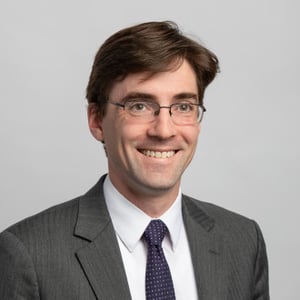
Deputy Litigation Director, Institute for Justice
Robert McNamara serves as Deputy Litigation Director with the Institute for Justice. He joined the Institute in August 2006 and litigates cutting-edge constitutional cases protecting free speech, property rights, economic liberty and other individual liberties in both federal and state courts.
Robert’s work has resulted in court victories for property owners fighting eminent domain abuse, tour guides fighting unconstitutional restrictions on their speech, taxi drivers seeking the right to own their own business, and many others. Robert also litigates in defense of innovation and entrepreneurship in medical care and was co-counsel in Flynn v. Holder, IJ’s landmark challenge to the federal prohibition on compensating bone marrow donors.
Robert’s writing has been published by outlets including The New York Times, The Wall Street Journal, The Washington Post and dozens more nationwide. His opinions and views on legal issues have been featured in radio and television programs ranging from National Public Radio’s All Things Considered to Fox News Channel’s Hannity & Colmes.
Robert is a graduate of Boston University and the New York University School of Law, where he was a founding member and eventual editor-in-chief of the NYU Journal of Law & Liberty. He currently lives in Virginia with his wife and children.
Robert McNamara is a member of the Virginia bar.
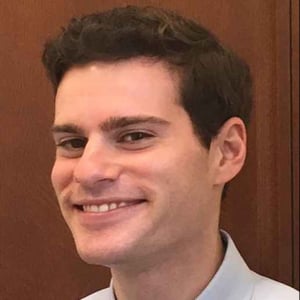
Michael primarily litigates cases related to police misconduct and racial discrimination. He graduated Harvard Law School, cum laude, and Brandeis University, summa cum laude. Previously, Michael clerked for the Hon. John R. Fisher on the District of Columbia Court of Appeals and interned with the Special Litigation Section of DOJ’s Civil Rights Division. He has also represented tenants facing eviction and prisoners in disciplinary hearings. In addition to his legal experience, Michael has worked on a political campaign and served as a fellow at an organization that helps people on public assistance find employment.
Michael enjoys running and, one day, hopes to learn how to dance.
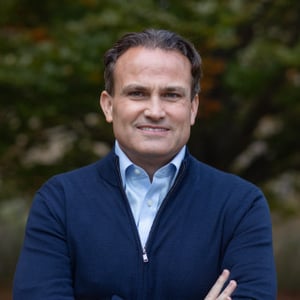
Professor of Law, University of Michigan Law School
Christopher J. Walker is a Professor of Law at the University of Michigan. Prior to joining Michigan law faculty in 2022, he spent a decade teaching at The Ohio State University Moritz College of Law. He previously clerked for Justice Anthony Kennedy of the U.S. Supreme Court, worked on the Civil Appellate Staff at the U.S. Department of Justice, and served on the Senate Judiciary Committee staff for the Gorsuch Supreme Court confirmation. Professor Walker’s research focuses on administrative law, regulation, and law and policy at the agency level. Outside the law school, he chaired the American Bar Association’s Section of Administrative Law and Regulatory Practice in 2020-21 and served as one of forty Public Members of the Administrative Conference of the United States from 2016-2022, and he continues to serve in both organizations in various capacities. He also works of counsel at the U.S. Chamber Litigation Center. In 2022, he received the Federalist Society’s Joseph Story Award.
Deputy Litigation Director, Institute for Justice
Robert McNamara serves as Deputy Litigation Director with the Institute for Justice. He joined the Institute in August 2006 and litigates cutting-edge constitutional cases protecting free speech, property rights, economic liberty and other individual liberties in both federal and state courts.
Robert’s work has resulted in court victories for property owners fighting eminent domain abuse, tour guides fighting unconstitutional restrictions on their speech, taxi drivers seeking the right to own their own business, and many others. Robert also litigates in defense of innovation and entrepreneurship in medical care and was co-counsel in Flynn v. Holder, IJ’s landmark challenge to the federal prohibition on compensating bone marrow donors.
Robert’s writing has been published by outlets including The New York Times, The Wall Street Journal, The Washington Post and dozens more nationwide. His opinions and views on legal issues have been featured in radio and television programs ranging from National Public Radio’s All Things Considered to Fox News Channel’s Hannity & Colmes.
Robert is a graduate of Boston University and the New York University School of Law, where he was a founding member and eventual editor-in-chief of the NYU Journal of Law & Liberty. He currently lives in Virginia with his wife and children.
Robert McNamara is a member of the Virginia bar.
Michael primarily litigates cases related to police misconduct and racial discrimination. He graduated Harvard Law School, cum laude, and Brandeis University, summa cum laude. Previously, Michael clerked for the Hon. John R. Fisher on the District of Columbia Court of Appeals and interned with the Special Litigation Section of DOJ’s Civil Rights Division. He has also represented tenants facing eviction and prisoners in disciplinary hearings. In addition to his legal experience, Michael has worked on a political campaign and served as a fellow at an organization that helps people on public assistance find employment.
Michael enjoys running and, one day, hopes to learn how to dance.
Professor of Law, University of Michigan Law School
Christopher J. Walker is a Professor of Law at the University of Michigan. Prior to joining Michigan law faculty in 2022, he spent a decade teaching at The Ohio State University Moritz College of Law. He previously clerked for Justice Anthony Kennedy of the U.S. Supreme Court, worked on the Civil Appellate Staff at the U.S. Department of Justice, and served on the Senate Judiciary Committee staff for the Gorsuch Supreme Court confirmation. Professor Walker’s research focuses on administrative law, regulation, and law and policy at the agency level. Outside the law school, he chaired the American Bar Association’s Section of Administrative Law and Regulatory Practice in 2020-21 and served as one of forty Public Members of the Administrative Conference of the United States from 2016-2022, and he continues to serve in both organizations in various capacities. He also works of counsel at the U.S. Chamber Litigation Center. In 2022, he received the Federalist Society’s Joseph Story Award.
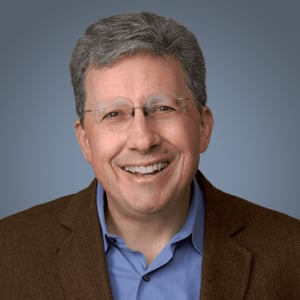
General Counsel, Competitive Enterprise Institute
Daniel Greenberg is the General Counsel at the Competitive Enterprise Institute. His research focuses on civil asset forfeiture and regulatory reform. He served as senior policy advisor at the U.S. Department of Labor from 2017-2021. From 2011-2017, he was president of the Advance Arkansas Institute, a nonprofit research and educational organization.
He has been an adjunct professor of law and political science at the University of Arkansas at Little Rock as well as senior counsel for the Center for Class Action Fairness. He served in the Arkansas House of Representatives from 2007-2011, and on the Pulaski County Quorum Court for four years prior to that. As a state legislator, he received National Review’s “2010 Challenge / Best Conservative Idea” award for his work on federalism issues as well as the Arkansas Press Association’s Freedom of Information Award for his work on First Amendment issues.
During the 1990s, he served as a congressional staffer for Congressman Jay Dickey and Tim Hutchinson before moving to the Heritage Foundation and then to the Cato Institute. He has published extensively on government and public policy in newspapers, magazines and academic journals, including the New York Times, National Review, the Monist, the John Marshall Law Review, and the Ohio State Law Journal. He holds degrees from Brown University, Bowling Green State University, and UALR’s Bowen School of Law.
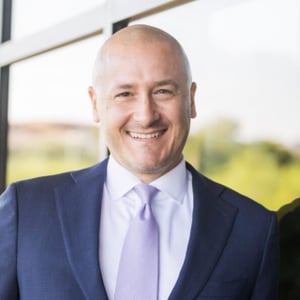
Managing Partner, Radix Law
Andy joined Radix following a decorated legal career in the public and private sectors. He began his career practicing complex business litigation for nearly a decade at a large law firm in Phoenix, then became a prosecutor at the Arizona Attorney General’s Office where he focused on high profile racketeering, securities fraud, and public corruption matters. Andy was then appointed Chief Counsel and Legal Division Director of the Arizona Corporation Commission, where he advised five elected commissioners on statewide public utility matters and led some of the most influential policies and judicial outcomes in the history of the Commission.
Following public service, Andy became General Counsel for a private family office, managing all national legal affairs for a portfolio of companies in the financial services, private equity, professional sports, and fintech space. He has tried cases in both civil and criminal courts, represented government agencies and private clients across the State of Arizona, and argued matters before the Arizona Court of Appeals and the Arizona Supreme Court. Andy is also one of the nation’s leading advisors on Arizona Alternative Business Structures and has successfully counseled many clients through the ABS formation and approval process.
Andy’s clients include high net worth individuals, established businesses, hyper-growth companies, and state agencies who rely on Andy as their outside general counsel. His combination of experience in litigation, criminal matters, appeals, government & regulatory affairs, crisis management, and private business provides one of a kind value, helping his clients achieve their goals while protecting against threats to their success.
In 2018, he was awarded Counsel of the Year by the Association of Corporate Counsel and is a Flinn-Brown Fellow through the Arizona Center for Civic Leadership.
Andy currently serves on the Arizona Supreme Court’s Committee on Alternative Business Structures and the Attorney Regulation Advisory Committee.
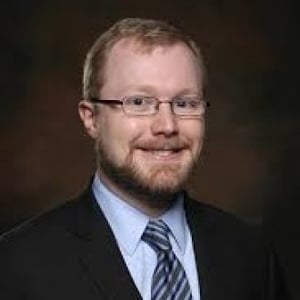
Senior Attorney, Institute for Justice
Paul Sherman is a senior attorney at the Institute for Justice.
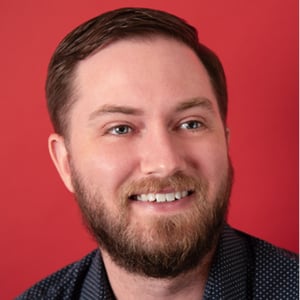
Attorney, Pacific Legal Foundation
Caleb Trotter is an attorney at Pacific Legal Foundation, where he litigates on behalf of individuals and small businesses fighting for their constitutional rights to free speech, economic liberty, and equal protection under the law.
Caleb’s practice at PLF is primarily focused on free speech rights that allow people to pursue the profession of their choice in the manner they see fit. He successfully represented Peggy Fontenot in a challenge to an Oklahoma law that prevented her from truthfully marketing her art as American Indian-made.
Caleb also has taken the lead in fighting for students to participate in school athletics free from oppressive sex-based quotas. He has successfully represented Dmitri Moua, Zachary Greenwald, and Freddie Linden in challenging rules in Minnesota and South Dakota that prohibited them from participating on high school competitive dance teams.
Prior to PLF, Caleb clerked for the Institute for Justice and externed for the public defender’s office in Jefferson Parish, Louisiana. Before starting his legal career, he worked in real estate, banking, and investments.
Upon witnessing government screw-ups at every level following Hurricane Katrina, and due to absorbing the laissez-faire culture of New Orleans over many years, Caleb came to see the importance of individualism to human flourishing. He was inspired to dedicate his career to advancing liberty through the law after reading story after story in Reason magazine of organizations like PLF fighting to protect individual rights.
Caleb attended law school at Loyola University New Orleans, where he graduated cum laude and served as a member of the Loyola Law Review and moot court program. He also earned a BSM in finance and legal studies in business at Tulane University. He lives in Sacramento with his wife, Ashlee, and cat, Frank. Caleb loves traveling—he’s been to all 50 states—following his beloved Texas Rangers, photography, and Mardi Gras. If you’re ever in PLF’s Sacramento office, be sure to check out his bobblehead collection.
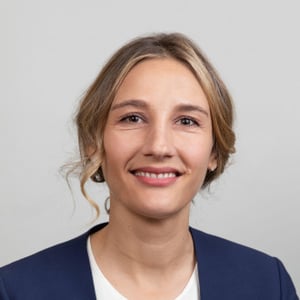
Attorney, Institute for Justice
Anya Bidwell (née Cherkasova) leads IJ’s Project on Immunity and Accountability (“PIA”). Through this project, Anya works to promote judicial engagement and ensure that government officials are held to account when they violate individuals’ constitutional rights. Anya also serves as an adviser on the American Law Institute’s Restatement of the Law, Constitutional Torts project.
One of Anya’s PIA cases—Gonzalez v. Trevino—was heard by the United States Supreme Court on March 20, 2024. She argued the case for the petitioner, with the goal of convincing the Justices that retaliatory arrests not involving on-the-spot decisions by police officers should be actionable under the First Amendment regardless of probable cause. The decision is expected in June.
This was Anya’s third appearance before the U.S. Supreme Court. She second-chaired Brownback v. King (an excessive force case) and Tennessee Wine & Spirits Retailers Association v. Thomas (a commerce clause case) in November 2020 and January 2019 respectfully.
Before joining IJ, Anya worked for a top national law firm, handling cases in trial and appellate courts. She earned her J.D. with honors from the University of Texas. Two years prior to entering law school, Anya received a master’s degree in Global Policy Studies, also from the University of Texas, and wrote a thesis on asymmetric warfare.
Anya spent her childhood in Ukraine and Kyrgyzstan. At 16, she left her family behind and came to America on a university scholarship. Her upbringing motivated her to study law and become an advocate for a strong, independent judiciary.
Anya’s work has been featured in numerous publications, including the Washington Post, the Wall Street Journal, the New York Times, USA Today, and the Guardian. She is also the host of live recordings of our Short Circuit podcast and a co-producer of our documentary-style podcast Bound by Oath.
Attorney, Institute for Justice
Anya Bidwell (née Cherkasova) leads IJ’s Project on Immunity and Accountability (“PIA”). Through this project, Anya works to promote judicial engagement and ensure that government officials are held to account when they violate individuals’ constitutional rights. Anya also serves as an adviser on the American Law Institute’s Restatement of the Law, Constitutional Torts project.
One of Anya’s PIA cases—Gonzalez v. Trevino—was heard by the United States Supreme Court on March 20, 2024. She argued the case for the petitioner, with the goal of convincing the Justices that retaliatory arrests not involving on-the-spot decisions by police officers should be actionable under the First Amendment regardless of probable cause. The decision is expected in June.
This was Anya’s third appearance before the U.S. Supreme Court. She second-chaired Brownback v. King (an excessive force case) and Tennessee Wine & Spirits Retailers Association v. Thomas (a commerce clause case) in November 2020 and January 2019 respectfully.
Before joining IJ, Anya worked for a top national law firm, handling cases in trial and appellate courts. She earned her J.D. with honors from the University of Texas. Two years prior to entering law school, Anya received a master’s degree in Global Policy Studies, also from the University of Texas, and wrote a thesis on asymmetric warfare.
Anya spent her childhood in Ukraine and Kyrgyzstan. At 16, she left her family behind and came to America on a university scholarship. Her upbringing motivated her to study law and become an advocate for a strong, independent judiciary.
Anya’s work has been featured in numerous publications, including the Washington Post, the Wall Street Journal, the New York Times, USA Today, and the Guardian. She is also the host of live recordings of our Short Circuit podcast and a co-producer of our documentary-style podcast Bound by Oath.
Deputy Litigation Director, Institute for Justice
Robert McNamara serves as Deputy Litigation Director with the Institute for Justice. He joined the Institute in August 2006 and litigates cutting-edge constitutional cases protecting free speech, property rights, economic liberty and other individual liberties in both federal and state courts.
Robert’s work has resulted in court victories for property owners fighting eminent domain abuse, tour guides fighting unconstitutional restrictions on their speech, taxi drivers seeking the right to own their own business, and many others. Robert also litigates in defense of innovation and entrepreneurship in medical care and was co-counsel in Flynn v. Holder, IJ’s landmark challenge to the federal prohibition on compensating bone marrow donors.
Robert’s writing has been published by outlets including The New York Times, The Wall Street Journal, The Washington Post and dozens more nationwide. His opinions and views on legal issues have been featured in radio and television programs ranging from National Public Radio’s All Things Considered to Fox News Channel’s Hannity & Colmes.
Robert is a graduate of Boston University and the New York University School of Law, where he was a founding member and eventual editor-in-chief of the NYU Journal of Law & Liberty. He currently lives in Virginia with his wife and children.
Robert McNamara is a member of the Virginia bar.
Michael primarily litigates cases related to police misconduct and racial discrimination. He graduated Harvard Law School, cum laude, and Brandeis University, summa cum laude. Previously, Michael clerked for the Hon. John R. Fisher on the District of Columbia Court of Appeals and interned with the Special Litigation Section of DOJ’s Civil Rights Division. He has also represented tenants facing eviction and prisoners in disciplinary hearings. In addition to his legal experience, Michael has worked on a political campaign and served as a fellow at an organization that helps people on public assistance find employment.
Michael enjoys running and, one day, hopes to learn how to dance.
Professor of Law, University of Michigan Law School
Christopher J. Walker is a Professor of Law at the University of Michigan. Prior to joining Michigan law faculty in 2022, he spent a decade teaching at The Ohio State University Moritz College of Law. He previously clerked for Justice Anthony Kennedy of the U.S. Supreme Court, worked on the Civil Appellate Staff at the U.S. Department of Justice, and served on the Senate Judiciary Committee staff for the Gorsuch Supreme Court confirmation. Professor Walker’s research focuses on administrative law, regulation, and law and policy at the agency level. Outside the law school, he chaired the American Bar Association’s Section of Administrative Law and Regulatory Practice in 2020-21 and served as one of forty Public Members of the Administrative Conference of the United States from 2016-2022, and he continues to serve in both organizations in various capacities. He also works of counsel at the U.S. Chamber Litigation Center. In 2022, he received the Federalist Society’s Joseph Story Award.
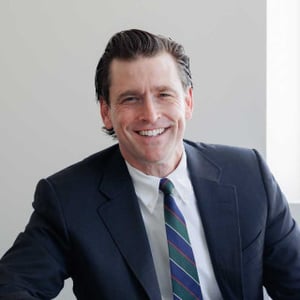
Partner, Maderal Byrne & Furst PLLC
John is a trial lawyer who handles every case with a view towards winning at trial. As both a former federal prosecutor and federal appellate law clerk, John brings both a cerebral and practical approach to case development and strategy. Given his philosophy and experience, it is no surprise that high-profile clients have trusted him with their cases, including a former head of state, a prominent NCAA head basketball coach, and high-level city and federal officials.
John represents plaintiffs in cases involving serious injury, death, or consumer fraud. He also represents defendants in select white-collar criminal matters.
Prior to co-founding Maderal Byrne & Furst PLLC, he was an Assistant United States Attorney for the Southern District of Florida. During his time at the U.S. Attorney’s Office, John charged over 60 cases, including numerous fraud cases. He took 16 of these cases to trial, serving as first chair ten times and second chair six times. During his time as a prosecutor, he developed an extensive knowledge of federal law, including federal statutory law, the Federal Rules of Evidence, and the Federal Rules of Criminal Procedure.
John also has extensive federal appellate experience. In addition to having argued appeals before multiple United States Courts of Appeal, he served as the law clerk to Judge Jeffrey R. Howard of the U.S. Court of Appeals for the First Circuit.
Prior to his time as an Assistant U.S. Attorney, John practiced with Ropes & Gray LLP, where he focused on internal investigations, regulatory enforcement matters, and complex commercial disputes.
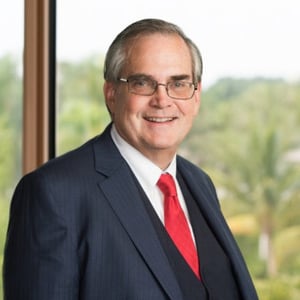
Managing Partner, Trial Division, Briscoe Ortiz Zuluaga, PLLC
Eric Gressman is the Senior Litigator at BOZ Legal, and he serves as the Managing Partner of the Trial Division of Briscoe Ortiz Zuluaga, PLLC. Eric’s trial practice is varied and includes jury trials in defense of Medical Malpractice claims, personal injury defense, civil rights suits, White Collar Criminal Defense, employment claims, and Third as well as First Party Property Insurance Defense. Eric has developed expertise in trial practice through taking over 500 cases to jury and bench trials. Eric also has handled, as lead counsel, over 100 appeals to the Third District Court of Appeals, the Florida Supreme Court, the Eleventh Circuit Court of Appeals, and the United States Supreme Court.
During his career, Eric has successfully handled numerous cases in state and federal courts. Eric is a member in good standing of Florida and the Washington, D.C. Bars. Eric was admitted to the D.C. Bar based on a very high score on the Multi-State Bar Exam. Eric is a member in good standing of the United States Supreme Court, the Eleventh Circuit Court, and the United States District Courts for the Southern and Middle Districts of Florida.
Eric also received in 1990 and in 2017 awards from the Miami-Dade County Attorney for exemplary and distinguished service to Miami-Dade County and its County Attorney’s Office. Eric is an Adjunct Professor at the University of Miami School of Law and at the University of Miami’s Paralegal Program. Eric has taught courses in Legal Writing, Trial Practice, Advanced Appellate Advocacy, Torts, Contracts, and the Florida Rules of Civil Procedure. Eric has lectured for law firms and for CLE sponsored events regarding trial practice.
Eric earned his Bachelor of Arts and Master’s degrees from the University of Michigan where he graduated with the highest honors. Eric earned numerous academic scholarships based on his grade point average and test scores. Eric was accepted into the Honors Program and the Accelerated Bachelors and Graduate Program at the University of Michigan and at the University of Michigan’s Gerald R. Ford School of Public Policy. He then went on to earn his Juris Doctor degree from the University of Michigan Law School, where he was the administrative note editor of a law review. Eric published law review articles in law journals at the University of Michigan Law School and at George Washington University Law School. During law school, Eric was permitted to try DUI cases. Eric went on to work for the Miami-Dade County Attorney’s Office where he took over 400 cases to trial by juries during 36 years where he defended Miami-Dade County and Jackson Memorial Hospital in civil suits. Eric rose to the level of County Attorney’s Chief of the Torts Division, where he supervised 12 Assistant County Attorneys and over 1,000 personal injury and civil rights cases. Eric is now pleased to continue his role to work with and help the bright, young attorneys at BOZ Legal. Eric currently represents the City of Coral Gables and the City of North Miami, doctors and nurses as well as numerous insurance companies. Eric also volunteers for the Guardian Ad Litem Program and CABA pro bono program to defend the rights of children and to represent indigent parents in divorce proceedings.
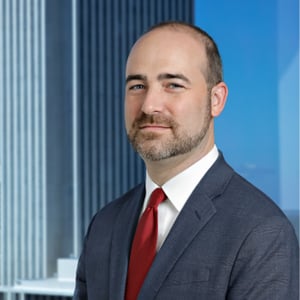
Partner, Shutts & Bowen LLP
Daniel Nordby is a partner in the Tallahassee office of Shutts & Bowen LLP, where he is a member of the Appellate Practice Group. His practice focuses on high-profile, high stakes matters of law and public policy, particularly in the areas of constitutional, appellate and administrative law.
Over the course of his career, Daniel has developed extensive experience in the area of government and administrative law. He is a Past Chair of the Florida Bar’s Administrative Law Section and has served on the Section’s Executive Council for more than a decade. Daniel has represented clients in some of Florida’s largest competitive procurements and has served as counsel of record in a variety of administrative and judicial proceedings involving the application of constitutional and administrative law principles. He has personally presented oral argument on multiple occasions before the Florida Supreme Court, Florida’s First District Court of Appeal, and the Federal Court of Appeals for the Eleventh Circuit on high-profile matters of constitutional law. A representative list of Daniel’s reported opinions in the state and federal courts is available here.
Daniel draws on his prior service in the public sector when representing businesses, individuals and governmental clients on their most challenging legal issues. As General Counsel to then-Governor Rick Scott from 2017-2019, Daniel provided oversight and strategic direction for all major litigation involving Florida’s executive branch agencies and advised Governor Scott on the appointment of more than 100 judges to Florida’s trial and appellate courts. Daniel’s career also includes service as General Counsel to the Florida House of Representatives, General Counsel to Florida’s Secretary of State, Assistant General Counsel to the Florida Department of Education, and Staff Attorney to the Florida Legislature’s Joint Administrative Procedures Committee.
Daniel continues his public service as a gubernatorial appointee to the Florida Supreme Court Judicial Nominating Commission. After serving on the Commission from 2012-2018 as a direct appointee of Governor Scott, Daniel was appointed by Governor DeSantis in July 2019 to a third term. He currently serves as Chair of the Florida Supreme Court Judicial Nominating Commission.
Daniel is also involved with several non-profit and community groups. He is a graduate of Leadership Florida (Connect VI), a member of Florida Blue Key, a member of the American Enterprise Institute’s Leaders Network, and a member of the James Madison Institute’s Inaugural Class of Leaders Fellows. Daniel is on the Steering Committee of the Tallahassee Lawyers Chapter of the Federalist Society for Law and Public Policy Studies and is a Past President of both its Tallahassee Lawyers Chapter and University of Florida Student Chapter. Daniel is an Eagle Scout and attends St. Peter’s Anglican Cathedral in Tallahassee.
Daniel is a “triple-Gator” with three degrees from the University of Florida: a J.D. (with high honors), a B.S. in Microbiology and Cell Science, and a B.A. in Classical Studies. He has been recognized as a Florida Super Lawyers “Rising Star” and has been named to the roster of Florida Legal Elite by Florida Trend magazine in the categories of “Government & Administrative Law,” “Best Government & Non-Profit Attorneys,” and ”Best Up & Coming Attorneys.”
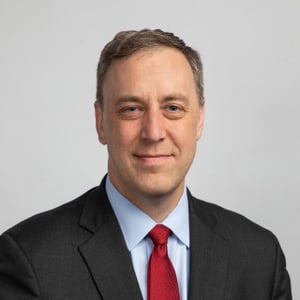
Florida Office Managing Attorney, Institute for Justice
Justin Pearson is the Institute’s Florida Office Managing Attorney. He also coordinates aspects of the Institute’s national economic liberty efforts and personally directs IJ’s National Street Vending Initiative. Justin has devoted his career to vindicating the constitutional rights of small-business owners, and he has victoriously litigated on their behalf in trial and appellate courts across the nation.
Justin often wins in novel ways. He was the lead counsel in a federal appellate court victory vindicating the right of a Florida dairy creamery to tell the truth on its labels, which was the first victorious First Amendment challenge to a food standard of identity in U.S. history. His win against Little Rock’s ban on taxi competition was based on a provision in the Arkansas Constitution that had not been successfully relied upon in over half a century. And his victory against Fort Pierce’s food truck ban included the first preliminary injunction ever issued in this type of challenge anywhere in the nation.
In addition to litigation, Justin has testified to Florida Senate and House committees dozens of times, and provisions suggested by Justin have been enacted into law. The successful bills that Justin has actively supported include Florida’s 2021 cottage food, home-based business, and local occupational licensing reforms, Florida’s historic 2020 occupational licensing reform (which repealed the most occupational licensing barriers in U.S. history), Florida’s 2019 repeal of the certificate of need requirement for hospitals, Florida’s 2019 Fresh Start reform making it easier for individuals with criminal records to obtain employment, and Florida’s 2016 overhaul of its civil forfeiture laws.
Justin’s work has appeared in countless media outlets, and Justin has spoken to scores of law schools and attorney organizations across the nation. The law schools that have hosted Justin’s talks include Yale, the University of Chicago, Duke, NYU, Notre Dame, and the University of Michigan, among many others.
Prior to joining IJ, Justin founded and managed his own law practice to advocate for small-business owners, and Justin’s law practice was successful for many years before he made the decision to join IJ in 2012 to better fight against government power gone awry.
Justin received his law degree with honors from the University of Miami in 2002, where he was the Research and Writing Editor for, and was published in, the University of Miami Business Law Review. Justin received his undergraduate degree in business management from North Carolina State University. Justin has been honored by the Daily Business Review and Law.com for being one of South Florida’s “Most Effective Lawyers.”
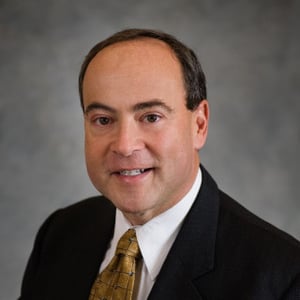
Justice, Supreme Court of Arizona
Clint Bolick was appointed by Governor Doug Ducey in January 2016 to serve on the Arizona Supreme Court and was retained by the voters in 2018 and 2024.
Prior to joining the Court, Justice Bolick litigated constitutional cases in state and federal courts from coast to coast, including the U.S. Supreme Court. Among other positions, he served as Vice President for Litigation at the Goldwater Institute and as Co-founder and Vice President for Litigation at the Institute for Justice. He has litigated in support of school choice, freedom of enterprise, private property rights, freedom of speech, and federalism, and against racial classifications and government subsidies.
Justice Bolick received his Juris Doctor degree from the University of California at Davis, where he has been recognized as a distinguished alumnus, and his Bachelor of Arts degree magna cum laude from Drew University. He serves as a research fellow with the Hoover Institution. Among other honors, he was named one of the 90 Greatest DC Lawyers in the Last 30 Years by Legal Times in 2008, received a Bradley Prize in 2006, and was recognized as one of the nation’s three lawyers of the year by American Lawyer in 2002 for his successful defense of school vouchers in Zelman v. Simmons-Harris.
Justice Bolick is a prolific author of a dozen books and hundreds of articles. Among his most recent books are Unshackled: Freeing America’s K-12 Education System: Immigration Wars: Forging an American Solution, co-authored with former Florida Governor Jeb Bush; and David’s Hammer: The Case for an Activist Judiciary. Bolick serves as an adjunct professor of constitutional law at Arizona State University’s Sandra Day O’Connor School of Law and has served as a lecturer at Harvard University’s John F. Kennedy School of Government.
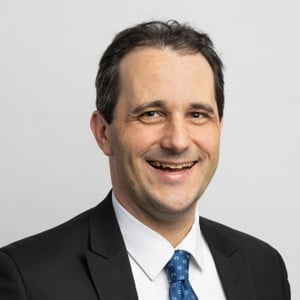
Director, Center for Judicial Engagement, Institute for Justice
Anthony Sanders is the Director of the Center for Judicial Engagement (CJE) at the Institute for Justice and a senior attorney. He joined IJ in 2010. As CJE’s director, he educates the public about the proper role of judges in enforcing constitutional limits on the size and scope of government. As a senior attorney he litigates cutting-edge constitutional cases protecting economic liberty, private property, freedom of speech and other individual liberties in both federal and state courts across the country.
One area of Anthony’s expertise is on using state constitutions to protect individual rights. He is the author of the book, published by University of Michigan Press, Baby Ninth Amendments: How Americans Embraced Unenumerated Rights and Why It Matters. He has also written several law review articles on state constitutional law, unenumerated rights, judicial review, economic liberty, property rights, international law, and other subjects. His work has appeared in publications such as the Iowa Law Review, Minnesota Law Review, American University Law Review, and Rutgers Law Review, and he has published opinion pieces in leading media outlets across the country. Further, he frequently speaks to various audiences on these matters and others, including judicial engagement, free speech, civil forfeiture, and the continuing importance of Magna Carta. Additionally, he hosts the weekly Short Circuit podcast, which often records live in front of law student audiences.
Anthony has litigated several cases in various state courts on state constitutional protections, as well as in federal courts on matters such as economic liberty, free speech, administrative law, and fines and fees abuse. Prior to joining IJ, Anthony served as a law clerk to Justice W. William Leaphart on the Montana Supreme Court. Anthony also worked for several years in private practice in Chicago where he was an active member of the Chicago Bar Association and chaired its Civil Rights Committee.
Anthony received his law degree cum laude from the University of Minnesota Law School in 2004, where he served as an articles submission editor for the Minnesota Law Review. He received his undergraduate degree from Hamline University in St. Paul, Minnesota, and his master’s degree from the University of Wisconsin-Madison. A dual U.S. and U.K. citizen, Anthony grew up on the islands of Vashon in Washington State, and Alderney in the British Channel Islands.
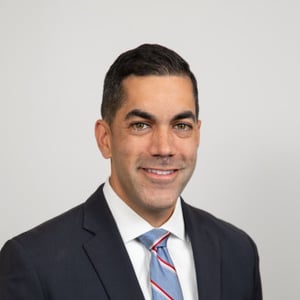
Managing Attorney, Institute for Justice
Arif Panju serves as a managing attorney with the Institute for Justice. He leads IJ’s Texas office and litigates cases involving free speech, property rights, economic liberty, and educational choice.
Arif is co-counsel in the case of Carson v. Makin in the U.S. Supreme Court. Carson is a challenge to Maine’s exclusion of religious educational options from the state’s school choice program.
Arif’s work has resulted in court victories in both federal and state court. He vindicated the free speech rights of tour guides in Billups v. City of Charleston. He secured a victory for economic liberty in Brantley v. Kuntz, freeing hairbraiding schools in Texas from onerous restrictions and paving the way for the abolishment of the state’s braiding license at the Texas Legislature. In Patel v. Texas Department of Licensing and Regulation, Arif helped secure a landmark victory in the Texas Supreme Court, establishing a new test for reviewing the constitutionality of economic regulations.
Arif’s work at IJ has been featured by outlets including The Wall Street Journal, New York Times, Washington Post, The Atlantic, Texas Tribune, and dozens more nationwide. His opinions and views on legal issues have been published in several outlets, including the Dallas Morning News, Austin American-Statesman, and USA Today. Arif sits on the board for the Freedom of Information Foundation of Texas.
Arif graduated law school with honors from Southern Methodist University. During law school he clerked on the United States Senate Committee on the Judiciary. Arif lives in Austin, Texas.
General Counsel, Competitive Enterprise Institute
Daniel Greenberg is the General Counsel at the Competitive Enterprise Institute. His research focuses on civil asset forfeiture and regulatory reform. He served as senior policy advisor at the U.S. Department of Labor from 2017-2021. From 2011-2017, he was president of the Advance Arkansas Institute, a nonprofit research and educational organization.
He has been an adjunct professor of law and political science at the University of Arkansas at Little Rock as well as senior counsel for the Center for Class Action Fairness. He served in the Arkansas House of Representatives from 2007-2011, and on the Pulaski County Quorum Court for four years prior to that. As a state legislator, he received National Review’s “2010 Challenge / Best Conservative Idea” award for his work on federalism issues as well as the Arkansas Press Association’s Freedom of Information Award for his work on First Amendment issues.
During the 1990s, he served as a congressional staffer for Congressman Jay Dickey and Tim Hutchinson before moving to the Heritage Foundation and then to the Cato Institute. He has published extensively on government and public policy in newspapers, magazines and academic journals, including the New York Times, National Review, the Monist, the John Marshall Law Review, and the Ohio State Law Journal. He holds degrees from Brown University, Bowling Green State University, and UALR’s Bowen School of Law.
Managing Partner, Radix Law
Andy joined Radix following a decorated legal career in the public and private sectors. He began his career practicing complex business litigation for nearly a decade at a large law firm in Phoenix, then became a prosecutor at the Arizona Attorney General’s Office where he focused on high profile racketeering, securities fraud, and public corruption matters. Andy was then appointed Chief Counsel and Legal Division Director of the Arizona Corporation Commission, where he advised five elected commissioners on statewide public utility matters and led some of the most influential policies and judicial outcomes in the history of the Commission.
Following public service, Andy became General Counsel for a private family office, managing all national legal affairs for a portfolio of companies in the financial services, private equity, professional sports, and fintech space. He has tried cases in both civil and criminal courts, represented government agencies and private clients across the State of Arizona, and argued matters before the Arizona Court of Appeals and the Arizona Supreme Court. Andy is also one of the nation’s leading advisors on Arizona Alternative Business Structures and has successfully counseled many clients through the ABS formation and approval process.
Andy’s clients include high net worth individuals, established businesses, hyper-growth companies, and state agencies who rely on Andy as their outside general counsel. His combination of experience in litigation, criminal matters, appeals, government & regulatory affairs, crisis management, and private business provides one of a kind value, helping his clients achieve their goals while protecting against threats to their success.
In 2018, he was awarded Counsel of the Year by the Association of Corporate Counsel and is a Flinn-Brown Fellow through the Arizona Center for Civic Leadership.
Andy currently serves on the Arizona Supreme Court’s Committee on Alternative Business Structures and the Attorney Regulation Advisory Committee.
Senior Attorney, Institute for Justice
Paul Sherman is a senior attorney at the Institute for Justice.
Attorney, Pacific Legal Foundation
Caleb Trotter is an attorney at Pacific Legal Foundation, where he litigates on behalf of individuals and small businesses fighting for their constitutional rights to free speech, economic liberty, and equal protection under the law.
Caleb’s practice at PLF is primarily focused on free speech rights that allow people to pursue the profession of their choice in the manner they see fit. He successfully represented Peggy Fontenot in a challenge to an Oklahoma law that prevented her from truthfully marketing her art as American Indian-made.
Caleb also has taken the lead in fighting for students to participate in school athletics free from oppressive sex-based quotas. He has successfully represented Dmitri Moua, Zachary Greenwald, and Freddie Linden in challenging rules in Minnesota and South Dakota that prohibited them from participating on high school competitive dance teams.
Prior to PLF, Caleb clerked for the Institute for Justice and externed for the public defender’s office in Jefferson Parish, Louisiana. Before starting his legal career, he worked in real estate, banking, and investments.
Upon witnessing government screw-ups at every level following Hurricane Katrina, and due to absorbing the laissez-faire culture of New Orleans over many years, Caleb came to see the importance of individualism to human flourishing. He was inspired to dedicate his career to advancing liberty through the law after reading story after story in Reason magazine of organizations like PLF fighting to protect individual rights.
Caleb attended law school at Loyola University New Orleans, where he graduated cum laude and served as a member of the Loyola Law Review and moot court program. He also earned a BSM in finance and legal studies in business at Tulane University. He lives in Sacramento with his wife, Ashlee, and cat, Frank. Caleb loves traveling—he’s been to all 50 states—following his beloved Texas Rangers, photography, and Mardi Gras. If you’re ever in PLF’s Sacramento office, be sure to check out his bobblehead collection.

Do We Need Qualified Immunity?
Robert J. McNamara, Michael Perloff, Christopher J. Walker
Qualified immunity is perhaps the nation’s most controversial legal doctrine. Proponents say qualified immunity is necessary to give government officials—especially...
Do We Need Qualified Immunity?
Robert J. McNamara, Michael Perloff, Christopher J. Walker
Qualified immunity is perhaps the nation’s most controversial legal doctrine. Proponents say qualified immunity is necessary to give government officials—especially...
Do We Need Qualified Immunity?
Panel 3: The Conservative Plaintiff's Bar
2024 Florida Young Lawyers Summit
Coral Gables, FLConstitutional Conversation: Legal Practice & Authorship
Phoenix Lawyers Chapter
Phoenix, AZDoes an Originalist Understanding of the Texas Constitution Protect Economic Liberty?
San Antonio Lawyers Chapter
San Antonio, TXPanel II: Practical Challenges to Legal Licensing Reform
Daniel Greenberg, Andy Kvesic, Paul Sherman, Caleb Trotter
Featured: Paul Sherman, Senior Attorney, Institute for Justice Caleb Trotter, Attorney, Pacific Legal Foundation Andy...
Panel II: Practical Challenges to Legal Licensing Reform
Legal Licensing Reform: Does the World Need More Lawyers?
Washington, DCCourthouse Steps Oral Argument: Gonzalez v. Trevino
Anya Bidwell
In Gonzalez v. Trevino, Petitioner Sylvia Gonzalez is a 72 year-old city councilwoman from Castle...
Courthouse Steps Oral Argument: Gonzalez v. Trevino
Anya Bidwell
In Gonzalez v. Trevino, Petitioner Sylvia Gonzalez is a 72 year-old city councilwoman from Castle...