
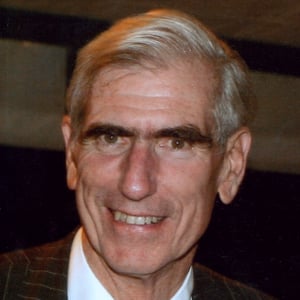
Founding Partner, Boyden Gray & Associates
Ambassador C. Boyden Gray is the founding partner of Boyden Gray & Associates, a law and strategy firm in Washington, D.C., focused on constitutional and regulatory issues.
Mr. Gray worked in the White House for twelve years, first as counsel to the Vice President during the Reagan administration and then as White House Counsel to President George H.W. Bush. In the Reagan administration, he was Counsel to the Presidential Task Force on Regulatory Relief, for which he wrote the original Executive Order 12291 requiring cost-benefit analysis and White House review of regulations (later renumbered as current EO 12866). In the George H.W. Bush Administration, Mr. Gray was in charge of judicial selection and was also instrumental in the enactment of the Clean Air Act Amendments of 1990, the Energy Policy Act of 1992, and a cap-and-trade system for acid rain emissions. In 1993, he received the Presidential Citizens Medal. Under President George W. Bush, Mr. Gray was U.S. Ambassador to the European Union and U.S. Special Envoy to Europe for Eurasian Energy.
Mr. Gray practiced law for 25 years at the law firm of Wilmer, Cutler & Pickering and was chairman of the Administrative Law and Regulatory Practice Section of the American Bar Association from 2000 to 2002. Early in his career, Mr. Gray helped to develop the Business Roundtable and served as its first counsel. He is an adjunct professor at Antonin Scalia Law School and a former adjunct professor at NYU Law School (teaching energy and environmental law). Mr. Gray is on the Board of Directors of the Atlantic Council, the Federalist Society, Reason Foundation, and the Trust for the National Mall.
Mr. Gray earned his A.B. magna cum laude from Harvard, where he was an editor of the Crimson, and his J.D. with high honors from the University of North Carolina at Chapel Hill, where he was editor-in-chief of the Law Review. Mr. Gray served in the United States Marine Corps, and after law school, he clerked for Earl Warren, Chief Justice of the United States Supreme Court.
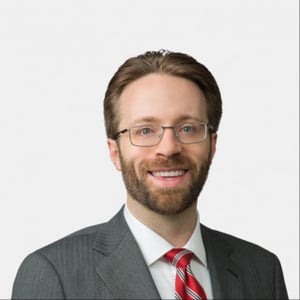
Shareholder at Kirton McConkie, Former Solicitor General of Idaho
Alan Hurst is the Solicitor General of Idaho, the state’s chief appellate advocate before the Idaho Supreme Court, the federal courts of appeals, and the United States Supreme Court. He supervises all civil appellate litigation for the state and all trial-court filings raising significant civil appellate issues. He also advises the Attorney General and other state officers on matters of constitutional and legal policy.
Alan is a graduate of Brigham Young University and Yale Law School and clerked for Justice Christine Durham of the Utah Supreme Court and Judge Monroe McKay on the Tenth Circuit. He has been a fellow at the Yale Center for Faith and Culture, the Becket Fund for Religious Liberty, and BYU’s J. Reuben Clark Law School, where he taught property law and related subjects before becoming a litigation partner at a national law firm and an occasional legal columnist for the Deseret News.
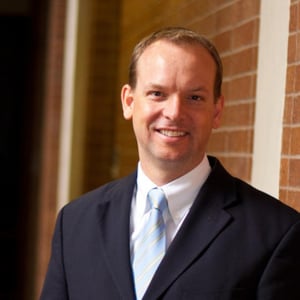
Sterling and Eleanor Colton Endowed Chair in Law; Associate Director, International Center for Law and Religion Studies, BYU Law
Professor Moore is a scholar of foreign relations law, international law, international human rights, and international development. His publications have appeared in the Harvard, Columbia, Virginia, and Northwestern Law Reviews, among others. Professor Moore has taught international law, international human rights, U.S. foreign relations law, civil procedure, legal scholarship, a plenary powers colloquium, and an international religious freedom clinic. As a teacher, he has been recognized with the University's R. Wayne Hansen Teaching and Learning Fellowship, the BYU Law Alumni Association Teacher of the Year Award, and the Student Bar Association First Year Professor of the Year Award. He is a member of the American Law Institute.
As a human rights expert, Professor Moore serves on the Organization for Security and Cooperation in Europe’s Moscow Mechanism. In 2020, he was elected to a brief term on the Human Rights Committee, a body of independent experts that oversees states’ compliance with the International Covenant on Civil and Political Rights. Professor Moore also serves as an Associate Director of the International Center for Law and Religion Studies, which seeks to secure the blessings of religious freedom and belief for everyone.
Between 2017 and 2019, Professor Moore served, variously, as the Acting Deputy Administrator and General Counsel of the U.S. Agency for International Development, the federal government’s lead agency for international development and humanitarian assistance. From 2016 to 2017, he was the Associate Dean for Research and Academic Affairs at Brigham Young University Law School. He was a Visiting Professor at the George Washington University Law School from 2008 to 2009.
Before joining BYU, Professor Moore clerked for Justice Samuel A. Alito, Jr. during the U.S. Supreme Court’s 2007 Term. From 2003 to 2007, Professor Moore was an assistant and then associate professor at the University of Kentucky College of Law. He arrived at the University of Kentucky after researching and teaching at the University of Chicago Law School as an Olin Fellow from 2001 to 2003. From 2000 to 2001, Professor Moore clerked for Judge Samuel A. Alito, Jr. on the U.S. Court of Appeals for the Third Circuit. From 1996 to 2000, he was an Honor Program trial attorney at the U.S. Department of Justice, Civil Division, Federal Programs Branch.
Professor Moore is a summa cum laude graduate of Brigham Young University Law School, where he served as Editor in Chief of the Law Review and graduated first in his class. He received his BA from Brigham Young University, where he was a Benson scholar and graduated summa cum laude, with University Honors, and as co-valedictorian of his college. He and his wife Natalie are the parents of seven wonderful children.
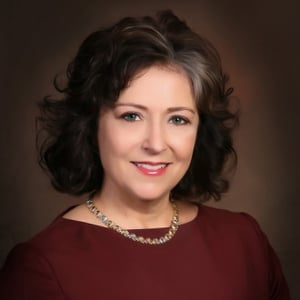
Associate Professor of Law, Southern University Law Center
Professor Nedzel's interests include international and comparative commercial law, policy, and jurisprudence; specifically the interrelationship among market economy, technology, the rule of law, and personal autonomy. She has been a Visiting Research Scholar at the Lauterpacht Centre for International Law at Cambridge University, a Fulbright Senior Specialist teaching Comparative Contract Law and Legal Drafting in Santiago, Chile (April, 2007), and she taught legal drafting in Istanbul, Turkey along with other legal writing experts. Most recently, she taught law school faculty in Santiago, Chile how to incorporate case method into their teaching. She is a member of the Louisiana Advisory to the United States Civil Rights Commission.
An active scholar, her textbook, Legal Research and Writing for International Graduate Students (2nd ed. Aspen 2008) has been translated into Chinese, and she'll begin working on a third edition in the summer of 2011. She is finishing a new casebook on Louisiana Sales and Lease, and continues to work on her Rule of Law project. Her most recent law review article is: "The Rule of Law: Its History and Meaning in Common Law, Civil Law, and Latin American Judicial Systems, 10 Richmond J. Global L. & Bus. 57 (2010).
Professor Nedzel came to SULC from Tulane University School of Law, where she was the director of Graduate Legal Studies and Exchange Programs. She also practiced admiralty and international trade, served as a staff attorney for the United States Fifth Circuit Court of Appeals, and is a former judicial clerk for Judge Carl E. Stewart of that court. Professor Nedzel earned her J.D. magna cum laude from Loyola University School of Law and an LL.M. with honors from Northwestern University. She speaks French, Spanish, and some Russian.
Lab Fellow, Edmond J. Safra Center for Ethics, Harvard University
Newhouse focuses on think tank ethics and governance issues as a Lab Fellow at the Safra Center. Most recently, she was a senior fellow at the Manhattan Institute's Center for Legal Policy, where she published white papers, law review articles, and popular articles on issues related to civil and criminal justice reform. Previously she was the Director of Educational Programs at the Institute for Humane Studies; a policy analyst at the Cato Institute, where she focused on education reform; and a litigation attorney in private practice. Her scholarly articles appear in the Journal of Law, Economics, & Policy, and the Rutgers Journal of Law and Public Policy. Her popular articles have appeared in Business Week, the Investor's Business Daily, Barron's, the National Law Journal's "Supreme Court Insider," National Review Online, and elsewhere. She holds a B.A. in political science from the University of Washington, a J.D. from the University of Washington School of Law, and a Ph.D. in public policy from Harvard University.

Thomas M. Siebel Senior Fellow, The Hoover Institution, Stanford University; Gary T. Schwartz Distinguished Professor of Law Emeritus, UCLA School of Law
Eugene Volokh is the Thomas M. Siebel Senior Fellow at the Hoover Institution (Stanford), as well as the Gary T. Schwartz Distinguished Professor of Law Emeritus and Distinguished Research Professor at UCLA School of Law. He recently retired from teaching at UCLA, after 30 years there, and is now focusing on research.
Volokh is the author of the textbooks The First Amendment and Related Statutes (8th ed. 2023), and Academic Legal Writing (5th ed. 2016), as well as over 100 academic law journal articles, mostly on First Amendment law. He is a member of The American Law Institute; the editor-in-chief of the Journal of Free Speech Law; and the creator and coauthor of The Volokh Conspiracy, a leading legal blog founded in 2002 (hosted at the Washington Post from 2014 to 2017 and now at Reason Magazine).
Professor, Regent University School of Law
Professor David Wagner teaches at the Regent University School of Law and has been doing so since 1998. Professor Wagner is the former Director of Legal Policy for the Family Research Council and also has written for several publications. He was an editorial writer for the Washington Times, and he has also appeared on several TV and Radio programs, among them Larry King Live and the Mary Matalin Show.
Associate Professor of Political Science, Johns Hopkins University
Steven Teles is associate professor of political science at Johns Hopkins University and fellow at the New America Foundation.
He is the author, most recently, of the Rise of the Conservative Legal Movement: The Battle for Control of the Law (Princeton University Press, 2008), and before that Whose Welfare: AFDC and Elite Politics (University Press of Kansas, 1996). He is the co-editor of two books: Conservatism and American Political Development (Oxford University Press, 2009, with Brian Glenn) and Ethnicity, Social Mobility and Public Policy: Comparing the US and UK (Cambridge University Press, 2005, with Glenn Loury and Tariq Modood). Professor Teles is also the editor of Oxford University Press' book series on Contemporary American Political Development. He is currently working on two co-authored books. The first, with Mark Kleiman of UCLA, tentatively calledThe Statesman's Discipline: The Art of Asking the Right Questions. His second project, with Peter Frumkin, is a developmental study of foundations over the past half-century.
Professor Teles has also published articles in the New Statesman, American Prospect, Public Interest, National Affairs, The American Interest, Prospect (UK) and Boston Reviews, appeared on bloggingheads.tv and blogs occasionally at samefacts.com.
He received his PhD in government and foreign affairs from the University of Virginia in 1995, and his BA in political science from George Washington University in 1989.
Raoul Berger Professor of Legal History at Northwestern University School of Law
Stephen Presser is a leading American legal historian and expert on shareholder liability for corporate debts. He is frequently an invited witness before committees of the U.S. Senate and House of Representatives on issues of constitutional law. He holds a joint appointment with the J. L. Kellogg Graduate School of Management and also teaches in Northwestern's history department.
Assistant Professor of Law, Emory University School of Law
Alexander "Sasha" Volokh is an assistant professor of law, joining the Emory Law faculty in Fall 2009.
Professor Volokh earned his B.S. from UCLA and his J.D. and Ph.D. in economics from Harvard University. He clerked for Judge Alex Kozinski of the Ninth Circuit and for Supreme Court Justices Sandra Day O'Connor and Samuel Alito. Before coming to Emory, he was a visiting associate professor at Georgetown University Law Center and a visiting assistant professor at University of Houston Law Center.
His interests include law and economics, administrative law and the regulatory process, environmental law and policy, and legal history. His current research topics include the private management of government services, medieval law, judicial decisionmaking and statutory interpretation.
Legal Fellow, Center for the Separation of Powers, Pacific Legal Foundation
Alison Somin joined Pacific Legal Foundation in May 2020 as a legal fellow in the Center for the Separation of Powers and part of the equality before the law practice group.
Before joining the Pacific Legal Foundation team, Alison was a special assistant and counsel for over a decade to Gail Heriot, a member of the bipartisan United States Commission on Civil Rights. She also has deep roots in the liberty movement. Alison was a Koch Associate at the National Federation for Independent Business Legal Foundation and, during law school, completed summer clerkships at the Institute for Justice and the Charles G. Koch Charitable Foundation. She holds a J.D. from Emory University School of Law and an A.B. in history from Dartmouth College.
Her work has been published in the San Francisco Chronicle, the Daily Journal, Texas Journal of Law and Politics, and The Federalist Society’s Engage magazine and blog.
She lives in northern Virginia with her husband Ilya; two children; and golden retriever Willow. In her spare time, she enjoys reading, baking and cooking, children’s art projects, and training and exercising Willow.
Justice, Supreme Court of Alabama (Retired); Professor of Law, Belmont University College of Law?
William Gardiner Hammond Professor of Law, Washington University Law
Professor Brian Z. Tamanaha is a renowned jurisprudence scholar and the author of eight books and numerous scholarly articles, including his groundbreaking book, Beyond the Formalist–Realist Divide: The Role of Politics in Judging. His articles have appeared in a variety of leading journals, and his publications have been translated into eight languages. Also an expert in law and society, he has delivered lectures in Brazil, Indonesia, Japan, France, the Netherlands, Colombia, Singapore, Australia, Canada, and the United Kingdom. He spent a year in residence as a Member of the Institute for Advanced Study in Princeton. Professor Tamanaha is the recipient of several book prizes and awards, including Professor of the Year, and a frequent speaker and lecturer at legal conferences throughout the United States and abroad. His professional affiliations include serving as a past member of the Board of Trustees of the Law and Society Association. Before becoming a law professor, he clerked for the Hon. Walter E. Hoffman, U.S. District Court for the Eastern District of Virginia. He also practiced law in Hawaii and Micronesia, where he served as legal counsel for the Micronesian Constitutional Convention, Assistant Attorney General for the Yap State, and Assistant Federal Public Defender for the District of Hawaii. He then earned a doctorate of juridical science at Harvard Law School.?
His latest book, Failing Law Schools, is available at http://www.amazon.com/Failing-Schools-Chicago-Series-Society/dp/0226923614. ?

Reception with Boyden Gray
Washington, District of ColumbiaMortgage Foreclosures: Are Home Values Higher when Courts are not Involved? Should the Florida Legislature Remove Judges from the Process?
Coral Gables, Florida2014 National Student Symposium
Security vs. Freedom: Contemporary Controversies
Gainesville, FLA Lady or a Tiger?: Thoughts on Fisher v. University of Texas and the Future of Race Preferences in America
Alison E. Somin
Note from the Editor: This article is about the U.S. Supreme Court’s decision in Fisher...
Are American Law Schools Failing?: An Exchange Between Brian Tamanaha & Harold See
Harold F. See, Brian Z. Tamanaha
The Collapsing Economics of Legal Education Brian Z. Tamanaha* Introduction Many law schools around the...
Seven-Minute Presentations of Works in Progress - Part IA
16th Annual Faculty Conference
New York, NYThe Framers' View of the Role of the Federal Government
Why Conservatives Are Changing Their Tune on Criminal Justice
Denver, ColoradoWhere Have We Been, and Where Are We Going in Constitutional and Private Law, and Is It Someplace We Really Want to Get To?
Richmond, VirginiaMinneci v. Pollard and Constitutional Torts
Greenville, South Carolina