
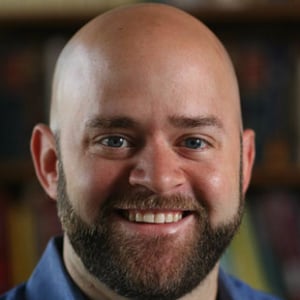
Charles E. Rice Professor of Law, Concurrent Professor of Political Science, & Director, de Nicola Center for Ethics and Culture, University of Notre Dame Law School
Professor Carter Snead is one of the world’s leading experts on public bioethics – the governance of science, medicine, and biotechnology in the name of ethical goods. His research explores issues relating to neuroethics, enhancement, human embryo research, assisted reproduction, abortion, and end-of-life decision-making.
He is the author of What It Means to be Human: The Case for the Body in Public Bioethics (Harvard University Press, October 2020), which was named by the Wall Street Journal as one of the “Ten Best Books of 2020;” in his review for the same paper, Yuval Levin called it “among the most important works of moral philosophy produced so far in this century.” In May of 2022, it was listed in The New York Times as one of “Ten Books to Understand the Abortion Debate in the United States.” Snead and the book received the 2021 “Expanded Reason Award” (given by Francisco de Vitoria University (Madrid) and the Joseph Ratzinger/Benedict XVI Vatican Foundation), and has been reviewed and discussed in such publications as the Wall Street Journal, The New York Times, New York Post, USA Today, Bloomberg Opinion, Il Foglio, Christian Post, The Review of Metaphysics, American Journal of Jurisprudence, America Magazine, First Things, The New Atlantis, Plough, The Boston Pilot, Public Discourse, Practical Ethics (Oxford University), Legal Ethics Forum, Church Life Journal, Law & Liberty, Angelus News, Mirror of Justice, Crux, Mars Hill Audio Journal, Mercator Net, BioEdge, Front Porch Republic, The National Catholic Register, The American Conservative, Fare Forward, Catholic World Report, The Gospel Coalition, Chronicles: A Magazine of American Culture, The Human Life Review, Eikon, Salvo, The Catholic Thing, The Daily Signal, and National Review.
Additionally, he has written more than 70 journal articles, book chapters, and essays. His scholarly works appear in such publications as the New York University Law Review, the Harvard Law Review Forum, the Vanderbilt Law Review, Constitutional Commentary, Quaderni Costituzionali (Italy’s premier journal of constitutional law), the Yale Journal of Health Policy, Law and Ethics, the Journal of Medicine and Philosophy, and Political Science Quarterly. He is also the editor of two book series for the University of Notre Dame Press – “Catholic Ideas for a Secular World” and “Notre Dame Studies in Bioethics and Medical Ethics.” Snead teaches Law & Bioethics, Health Law, Torts, and Constitutional Criminal Procedure.
In addition to his scholarship and teaching, Snead has provided advice on the legal and public policy dimensions of bioethical questions to officials in all three branches of the U.S. government, and in several intergovernmental fora. Prior to joining the law faculty at Notre Dame, Snead served as general counsel to The President’s Council on Bioethics (Chaired by Dr. Leon R. Kass), where he was the primary drafter of the 2004 report, “Reproduction and Responsibility: The Regulation of New Biotechnologies.” He has testified in the U.S. House of Representatives on regulatory questions concerning RU-486 (the abortion pill). In 2013, he testified in the Texas state legislature on the constitutionality of a proposed fetal pain bill. Snead led the U.S. government delegation to UNESCO and served as its chief negotiator for the Universal Declaration on Bioethics and Human Rights, adopted in October 2005. He served as the U.S. government’s Permanent Observer to the Council of Europe’s Steering Committee on Bioethics, where he assisted in its efforts to elaborate international instruments and standards for the ethical governance of science and medicine. In conjunction with the American Association for the Advancement of Science, he has lectured to state and federal judges on the uses of neuroimaging in the courtroom. He regularly serves as an expert witness on bioethical matters before federal courts.
In 2008, he was appointed by the director-general of UNESCO to a four-year term on the International Bioethics Committee, a 36-member body of independent experts that advises member states on bioethics, law, and public policy. The IBC is the only bioethics commission in the world with a global mandate. In 2016, he was appointed to the Pontifical Academy for Life, the principal bioethics advisory body to Pope Francis. He is also an elected fellow of The Hastings Center, the oldest independent bioethics research institute in the world.
Snead received his J.D., magna cum laude, from Georgetown University, where he was elected to the Order of the Coif, and his bachelor of arts from St. John’s College in Annapolis, Maryland. He clerked for Judge Paul J. Kelly Jr. of the U.S. Court of Appeals for the Tenth Circuit.
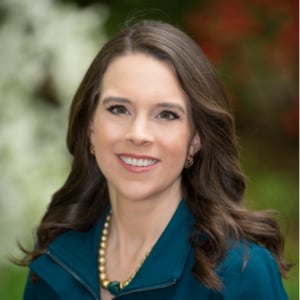
President, JCN
Carrie Campbell Severino is the president of the JCN, and co-author with Mollie Hemingway of the bestselling book Justice on Trial: The Kavanaugh Confirmation and the Future of the Court. As a go-to expert on the confirmation process, Mrs. Severino has been extensively quoted in the media. She regularly appears on television, including FOX, CNN, MSNBC, C-SPAN, and ABC’s This Week.
Severino writes and speaks on a wide range of judicial issues, including the constitutional limits on government, the federal nomination process, and state judicial selection. She has testified before Congress on constitutional questions and briefed Senators on judicial nominations, and regularly files briefs in high-profile Supreme Court cases. She was a law clerk to Supreme Court Justice Clarence Thomas and to Judge David B. Sentelle of the U.S. Court of Appeals for the D.C. Circuit, and is a graduate of Harvard Law School (J.D.), Duke University (B.A., Biology), and Michigan State University (M.A., Linguistics).
Associate Professor of Law, University of Colorado Law School
Scott Moss joined CU Law School in 2007 after six years as an attorney in New York City and three years as a professor at Marquette Law School, where he was the 2007 recipient of the James D. Ghiardi Faculty Award for Outstanding Teaching, Student Body Support, and Scholarship. In New York, Professor Moss was a law clerk to U.S. District Judge Constance Baker Motley and then a plaintiff's employment lawyer at Outten & Golden LLP, the largest plaintiff-side employment law practice in the country, where he litigated individual and class action cases of discrimination, harassment, and minimum/overtime wage violations. He also has argued and briefed appeals of employment cases and has undertaken pro bono projects such as First Amendment right-to-protest litigation with the New York Civil Liberties Union, low-income worker clinics in lower Manhattan, and court-sponsored mediations for pro se litigants. Professor Moss received his J.D. (magna cum laude) in 1998 from Harvard Law School, where he was a Senior Editor of the Harvard Civil Rights-Civil Liberties Law Review; his B.A. (Economics) and M.A. (Media Studies) are from Stanford University. Professor Moss's research interests have included employment law, discrimination, constitutional law, various civil procedure rules, and economic analysis of all of the preceding topics.
B.A., Stanford
M.A., Stanford
J.D., Harvard
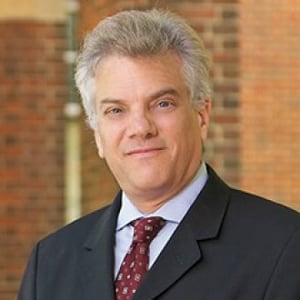
Sudler Family Professor of Constitutional Law, New York University School of Law
Richard H. Pildes is one of the nation’s leading scholars of constitutional law and a specialist in legal issues affecting democracy. He is a Member of the American Academy of Arts and Sciences and the American Law Institute, and has received recognition as a Guggenheim Fellow and a Carnegie Scholar. His acclaimed casebook, The Law of Democracy: Legal Structure of the Political Process (now in its fourth edition), helped create an entirely new field of study in the law schools. The Law of Democracy systematically explores legal and policy issues concerning the structure of democratic elections and institutions, such as the role of money in politics, the design of election districts, the regulation of political parties, the design of voting systems, the representation of minority interests in democratic institutions, and similar issues. He has written extensively on the rise of political polarization in the United States, the Voting Rights Act, the dysfunction of America’s political processes, the role of the Supreme Court in overseeing American democracy, the powers of the American President and Congress, and he has criticized excessively “romantic” understandings of democracy. In addition to his scholarship on these issues, he has written on national-security law, the design of the regulatory state, and American constitutional history and theory.
Respect for his expertise in these areas is reflected in frequent citations of his work in U.S. Supreme Court opinions, the translation of his work into many languages, and his frequent public lectures and appearances around the world, including his nomination with the NBC News Team for an Emmy Award for coverage of the 2000 Presidential election litigation.
His work has been translated and published in Chinese, French, Spanish, and Portuguese. In addition to his scholarship, Professor Pildes plays an active role litigating in these areas. He has won two cases before the United States Supreme Court, including a 2015 victory in Alabama Democratic Conference v. Alabama, a case involving race and redistricting. He served as counsel to a group of former chairmen of the Securities and Exchange Commission in litigation defending the constitutionality of the Sarbanes-Oxley Act; as counsel in election litigation to the Puerto Rico Electoral Commission; as counsel to the government of Puerto Rico; as a federal court-appointed independent expert on voting rights litigation; and as counsel in successful Supreme Court litigation that challenged the way the United States Tax Court operated. He was also a senior legal advisor to the 2008 and 2012 campaigns of President Obama.
Pildes received his A.B. in physical chemistry summa cum laude from Princeton, and his J.D. magna cum laude from Harvard, where he served as Supreme Court Note Editor on the Harvard Law Review. He clerked for Judge Abner J. Mikva of the U.S. Court of Appeals for the District of Columbia Circuit and for Justice Thurgood Marshall of the U.S. Supreme Court. After practicing law in Boston, he began his academic career at the University of Michigan Law School, before joining the NYU School of Law in 2001.

Judge, United States Court of Appeals, Eighth Circuit
David Stras became a judge on the United States Court of Appeals for the Eighth Circuit on January 31, 2018. Before serving on the Eighth Circuit, Judge Stras was an Associate Justice of the Minnesota Supreme Court, a position he occupied from July 1, 2010 until his appointment to the Eighth Circuit.
Prior to becoming a judge, Stras was a member of the faculty of the University of Minnesota Law School from 2004 through 2010. He taught and wrote in the areas of federal courts and jurisdiction, constitutional law, criminal law, and law and politics.
Judge Stras received his Bachelor of Arts degree, with highest distinction, in 1995 and his Master of Business Administration in 1999, both from the University of Kansas. He also received his law degree from the University of Kansas School of Law in 1999, where he served as Editor-in-Chief of the Criminal Procedure Edition of the Kansas Law Review.
Following law school, Stras clerked for The Honorable Melvin Brunetti of the United States Court of Appeals for the Ninth Circuit and then for The Honorable J. Michael Luttig of the United States Court of Appeals for the Fourth Circuit.
From 2001 to 2002, he practiced white-collar criminal and appellate litigation with the Washington, D.C., office of Sidley Austin Brown & Wood. Following his year in practice, he clerked for The Honorable Clarence Thomas of the Supreme Court of the United States.
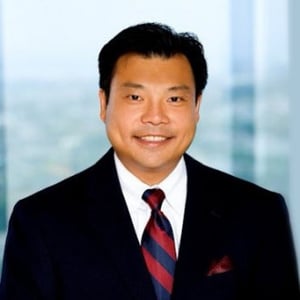
Attorney and Legal Commentator
John Shu is an attorney and legal commentator. His focus areas include constitutional law, securities & corporate law, antitrust law, administrative law, politics, and international affairs. Mr. Shu has lectured and published on a wide variety of issues.
Mr. Shu served President George H.W. Bush and President George W. Bush. He also served Judge Stanley Sporkin, U.S. District Court for the District of Columbia, who was Director of Enforcement at the U.S. Securities & Exchange Commission and General Counsel at the Central Intelligence Agency, and Judge Paul Roney, U.S. Court of Appeals for the Eleventh Circuit, who was Presiding Judge of the Foreign Intelligence Surveillance Court of Review.
Mr. Shu is a member of the National Committee on U.S. - China Relations, the Pacific Council on International Policy, and the Foreign Policy Association.
Co-Founder, Dickey & Campbell PLC
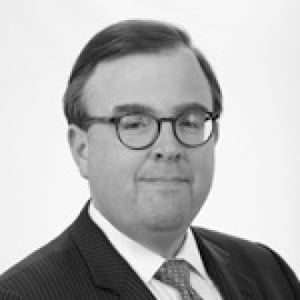
Partner, Morgan, Lewis & Bockius LLP
Michael Edney defends executives and corporations in criminal prosecutions and agency enforcement actions, successfully challenging numerous regulatory agencies—from the Justice Department to the US Securities and Exchange Commission and the US Commodity Futures Trading Commission, among others—against federal government overreach. Many of the regulations Mike has convinced the courts to reverse would have arbitrarily ended hundreds of businesses absent the courts’ intervention. He has also successfully challenged government decisions to break contracts and end projects in cooperation with private industry.
In addition to his criminal defense practice, Mike regularly brings actions challenging government agency regulations as illegal and unconstitutional before they are enforced. He has sued government agencies and reversed their attempted regulations seeking to upend the energy, financial, and tobacco industries.
His civil litigation practice spans beyond anti-regulatory suits. He has brought some of the leading First Amendment cases in the country. On behalf of The Washington Free Beacon, he vindicated the publication’s First Amendment right to access sealed court records before the Arizona Supreme Court. He has defended corporations in bet-the-company litigation concerning securities, environmental, employment, and fair housing. He has represented states at the request of their governors. He has repeatedly served as counsel for former Attorneys General of the United States when they appear as amici curiae before the Supreme Court.
Mike also represents clients on numerous national security matters, including the Classified Information Procedures Act, the Foreign Agent Registration Act, matters before the Committee on Foreign Investment in the United States, government cybersecurity investigations into companies regarded as critical national infrastructure, the handling of classified information by government contractors, and prepublication review of books authored by former government officials for sensitive and classified information.
His private practice draws from a half decade of prior government service. During the administration of former President George W. Bush, he served as deputy legal advisor to the National Security Council at the White House and in the Office of Legal Counsel at the United States Department of Justice, where he helped the administration address many legal issues pertaining to the United States' post-9/11 campaign against terrorism.
Before joining Morgan Lewis, Mike was a litigation partner at another global law firm.
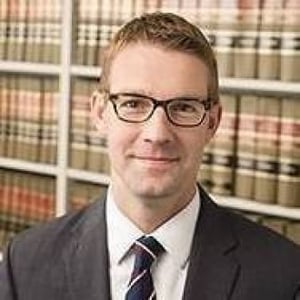
Chief Policy Advisor and Senior Legal Counsel, Office of Governor Kim Reynolds
Co-Founder, Dickey & Campbell PLC
Partner, Morgan, Lewis & Bockius LLP
Michael Edney defends executives and corporations in criminal prosecutions and agency enforcement actions, successfully challenging numerous regulatory agencies—from the Justice Department to the US Securities and Exchange Commission and the US Commodity Futures Trading Commission, among others—against federal government overreach. Many of the regulations Mike has convinced the courts to reverse would have arbitrarily ended hundreds of businesses absent the courts’ intervention. He has also successfully challenged government decisions to break contracts and end projects in cooperation with private industry.
In addition to his criminal defense practice, Mike regularly brings actions challenging government agency regulations as illegal and unconstitutional before they are enforced. He has sued government agencies and reversed their attempted regulations seeking to upend the energy, financial, and tobacco industries.
His civil litigation practice spans beyond anti-regulatory suits. He has brought some of the leading First Amendment cases in the country. On behalf of The Washington Free Beacon, he vindicated the publication’s First Amendment right to access sealed court records before the Arizona Supreme Court. He has defended corporations in bet-the-company litigation concerning securities, environmental, employment, and fair housing. He has represented states at the request of their governors. He has repeatedly served as counsel for former Attorneys General of the United States when they appear as amici curiae before the Supreme Court.
Mike also represents clients on numerous national security matters, including the Classified Information Procedures Act, the Foreign Agent Registration Act, matters before the Committee on Foreign Investment in the United States, government cybersecurity investigations into companies regarded as critical national infrastructure, the handling of classified information by government contractors, and prepublication review of books authored by former government officials for sensitive and classified information.
His private practice draws from a half decade of prior government service. During the administration of former President George W. Bush, he served as deputy legal advisor to the National Security Council at the White House and in the Office of Legal Counsel at the United States Department of Justice, where he helped the administration address many legal issues pertaining to the United States' post-9/11 campaign against terrorism.
Before joining Morgan Lewis, Mike was a litigation partner at another global law firm.
Chief Policy Advisor and Senior Legal Counsel, Office of Governor Kim Reynolds
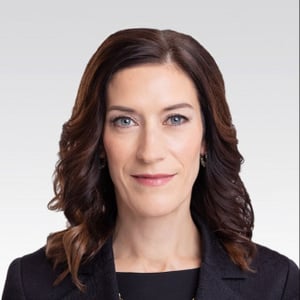
Executive Vice President of Global Governance, Chief Legal Officer and Corporate Secretary, Walmart Inc.
Rachel Brand is Walmart’s executive vice president of global governance, chief legal officer, and corporate secretary. She oversees the company’s global legal, compliance, ethics, corporate governance, digital citizenship, aviation, investigative, and corporate security functions, including Walmart’s Emergency Operations Center.
Immediately before joining Walmart, Rachel served as the United States Associate Attorney General and holds the distinction of being the first woman to serve in this role. She had previously served in the U.S. Department of Justice as the Assistant Attorney General for the Office of Legal Policy during President George W. Bush’s administration. Her other government service includes an appointment by President Obama to serve as a Member of the U.S. Privacy and Civil Liberties Oversight Board, service as an Associate Counsel to the President at the White House, and judicial clerkships with Justice Charles Fried of the Supreme Judicial Court of Massachusetts and Justice Anthony Kennedy at the Supreme Court of the United States. In the private sector, Rachel was a lawyer in private practice at two law firms in Washington, D.C. and served as the Vice President and Chief Counsel for Regulatory Litigation at the U.S. Chamber of Commerce Litigation Center.
Rachel serves on the board of directors for the Walmart Foundation and is the executive sponsor for Walmart’s Tribal Voices Associate Resource Group. Outside of Walmart, she serves on the board of directors for the International Justice Mission and is a member of The American Law Institute.
Rachel earned her Bachelor of Arts degree from the University of Minnesota-Morris and her J.D. from Harvard Law School.
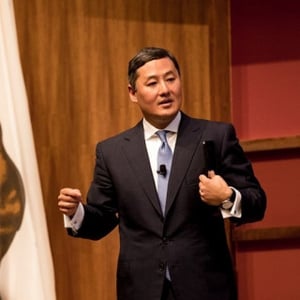
Emanuel S. Heller Professor of Law, University of California at Berkeley; Thomas Smith Senior Research Fellow, Civitas Institute, University of Texas at Austin
John Yoo is the Emanuel Heller Professor of Law at the University of California at Berkeley. He is also the Thomas Smith Senior Research Fellow, Civitas Institute, at the University of Texas at Austin. He is also a Nonresident Senior Fellow at the American Enterprise Institute.
His most recent book, The Politically Incorrect Guide to the Supreme Court, co-authored with Robert Delahunty, was published in 2023. Professor Yoo’s other books include Defender-in-Chief: Trump’s Fight for Presidential Power; Striking Power: How Cyber, Robots, and Space Weapons Change the Rules for War; Point of Attack: Preventive War, International Law, and Global Welfare; and Crisis and Command: A History of Executive Power from George Washington to George Bush.
He is a co-author of volumes 1 and 2 of R. Rossum, G. Tarr, V. Munoz & J. Yoo American Constitution Law (Routledge, 2026), and a co-editor of the eight-volume series on the 250th anniversary of the American Revolution, We Hold These Truths, with Yuval Levin and Adam White of the American Enterprise Institute.
Professor Yoo has published more than 100 articles in academic journals on subjects including national security, constitutional law, international law, and the Supreme Court. He also regularly contributes to the editorial pages of the Wall Street Journal, New York Times, Washington Post, Los Angeles Times, and National Review, among others.
Professor Yoo has served in all three branches of government. He was an official in the U.S. Department of Justice, where he worked on national security and terrorism issues after the 9/11 attacks. He served as general counsel of the U.S. Senate Judiciary Committee. He has been a law clerk for Supreme Court Justice Clarence Thomas and federal appeals Judge Laurence Silberman. He has been a visiting professor at the University of Texas at Austin’s School of Civic Leadership, Seoul National University, the Interdisciplinary Center Herzliya, Keio University, Trento University, the University of Chicago, and the Free University of Amsterdam.
Professor Yoo supervises the Public Law and Policy Program and the California Constitution Center. He also serves on the boards of Founding Forward, the Washington Legal Foundation, the Pacific Legal Foundation, the Ulysses Grant Institute, the Federalist Society’s Separation of Powers and Federalism Division, the Universidad Cientifica del Sur Law School, and the Asia-Pacific Law Institute at Seoul National University. He is a winner of the Federalist Society’s Paul Bator award and the Heritage Foundation’s Edwin Meese III Originalism Lectureship.
Professor Yoo graduated from Yale Law School and summa cum laude from Harvard College.
Emanuel S. Heller Professor of Law, University of California at Berkeley; Thomas Smith Senior Research Fellow, Civitas Institute, University of Texas at Austin
John Yoo is the Emanuel Heller Professor of Law at the University of California at Berkeley. He is also the Thomas Smith Senior Research Fellow, Civitas Institute, at the University of Texas at Austin. He is also a Nonresident Senior Fellow at the American Enterprise Institute.
His most recent book, The Politically Incorrect Guide to the Supreme Court, co-authored with Robert Delahunty, was published in 2023. Professor Yoo’s other books include Defender-in-Chief: Trump’s Fight for Presidential Power; Striking Power: How Cyber, Robots, and Space Weapons Change the Rules for War; Point of Attack: Preventive War, International Law, and Global Welfare; and Crisis and Command: A History of Executive Power from George Washington to George Bush.
He is a co-author of volumes 1 and 2 of R. Rossum, G. Tarr, V. Munoz & J. Yoo American Constitution Law (Routledge, 2026), and a co-editor of the eight-volume series on the 250th anniversary of the American Revolution, We Hold These Truths, with Yuval Levin and Adam White of the American Enterprise Institute.
Professor Yoo has published more than 100 articles in academic journals on subjects including national security, constitutional law, international law, and the Supreme Court. He also regularly contributes to the editorial pages of the Wall Street Journal, New York Times, Washington Post, Los Angeles Times, and National Review, among others.
Professor Yoo has served in all three branches of government. He was an official in the U.S. Department of Justice, where he worked on national security and terrorism issues after the 9/11 attacks. He served as general counsel of the U.S. Senate Judiciary Committee. He has been a law clerk for Supreme Court Justice Clarence Thomas and federal appeals Judge Laurence Silberman. He has been a visiting professor at the University of Texas at Austin’s School of Civic Leadership, Seoul National University, the Interdisciplinary Center Herzliya, Keio University, Trento University, the University of Chicago, and the Free University of Amsterdam.
Professor Yoo supervises the Public Law and Policy Program and the California Constitution Center. He also serves on the boards of Founding Forward, the Washington Legal Foundation, the Pacific Legal Foundation, the Ulysses Grant Institute, the Federalist Society’s Separation of Powers and Federalism Division, the Universidad Cientifica del Sur Law School, and the Asia-Pacific Law Institute at Seoul National University. He is a winner of the Federalist Society’s Paul Bator award and the Heritage Foundation’s Edwin Meese III Originalism Lectureship.
Professor Yoo graduated from Yale Law School and summa cum laude from Harvard College.
Partner, Morgan, Lewis & Bockius LLP
Michael Edney defends executives and corporations in criminal prosecutions and agency enforcement actions, successfully challenging numerous regulatory agencies—from the Justice Department to the US Securities and Exchange Commission and the US Commodity Futures Trading Commission, among others—against federal government overreach. Many of the regulations Mike has convinced the courts to reverse would have arbitrarily ended hundreds of businesses absent the courts’ intervention. He has also successfully challenged government decisions to break contracts and end projects in cooperation with private industry.
In addition to his criminal defense practice, Mike regularly brings actions challenging government agency regulations as illegal and unconstitutional before they are enforced. He has sued government agencies and reversed their attempted regulations seeking to upend the energy, financial, and tobacco industries.
His civil litigation practice spans beyond anti-regulatory suits. He has brought some of the leading First Amendment cases in the country. On behalf of The Washington Free Beacon, he vindicated the publication’s First Amendment right to access sealed court records before the Arizona Supreme Court. He has defended corporations in bet-the-company litigation concerning securities, environmental, employment, and fair housing. He has represented states at the request of their governors. He has repeatedly served as counsel for former Attorneys General of the United States when they appear as amici curiae before the Supreme Court.
Mike also represents clients on numerous national security matters, including the Classified Information Procedures Act, the Foreign Agent Registration Act, matters before the Committee on Foreign Investment in the United States, government cybersecurity investigations into companies regarded as critical national infrastructure, the handling of classified information by government contractors, and prepublication review of books authored by former government officials for sensitive and classified information.
His private practice draws from a half decade of prior government service. During the administration of former President George W. Bush, he served as deputy legal advisor to the National Security Council at the White House and in the Office of Legal Counsel at the United States Department of Justice, where he helped the administration address many legal issues pertaining to the United States' post-9/11 campaign against terrorism.
Before joining Morgan Lewis, Mike was a litigation partner at another global law firm.
Chief Policy Advisor and Senior Legal Counsel, Office of Governor Kim Reynolds

Embryonic Stem Cell Research
O. Carter Snead
Brought to you by the Religious Liberties Practice Group The Federalist Society takes no position on particular...
Confirming a Supreme Court Justice
Des Moines, IowaJustice Stevens’ Retirement & Filling the Vacancy
Carrie Campbell Severino, Scott Moss, Richard H. Pildes, David R. Stras
Updated: 9 AM, May 5, 2010 On Friday, April 9, 2010, Justice John Paul Stevens...
Financial Reform – The Senate Version
John Shu
Brought to you by the Financial Services & E-Commerce Practice GroupThe Federalist Society takes no position...
Engage Volume 11, Issue 1, March 2010
*Online-Only Issue* ADMINISTRATIVE LAW & REGULATION The Regulation of Prescription Drug and Restricted Medical Device...
Crisis and Command : A History of Executive Power from George Washington to George W. Bush
Dallas, TexasExecutive Power
From Guantanamo Bay to Thomson, Illinois: A Debate on the Detention and Prosecution of Alleged Terrorists in 2010 and Beyond
Angela Campbell, Michael J. Edney, Larry J. Eisenhauer, Ryan G. Koopmans
Approximately one year after President Barack Obama announced his intention to close the detainee holding...
From Guantanamo Bay to Thomson, Illinois: A Debate on the Detention and Prosecution of Alleged Terrorists in 2010 and Beyond
Angela Campbell, Michael J. Edney, Larry J. Eisenhauer, Ryan G. Koopmans
Approximately one year after President Barack Obama announced his intention to close the detainee holding...
From Guantanamo Bay to Thomson, Illinois: A Debate on the Detention and Prosecution of Alleged Terrorists in 2010 and Beyond
Iowa Lawyers Chapter
Des Moines, IA