
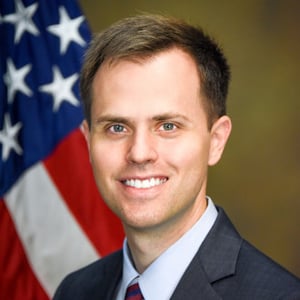
Deputy Chief, Felony Major Crimes Section, United States Attorney's Office for the District of Columbia

H.H. Macaulay Endowed Professor of Economics, Clemson College of Business
Thomas Hazlett is the Hugh H. Macaulay Endowed Professor of Economics at Clemson University. He has previously held faculty positions at George Mason University, the University of California, Davis, and the Wharton School, and served as Chief Economist of the Federal Communications Commission. A noted expert in regulatory economics and information markets, his research has appeared in academic forums such as the Journal of Law & Economics, RAND Journal of Economics, the Journal of Financial Economics, the University of Pennsylvania Law Review and the Columbia Law Review. He has also written for such popular periodicals as the Wall Street Journal, The Economist, Slate, the N.Y. Times, N.Y. Daily News, Reuters.com, Business Week, The New Republic and the Financial Times. His most recent book, The Political Spectrum: The Tumultuous Liberation of Wireless Technology, from Herbert Hoover to the Smartphone, (Yale, 2017), was featured as one of the top tech books of the year at CES 2018.

Executive Vice President, Chief Legal Officer, Gates Corporation
Matthew R. A. Heiman joined the Company in May 2026 and has served as the Company’s Chief Legal Officer and Corporate Secretary since June 2026. As Chief Legal Officer, Mr. Heiman is responsible for all legal functions for Gates, including securities and corporate governance, M&A, litigation, commercial, regulatory, compliance, patents and trademarks, real estate, employment and labor, sustainability and environmental matters. Prior to joining Gates, Mr. Heiman held senior legal leadership roles at Waystar, where he served as Chief Legal & Administrative Officer from 2023 to 2025 and as General Counsel and Corporate Secretary from 2020 to 2023. Prior to that, he was with Johnson Controls, where he served as Vice President, Corporate Secretary, and Associate General Counsel. Mr. Heiman has been a Senior Fellow for the National Security Institute at George Mason University’s Antonin Scalia School of Law since 2018.

Founder and Executive Director, National Security Institute; Assistant Professor of Law, Antonin Scalia Law School, George Mason University
Jamil N. Jaffer is the Founder and Executive Director of the National Security Institute at the Antonin Scalia Law School at George Mason University where he also serves as an Assistant Professor of Law, Director of the National Security Law and Policy Program, and Director of the Cyber, Intelligence, and National Security LLM Program. Jamil also teaches classes on counterterrorism, intelligence, surveillance, cybersecurity, and other national security matters, as well as a summer course held abroad with U.S. Supreme Court Justice Neil M. Gorsuch. Jamil is also affiliated with Stanford University’s Center for International Security and Cooperation and previously served as a Visiting Fellow at the Hoover Institution from 2016 to 2019.
Jamil is also a Venture Partner with Paladin Capital Group, where he assists the firm with investments across the full range of its themes and theses, including a focus on dual-use national security technologies. Jamil also serves on the board of directors of RangeForce, a cybersecurity training and readiness platform startup and Tozny, a digital identity startup, and on the advisory boards of U.S. Strategic Metals, North America’s largest primary producer of cobalt, a critical mineral used in EV batteries, aerospace, and other national security applications; and Constella Intelligence, a deep and dark web intelligence startup. Jamil also serves as an advisor to Beacon Global Strategies, a strategic advisory firm and Duco, a technology platform startup that connects corporations with geopolitical and international business experts. Jamil is also the managing director of Trigraph Caveat Capital, a private investment vehicle.
Among other things, Jamil currently serves on the Board of Directors for the Greater Washington Board of Trade, the Board of Advisors for the Global Cyber Alliance, and the Advisory Board of the Foundation for the Defense of Democracies’ Center on Cyber and Tech Innovation, the Executive Committee of the Reagan Institute Strategy Group. Jamil is also a Fellow at the Academy for Judaic, Christian, and Islamic Studies, an advisor to the Concordia Summit, and is a member of the Board of Directors for the Center for Intelligence Policy, the Board of Directors of Speech First, and the Executive Committee of the International Law and National Security Practice Group of the Federalist Society.
Immediately prior to his current positions, from 2015-2021, Jamil served as a senior business leader at IronNet Cybersecurity, helping take the company from a bootstrapped first-year technology products startup through two rounds of venture capital fundraising, growing from 40 employees to over 300, and through its listing on New York Stock Exchange. In his role as IronNet's Senior Vice President for Strategy, Partnerships & Corporate Development, Jamil worked directly for the co-CEOs of the company, Gen (ret.) Keith B. Alexander, the former Director of the National Security Agency and Founding Commander of U.S. Cyber Command, and Bill Welch, the former COO of Zscaler and Duo; in that role, Jamil led all of the company’s strategic and technology partnership efforts, including developing go-to-market and technology integration plans with some of the largest cloud platforms and cybersecurity companies in the market, evaluating potential acquisition targets, and developing overall corporate strategy and thought leadership around collective security and collaborative defense in the cyber arena.
Prior to his time at IronNet, Jamil served on the leadership team of the Senate Foreign Relations Committee as Chief Counsel and Senior Advisor under Chairman Bob Corker (R-TN), where he worked on key national security and foreign policy issues, including leading the drafting of the proposed Authorization for the Use of Military Force against ISIS in 2014 and 2015, the AUMF against Syria in 2013, and revisions to the 9/11 AUMF against al Qaeda. Jamil was also the lead architect of the Iran Nuclear Agreement Review Act and two sanctions laws against Russia for its first intervention in Ukraine.
Prior to joining SFRC, Jamil served as Senior Counsel to the House Permanent Select Committee on Intelligence under Chairman Mike Rogers (R-MI) where he led the committee’s oversight of NSA surveillance, NRO intelligence issues, and NGA analytic and collection matters, as well as intelligence community-wide counterterrorism issues. Jamil was also the lead architect of the Cyber Intelligence Sharing and Protection Act, the nation’s first cyber threat intelligence sharing legislation that was signed into law in 2015.
In the Bush Administration, Jamil served in the White House as an Associate Counsel to the President, handling Defense Department, State Department, and intelligence community matters, and serving as one of the White House Counsel’s primary representatives to the National Security Council Deputies Committee.
Prior to the White House, Jamil served on the leadership team of the Justice Department’s National Security Division as Counsel to the Assistant Attorney General for National Security, where he focused on counterterrorism and intelligence matters. At NSD, Jamil helped lead the division’s work on In re: Directives, the first ever two-party litigated matter in the FISA Court and the second case before the FISA Court of Review in its 30-year history. Jamil also led NSD’s efforts on the President’s Comprehensive National Cybersecurity Initiative (CNCI), including the drafting of NSPD-54/HSPD-23, and related classified matters, and advised the National Security Agency (NSA) and U.S. Cyber Command’s predecessor organization, the Joint Function Component Command for Network Warfare (JFCC-NW), on matters related to cyber intelligence collection and offensive cyber activities. For his work on these matters, Jamil was awarded the Assistant Attorney General’s Award for Special Initiative and was among the group of lawyers awarded the Director of National Intelligence’s 2008 Legal Award (Team of the Year – Cyber Legal).
Jamil also served in other positions in the Justice Department, including in the Office of Legal Policy, where he worked on the confirmations of Chief Justice John G. Roberts, Jr. and Justice Samuel A. Alito, Jr. to the United States Supreme Court.
Jamil also served as a lawyer in private practice at Kellogg Huber, a Washington, DC-based litigation boutique, as a policy advisor to Congressman Bob Goodlatte (R-VA), and as a staff member or senior advisor on a number of political campaigns, including two presidential campaigns and a presidential transition team. While in law school, Jamil was a member of the University of Chicago Law Review, managing editor of the Chicago Journal of International Law, and National Symposium Editor of the Harvard Journal of Law & Public Policy. Following law school, Jamil served as a law clerk to Judge Edith H. Jones of the United States Court of Appeals for the Fifth Circuit and, later in his career, as a law clerk to then-Judge Neil M. Gorsuch when he first joined the United States Court of Appeals for the Tenth Circuit as well as a law clerk to Justice Neil Gorsuch when he joined the U.S. Supreme Court.
Jamil has published multiple op-eds and academic articles on national security, foreign policy, cybersecurity, counterterrorism, encryption, and intelligence matters, and is the co-author of a book chapter with former NSA Director Gen. (Ret.) Keith B. Alexander on national security and the press in National Security, Leaks, and the Freedom of the Press: The Pentagon Papers Fifty Years On (2021) and a book chapter with former CIA Director Gen. (ret.) Mike Hayden on ISIS, al Qaeda, and other international terrorist groups in Choosing to Lead: American Foreign Policy for a Disordered World (2015). Jamil has also written book chapters on cybersecurity and surveillance, as well as op-eds and policy papers with former Attorney General Michael B. Mukasey, former National Counterterrorism Center Director Matt Olsen, and Congressman Mike Waltz (R-FL), among others.
Jamil has previously taught graduate-level courses in intelligence law and policy at George Washington University’s Elliott School of International Affairs and the National Intelligence University, served an outside advisor to the Cyberspace Solarium Commission, and has recently testified before committees of the U.S. Senate and House of Representatives on China, cybersecurity, counterterrorism, and other national security matters. Jamil has also recently appeared on a range of national television and radio outlets including CNN, Fox News, Fox Business, MSNBC, Bloomberg, PBS, Voice of America, and National Public Radio, and in various print and online publications, including the Wall Street Journal, New York Times, and the Washington Post on a range of national security matters including cybersecurity, counterterrorism, surveillance, encryption, privacy, and foreign policy issues.
Jamil holds degrees from UCLA (BA, cum laude), the University of Chicago Law School (JD, with honors), and the United States Naval War College (MA, with distinction).

Nonresident Senior Fellow, Cyber Statecraft Initiative, Atlantic Council
Megan Stifel is a Nonresident Senior Fellow with the Cyber Statecraft Initiative at the Brent Scowcroft Center on International Security and the Founder of Silicon Harbor Consultants, which provides strategic cybersecurity operations and policy counsel. Prior to founding Silicon Harbor Consultants, she was an attorney in the National Security Division at the U.S. Department of Justice (DOJ). She most recently served on detail as a Director for International Cyber Policy in the National Security Council at the White House. In this role Ms. Stifel developed and implemented policies in connection with Internet governance, cybersecurity, and cybercrime.
Prior to the White House, Ms. Stifel worked at the Computer Crime and Intellectual Property Section (CCIPS). At CCIPS she collaborated with law enforcement agencies to investigate and prosecute computer crime cases, including identity theft, network intrusion, and malware distribution.
Ms. Stifel also previously served as the Director for Cyber Policy at NSD, where she coordinated the Division's policy and legal analysis in connection with the 2009 Cyberspace Policy Review (CSPR) and the 2008 Comprehensive National Cybersecurity Initiative, cyber-related legislative proposals, cybersecurity investigations, cyber operations, and the telecommunications supply chain. She was a member of the interagency group that developed the 2011 International Strategy for Cyberspace and the CSPR.
Ms. Stifel earned her B.A. in International Studies and German, magna cum laude, from the University of Notre Dame and her J.D. from Indiana University.

Co-Director, IBM PolicyLab
Ryan Hagemann is a Technology Policy Executive at IBM. He was previously a senior policy fellow at the International Center for Law & Economics. Before joining the International Center for Law & Economics, he was a senior fellow at the Niskanen Center, where he also served as the senior director for policy and director of technology policy. His policy expertise focuses on regulatory governance of emerging technologies, as well as a broader research portfolio that includes genetic modification and regenerative medicine, bioengineering and healthcare IT, artificial intelligence, autonomous vehicles, commercial drones, the Internet of Things, and other issues at the intersection of technology, regulation, and the digital economy. His work on “soft law” governance systems, autonomous vehicles, and commercial drones has been featured in numerous academic journals, and his research and comments have been cited by The New York Times, MIT Technology Review, and The Atlantic, among other outlets. He has been published in The Wall Street Journal, Wired, National Review, The Washington Examiner, U.S. News & World Report, The Hill, and elsewhere.
Ryan graduated from Boston University with a B.A. in international relations, foreign policy, and security studies and holds a Master of Public Policy in science and technology policy from George Mason University.
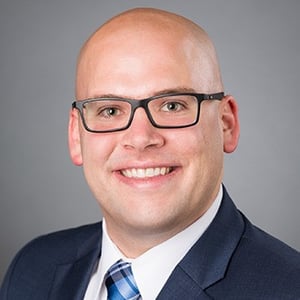
Senior Director of Strategy and Research, The Center for Growth and Opportunity at Utah State University
Christopher Koopman is the Senior Director of Strategy and Research at The Center for Growth and Opportunity at Utah State University. He previously served as a Senior Research Fellow and Director of the Technology Policy Program at the Mercatus Center at George Mason University. He specializes in regulation, competition, and innovation. His research and commentary has appeared in the Wall Street Journal, New York Times, Washington Post, USA Today, Bloomberg,and NPR. He is also a contributor at The Hill, and was named to Forbes' 30 Under 30 2016 for law and policy.
Koopman earned his J.D. from Ave Maria University and his LL.M. in law and economics at George Mason University where he now teaches in both the economics department and the George Mason University School of Law.

Professor of Law and Public Policy, Pepperdine University Caruso School of Law
Greg McNeal is an award winning entrepreneur, professor, and investor. He co-founded AirMap, a multinational aerospace and defense company honored as one of the “World’s Most Innovative Companies” by Fast Company and ranked as an Inc.com 25 Most Disruptive Company. The company also received a Los Angeles Business Journal Innovation Award, and a Consumer Electronics Show “Innovation Award.” The company was acquired in 2021.
He invests in and advises companies and entrepreneurs in SAAS, Defense, AI, and entertainment. The companies he founded or serves on the corporate board of have raised over $100 million in funding with his direct participation in the process. Those investors include Microsoft, Flexport, Sony, Qualcomm, Rakuten, Baidu, Airbus, and top global financial services and venture capital funds including Greycroft, Social Capital, General Catalyst, Lux Capital, Bullpen Capital, Bay Bridge Ventures, Teamworthy Ventures, Operate Studio, TenOneTen, Temasek, Macquarie Group, Graph Ventures and many others. The companies he advises have raised substantially more funding, in part due to his advice and mentorship.
He is a tenured Professor of Law and Public Policy at Pepperdine University and a faculty member with the Palmer Center for Entrepreneurship and the Law and teaches courses in technology, public policy, internet, and privacy law.
As a public policy and legal expert, Greg has worked with the White House, the Department of Defense, the State Department, and independent regulatory agencies on matters related to technology, law and policy. He has on multiple occasions testified before Congress and state legislatures about entrepreneurship and emerging technology and has aided state legislators, cities, municipalities, and executive branch officials in drafting legislation and ordinances related to technological advances and has been appointed by Cabinet officials to serve on Federal Rulemaking Committees.
He is a frequent keynote speaker at industry events and academic conferences related to technology, law, and public policy. He advises venture capital firms and other investors, start-ups, law enforcement, consulting firms, and Fortune 500 companies about the legal and regulatory issues associated with emerging technologies.
He regularly appears on television and radio to discuss technology and business, wrote a column on business and technology for Forbes and has authored Op-Eds for the New York Times, the Washington Post, and The Washington Times, among others. In his early career he worked on national security, international criminal law and counterterrorism matters and served as an Army officer.

Legal Fellow, Center for Constitutional Studies, Cato Institute
Brent Skorup is a legal fellow in the Cato Institute’s Robert A. Levy Center for Constitutional Studies.
Before joining Cato, he was a senior research fellow at the Mercatus Center at the George Mason University. His research areas include free speech, technology law, Fourth Amendment protections, regulation, and property law. Skorup has published pieces in economics and law journals and in popular media, including The Wall Street Journal, The New York Times, Bloomberg Law, Reuters, and Wired. He’s appeared as a TV and radio interview guest for news outlets like C‑SPAN, NPR, CBS News, ABC News, and CNBC Asia.
The Pennsylvania Supreme Court, a dissenting opinion at the Illinois Supreme Court, and the ALI's Restatement of the Law of Property have cited his legal research and he has testified as a technology and legal expert in legislative hearings in several states. Skorup has been appointed to several federal and state advisory bodies and he is currently a member of the Texas Advanced Air Mobility Advisory Committee.
Skorup has a BA in economics from Wheaton College and a law degree from the George Mason University School of Law, where he was articles editor for the Civil Rights Law Journal. He was a legal clerk at the FCC’s wireless bureau and Office of General Counsel and at the Energy and Commerce Committee in the U.S. House of Representatives.
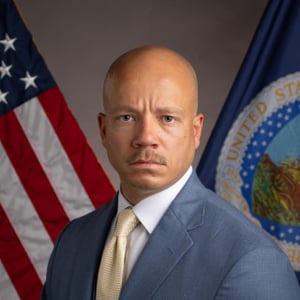
Assistant Secretary for Civil Rights, U.S. Department of Agriculture
Devon Westhill is the Assistant Secretary for Civil Rights at the U.S. Department of Agriculture. The U.S. Senate confirmed President Donald Trump’s nomination of Westhill on October 7, 2025.
Westhill returns to the USDA where he previously headed the civil rights office as Deputy Assistant Secretary in President Trump’s first term. His previous government appointments also include service at the U.S. Department of Labor, liaison to the Administrative Conference of the U.S., and liaison to the White House Initiative on Historically Black Colleges and Universities. Prior to returning to government service, Westhill was President and General Counsel of a nonprofit civil rights organization.
Westhill has testified on civil rights matters before Congress, federal agencies, and as an expert witness in federal court. He has spoken hundreds of times at college campuses, conferences, and on radio and TV programs, and he is frequently quoted in print publications, and his writing has appeared in numerous national outlets. A U.S. Navy veteran, Westhill earned his BA from the University of North Carolina at Chapel Hill and his JD from the University of Florida.

Professor of the Practice of Economics, Duke University
Michelle P. Connolly is Professor of the Practice in the Economics Department at Duke University. She was the Economics Director of Duke in New York: Financial Markets and Institutions Program for 2007-2009 and the Director of EcoTeach for several years. She currently serves as the Director of the Honors Program in Economics and a member of the Duke Alumni Association Board.
In 2011, Professor Connolly won the Howard D. Johnson Trinity College Teaching Prize and was named among the top five percent of Duke University Undergraduate Instructors in 2009, 2010 and 2011.
Professor Connolly previously served as Chief Economist of the Federal Communications Commission in 2006-2007 and 2008-2009, and as an Economist for the International Research Function for the Federal Reserve Bank of New York from 1996 to 1997. She graduated Phi Beta Kappa and Summa Cum Laude from Yale University in 1990, and went on to earn her M.A. and M.Phil in economics. Professor Connolly received her Ph.D. in economics from Yale University in 1996.
Professor Connolly’s research and teaching focus specifically on international trade, telecommunications policy, media policy, education, growth, and development. She has received funding for her research from the National Science Foundation, the Duke Arts and Sciences Research Council Grants, the Spencer Grant, and the Teagle Grant.
Professor Connolly has published in numerous journals, including the American Economic Review, the American Economic Journal: Macroeconomics, the Journal of Development Economics, the Journal of Economic History, the Journal of Economic Growth, the Review of Industrial Organization, and Current Issues in Economics and Finance.
In 2011, Professor Connolly testified before Congress and participated in a White House panel on Spectrum Issues. She has been presenting her work at university seminars and international conferences since 1996. Some of her appearances were at the ACLP Advanced Communications 2009 Summit, where she was a panelist and moderator, at the conference on “Wireless Technologies: Enabling Innovation and Economic Growth”, where she served as a keynote panelist, and at the Martin H. Crego Lecture in Economics, an all college Lecture at Vassar College. In 2013 Professor Connolly was awarded a National Science Foundation Secure and Trustworthy Cyberspace Grant, “Dollars for Hertz: Making Trustworthy Spectrum Sharing Technically and Economically Viable.”
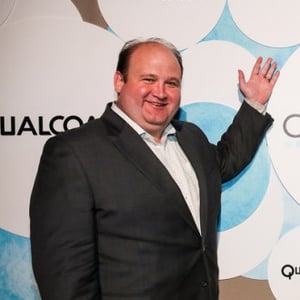
Executive Vice President, CTIA
Brad Gillen joined CTIA in 2014 and is responsible for shaping the association's strategic and policy initiatives, as well as helping manage the association's day-to-day operations.
Most recently, Mr. Gillen was a partner at Wilkinson Barker Knauer, LLP, specializing in telecommunications policy and strategy.
Mr. Gillen was formerly a Legal Advisor to then-FCC Commissioner Baker responsible for broadband, new technologies and media issues. He also served in other senior policy roles at the FCC and with DISH Network.
Mr. Gillen graduated from Hampden-Sydney College, and earned his law degree from the University of Virginia School of Law.

Chip Pickering has been CEO of INCOMPAS since January 2014. During that time, INCOMPAS has achieved significant growth with leading internet, backbone, business broadband, wireless, and international companies. Under his leadership, INCOMPAS has led numerous public policy campaigns promoting competition through an open internet and in the business broadband market.
Pickering was a six-term Congressman representing Mississippi’s Third District. During his time in the House, he served on the Energy & Commerce Committee, where he was vice chairman from 2002 to 2006 and a member of the Telecommunications Subcommittee.
He also was co-chairman and founder of the Congressional Wireless Caucus and an assistant minority whip of the House. Previously, Chip worked for Sen. Trent Lott (R-Miss.) and served as a staff member on the Senate Commerce Committee, where he helped shape the Telecommunications Act of 1996.
Because of his role in drafting the 1996 Act, he became well known as a Congressional leader on telecommunications issues. While in Congress, Chip served as chair of the subcommittee overseeing the transition to the commercial internet, the establishment of domain names, registries, and internet governance. He also successfully led a bipartisan legislative effort to codify net neutrality principles through the House in 2006.
Prior to joining INCOMPAS, Chip was a partner with Capitol Resources LLC, a public affairs and government relations firm, where he represented an array of telecom clients, including wireless, cable and competitive broadband providers, as well as non-profits and companies specializing in education, energy, technology and defense.

Founder and President, Salt Point Strategies
David Redl is the Founder and President of Salt Point Strategies, a strategic advising firm focused on the technology and telecom sectors. David is an attorney and former government executive with experience in both the legislative and executive branches of the U.S. government in the telecommunications, media, and technology fields.
David previously served as Assistant Secretary of Commerce for Communications and Information and the Administrator of the National Telecommunications and Information Administration. During his tenure, he led U.S. efforts to ensure American leadership in 5G, to bring broadband to more rural Americans, and to promote a free, open, and secure Internet around the world.
David also represented the United States in international forums, including leading U.S. efforts before the Internet Corporation for Assigned Names and Numbers, the Inter-American Telecommunication Commission, the Organisation for Economic Co-operation and Development, and the International Telecommunication Union.
In the legislative branch, David served as Chief Counsel for Communications and Technology on the majority staff of the U.S. House of Representatives Committee on Energy and Commerce. While at Energy and Commerce, he worked extensively on telecommunications, media, and technology laws, including the successful passage of laws authorizing the first-ever spectrum incentive auction, the creation of the First Responder Network Authority, and reauthorization of the satellite television laws.
Prior to his government service, David started his career as Director of Regulatory Affairs at CTIA, an international trade association of the wireless communications industry.
Mr. Redl received his B.A. in Journalism and his B.A. in Political Science from the Pennsylvania State University and his J.D. from the Catholic University of America with a certificate from the Institute for Communications Law Studies. He is a member of the New York and District of Columbia Bars.

Managing Partner, Wilkinson Barker Knauer LLP
Bryan Tramont, the firm’s managing partner, offers strategic counsel to Fortune 100 companies and trade associations, as well as small and mid-sized telecommunications and media companies, on all aspects of communications law and regulation. He is regularly called on to advise companies as they develop and evaluate new business opportunities in the technology, media, and telecommunications sectors. Mr. Tramont also designs and leads the execution of the firm’s strategic plan and directs client management and development. Mr. Tramont has been recognized by leading publications like Legal 500, Chambers USA, and Washingtonian as one of the nation’s top communications lawyers. In 2017, he was named to the inaugural Legal 500 Hall of Fame List, which highlights individuals who have received constant praise by their clients and who have been recognized by the Legal 500 as an elite leading lawyer for six consecutive years. He has been awarded The Best Lawyers in America © 2017 “Lawyer of the Year” for Media Law and “Lawyer of the Year" in Communications Law in 2016. In 2016, he was also named one of the Top 10 Washington, DC Super Lawyers.
Mr. Tramont serves on the Commerce Spectrum Management Advisory Committee (CSMAC), advising the Assistant Secretary of Commerce for Communications and Information at NTIA. Appointed under the Bush and Obama Administrations, he also served as the committee’s Co-Chairman from 2008-2010. In addition, Mr. Tramont is active in the Federal Communications Bar Association, where he served in a variety of leadership roles, including as President from 2010-11 and has been awarded the organization’s Distinguished Service Award. Mr. Tramont chairs the Federalist Society’s Telecommunications Practice Group Executive Committee, serves on the International Institute of Communications Canada Board of Directors, and previously served on the Governing Committee of the ABA Forum on Communications Law. Mr. Tramont currently is an adjunct law professor at The Catholic University of America as part of the Communications Law Institute, is a senior adjunct fellow at the University of Colorado, Boulder, has served as the Syracuse University Law School’s Practitioner in Residence, and is on the Board of Trustees at William Woods University. Mr. Tramont is the author of numerous articles on communications policy and is a frequent speaker and lecturer at academic and industry events. Prior to joining Wilkinson Barker Knauer, Mr. Tramont served as Chief of Staff of the Federal Communications Commission under Chairman Michael Powell. As Chief of Staff, Mr. Tramont managed all aspects of the agency’s operations and directed FCC staff in implementing all components of the agency’s policy portfolio including media, broadband, mobility, and traditional telephone services. Before being elevated to Chief of Staff, Mr. Tramont was Chairman Powell’s Senior Legal Advisor, advising him on strategic policy matters and on wireless, international, technology, satellite, and consumer issues. Mr. Tramont also served as Senior Legal Advisor to Commissioner Kathleen Abernathy and, before that, to Commissioner Harold Furchtgott-Roth. He also served as a law clerk for the Honorable Duane Benton on the Supreme Court for his home state of Missouri. In addition, Mr. Tramont has served as an expert witness in a number of communications-related litigation matters.
Bryan Tramont graduated summa cum laude from The George Washington University with a degree in political science. He earned his law degree from Yale Law School, where he served as editor of the Yale Law & Policy Review.
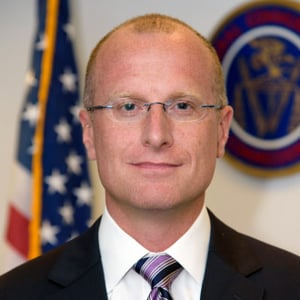
Chairman, Federal Communications Commission
Brendan Carr is the Chairman of the Federal Communications Commission. He previously served as the senior Republican Commissioner and as the FCC’s General Counsel. Nominated by both President Trump and President Biden, Carr has been confirmed unanimously by the Senate three times.
Described by Axios as “the FCC’s 5G crusader,” Carr has led the FCC’s work to modernize its infrastructure rules and accelerate the buildout of high-speed networks. His reforms cut billions of dollars in red tape, enabled the private sector to construct high-speed networks in communities across the country, and extended America’s global leadership in 5G.
Chairman Carr is also focused on expanding America’s skilled workforce—the tower climbers and construction crews needed to build next-gen networks. His jobs initiative promotes community colleges and apprenticeships as a pipeline for good-paying 5G jobs. He is recognizing America’s talented tower crews through a series of “5G Ready” Hard Hat presentations.
Chairman Carr leads a groundbreaking telehealth initiative at the FCC. The Connected Care Pilot Program supports the delivery of high-quality care to low-income Americans and veterans.
Chairman Carr’s time outside of Washington helps inform his approach to the job. He regularly hits the road to hear directly from community members and learn how changes in federal policies could help improve their lives.
Chairman Carr brings nearly 20 years of private and public sector experience in communications and tech policy to his position. Before joining the FCC as a staffer back in 2012, he worked as an attorney at Wiley Rein LLP in the firm’s appellate, litigation, and telecom practices. Previously, Chairman Carr clerked on the U.S. Court of Appeals for the Fourth Circuit for Judge Dennis Shedd. After attending Georgetown University for his undergrad, Chairman Carr earned his J.D. magna cum laude from the Catholic University of America’s Columbus School of Law where he served as an editor of the Catholic University Law Review.
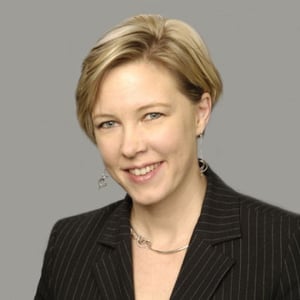
Clinical Professor and Senior Scholar and Senior Fellow for Copyright Research and Policy of C-IP2, Antonin Scalia Law School, George Mason University
Sandra Aistars is Senior Fellow for Copyright Research and Policy and a Senior Scholar at the Center for Intellectual Property x Innovation Policy (C-IP2). She also leads the law school’s Arts & Entertainment Advocacy Program. Professor Aistars has over twenty years of advocacy experience on behalf of copyright and other intellectual property owners. She has served on trade missions and been an industry advisor to the Department of Commerce on intellectual property implications for international trade negotiations; worked on legislative and regulatory matters worldwide; frequently testified before Congress and federal agencies regarding intellectual property matters; chaired cross-industry coalitions and technology standards efforts; and is regularly tapped by government agencies to lecture in U.S. government-sponsored study tours for visiting legislators, judges, prosecutors, and regulators.
Immediately prior to joining Scalia Law, Professor Aistars was the Chief Executive Officer of the Copyright Alliance – a nonprofit, public interest organization that represents the interests of artists and creators across the creative spectrum. While at Scalia Law, she continues to collaborate with the Copyright Alliance as a member of its Academic Advisory Board. Professor Aistars currently serves on the boards of the Washington Area Lawyers for the Arts (WALA) and the Howard Intellectual Property Program (HIPP), and she has previously served as trustee of the Copyright Society of the USA (CSUSA). Professor Aistars has also previously served as Vice President and Associate General Counsel at Time Warner Inc. She began her legal career in private practice at Weil, Gotshal and Manges LLP.

Partner, Steptoe & Johnson LLP
Stewart Baker is a partner in the law firm of Steptoe & Johnson in Washington, D.C. From 2005 to 2009, he was the first Assistant Secretary for Policy at the Department of Homeland Security. His law practice covers cybersecurity, data protection, homeland security, and travel and foreign investment regulation; he has been awarded one patent.
Mr. Baker has been General Counsel of the National Security Agency and General Counsel of the commission that investigated WMD intelligence failures prior to the Iraq war. He is the author of Skating on Stilts, a book on terrorism, cybersecurity, and other technology issues; he also hosts the weekly Cyberlaw Podcast.

Senior Counsel, Electronic Privacy Information Center
Alan Butler is Senior Counsel at the Electronic Privacy Information Center (EPIC) in Washington, DC. In that capacity, Mr. Butler manages EPIC's litigation, including the Amicus Program, and files briefs in emerging privacy and civil liberties cases before the U.S. Supreme Court and other appellate courts. Mr. Butler has argued on behalf of EPIC in privacy and open government cases in the U.S. Court of Appeals for the D.C. Circuit, the Third Circuit, and the Supreme Courts of New Mexico and New Jersey. Mr. Butler has authored briefs on behalf of EPIC in significant privacy cases, including an amicus brief in Riley v. California that was cited in the Supreme Court's unanimous opinion upholding Fourth Amendment protections for cell phones. He has also authored briefs on national security, open government, workplace privacy, and consumer privacy issues. Mr. Butler is also Chair of the Privacy and Information Protection Committee of the ABA Section on Civil Rights and Social Justice. He is co-author of the most recent edition of Communications Law and Policy: Cases and Materials and has also published several articles on emerging privacy issues, including: Products Liability and the Internet of (Insecure) Things: Should Manufacturers Be Liable for Damage Caused by Hacked Devices?, Get a Warrant: The Supreme Court's New Course for Digital Privacy Rights after Riley v. California, Standing Up to Clapper: How to Increase Transparency and Oversight of FISA Surveillance, and When Cyberweapons End Up on Private Networks: Third Amendment Implications for Cybersecurity Policy. Mr. Butler is a graduate of UCLA School of Law and Washington University in St. Louis, where he earned a B.A. in Economics. He is a frequent speaker and commentator on cybersecurity, consumer privacy, and surveillance law issues.

Senior Fellow and Academic Director, Penn Carey Law School
Gus Hurwitz is a Senior Fellow and the Academic Director of the Center for Technology, Innovation & Competition and the University of Pennsylvania Carey Law School where he is working to develop academic and scholarly programs at the intersecution of law, technology, and policy.
He is also Director of Law & Economics Programs at the International Center for Law & Economics (ICLE), a think tank based in Portland, Oregon, where he directs its law and economics-focused research program and helps to translate academic research into applied policy issues.
Hurwitz's research focuses on the regulation of technology, including administrative and regulatory law, antitrust law, torts and products liability, and media law - alongside cognate fields. Inrecent years he has worked on an AI standardization initiative with Seoul National University, a UNICEF-organized study of broadband deployment to public schools in Rwanda, and a book on conglomerate and ecosystems theories of antitrust.
He has published over 30 articles and book chapters, two books (one on cybersecurity law & policy, one on media regulation in the digital era) and have two more in process, over 100 shorter writings (op-eds, shorter analyses, blog posts, &c), hosted over 100 podcast episodes, and regularly appear or am quoted in popular media (including the NY Times, Wall Street Journal, Washington Post, and Associated Press). His work has been cited by legislators, federal courts of appeals, and federal regulatory agencies.
He was previously a full professor and founding director of the Governance & Technology Center at the University of Nebraska, prior to which he was the inaugural research fellow at the Center for Technology, Innovation & Competition (CTIC). From 2007 to 2010, he was a trial attorney with the U.S. Department of Justice Antitrust Division in the Telecommunications and Media Enforcement Section.
He also is, or has been, affiliated with the Classical Liberal Institute at New York University School of Law, the National Security Institute at George Mason University, and the American Enterprise Institute (AEI).
Before attending law school, Hurwitz worked at Los Alamos National Lab and interned at the Naval Research Lab. During this time his work was recognized by the Federal Laboratory Consortium, Los Alamos National Lab, IEEE & ACM, Corporation for Education Network Initiatives in California, R&D Magazine, and even the Guinness Book of World Records.
A current list of Hurwitz’s publications is available on his website: GusHurwitz.net.
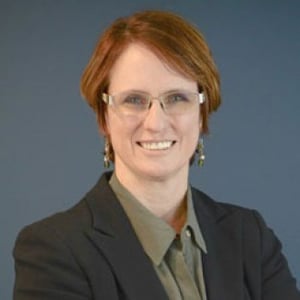
Senior Counsel and Director of Strategy, Future of Privacy Forum
Brenda Leong, CIPP/US, is Senior Counsel and Director of Strategy at the Future of Privacy Forum. She oversees strategic planning of organizational goals, as well as managing the FPF portfolio on biometrics, particularly facial recognition, along with the ethics and privacy issues associated with artificial intelligence. She works on industry standards and collaboration on privacy concerns, by partnering with stakeholders and advocates to reach practical solutions to the privacy challenges for consumer and commercial data uses. Prior to working at FPF, Brenda served in the U.S. Air Force, including policy and legislative affairs work from the Pentagon and the U.S. Department of State. She is a 2014 graduate of George Mason University School of Law.

Partner, Arnold & Porter
John Elwood is the head of Arnold & Porter’s Appellate and Supreme Court practice. He has argued before the Supreme Court nine times, and appeared before most of the federal courts of appeals. He has successfully argued cases across a broad cross-section of subjects, with particular experience in environmental law, the False Claims Act, government contracting, and federal criminal law
Mr. Elwood’s work has earned him recognition as one of Washington’s top Supreme Court lawyers (Washingtonian, 2013), as one of “a small group of lawyers” with an “outsized influence at the U.S. Supreme Court” (Reuters, 2014), and as one of the country’s most innovative lawyers (Financial Times, 2014). Chambers USA reports that “[t]he much-admired John Elwood is praised for his advocacy skills” (2013), and describes Mr. Elwood as “phenomenal” (2014), “incredibly talented” (2012), and “a much-loved and widely respected lawyer who is quick on his feet” (2010).
Before joining the firm, Mr. Elwood served in senior-level positions in the U.S. Department of Justice. Beginning as an Assistant to the Solicitor General, and continuing with the firm, he has briefed more than 20 merits cases before the Supreme Court of the United States, and has briefed approximately 135 cases at the certiorari stage. As the senior Deputy in the Office of Legal Counsel, he advised the White House and federal agencies on a range of constitutional, statutory, and regulatory issues.
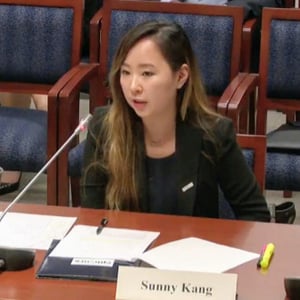
International Consumer Counsel, Electronic Privacy Information Center (EPIC)
Sunny Seon Kang is International Consumer Counsel at the Electronic Privacy Information Center (EPIC). Her work at EPIC focuses on U.S. privacy regulations and EU data protection laws. She advocates for the global implementation of the GDPR to raise online privacy standards. In London, Ms. Kang was a Legal Researcher for the Western Balkans Rule of Law Project and authored judicial guidelines on the right to privacy and freedom of expression under the European Convention on Human Rights. She was a Summer Associate at Allen & Overy UK in the intellectual property litigation department, and worked in Seoul as a Research Fellow at the Innovation, Competition & Regulation (ICR) Law Center. In San Francisco, Ms. Kang was a Legal Extern at the California Department of Justice, Attorney General Kamala Harris' Office, where she produced legislative analyses and policy recommendations on state privacy laws. Prior to joining EPIC, Ms. Kang was a Legal Fellow and Yelp Public Policy Affiliate at TechFreedom on FTC regulatory affairs and consumer privacy. Ms. Kang holds a law degree (LL.B.) from University College London and a Master of Laws (LL.M.) in Intellectual Property and Technology from the UC Berkeley School of Law. She is certified to the New York bar.
Senior Vice President, Strand Consult
Roslyn Layton, PhD is a leading international expert on technology policy. She is Senior Vice President of Strand Consult, an independent consultancy serving the global mobile telecom industry. She is also a Visiting Researcher at Aalborg University Copenhagen where she earned a doctoral thesis on network neutrality by measuring the outcome of the policy across 53 countries over 5 years. She served on the Presidential Transition Team for the Federal Communications Commission (FCC), and her work was critical to the FCC’s defense for the Restoring Internet Freedom Order. She has testified to the United States Senate and House on multiple topics including spectrum, broadband, mobile mergers, competition, and privacy. She founded the think tank China Tech Threat to study the problems of technology produced by the People’s Republic of China. She serves as the Program Chair for the Telecom Policy Research Conference, the leading interdisciplinary academic gathering. Her recent paper on rural broadband describes the empirical case for policy reform to recover network infrastructure costs from streaming video entertainment providers. She is a Senior Contributor to Forbes.

Senior Fellow, R Street Institute
Prior to R Street, Adam spent 12 years as a senior fellow at the Mercatus Center at George Mason University. Before the Mercatus Center, he served as the president of the Progress and Freedom Foundation. Adam has also worked for the Adam Smith Institute, the Heritage Foundation and the Cato Institute.
Adam has published 10 books on a wide range of topics, including online child safety, internet governance, intellectual property, telecommunications policy, media regulation and federalism.
In 2008, Adam received the Family Online Safety Institute’s “Award for Outstanding Achievement.”
Special Counsel for National Security, Computer Crime & Intellectual Property Section, US Department of Justice
Leonard Bailey is Special Counsel for National Security in the Criminal Division’s Computer Crime and Intellectual Property Section. He has prosecuted computer crime cases and routinely advised on cybersecurity, searching and seizing electronic evidence, and conducting electronic surveillance. He has managed DOJ cyber-policy as Senior Counselor to the Assistant Attorney General for the National Security Division and then as an Associate Deputy Attorney General. He has also served as Special Counsel and Special Investigative Counsel for DOJ’s Inspector General. Bailey is a graduate of Yale University and Yale Law School. He has taught law courses at Georgetown Law School and Columbus School of Law in Washington, DC.

Assistant Professor, Cornell University School of Information Science
Joining the Cornell University School of Information Science faculty in July 2017, Barocas focuses on the ethics of machine learning, particularly applications that affect people’s life chances and their everyday experiences on online platforms. He is currently exploring issues of fairness in machine learning, methods for bringing accountability to automated decision-making, the privacy implications of inference, and the role that privacy plays in mitigating economic inequality.
Before arriving at Cornell, he was a Postdoctoral Researcher at Microsoft Research, where he was part of the Society, Ethics, and AI group. Previously, he spent two years at the Center for Information Technology Policy at Princeton University as a Postdoctoral Research Associate. Barocas completed his doctorate in the Department of Media, Culture, and Communication at New York University, where he remains a Visiting Scholar at the Center for Urban Science + Progress and an affiliate of the Information Law Institute. He also routinely works with the Data & Society Research Institute, where he's an affiliate as well.
Co-Founder and Executive Chairman, The Providence Group
Dan Caprio, Co-founder and Executive Chairman at The Providence Group (Washington, DC), is an internationally recognized expert on privacy and cybersecurity. He has served as the Chief Privacy Officer and Deputy Assistant Secretary at the Commerce Department, a transatlantic subject matter expert for the European Commission’s Internet of Things formal expert group, a Chief of Staff for a Federal Trade Commission Commissioner and a member of the Department of Homeland Security Data Privacy and Integrity Advisory Committee. In 2002, Dan was a representative for the United States delegation revising the OECD Security Guidelines that formed the basis for the first White House Strategy to Secure Cyberspace.

Head of AI Policy, Abundance Institute
Neil Chilson is the Head of AI Policy at the Abundance Institute. Prior to this position, he served as a Senior Research Fellow at the Center for Growth and Opportunity. Chilson is a lawyer, computer scientist, and author of the book “Getting Out of Control: Emergent Leadership in a Complex World.”
Chilson was previously the senior research fellow for Technology and Innovation at Stand Together, where he guided efforts to understand and promote the legal and cultural paradigms that best enable people to discover, innovate, and improve all our lives.
Before Stand Together, Chilson was the Chief Technologist at the Federal Trade Commission, where he focused on the economics of privacy and blockchain-related issues. Previously, he was an attorney advisor to Acting FTC Chairman Maureen K. Ohlhausen. In both roles he advised Chairman Ohlhausen and worked with staff on nearly every major technology-related case, report, workshop, or other FTC proceeding since January 2014. Neil joined the FTC from telecom firm Wilkinson Barker Knauer. Neil is frequently quoted by the press and his work has appeared in numerous news outlets, including The Wall Street Journal, The Washington Post, USAToday, and Newsweek. Neil has a J.D. from The George Washington Law School, a M.S. in computer science from University of Illinois, Urbana-Champaign, and a B.S. in computer science from Harding University.
Associate Professor of Law and Director, Program on Economics & Privacy, Antonin Scalia Law School, George Mason University
Associate Professor of Law James C. Cooper brings over a decade of public and private sector experience to his research and teaching. He served as Deputy and Acting Director of the Federal Trade Commission’s Office of Policy Planning, Advisor to Federal Trade Commissioner William Kovacic, and an associate in the antitrust group of Crowell and Moring, LLP. His research on vertical restraints, price discrimination, behavioral economics and antitrust, and privacy policy have appeared in top journals and are widely cited.
Professor Cooper has a BA from the University of South Carolina, received his PhD in economics from Emory University, and his law degree (magna cum laude) from Antonin Scalia Law School, George Mason University, where he was a Levy Fellow and a member of the George Mason Law Review.
He teaches Economics for Lawyers, Advanced Seminar on Law & Economics, and Digital Information Policy Seminar.

President & CEO, Network Advertising Initiative
As President & CEO of NAI, Leigh Freund leads the organization’s growth and helps set the agenda and strategic priorities. Leigh joined NAI in 2015 after an eleven-year career at AOL Inc., where she served as vice president & chief counsel for global public policy.
Leigh brings more than a decade of substantive expertise in privacy, advertising, and public policy in the digital sector to her work at NAI. She has first-hand knowledge of the tremendous contributions third parties have made in the digital advertising space and she is a passionate believer in strong self-regulation.
During her time at AOL, Leigh led the company’s public policy efforts and was a leading voice on global digital and technology policy. Prior to that role, Leigh headed up the AOL advertising legal team and worked with AOL’s privacy team to promote and develop responsible use and collection of data, and ensure compliance with the industry's self-regulatory programs.
Before joining AOL in 2004, Leigh worked at K&L Gates and on Capitol Hill with Rep. Fred Upton from her home state of Michigan.
Leigh holds an undergraduate degree in political science from Kalamazoo College and a J.D. from Georgetown University. She is an active participant in several industry organizations devoted to compliance with key regulatory initiatives and principles, including the Interactive Advertising Bureau (IAB) and Digital Advertising Alliance (DAA).

Tech Policy Fellow, Mozilla Foundation
Caroline Holland is currently serving as a Tech Policy Fellow with the Mozilla Foundation. She is exploring antitrust and competition policy issues as they relate to promoting and protecting an open and healthy internet. Holland served in the Obama Administration at the Department of Justice Antitrust Division as the Chief Counsel for Competition Policy and Intergovernmental Relations. In that role, she was involved in several high-profile matters while managing the Division’s competition policy and advocacy efforts, interagency policy initiatives, and congressional relations.
Holland previously served as the Chief Counsel to the Senate Antitrust Subcommittee. She advised Chairs, Senator Klobuchar and Senator Kohl, and led the Subcommittee's bipartisan efforts to examine high-profile mergers and advance competition policy issues involving intellectual property, healthcare, telecommunications, transportation, and criminal antitrust enforcement.
Holland holds a J.D. from Georgetown University Law Center and a B.A. in Public Policy from Trinity College in Hartford, Connecticut. Between college and law school, Ms. Holland spent a year with the Antitrust Division as an honors paralegal and two years as Clerk of the Senate Antitrust Subcommittee.
Senior Fellow and Academic Director, Penn Carey Law School
Gus Hurwitz is a Senior Fellow and the Academic Director of the Center for Technology, Innovation & Competition and the University of Pennsylvania Carey Law School where he is working to develop academic and scholarly programs at the intersecution of law, technology, and policy.
He is also Director of Law & Economics Programs at the International Center for Law & Economics (ICLE), a think tank based in Portland, Oregon, where he directs its law and economics-focused research program and helps to translate academic research into applied policy issues.
Hurwitz's research focuses on the regulation of technology, including administrative and regulatory law, antitrust law, torts and products liability, and media law - alongside cognate fields. Inrecent years he has worked on an AI standardization initiative with Seoul National University, a UNICEF-organized study of broadband deployment to public schools in Rwanda, and a book on conglomerate and ecosystems theories of antitrust.
He has published over 30 articles and book chapters, two books (one on cybersecurity law & policy, one on media regulation in the digital era) and have two more in process, over 100 shorter writings (op-eds, shorter analyses, blog posts, &c), hosted over 100 podcast episodes, and regularly appear or am quoted in popular media (including the NY Times, Wall Street Journal, Washington Post, and Associated Press). His work has been cited by legislators, federal courts of appeals, and federal regulatory agencies.
He was previously a full professor and founding director of the Governance & Technology Center at the University of Nebraska, prior to which he was the inaugural research fellow at the Center for Technology, Innovation & Competition (CTIC). From 2007 to 2010, he was a trial attorney with the U.S. Department of Justice Antitrust Division in the Telecommunications and Media Enforcement Section.
He also is, or has been, affiliated with the Classical Liberal Institute at New York University School of Law, the National Security Institute at George Mason University, and the American Enterprise Institute (AEI).
Before attending law school, Hurwitz worked at Los Alamos National Lab and interned at the Naval Research Lab. During this time his work was recognized by the Federal Laboratory Consortium, Los Alamos National Lab, IEEE & ACM, Corporation for Education Network Initiatives in California, R&D Magazine, and even the Guinness Book of World Records.
A current list of Hurwitz’s publications is available on his website: GusHurwitz.net.

Multistate Policy Director, Common Sense Media
Joseph Jerome serves as Director for Multistate Policy at Common Sense Media, where he focuses on common-sense legislative and policy solutions that support kids’ digital well-being. Joseph has worked at the intersection of law and technology, and has written about AR/VR, the privacy implications of big data, trust deficits in the online sharing economy, and emerging technologies in video games. Previously, he was part of the Privacy & Data Project at the Center for Democracy & Technology, an associate in the cybersecurity and privacy practice at WilmerHale, and counsel at the Future of Privacy Forum. He was a fellow with the Internet Law & Policy Foundry and has taught courses on cybersecurity and privacy compliance. Joseph has a J.D. from the New York University School of Law, where he was an International Law and Human Rights Student Fellow.

Senior Lecturer and Academic Co-Director of the Cyberspace Law and Policy Centre, University of new South Wales Law School
Alana Maurushat is senior lecturer and academic co-director of the Cyberspace Law and Policy Centre at the University of New South Wales Law School. Prior to joining the Faculty of Law at UNSW, she was assistant professor and deputy director of the LLM in Information Technology and Intellectual Property at the University of Hong Kong Faculty of Law. Her research has been focused of intellectual property, information technology law, and cybercrime/cybersecurity.
Dr. Maurushat has done consultancy work with the Canadian and Australian governments, as well as for the NGO, Freedom House. She is also on the Board of Directors of the Internet Fraud Watchdog, and is a member of the International Association of Cybercrime Prevention and the China Information Technology Law Centre.
Dr. Maurushat has a PhD from the University of New South Wales, an LLM from the University of Ottawa, an LLB and BCL from Mcgill, and a BA from the University of Calgary
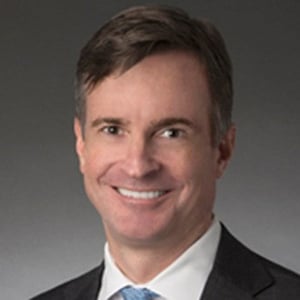
Partner, Sidley Austin, LLP
Jon Nuechterlein, a partner and coleader of Sidley Austin’s Communications Regulatory practice, focuses on telecommunications law, antitrust, and appellate litigation. He rejoined the firm in 2016 after serving as General Counsel of the Federal Trade Commission. Mr. Nuechterlein’s extensive government experience also includes positions as Deputy General Counsel of the Federal Communications Commission, as Assistant to the Solicitor General, and as law clerk to DC Circuit Judge Stephen Williams and Supreme Court Justice David Souter. He is the author (with Phil Weiser) of a widely cited treatise on telecommunications law and policy.
As the FTC’s General Counsel from 2013 to 2016, Mr. Nuechterlein represented the FTC in court, provided legal counsel on a range of antitrust and consumer protection issues, and oversaw the Commission’s appellate litigation activities. Under his leadership, the FTC won a string of high-profile appellate victories.
Mr. Nuechterlein earned his JD at Yale Law School, where he was the articles editor of the Yale Law Journal, and his BA, summa cum laude and Phi Beta Kappa, from Yale College.

Co-Founder and Chief Technology Officer, HackerOne
Alex Rice is the co-founder and chief technology officer of HackerOne, Inc. Mr. Rice leads product and engineering for HackerOne, a platform that enables security researchers to find and report security holes to companies. More than 300 companies, including Adobe, Yahoo, Twitter, Dropbox, Square, and Airbnb, trust HackerOne to enable their vulnerability disclosure process.
Prior to HackerOne, Mr. Rice worked at Facebook for over six years, where he founded the product security team, built one of the industry’s most successful security programs, and introduced new transport layer encryption. He has also served as a senior security researcher at Websense and as a network security engineer for the state of Florida.
Mr. Rice serves on the board of the Internet Bug Bounty, a nonprofit enabling friendly hackers to help build a more secure Internet.
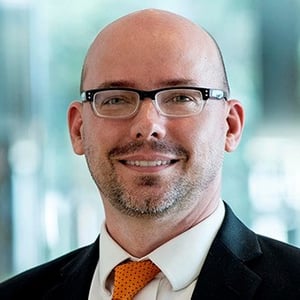
Policy Researcher, RAND Corporation
Sasha Romanosky is a policy researcher at the RAND Corporation and former cyber policy advisor at the Pentagon in the Office of the Secretary of Defense for Policy (OSDP).
He researches topics in the economics of security and privacy, information policy, applied microeconomics, and law and economics. For example, he has examined whether state data breach disclosure laws have reduced consumer identity theft; when and how firms are more likely to be sued when they suffer a data breach, and when they’re more likely to settle. He has also studied the cost of data breaches in order to understand whether corporate losses are really as severe as is commonly believed. And most recently, he collected a dataset of cyber insurance policies to examine how insurance carriers measure and price cyber risk.
He was a Microsoft research fellow in the Information Law Institute at New York University, and was a security professional for over 10 years in the financial and e-commerce industries. He holds a CISSP certification, and is co-author of the Common Vulnerability Scoring System (CVSS), an open standard for scoring computer vulnerabilities. While in DoD, he oversaw two of the Department's most critical vulnerability programs, and advised on numerous other matters related to cyber security and cyber policy.
Romanosky holds a Ph.D. in public policy and management from Carnegie Mellon University, and a B.S. in electrical engineering from the University of Calgary, Canada.
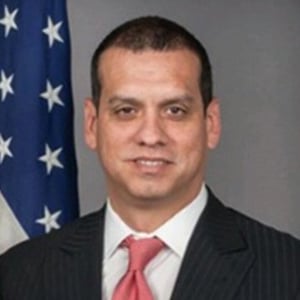
Vice President of Global Government Relations, MediaMath
As VP Government Relations, Danny Sepulveda joins MediaMath after spending the last decade at the highest levels of the US government. Prior to working in the Obama administration, Danny served as Ambassador, Deputy Assistant Secretary in the U.S. State Department under Secretary of State John Kerry, where he travelled the world working on high-level initiatives including cyber policy, digital economy, internet governance and human rights. Danny’s role is focused on shaping, implementing and communicating MediaMath’s policies and practices around the consumer value proposition, privacy protection and public policy.
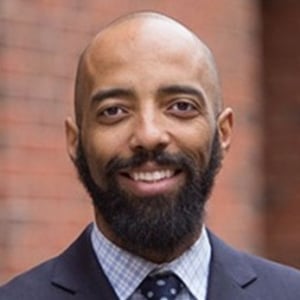
Executive Director, Center on Race, Inequality, and the Law, New York University School of Law
Vincent M. Southerland joined the Center on Race, Inequality, and the Law as its inaugural Executive Director in February 2017. He has dedicated his career to advancing racial justice and civil rights. Vincent comes to NYU Law after serving as an Assistant Federal Public Defender with the Federal Defenders for the Southern District of New York since 2015. Prior to his time at the Federal Defenders, Vincent spent seven years at the NAACP Legal Defense and Educational Fund, Inc. (LDF), where he was a Senior Counsel. While at LDF, he engaged in litigation and advocacy at the intersection of race and criminal justice, including the successful representation of death-sentenced prisoners across the American South and juveniles sentenced to life imprisonment without parole. He also led LDF’s advocacy efforts around race and policing, and was lead counsel in school desegregation and employment discrimination matters. Vincent previously served as a staff attorney at The Bronx Defenders, and an E. Barrett Prettyman Fellow at Georgetown University Law Center. He began his career as a law clerk to the Honorable Theodore McKee, Judge of the United States Court of Appeals for the Third Circuit, and the Honorable Louis H. Pollak, of the United States District Court for the Eastern District of Pennsylvania. Vincent holds an LLM from Georgetown University Law Center, received his JD from Temple University School of Law and his BA from the University of Connecticut.
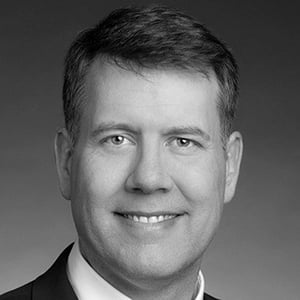
Partner, Reed Smith LLP
Gerry is a partner in Reed Smith's IP, Tech & Data Group. He focuses his practice on corporate governance, intellectual property, and Internet issues, especially as they relate to privacy, information security and consumer protection. An experienced and pragmatic litigator, Gerry focuses a significant part of his practice on prelitigation and advisory services relating to business strategy for privacy by design, data protection, intellectual property, and emerging technologies and markets, often acting as outside product counsel to leading innovators and disruptive technology companies.
Gerry is designated as a Certified Information Privacy Professional by the International Association of Privacy Professionals. In recent years, he has helped many automotive, health information technology, data management, advertising and consumer technology companies with information management and protection strategy, including some of the most popular consumer products and services of the past decade.
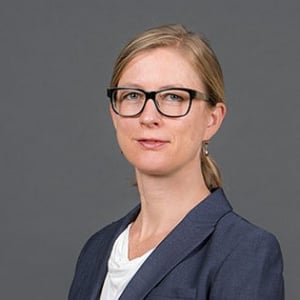
Assistant Professor of Law, George Mason University Antonin Scalia Law School
Megan Stevenson is an economist and legal scholar who became an Assistant Professor of Law at George Mason University, in 2017. Her research uses advanced econometric techniques to evaluate criminal law and policy in areas such as bail, pretrial detention, juvenile justice, and risk assessment. Her studies are published or forthcoming in top journals in both economics and law, such as the Stanford Law Review and the Review of Economics and Statistics. Her research on bail was cited extensively in a landmark federal civil rights decision, O’Donnell v. Harris, and has received widespread media coverage. In addition to legal scholarship, Professor Stevenson has written a number of op-eds for news outlets such as the Houston Chronicle and the Philadelphia Inquirer. Her research has been funded by the National Science Foundation, the Russell Sage Foundation, and the Laura and John Arnold Foundation.
Prior to joining the law faculty at George Mason, Professor Stevenson was a fellow at the Quattrone Center for the Fair Administration of Justice at the University of Pennsylvania Law School (2015-2017). She holds a BA in Interdisciplinary Studies (2009, with highest distinction) and a PhD in Agricultural and Resource Economics (2016), both from the University of California, Berkeley. She teaches Law & Economics and Criminal Law.

Privacy & Freedom of Speech Postdoctoral Research Associate, Center for Digital Society and Data Studies University of Arizona James E. Rogers College of Law
Mark Verstraete is a Privacy & Freedom of Speech Post-doctoral Research Associate for the Center for Digital Society and Data Studies at the University of Arizona, and will be working primarily for faculty in the University’s James E. Rogers College of Law. His research examines how technology and law distribute power across networks (government, civil society, etc.) and the implications of those distributions. He is a graduate of the University of Georgia and has a JD from Harvard Law School where he was a teaching fellow for a class on Internet privacy and a research assistant to Prof. Brett Frischmann. Mr. Verstraete’s work for the Center and for affiliated faculty in Law will focus on questions of data privacy and related regulations. He is writing a white paper that maps the fake news landscape and identifies possible roadblocks to effective solutions. He is also working on two law review articles: one about automatic execution of private agreements and another about algorithmic decision making by administrative agencies
Assistant Secretary for Civil Rights, U.S. Department of Agriculture
Devon Westhill is the Assistant Secretary for Civil Rights at the U.S. Department of Agriculture. The U.S. Senate confirmed President Donald Trump’s nomination of Westhill on October 7, 2025.
Westhill returns to the USDA where he previously headed the civil rights office as Deputy Assistant Secretary in President Trump’s first term. His previous government appointments also include service at the U.S. Department of Labor, liaison to the Administrative Conference of the U.S., and liaison to the White House Initiative on Historically Black Colleges and Universities. Prior to returning to government service, Westhill was President and General Counsel of a nonprofit civil rights organization.
Westhill has testified on civil rights matters before Congress, federal agencies, and as an expert witness in federal court. He has spoken hundreds of times at college campuses, conferences, and on radio and TV programs, and he is frequently quoted in print publications, and his writing has appeared in numerous national outlets. A U.S. Navy veteran, Westhill earned his BA from the University of North Carolina at Chapel Hill and his JD from the University of Florida.

Vice Dean and Professor of Law, University of Haifa Faculty of Law
Tal Zarsky is the vice dean and professor of law at the University of Haifa’s Faculty of Law. His research focuses on information privacy, cyber-security, internet policy, social networks, telecommunications law, online commerce, reputation, and trust. He has published numerous articles and book chapters in the US, Europe, and Israel. His work is often cited in a variety of contexts related to law in the digital age. Among others, he participated in the Data Mining without Discrimination project, funded by the Dutch Research Council (NWO) as well as other national and international research projects. He has advised various Israeli regulators, legislators, and commercial entities on related matters. He has served on a variety of advisory boards and is a frequent evaluator of articles and research grants for various international foundations. Professor Zarsky was a fellow at the Information Society Project, at Yale Law School and a Global Hauser Fellow, at NYU Law School. He completed his doctorate dissertation, which focused on data mining in the Internet Society, at Columbia Law School. He earned a joint BA degree (law and psychology) at the Hebrew University with high honors and his masters degree (in law) from Columbia University.

Courthouse Steps Decision: Currier v. Virginia
John L. Hill
In Currier v. Virginia, Justice Gorsuch, writing for a 5-4 majority, held that where a...
The GDPR and the Future of Internet Privacy
Telecommunications & Electronic Media Practice Group and Regulatory Transparency Project Teleforum
TeleforumWhat to do about Facebook: On Data Privacy and the Future of Tech Regulation
Thomas Hazlett, Matthew R. A. Heiman, Jamil N. Jaffer, Megan Stifel
Facebook is not getting many "likes" these days following revelations that Cambridge Analytica accessed personal...
Topics
Lessons to be Learned from Europe's GDPR
The EU has grandstanded on their policy choices for privacy and net neutrality, saying that...
Public Policy Symposium on the Law & Economics of Privacy and Data Security
Regulatory Transparency Project Co-Sponsored Event
Arlington, VAEmerging Technology in Transportation
Ryan Hagemann, Christopher L. Koopman, Gregory S. McNeal, Brent Skorup, Devon Westhill
On Friday, May 18, 2018, the Regulatory Transparency Project and Capitol Hill Chapter of the...
The Future of the Internet and American Leadership
Michelle P. Connolly, Brad Gillen, Charles W. Pickering, David Redl, Bryan N. Tramont, Brendan Carr
The Sixth Annual Executive Branch Review Conference is scheduled for Tuesday, April 17 at the...
21st Century Business Models Meet 20th Century Regulation
Sandra Aistars, Stewart A. Baker, Alan Butler, Justin (Gus) Hurwitz, Brenda Leong
This symposium was co-sponsored by the Regulatory Transparency Project and took place at the Antonin...
Courthouse Steps: U.S. v. Microsoft
John P. Elwood
The Stored Communications Act of 1986 authorizes federal, state, and local law enforcement officers to...
Topics
Old Law, New Technology, and the Congressional Need To Update ECPA
Last week, witnesses before the Senate Judiciary Committee faced much more amicable questions than then-Judge...