
Supreme Court Correspondent, The Washington Post
Robert Barnes has been a Washington Post reporter and editor since 1987. He joined the paper to cover Maryland politics, and has served in various editing positions including metropolitan editor and national political editor . He has covered the Supreme Court since November 2006. He gave up law school plans for a life in newspapers after taking a journalism class in college. It did not occur to him, as it apparently did to others, that he could do both.
Judge, United States Court of Appeals, Fifth Circuit
Judge Duncan received his B.A. from Louisiana State University in 1994, his J.D. from the Paul M. Hebert Law Center at Louisiana State University in 1997, and his LL.M. from Columbia Law School in 2004.
After graduating from law school, he clerked for Louisiana-based Circuit Judge John Malcolm Duhé Jr. of the United States Court of Appeals for the Fifth Circuit.
From 2008–2012, Duncan served as Appellate Chief for Louisiana's Attorney General's office. From 2012–2014, he served as general counsel of the Becket Fund for Religious Liberty. From 2004-2008, he was an assistant professor of law at the University of Mississippi School of Law.
Before becoming a judge, Duncan practiced at the Washington, D.C. firm of Schaerr Duncan LLP, where he was a founding partner. He was appointed by President Trump to the United States Court of Appeals for the Fifth Circuit on May 1, 2018.

Dr. John Eastman is the former Henry Salvatori Professor of Law & Community Service and former Dean at Chapman University's Dale E. Fowler School of Law, where he had been a member of the faculty since 1999, specializing in Constitutional Law, Legal History, and Property. He is a founding director of the Center for Constitutional Jurisprudence, a public interest law firm affiliated with the Claremont Institute that he founded in 1999. He has a Ph.D. in Government from the Claremont Graduate School and a J.D. from the University of Chicago Law School, and a B.A. in Politics and Economics from the University of Dallas. He serves as the Chairman of the Board of the National Organization for Marriage.
Prior to joining the Chapman law faculty, Dr. Eastman served as a law clerk to the Honorable Clarence Thomas, Associate Justice, Supreme Court of the United States, and to the Honorable J. Michael Luttig, Judge, United States Court of Appeals for the Fourth Circuit and practiced law with the national law firm of Kirkland & Ellis. Dr. Eastman has also represented numerous clients in important constitutional law matters and has argued before the Supreme Court. On behalf of the Claremont Institute Center for Constitutional Jurisprudence, he has participated as amicus curiae before the Supreme Court of the United States, U.S. Courts of Appeals, and State Supreme Courts in more than one hundred cases of constitutional significance, including Boy Scouts of America v. Dale, Zelman v. Simmons-Harris (the school vouchers case), Kelo v. New London, Ct. (eminent domain), and Van Orden v. Perry (the 10 Commandments case). He has also appeared as an expert legal commentator on numerous television and radio programs, including C-SPAN, Fox News, PBS, NewsHour, and The O'Reilly Factor.
Professor from Practice, Georgetown University Law Center
President, Constitutional Accountability Center
Elizabeth is Constitutional Accountability Center’s President. From 2008-2016, she served as CAC's Chief Counsel, representing the Center as well as clients including preeminent constitutional scholars and historians, state and local government organizations, and groups such as the League of Women Voters and the AARP. She frequently participates in Supreme Court litigation and her legal brief writing has been recognized as “exemplary” by the Green Bag Almanac & Reader. Elizabeth has also argued several important cases in the federal courts of appeals on a range of issues, including immigration law, habeas corpus, and sovereign immunity. She joined CAC from private practice at Quinn Emanuel Urquhart & Sullivan in San Francisco, where she was an attorney working with former Stanford Law School Dean Kathleen Sullivan in the firm’s Supreme Court/appellate practice. Previously, Elizabeth was a supervising attorney and teaching fellow at the Georgetown University Law Center appellate litigation clinic, a law clerk for Judge James R. Browning of the U.S. Court of Appeals for the Ninth Circuit, and a lawyer at Pillsbury Winthrop Shaw Pittman, a law firm in Washington. She has appeared as a legal expert for NBC, ABC, PBS, CNN, Fox News, the BBC, Current TV, and NPR, among other outlets. Elizabeth has been quoted extensively in the print media and is a regular contributor to the ABA’s Preview of United States Supreme Court Cases. Her writings have appeared in The New York Times, Reuters, USA Today, Politico, CNN.com, Slate, and on numerous political and legal blogs, such as Huffington Post, SCOTUSblog, and ACSblog. She has also published in the UCLA Journal of Environmental Law & Policy, Syracuse Law Review, The Cato Institute’s Supreme Court Review, and the Yale Journal of International Law. Elizabeth is a graduate of Yale Law School.
Judge, United States Court of Appeals, Fifth Circuit
Judge Duncan received his B.A. from Louisiana State University in 1994, his J.D. from the Paul M. Hebert Law Center at Louisiana State University in 1997, and his LL.M. from Columbia Law School in 2004.
After graduating from law school, he clerked for Louisiana-based Circuit Judge John Malcolm Duhé Jr. of the United States Court of Appeals for the Fifth Circuit.
From 2008–2012, Duncan served as Appellate Chief for Louisiana's Attorney General's office. From 2012–2014, he served as general counsel of the Becket Fund for Religious Liberty. From 2004-2008, he was an assistant professor of law at the University of Mississippi School of Law.
Before becoming a judge, Duncan practiced at the Washington, D.C. firm of Schaerr Duncan LLP, where he was a founding partner. He was appointed by President Trump to the United States Court of Appeals for the Fifth Circuit on May 1, 2018.
Senior Fellow, Governance Studies, The Brookings Institution
William A. Galston holds the Ezra K. Zilkha Chair in the Brookings Institution’s Governance Studies Program, where he serves as a senior fellow. A former policy advisor to President Clinton and presidential candidates, Galston is an expert on domestic policy, political campaigns, and elections. His current research focuses on designing a new social contract and the implications of political polarization.
He is also College Park Professor at the University of Maryland. Prior to January 2006, he was Saul Stern Professor and Acting Dean at the School of Public Policy, University of Maryland, director of the Institute for Philosophy and Public Policy, founding director of the Center for Information and Research on Civic Learning and Engagement (CIRCLE), and executive director of the National Commission on Civic Renewal, co-chaired by William Bennett and Sam Nunn. A participant in six presidential campaigns, he served from 1993 to 1995 as Deputy Assistant to President Clinton for Domestic Policy. From 1969 to 1970 Galston served as a member of the United States Marine Corps and was honorably discharged.
Galston is the author of eight books and more than 100 articles in the fields of political theory, public policy, and American politics. His most recent books are Liberal Pluralism (Cambridge, 2002), The Practice of Liberal Pluralism (Cambridge, 2004), and Public Matters (Rowman & Littlefield, 2005). A winner of the American Political Science Association’s Hubert H. Humphrey Award, he was elected a Fellow of the American Academy of Arts and Sciences in 2004.
Galston has appeared on all the principal television networks and is a frequent commentator on NPR. He writes a weekly column for the Wall Street Journal.

McCormick Professor of Jurisprudence; Director, James Madison Program, Princeton University
Robert P. George is McCormick Professor of Jurisprudence and Director of the James Madison Program in American Ideals and Institutions at Princeton University. He has several times been a Visiting Professor at Harvard Law School. He has served as Chairman of the U.S. Commission on International Religious Freedom and on the U.S. Commission on Civil Rights and the President’s Council on Bioethics. He has also served as the U.S. member of UNESCO’s World Commission on the Ethics of Scientific Knowledge and Technology. He was a Judicial Fellow at the Supreme Court of the United States, where he received the Justice Tom C. Clark Award. A Phi Beta Kappa graduate of Swarthmore, he holds the degrees of J.D. and M.T.S. from Harvard University and the degrees of D.Phil., B.C.L., D.C.L., and D.Litt. from Oxford University, in addition to twenty-one honorary doctorates. He is a recipient of the U.S. Presidential Citizens Medal, the Honorific Medal for the Defense of Human Rights of the Republic of Poland, the Canterbury Medal of the Becket Fund for Religious Liberty, the Bradley Prize, the Irving Kristol Award of the American Enterprise Institute, and Princeton University’s President’s Award for Distinguished Teaching. His books include Making Men Moral: Civil Liberties and Public Morality and In Defense of Natural Law (both published by Oxford University Press), as well as The Clash of Orthodoxies and Conscience and Its Enemies (both published by ISI Books).

John Paul Stevens Professor of Law, Northwestern University School of Law
Andrew Koppelman is John Paul Stevens Professor of Law, Professor (by courtesy) of Political Science, and Philosophy Department Affiliated Faculty at Northwestern University. He received the Walder Award for Research Excellence from Northwestern, the Hart-Dworkin award in legal philosophy from the Association of American Law Schools, and the Edward S. Corwin Prize from the American Political Science Association. His scholarship focuses on issues at the intersection of law and political philosophy. He has written more than 100 scholarly articles and eight books, most recently Burning Down the House: How Libertarian Philosophy Was Corrupted by Delusion and Greed, (St. Martin’s Press). His column appears regularly at The Hill. You can find his recent work at andrewkoppelman.com.

Judge, United States Court of Appeals, Ninth Circuit
Judge O’Scannlain was appointed United States Circuit Judge for the Ninth Circuit by President Reagan on September 26, 1986. He received a J.D. degree in 1963 from Harvard Law School and a B.A. in 1957 from St. John’s University. He also earned the LL.M. (Judicial Process) degree at University of Virginia Law School in 1992. He was awarded the LL.D. (honoris causa) degree by the University of Notre Dame in 2002, the LL.D. (honoris causa) degree by Lewis & Clark College in 2003 and the LL.D. (honoris causa) degree by the University of Portland in 2011.
As a judge on the U.S. Court of Appeals for the Ninth Circuit, Judge O’Scannlain has participated in over 6,000 federal cases and has written hundreds of published opinions on a broad range of subjects including constitutional law, international law, securities law, administrative law, and criminal law. He hears appeals in San Francisco (court headquarters), as well as in Los Angeles (Pasadena), Portland, Seattle, Anchorage and Honolulu. The late Chief Justice Rehnquist appointed Judge O'Scannlain to the Federal Judicial Center's Advisory Committee on Appellate Judge Education. In 2009, Chief Justice Roberts appointed Judge O’Scannlain to the International Judicial Relations Committee of the U.S. Judicial Conference and subsequently appointed him Chairman in 2010.
President George W. Bush appointed Judge O’Scannlain to the Board of Trustees of the James Madison Memorial Fellowship Foundation in 2004. Pope Benedict XVI conferred the Order of Saint Gregory the Great on Judge and Mrs. O’Scannlain in 2007.
Judge O’Scannlain’s professional interests also include judicial administration and reform, and continuing legal education. Judge O’Scannlain is former Chair of the Judicial Division of the American Bar Association and has previously chaired the ABA’s Appellate Judges Conference, its Committee on Appellate Practice, and its 9th Appellate Practice Institute. He has testified before the Senate Judiciary Committee on several occasions, the House Judiciary Subcommittee on Courts and Intellectual Property, and the Commission on Structural Alternatives for the Federal Courts of Appeals on the subject of court reorganization. In addition to serving as a faculty member at numerous federal appellate practice seminars for judges and attorneys, including New York University Law School’s Institute for Judicial Administration, Judge O’Scannlain is an Adjunct Professor at Lewis & Clark Law School where he teaches a seminar on the Supreme Court. He has served as a Moot Court Judge at distinguished law schools across the United States including Harvard, Yale Stanford, Boalt Hall (Berkeley Law), Virginia, Cornell, Notre Dame, Fordham, Alabama, University of Southern California, King Hall (U.C. Davis) and Loyola Marymount University and in China at Xiamen and Renmin Universities.
Between graduation from Harvard and investiture as a federal judge, Judge O’Scannlain was primarily engaged in private law practice. Between 1969 and 1974, he was consecutively the Deputy Attorney General of Oregon, the Public Utility Commissioner of Oregon, and Director of the Oregon Department of Environmental Quality. He retired from the U.S. Army Reserve in 1978 as a Major after 23 years Reserve and National Guard service, including four years as an enlisted man.
A first generation Irish-American son of immigrant parents from Sligo and Derry, Judge O’Scannlain is married to the former Maura Nolan and has eight children: Sean, Jane, Brendan, Kevin, Megan, Christopher, Anne, and Kate, and nineteen grandchildren. His chambers are in the Pioneer Courthouse in Portland, Oregon.
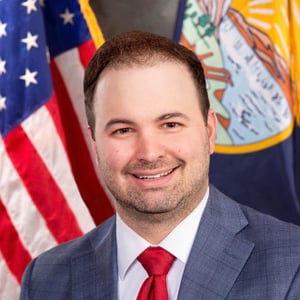
Solicitor General, Montana Attorney General's Office
Christian is currently Solicitor General of Montana, where he serves as the chief litigator and principal legal advisor to Montana Attorney General Austin Knudsen. In that capacity, he manages litigation before the federal district courts, courts of appeal, and the United States Supreme Court, as well as the Montana Supreme Court. He previously served in the Trump Administration as Senior Counsel to the Assistant Secretary for Civil Rights at the U.S. Department of Education. Prior to government service, he was a public interest constitutional litigator at Mountain States Legal Foundation and a fellow at the Institute for Justice. He clerked for Justice Caleb Stegall on the Kansas Supreme Court. He also served as Director of Publications for the Federalist Society's national headquarters.
Christian earned his B.A. in Political Science in 2009 from the University of Pennsylvania before attending the University of Kansas School of Law. Christian is admitted to practice law in Kansas and Montana. A Kansas native, he is a die-hard fan of the Kansas Jayhawks, Kansas City Chiefs, and Kansas City Royals.
Christian is a member of the Federalism & Separation of Powers Practice Group's Executive Committee.

Senior Fellow and Director of Constitutional Studies, Manhattan Institute
Ilya Shapiro is a senior fellow and director of constitutional studies at the Manhattan Institute and a contributing editor of City Journal. Previously he was executive director and senior lecturer at the Georgetown Center for the Constitution, and before that a vice president of the Cato Institute.
Shapiro is the author of Lawless: The Miseducation of America’s Elites (2025) and Supreme Disorder: Judicial Nominations and the Politics of America’s Highest Court (2020), coauthor of Religious Liberties for Corporations? (2014), and editor of 11 volumes of the Cato Supreme Court Review (2008-18). He has contributed to a variety of academic, popular, and professional publications, including the Wall Street Journal, Harvard Journal of Law & Public Policy, Washington Post, Los Angeles Times, USA Today, National Review, and Newsweek. He also regularly provides commentary for various media outlets, writes the Shapiro’s Gavel newsletter on Substack, and once appeared on the Colbert Report.
Shapiro has testified many times before Congress and state legislatures and has filed more than 500 amicus curiae “friend of the court” briefs in the Supreme Court. He lectures regularly on behalf of the Federalist Society, is a member of the board of fellows of the Jewish Policy Center, was an inaugural Washington Fellow at the National Review Institute, and has been an adjunct law professor at the George Washington University and University of Mississippi. He is also the chairman of the board of advisers of the Mississippi Justice Institute, a barrister in the Edward Coke Appellate Inn of Court, and a former member of the Virginia Advisory Committee to the U.S. Commission on Civil Rights.
Earlier in his career, Shapiro was a special assistant/adviser to the Multi-National Force in Iraq on rule-of-law issues and practiced at Patton Boggs and Cleary Gottlieb. Before entering private practice, he clerked for Judge E. Grady Jolly of the U.S. Court of Appeals for the Fifth Circuit. He holds an AB from Princeton University, an MSc from the London School of Economics, and a JD from the University of Chicago Law School.
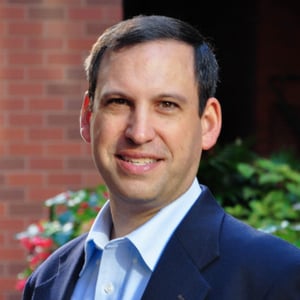
President, Becket Fund for Religious Liberty; Professor of Law and Co-Director of the Center for Religious Liberty, Catholic University; Visiting Professor, Harvard Law School
Mark joined the Becket team in 2011 and splits his time as Associate Professor at The Catholic University of America, Columbus School of Law, and as Visiting Professor at Harvard Law School. Mark teaches constitutional law, religious liberty, torts, and evidence. He has been voted Teacher of the Year three years in a row by the Law School’s Student Bar Association.
Mark has broad experience litigating First Amendment religious exercise and free speech cases. He has represented the winning parties in a variety of Supreme Court First Amendment cases including Hobby Lobby, Little Sisters, Wheaton College, and Holt. In January 2014, Mark argued before the Supreme Court in McCullen v. Coakley, a First Amendment challenge to a Massachusetts speech restriction outside of abortion clinics. The Justices ruled in favor of his clients 9-0. Mark also led a successful eight-year litigation battle against Governor Blagojevich’s effort to force religious pharmacists to distribute the morning-after and week-after pills.
Mark’s academic writing focuses on the First and Fourteenth Amendments, and has appeared in a variety of prestigious journals, including the Harvard Law Review.
Mark is a widely sought after speaker on constitutional issues, particularly concerning abortion and the First Amendment. Professor Rienzi has been invited to discuss these issues at Harvard Law School, Columbia University Law School, Georgetown University Law Center, Boston College Law School, Notre Dame Law School, the National Press Club, and the Capitol. He has been quoted on constitutional law issues on NPR, in the Washington Times, The New York Daily News, and the Chicago Sun-Times. Mark has also been featured on the Kelly File, Fox News Sunday, Your World with Neil Cavuto, Geraldo at Large, CNN Tonight, CNN Live, Andrea Mitchell Reports, and Wall Street Journal Live.
Prior to joining Becket, Mark served as counsel for the litigation department and the intellectual property litigation practice group of WilmerHale LLP. His practice focused on complex civil and appellate litigation with a particular emphasis on intellectual property and First Amendment issues. Prior to joining WilmerHale, he served as law clerk to the Hon. Stephen F. Williams, senior circuit judge for the U.S. Court of Appeals for the D.C. Circuit. Prior to that, Mark was an editor of the Harvard Law Review, and earned his J.D. from Harvard Law School and B.A. from Princeton University, both with honors.
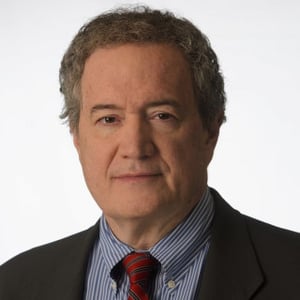
Director of the Program in Human Rights, Catholic University of America
William L. Saunders is Chair Emeritus of the Religious Liberties Practice Group of the Federalist Society. He is also a religious liberty and human rights scholar as well as director of the Center for Human rights at The Catholic University of America. He is Law Fellow with the Institute for Human Ecology, Professor and Director of the Program in Human Rights in the School of Arts & Sciences and Co-director of the Center for Religious Liberty at the Columbus School of Law. Before joining The Catholic University of America, Mr. Saunders served as Senior Vice President and Senior Counsel with Americans United for Life for ten years. From 1999 to 2009, he was Senior Fellow in Bioethics and Human Rights Counsel at the Family Research Council.
Mr. Saunders attended the University of North Carolina at Chapel Hill on a Morehead scholarship. He obtained his degree in law from the Harvard Law School.
Mr. Saunders was featured in Harvard’s first Guide to Conservative Public Interest Law in 2003 and again in the 2008 edition. He served on Harvard’s Advisory Committee for its 2008 celebration of public interest law. A member of the Supreme Court bar, he has authored numerous legal briefs in state, federal, foreign, and international courts.
Mr. Saunders’ book, Unborn Human Life and Fundamental Rights: Leading Constitutional Cases Under Scrutiny, was published in 2019. His articles and book chapters have been published by the university presses of Harvard, Villanova, Brigham Young, Fordham, Georgetown, Houston, Scranton, and the Catholic University of America, as well as by the Intercollegiate Studies Institute, Freedom House, Greenhaven Press, Rowan & Littlefield, Praeger, St. Augustine’s, and Intervarsity press. He has given lectures and participated in debates at many colleges, universities, and law schools, including Princeton, Harvard, Georgetown, and Notre Dame. He delivered the annual J. Michael Miller Lecture at the University of St. Thomas (on international law) in February 2007, the annual R. Wayne Kraft Memorial Lecture (on bioethics) at DeSales University in February 2004 and the annual James Moore Lecture (on human rights violations in Sudan) at Millikin University in 1999. He has also lectured, and/or has been published, in many foreign countries, including Italy, Germany, Poland, Austria, Spain, Greece, Slovakia, Mexico, Qatar, Malaysia, Romania, the Philippines, Hong Kong, and the United Kingdom.
In addition to speaking and writing frequently on bioethics topics, Mr. Saunders has submitted testimony to the President’s Council on Bioethics, as well as to UNESCO’s Committee on Bioethics, and has briefed Congressional staff and state legislatures. He is a regular columnist for the National Catholic Bioethics Quarterly.
Mr. Saunders has appeared often in the media, including BBC World News, CNN, Fox News, Vatican Radio, and National Public Radio. His articles on issues have appeared in a variety of journals, such as First Things, Human Events, Human Life Review, The Legal Times, Communio, The Family in America: A Journal of Public Policy, Ethics & Medics, and Touchstone.
Mr. Saunders served on the official United States delegation to the UN Special Session on Children in 2001/02. In 2011, he was a speaker at an official briefing at the UN, addressing the topic, why euthanasia is not a human right.
In 2004, he served on the NGO Working Committee in connection with the Doha Intergovernmental Conference for the Family.
Mr. Saunders is Senior Fellow with the Religious Freedom Institute, and Affiliated Scholar with the Pellegrino Center for Clinical Ethics at the Georgetown University School of Medicine. He is President of the Fellowship of Catholic Scholars and a member of the boards of the International Association of Catholic Bioethicists, the International Right to Life Federation, the Institute on Religion and Democracy, and the Society of Catholic Social Scientists.
In 1999, Mr. Saunders founded Sudan Relief and Rescue, Inc., to aid the persecuted church in Sudan. He has worked for and written on behalf of the persecuted church for many years.

Executive Vice President, The Federalist Society
Dean Reuter is Executive Vice President at the Federalist Society for Law and Public Policy Studies. He has served in two federal government agency Offices of the Inspector General, as Counsel to the Inspector General and Deputy Inspector General, responsible for policing the use of federal funds granted and contracted through those agencies. As such, he helped conduct and oversee criminal investigations across the country. He is the principal author of the non-fiction book, The Hidden Nazi: The Untold Story of America's Deal with the Devil, and editor of Liberty’s Nemesis: The Unchecked Expansion of the State and Confronting Terror: 9/11 and the Future of American National Security. He was appointed by the President and served as Vice-Chairman of the Board of Directors of the Corporation for National and Community Service, and recently served as an appointee on the U.S. Commission on Presidential Scholars. He is a graduate of Hood College (BA with Honors) and the University of Maryland School of Law.
Judge, United States Court of Appeals, Fifth Circuit
Judge Duncan received his B.A. from Louisiana State University in 1994, his J.D. from the Paul M. Hebert Law Center at Louisiana State University in 1997, and his LL.M. from Columbia Law School in 2004.
After graduating from law school, he clerked for Louisiana-based Circuit Judge John Malcolm Duhé Jr. of the United States Court of Appeals for the Fifth Circuit.
From 2008–2012, Duncan served as Appellate Chief for Louisiana's Attorney General's office. From 2012–2014, he served as general counsel of the Becket Fund for Religious Liberty. From 2004-2008, he was an assistant professor of law at the University of Mississippi School of Law.
Before becoming a judge, Duncan practiced at the Washington, D.C. firm of Schaerr Duncan LLP, where he was a founding partner. He was appointed by President Trump to the United States Court of Appeals for the Fifth Circuit on May 1, 2018.
Executive Vice President, The Federalist Society
Dean Reuter is Executive Vice President at the Federalist Society for Law and Public Policy Studies. He has served in two federal government agency Offices of the Inspector General, as Counsel to the Inspector General and Deputy Inspector General, responsible for policing the use of federal funds granted and contracted through those agencies. As such, he helped conduct and oversee criminal investigations across the country. He is the principal author of the non-fiction book, The Hidden Nazi: The Untold Story of America's Deal with the Devil, and editor of Liberty’s Nemesis: The Unchecked Expansion of the State and Confronting Terror: 9/11 and the Future of American National Security. He was appointed by the President and served as Vice-Chairman of the Board of Directors of the Corporation for National and Community Service, and recently served as an appointee on the U.S. Commission on Presidential Scholars. He is a graduate of Hood College (BA with Honors) and the University of Maryland School of Law.

Paul J. Schierl Professor of Law, University of Notre Dame Law School
Professor Richard W. Garnett teaches and writes in the areas of constitutional law, criminal law, the First Amendment, and law and religion. He is a leading authority on questions and debates regarding religious freedom and church-state relations, and is the founding director of Notre Dame Law School’s Program on Church, State, and Society.
Garnett clerked for the late Chief Justice of the United States, William H. Rehnquist, and also for the late Chief Judge of the United States Court of Appeals for the Eighth Circuit, Richard S. Arnold. He earned his J.D. from Yale Law School in 1995 and his B.A., summa cum laude, from Duke University in 1990. He joined the faculty in 1999 after practicing law in Washington, D.C. with Miller, Cassidy, Larroca & Lewin.
Boochever and Bird Chair for the Study and Teaching of Freedom a, UC-Davis School of Law
Alan Brownstein, a nationally recognized Constitutional Law scholar, teaches Constitutional Law, Law and Religion, and Torts at UC Davis School of Law. While the primary focus of his scholarship relates to church-state issues and free exercise and establishment clause doctrine, he has also written extensively on freedom of speech, privacy and autonomy rights, and other constitutional law subjects. His articles have been published in numerous academic journals including the Stanford Law Review, Cornell Law Review, UCLA Law Review and Constitutional Commentary. Brownstein received the UC Davis School of Law's Distinguished Teaching Award in 1995 and the UC Davis Distinguished Scholarly Public Service Award in 2008. He is a member of the American Law Institute.
Professor Brownstein has testified on several occasions before various California Senate Committees on legislation promoting religious liberty and bills that raise Establishment Clause concerns. His assistance is often sought by advocacy groups on issues relating to religious liberty and equality. He is a frequent invited lecturer at academic conferences and regularly participates as a speaker or panelist in law related programs before civic, legal, religious, and educational groups. He is the co-author of dozens of Findlaw columns discussing a range of legal issues.
A graduate of Antioch College and Harvard Law School (where he served as a Case Editor of the Harvard Law Review), Brownstein was an attorney in general litigation and corporate practice with the law firm of Tuttle & Taylor in Los Angeles before joining the UC Davis law faculty. From 1977-78, he clerked for the Honorable Frank M. Coffin, Chief Judge of the U.S. District Court of Appeals for the 1st Circuit in Portland, Maine.
"Most lawyers do not practice constitutional law," Brownstein notes, "but members of the Bar bear a special responsibility for understanding constitutional doctrine and communicating its meaning to non-lawyers. The role that constitutional law plays in our society depends in part on the interplay between courts and the political culture. If judicial decisions are unintelligible to the polity and no group accepts responsibility for explaining the Constitution's evolving meaning to the polity, we undermine part of the foundation of the constitutional scheme of things."

Associate Justice, Supreme Court of the United States
Associate Justice Brett Kavanaugh was born in Washington, D.C., on February 12, 1965. He married Ashley Estes in 2004, and they have two daughters - Margaret and Liza. He received a B.A. from Yale College in 1987 and a J.D. from Yale Law School in 1990. He served as a law clerk for Judge Walter Stapleton of the U.S. Court of Appeals for the Third Circuit from 1990-1991, for Judge Alex Kozinski of the U.S. Court of Appeals for the Ninth Circuit from 1991-1992, and for Justice Anthony M. Kennedy of the U.S. Supreme Court during the 1993 Term. In 1992-1993, he was an attorney in the Office of the Solicitor General of the United States. From 1994 to 1997 and for a period in 1998, he was Associate Counsel in the Office of Independent Counsel. He was a partner at a Washington, D.C., law firm from 1997 to 1998 and again from 1999 to 2001. From 2001 to 2003, he was Associate Counsel and then Senior Associate Counsel to President George W. Bush. From 2003 to 2006, he was Assistant to the President and Staff Secretary for President Bush. He was appointed a Judge of the United States Court of Appeals for the District of Columbia Circuit in 2006. President Donald J. Trump nominated him as an Associate Justice of the Supreme Court, and he took his seat on October 6, 2018.

Richard and Frances Mallery Professor of Law and Faculty Director, Constitutional Law Center, Stanford Law School
Michael W. McConnell is the Richard and Frances Mallery Professor and Faculty Director of the Constitutional Law Center at Stanford Law School, and a Senior Fellow at the Hoover Institution. From 2002 to 2009, he served as a Circuit Judge on the United States Court of Appeals for the Tenth Circuit. He was nominated by President George W. Bush, a Republican, and confirmed by a Democratic Senate by unanimous consent. McConnell has previously held chaired professorships at the University of Chicago and the University of Utah, and visiting professorships at Harvard and NYU. He teaches courses on constitutional law, constitutional history, First Amendment, and interpretive theory. He has published widely in the fields of constitutional law and theory, especially church and state, equal protection, and separation of powers. His book, “The President Who Would Not Be King: Executive Power Under the Constitution,” was published by Princeton University Press in 2020, based on the Tanner Lectures in Human Values, which he delivered at Princeton in 2019. His latest book, co-authored with Nathan Chapman, “Agreeing to Disagree: How the Establishment Clause Protects Religious Diversity and Freedom of Conscience,” was published by Oxford University Press in mid-2023. McConnell has argued sixteen cases in the United States Supreme Court, most recently Carney v. Adams (2020). defending a provision of the Delaware Constitution requiring political balance on that state’s courts. More recently, he was co-counsel in Gonzalez v. Google. He earned his B.A. from Michigan State University and his J.D. from the University of Chicago, and has received honorary degrees from Notre Dame University and Michigan State. He served as law clerk to Supreme Court Justice William J. Brennan, Jr. and D.C. Circuit Chief Judge J. Skelly Wright. He has been Assistant General Counsel of the Office of Management & Budget, Assistant to the Solicitor General of the Department of Justice, and a member of the President’s Intelligence Oversight Board. He is Senior of Counsel to the law firm Wilson, Sonsini, Goodrich & Rosati, and is co-chair of Meta’s Oversight Review Board.
F. Elwood and Eleanor Davis Professor Emeritus of Law, The George Washington University Law School
Professor Lupu joined the law school in 1990. After graduating from law school, where he was case editor of the Harvard Law Review, he practiced law with the Boston firm of Hill & Barlow and then joined the law faculty at Boston University, where he taught from 1973 to 1989. During that time, he also served as a visiting professor at Northeastern University and at the University of California, Berkeley. In 1989–90, he was the professor-in-residence on the Appellate Staff of the Civil Division of the U.S. Department of Justice.
Professor Lupu is a nationally recognized scholar in constitutional law, with an emphasis in his writings on the religion clauses of the First Amendment. Together with his colleague Professor Robert Tuttle, Professor Lupu is the co-author of Secular Government, Religious People (Eerdmans Pub. Co., 2014) and many law journal articles.
Chairman and President, The Becket Fund for Religious Liberty
Kevin J. "Seamus" Hasson is Founder and President of The Becket Fund for Religious Liberty, a bipartisan, public-interest law firm that protects the free expression of all religious traditions. Since 1994, Hasson and the Becket Fund have successfully represented clients from nearly every faith tradition including Christians, Jews, Muslims, Buddhists, Sikhs, Hindus, Native Americans, Unitarians and Zoroastrians. Along the way, The Becket Fund has won kudos from thinkers from Pope John Paul II to Elie Wiesel.
Hasson enjoys broad credibility in the national media. He has been widely quoted, appearing for example, in Newsweek, US News and World Report, The New York Times, The Washington Post, The Wall Street Journal, The Christian Science Monitor and USA Today, as well as in regional media from The L.A. Times to The Chicago Tribune to The Philadelphia Enquirer. He has appeared on broadcast news programs including The Today Show, Dateline NBC, McLaughlin One on One, NPR's Talk of the Nation, and CNN Talkback Live. He's also appeared twice on Al-Jazeera, debating Saudi clerics.
Hasson lectures and debates frequently, in venues ranging from Oxford to the Vatican, from Harvard to BYU. He is the author of The Right to be Wrong: Ending the Culture War over Religion in America.
Before founding the Becket Fund in 1994, Hasson was an attorney at Williams & Connolly in Washington D.C., where he focused on religious liberty litigation. From 1986 to 1987, he served in the Office of Legal Counsel at the Justice Department where he advised the White House and cabinet departments on church-state relations. He is a 1985 magna cum laude graduate of Notre Dame Law School and also holds a Master's degree in theology from Notre Dame.
McCormick Professor of Jurisprudence; Director, James Madison Program, Princeton University
Robert P. George is McCormick Professor of Jurisprudence and Director of the James Madison Program in American Ideals and Institutions at Princeton University. He has several times been a Visiting Professor at Harvard Law School. He has served as Chairman of the U.S. Commission on International Religious Freedom and on the U.S. Commission on Civil Rights and the President’s Council on Bioethics. He has also served as the U.S. member of UNESCO’s World Commission on the Ethics of Scientific Knowledge and Technology. He was a Judicial Fellow at the Supreme Court of the United States, where he received the Justice Tom C. Clark Award. A Phi Beta Kappa graduate of Swarthmore, he holds the degrees of J.D. and M.T.S. from Harvard University and the degrees of D.Phil., B.C.L., D.C.L., and D.Litt. from Oxford University, in addition to twenty-one honorary doctorates. He is a recipient of the U.S. Presidential Citizens Medal, the Honorific Medal for the Defense of Human Rights of the Republic of Poland, the Canterbury Medal of the Becket Fund for Religious Liberty, the Bradley Prize, the Irving Kristol Award of the American Enterprise Institute, and Princeton University’s President’s Award for Distinguished Teaching. His books include Making Men Moral: Civil Liberties and Public Morality and In Defense of Natural Law (both published by Oxford University Press), as well as The Clash of Orthodoxies and Conscience and Its Enemies (both published by ISI Books).

The Contraceptive Mandate
Robert Barnes, Stuart Kyle Duncan, John C. Eastman, Martin S. Lederman, Elizabeth B. Wydra
Religion has long had a special place in our society and in the Constitution. Has...
Religious Liberties: Religious Liberty & Conflicting Moral Visions
Stuart Kyle Duncan, William A. Galston, Robert P. George, Andrew Koppelman, Diarmuid F. O'Scannlain
In a variety of contexts, from the HHS preventive services mandate to same-sex marriage, differing...
Anti-discrimination and Individual Liberties: Elane Photography v. Willock - Podcast
Christian Corrigan, Ilya Shapiro
On August 22, the New Mexico Supreme Court ruled in Elane Photography v. Willock that...
HHS "Contraceptive" Mandate - Litigation Update - Podcast
Mark L. Rienzi, William L. Saunders, Dean Reuter
The controversy over the HHS contraceptive mandate has generated over 50 lawsuits, on behalf of...
HHS Contraceptive Mandate: Litigation Update - Podcast
Stuart Kyle Duncan, Dean Reuter
On August 1 of this year, the Department of Health and Human Services mandate went...
Positive Secularism and the American Model of Religious Liberty
Richard W. Garnett
At its best, the American model of religious liberty is not a freedom from religion...
Religious Liberties: Religious Liberty and the Limits of Government Power
Alan E. Brownstein, Brett M. Kavanaugh, Michael W. McConnell, Ira C. “Chip” Lupu
Religious freedom is often referred to as our "first freedom." But while many recognize that...
Gay Marriage and Religious Freedom
Kevin J. Hasson, Jennifer Wolsing
The Iowa Supreme Court's and the Vermont legislature's controversial decisions to extend legal marriage rights...
Democracy, Secularism and Religious Faith in America
Robert P. George
Remarks at Ave Maria Law School (March 22, 2002):As American citizens, we participate in a...