
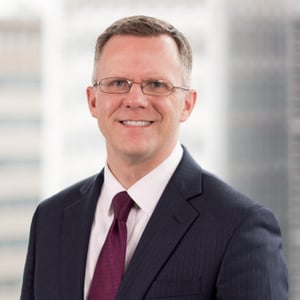
Partner, WilmerHale LLP
Matthew Martens represents clients in their toughest civil and criminal investigations and litigation. He is one of the few lawyers who has appeared—and won—at trial at “all four tables”: civil plaintiff, civil defendant, criminal prosecution, and criminal defendant. In all, he has tried 26 cases ranging from securities fraud to patent infringement to consumer fraud to murder to employment law to money laundering, in New York, California, Illinois, Texas, Florida, Washington, South Dakota, New Jersey, and North Carolina. He has also argued 18 appeals in federal and state appellate courts across the country. Martens joined WilmerHale after a long career of government service, including both as Chief Litigation Counsel for the SEC’s Division of Enforcement and, earlier, as Chief of Staff for the Criminal Division at the US Department of Justice during the Bush Administration. He has been recognized as an AmLaw Daily Litigator of the Week, a National Law Journal Litigation Trailblazer and a Law360 Securities Law MVP.
At the SEC, Martens led the Enforcement Division's litigation program, managing cases nationwide and supervising a trial unit of approximately 40 attorneys in Washington DC, as well as coordinating the activity of litigators throughout the SEC's 11 regional offices. He personally developed and directed the Commission's nationwide litigation response to the Supreme Court's decision in Janus Capital, for which he received the SEC's prestigious Chairman's Award for Excellence.
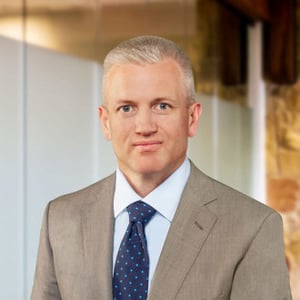
Executive General Counsel, First Liberty Institute
Hiram Sasser is Executive General Counsel for First Liberty Institute, where he oversees First Liberty’s litigation and media efforts. Sasser’s practice focuses on First Amendment and other constitutional and civil rights issues relating to religious liberty. Sasser served as co-counsel in seven victories before the United States Supreme Court, including Groff v. DeJoy (landmark case overturning the “de minimis cost” test for Title VII in place almost 50 years), Kennedy v. Bremerton (landmark case overturning 50 years of Establishment Clause precedent), Carson v. Makin (overturning 40 years of Maine’s discrimination against parents choosing faith-based schools), American Legion v. American Humanist Association (landmark case ending Establishment Clause attacks on veterans’ memorials with religious imagery), Klein v. Oregon Bureau of Labor and Industries (granted, vacated, and remanded (twice) in religious wedding service case), and Sause v. Bauer (summary reversal revoking qualified immunity for police who ordered a citizen not to pray in her own home).
In addition to his legal duties, Sasser develops, coordinates, and implements successful media strategies on behalf of his clients. This includes numerous appearances on ABC, NBC, CBS, Fox News, CNN, and the BBC as well as being heard on various radio stations throughout the United States, Asia, Africa, and Europe.
In 2016, Sasser took a leave of absence to serve a temporary assignment as the Chief of Staff for the Attorney General of Texas. He currently serves as an Adjunct Professor of Law at both The University of Texas at Austin School of Law (teaching Religious Liberty) and Oklahoma City University School of Law (teaching Civil Rights Procedure).
Of Counsel, Christian Legal Society's Center for Law & Religious Freedom
Kim Colby has worked for Christian Legal Society’s Center for Law and Religious Freedom since graduating from Harvard Law School in 1981. She has represented religious groups in several appellate cases, including two cases heard by the United States Supreme Court. She has filed numerous amicus briefs in federal and state courts. In 1984, she assisted in congressional passage of the Equal Access Act, 20 U.S.C. § 4071, et seq., which protects the right of secondary school students to meet for prayer and Bible study on campus. Ms. Colby has prepared several CLS publications addressing issues about religious expression in public schools, including released time programs, implementation of the Equal Access Act, and teachers’ religious expression.
Ms. Colby graduated summa cum laude from the University of Illinois with a major in American History and a particular interest in slavery in colonial North America.
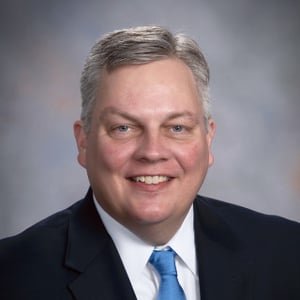
University Professor of Law and Religion and Director of the Eleanor H. McCullen Center for Law, Religion and Public Policy, Villanova University Charles Widger School of Law
Michael P. Moreland was appointed University Professor of Law and Religion and Director of the Eleanor H. McCullen Center for Law, Religion and Public Policy at Villanova University in 2017. Professor Moreland joined the Villanova faculty in 2006 and served as Vice Dean from 2012 to 2015. His research is primarily in the areas of torts, law and religion, constitutional law, and Catholic social thought, and he regularly teaches Torts, First Amendment, seminars in law and religion, and undergraduate courses in ethics.
Professor Moreland is the co-editor of Christianity and Private Law (Routledge, 2021), and his most recent publications include: “The Authority of Tradition: John Henry Newman and Legal Theory” in Christianity and the Making of Irish Law (Routledge, 2025); “Christianity and Torts” in The Oxford Handbook on Christianity and Law, (Oxford University Press, 2023); “Germaneness and Religious Liberty” in the Notre Dame Law Review (2023); “Contingency and Contestation in Christianity and Liberalism” in the Notre Dame Law Review (2023); “Friendship as the Primary Purpose of Law” in The American Journal of Jurisprudence 279 (2022); and “The Moral of Torts” (with Jeffrey Pojanowski) in Christianity and Private Law (Routledge, 2021).
Professor Moreland was a Visiting Professor of Law at the University of Notre Dame and the Mary Ann Remick Senior Visiting Fellow at the Notre Dame Center for Ethics and Culture from 2015 to 2017. He was the Forbes Visiting Fellow at Princeton University in the James Madison Program during academic year 2010-11. He has served as the project leader for grants from the John Templeton Foundation and the Charles Koch Foundation. He serves as the Chair of the Federalist Society’s Religious Liberties Practice Group Executive Committee and the Chair of the Board of Trustees of the Institute for Advanced Catholic Studies at the University of Southern California.
Professor Moreland received his BA in philosophy from the University of Notre Dame, his MA and PhD in theological ethics from Boston College, and his JD from the University of Michigan Law School. Following law school, Professor Moreland clerked for the Honorable Paul J. Kelly Jr., of the United States Court of Appeals for the Tenth Circuit and was an associate at Williams & Connolly LLP in Washington, DC, where he represented clients in First Amendment, professional liability, and products liability matters. Before coming to Villanova, he served as Associate Director for Domestic Policy at the White House under President George W. Bush, where he worked on a range of legal policy issues, including criminal justice, immigration, civil rights, and liability reform.
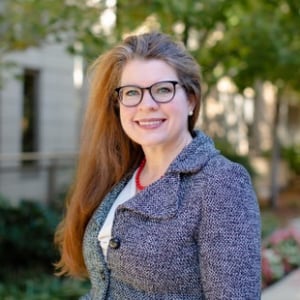
Vice President and Senior Counsel, The Becket Fund for Religious Liberty
Lori Windham is vice president and senior counsel at Becket, where she has represented clients on cutting-edge religious freedom issues since 2005. She has represented parties before the Supreme Court, arguing Becket’s unanimous victory on behalf of foster families in Fulton v. Philadelphia, as well as working with the Becket team on its Supreme Court victories in Hosanna-Tabor, Hobby Lobby, and Little Sisters of the Poor. She won a victory for the world’s largest religious media network in EWTN v. Azar, staving off millions of dollars in government fines under unlawful the HHS mandate. She has won more than a dozen victories in federal appellate courts, including successful defense of cities and school districts sued for accommodating religion, victories for houses of worship facing discrimination in the land use process, and overturning a multimillion-dollar judgment against a major evangelical ministry. She recently won a first-in-the-nation injunction for an adoption agency threatened with shutdown for its religious beliefs.
Recognized in Washington as an expert on religious freedom issues, Lori has testified in Congressional oversight hearings before the U.S. House of Representatives Judiciary Committee and before the U.S. Commission on Civil Rights. Outside Washington, Lori is sought-after speaker on First Amendment law, including appearances at Yale Law School, Harvard Law School, Stanford Law School, Georgetown University Law Center, Central European University, and many others.
In addition to these venues, Lori also defends her clients in the media, including television appearances on CBS This Morning, Hardball, CNN Tonight, On the Record, America’s Newsroom, Opinion Journal, and many others. Her work has been covered by the New York Times, Wall Street Journal, Washington Post, and dozens of other papers. She is also a regular guest on radio, with appearances on shows ranging from Sean Hannity to NPR.
Lori has successfully represented a wide array of clients, including a Santeria priest prohibited from making animal sacrifices, synagogues prohibited from building on their own land, and religious student organizations penalized for their religious speech. One of her most challenging cases involved travel to a remote farming community to ensure that members of the local Amish community were not jailed for using their traditional building methods.
Lori is a graduate of Harvard Law School and earned her B.A. summa cum laude at Abilene Christian University. She has served on the Board of Visitors of Abilene Christian University and received the ACU Young Alumnus of the Year award for her work at Becket. She sits on the board of Dominion Christian School and the visiting committee of the Fund for American Studies’ Summer Law Fellowship.
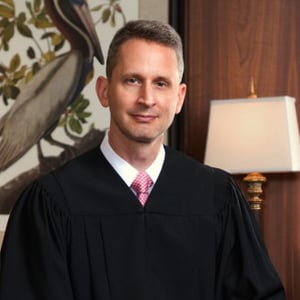
Judge, United States Court of Appeals, Fifth Circuit
Judge Duncan received his B.A. from Louisiana State University in 1994, his J.D. from the Paul M. Hebert Law Center at Louisiana State University in 1997, and his LL.M. from Columbia Law School in 2004.
After graduating from law school, he clerked for Louisiana-based Circuit Judge John Malcolm Duhé Jr. of the United States Court of Appeals for the Fifth Circuit.
From 2008–2012, Duncan served as Appellate Chief for Louisiana's Attorney General's office. From 2012–2014, he served as general counsel of the Becket Fund for Religious Liberty. From 2004-2008, he was an assistant professor of law at the University of Mississippi School of Law.
Before becoming a judge, Duncan practiced at the Washington, D.C. firm of Schaerr Duncan LLP, where he was a founding partner. He was appointed by President Trump to the United States Court of Appeals for the Fifth Circuit on May 1, 2018.

Maurice and Hilda Friedman Professor of Law, Columbia Law School; CEO, New Civil Liberties Alliance
Philip Hamburger is the Maurice and Hilda Friedman Professor of Law at Columbia Law School, and Chief Executive Officer at the New Civil Liberties Alliance. Before coming to Columbia, he was the John P. Wilson Professor at the University of Chicago Law School.
He writes on constitutional law and its history—with particular emphasis on religious liberty, freedom of speech and the press, judicial office, administrative power, and unconstitutional conditions.
His books are Separation of Church and State (Harvard 2002), Law and Judicial Duty (Harvard 2008), Is Administrative Law Unlawful? (Chicago 2014), The Administrative Threat (Encounter 2017), and Liberal Suppression: Section 501(c)(3) and the Taxation of Speech (Chicago 2018). A forthcoming book is Purchasing Submission: Conditions, Power, and Freedom (Harvard 2021).
He is a member of the American Academy of Arts and Sciences, and he has served on the board of directors of the American Society for Legal History. He has twice received the Sutherland Prize for the most significant contribution to English legal history, and has been awarded the Henry Paolucci - Walter Bagehot Book Award, the Hayek Book Prize, and the Bradley Prize.

Richard and Frances Mallery Professor of Law and Faculty Director, Constitutional Law Center, Stanford Law School
Michael W. McConnell is the Richard and Frances Mallery Professor and Faculty Director of the Constitutional Law Center at Stanford Law School, and a Senior Fellow at the Hoover Institution. From 2002 to 2009, he served as a Circuit Judge on the United States Court of Appeals for the Tenth Circuit. He was nominated by President George W. Bush, a Republican, and confirmed by a Democratic Senate by unanimous consent. McConnell has previously held chaired professorships at the University of Chicago and the University of Utah, and visiting professorships at Harvard and NYU. He teaches courses on constitutional law, constitutional history, First Amendment, and interpretive theory. He has published widely in the fields of constitutional law and theory, especially church and state, equal protection, and separation of powers. His book, “The President Who Would Not Be King: Executive Power Under the Constitution,” was published by Princeton University Press in 2020, based on the Tanner Lectures in Human Values, which he delivered at Princeton in 2019. His latest book, co-authored with Nathan Chapman, “Agreeing to Disagree: How the Establishment Clause Protects Religious Diversity and Freedom of Conscience,” was published by Oxford University Press in mid-2023. McConnell has argued sixteen cases in the United States Supreme Court, most recently Carney v. Adams (2020). defending a provision of the Delaware Constitution requiring political balance on that state’s courts. More recently, he was co-counsel in Gonzalez v. Google. He earned his B.A. from Michigan State University and his J.D. from the University of Chicago, and has received honorary degrees from Notre Dame University and Michigan State. He served as law clerk to Supreme Court Justice William J. Brennan, Jr. and D.C. Circuit Chief Judge J. Skelly Wright. He has been Assistant General Counsel of the Office of Management & Budget, Assistant to the Solicitor General of the Department of Justice, and a member of the President’s Intelligence Oversight Board. He is Senior of Counsel to the law firm Wilson, Sonsini, Goodrich & Rosati, and is co-chair of Meta’s Oversight Review Board.

Former President & CEO, The Federalist Society for Law and Public Policy Studies
Eugene B. Meyer, former President and CEO of the Federalist Society, has served as Executive Director, CEO, and/or President of the organization for more than 40 years. He is responsible for shepherding the organization from a small group of law students to a community of 90,000 lawyers, law students, academics, judges, and others interested in the rule of law. The Society now includes a Student Chapter at nearly every ABA-accredited law school in the country and Lawyers Chapters in 220 major cities across the nation. Gene earned his B.A. in history at Yale in 1975 and his M.A. in political science from the London School of Economics in 1976. Gene currently serves on the boards of the U.S. Chess Center, the Holman Foundation, the Sarah Scaife Foundation, and the advisory board of the Adam Smith Society. He holds the title of International Chess Master.
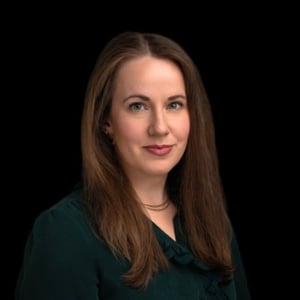
Partner, Cooper & Kirk
Megan M. Wold focuses her practice on legal issues and brief-writing in complex commercial matters, constitutional litigation, and administrative law disputes. She has argued cases in both state and federal court, drafted briefs at all levels of state and federal litigation, and regularly practices before the U.S. Supreme Court. She has represented Fortune 500 clients in international arbitrations, complex tort and fraud litigation, class actions, commercial property disputes, and complex multi-district litigation. She has frequently represented clients in regulatory disputes with state and federal agencies.
Ms. Wold previously served as a Simon Karas Fellow and Deputy Solicitor General in the Ohio Attorney General’s Office. Ms. Wold has practiced as an associate at Bancroft PLLC and as a partner in the Washington, D.C. office of Kirkland & Ellis LLP.
Ms. Wold served as a law clerk to Justice Samuel A. Alito of the U.S. Supreme Court and to Judge Jeffrey Sutton of the U.S. Court of Appeals for the Sixth Circuit. She graduated from the University of Notre Dame School of Law in 2011 and is a member of the bars of Ohio and the District of Columbia. Ms. Wold graduated summa cum laude from Ohio Wesleyan University in 2008 with an undergraduate degree in international studies and religion. She was a member of Phi Beta Kappa and a recipient of the Meek Family Service Leadership Prize.
Partner, Jones Day
Christopher DiPompeo's practice focuses on complex litigation and appellate advocacy in the context of business restructurings and chapter 11 bankruptcies. He has significant experience across a variety of industries, including financial services, government contracts, gaming, and municipal government. Chris regularly counsels clients in connection with issues relating to bankruptcy jurisdiction and venue, the automatic stay, post-petition financing, and complex commercial contracts.
In 2013 and 2014, Chris was a member of the Jones Day team representing the City of Detroit, Michigan in its historic chapter 9 bankruptcy case. He played a significant role in many aspects of the chapter 9 case, including litigation over the City's eligibility for bankruptcy, its request to obtain post-petition financing, and confirmation of its plan of adjustment. Chris also played a lead role in the City's lawsuit challenging the legality of $1.4 billion of pension obligation certificates of participation issued by the City in 2005 and 2006. Most recently, he has represented major creditors of Energy Future Holdings Corp., Caesars Entertainment Operating Company, General Motors, and the Commonwealth of Puerto Rico.
Prior to joining Jones Day, Chris served as a law clerk for the Chief Justice of the United States, John G. Roberts Jr., and for Judge Paul V. Niemeyer of the United States Court of Appeals for the Fourth Circuit. In 2012, he was awarded a Temple Bar Scholarship, through which he traveled to London to work alongside some of the most senior members of the English bar and judiciary.
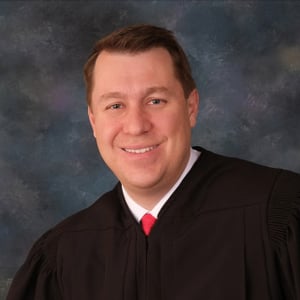
Judge, United States District Court for the Southern District of Ohio
Judge Matthew R. Byrne was nominated to serve on the United States District Court for the Southern District of Ohio by President Donald J. Trump on June 15, 2026. The nomination was confirmed by the United States Senate on September 15, 2026, and Judge Byrne began his federal judicial service on October 2, 2026.
For nearly six years, beginning in 2021, Judge Byrne served as an elected Judge on Ohio’s Twelfth District Court of Appeals, where he heard civil and criminal appeals from trial courts in eight southwest Ohio counties. Judge Byrne served as the Twelfth District Court of Appeals’ Presiding Judge in 2026 and as its Administrative Judge in 2024 and 2025. In his time at the appeals court, Judge Byrne authored 237 majority opinions and a number of concurring and dissenting opinions.
While at the appeals court, Judge Byrne was appointed to serve as Vice Chairman and Member of the Supreme Court of Ohio’s Commission on the Rules of Practice and Procedure in Ohio Courts (where he also served as chair of the Appellate Rules Committee) and as Member of the Board of Commissioners on Character and Fitness. Chief Justice Sharon L. Kennedy appointed Judge Byrne to serve as a visiting judge on the Supreme Court of Ohio in five cases.
From January 2010 to December 2020, Judge Byrne practiced law at the national law firm of Jackson Lewis P.C. He was a member of the firm's General Employment Litigation Practice Group and the Wage and Hour Practice Group. From 2007 to 2010 he practiced at Taft Stettinius & Hollister LLP. At both firms, Judge Byrne represented clients ranging from small businesses to international corporations in state and federal trial and appellate litigation, including multiple class and collective actions. He also represented clients in arbitration and before numerous administrative agencies, including the Equal Employment Opportunity Commission, the National Labor Relations Board, and the Ohio Civil Rights Commission. Judge Byrne's litigation and administrative agency experience included matters in fourteen states.
Judge Byrne earned his law degree, cum laude, from The Ohio State University Moritz College of Law. During law school he was symposium editor of the Ohio State Law Journal and the winner of the Donald S. Teller Memorial Award for student writing contributing most significantly to the Ohio State Law Journal. During law school he working as an Honors Summer Clerk for the Acting General Counsel of the United States Department of the Treasury.
Prior to law school, Judge Byrne served as a member of the White House Staff in the Office of Presidential Personnel. In that role Judge Byrne was responsible for preparing documents submitted to President George W. Bush concerning his selection and nomination of appointees for high-level federal government positions, and for coordinating with the Offices of White House Counsel, Press Secretary, and Executive Clerk regarding candidate background clearances, press announcements, and the status of appointments/nominations.
Judge Byrne earned his bachelor's degree, magna cum laude, from Xavier University, where he majored in International Affairs (Business) and Political Science.
Judge Byrne has been active in numerous community, civic, and religious organizations. He has been a member of the Federalist Society since law school and he served for five years as the president of the Federalist Society's Cincinnati Lawyers Chapter. At various times he has been a member of the Ohio State Bar Association, the Cincinnati Bar Association, the Butler County Bar Association, the Warren County Bar Association, and the Clermont County Bar Association. He is also a former board member and board president of the Saint Thomas More Lawyers Guild of Greater Cincinnati.
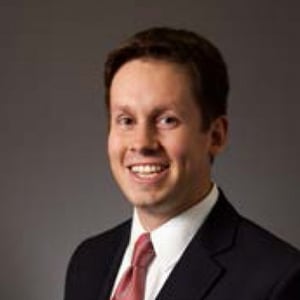
Senior Counsel, Alliance Defending Freedom
Jeremiah Galus serves as senior counsel for Alliance Defending Freedom, where he is a key member of the Center for Christian Ministries.
Since joining ADF in 2015, Galus has represented a wide array of religious ministries, schools, and churches, litigating cases at all levels of state and federal court. Galus has successfully briefed and argued appeals before both state appellate courts and the U.S. Court of Appeals. He was a key member of ADF’s litigation team in Uzuegbunam v. Preszewski, leading to a U.S. Supreme Court victory ensuring government officials are held accountable for violating constitutionally protected freedoms.
Prior to joining ADF, Galus worked as an attorney with a large law firm in Washington, D.C., where he focused on complex civil litigation. Galus also served as a prosecutor before joining ADF. Galus received his J.D., cum laude, in 2009 from the University of Pittsburgh School of Law, where he served as senior research editor of the University of Pittsburgh Law Review. He earned a B.A. in government and political affairs from Millersville University in 2006. Galus also is a 2007 Blackstone Fellow.
Galus is admitted to the state bars of Arizona, Pennsylvania, and the District of Columbia, the U.S. Supreme Court, and various lower federal courts.

Vice President of Government Relations, Columbus Chamber of Commerce
As Vice President of Government Relations, Holly Gross helps our members navigate the ever-changing opportunities and challenges businesses face when it comes to local, state and federal policy decisions. Not only can she advocate for your business, but she also helps to unify the voices of our greater Columbus business community. Holly, an attorney, finds creative ways to help businesses better understand critical policy issues, foster relationships with your elected officials and provide your business with the resources it needs to be successful.
A graduate of The Ohio State University and Capital University Law School, Holly represented the State’s retail industry before the Ohio General Assembly as Legislative Counsel for the Ohio Council of Retail Merchants, where she focused on legislative issues pertaining to labor and employment, alcohol and gambling, economic and workforce development and the automotive industry. Her previous experiences also include Executive Director for the Ohio Association of Convenience Stores and the Ohio Tire and Automotive Association, as well as a Legislative Aide for the Ohio House of Representatives.
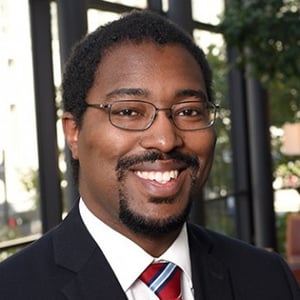
Partner, Taft Stettinius & Hollister LLP
Philip litigates complex matters in state and federal courts. He has briefed appeals in multiple U.S. Courts of Appeals, including the Sixth, Seventh, and Ninth Circuits, as well as state appellate courts in Ohio, Kentucky, and Georgia. Philip has also represented amici at both the cert petition and merits stages in the U.S. Supreme Court.
Prior to joining Taft, Philip served as a law clerk for Judge Raymond M. Kethledge of the U.S. Court of Appeals for the Sixth Circuit, Judge Amul R. Thapar of the U.S. District Court for the Eastern District of Kentucky, and Judge Lavenski R. Smith of the U.S. Court of Appeals for the Eighth Circuit.
Philip serves on the board of directors for the Cincinnati and Northern Kentucky lawyers chapters of the Federalist Society. He was a 2018 James Wilson Fellow with the James Wilson Institute, a 2013 John Marshall Fellow with the Claremont Institute Center for Constitutional Jurisprudence, and a 2011 Blackstone Fellow with the Alliance Defending Freedom.
Philip received his undergraduate degree, with Highest Honors, from Ouachita Baptist University. He received his J.D. from the University of Virginia School of Law, where he served as the submissions review editor for the Journal of Law and Politics.
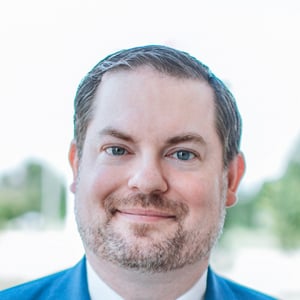
Deputy General Counsel, First Liberty Institute
Justin Butterfield is Deputy General Counsel at First Liberty Institute, to which Justin returned after serving for two years as Senior Advisor for Conscience and Religious Freedom at the U.S. Department of Health and Human Services. In his role at HHS, Justin launched a new division of the HHS Office for Civil Rights under Roger Severino dedicated to protecting Americans’ rights of conscience and religious freedom in health care. Prior to his work at HHS, Justin had been with First Liberty Institute for over seven years, during which time he litigated numerous religious freedom cases and wrote several scholarly articles on religion and the law. Justin received his J.D. from Harvard Law School and his bachelor of science summa cum laude in Electrical Engineering from the University of Texas at El Paso, where Justin is originally from.
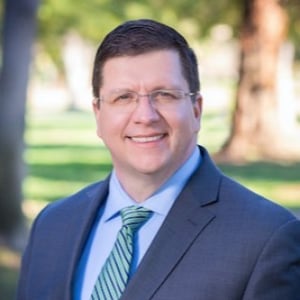
Vice President and Senior Counsel, The Becket Fund for Religious Liberty
Eric Rassbach is Vice President and Senior Counsel at the Becket Fund for Religious Liberty, where he has served since 2003. He has briefed over 90 cases at the United States Supreme Court and has led or been a part of Becket litigation teams in each of Becket’s pathbreaking victories there, including Hosanna-Tabor, Hobby Lobby, Holt v. Hobbs, Zubik v. Burwell, Agudath Israel of America v. Cuomo, and Fulton v. Philadelphia. In 2020, Eric argued Our Lady of Guadalupe School v. Morrissey-Berru to the Supreme Court, garnering a 7-2 win for his Catholic school clients. Eric has also briefed and argued cases in federal appeals courts and state supreme courts across the nation. Eric has also represented clients in appeals to the European Court of Human Rights in Strasbourg, France and in the highest courts of several other countries.
Eric believes passionately in the right of all people to the full measure of religious liberty and has represented members of almost every religious group present in the United States, including Buddhists, Christians, Hindus, Jains, Jews, Muslims, Native Americans, Santeros, and Sikhs, as well as many governmental entities targeted for accommodating religion.
Eric frequently comments on church-state issues in the media, including the New York Times, the Washington Post, the Wall Street Journal, and other major press outlets. He has published legal scholarship in the Harvard Law Review Forum, the Tennessee Law Review, the Illinois Law Review, the Cato Supreme Court Review, and other legal journals, and often speaks to law school audiences.
Before joining Becket, Eric worked at Baker Botts LLP in Houston, where he worked in international project finance. He also served as a law clerk to United States District Court Judge Lee Rosenthal in Houston, Texas.
Eric graduated from Haverford College with a degree in Comparative Literature, is a member of Fitzwilliam College, University of Cambridge, and is a graduate of Harvard Law School. Eric was a 2012-2013 Wasserstein Public Interest Fellow at Harvard Law School. He is Visiting Professor and Executive Director of The Hugh and Hazel Darling Foundation Religious Liberty Clinic at Pepperdine University Caruso School of Law in Malibu, where he leads students in litigating cases in American courts. He is also an Associated Scholar with the Centre for Religious Freedom at Jagiellonian University in Kraków, Poland. Eric is admitted in Texas, DC, California, and Ireland.
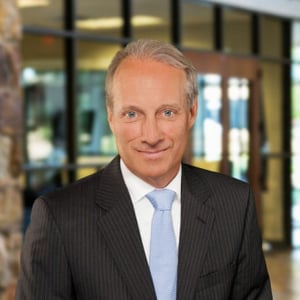
President and CEO, First Liberty Institute
Kelly Shackelford, Esq., is President and CEO of First Liberty Institute, the largest legal firm in the nation dedicated exclusively to protecting religious freedom for all Americans. He has served in this role since 1997, leading First Liberty’s efforts to defend religious freedom in the courts and in the public arena. Under his leadership, First Liberty’s legal team has participated in cases before the United States Supreme Court, federal courts of appeals, federal district courts and various state courts, where they have won more than 90 percent of their cases.
Shackelford is a constitutional scholar who has argued before the United States Supreme Court, testified before the U.S. House and Senate, and has won a number of landmark First Amendment and religious liberty cases.
He was recently named one of the 25 greatest Texas lawyers of the past quarter-century by Texas Lawyer and is the recipient of the prestigious William Bentley Ball Award for Life and Religious Freedom Defense for pioneering work protecting religious freedom.
Shackelford is a highly sought-after speaker and frequent guest on national news and talk shows including Good Morning America, The Today Show, The O’Reilly Factor, CNN, Fox and Friends, MSNBC, and Hannity. He also has been featured in the National Law Journal, Associated Press, The New York Times, The Washington Times, The Washington Post, and The L.A. Times, and many others.
Shackelford is on the Board of Trustees of the United States Supreme Court Historical Society and earned his law degree from Baylor University.
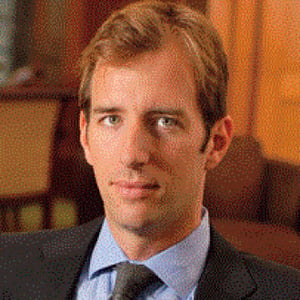
Professor of Law, Brooklyn Law School
Professor Tebbe teaches courses on constitutional law, religious freedom, legal theory, and professional responsibility. His scholarship focuses on the relationship between religious traditions and constitutional law, both in the United States and abroad. His articles have appeared in Georgetown Law Journal, Journal of Religion, Michigan Law Review, University of Pennsylvania Law Review, and, most recently, Virginia Law Review. He is a past Chair of the Law and Religion Section of the Association of American Law Schools and he is co-organizer of the Annual Law and Religion Roundtable. He is regularly called on by media outlets to discuss questions of religious freedom and general constitutional law.
Professor Tebbe served as a Visiting Professor of Law at Cornell Law School during the fall of 2012. He joined Brooklyn Law School from St. John's University School of Law, where he received a Dean's Teaching Award. Before teaching, he clerked for Judge John M. Walker Jr. of the U.S. Court of Appeals for the Second Circuit and practiced law at the American Civil Liberties Union and at Davis Polk & Wardwell. He was also a Fulbright Scholar at the University of Cape Town.
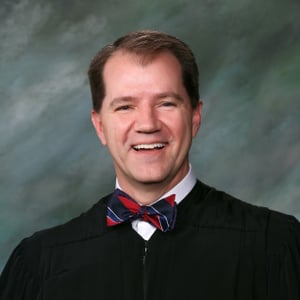
Judge, U.S. Court of Appeals, Fifth Circuit
Don Willett serves on the United States Court of Appeals for the Fifth Circuit. Before joining the federal bench, he served 13 years on the Supreme Court of Texas. His career spans decades of public service, including roles as legal counsel to a Texas Attorney General, a Texas Governor, a U.S. Attorney General, and the President of the United States. Raised by a heroic, widowed mom in a town of 32 people, Judge Willett is his family’s first college graduate. He earned a triple-major B.B.A. from Baylor University (where he serves on the Board of Regents) and three degrees from Duke University (where he served on the Board of Visitors): a J.D. with honors, an M.A. in political science, and an LL.M. in judicial studies. After law school, he clerked on the Fifth Circuit and practiced at Haynes and Boone before entering public service. Judge Willett writes and speaks widely on law, judging, and civic life. He serves on the Advisory Board of the School of Civic Leadership at the University of Texas at Austin, was the longtime editor-in-chief of Judicature: The Scholarly Journal for Judges, teaches at various law schools, and publishes in leading law journals and the popular press. He has received more than a dozen Green Bag honors for “exemplary legal writing,” was named Distinguished Jurist of the Year by the Texas Review of Law & Politics and is a member of the American Law Institute and a Life Fellow of the American, Texas, and Austin Bar Foundations. A former rodeo bull rider and professional drummer, Judge Willett was named “Tweeter Laureate of Texas” in 2015. He is the namesake of Don R. Willett Elementary School—home of mighty Willett Wranglers—located barely a mile from where the Willett family doublewide once stood. He and his radiant wife, Tiffany have three children—Jacob, Shane-David, and Geneviève—plus the family pup, Amicus.
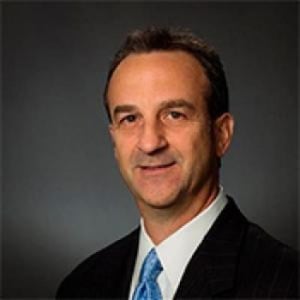
Senior Counsel and Vice President of U.S. Litigation, Alliance Defending Freedom
David A. Cortman, Esq., serves as senior counsel and vice president of U.S. litigation with Alliance Defending Freedom. He joined ADF in 2005 and currently supervises a team of nearly 40 attorneys and legal staff who specialize in constitutional law, focusing on religious freedom, sanctity of life, and marriage and family.
Cortman has successfully litigated over 200 constitutional law cases in both federal and state court at all levels. He has also litigated several U.S. Supreme Court cases, including arguing before the Court in Reed v. Town of Gilbert, which resulted in a 9-0 victory, with the Court holding that the government could not discriminate against religious speech while favoring political speech. He served as lead counsel in Trinity Lutheran Church of Columbia v. Pauley, which was decided in the Church's favor. He has also served as lead or co-counsel in victories at the high court in Conestoga Wood Specialties v. Burwell, successfully challenging the U.S. Department of Health and Human Services abortion pill mandate that forces employers to provide healthcare coverage that includes abortion-inducing drugs in violation of their religious convictions; Town of Greece v. Galloway, successfully defending the freedom of Americans to pray at public meetings.
Cortman earned his J.D. from Regent University School of Law in 1996, graduating magna cum laude. He is a member of the state bar in Georgia, Florida, Arizona, and the District of Columbia, and is admitted to practice in over two dozen federal courts, including the U.S. Supreme Court. He also teaches legal courses on the First Amendment and civil rights litigation.
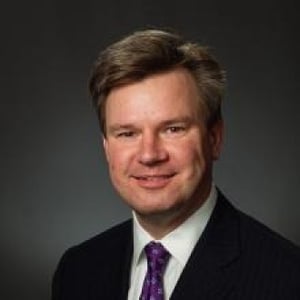
Senior Counsel & Director of the Center for Religious Schools, Alliance Defending Freedom
Gregory S. Baylor serves as senior counsel with Alliance Defending Freedom, where he is the director of the Center for Religious Schools and senior counsel with the Center for Public Policy.
Since joining ADF in 2009, Baylor has focused on defending and advancing the religious freedom of faith-based educational institutions through advice, education, legislative and public advocacy, and representation in disputes. He has testified about religious liberty issues three times before congressional committees and numerous times before state legislative committees.
Greg serves on the board of directors of the International Alliance for Christian Education, the board of directors of the Association for Biblical Higher Education, the board of directors of the Association for Christian Schools International, the board of advisors of the Museum of the Bible, and advisory board of the Center for Academic Faithfulness and Flourishing.
Greg earned his Juris Doctor in 1990 from Duke University School of Law, where he graduated Order of the Coif, with high honors, and served on the editorial board of the Duke Law Journal. He received his bachelor’s degree in Honors English in 1987 from Dartmouth College. Following graduation from law school, he served as law clerk to the Hon. Jerry E. Smith on the U.S. Court of Appeals for the Fifth Circuit. He practiced labor and employment law at two large international law firms for three years before joining the staff of Christian Legal Society’s Center for Law and Religious Freedom, where he served for 15 years prior to joining ADF. He lives in Northern Virginia with his wife (a medical doctor) and two daughters.

Drive-In Churches and the Constitution: Balancing the Religious Belief in Corporate Worship and Health Concerns Related to COVID-19
Matthew T. Martens, Hiram Sasser
Almost every religious institution closed its doors in mid-March in response to requests and then...
Religious Freedom in a Pandemic
Kim Colby, Michael P. Moreland
Shut-down orders issued by state governors amid the COVID-19 pandemic and federal responses to the...
Litigation Update: Religious Foster Care Agencies and the First Amendment
Lori Windham
What happens when governments try to exclude religious foster care agencies? Philadelphia put out an urgent...
Twelfth Annual Rosenkranz Debate & Luncheon
Stuart Kyle Duncan, Philip A. Hamburger, Michael W. McConnell, Eugene B. Meyer
RESOLVED: The Free Exercise Clause guarantees a constitutional right of religious exemption from general laws...
Litigation Update: Archdiocese of Washington v. Washington Metropolitan Area Transit Authority (WMATA)
Megan M. Wold
The Washington Metropolitan Area Transit Authority (WMATA) prohibits religious advertisements on Metro buses, including the...
Courthouse Steps Decision Teleforum: The American Legion v. American Humanist Association
Christopher DiPompeo
For decades, the law surrounding the constitutionality of monuments and memorials has been in disarray,...
Panel 3: Emerging Religious Liberty Issues in Ohio
Matthew R. Byrne, Jeremiah Galus, Holly Gross, Philip D. Williamson
On April 5, 2019, the Federalist Society's Ohio lawyers chapters hosted the 2019 Ohio Chapters...
Religious Liberty and Conscience Rights in the Trump Era
Justin Edward Butterfield, Eric Rassbach, Kelly Shackelford, Nelson Tebbe, Don R. Willett
On September 7-8, 2018, the Federalist Society's Fort Worth Lawyers Chapter hosted the fourth annual...
Courthouse Steps: Trinity Lutheran Church of Columbia, Inc. v. Comer - Decided - Podcast
David A. Cortman
The Missouri Department of Natural Resources (DNR) denied a Learning Center run by Trinity Lutheran...
President Trump's Religious Liberties Executive Order - Podcast
Gregory Baylor
On May 4, President Trump signed a Religious Liberty Executive Order relaxing IRS enforcement of...