
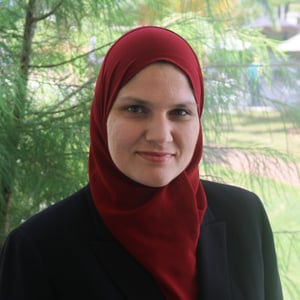
Assistant Professor of Law, Barry University - Dwayne O. Andreas School of Law
Nadia B. Ahmad is an Associate Professor at Barry University School of Law. Professor Ahmad’s research explores the intersections of energy siting, the environment, and sustainable development and draws on international investment law and corporate social responsibility. She has published over 30 scholarly articles and book chapters. In 2016, she was recognized by the Orlando Business Journal as a 40 Under 40 honoree for her leadership and community involvement.
Professor Ahmad was competitively selected twice to present at the Sabin Colloquium on Innovative Environmental Scholarship at Columbia Law School. She has presented her research on the law and policy of advanced biofuels in Abu Dhabi, Cairo, Cambridge, Doha, Denver, New York, and San Francisco. Prior to joining the Barry Law faculty, Professor Ahmad was the inaugural Visiting Assistant Professor of Environmental Law at Pace Law School. She also worked as a Legal Fellow with Sustainable Development Strategies Group on tax policy for natural resources, community development agreements, and mineral leasing rights for projects in Afghanistan, Mali, and Mozambique. At the Columbia Center on Sustainable Investment at Columbia University, she advised on offshore drilling laws for Sierra Leone. Professor Ahmad’s earlier experience included working for a multinational oil and gas company in the Denver-Julesburg Basin and in private law practice in Florida in the areas of land use, zoning, asset protection, and bad faith insurance litigation defense.
Professor Ahmad earned an undergraduate degree in Comparative Literature with language emphases in Latin and English from the University of California at Berkeley with high honors. Her undergraduate thesis examined representations of tradition and modernity in Indo-Anglian literature from 1947 to 1997. She completed her law degree (J.D.) from the University of Florida Levin College of Law, where she was a Virgil Hawkins Fellowship recipient. At UF Law, she served as executive editor of the Florida Journal of International Law and wrote about women’s property rights in Post-Partition South Asia. Later, she earned a masters of law (LL.M.) in Environmental and Natural Resources Law from the University of Denver Sturm College of Law, where she explored the legal barriers for the deployment of advanced renewable technologies in the Global South and worked on the editorial review of the Journal of Energy & Natural Resources Law.
She currently serves as Vice Chair of the ABA Section of Civil Rights and Social Justice’s Environmental Justice Committee, which was presented with the 2016-2017 ABA Committee Excellence Award, and the ABA Section of Environment, Energy, and Resources' Superfund and Natural Resource Damages Litigation Committee. She is an official expert for multilateral development organization, International Bamboo and Rattan Organisation (INBAR) Taskforce on Bamboo for Renewable Energy (TFB4RE), which promotes environmentally sustainable development using bamboo and rattan. She was previously Chair of the Younger Comparativists Committee’s Linkages and Engagement Advisory Group of the American Society of Comparative Law, Regional Chair of Mid-Florida for the Florida Muslim Bar Association, Chair of the Florida Bar’s Media and Communications Law Committee and a Board Member of the City and County of Denver’s Human Rights and Community Partnerships Advisory Board. Professor Ahmad is a member of the state bars of Florida and Colorado.
Professor Ahmad’s most publications and working papers may be found on Social Science Research Network.
Schott-van den Eynden Professor of Business Law and Professor of Political Science; Associate Dean for Global Legal Studies, Case Western Reserve University School of Law
Juscelino F. Colares is Associate Dean for Global Legal Studies and Schott-van den Eynden Professor of Business Law. He is also Co-director of the Frederick K. Cox International Law Center and Professor of Political Science, with a secondary appointment in Case Western Reserve University's College of Arts and Sciences. Colares teaches civil procedure, conflict of laws and variety of courses and seminars on international business law and regulatory law. His scholarship focuses on interjurisdictional conflicts between national regulatory law and local, supranational or international norms in areas ranging from commercial law to corruption and from trade to environmental law. Colares's research has appeared in leading peer-reviewed journals and law reviews, including the American Law and Economics Review, Journal of Empirical Legal Studies, Journal of International Economic Law, Journal of World Trade, Jurimetrics, Revista dos Tribunais (Brazil), Columbia Journal of European Law, Cornell International Law Journal and Vanderbilt Journal of Transnational Law.
A former clerk for the Hon. Jean-Louis Debré, former Chief Justice of the Conseil constitutionnel (the French Constitutional Court) (2008-09 term) and visiting professor at Ecole normale supérieure in Paris, Colares, was born in Brazil and is a naturalized citizen of the United States. Colares practiced law at Dewey Ballantine, LLP in Washington, D.C., where he litigated trade cases before federal agencies, federal courts and NAFTA panels.
The 2018 recipient of the School of Law's Distinguished Law Faculty Research Award, Colares was awarded an endowed chair in 2015. Colares served as Vice-Chair, Chair and Past-Chair of the CWRU Faculty Senate (2016-19) and was recently reappointed by the Office of the United Trade Representative to serve on the United States Roster of NAFTA Chapter 19 (Trade) Panelists (serving since 2013).
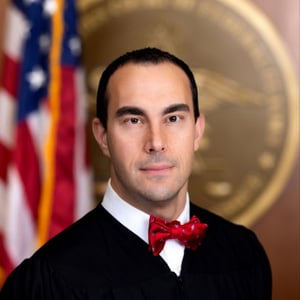
U.S. Court of Federal Claims and Jurist-In-Residence Professor of Law, The University of Akron School of Law
Judge Ryan T. Holte was sworn in as a judge on the United States Court of Federal Claims in July 2019. Prior to confirmation he served as the David L. Brennan Professor of Law and Director of the Center for Intellectual Property Law and Technology at The University of Akron School of Law (2017-2019) and an assistant professor of law at Southern Illinois University School of Law (2013-2017). Judge Holte has written and presented widely on patent law subjects and empirical legal studies of Federal Circuit and district court patent law cases. His most recent articles were published in the Iowa Law Review (2019), George Mason Law Review (2018), and Washington Law Review (2017).
In practice, Judge Holte served for six years as general counsel and partner of an electrical engineering technology company and is co-inventor of multiple patents related to Systems and Methods for Countering Satellite-Navigated Munitions. Prior to entering academia, Judge Holte practiced as a litigation attorney at the Federal Trade Commission and an associate in the Intellectual Property Practice Group at Jones Day. Prior to practice, he served as a law clerk to Judge Stanley F. Birch, Jr. on the United States Court of Appeals for the Eleventh Circuit and as a law clerk to Judge Loren A. Smith on the United States Court of Federal Claims.
Judge Holte received his JD from the University of California Davis School of Law and his BS, magna cum laude, in engineering from the California Maritime Academy where he was a First Class graduate of the Corps of Cadets Third Engineering Division and sailed as a U.S. Merchant Marine oiler.

Senior Fellow, Technology Policy, Cato Institute
Jennifer’s research focuses on the intersection of emerging technology and law with a particular interest in the interactions between technology and the administrative state. Her work covers topics including judicial deference, liability protection for Internet platforms, autonomous vehicles and other disruptive transportation technologies, the regulation of data privacy, and the benefits of technology and innovation. Her work has appeared in USA Today, the Chicago Tribune, the New York Daily News, the Sacramento Bee, the Washington Times, Real Clear Policy, and U.S. News and World Report. Jennifer has a JD from the University of Alabama School of Law and a BA in political science at Wellesley College.
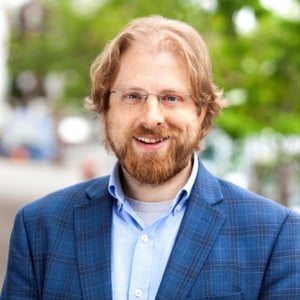
Senior Fellow and Academic Director, Penn Carey Law School
Gus Hurwitz is a Senior Fellow and the Academic Director of the Center for Technology, Innovation & Competition and the University of Pennsylvania Carey Law School where he is working to develop academic and scholarly programs at the intersecution of law, technology, and policy.
He is also Director of Law & Economics Programs at the International Center for Law & Economics (ICLE), a think tank based in Portland, Oregon, where he directs its law and economics-focused research program and helps to translate academic research into applied policy issues.
Hurwitz's research focuses on the regulation of technology, including administrative and regulatory law, antitrust law, torts and products liability, and media law - alongside cognate fields. Inrecent years he has worked on an AI standardization initiative with Seoul National University, a UNICEF-organized study of broadband deployment to public schools in Rwanda, and a book on conglomerate and ecosystems theories of antitrust.
He has published over 30 articles and book chapters, two books (one on cybersecurity law & policy, one on media regulation in the digital era) and have two more in process, over 100 shorter writings (op-eds, shorter analyses, blog posts, &c), hosted over 100 podcast episodes, and regularly appear or am quoted in popular media (including the NY Times, Wall Street Journal, Washington Post, and Associated Press). His work has been cited by legislators, federal courts of appeals, and federal regulatory agencies.
He was previously a full professor and founding director of the Governance & Technology Center at the University of Nebraska, prior to which he was the inaugural research fellow at the Center for Technology, Innovation & Competition (CTIC). From 2007 to 2010, he was a trial attorney with the U.S. Department of Justice Antitrust Division in the Telecommunications and Media Enforcement Section.
He also is, or has been, affiliated with the Classical Liberal Institute at New York University School of Law, the National Security Institute at George Mason University, and the American Enterprise Institute (AEI).
Before attending law school, Hurwitz worked at Los Alamos National Lab and interned at the Naval Research Lab. During this time his work was recognized by the Federal Laboratory Consortium, Los Alamos National Lab, IEEE & ACM, Corporation for Education Network Initiatives in California, R&D Magazine, and even the Guinness Book of World Records.
A current list of Hurwitz’s publications is available on his website: GusHurwitz.net.

Associate Dean for Academic Affairs, Austin E. Owen Research Scholar & Professor of Law, The University of Richmond School of Law
Dean Kristen Jakobsen Osenga teaches and writes in the areas of patent law, antitrust, and legislation and regulation. Some of her recent scholarship focuses on standard development organizations, patent eligible subject matter, patent licensing firms, litigation and remedies for patent infringement, and patent law reform. She has written numerous law review articles on these and other topics, as well as book chapters and op eds on various aspects of patent law. Additionally, she has spoken on these issues at many academic conferences and bar events. Dean Osenga is Chief Policy Counselor for the Inventors Defense Alliance, as well as an active member of the Federal Circuit Bar Association and the American Intellectual Property Law Association.
Dean Osenga received a B.S. degree in Biomedical Engineering from the University of Iowa, an M.S. degree in Electrical Engineering from Southern Illinois University – Carbondale, and a J.D. from the University of Illinois College of Law, where she graduated magna cum laude. After law school, she practiced at the law firm of Finnegan, Henderson, Farabow, Garrett, & Dunner LLP, (now Finnegan) where she did patent prosecution and litigation. She then clerked for the Judge Richard Linn of the U.S. Court of Appeals for the Federal Circuit. After clerking, she entered academia, teaching first at Chicago-Kent College of Law and then at the University of Richmond, where she has been since 2006. She has also been a Visiting Professor at Emory University School of Law and at William & Mary School of Law.
Frank Edwards Tyler Distinguished Professor of Law, University of Kansas School of Law
Stephen Ware is the author of five books, over 60 law review articles and many other publications. His writings have been cited by the Supreme Court of the United States and in at least 37 other cases. Ware teaches and writes on:
each with an international or comparative dimension. An experienced teacher of lawyering skills exercises in which student groups negotiate, mediate, and draft legal documents, Professor Ware takes this approach in his Transnational Dispute Resolution course, which he has customized for universities from Beijing to Istanbul to Kansas.
Ware has testified before both houses of the U.S. Congress, several state legislatures and, as an expert witness, in court. He is a frequent guest lecturer and speaker at academic and professional conferences—having given such presentations throughout the U.S. and in several other countries. He has appeared on numerous television and radio stations and been quoted in The New York Times, Wall Street Journal, USA Today, Financial Times, National Law Journal and many other news outlets. He is an elected member of the American Law Institute (ALI) and has served, at various times in his career, on the editorial board of the Journal of Legal Education and as an arbitrator for the American Arbitration Association.
Ware was named as the Frank Edwards Tyler Distinguished Professor of Law in 2019.
Counsel, White & Case
Antonio Garza served as the U.S. Ambassador to Mexico from 2002 through 2009 and is now Counsel to White & Case in Mexico City. Garza is currently a Director to both Kansas City Southern (NYSE:KSU), where he is member of the Executive Committee and Chairman of the company's subsidiary, Kansas City Southern de Mexico, and MoneyGram (NYSE:MGI) where he serves as Chairman of the company's Committee on Compliance and Ethics. Additionally, Garza is a Trustee at Southern Methodist University (J.D.,1983) and acts as Chairman of the university's Committee on Legal and Governmental Affairs and is a past-Chairman and President of the TexasExes, the alumni association of the University of Texas at Austin (B.B.A.,1980). Mr. Garza served as Chairman of the Texas Railroad Commission from 1998-2002, and prior to that as Texas 99th Secretary of State and Cameron County Judge , 1988-1994.

Principal, Navigators Global
Andy Keiser served 14 years on Capitol Hill for former House Intelligence Committee Chairman Mike Rogers - as Senior Advisor to the Committee, Chief of Staff, and Legislative Director handling all national security policy issues.
As Deputy National Security Senior Advisor to the pre-election phase of the Trump for America transition team, Mr. Keiser prepared and advised the transition's policy, personnel and agency action teams on all aspects of the national security portfolio. This included work in the Departments of Defense, State, Justice, Homeland Security, the Intelligence Community, and the National Security Council.
He was also the head writer for a nationally-syndicated radio program and assisted in the production of the CNN series “Declassified.”
Mr. Keiser has written extensively on intelligence, space and cyber policy, missile defense, Afghanistan, China, Iran, ISIS, North Korea, and Russia. He also helped shepherd six Intelligence Authorization Acts into law and managed Chairman Rogers’ cyber threat sharing legislation, which passed the House twice and the core of which was later signed into law by President Obama.
He has a Bachelor of Arts from Michigan State University and a Master of Arts from the United States Naval War College. He is active on various national security-focused policy projects at the Center for the Study of the Presidency and Congress, where he serves as a Senior Advisor, and at the National Security Institute at George Mason University’s Antonin Scalia Law School, where he serves as a Fellow. He also is a member of the OSS Society and serves on the Meridian International Center’s Global Leadership Council.
Mr. Keiser is currently a Principal at Navigators Global, where he focuses on cybersecurity and other national security priorities. Dubbed a “national security expert” by the Washington Post, Andy is a regular media commentator on national security issues.
Professor of Law, Vanderbilt Law School

Professor Emeritus of Law, Antonin Scalia Law School, George Mason University
Jeremy A. Rabkin is a Professor Emeritus of Law at the Antonin Scalia Law School, George Mason University. Before joining the faculty in June 2007, he was for over two decades a professor in the Department of Government at Cornell University. Professor Rabkin serves on the board of directors of the Center for Individual Rights, a public interest law firm based in Washington, D.C. Previously he was a board member of the U.S. Institute of Peace and the board of academic advisors of the American Enterprise Institute.
Professor Rabkin’s books include Law Without Nations? (Princeton University Press, 2005). He authored “If You Need a Friend, Don’t Call a Cosmopolitan,” a chapter in Varieties of Sovereignty and Citizenship (Sigal R. Ben-Porath & Rogers M. Smith eds., University of Pennsylvania Press, 2012). His articles have appeared in major law reviews and political science journals and his journalistic contributions in a range of magazines and newspapers, including the Washington Post and the Wall Street Journal.

Academic Director, Fashion Law Institute, Fordham University School of Law
Susan Scafidi is the first professor ever to offer a course in Fashion Law, and she is internationally recognized for her leadership in establishing the field. She has testified regarding the proposed extension of legal protection to fashion designs and continues to work actively with members of Congress and the fashion industry on this and other issues. Her additional areas of expertise encompass property, intellectual property, cultural property, international law, trusts &estates, and legal history. Professor Scafidi founded and directs the nonprofit Fashion Law Institute, which was established with the generous support and advice of the Council of Fashion Designers of America and its president, Diane von Furstenberg, and is located at Fordham Law School. Prior to teaching at Fordham, Professor Scafidi was a tenured member of both the law and history faculties at SMU, and she has taught at a number of other schools, including Yale, Georgetown, and Cardozo.
Of Counsel, Olshan Frome Wolosky LLP
Lee is an internationally renowned intellectual property and corporate lawyer and a leader in the fashion and retail law industry. His focus is on clients in the luxury goods, fashion and retail industries. Lee has extensive experience over a broad range of legal matters including intellectual property, licensing, marketing, transactional, securities, commercial and retail real estate, and employment.
Lee has served as General Counsel and in key management positions, most recently as Senior Vice President - Business Affairs, General Counsel & Corporate Secretary at Michael Kors Holdings Limited. He was part of the senior management team that over his thirteen year tenure transformed the company into one of the most successful fashion brands in the world, culminating in the company’s successful initial public offering in 2011.
Prior to Michael Kors, Lee was Senior Vice President, General Counsel & Corporate Secretary at Kasper A.S.L., Ltd., and he spent over eleven years at Polo Ralph Lauren Corporation, including as its Vice President of Intellectual Property and Associate General Counsel. His areas of responsibility included initial public offerings, product and territorial licensing, acquisitions and management of substantial licensees, joint venture agreements, supervision of major litigation, managing and enforcing the global intellectual property portfolio, and a range of compliance and legal issues relating to all production, advertising and public relations matters.
Lee was awarded the Luxury Law Summit's Lifetime Achievement Award. He is at the forefront of academic and industry leadership, including serving as Professor from Practice at Cardozo Law School where he helped create, and is now Co-Director of, its unique Fashion, Arts, Media and Entertainment Law Center (FAME). In addition, he serves as a Lecturer in Law at the University of Pennsylvania School of Law and Adjunct Professor at Villanova Law School. Lee is a contributor to Fashion Law, A Guide for Designers, Fashion Executives & Attorney (Fairchild Books, 2014), and was the project creator and co-editor of the seminal treatise, Trademark Counterfeiting (Aspen Law & Business, 1999). He served as Chairman of the International Anticounterfeiting Coalition and served on its board as a member of its Executive Committee for over a decade, and has been a frequent lecturer to federal, state and local law enforcement personnel, as well as to the trade, on matters relating to intellectual property protection and licensing. Sporn has been featured in publications including Corporate Counsel, Global Legal Post and Women’s Wear Daily.
Sporn received his J.D. Magna Cum Laude from Brooklyn Law School where he was a notes editor on the Brooklyn Law Review and received the Stanley Nathanson Award for outstanding leadership & scholarship. Following Brooklyn Law School, Sporn was an associate at Proskauer Rose. He received his B.A. at Oberlin College of Arts & Sciences and Oberlin Conservatory of Music.
Partner, Barnes & Thornburg LLP
David M. Spooner is a partner in the Corporate Department and Co-Chair of the International Trade Practice Group. Mr. Spooner represents governments, trade associations, and corporate clients on international trade matters, including trade remedies, trade policy and customs issues. He uses his past experience as a high-level political appointee in the Executive Branch and on Capitol Hill to assist clients with their advocacy efforts before both branches of government, as well as before foreign governments.
Prior to entering private practice, Mr. Spooner served as the Assistant Secretary of Commerce for Import Administration. In that capacity, Mr. Spooner led U.S. Government enforcement of trade remedy laws, principally the antidumping and anti-subsidy laws. He administered the Foreign Trade Zone system; oversaw apparel trade policy and the implementation of laws governing trade in apparel; managed trade remedy negotiations at the World Trade Organization (WTO), as well as dispute resolution proceedings at the WTO; chaired U.S.-China talks on macroeconomic reforms and the steel industry; and supervised the US Department of Commerce’s import safety initiatives.
Prior to his Senate confirmation as Assistant Secretary, Mr. Spooner served as the Chief Textile and Apparel Negotiator and Transition Coordinator in the Office of the U.S. Trade Representative (USTR). While at USTR, he was a principal negotiator for free trade agreements with Central America, the Dominican Republic, Singapore, Australia, Chile, Panama, Bahrain, United Arab Emirates, Colombia and Peru, principally negotiating customs enforcement, apparel and textile, origin and safeguard provisions. He was heavily involved in building support for congressional passage of the Bush Administration’s trade agenda. Mr. Spooner also negotiated a comprehensive apparel trade agreement with China and concluded bilateral customs and quota arrangements with several nations.
Before his appointment to USTR, Mr. Spooner worked on Capitol Hill, managing the Washington D.C. office and serving as the legislative director and press secretary for a member of Congress, serving as Communications Director for the U.S. House Committee on Agriculture, and working for the U.S. House Committee on Rules, which manages debate and amendments in the House of Representatives.
Mr. Spooner is a noted speaker at industry events with a particular focus on the regulatory issues facing retailers and apparel brands. He is often quoted in news stories on trade remedy disputes and trade agreement negotiations.
Mr. Spooner earned his J.D. from the College of William & Mary School of Law and his B.A. from the University of Virginia.
He is admitted to practice in Washington, D.C., and Virginia and before the U.S. Court of International Trade and the U.S. Court of Appeals for the Federal Circuit.
President & CEO, The National Council of Textile Organizations
Auggie has worked in government service or government relations in Washington, D.C. since 1981. Most recently he served as Executive Director of the American Manufacturing Trade Action Coalition, a trade association dedicated to furthering the interests of U.S. manufacturing. At earlier points in his career, he was Deputy Assistant Secretary for Textiles & Apparel at the U.S. Department of Commerce under President George H. W. Bush, and Chief of Staff to U. S. Senator Strom Thurmond of South Carolina. Auggie earned a B.S. in Agricultural Economics from Clemson University.
President, United States Fashion Industry Association
Julia K. Hughes is President of the United States Fashion Industry Association (USFIA), which represents brands, retailers, importers, and wholesalers based in the United States and doing business globally. She represents the industry in front of the U.S. government as well as international governments and stakeholders, explaining how fashion companies create high quality jobs in the United States and economic opportunities around the world.
An expert on textile and apparel trade issues, Julie has testified before Congress and the Executive Branch. She frequently speaks at international conferences including the China & Asia Textile Forum, Fashion Institute of Technology (FIT), Harvard University’s Bangladesh Development Conference, MAGIC, Prime Source Forum, Vietnam Textile Summit, and others.
Julie served as the first President and is one of the founders of the Washington Chapter of Women in International Trade (WIIT) and is one of the founders of the WIIT Charitable Trust. She also was the first President of the Organization of Women in International Trade (OWIT). In 1992, she received the Outstanding Woman in International Trade award and in 2008, the WIIT Lifetime Achievement Award. She also is a member of the International Women’s Forum.
She has an M.A. in International Studies from the Johns Hopkins School of Advanced International Studies and a B.S. in Foreign Service from Georgetown University.
Professor of Law & Helen L. Crocker Faculty Scholar, Stanford Law School
Jud Campbell joined the faculty of Stanford Law School in 2023. He previously served as a professor of law at the University of Richmond School of Law and as a visiting professor of law at the University of Chicago Law School and at Harvard Law School. His academic focus is constitutional history and First Amendment law. His publications include articles in the Stanford Law Review, Yale Law Journal, Harvard Law Review, Texas Law Review, Constitutional Commentary, and Law and History Review. After completing his J.D. at Stanford Law School, he clerked for Judge Diane S. Sykes on the U.S. Court of Appeals for the Seventh Circuit, and for Judge José A. Cabranes on the U.S. Court of Appeals for the Second Circuit. He then served as the Executive Director of the Stanford Constitutional Law Center. He holds a bachelor’s degree from the University of North Carolina at Chapel Hill and two master’s degrees from the London School of Economics, where he studied as a Marshall Scholar.

Laurence A. Tisch Professor of Law and Director, Classical Liberal Institute, New York University School of Law; Senior Fellow, The Civitas Institute, University of Texas at Austin
Richard A. Epstein is the inaugural Laurence A. Tisch Professor of Law at NYU School of Law. Prior to his joining the faculty, he was a visiting law professor at NYU from 2007 through 2009. He served as the Peter and Kirstin Bedford Senior Fellow at the Hoover Institution from 2000 to 2024. Since 2024 to the present he is a senior lecturer at the Civitas Institute at the University of Texas—Austin. Epstein is also the James Parker Hall Distinguished Service Professor of Law Emeritus and a senior lecturer at the University of Chicago. His initial law school appointment was at the University of Southern California from 1968 to 1972. Epstein received an LL.D., h.c. from the University of Ghent, 2003. He has been a member of the American Academy of Arts and Sciences since 1985 and was a Senior Fellow of the Center for Clinical Medical Ethics at the University of Chicago Division of Biological Sciences, also from 1983. to 2022 He served as editor of the Journal of Legal Studies from 1981 to 1991, and of the Journal of Law and Economics from 1991-2001. From 2001 to 2010 he was a director of the John M. Olin Program in Law and Economics at the University of Chicago.
His newest book, The Myth of Birthright Citizenship: What the Fourteenth Amendment Really Says was published in 2026 (Encounter Books). Prior to that he has published many books including, The Dubious Morality of the Modern Administrative State (Roman & Littlefield 2020).Earlier he published th Classical Liberal Constitution: The Uncertain Quest for Limited Government (Harvard 2014) iHis previous books include Design for Liberty: Private Property, Public Administration and the Rule of Law (Harvard 2011); The Case Against the Employee Free Choice Act (Hoover 2009); Supreme Neglect: How to Revive the Constitutional Protection of Property Rights (Oxford 2008); Antitrust Decrees in Theory and Practice: Why Less is More (AEI 2007); Overdose: How Excessive Government Regulation Stifles Pharmaceutical Innovation (Yale University Press. 2006); How Progressives Rewrote the Constitution (Cato 2006); Cases and Materials on Torts (Aspen Law & Business; 8th ed. 2004); Skepticism and Freedom: A Modern Case for Classical Liberalism (University of Chicago, 2003); Torts (Aspen Law & Business 1999); Principles for a Free Society: Reconciling Individual Liberty with the Common Good (Perseus Books, 1998): Mortal Peril: Our Inalienable Rights to Health Care (Addison-Wesley, 1997); Simple Rules for a Complex World (Harvard, 1995); Bargaining With the State (Princeton, 1993); Forbidden Grounds: The Case Against Employment Discrimination Laws (Harvard , 1992); Takings: Private Property and the Power of Eminent Domain (Harvard, 1985); and Modern Products Liability Law (Greenwood Press, 1980). He has also edited(with Catherine M. Sharkey) Cases and Materials on the Law of Torts (10th edition 2012).
Professor Epstein has written numerous articles on a wide range of legal and interdisciplinary subjects. He has taught courses in administrative law, antitrust law, civil procedure, communications, constitutional law, contracts, corporations, criminal law, employment discrimination law, environmental law, food and drug law health law and policy, legal history, labor law, property, real estate development and finance, jurisprudence, labor law; land use planning, patents, individual, estate and corporate taxation, Roman Law; torts, and workers' compensation.
Professor Epstein also writes a regular column for Civitas Institute, which also sponsors his podcast, The Libertarian with Charles C.W. Cooke, and Law Talk, with Cooke and John Yoo. He also does a podcast with John Batchelor. And appears regularly on the Freedom File with Judge Andrew Napolitano.
Former Solicitor General of Texas
Jonathan F. Mitchell is Principal at Mitchell Law PLLC. He received his law degree with high honors from the University of Chicago Law School, where he was an articles editor of The University of Chicago Law Review and a member of the Order of the Coif.
After graduating from law school, Mr. Mitchell clerked for Judge J. Michael Luttig of the U.S. Court of Appeals for the Fourth Circuit and for Justice Antonin Scalia of the Supreme Court of the United States. He then served as an Attorney-Adviser in the Office of Legal Counsel of the United States Department of Justice from 2003 through 2006. After leaving the Department of Justice, Mr. Mitchell served as a Visiting Researcher at Georgetown University Law Center, a Visiting Assistant Professor at the University of Chicago Law School from 2006 through 2008, and an Assistant Professor of Law at George Mason University from 2008 through 2010.
In 2010, Mr. Mitchell was appointed Solicitor General of Texas, a position he held until January 2015. After leaving the Texas Solicitor General’s office, Mr. Mitchell served as the Searle Visiting Professor of Law at the University of Texas School of Law before joining the Hoover Institution as a Visiting Fellow from 2015 to 2016. Mr. Mitchell also served as a Visiting Professor of Law at Stanford Law School before opening his own law firm in 2018.
Mr. Mitchell has published numerous works of scholarship in top-10 law journals, and he has written articles on textualism, national-security law, criminal law and procedure, judicial review and judicial federalism, and the legality of stare decisis in constitutional adjudication.
Mr. Mitchell has argued eight times before the Supreme Court of the United States, and more than 20 times in the federal courts of appeals. He has also argued before Supreme Court of Texas and in numerous trial courts. Mr. Mitchell has authored the principal merits brief in 11 Supreme Court cases, and has written and submitted more than 20 amicus curiae briefs in the Supreme Court.
Mr. Mitchell devised the novel enforcement mechanism in the Texas Heartbeat Act, also known as Senate Bill 8, which avoids pre-enforcement judicial review by prohibiting government officials from enforcing the statute and empowering private citizens to bring lawsuits against those who violate it. This produced an end-run around Roe v. Wade and allowed Texas and other states to impose pre-viability abortion bans despite the continued existence of Roe.
Associate Attorney, Gibson, Dunn & Crutcher LLP
Lochlan F. Shelfer is a litigation associate in the Washington, D.C. office of Gibson, Dunn & Crutcher. He is a member of the firm’s Appellate and Constitutional Law and Administrative Law practice groups.
Mr. Shelfer has litigated a wide range of appellate and trial matters in federal and state court. Mr. Shelfer’s appellate practice includes representing corporate clients in high-stakes commercial disputes, litigating cutting-edge legal issues before the Supreme Court of the United States, bringing merits and collection actions against foreign sovereigns, and representing pro bono clients before the courts of appeals. He has argued an appeal before the United States Court of Appeals for the Ninth Circuit, addressing matters of federal jurisdiction. In addition, Mr. Shelfer regularly represents clients in litigation under the Administrative Procedure Act.
Mr. Shelfer received his law degree from Yale Law School, where he served as an Articles Editor of the Yale Law Journal and was awarded the Judge William E. Miller Prize for best paper on the Bill of Rights for his work "How the Constitution Shall Not Be Construed," BYU Law Review (2017), and the Joseph Parker Prize for best paper on legal history for his work "Special Juries in the Supreme Court," Yale Law Journal (October, 2013). Prior to attending law school, Mr. Shelfer graduated summa cum laude from New York University with a B.A. in Classics and from Johns Hopkins University with a Ph.D. in Classics, specializing in the history of law. From 2013–2014, Mr. Shelfer served as a law clerk to the Honorable Carlos T. Bea of the United States Court of Appeals for the Ninth Circuit.
Mr. Shelfer is a member of the bars of Maryland and the District of Columbia.
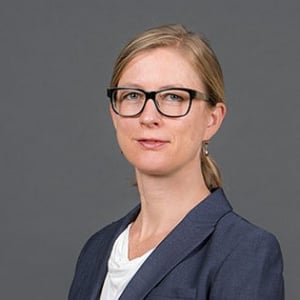
Assistant Professor of Law, George Mason University Antonin Scalia Law School
Megan Stevenson is an economist and legal scholar who became an Assistant Professor of Law at George Mason University, in 2017. Her research uses advanced econometric techniques to evaluate criminal law and policy in areas such as bail, pretrial detention, juvenile justice, and risk assessment. Her studies are published or forthcoming in top journals in both economics and law, such as the Stanford Law Review and the Review of Economics and Statistics. Her research on bail was cited extensively in a landmark federal civil rights decision, O’Donnell v. Harris, and has received widespread media coverage. In addition to legal scholarship, Professor Stevenson has written a number of op-eds for news outlets such as the Houston Chronicle and the Philadelphia Inquirer. Her research has been funded by the National Science Foundation, the Russell Sage Foundation, and the Laura and John Arnold Foundation.
Prior to joining the law faculty at George Mason, Professor Stevenson was a fellow at the Quattrone Center for the Fair Administration of Justice at the University of Pennsylvania Law School (2015-2017). She holds a BA in Interdisciplinary Studies (2009, with highest distinction) and a PhD in Agricultural and Resource Economics (2016), both from the University of California, Berkeley. She teaches Law & Economics and Criminal Law.
Professor of Law, Georgetown Law
Professor Teitelbaum joined the Georgetown faculty in 2009. Before coming to Georgetown, he clerked for Judge Richard M. Berman of the U.S. District Court for the Southern District of New York, practiced corporate and securities law at Cahill Gordon & Reindel LLP in New York, and was a Visiting Assistant Professor at Cornell Law School.
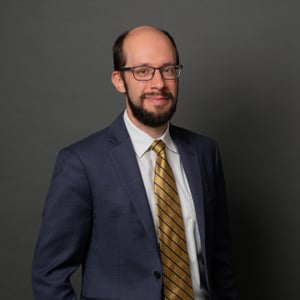
Assistant Professor of Law, Antonin Scalia Law School, George Mason University
Lael Weinberger is an assistant professor of law at George Mason University Antonin Scalia Law School. Previously, Lael clerked for Justice Neil Gorsuch on the United States Supreme Court, Judge Frank Easterbrook on the Seventh Circuit Court of Appeals, and Chief Justice Daniel Eismann on the Idaho Supreme Court. Lael also practiced law at the Washington, D.C., office of Gibson Dunn and held fellowships at Stanford and Harvard law schools. Lael earned a law degree and a Ph.D. in history, both from the University of Chicago. Lael's academic work has appeared in journals such as the University of Chicago Law Review, Notre Dame Law Review, and Constitutional Commentary, among others. He has also written widely for broader public audiences, with his writings and reviews appearing in publications including Newsweek, National Review, Claremont Review, First Things, Christianity Today, LA Review of Books, World, and the New Rambler Review.
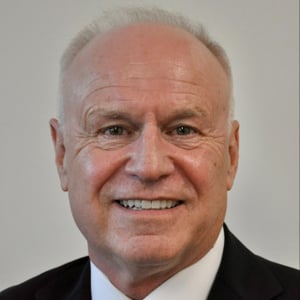
Former Director (consultant), International Affairs, The Federalist Society
From 2005 to 2025, Jim Kelly served on a consulting basis as the Federalist Society’s Director of International Affairs, responsible for outreach to law students, lawyers, and judges in Canada, Europe, and Israel. From 2005 to 2008, he served on the U.S. National Commission to UNESCO, and as Chairman of its Social and Human Sciences Committee. From 2001 to 2008, he served as an official U.S. delegate to five international human rights conferences. In 2019, the U.S. State Department appointed Jim to serve as one of the two U.S. members on the European Commission for Democracy through Law (the “Venice Commission”). In 2020, the State Department named him as an expert to the OSCE Moscow Mechanism. In March 2022, he initiated Ukraine’s consideration and use of the Moscow Mechanism to conduct the first official international investigation of the Russia-Ukraine conflict, which resulted in the Report on Violations of International Humanitarian and Human Rights Law, War Crimes and Crimes Against Humanity Committed in Ukraine (1 April – 25 June 2022). Jim is the Founder of, and Director of Research for, Global Governance Watch, a web-based project that monitors the global governance activities of the UN’s sustainable development and ESG agenda. In 2022, in connection with his position as a Lecturer at the Busch School of Business at Catholic University of America, he authored Evolution of Business, Human Rights, & ESG, consisting of 28 one-hour presentations about the technocratic, anti-democratic, anti-capitalist, and religious nature and practices of the ESG movement. Jim is Founder and President of Solidarity Center for Law and Justice, P.C., which, since 2001, has filed amicus curiae briefs in five landmark U.S. Supreme Court educational and religious liberty cases. He is the Founder and General Counsel of the Georgia GOAL Scholarship Program, Georgia’s largest K-12 tuition tax credit scholarship program, which, since 2008, has awarded scholarships worth $224.3 million to 21,744 students for use at the accredited private K-12 schools of their choice. He has served on the Georgia Judicial Nominating Commission and Georgia Board of Juvenile Justice. In 2005, he authored Christianity, Democracy, and the American Ideal, a collection of the writings of the French-Catholic philosopher, Jacques Maritain. Jim earned his BBA and Law degrees from the University of Georgia. He also earned a Master of Taxation degree from Georgia State University, a Master of Non-Profit Management degree from Regis University, and a Master of International Relations degree from Salve Regina University. Jim and his wife, Lisa, reside in the Atlanta area.
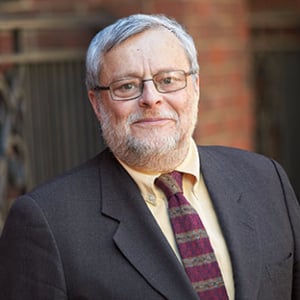
Dwight D. Opperman Professor of Law; Director, Center for Labor, New York University School of Law
Samuel Estreicher is a nationally preeminent scholar in US and international-comparative labor and employment law and arbitration law. He has authored more than a dozen books, including Beyond Elite Law: Access to Civil Justice in America (with Joy Radice, Cambridge Univ. 2016); leading casebooks on legislation and regulatory state, labor law and employment discrimination and employment law; and published more than 200 articles in professional and academic journals. He served as Chief Reporter for the American Law Institute’s Restatement of Employment Law (2015). After clerking for Judge Harold Leventhal of the US Court of Appeals for the DC Circuit, practicing in a labor law firm, and clerking for Justice Lewis F. Powell Jr. of the US Supreme Court, Prof. Estreicher joined the NYU School of Law faculty in 1978. In addition to serving as counsel to major law firms, he is the former secretary of the Labor and Employment Law Section of the American Bar Association, a former chair of the Committee on Labor and Employment Law of the Association of the Bar of the City of New York.15). He maintains an active appellate and ADR practice. The Labor and Employment Research Association awarded him its 2010 Susan C. Eaton Award for Outstanding Scholar-Practitioner. In recent years, Estreicher also has published work in public international law and authored several briefs in the Supreme Court and US courts of appeals on employment and US foreign relations law issues. Prof. Estreicher received his BA from Columbia College, his MS in industrial relations from Cornell University, and his JD from Columbia Law School, where he was editor-in-chief of the Columbia Law Review. He is a member of the College of Labor and Employment Lawyers and was appointed in 2016 by the UN Secretary General as a member of the UN’s Internal Justice Commission.
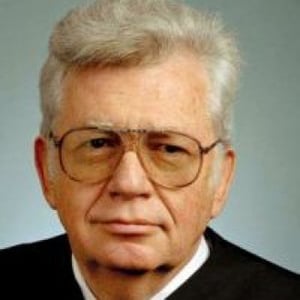
Judge, U.S. Court of Appeals, District of Columbia Circuit
Judge Sentelle was appointed United States Circuit Judge in October 1987, served as Chief Judge from February 11, 2008 until February 11, 2013, and took senior status on February 12, 2013. He is a 1968 graduate of the University of North Carolina Law School. Following law school, he practiced with the firm of Uzzell & DuMont until he became an Assistant U.S. Attorney in Charlotte, N.C. in 1970. From 1974 to 1977, he served as a North Carolina State District Judge but left the bench in 1977 to become a partner with the firm of Tucker, Hicks, Sentelle, Moon & Hodge. In 1985, Judge Sentelle joined the U.S. District Court, Western District of North Carolina, in Asheville, where he served until his appointment to the D.C. Circuit. Judge Sentelle was the Presiding Judge of the Special Division for the Purpose of Appointing Independent Counsels (1992-2006). He also served as the Chair of the U.S. Judicial Conference's Executive Committee (2010-2013). Judge Sentelle served for over 20 years as President of the Edward Bennett Williams Inn of the American Inns of Court.

Emanuel S. Heller Professor of Law, University of California at Berkeley; Thomas Smith Senior Research Fellow, The Civitas Institute, University of Texas at Austin
John Yoo is the Emanuel Heller Professor of Law at the University of California at Berkeley. He is also the Thomas Smith Senior Research Fellow, Civitas Institute, at the University of Texas at Austin. He is also a Nonresident Senior Fellow at the American Enterprise Institute.
His most recent book, The Politically Incorrect Guide to the Supreme Court, co-authored with Robert Delahunty, was published in 2023. Professor Yoo’s other books include Defender-in-Chief: Trump’s Fight for Presidential Power; Striking Power: How Cyber, Robots, and Space Weapons Change the Rules for War; Point of Attack: Preventive War, International Law, and Global Welfare; and Crisis and Command: A History of Executive Power from George Washington to George Bush.
He is a co-author of volumes 1 and 2 of R. Rossum, G. Tarr, V. Munoz & J. Yoo American Constitution Law (Routledge, 2026), and a co-editor of the eight-volume series on the 250th anniversary of the American Revolution, We Hold These Truths, with Yuval Levin and Adam White of the American Enterprise Institute.
Professor Yoo has published more than 100 articles in academic journals on subjects including national security, constitutional law, international law, and the Supreme Court. He also regularly contributes to the editorial pages of the Wall Street Journal, New York Times, Washington Post, Los Angeles Times, and National Review, among others.
Professor Yoo has served in all three branches of government. He was an official in the U.S. Department of Justice, where he worked on national security and terrorism issues after the 9/11 attacks. He served as general counsel of the U.S. Senate Judiciary Committee. He has been a law clerk for Supreme Court Justice Clarence Thomas and federal appeals Judge Laurence Silberman. He has been a visiting professor at the University of Texas at Austin’s School of Civic Leadership, Seoul National University, the Interdisciplinary Center Herzliya, Keio University, Trento University, the University of Chicago, and the Free University of Amsterdam.
Professor Yoo supervises the Public Law and Policy Program and the California Constitution Center. He also serves on the boards of Founding Forward, the Washington Legal Foundation, the Pacific Legal Foundation, the Ulysses Grant Institute, the Federalist Society’s Separation of Powers and Federalism Division, the Universidad Cientifica del Sur Law School, and the Asia-Pacific Law Institute at Seoul National University. He is a winner of the Federalist Society’s Paul Bator award and the Heritage Foundation’s Edwin Meese III Originalism Lectureship.
Professor Yoo graduated from Yale Law School and summa cum laude from Harvard College.

7 Minute Presentations of Works in Progress Panel 2-B
21st Annual Federalist Society Faculty Conference
New Orleans, LANew NAFTA or Else ... What?
Antonio Garza, Andy Keiser, Timothy Meyer, Jeremy A. Rabkin
Last month, the Trump administration announced completion of a U.S.-Canada-Mexico-Agreement, intended to supersede the 1993...
Fashion & Free Trade: Questions about Globalism, Tariffs, and Trade
Susan Scafidi, Lee S. Sporn, David Spooner, Augustine Tantillo, Howard Deutchman, Julia K. Hughes
Do you know where your clothing comes from? America consumes billions of dollars of apparel...
Young Legal Scholars Paper Presentations
Jud Campbell, Richard A. Epstein, Jonathan Mitchell, Lochlan Shelfer, Megan Stevenson, Joshua C. Teitelbaum, Lael Weinberger
The winners of our Young Legal Scholars Paper Competition will present their papers, and various...
Corporate Social Responsibility or UN Corporate Governance?
John S. Gardner, James P. Kelly
Recently, UN officials have begun using a human rights agenda to govern the activities of...
The Labor Movement, NGOs, International Labor Standards and American Values
Samuel Estreicher, Adam B. Greene, Deborah Greenfield, David B. Sentelle
The Federalist Society's Labor & Employment Law Practice Group presented this panel discussion at the...
Report on Day 1 & 2 of the Forty-third Assemblies of the Member States of WIPO
John S. Gardner
John S. Gardner, a Senior Director of the White House Writers Group in Washington, D.C.,...
The Chemical Weapons Treaty is Unconstitutional
John C. Yoo
I would like to thank the Chairman for the opportunity to testify on the constitutionality...