
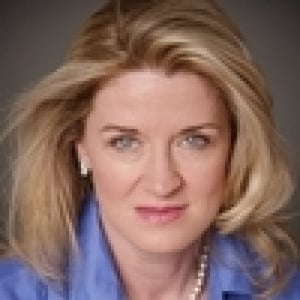
Counsel, The Judicial Confirmation Network
Wendy Long is legal counsel to the Judicial Confirmation Network. Until March 2005, she was a litigation partner in the New York office of Kirkland & Ellis LLP. Wendy was a law clerk to U.S. Supreme Court Justice Clarence Thomas and to Judge Ralph Winter of the U.S. Court of Appeals for the Second Circuit in New York. She is a graduate of Northwestern University School of Law, cum laude and Order of the Coif, where she was articles editor of the Northwestern University Law Review, and of Dartmouth College. She previously served as a press secretary in the U.S. Senate, for former U.S. Senator Bill Armstrong (R-Colo.) and former U.S. Senator Gordon Humphrey (R-N.H.).
Vice President and Legal Director, Legal Momentum

Dr. John Eastman is the former Henry Salvatori Professor of Law & Community Service and former Dean at Chapman University's Dale E. Fowler School of Law, where he had been a member of the faculty since 1999, specializing in Constitutional Law, Legal History, and Property. He is a founding director of the Center for Constitutional Jurisprudence, a public interest law firm affiliated with the Claremont Institute that he founded in 1999. He has a Ph.D. in Government from the Claremont Graduate School and a J.D. from the University of Chicago Law School, and a B.A. in Politics and Economics from the University of Dallas. He serves as the Chairman of the Board of the National Organization for Marriage.
Prior to joining the Chapman law faculty, Dr. Eastman served as a law clerk to the Honorable Clarence Thomas, Associate Justice, Supreme Court of the United States, and to the Honorable J. Michael Luttig, Judge, United States Court of Appeals for the Fourth Circuit and practiced law with the national law firm of Kirkland & Ellis. Dr. Eastman has also represented numerous clients in important constitutional law matters and has argued before the Supreme Court. On behalf of the Claremont Institute Center for Constitutional Jurisprudence, he has participated as amicus curiae before the Supreme Court of the United States, U.S. Courts of Appeals, and State Supreme Courts in more than one hundred cases of constitutional significance, including Boy Scouts of America v. Dale, Zelman v. Simmons-Harris (the school vouchers case), Kelo v. New London, Ct. (eminent domain), and Van Orden v. Perry (the 10 Commandments case). He has also appeared as an expert legal commentator on numerous television and radio programs, including C-SPAN, Fox News, PBS, NewsHour, and The O'Reilly Factor.
Counsel to the Firm, Cascadia Cross-Border Law
Margaret Stock focuses her practice on immigration and citizenship law. She is a nationally known expert on immigration and national security laws, and has testified regularly before Congressional committees on immigration, homeland security, and military matters. As a retired Lieutenant Colonel in the Military Police, U.S. Army Reserve, Margaret has extensive experience with U.S. military issues. She has also worked as a professor at the United States Military Academy at West Point, and she has served as an adjunct instructor at the University of Alaska. Margaret served as a member of the American Bar Association Commission on Immigration from 2008-2012. She regularly authors articles on military-related immigration issues, and is well-versed on “parole in place” for military family members and the Military Accessions Vital to the National Interest (“MAVNI”) Program. Margaret authored the book Immigration Law & the Military, which was published by the American Immigration Lawyers Association in 2012.
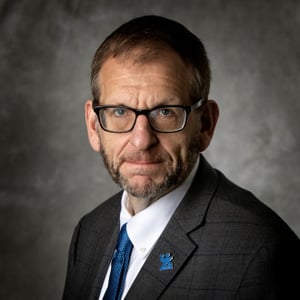
General Counsel, University of Kentucky & Former Solicitor General of Virginia, University of Kentucky
William E. Thro, the General Counsel of the University of Kentucky, is an accomplished university attorney, appellate advocate, and legal scholar.
As the Chief Legal Officer for the University of Kentucky, he provides proactive strategic advice on critical legal and policy issues confronting a public flagship land grant research university with an integrated academic medical center and a high profile athletics program. Before assuming his present position in 2012, he spent more than twenty years representing public universities including eight years as the first in-house counsel at Christopher Newport University.
As Solicitor General of Virginia for four years, he was responsible for the Virginia State Government’s U.S. Supreme Court litigation (except capital cases) as well as lower court appeals involving the constitutionality of statutes or politically sensitive issues. He argued two cases in the U.S. Supreme Court and numerous cases in the lower appellate courts. He co-authored seven U.S. Court merits briefs, eleven U.S. Supreme Court amicus briefs, and more than fifty briefs at the petition stage. He received two Best Brief Awards from the National Association of Attorneys General.
As a legal scholar, he focuses on constitutional law in educational contexts. He has more than sixty publications in law reviews or peer reviewed journals as well as numerous monographs, book chapters, and encyclopedia entries. In recognition of his scholarly work, he received Stetson University’s Kaplin Award for Excellence in Higher Education Law & Policy Scholarship (2014) and became a Fellow of both the National Education Finance Conference (2012) and the National Association of College and University Attorneys (2007).
He has served as President of the Education Law Association, Chair of the Virginia Bar Association’s Appellate Practice Section, Board Chair for a local Red Cross Chapter, on the Boards of both the National Association of College & University Attorneys and the National Education Finance Academy, and an Elder in the Presbyterian Church (U.S.A.).
A native of Kentucky, he received his undergraduate degree summa cum laude from Hanover College. In addition to receiving the Crowe Citation as the outstanding male in his class, he was the first Hanover student to become a Harry S. Truman Scholar. He earned a graduate degree with honours from the University of Melbourne while attending as a Rotary Foundation International Ambassadorial Scholar. His law degree is from the University of Virginia where he was a published member of the VIRGINIA LAW REVIEW and research assistant to constitutional law professor A.E. Dick Howard. He began his legal career as a judicial clerk to the late Judge Ronald E. Meredith of the U.S. District Court for the Western District of Kentucky in Louisville.
He is married to the Rev. Dr. Julie Urback Thro and has two children in college (Sandra, Will) and one in high school (Noah).
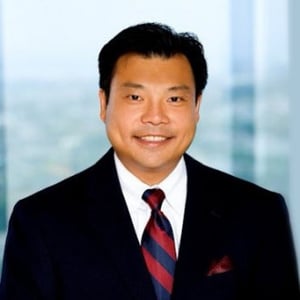
Attorney and Legal Commentator
John Shu is an attorney and legal commentator. His focus areas include constitutional law, securities & corporate law, antitrust law, administrative law, politics, and international affairs. Mr. Shu has lectured and published on a wide variety of issues.
Mr. Shu served President George H.W. Bush and President George W. Bush. He also served Judge Stanley Sporkin, U.S. District Court for the District of Columbia, who was Director of Enforcement at the U.S. Securities & Exchange Commission and General Counsel at the Central Intelligence Agency, and Judge Paul Roney, U.S. Court of Appeals for the Eleventh Circuit, who was Presiding Judge of the Foreign Intelligence Surveillance Court of Review.
Mr. Shu is a member of the National Committee on U.S. - China Relations, the Pacific Council on International Policy, and the Foreign Policy Association.
Publius comes from the pen name Alexander Hamilton, James Madison, and John Jay used when they wrote 85 publicly printed letters now known as the Federalist Papers. Hamilton chose “Publius” as a name that would represent friends of the newly proposed American republic - Publius Valeria Publicola was a Roman general who helped to found the Roman Republic. The Federalist Society continues the tradition of publishing things under the name Publius in celebration of our constitutional roots and recognition that author credit is not always necessary.
Wendy Keefer is an attorney at Barnwell, Whaley, Patterson, and Helms in Charleston, SC.
Professor of Law, University of Notre Dame Law School
Gerard V. Bradley is Professor of Law at the University of Notre Dame, where he teaches Legal Ethics and Constitutional Law. At Notre Dame he directs (with John Finnis) the Natural Law Institute and co-edits The American Journal of Jurisprudence, an international forum for legal philosophy. Bradley has been a Visiting Fellow at the Hoover Institution of Stanford University, and a Senior Fellow of the Witherspoon Institute, in Princeton, New Jersey. He served for many years as President of the Fellowship of Catholic Scholars.
Bradley received his B.A and J.D. degrees from Cornell University, graduating Summa cum laude from the law school in 1980. After serving in the Trial Division of the Manhattan District Attorney’s Office he joined the law faculty at the University of Illinois. He moved to Notre Dame in 1992. Bradley has published over one hundred scholarly articles and reviews. His most recent books are an edited collection of essays titled, Challenges to Religious Liberty in the Twenty-First Century (published by Cambridge University Press in 2012), Essays on Law, Religion, and Morality and Unquiet Americans: U.S. Catholics and the Common Good (both to be published in 2014.) He is currently working on a book about regulating obscenity in the Internet Age.
Partner, Simpson Thacher
Mr. Noreika leads projects related to the U.S. banking industry, as well as clients that span beyond traditional banking including financial technology and cryptocurrency companies. He is the company’s focal point for C-suite advice on compliance and regulatory requirements at all levels, domestic and international.
Prior to joining Patomak, Mr. Noreika was a partner at Simpson Thacher & Bartlett LLP and was a lead lawyer in the firm’s financial institutions regulatory practice, focusing on banking regulation and related litigation. In that role, he advised domestic and international financial institutions on regulatory issues relating to mergers and acquisitions, minority investments, capital issuances, structuring and compliance activities, and litigation matters.
Mr. Noreika’s extensive experience includes advising regional and multinational banks on the structuring of their U.S. operations, compliance with the Volcker Rule, Consumer Financial Protection Bureau and other federal agency regulations, Bank Secrecy Act and anti-money laundering rules, as well as transactional matters and related regulatory applications. He has counseled numerous private equity funds with respect to investments in banking organizations.
In 2017, Mr. Noreika served as acting Comptroller of the Currency where he led the 4,000-person independent agency responsible for chartering, regulating, and supervising all national banks and federal savings associations as well as federal branches and agencies of foreign banks in the U.S. There, he worked to make regulation more accountable, improved the efficiency of chartering and licensing decisions, and sought the enhance the value of the national bank and federal thrift charters and their ability to meet the credit and banking needs of their communities. In this role, he also served as director of the Federal Deposit Insurance Corporation and member of the Financial Stability Oversight Council.
Mr. Noreika has been recognized as a leader in his field by Chambers USA in “Financial Services Regulation: Banking Compliance” since 2014. He received his law degree from Harvard Law School, where he was editor of the Harvard Law Review. He earned his B.S. in economics with a concentration in finance from The Wharton School of the University of Pennsylvania.
Board Member, Center for Equal Opportunity
Roger Clegg is a Board Member at and former President and General Counsel of the Center for Equal Opportunity. He focuses on legal issues arising from civil rights laws--including the regulatory impact on business and the problems in higher education created by affirmative action. A former Deputy Assistant Attorney General in the Reagan and Bush administrations, Clegg held the second highest positions in both the Civil Rights Division (1987-91) and in the Environment and Natural Resources Division (1991-93). He has held several other positions at the U.S. Justice Department, including Assistant to the Solicitor General (1985-87), Associate Deputy Attorney General (1984-85), and Acting Assistant Attorney General in the Office of Legal Policy (1984). Clegg is a graduate of Yale University Law School (1981).
Judge, United States Court of Appeals, Seventh Circuit
Michael B. Brennan was confirmed and sworn in as a Circuit Judge for the U.S. Court of Appeals for the Seventh Circuit in May 2018.
He previously worked as a partner in the Milwaukee law firm of Gass Weber Mullins LLC, where he tried cases and handled appeals in federal and state courts, as a judge on the Milwaukee County Circuit, where he presided over a variety of criminal and civil calendars, and as an assistant district attorney in the Milwaukee County District Attorney’s office.
Brennan’s undergraduate degree is from the University of Notre Dame, and his law degree from Northwestern University School of Law, where he was an editor on the law review and the moot court champion. He served as a law clerk on the U.S. District Court for the Eastern District of Wisconsin and the U.S. Court of Appeals for the Seventh Circuit.
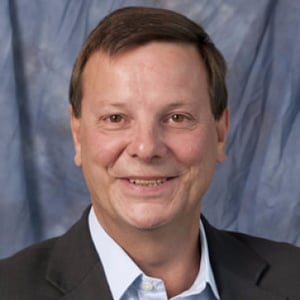
Professor of Law, Antonin Scalia Law School, George Mason University
Professor of Law Michael S. Greve joined the faculty of the Antonin Scalia Law School, George Mason University in fall 2012 after having served as John G. Searle Scholar at the American Enterprise Institute (AEI), where he specialized in constitutional law, courts, and business regulation and served as chairman of the Competitive Enterprise Institute. Prior to joining AEI, Greve was founder and co-director of the Center for Individual Rights, a public interest law firm specializing in constitutional litigation.
Greve has served previously as an adjunct professor at a number of universities, including Cornell and Johns Hopkins Universities, and has been a visiting professor at Boston College since 2004. He was awarded a PhD and an MA in government by Cornell University. Greve also earned a Diploma from the University of Hamburg in Germany.
A prolific writer, Greve is the author of nine books and a multitude of articles appearing in scholarly publications, as well as numerous editorials, short articles, and book reviews. He is a frequent speaker for professional and scholarly organizations and has made many appearances on radio and television.
In addition Greve has provided congressional and state legislative testimony, has lobbied and consulted in federal agency proceedings, and has provided litigation services and management in over 30 cases, including matters before the U.S. Supreme Court.
Roger Williams University School of Law
Professor Bogus has achieved national prominence in two areas -- (1) tort law, and especially, products liability; and (2) gun control, including issues involving the Second Amendment.
His work in the first area includes Why Lawsuits Are Good for America: Disciplined Democracy, Big Business and the Common Law (NYU Press). His Constitutional Law research proposes the thesis that James Madison wrote the Second Amendment to ensure that the federal government could not subvert the slave system by disarming the militia, on which the South relied for slave control. Professor Bogus has testified before Congress and spoken about and debated these subjects at many venues across the country, including at Harvard, Columbia, Chicago, Stanford, and Vanderbilt law schools, and his writings on these subjects have been published by law reviews, as well as opinion journals such as The Nation and The American Prospect, and newspapers including USA Today, Boston Globe, Washington Times, and the Providence Journal. Most recently, he was interviewed by National Public Radio. One of his interests is how ideology influences the law, and he is presently at work on a biography of William F. Buckley, Jr. and the conservative movement.
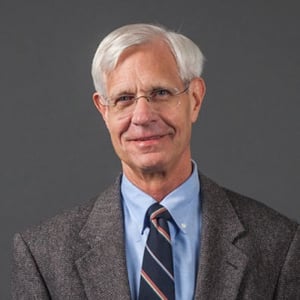
Distinguished University Professor, Antonin Scalia Law School, George Mason University
University Professor Nelson Lund is the author of Rousseau’s Rejuvenation of Political Philosophy: A New Introduction. He has also written widely in the field of constitutional law, including articles on constitutional interpretation, federalism, separation of powers, the Second Amendment, the Commerce Clause, the Speech or Debate Clause, the Equal Protection Clause, and the Uniformity Clause. In addition, he has published articles in the fields of employment discrimination and civil rights, the legal regulation of medical ethics, and the application of economic analysis to legal institutions and legal ethics.
Professor Lund graduated from St. John's College in Annapolis, Maryland, after which he received an MA in philosophy from the Catholic University of America and a PhD in political science from Harvard University. He left the faculty of the University of Chicago to attend its law school, where he served as executive editor of the University of Chicago Law Review and chapter chairman of the Federalist Society for Law and Public Policy Studies. After law school, he held positions at the United States Department of Justice in the Office of the Solicitor General and the Office of Legal Counsel. He also served as a law clerk to the Honorable Patrick E. Higginbotham of the United States Court of Appeals for the Fifth Circuit and to the Honorable Sandra Day O'Connor of the United States Supreme Court. Following his clerkship with Justice O'Connor, Professor Lund served in the White House as associate counsel to the president from 1989 to 1992.
Since joining the faculty at George Mason University's Antonin Scalia Law School, Professor Lund has taught Constitutional Law, Legislation, Federal Election Law, Employment Discrimination, State and Local Government, and seminars on the Second Amendment and on a variety of topics in Jurisprudence.
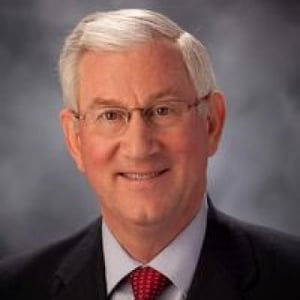
Of Counsel, Erickson & Sederstrom
Professional Positions
Former Member of National Association of Attorneys General Executive Committee (2002)
Member, Society of Attorneys General Emeritus (SAGE)
Washington Legal Foundation, Policy Advisory Board
Federalist Society, Member of the Federalism Subcommittee for Federalism and Separation of Powers
Former Member, TRANSLink Transmission Co., Board of Directors
Former Member, U.S. Chamber of Commerce Federalism Working Group
Former Chair, Nebraska Crime Commission
Honors and Accomplishments
Argued cases in the United States Supreme Court
Phi Beta Kappa
Republican Nominee for U.S. Senate in Nebraska (2000)
Founding Member of the Republican Attorneys General Association
Nebraska Fertilizer and Ag Chemical Institute's Government Official of the Year (2000)
Nebraska Coalition for Victims of Crime's Public Policy Award (1999)
Lincoln Independent Business Association's Business Champion Award (1997)
Lincoln Jaycees Outstanding Young Individual Award (1981)
Prior to Becoming of Counsel to Erickson & Sederstrom, P.C.
Attorney General of Nebraska (1991-2003)
Legal Counsel to the Governor of Nebraska (1979-1983)
University of Nebraska, Lincoln, B.A. (1970)
Harvard Business School, M.B.A. (1974)
Harvard Law School, J.D. (cum laude) (1974)
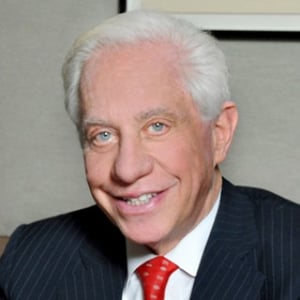
Partner, Shook, Hardy & Bacon LLP
Victor Schwartz chairs the firm's Public Policy Practice Group, which focuses on integrating litigation, government affairs and public relations. The group seeks to be the vanguard of developing public policy issues that will help improve our civil justice system. Mr. Schwartz also has an active appellate practice and advises product manufacturers on liability prevention, litigation and public relations issues.
Sought by print and broadcast media, Mr. Schwartz is frequently quoted in The Wall Street Journal, The Washington Post and The New York Times. He has appeared on Oprah, 60 Minutes and leading news programs. The Legal Times of Washington has named Mr. Schwartz one of Washington’s Top 30 “Visionary” lawyers, and The National Law Journal named Mr. Schwartz one of the 100 most influential lawyers in the United States in March 2013.
Mr. Schwartz is on the Board of Directors of the Searle Civil Justice Institute at George Mason University School of Law. He is a frequent participant in judicial education programs. Mr. Schwartz serves as General Counsel to the American Tort Reform Association.
Prior to entering the full time practice of law, Mr. Schwartz was a professor and dean at the University of Cincinnati College of Law. He currently serves on the College’s Board of Visitors. In 2012, the College established the Professor Victor E. Schwartz Chair in Tort Law.
Mr. Schwartz, while at the U.S. Department of Commerce, served as chair of the Federal Inter-Agency Task Force on Product Liability, and the Federal Inter-Agency Council on Insurance. He was the principal author of the Uniform Product Liability Act and the Federal Risk Retention Act. He received the Secretary of Commerce’s Award for Professional Excellence.
Mr. Schwartz is co-author of the most widely used torts casebook in the United States, Prosser, Wade and Schwartz’s Torts (12th ed. 2010). He is author of the leading text Comparative Negligence (5th ed. 2010).
Mr. Schwartz has been an advisor for each of the American Law Institute’s (ALI) Restatement (Third) of Torts projects; Products Liability, Apportionment of Liability, and Liability for Physical Injury and Emotional Harm. He is a life member of the ALI.
Mr. Schwartz’s law review articles have analyzed almost every major subject of modern tort and civil justice public policy issues. His articles are frequently cited by both state and federal courts.

Abortion and the Courts
Wendy Long, Jennifer G. Brown
The Supreme Court has upheld the constitutionality of the Partial-Birth Abortion Ban Act, passed by...
Five Questions on Immigration Reform
John C. Eastman, Margaret D. Stock
Below, two Federalist Society members pose and then answer questions about the Immigration Reform measures...
Toward a Simpler Standard for Abrogating Sovereign Immunity
William Thro
In recent terms, the Supreme Court has repeatedly addressed issues related to the states’ sovereign...
Recent Gay Marriage Rulings
John Shu
Gay marriage litigation continues to occur in various forms among the several states. In the...
Recent Trends in the Alabama Supreme Court
Publius
Tort and Consumer Issues In the early ‘90s, tort reform advocates viewed Alabama as a...
New Limit on Punitive Damages? A Look At State Farm v. Campbell
Wendy Keefer
In April of 2003, the United States Supreme Court again undertook to define what limits...
The Prodigal Argument: McCollum v. Board of Education, Introduction
Gerard V. Bradley
Judges, lawyers, and scholars all cite the 1947 case, Everson v. Board of Education, as...
Racial Profiling, Equal Protection, and the War Against Terrorism
Keith Noreika, Roger B. Clegg
by Roger Clegg, Center for Equal Opportunity and Keith Noreika, Covington & Burling SummaryIn this...
Hot Topics: Judicial Activism
Michael B. Brennan, Michael S. Greve
When President George W. Bush announced his first nominations for the federal bench, he declared,...
Firearms Litigation, Tort Liability, and the Second Amendment - A Symposium
Carl T. Bogus, John Coale, Nelson Lund, Donald B. Stenberg, Victor E. Schwartz
Editor's Note: At the 1999 National Lawyers Convention in Washington, D.C., the Civil Rights Practice Group...