
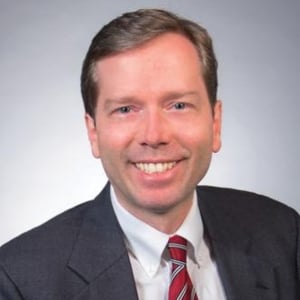
Senior Attorney and Counsel for Special Projects, Competitive Enterprise Institute
CEI’s Counsel for Special Projects is Hans Bader. Coming to CEI in 2003, Hans’s prior casework has included suits involving the First Amendment, federalism, and civil rights issues. He graduated from the University of Virginia with a B.A. in economics and history, and later earned his J.D. from Harvard Law School. Just before joining CEI, Hans was Senior Counsel at the Center for Individual Rights.
Adjunct Professor, Sandra Day O'Connor College of Law
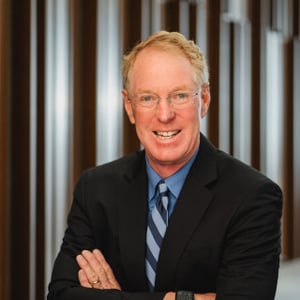
Ronald N. Boyce Presidential Professor of Criminal Law and University Distinguished Professor of Law, The University of Utah College of Law
Paul G. Cassell is an internationally recognized legal scholar on criminal and civil justice, crime victims' rights, constitutional law, evidence, judicial process, and other legal issues. Cassell received a B.A. (1981) and a J.D. (1984) from Stanford University, where he graduated Order of the Coif and was President of the Stanford Law Review. He clerked for then-Judge Antonin Scalia when Scalia was on the U.S. Court of Appeals for the D.C. Circuit (1984-85) and for Chief Justice Warren Burger of the United States Supreme Court (1985-86). Cassell then served as an Associate Deputy Attorney General with the U.S. Justice Department (1986-88) and as an Assistant U.S. Attorney for the Eastern District of Virginia (1988 to 1991). Cassell joined the faculty at the College of Law in 1992, where he taught full-time until he was sworn in as a U.S. District Court Judge for the District of Utah in July 2002. In November 2007, he resigned his judgeship to return full-time to the College of Law to teach, write, and litigate concerning issues relating to crime victims' rights and criminal and civil justice reform. Professor Cassell has also published numerous law review articles in journals such as the Stanford Law Review, the Michigan Law Review, the Harvard Journal of Law and Public Policy, and the Journal of Criminal Law and Criminology. He is a co-author of the nation's only law school textbook on crime victims' rights, Victims in Criminal Procedure (various editions, most recently in its fifth edition published in 2025). Professor Cassell has argued pro bono cases relating to criminal procedure and crime victims' rights before the United States Supreme Court, the 2nd, 4th, 5th, 6th, 7th, 8th, 9th, 10th, 11th, and D.C. Circuits (including the 5th and 11th Circuits en banc), several U.S. District Courts, the Utah Supreme Court, and the Arizona Supreme Court. In 2020, Cassell received the Ronald Wilson Reagan Public Policy Award - National Crime Victims' Service Award from the U.S. Department of Justice. Cassell is a member of the American Law Institute, a fellow of the American Bar Foundation, and an inaugural member of the Council on Criminal Justice. He is also an occasional blogger at The Volokh Conspiracy.
Retired
Tom Gede retired in 2023 as a principal in Morgan Lewis Consulting LLC and of counsel to the firm. He currently consults on a variety of legal and policy matters for both public and private clients. Tom has a national reputation and distinguished background in federal Indian law. Prior to retirement, he represented clients in complex governmental matters in litigation, administrative and regulatory proceedings, including high-profile matters involving state governments. A former senior deputy in the California Attorney General’s office, Tom was amicus coordinator and Supreme Court counsel, and argued cases in the US Supreme Court, the California Supreme Court, and numerous state and federal appellate courts.
Tom also served as executive director of the Conference of Western Attorneys General (CWAG), coordinating activities on key legal and policy issues, such as federal Indian law, energy, environmental, public lands, financial services, and telecommunications, for the attorneys general of 18 western states and territories. In 2016, Tom was elected as a Member of the American Law Institute (ALI), and served as an Adviser on the Restatement of the Law Third - The Law of American Indians. Tom also taught federal Indian law as an adjunct law professor at the University of the Pacific - McGeorge School of Law. He served as an assistant editor for and the author of the Indian gaming chapter in CWAG’s American Indian Law Deskbook (2d & 3d eds.). He has been engaged in Indian gaming and Indian law matters for more than three decades, having focused on the gaming compacts with Indian tribes, as well as complex civil and criminal jurisdiction, land, natural resources, water and law enforcement issues in Indian country. He has testified before Congress on American Indian and Native Alaskan issues. In 2012 he was appointed by Speaker John Boehner to serve on the United States Indian Law and Order Commission, where he examined criminal justice issues in Indian country and Alaska, resulting in the issuance of an important report to the President and Congress.
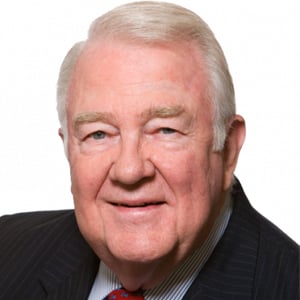
Ronald Reagan Distinguished Fellow Emeritus, The Heritage Foundation
Edwin Meese III, the prominent conservative leader, thinker and elder statesman, continues a quarter-century formal association with The Heritage Foundation as the leading think tank’s Ronald Reagan Distinguished Fellow Emeritus.
In that capacity, Meese oversees special projects and acts as an ambassador for Heritage within the conservative movement.
Meese was chairman of Heritage’s Center for Legal and Judicial Studies from its founding in 2001 until what he calls his “semi-retirement” on Feb. 1, 2013.
He joined Heritage in 1988 as the think tank's first Ronald Reagan Distinguished Fellow -- the only policy chair in the country to be officially named for the 40th president. His work focused on keeping President Reagan’s legacy of conservative principles alive in public debate and discourse.
The legal center now bears his name, in recognition of Meese’s contributions to the rule of law and the nation’s understanding of constitutional law. Its mission is to educate government officials, the media and the public about the Constitution and legal principles -- and how they affect public policy.
Perhaps best known as U.S. attorney general during Reagan’s second term, Meese’s service to the conservative icon stretched from the California governor’s mansion in 1966 to the White House in 1981 before he went to the Department of Justice four years later.
His Heritage “hats” kept Meese among the major conservative voices in national policy debates at an age when most men and women enjoyed quiet retirements.
In 2006, for example, Meese was named to the Iraq Study Group, a special presidential commission dedicated to examining the best resolutions for America's involvement in Iraq. In the past few years he wrote and spoke about constitutional topics ranging from religious liberty to the responsibility of Supreme Court justices.
Immediately after Reagan's death in 2004, and in the years since, Meese often agreed to major media appearances to discuss the lasting impact of his old friend, mentor and boss. He has summarized the Reagan legacy in three accomplishments: Reagan cut taxes and kept them low. He worked to defeat and end the Soviet Union and its worldwide push for communism. And he restored America's faith in itself after years of failure and "malaise."
"I admired him as a leader and cherish his friendship," Meese wrote in a 2004 essay for Heritage members and supporters. "Ronald Reagan had strong convictions. He was committed to the principles that had led to the founding of our nation. And he had the courage to follow his convictions against all odds." <[>Edwin Meese III was born Dec. 2, 1931, to Edwin Jr. and Leone Meese in Oakland, Calif. He graduated from Yale University in 1953 and holds a law degree from the University of California-Berkeley.
Meese spent much of his adult life working for Reagan, first after the former actor, sports announcer and athlete was elected as California’s governor in 1966 and then when he sought and won the presidency in 1980.
Reagan never forgot Meese's loyalty and hard work. During a press conference at which reporters questioned Meese's actions at the Justice Department, Reagan replied: "If Ed Meese is not a good man, there are no good men."
During the Reagan governorship, Meese served as executive assistant and chief of staff from 1969 through 1974 and as legal affairs secretary from 1967 through 1968. He previously was deputy district attorney in Alameda County, Calif.
From January 1981 to February 1985, Meese held the position of counsellor to the president -- the senior job on the White House staff -- and functioned as Reagan's chief policy adviser. In 1985, he received Government Executive magazine's annual award for excellence in management.
Meese served as the 75th attorney general of the United States from February 1985 to August 1988. As the nation's chief law enforcement officer, he directed the Justice Department and led international efforts to combat terrorism, drug trafficking and organized crime.
Meese’s relationship with Heritage began when he met with senior management to discuss the think tank's landmark policy guide, Mandate for Leadership, prepared for the incoming administration. Meese later recalled that Reagan personally handed out copies of the 1,093-page book to members of his Cabinet and asked them to read it. Nearly two-thirds of Mandate's 2,000 recommendations would be adopted or attempted by the Reagan administration.
More than a decade after joining Heritage, Meese assumed the chairmanship of its Center for Legal and Judicial Studies. Under his guidance, the center counseled White House staffers, Justice Department officials and Senate Judiciary Committee members on the importance of filling judicial vacancies with qualified men and women who are committed to interpreting the Constitution according to the founding document's original meaning.
The center became known for hosting "moot court" practice sessions to sharpen the arguments of attorneys slated to bring important cases before the Supreme Court. Those cases addressed constitutional issues ranging from property rights to racial preferences in primary and secondary schools to restrictions on free speech in campaign finance law.
Meese headed the legal center's Advisory Board for the writing and editing of the best-selling book, The Heritage Guide to the Constitution (Regnery, 2005). In it, 109 experts walked readers through a clause-by-clause analysis of the Constitution. Sen. Tom Coburn (R-Okla.) was among those keeping the reference work handy during Judiciary Committee hearings on Supreme Court nominees.
Meese's other books include “Leadership, Ethics and Policing” (Prentice Hall, 2004); “Making America Safer” (Heritage, 1997); and “With Reagan: The Inside Story” (Regnery Gateway, 1992).He wrote the Introduction to a well-received 2010 book on the “overcriminalization” trend, “One Nation Under Arrest,” by Heritage veterans Paul Rosenzweig and Brian W. Walsh.
He also is a distinguished visiting fellow at the Hoover Institution at Stanford University in California and lectures, writes and consults throughout the United States on a variety of subjects.
As both attorney general and counsellor to Reagan, Meese was a member of the Cabinet and the National Security Council. He served as chairman of the Domestic Policy Council and the National Drug Policy Board. After Reagan won the White House in the 1980 election, Meese headed the transition team. During the campaign, he was the Reagan-Bush Committee's senior official.
Meese had a career outside government and politics. From 1977 to 1981, he was a law professor at the University of San Diego, where he also directed the Center for Criminal Justice Policy and Management.
He was an executive in the aerospace and transportation industry as vice president for administration of Rohr Industries Inc. in Chula Vista, Calif. He left Rohr to return to the practice of law, doing corporate and general work in San Diego County.
A retired colonel in the Army Reserve, Meese remains active in numerous civic and educational organizations.
He and his wife, Ursula, have two grown children and reside in McLean, Va.
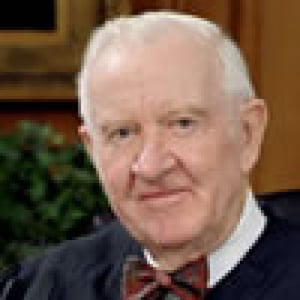
Former Associate Justice, United States Supreme Court
John Paul Stevens was appointed to the Supreme Court in 1975. As the newest member of the Court, Stevens had the duty of keeping minutes and answering the door in the justices' closed conference. Stevens had to wait six years, until the appointment of Sandra Day O'Connor, before he relinquished his freshman spot. Today, Stevens is the most senior justice, both in age and years of service. In seniority, he is second only to Chief Justice John G. Roberts, Jr. Stevens now speaks second in conference after Roberts; and, Stevens can assign opinions in the event that he is in the majority and Roberts is in minority. Still, Stevens' influence remains uncertain. Many observers point to his quirky and unconventional jurisprudence as a constraint on his ability to lead the Court. They argue that Stevens' individualistic personality keeps him permanently outside the mainstream of the Court and that he lacks the characteristics of a coalition-builder. However, as the Court has turned further to the right with the appointments of Chief Justice Roberts and Justice Samuel A. Alito, Jr., Stevens has emerged as the voice of moderation on an increasing conservative bench.
John Paul Stevens was born on April 20, 1920, in Chicago, Illinois, as the youngest of Ernest and Elizabeth Stevens' four sons. Stevens grew up in a wealthy family. His father made a fortune in the insurance and hotel business and owned the Stevens Hotel, which has since become the Chicago Hilton. The Stevens lived near the University of Chicago campus and sent their sons to the university's laboratory school for preparatory education. Stevens attended college at the University of Chicago, following his father's footsteps, and joined his father's fraternity. He participated in a wide variety of campus activities and graduated Phi Beta Kappa in 1941. A year after his graduation, Stevens married Elizabeth Sheeren, with whom he had a son and three daughters.
Stevens enlisted in the Navy during World War II. In his position as part of a Navy code-breaking team, Stevens earned the Bronze Star. Following the war, he again followed his father's path and entered Northwestern University Law School to study law. Stevens distinguished himself at Northwestern by becoming editor-in-chief of the school's law review and graduating with the highest grades in the law school's history. After graduating, he served a term as law clerk to Supreme Court Justice Wiley Rutledge.
Stevens joined a prominent law firm in Chicago specializing in antitrust law and creating a reputation as a talented antitrust lawyer. He left the firm to start his own practice after three years and also began teaching law at Northwestern University and the University of Chicago law schools. His abilities in antitrust laws earned him positions with various special counsels to the House of Representatives and the U.S. Attorney General's office.
Stevens became known as a fair-minded and able counsel. Richard Nixon appointed him to the Unites States Court of Appeals for the Seventh Circuit in 1970. On the appeals court, Stevens continued to establish his reputation as a notable legal thinker. When Justice William Douglas stepped down from the Court in 1975. Attorney General Edward Levi proposed Stevens' appointment to the High Court. President Gerald Ford acted on Levi's advice and the Senate confirmed Stevens' appointment without controversy.
As a justice, Stevens has avoided simple conservative or liberal labels. As the Court moved toward the right during the Reagan and Bush presidencies, however, Stevens appeared more and more liberal relative to the make-up of the Court. Although Stevens is the difficult to predict, his approach to judicial decision-making can be summarized in a general sense. Stevens will typically examine the facts of each case carefully and on its own merits. He also seeks to defer to the judgments of others who he feels are better suited to decide. He has demonstrated considerable judicial restraint and deference to the Congress.
After 34 years, 6 months, and 11 days of service on the Court, Stevens stepped down on June 29, 2010. He is now tied with Justice Stephen J. Field for second place on the all-time list for continuous service, superseded only by Justice William O. Douglas. If Douglas is the Cal Ripken Jr. of the Supreme Court, that would make Stevens the Court's Lou Gehrig.
Justice Stevens has not departed from the spotlight, however. He has written two books --Five Chiefs: A Supreme Court Memoir and Six Amendments: How and Why We Should Change the Constitution -- and several critical book reviews and commentaries. In 2014, Stevens testified before a Senate committee to express his pointed criticism of more recent Supreme Court decisions undoing spending limits in political campaigns.
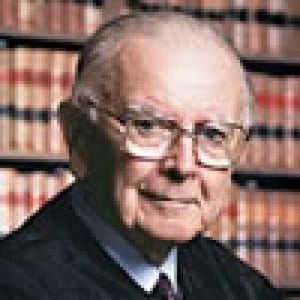
Former Associate Justice, United States Supreme Court
William J. Brennan, Jr. was born and raised in New Jersey. The second of eight children born to Irish immigrants, Brennan gave early evidence of academic achievement. Brennan completed his law degree at Harvard and entered private practice in his home state of New Jersey. When his practice intruded on his devotion to his family, Brennan opted for service as a trial judge. He was promoted to the state's highest court in 1952.
He was appointed to the Supreme Court in 1956 by President Dwight D. Eisenhower. In a 1987 interview, Brennan recalled his first day on the Court. Later, Eisenhower would publicly admit the appointment was a mistake. That's because Brennan proved to be the most liberal and influential justice on the modern Supreme Court. He authored important opinions in the areas of free expression, criminal procedure, and reapportionment.
As a result of his leadership, Brennan imparted his constitutional vision to a broad coalition of his colleagues. He resigned on account of health in 1990.

States May Be Immune From Certain Lanham Act Claims
Thomas E. Graham
A decision issued December 13, 1996, by the United States District Court for the District...
Whether There is a Constitutional Right to Die
Keith A. Pesto
The existence of a constitutional right to die is currently under consideration by the United...
US v. Virginia: The New and Improved Equal Protection Clause
Anita K. Blair
Last summer's 7-1 Supreme Court decision in the Virginia Military Institute (VMI) case, United States...
The California Civil Rights Initiative Goes to Court
Hans Frank Bader
Last November, the voters of California adopted a state constitutional amendment, known as the California...
A Bill of Rights for Crime Victims
Steven J. Twist, Paul G. Cassell
While our Bill of Rights enumerates extensive rights for criminal defendants, it contains not a...
Supreme Court Reaffirms State Sovereignty
Thomas F. Gede
The most significant decision involving federalism that was handed down during the October 1995 Term--indeed,...
The Supreme Court Closes in on Racial Gerrymandering but Questions Remain
Joseph E. Broadus
A closely divided U.S. Supreme Court has extended the emerging pattern of condemnation of race-based...
The Great Debate: Attorney General Ed Meese III - November 15, 1985
Edwin Meese
Attorney General Edwin Meese III Before the DC Chapter of the Federalist Society Lawyers Division...
The Great Debate: Justice John Paul Stevens - October 23, 1985
John Paul Stevens
Justice John Paul Stevens Before the Federal Bar Association October 23, 1985, Chicago, Illinois What...
The Great Debate: Justice William J. Brennan, Jr. - October 12, 1985
William J. Brennan
Justice William J. Brennan, Jr. To the Text and Teaching Symposium, Georgetown University October 12,...