
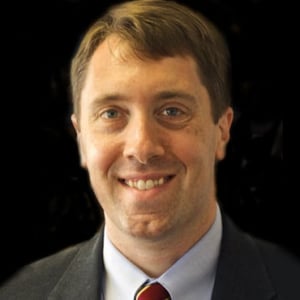
Professor of Law, Antonin Scalia Law School, George Mason University
Eric R. Claeys is Professor of Law at the Antonin Scalia Law School, George Mason University. He has written widely in the fields of property, private law, and constitutional law. Professor Claeys’s current research interests focus on flourishing- and labor-based natural rights justifications for property—in American property theory, in intellectual property, and in contemporary regulation of shale gas exploration and hydraulic fracturing. He is a member of the American Law Institute, he serves on the ALI’s Members’ Consultative Group for the first Restatement of Copyright, and he also serves as an adviser to the Restatement (Fourth) of the Law of Property.
Professor Claeys received his JD from the University of Southern California Gould School of Law. He received his AB from Princeton University, and he is a former visiting fellow and current member of Princeton’s Politics Department’s James Madison Program in American Ideals and Institutions. After law school, Professor Claeys clerked for the Hon. Melvin Brunetti, U.S. Court of Appeals for the Ninth Circuit, and the Hon. William H. Rehnquist, Chief Justice of the United States.
Professor Claeys’s main teaching interests include Property, Torts, Jurisprudence, and Intellectual Property. In recent years, he has also taught Water Law, Remedies, Estates and Trusts, Trade Secrecy, Constitutional Law, Torts, and Oil and Gas law. Spring 2018, he is teaching Torts and Jurisprudence as a Visiting Professor at Harvard Law School.
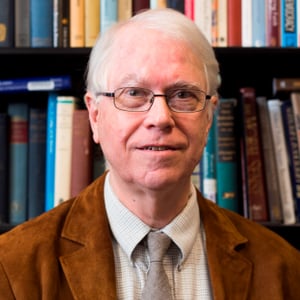
Paul Ermine Potter and Dawn Tibbetts Potter Endowed Professorship in Politics, Hillsdale College
Prof. Thomas G. West holds the Paul and Dawn Potter Chair in Politics at Hillsdale College. He received a B.A. from Cornell and Ph.D. from Claremont Graduate University. Before Hillsdale, he taught at the University of Dallas for three decades.
Prof. West has taught and published on a wide variety of topics, including Plato, Shakespeare, Locke, freedom of speech, contemporary liberalism, and Protestant theology in colonial America. Many of these writings are on his faculty page at Hillsdale.
His earlier book on the founding, Vindicating the Founders, responded to the typical liberal criticisms and misrepresentations of the founders’ view of blacks, women, and the poor. His latest book is The Political Theory of the American Founding: Natural Rights, Public Policy, and the Moral Conditions of Freedom.
In October, Prof. West received the Claremont Institute’s Salvatori Prize in the American Founding, presented at a Washington, DC conference on his new book.

Vice President, Edwin Meese III Institute for the Rule of Law, Advancing American Freedom
John G. Malcolm oversees Advancing American Freedom’s work to increase understanding of the Constitution and the rule of law as Vice President of the organization’s Edwin Meese III Institute for the Rule of Law. Malcolm brings to the challenge a wealth of legal expertise and experience in both the public and private sectors.
Prior to joining Advancing American Freedom in 2025, Malcolm was the Vice President of the Institute for Constitutional Government and the Director of the Meese Center for Legal and Judicial Studies at the Heritage Foundation. Prior to joining Heritage in 2012, Malcolm was general counsel at the U.S. Commission on International Religious Freedom, as well as a distinguished practitioner in residence at Pepperdine Law School. From 2004 to 2009, Malcolm was executive vice president and director of worldwide anti-piracy operations for the Motion Picture Association.
Malcolm served as a deputy assistant attorney general in the Department of Justice’s Criminal Division from 2001 to 2004, where he oversaw sections on computer crime and intellectual property, domestic security, child exploitation and obscenity, and special investigations. Immediately prior to that, he was a founding partner in the Atlanta law firm of Malcolm & Schroeder, LLP.
From 1990 to 1997, Malcolm was an assistant U.S. attorney in Atlanta, assigned to the fraud and public corruption section, and also an associate independent counsel, investigating fraud and abuse in the Department of Housing and Urban Development. He was honored with the Director’s Award for Superior Performance for his work in connection with the successful prosecution of Walter Leroy Moody Jr., who assassinated an 11th Circuit judge and the head of the Savannah chapter of the NAACP.
A graduate of Harvard Law School and Columbia College, Malcolm began his career as a law clerk to a federal district court judge and a federal appellate court judge, and as an associate at the Atlanta-based law firm of Sutherland, Asbill & Brennan (new Eversheds Sutherland).
Malcolm, who resides in Washington, D.C., serves on the Board of Trustees of the Washington National Opera and is a Senate-confirmed member of the Board of Directors of the Legal Services Corporation, the largest funder of civil legal aid in the United States.
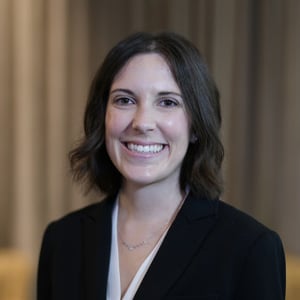
Director, Faculty Relations, The Federalist Society
Katie McClendon is the Director of Faculty Relations at the Federalist Society, where she has worked since 2015.
Katie holds a J.D. from the University of Pennsylvania Law School and a B.A. in Political Science from Biola University, where she was a member of the Torrey Honors Institute. She is a fellow of the John Jay Institute and the Blackstone Legal Fellowship. Katie is originally from Los Angeles, and she now lives with her husband and four children in Atlanta.

Senior Fellow and Director of Constitutional Studies, Manhattan Institute
Ilya Shapiro is a senior fellow and director of constitutional studies at the Manhattan Institute and a contributing editor of City Journal. Previously he was executive director and senior lecturer at the Georgetown Center for the Constitution, and before that a vice president of the Cato Institute.
Shapiro is the author of Lawless: The Miseducation of America’s Elites (2025) and Supreme Disorder: Judicial Nominations and the Politics of America’s Highest Court (2020), coauthor of Religious Liberties for Corporations? (2014), and editor of 11 volumes of the Cato Supreme Court Review (2008-18). He has contributed to a variety of academic, popular, and professional publications, including the Wall Street Journal, Harvard Journal of Law & Public Policy, Washington Post, Los Angeles Times, USA Today, National Review, and Newsweek. He also regularly provides commentary for various media outlets, writes the Shapiro’s Gavel newsletter on Substack, and once appeared on the Colbert Report.
Shapiro has testified many times before Congress and state legislatures and has filed more than 500 amicus curiae “friend of the court” briefs in the Supreme Court. He lectures regularly on behalf of the Federalist Society, is a member of the board of fellows of the Jewish Policy Center, was an inaugural Washington Fellow at the National Review Institute, and has been an adjunct law professor at the George Washington University and University of Mississippi. He is also the chairman of the board of advisers of the Mississippi Justice Institute, a barrister in the Edward Coke Appellate Inn of Court, and a former member of the Virginia Advisory Committee to the U.S. Commission on Civil Rights.
Earlier in his career, Shapiro was a special assistant/adviser to the Multi-National Force in Iraq on rule-of-law issues and practiced at Patton Boggs and Cleary Gottlieb. Before entering private practice, he clerked for Judge E. Grady Jolly of the U.S. Court of Appeals for the Fifth Circuit. He holds an AB from Princeton University, an MSc from the London School of Economics, and a JD from the University of Chicago Law School.
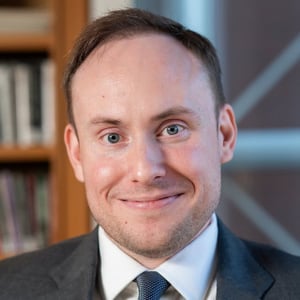
Director, Robert A. Levy Center for Constitutional Studies, Cato Institute
Thomas Berry is the director in the Cato Institute’s Robert A. Levy Center for Constitutional Studies and editor in chief of the Cato Supreme Court Review. Before joining Cato, he was an attorney at Pacific Legal Foundation and clerked for Judge E. Grady Jolly of the U.S. Court of Appeals for the Fifth Circuit. His academic work has appeared in NYU Journal of Law and Liberty, Washington and Lee Law Review Online, and Federalist Society Review. His popular writing has appeared in The Wall Street Journal, National Law Journal, Investor’s Business Daily, National Review Online, and The Hill Online. He has testified before the U.S. Senate, and his work has been cited by the U.S. District Court for the District of Columbia.
Berry holds a J.D. from Stanford Law School, where he was a senior editor on the Stanford Law and Policy Review and a Bradley Student Fellow in the Stanford Constitutional Law Center. He graduated with a B.A. in Liberal Arts from St. John’s College, Santa Fe.
Executive in Residence, Wake Forest University School of Business
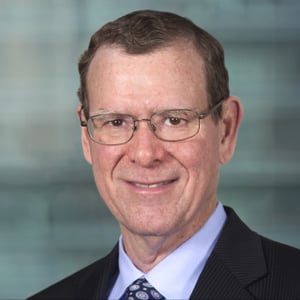
John Allison is an Executive in Residence at the Wake Forest School of Business. He is a member of the Cato Institute’s Board of Directors and Chairman of the Executive Advisory Council of the Cato Institute’s Center for Monetary and Financial Alternatives. Allison was president and CEO of the Cato Institute from October 2012 to April 2015. Prior to joining Cato, Allison was chairman and CEO of BB&T Corporation, the 10th-largest financial services holding company headquartered in the United States. During his tenure as CEO from 1989 to 2008, BB&T grew from $4.5 billion to $152 billion in assets. He was recognized by theHarvard Business Reviewas one of the top 100 most successful CEOs in the world over the last decade.
Allison has received the Corning Award for Distinguished Leadership, been inducted into the North Carolina Business Hall of Fame, and received the Lifetime Achievement Award from theAmerican Banker. He is the author of The Financial Crisis and the Free Market Cure: Why Pure Capitalism Is the World Economy’s Only Hope and The Leadership Crisis and the Free Market Cure: Why the Future of Business Depends on the Return to Life, Liberty, and the Pursuit of Happiness. In addition, he is a former Distinguished Professor of Practice at Wake Forest University School of Business, and serves on the Board of Visitors at the business schools at Wake Forest, Duke, and the University of North Carolina–Chapel Hill.
Allison is a Phi Beta Kappa graduate of the University of North Carolina–Chapel Hill. He received his master’s degree in management from Duke University and is also a graduate of the Stonier Graduate School of Banking. Allison is the recipient of six honorary doctorate degrees.
Professor of Law, Antonin Scalia Law School, George Mason University
Eric R. Claeys is Professor of Law at the Antonin Scalia Law School, George Mason University. He has written widely in the fields of property, private law, and constitutional law. Professor Claeys’s current research interests focus on flourishing- and labor-based natural rights justifications for property—in American property theory, in intellectual property, and in contemporary regulation of shale gas exploration and hydraulic fracturing. He is a member of the American Law Institute, he serves on the ALI’s Members’ Consultative Group for the first Restatement of Copyright, and he also serves as an adviser to the Restatement (Fourth) of the Law of Property.
Professor Claeys received his JD from the University of Southern California Gould School of Law. He received his AB from Princeton University, and he is a former visiting fellow and current member of Princeton’s Politics Department’s James Madison Program in American Ideals and Institutions. After law school, Professor Claeys clerked for the Hon. Melvin Brunetti, U.S. Court of Appeals for the Ninth Circuit, and the Hon. William H. Rehnquist, Chief Justice of the United States.
Professor Claeys’s main teaching interests include Property, Torts, Jurisprudence, and Intellectual Property. In recent years, he has also taught Water Law, Remedies, Estates and Trusts, Trade Secrecy, Constitutional Law, Torts, and Oil and Gas law. Spring 2018, he is teaching Torts and Jurisprudence as a Visiting Professor at Harvard Law School.
Paul Ermine Potter and Dawn Tibbetts Potter Endowed Professorship in Politics, Hillsdale College
Prof. Thomas G. West holds the Paul and Dawn Potter Chair in Politics at Hillsdale College. He received a B.A. from Cornell and Ph.D. from Claremont Graduate University. Before Hillsdale, he taught at the University of Dallas for three decades.
Prof. West has taught and published on a wide variety of topics, including Plato, Shakespeare, Locke, freedom of speech, contemporary liberalism, and Protestant theology in colonial America. Many of these writings are on his faculty page at Hillsdale.
His earlier book on the founding, Vindicating the Founders, responded to the typical liberal criticisms and misrepresentations of the founders’ view of blacks, women, and the poor. His latest book is The Political Theory of the American Founding: Natural Rights, Public Policy, and the Moral Conditions of Freedom.
In October, Prof. West received the Claremont Institute’s Salvatori Prize in the American Founding, presented at a Washington, DC conference on his new book.
Former United States Senator, Oklahoma
Tom A. Coburn, M.D. was elected to the U.S. Senate on November 2, 2004. Dr. Coburn's priorities in the Senate included reducing wasteful spending, protecting your liberty, balancing the budget, improving health care access and affordability, protecting the sanctity of all human life - including the unborn - and representing traditional, Oklahoma values. As a citizen legislator, Dr. Coburn pledged to serve no more than two terms in the Senate and to continue to care for patients. He was a member of the Senate Judiciary Committee, Homeland Security and Governmental Affairs Committee, and the Committee on Finance.
As a Senator, Dr. Coburn offered more amendments than any of his colleagues. He offered amendments to eliminate funding for the "Bridge to Nowhere," the "Woodstock Museum" in New York and countless other special interests earmarks sponsored by members of both parties. Dr. Coburn also worked to make government more accountable and transparent. In 2006, he teamed up with then-Senator Barack Obama to create http://www.usaspending.gov/, an online database of all federal spending.
Prior to his election to the Senate, Dr. Coburn represented Oklahoma's Second Congressional District in the House of Representatives from 1995 through 2001. He was first elected in 1994, then re-elected in 1996 and 1998, becoming the first Republican to hold the seat for consecutive terms. Dr. Coburn retired from Congress in 2001, fulfilling his pledge to serve no more than three terms in the House.
In 1970, Dr. Coburn graduated with an accounting degree from Oklahoma State University. From 1970 to 1978, Dr. Coburn served as manufacturing manager at the Ophthalmic Division of Coburn Optical Industries in Colonial Heights, Virginia. Under his leadership, the Virginia division of Coburn Optical grew from 13 employees to more than 350 and captured 35 percent of the U.S. market.
After the family business was sold, Dr. Coburn changed the course of his life by returning to school to become a physician at the University of Oklahoma Medical School where he graduated in 1983. He then did his internship in general surgery at St. Anthony's Hospital in Oklahoma City and family practice residency at the University of Arkansas, Fort Smith.
Dr. Coburn returned to Muskogee where he specialized in family medicine, obstetrics and the treatment of allergies. Dr. Coburn personally delivered more than 4,000 babies.

Topics
Interesting Establishment Clause Case in the Eleventh Circuit - Kondrat'Yev v. City of Pensacola
In May, the Eleventh Circuit will hear argument in Kondrat'Yev v. City of Pensacola (No....
The Political Theory of the American Founding
Eric R. Claeys, Thomas G. West
The Political Theory of the American Founding: Natural Rights, Public Policy, and the Moral Conditions...
The Political Theory of the American Founding
Practice Groups Teleforum
TeleforumMorally Innocent, Legally Guilty: The Case for Mens Rea Reform
John G. Malcolm
Note from the Editor: This article discusses the concept of mens rea, argues that too...
The Federalist Paper, Fall 2016
Katie McClendon
The Federalist Society takes the American Founding and the Constitution seriously, and with that comes...
Evenwel v. Abbott: The Court Shanks Its Punt on “One Person, One Vote”
Ilya Shapiro, Thomas Berry
Note from the Editor: This article criticizes the Supreme Court’s recent decision in Evenwel v....
Topics
The Public Contract Basis of Intellectual Property Rights
The Constitution’s Article I, Section 8 Intellectual Property Clause grants to Congress the power “To...
14th Annual Barbara K. Olson Memorial Lecture
John A. Allison
Good evening. It’s really both a pleasure and honor to be here. I want to...
Magna Carta: Muse and Mentor
Washington, District of ColumbiaSenator Coburn and the Judiciary Committee
Tulsa, Oklahoma