
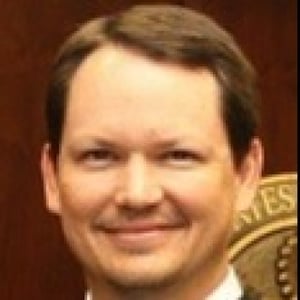
United States Senator, Utah
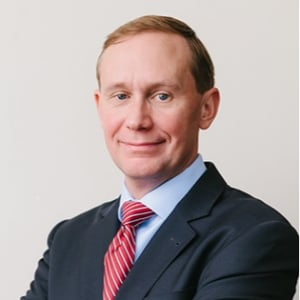
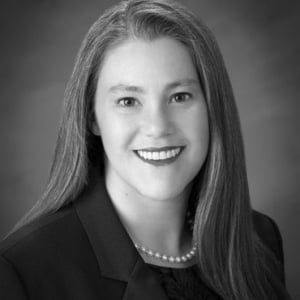
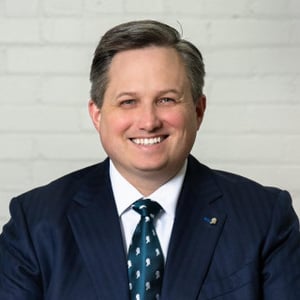
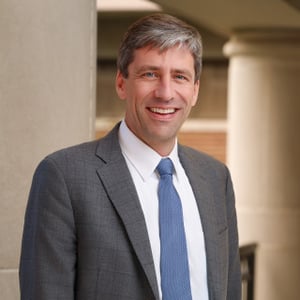
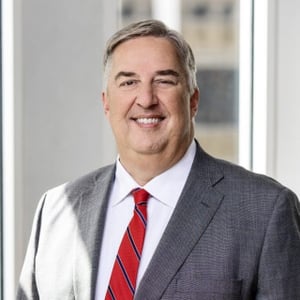
Elected in 2010 as Utah's 16th Senator, Mike Lee has spent his career defending the basic liberties of Americans and Utahns as a tireless advocate for our founding constitutional principles.
Senator Lee acquired a deep respect for the Constitution early on. His father, Rex Lee, who served as the Solicitor General under President Ronald Reagan, would often discuss varied aspects of judicial and constitutional doctrine around the kitchen table, from Due Process to the uses of Executive Plenary Power. He attended most of his father's arguments before the U.S. Supreme Court, giving him a unique, hands-on experience and understanding of government up close.
Lee graduated from Brigham Young University with a Bachelor of Science in Political Science, and served as BYU's Student Body President in his senior year. He graduated from BYU's Law School in 1997 and went on to serve as law clerk to Judge Dee Benson of the U.S. District Court for the District of Utah, and then with future Supreme Court Justice Judge Samuel A. Alito, Jr. on the U.S. Court of Appeals for the Third Circuit.
Lee spent several years as an attorney with the law firm Sidley & Austin specializing in appellate and Supreme Court litigation, and then served as an Assistant U.S. Attorney in Salt Lake City arguing cases before the U.S. Court of Appeals for the Tenth Circuit.
Lee served the state of Utah as Governor Jon Huntsman's General Counsel and was later honored to reunite with Justice Alito, now on the Supreme Court, for a one-year clerkship. He returned to private practice in 2007.
Throughout his career, Lee earned a reputation as an outstanding practitioner of the law based on his sound judgment, abilities in the courtroom, and thorough understanding of the Constitution.
Today, Lee fights to preserve America's proud founding document in the United States Senate. He advocates efforts to support constitutionally limited government, fiscal responsibility, individual liberty, and economic prosperity.
Lee is a member of the Judiciary Committee, and serves as Chairman of the Antitrust, Competition Policy and Consumer Rights Subcommittee protecting business competition and personal freedom.
He also oversees issues critical to Utah as the Chairman of the Water and Power Subcommittee of the Energy and Natural Resources Committee. He serves on the Commerce Committee and the Joint Economic Committee, as well.
In the 114th Congress, Lee also began his tenure as Chairman of the Senate Steering Committee, where he works with his Republican colleagues in the Senate to introduce bold and innovative solutions to issues facing the American people.
Lee and his wife Sharon live in Alpine, Utah, with their three children. He is a member of The Church of Jesus Christ of Latter-day Saints and served a two-year mission for the Church in the Texas Rio Grande Valley.
Professor Emerita of Law, George Mason University Antonin Scalia School of Law
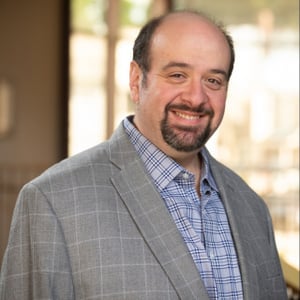
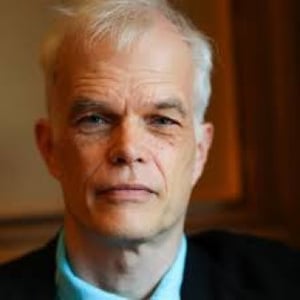
Professor Emerita Joyce Lee Malcolm is an historian and constitutional scholar active in the area of constitutional history, focusing on the development of individual rights in Great Britain and America. She is the author of eight books, most recently The Tragedy of Benedict Arnold: An American Life, May 2018. Professor Malcolm has written many books and articles on gun control, the Second Amendment, and individual rights. Her work was cited several times in the recent U.S. Supreme Court opinion in District of Columbia v. Heller.
Professor Malcolm has previously taught at Princeton University, Bentley College, Boston University, Northeastern University and Cambridge University. She was also a Senior Advisor at the Massachusetts Institute of Technology Security Studies Program, a Visiting Scholar at Massachusetts Center for Renaissance Studies, and is a Bye Fellow at Robinson College, Cambridge University.
Her seventh book, Peter's War: A New England Slave Boy and the American Revolution, was published by Yale University Press in 2009. "Magna Carta in America: Entrenched," a chapter authored by Professor Malcolm, appears in Magna Carta: The Foundation of Freedom 1215-2015 (Nicholas Vincent, Third Millennium Publishing). Her essays have appeared in The Wall Street Journal, The Financial Times, USA Today, The Boston Globe and other newspapers.
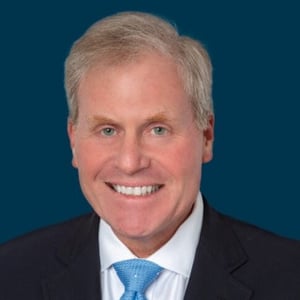
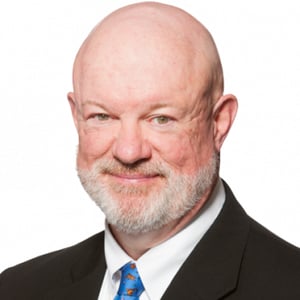
WILLIAM G. HYLAND JR is the author of four non-fiction books, including the award nominated IN DEFENSE OF THOMAS JEFFERSON (St. Martins 2009). His previous screenplay, DEADLINE, placed as a finalist in the STORYBAY competition. His legal publications include Law v. National Security: When Lawyers Make Terrorism Policy, University of Richmond Journal of Global Law and Business (Summer, 2008); Creative Malpractice: The Cinematic Lawyer, University of Texas Review of Entertainment and Sport Law, Vol. 9 (May, 2008); A Civil Action: Hemings v. Jefferson, American Journal of Trial Advocacy, Vol. 31. (December, 2007). He is also a member of Mystery Writers of America and the American Screenwriters Association. With a B.A. from the University of Alabama, Hyland is a noted trial lawyer, law professor and former prosecutor, whose credentials also include a TOP SECRET security clearance from the State Department in Washington.
Senior Fellow, The Claremont Institute
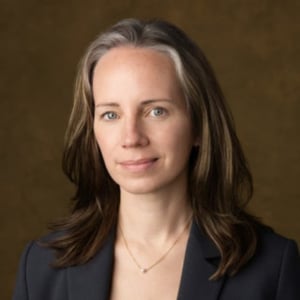
Charles Kesler is a Senior Fellow of the Claremont Institute, Editor of the Claremont Review of Books, host of Claremont’s The American Mind video series, and the Dengler-Dykema Distinguished Professor of Government at Claremont McKenna College.
Dr. Kesler also teaches in the Claremont Institute’s Publius Fellows Program and Lincoln Fellows Program. He received his B.A. in Social Studies and his M.A. and Ph.D. in Government from Harvard University. From 1989 to 2008, Dr. Kesler was director of CMC’s Henry Salvatori Center for the Study of Individual Freedom in the Modern World.
He is the recipient of the prestigious 2018 Bradley Prize, a high honor bestowed upon distinguished individuals who have influenced American scholarship and debate.
From September 2000 to March 2001, he served as vice chairman of the Advisory Committee to the U.S. Congress's James Madison Commemoration Commission.
He was selected in June 2000 as a member of the Scholars Commission on the Jefferson-Hemings Issue sponsored by the Thomas Jefferson Heritage Society.
Dr. Kesler is the author of I Am the Change: Barack Obama and the Crisis of Liberalism (Broadside Books); the editor of Saving the Revolution: The Federalist Papers and the American Founding (Free Press); co-editor, with John B. Kienker, of Life, Liberty, and the Pursuit of Happiness: Ten Years of the Claremont Review of Books (Rowman & Littlefield); and co-editor, with William F. Buckley, Jr., of Keeping the Tablets: Modern American Conservative Thought (HarperCollins). He has written extensively on American constitutionalism and political thought, and his edition of The Federalist Papers (Signet Classics) is the best-selling edition in the country.
Robert and Katheryn Dockson Professor of Public Policy and Professor Emeritus, Pepperdine University School of Public Policy
Gordon Lloyd is the Robert and Katheryn Dockson Professor of Public Policy at Pepperdine University. He earned his bachelor of arts degree in economics and political science at McGill University. He completed all the course work toward a doctorate in economics at the University of Chicago before receiving his master of arts and PhD degrees in government at Claremont Graduate School. The coauthor of three books on the American founding and sole author of a book on the political economy of the New Deal, he also has numerous articles, reviews, and opinion-editorials to his credit. His latest coauthored book, The New Deal & Modern American Conservatism: A Defining Rivalry, was published in 2013, and he most recently released as editor, Debates in the Federal Convention of 1787, in September 2014. He is the creator, with the help of the Ashbrook Center, of four highly regarded websites on the origin of the Constitution. He has received many teaching, scholarly, and leadership awards including admission to Phi Beta Kappa and the Howard White Award for Teaching Excellence at Pepperdine University. He currently serves on the National Advisory Council for the Walter and Leonore Annenberg Presidential Learning Center through the Ronald Reagan Presidential Foundation.
Professor of Law, Antonin Scalia Law School, George Mason University
Adam Mossoff is Professor of Law at Antonin Scalia Law School, George Mason University. He has published extensively on why patents, copyrights, and other intellectual property rights have been—and should be—legally secured to innovators and creators as property rights. His scholarship has been relied on by the United States Supreme Court, by lower federal courts, and by U.S. federal agencies. He has been invited to testify numerous times before the U.S. Senate and the House of Representatives on intellectual property legislation. His writings on intellectual property policy have also appeared in the Wall Street Journal, New York Times, Forbes, Investors Business Daily, and in other media outlets. His journal articles can be downloaded here.
Professor Mossoff is a longstanding member of the Executive Committee of the Intellectual Property Practice Group of the Federalist Society, on which he served as Chairperson from 2016-2018, and he is Chair of the Intellectual Property Working Group of the Regulatory Transparency Project of the Federalist Society. He is a Senior Fellow and Chair of the Forum for Intellectual Property at the Hudson Institute, a Visiting Intellectual Property Fellow at the Heritage Foundation, and a member of the Board of Directors of the Center for Intellectual Property Understanding. He is a member of the Intellectual Property Rights Policy Committee of ANSI and he has served as Chair and Vice-Chair of the Intellectual Property Committee of the IEEE-USA, on which he remains a member in good standing.
Professor of Law, Antonin Scalia Law School, George Mason University
Eric R. Claeys is Professor of Law at the Antonin Scalia Law School, George Mason University. He has written widely in the fields of property, private law, and constitutional law. Professor Claeys’s current research interests focus on flourishing- and labor-based natural rights justifications for property—in American property theory, in intellectual property, and in contemporary regulation of shale gas exploration and hydraulic fracturing. He is a member of the American Law Institute, he serves on the ALI’s Members’ Consultative Group for the first Restatement of Copyright, and he also serves as an adviser to the Restatement (Fourth) of the Law of Property.
Professor Claeys received his JD from the University of Southern California Gould School of Law. He received his AB from Princeton University, and he is a former visiting fellow and current member of Princeton’s Politics Department’s James Madison Program in American Ideals and Institutions. After law school, Professor Claeys clerked for the Hon. Melvin Brunetti, U.S. Court of Appeals for the Ninth Circuit, and the Hon. William H. Rehnquist, Chief Justice of the United States.
Professor Claeys’s main teaching interests include Property, Torts, Jurisprudence, and Intellectual Property. In recent years, he has also taught Water Law, Remedies, Estates and Trusts, Trade Secrecy, Constitutional Law, Torts, and Oil and Gas law. Spring 2018, he is teaching Torts and Jurisprudence as a Visiting Professor at Harvard Law School.
Paul Ermine Potter and Dawn Tibbetts Potter Endowed Professorship in Politics, Hillsdale College
Prof. Thomas G. West holds the Paul and Dawn Potter Chair in Politics at Hillsdale College. He received a B.A. from Cornell and Ph.D. from Claremont Graduate University. Before Hillsdale, he taught at the University of Dallas for three decades.
Prof. West has taught and published on a wide variety of topics, including Plato, Shakespeare, Locke, freedom of speech, contemporary liberalism, and Protestant theology in colonial America. Many of these writings are on his faculty page at Hillsdale.
His earlier book on the founding, Vindicating the Founders, responded to the typical liberal criticisms and misrepresentations of the founders’ view of blacks, women, and the poor. His latest book is The Political Theory of the American Founding: Natural Rights, Public Policy, and the Moral Conditions of Freedom.
In October, Prof. West received the Claremont Institute’s Salvatori Prize in the American Founding, presented at a Washington, DC conference on his new book.
Justice, Michigan Supreme Court
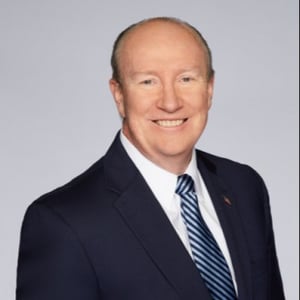
Stephen Markman was appointed Justice of the Michigan Supreme Court on October 1, 1999. He served as the Chief Justice from 2017-2019. Before his appointment, he served as Judge on the Michigan Court of Appeals from 1995-1999. Prior to this, he practiced law with the firm of Miller, Canfield, Paddock & Stone in Detroit.
From 1989-1993, Justice Markman served as United States Attorney, or federal prosecutor, in Michigan, after having been nominated by President George H. W. Bush and confirmed by the United States Senate. From 1985-1989, he served as Assistant Attorney General of the United States, after having been nominated by President Ronald Reagan and confirmed by the United States Senate. In that position, he headed the Department of Justice’s Office of Legal Policy, which served as the principal policy development office within the Department, and which coordinated the federal judicial selection process. Prior to this, he served for seven years as Chief Counsel of the United States Senate Subcommittee on the Constitution, and as Deputy Chief Counsel of the United States Senate Judiciary Committee.
Justice Markman has authored articles for such publications as the University of Michigan Journal of Law Reform, the Detroit College of Law Review, the Stanford Law Review, the University of Chicago Law Review, the American Criminal Justice Law Review, the Barrister’s Law Journal, the Harvard Journal of Law & Public Policy, and the American University Law Review. He has also served as a contributing editor of National Review magazine, and has authored chapters in such books as “In the Name of Justice: The Aims of the Criminal Law,” “Still the Law of the Land,” and “Originalism: A Quarter Century of Debate.”
Justice Markman has taught constitutional law at Hillsdale College since 1993. He has served on the Board of Directors of the Western Michigan University Thomas M. Cooley Law School. He traveled to Ukraine on two occasions on behalf of the State Department, to provide assistance in the development of that nation’s post-Soviet constitution. He is a Fellow of the Michigan Bar Foundation, a Master of the Bench of the Inns of Court, and a member of the One Hundred Club. He has spoken before hundreds of youth, civic, charitable, and legal groups throughout Michigan and nationally, and has coached Little League baseball and basketball. He lives with his wife Mary Kathleen in Mason, and has two sons, James and Charles.
Justice Markman was re-elected to the Supreme Court in 2000, 2004, and 2012. His present term expires January 1, 2021.
Judge, Oakland County Circuit Court, State of Michigan
Judge Michael D. Warren, Jr., was appointed to the Oakland County Circuit Court in December 2002 and elected to retain the position in 2004, 2006, and 2012. He is the presiding judge of the general civil and criminal division. He is the sponsor of the electronic data management system (e-filing) project of the Oakland County Circuit Court and the pilot judge for e-filing and the paperless courtroom. Judge Warren cofounded Patriot Week with his then 10-year-old daughter Leah (www.patriotweek.org) and is the author of America's Survival Guide: How to Stop America's Impending Suicide by Reclaiming Our First Principles. He has received the Oakland County Bar Association's Distinguished Public Servant Award and several other awards. A former visiting professor at the Western Michigan University Thomas M. Cooley Law School teaching classes in constitutional law, Judge Warren has published a number of guest commentaries in various publications on the law, education, and civics.
Blueprint for American Rights: George Mason’s Declaration
Mike S. Lee, Joyce Lee Malcolm, William G. Hyland
George Mason may be one of the lesser-known Founding Fathers, but his role in shaping...
Topics
Lemon is Dead
“Lemon is dead,” quoth the court, and there was much rejoicing. Happily, the glad tidings...
Brutus v. Publius: The Fight Over the Judiciary
Charles R. Kesler, Gordon Lloyd
Before the United States Constitution was ratified, the Founding Fathers famously debated the merits and...
Can a New Establishment Clause Jurisprudence Succeed in Protecting Religious Minorities Where Lemon Has Failed?
Alexandra M. Lightfoot
Note from the Editor: The Federalist Society takes no positions on particular legal and public...
Renewing the Spirit of America through Patriot Week
TeleforumThe Founding Fathers as Economic Innovators
Adam Mossoff
Adam Mossoff, Professor of Law, Antonin Scalia Law School, describes how the Founding Fathers viewed...
The Hubris of Judges Threatens Our Ability to Govern Ourselves
The Pennsylvania Supreme Court issued a ruling in February establishing new congressional voting districts for...
Topics
James Madison, Not Just the “Father of the Constitution”
As Federalist Society members, we revere James Madison as the “Father of the Constitution,” because...
Topics
Interesting Establishment Clause Case in the Eleventh Circuit - Kondrat'Yev v. City of Pensacola
In May, the Eleventh Circuit will hear argument in Kondrat'Yev v. City of Pensacola (No....
The Political Theory of the American Founding
Eric R. Claeys, Thomas G. West
The Political Theory of the American Founding: Natural Rights, Public Policy, and the Moral Conditions...