What Did the Founders Think of the President’s Pardon Power?
Event Video




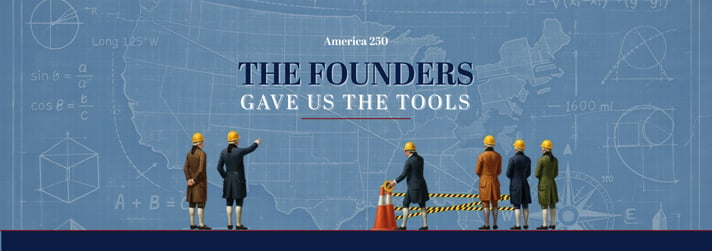
In this Federalist Society America250 series, experts analyze modern legal and policy debates through the lens of the Founding generation. The Founders gave us the tools to answer many contemporary questions; join us as we explore those answers.
During the constitutional convention, Alexander Hamilton raised the idea of a presidential pardon power, borrowing from the British monarchy’s prerogative of mercy. Hamilton’s proposal ultimately resulted in Article II, Section 2 of the U.S. Constitution, which gives the president the authority to pardon individuals convicted of a federal crime.
The first presidential pardon was exercised by George Washington in 1795, when he granted amnesty to individuals who participated in Pennsylvania’s Whiskey Rebellion. Since then, there have been more than 14,000 instances of presidential pardons. From Andrew Johnson’s pardon of Jefferson Davis to Gerald Ford’s preemptive pardon of Richard Nixon to more recent instances including Joe Biden’s preemptive pardon of Hunter Biden and Donald Trump’s January 6th pardons, presidents’ use – and sometimes purported abuse – of the power has been a controversial and fiercely debated executive authority throughout our nation’s history.
Join our panel of experts as they explore the Founders’ views of the pardon power and place recent use in context with the founding generation.
Featuring:
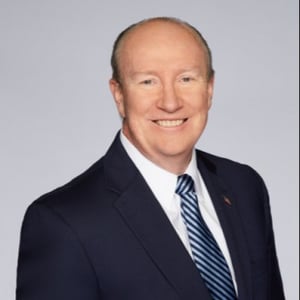
- Paul J. Larkin, Senior Legal Fellow, Advancing American Freedom
- Andrew McCarthy, Senior Fellow, National Review Institute; Contributing Editor, National Review
- James Trusty, Member, Ifrah Law
- (Moderator) Jeffrey DeSousa, Florida Office of the Attorney General
*******
As always, the Federalist Society takes no position on particular legal or public policy issues; all expressions of opinion are those of the speaker.