
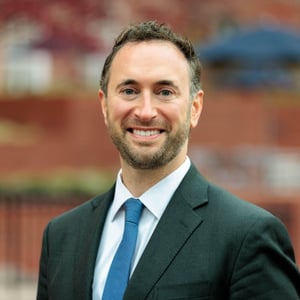
Associate Dean for Academic Affairs, The George Washington University Law School
Aram A. Gavoor is the Associate Dean for Academic Affairs and an internationally recognized scholar in American administrative law, national security, and federal courts. His co-authored work was cited by the U.S. Supreme Court in Department of Commerce v. New York (2019). His scholarship has earned placement in the Florida Law Review, Indiana Law Journal, Ohio State Law Journal, and other law journals. He has briefed and argued over a dozen high-profile public law cases before a majority of the U.S. Courts of Appeals and numerous cases before almost a third of the 94 U.S. District Courts. Associate Dean Gavoor frequently shares his national security, artificial intelligence policy, and federal courts expertise with international news media, including CNN, BBC World News, Wall Street Journal, NBC News, and ABC (Australia) World News. In 2021, the National Law Journal named Associate Dean Gavoor a Rising Star (top 40 under 40) honoree.
Earlier in his career, Associate Dean Gavoor served as Senior Counsel for National Security in the Civil Division of the U.S. Department of Justice, as third-in-rank Counselor to the Administrator of the Office of Information and Regulatory Affairs in the White House Office of Management and Budget, and in private practice. He received the Attorney General's Award for Distinguished Service in 2019, the Civil Division Special Commendation Award in 2020, 2019, and 2018, and a Commendation from the Human Rights and Special Prosecutions Section of the Criminal Division in 2018.
Associate Dean Gavoor previously served on the law school’s part-time faculty from 2008-2017 before accepting a term-limited position as Visiting Associate Professor from 2017-2019. He received GW Law’s Distinguished Adjunct Faculty Teaching Award from the 2020 and 2017 graduating classes. He currently teaches Constitutional Law II, Administrative Law, National Security Law, and Federal Courts.
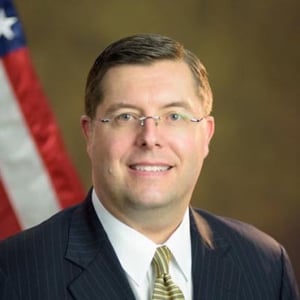
Chief Deputy Attorney General
Ryan Newman is currently Chief Deputy Attorney General for Florida Office of the Attorney General.
During the first Trump Administration, he served as Counselor to the United States Attorney General for national security and international affairs, Deputy General Counsel (Legal Counsel) for the Department of Defense, and Acting Assistant Attorney General for the Office of Legal Policy at the Department of Justice. Prior to serving in the Executive Branch, Ryan was Chief Counsel to United States Senator Ted Cruz during the 114th Congress.
Ryan served as a law clerk to the Honorable Samuel A. Alito, Jr. on the United States Supreme Court, the Honorable Richard J. Leon on the United States District Court for the District of Columbia, and the Honorable J.L. Edmondson on the United States Court of Appeals for the Eleventh Circuit.
Prior to law school, Ryan was an armor officer in the United States Army assigned to the 1st Squadron, 10th U.S. Cavalry Regiment (Buffalo Soldiers). He deployed to Iraq in 2003 for Operation Iraqi Freedom.
Ryan graduated from the United States Military Academy at West Point in 1998. He earned his law degree with high honors from The University of Texas School of Law in 2007.
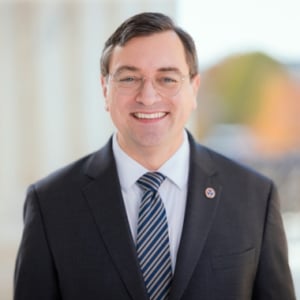
Attorney General of Tennessee
Jonathan Skrmetti was sworn in to an eight-year term as Tennessee’s Attorney General and Reporter on September 1, 2022.
Prior to his current role, General Skrmetti served as Chief Counsel to Governor Bill Lee and as Chief Deputy Attorney General to his predecessor, Tennessee Attorney General Herbert Slatery.
Before working for the State of Tennessee, General Skrmetti was a partner at Butler Snow LLP in Memphis. His legal career began with nearly a decade as a federal prosecutor. He worked at the Civil Rights Division at Main Justice and then at the Memphis U.S. Attorney’s Office and prosecuted sex traffickers, corrupt government officials, and violent white supremacists. In addition, General Skrmetti taught cyberlaw as an adjunct professor at the University of Memphis.
General Skrmetti earned honors degrees from George Washington University, the University of Oxford, and Harvard Law School, where he was editor-in-chief of the Harvard Journal of Law & Public Policy. Following law school, Jonathan clerked for Judge Steven Colloton on the U.S. Court of Appeals for the Eighth Circuit. He lives in Franklin, Tennessee, with his wife and four children.
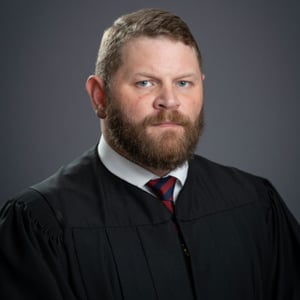
Justice, Texas Supreme Court
James P. Sullivan was appointed to the Texas Supreme Court by Governor Greg Abbott on January 7, 2025, after serving as his General Counsel. He is the proud husband of Alithea and father of Conan. Growing up in Austin, Judge Sully was an extra in the movie "Dazed & Confused." He was a highly unrecruited walk-on at Rice University, until an injury turned him into a debater. Once in law school, he met his wife, Alithea, on the Harvard Law Review. After graduating, he clerked on the D.C. Circuit for Judge Thomas B. Griffith. He also worked under then-Attorney General Abbott in the Office of the Solicitor General, in addition to stints as an adjunct professor at George Mason University and an appellate litigator in private practice.
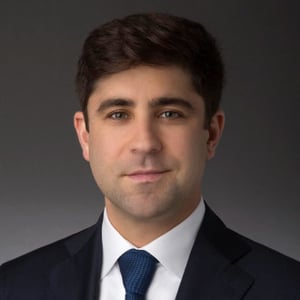
Partner, Sidley Austin LLP
Will Levi is a partner at Sidley Austin. He draws on his experience serving in senior roles at the U.S. Department of Justice and U.S. Senate to represent clients in high-stakes government enforcement actions, congressional investigations, litigation, and crisis situations. He focuses his practice on commercial disputes and government-facing litigation, including in matters defending against government enforcement actions and challenging federal regulatory action, and he represents clients before federal administrative agencies as well as in federal and state courts.
Prior to joining Sidley, Will served in senior roles at the U.S. Department of Justice, including as Chief of Staff of the Department of Justice and Senior Counselor to the Attorney General. In those roles, Will had broad responsibilities, including supervision of a wide range of high-profile civil litigation, criminal investigations and prosecutions, and national security matters. In recognition of outstanding service to the Department of Justice, Will was awarded the Department’s highest honor, the Edmund J. Randolph Award.
He also served as Chief Counsel to U.S. Senator Mike Lee and Staff Director of the U.S. Senate Judiciary Committee’s Subcommittee on Antitrust, Competition Policy, and Consumer Rights, which oversees the federal antitrust enforcement agencies and reviews major proposed mergers affecting the national economy.
Will regularly advises leading company executives and boards of directors on strategic legal issues arising from high-stakes litigation, congressional investigations and hearings, and government investigations and regulation. In recognition of his success, Will has been named a “Future Star” in the District of Columbia by Benchmark Litigation (2025), and he was ranked among an elite group of lawyers as a 2023 “D.C. Rising Star” by The National Law Journal.
Will clerked for U.S. Supreme Court Justice Samuel A. Alito, Jr. and U.S. Court of Appeals for the Third Circuit Judge Anthony J. Scirica. By appointment of the U.S. Court of Appeals for the D.C. Circuit, Will serves as a member of the Court’s Advisory Committee on Procedures. He is also an elected member of the American Law Institute and a member of the nominating committee for the William H. Webster Profiles in Leadership Award for Prosecution.
Chief Deputy Attorney General
Ryan Newman is currently Chief Deputy Attorney General for Florida Office of the Attorney General.
During the first Trump Administration, he served as Counselor to the United States Attorney General for national security and international affairs, Deputy General Counsel (Legal Counsel) for the Department of Defense, and Acting Assistant Attorney General for the Office of Legal Policy at the Department of Justice. Prior to serving in the Executive Branch, Ryan was Chief Counsel to United States Senator Ted Cruz during the 114th Congress.
Ryan served as a law clerk to the Honorable Samuel A. Alito, Jr. on the United States Supreme Court, the Honorable Richard J. Leon on the United States District Court for the District of Columbia, and the Honorable J.L. Edmondson on the United States Court of Appeals for the Eleventh Circuit.
Prior to law school, Ryan was an armor officer in the United States Army assigned to the 1st Squadron, 10th U.S. Cavalry Regiment (Buffalo Soldiers). He deployed to Iraq in 2003 for Operation Iraqi Freedom.
Ryan graduated from the United States Military Academy at West Point in 1998. He earned his law degree with high honors from The University of Texas School of Law in 2007.
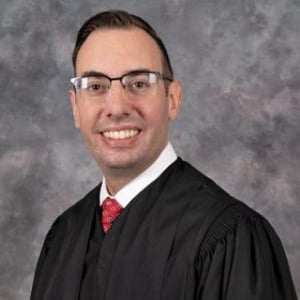
Circuit Judge, Ninth Judicial Circuit Court of Florida
Eric Netcher is a Circuit Judge in the Ninth Judicial Circuit of Florida. He was appointed to the bench in 2021 by Governor Ron DeSantis. Before his appointment, Judge Netcher’s practice focused on appeals and civil litigation in state and federal courts. He is Board Certified by the Florida Bar in Appellate Practice. Judge Netcher received his bachelor’s and law degrees from the University of Florida. After law school, he served as a judicial law clerk for U.S. District Court Judge David A. Faber.
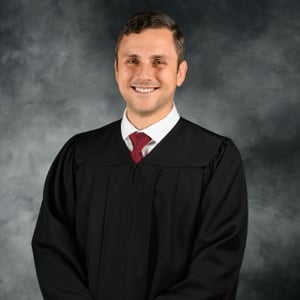
Judge, Florida Fifth District Court of Appeal
In April 2023, Judge Jordan E. Pratt was commissioned as a member of the Florida Fifth District Court of Appeal following his appointment by Governor Ron DeSantis.
Before joining the court, Judge Pratt worked as senior counsel at First Liberty Institute and served in various roles in state and federal government: as senior counsel in the U.S. Department of Justice, deputy general counsel in the U.S. Small Business Administration, and deputy solicitor general in the Florida Office of the Attorney General. As a deputy solicitor general, he defended significant Florida legislation and executive actions at every level of the state and federal court systems, with successful arguments before the U.S. Court of Appeals for the Eleventh Circuit, the Florida Supreme Court, and Florida’s First District Court of Appeal.
Judge Pratt graduated as a co-valedictorian of his undergraduate class at the University of Florida. He then received his J.D., magna cum laude, from the University of Florida College of Law, where he was a law review editor and president of the school’s Federalist Society and Christian Legal Society chapters. During law school, he interned for the Hon. Jeffrey S. Sutton on the U.S. Court of Appeals for the Sixth Circuit.
After his graduation from law school, Judge Pratt served as a law clerk to the Hon. Harvey E. Schlesinger on the U.S. District Court for the Middle District of Florida, Jacksonville Division. He then clerked for the Hon. Jennifer W. Elrod on the U.S. Court of Appeals for the Fifth Circuit.
Judge Pratt has held several fellowships, including an Olin–Searle Fellowship at Florida State University’s College of Law, and has published scholarship in the Tennessee Law Review, the Nebraska Law Review, and the Mississippi Law Journal. He is a member of the Federalist Society for Law & Public Policy Studies, and he has held several leadership roles in the organization, including service as president of its Tallahassee Lawyers Chapter from 2016 to 2019.
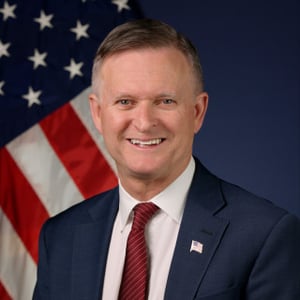
Deputy Secretary of Transportation, US Department of Transportation
Steven G. Bradbury was sworn in as the Deputy Secretary of Transportation on March 13, 2025, following his confirmation by the U.S. Senate on March 11, 2025. In this role, he oversees the Department’s operating administrations and spearheads initiatives to ensure a safe, efficient, and modern transportation system that strengthens economic productivity and global competitiveness. Deputy Secretary Bradbury also assists Secretary Duffy in managing the Department’s activities, including its workforce of over 58,000 employees and an annual budget exceeding $109 billion.
Bradbury previously served as the 23rd General Counsel of the Department of Transportation from 2017 to 2021, as the Acting Deputy Secretary from 2019, and as Acting Secretary of Transportation in 2021. As General Counsel, he was the chief legal officer, advising on all legal matters and ensuring the integrity and compliance of the Department’s policies and programs.
Before rejoining DOT, Bradbury was a Distinguished Fellow at The Heritage Foundation from December 2022 to March 2025. He has extensive experience in the public and private sector, having served as Principal Deputy and Acting Assistant Attorney General at the U.S. Department of Justice and as a partner at Kirkland & Ellis LLP and Dechert LLP. Earlier in his career, he clerked for Justice Clarence Thomas and Judge James L. Buckley.
Bradbury holds a J.D., magna cum laude, from the University of Michigan Law School and a B.A. in English from Stanford University.
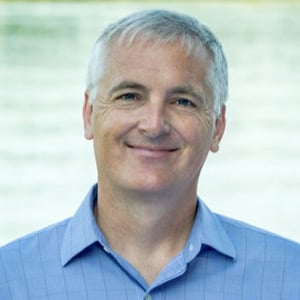
Partner, Donahue & Goldberg LLP
Sean H. Donahue's practice is focused on appellate litigation, including environmental cases in federal and state appellate courts, legal counseling, and helping clients communicate effectively to courts, agencies, and other audiences. He is a member of the bars of the District of Columbia and the State of California.
A 1992 graduate of University of Chicago Law School, Sean served as law clerk to Ruth Bader Ginsburg, then of the U.S. Court of Appeals for the D.C. Circuit, and to Justice John Paul Stevens. He entered private practice at Jenner & Block's Washington office, where he worked on civil matters including in telecommunications and First Amendment law. He then spent four years at the Department of Justice, Environmental and Natural Resources Division, Appellate Section, briefing and arguing cases in the United States Courts of Appeals, and state supreme courts concerning federal environmental and natural resources law, federal property law, takings, and Indian law.
Sean has argued approximately 50 cases in federal and state appellate courts. Since first establishing his own practice in 2002, he has represented environmental and public health organization parties in numerous major environmental and clean energy cases in the Supreme Court and the courts of appeals. His current practice includes representation of public interest organizations, governmental bodies, and private entities in environmental, energy, natural resources, and other cases. Sean has taught courses in environmental law, civil procedure, constitutional law and other subjects at Washington & Lee University School of Law, Iowa College of Law, and Georgetown University Law Center, and currently teaches climate change law and policy as a lecturer at Stanford Law School. He has given presentations at law schools including Berkeley, Columbia, Fordham, Harvard, Duke, Georgetown, Maryland, NYU, Northwestern, Stanford, University of Chicago, University of Florida, Vermont Law School, and Washington & Lee.

Judge, United States Court of Appeals, District of Columbia Circuit
Judge Katsas was appointed to the D.C. Circuit in December 2017. He graduated from Princeton University and Harvard Law School, where he was an executive editor on the Harvard Law Review. Between 1989 and 1992, he served as a law clerk to Judge Edward Becker on the Third Circuit, to then-Judge Clarence Thomas on the D.C. Circuit, and to Justice Thomas on the Supreme Court. Between 1992 and 2001, he was an associate and then partner in the Washington office of Jones Day, where he specialized in appellate and complex civil litigation. Between 2001 and 2009, he served in many senior positions in the Department of Justice, including as Assistant Attorney General for the Civil Division and as Acting Associate Attorney General. In 2009, he returned to Jones Day. From January to December 2017, he served as Deputy Assistant to the President and Deputy Counsel to the President.
Before joining the bench, Judge Katsas argued more than 75 appeals, including three cases in the Supreme Court, 13 cases in the D.C. Circuit, and cases in every other federal court of appeals. By appointment of the Chief Justice, he served on the Advisory Committee on Appellate Rules from 2013 to 2017. In 2016, he was elected to membership in the American Academy of Appellate Lawyers.
Chief Deputy Attorney General
Ryan Newman is currently Chief Deputy Attorney General for Florida Office of the Attorney General.
During the first Trump Administration, he served as Counselor to the United States Attorney General for national security and international affairs, Deputy General Counsel (Legal Counsel) for the Department of Defense, and Acting Assistant Attorney General for the Office of Legal Policy at the Department of Justice. Prior to serving in the Executive Branch, Ryan was Chief Counsel to United States Senator Ted Cruz during the 114th Congress.
Ryan served as a law clerk to the Honorable Samuel A. Alito, Jr. on the United States Supreme Court, the Honorable Richard J. Leon on the United States District Court for the District of Columbia, and the Honorable J.L. Edmondson on the United States Court of Appeals for the Eleventh Circuit.
Prior to law school, Ryan was an armor officer in the United States Army assigned to the 1st Squadron, 10th U.S. Cavalry Regiment (Buffalo Soldiers). He deployed to Iraq in 2003 for Operation Iraqi Freedom.
Ryan graduated from the United States Military Academy at West Point in 1998. He earned his law degree with high honors from The University of Texas School of Law in 2007.
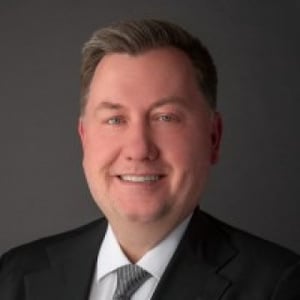
Partner, Sidley Austin LLP
JUSTIN SAVAGE is a global co-leader of the firm’s Environmental, Health, and Safety practice and co-leads the Automotive and Mobility sector team, where he is a leading strategist for companies navigating the intersection of complex regulation, high-stakes litigation, and transformative industry change. For nearly three decades, he has led clients through their most consequential environmental, health, and safety (EH&S) disputes and mobility-sector challenges, earning a reputation as both a trusted counselor and a forceful advocate in the courtroom and the boardroom. A core part of Justin’s practice also focuses on regulatory strategy and market entry, advising emerging technology companies, new market entrants, and established industry leaders on launching new products, technologies, and business models. He regularly counsel clients in emerging fields such as robotics and AI on engaging with regulators, anticipating enforcement and compliance risk, and building defensible regulatory strategies that support growth rather than slow it.
Clients praise Justin as “an excellent litigator… strategically clever and creative… attentive, thoughtful and willing to go above and beyond” (Chambers USA 2025). Chambers USA has ranked him for Band 1 for Environment in District of Columbia (2017–2025) and Band 3 for Transportation: Road (Automotive) in USA—Nationwide (2023–2025).
Justin has won some of the most closely watched EH&S and transportation disputes of the past two decades and guided companies through crises where business continuity, brand reputation, and regulatory survival were on the line. His leadership has been repeatedly recognized: he is a three-time Law360 Environmental “MVP” (2018, 2024, 2025) and a Lawdragon “500 Global Leaders in Crisis Management” (2025-2026). He is the first call for companies facing bet-the-company challenges.
Justin’s clients concentrate in heavily regulated industries, including auto and mobility, aviation, chemicals, data centers, energy, mining, and refining. Justin litigates and counsels across the spectrum of U.S. environmental, transportation, and administrative laws, including the Clean Air Act (Title I, mobile sources, and fuels), incident response, RMP, NHTSA, Clean Water Act, TSCA, CSB investigations, APA claims, FOIA litigation, NEPA, and the Safe Drinking Water Act.
Prior to joining Sidley, Justin served for nearly a decade at the Environmental Enforcement Section of the U.S. Department of Justice, where he led teams in several multi-billion dollar enforcement cases. In his career, Justin has regularly taught on a range of environmental and litigation topics. For several years, Justin served as an instructor at the Justice Department’s National Advocacy Center where he taught hundreds of Assistant U.S. Attorneys and other agency lawyers on topics that included trial advocacy and evidence. Since rejoining private practice, Justin has served eight times as a faculty member for the American Law Institute’s Environmental Litigation program. He also lectured on a range of litigation and trial topics for bar associations and organizations, including serving as an instructor for the FAA on trial advocacy.
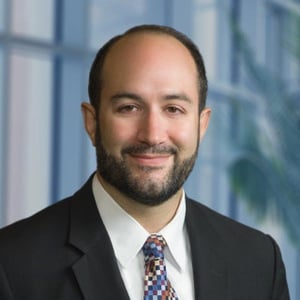
Judge, United States District Court, Northern District of Ohio
Judge J. Philip Calabrese was confirmed to serve on the U.S. District Court for the Northern District of Ohio in December 2020. Previously, he served on the State trial court in the Cuyahoga County Court of Common Pleas. Before taking the bench, he had a complex litigation practice for nearly two decades and was a partner at what is now Squire Patton Boggs and at Porter, Wright, Morris & Arthur, LLP, where he co-chaired the firm’s class action practice. After graduating from Harvard Law School, Judge Calabrese began his legal career as a law clerk to Judge Alice M. Batchelder of the United States Court of Appeals for the Sixth Circuit. He also serves as an adjunct professor at Case Western Reserve University School of Law, where he teaches an advanced course on expert evidence and at the University of Akron School of Law where he teaches the First Amendment’s Speech Clause.
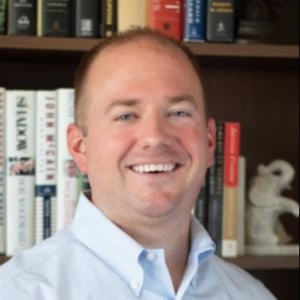
Member, Ohio House of Representatives
State Representative Brian Stewart is currently serving his first term as State Representative for the 78th Ohio House district, which includes Hocking and Morgan Counties, as well as portions of Athens, Fairfield, Muskingum and Pickaway Counties.
In addition to his career in public service, Rep. Stewart maintains a successful law practice representing businesses and individuals with The Law Office of Brian Stewart, LLC.
Rep. Stewart enlisted for active duty in the Army after experiencing 9/11 as a high school senior. He is an infantry veteran of the Iraq War and earned the Combat Infantryman’s Badge (CIB) in addition to twice receiving the Army Commendation Medal. Following his service, he returned to school and earned both his Bachelor’s and law degree from the Ohio State University.
A lifelong resident of Southern Ohio, Rep. Stewart is very active in his community. He is a past Vice President and Spokesman for the Ohio Fallen Heroes Memorial, a statewide memorial dedicated to all Ohio service members killed in the line of duty since 9/11. He has also been a member of the Pickaway County Farm Bureau, the Veterans of Foreign Warns, the Association of Ohio Commodores, the Pickaway County and Ohio State Bar Associations, the Pickaway Senior Center Board of Directors and the Pickaway County Republican Central Committee.
In his free time, Rep. Stewart is a dedicated movie buff, a passionate sports fan and enjoys target shooting, books on American history and the music of Johnny Cash. Rep. Stewart lives in Ashville and attends Village Chapel Church with his wife, Letanya, and their three children.
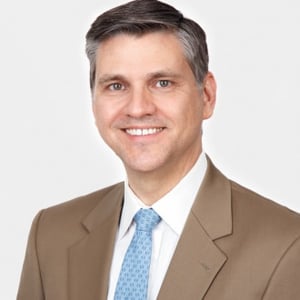
Partner, DiCello Levitt Gutzler LLC
David is a litigator and privacy advocate based in the New York office of DiCello Levitt Gutzler LLC. He is one of the nation’s leading voices for the recognition of property rights in personal data, a 10-year effort culminating in the Ninth Circuit’s landmark April 2020 decision in In re: Facebook Internet Tracking Litigation and the Northern District of California’s March 2021 decision in Calhoun v. Google, both of which he argued. David also successfully argued for the extraterritorial application of the Computer Fraud and Abuse Act in 2019 in In re: Apple Device Performance Litigation, and filed the first-ever data privacy class action under seal to address a dangerous website vulnerability under Court supervision in Rodriguez v. Universal Prop. & Cas. Ins. Co. As M.I.T. Technology Review magazine put it in 2012, David is “something of a pioneer” in the field.
David also frequently teaches, most recently as an adjunct professor at Yeshiva University’s Sy Syms School of Business, teaching Business Law and Ethics every fall semester from 2015 to 2021. Prior to joining DiCello Levitt, David was a partner with Kaplan Fox & Kilsheimer LLP, and helped launch the US offices of London-based Stewarts Law LLP before that, where he was the global head of investor protection litigation. Prior to joining the plaintiffs’ bar, David was an associate with the New York office of Skadden Arps Slate Meagher & Flom LLP. Although not currently an active member, David first joined the Federalist Society in law school in 1994, one of the few Society alums in the plaintiffs’ bar.
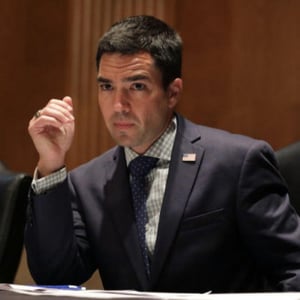
Vice President and General Counsel, NetChoice
Judge, United States District Court, Northern District of Ohio
Judge J. Philip Calabrese was confirmed to serve on the U.S. District Court for the Northern District of Ohio in December 2020. Previously, he served on the State trial court in the Cuyahoga County Court of Common Pleas. Before taking the bench, he had a complex litigation practice for nearly two decades and was a partner at what is now Squire Patton Boggs and at Porter, Wright, Morris & Arthur, LLP, where he co-chaired the firm’s class action practice. After graduating from Harvard Law School, Judge Calabrese began his legal career as a law clerk to Judge Alice M. Batchelder of the United States Court of Appeals for the Sixth Circuit. He also serves as an adjunct professor at Case Western Reserve University School of Law, where he teaches an advanced course on expert evidence and at the University of Akron School of Law where he teaches the First Amendment’s Speech Clause.
Member, Ohio House of Representatives
State Representative Brian Stewart is currently serving his first term as State Representative for the 78th Ohio House district, which includes Hocking and Morgan Counties, as well as portions of Athens, Fairfield, Muskingum and Pickaway Counties.
In addition to his career in public service, Rep. Stewart maintains a successful law practice representing businesses and individuals with The Law Office of Brian Stewart, LLC.
Rep. Stewart enlisted for active duty in the Army after experiencing 9/11 as a high school senior. He is an infantry veteran of the Iraq War and earned the Combat Infantryman’s Badge (CIB) in addition to twice receiving the Army Commendation Medal. Following his service, he returned to school and earned both his Bachelor’s and law degree from the Ohio State University.
A lifelong resident of Southern Ohio, Rep. Stewart is very active in his community. He is a past Vice President and Spokesman for the Ohio Fallen Heroes Memorial, a statewide memorial dedicated to all Ohio service members killed in the line of duty since 9/11. He has also been a member of the Pickaway County Farm Bureau, the Veterans of Foreign Warns, the Association of Ohio Commodores, the Pickaway County and Ohio State Bar Associations, the Pickaway Senior Center Board of Directors and the Pickaway County Republican Central Committee.
In his free time, Rep. Stewart is a dedicated movie buff, a passionate sports fan and enjoys target shooting, books on American history and the music of Johnny Cash. Rep. Stewart lives in Ashville and attends Village Chapel Church with his wife, Letanya, and their three children.
Partner, DiCello Levitt Gutzler LLC
David is a litigator and privacy advocate based in the New York office of DiCello Levitt Gutzler LLC. He is one of the nation’s leading voices for the recognition of property rights in personal data, a 10-year effort culminating in the Ninth Circuit’s landmark April 2020 decision in In re: Facebook Internet Tracking Litigation and the Northern District of California’s March 2021 decision in Calhoun v. Google, both of which he argued. David also successfully argued for the extraterritorial application of the Computer Fraud and Abuse Act in 2019 in In re: Apple Device Performance Litigation, and filed the first-ever data privacy class action under seal to address a dangerous website vulnerability under Court supervision in Rodriguez v. Universal Prop. & Cas. Ins. Co. As M.I.T. Technology Review magazine put it in 2012, David is “something of a pioneer” in the field.
David also frequently teaches, most recently as an adjunct professor at Yeshiva University’s Sy Syms School of Business, teaching Business Law and Ethics every fall semester from 2015 to 2021. Prior to joining DiCello Levitt, David was a partner with Kaplan Fox & Kilsheimer LLP, and helped launch the US offices of London-based Stewarts Law LLP before that, where he was the global head of investor protection litigation. Prior to joining the plaintiffs’ bar, David was an associate with the New York office of Skadden Arps Slate Meagher & Flom LLP. Although not currently an active member, David first joined the Federalist Society in law school in 1994, one of the few Society alums in the plaintiffs’ bar.
Vice President and General Counsel, NetChoice
Deputy Secretary of Transportation, US Department of Transportation
Steven G. Bradbury was sworn in as the Deputy Secretary of Transportation on March 13, 2025, following his confirmation by the U.S. Senate on March 11, 2025. In this role, he oversees the Department’s operating administrations and spearheads initiatives to ensure a safe, efficient, and modern transportation system that strengthens economic productivity and global competitiveness. Deputy Secretary Bradbury also assists Secretary Duffy in managing the Department’s activities, including its workforce of over 58,000 employees and an annual budget exceeding $109 billion.
Bradbury previously served as the 23rd General Counsel of the Department of Transportation from 2017 to 2021, as the Acting Deputy Secretary from 2019, and as Acting Secretary of Transportation in 2021. As General Counsel, he was the chief legal officer, advising on all legal matters and ensuring the integrity and compliance of the Department’s policies and programs.
Before rejoining DOT, Bradbury was a Distinguished Fellow at The Heritage Foundation from December 2022 to March 2025. He has extensive experience in the public and private sector, having served as Principal Deputy and Acting Assistant Attorney General at the U.S. Department of Justice and as a partner at Kirkland & Ellis LLP and Dechert LLP. Earlier in his career, he clerked for Justice Clarence Thomas and Judge James L. Buckley.
Bradbury holds a J.D., magna cum laude, from the University of Michigan Law School and a B.A. in English from Stanford University.
Partner, Donahue & Goldberg LLP
Sean H. Donahue's practice is focused on appellate litigation, including environmental cases in federal and state appellate courts, legal counseling, and helping clients communicate effectively to courts, agencies, and other audiences. He is a member of the bars of the District of Columbia and the State of California.
A 1992 graduate of University of Chicago Law School, Sean served as law clerk to Ruth Bader Ginsburg, then of the U.S. Court of Appeals for the D.C. Circuit, and to Justice John Paul Stevens. He entered private practice at Jenner & Block's Washington office, where he worked on civil matters including in telecommunications and First Amendment law. He then spent four years at the Department of Justice, Environmental and Natural Resources Division, Appellate Section, briefing and arguing cases in the United States Courts of Appeals, and state supreme courts concerning federal environmental and natural resources law, federal property law, takings, and Indian law.
Sean has argued approximately 50 cases in federal and state appellate courts. Since first establishing his own practice in 2002, he has represented environmental and public health organization parties in numerous major environmental and clean energy cases in the Supreme Court and the courts of appeals. His current practice includes representation of public interest organizations, governmental bodies, and private entities in environmental, energy, natural resources, and other cases. Sean has taught courses in environmental law, civil procedure, constitutional law and other subjects at Washington & Lee University School of Law, Iowa College of Law, and Georgetown University Law Center, and currently teaches climate change law and policy as a lecturer at Stanford Law School. He has given presentations at law schools including Berkeley, Columbia, Fordham, Harvard, Duke, Georgetown, Maryland, NYU, Northwestern, Stanford, University of Chicago, University of Florida, Vermont Law School, and Washington & Lee.
Judge, United States Court of Appeals, District of Columbia Circuit
Judge Katsas was appointed to the D.C. Circuit in December 2017. He graduated from Princeton University and Harvard Law School, where he was an executive editor on the Harvard Law Review. Between 1989 and 1992, he served as a law clerk to Judge Edward Becker on the Third Circuit, to then-Judge Clarence Thomas on the D.C. Circuit, and to Justice Thomas on the Supreme Court. Between 1992 and 2001, he was an associate and then partner in the Washington office of Jones Day, where he specialized in appellate and complex civil litigation. Between 2001 and 2009, he served in many senior positions in the Department of Justice, including as Assistant Attorney General for the Civil Division and as Acting Associate Attorney General. In 2009, he returned to Jones Day. From January to December 2017, he served as Deputy Assistant to the President and Deputy Counsel to the President.
Before joining the bench, Judge Katsas argued more than 75 appeals, including three cases in the Supreme Court, 13 cases in the D.C. Circuit, and cases in every other federal court of appeals. By appointment of the Chief Justice, he served on the Advisory Committee on Appellate Rules from 2013 to 2017. In 2016, he was elected to membership in the American Academy of Appellate Lawyers.
Chief Deputy Attorney General
Ryan Newman is currently Chief Deputy Attorney General for Florida Office of the Attorney General.
During the first Trump Administration, he served as Counselor to the United States Attorney General for national security and international affairs, Deputy General Counsel (Legal Counsel) for the Department of Defense, and Acting Assistant Attorney General for the Office of Legal Policy at the Department of Justice. Prior to serving in the Executive Branch, Ryan was Chief Counsel to United States Senator Ted Cruz during the 114th Congress.
Ryan served as a law clerk to the Honorable Samuel A. Alito, Jr. on the United States Supreme Court, the Honorable Richard J. Leon on the United States District Court for the District of Columbia, and the Honorable J.L. Edmondson on the United States Court of Appeals for the Eleventh Circuit.
Prior to law school, Ryan was an armor officer in the United States Army assigned to the 1st Squadron, 10th U.S. Cavalry Regiment (Buffalo Soldiers). He deployed to Iraq in 2003 for Operation Iraqi Freedom.
Ryan graduated from the United States Military Academy at West Point in 1998. He earned his law degree with high honors from The University of Texas School of Law in 2007.
Partner, Sidley Austin LLP
JUSTIN SAVAGE is a global co-leader of the firm’s Environmental, Health, and Safety practice and co-leads the Automotive and Mobility sector team, where he is a leading strategist for companies navigating the intersection of complex regulation, high-stakes litigation, and transformative industry change. For nearly three decades, he has led clients through their most consequential environmental, health, and safety (EH&S) disputes and mobility-sector challenges, earning a reputation as both a trusted counselor and a forceful advocate in the courtroom and the boardroom. A core part of Justin’s practice also focuses on regulatory strategy and market entry, advising emerging technology companies, new market entrants, and established industry leaders on launching new products, technologies, and business models. He regularly counsel clients in emerging fields such as robotics and AI on engaging with regulators, anticipating enforcement and compliance risk, and building defensible regulatory strategies that support growth rather than slow it.
Clients praise Justin as “an excellent litigator… strategically clever and creative… attentive, thoughtful and willing to go above and beyond” (Chambers USA 2025). Chambers USA has ranked him for Band 1 for Environment in District of Columbia (2017–2025) and Band 3 for Transportation: Road (Automotive) in USA—Nationwide (2023–2025).
Justin has won some of the most closely watched EH&S and transportation disputes of the past two decades and guided companies through crises where business continuity, brand reputation, and regulatory survival were on the line. His leadership has been repeatedly recognized: he is a three-time Law360 Environmental “MVP” (2018, 2024, 2025) and a Lawdragon “500 Global Leaders in Crisis Management” (2025-2026). He is the first call for companies facing bet-the-company challenges.
Justin’s clients concentrate in heavily regulated industries, including auto and mobility, aviation, chemicals, data centers, energy, mining, and refining. Justin litigates and counsels across the spectrum of U.S. environmental, transportation, and administrative laws, including the Clean Air Act (Title I, mobile sources, and fuels), incident response, RMP, NHTSA, Clean Water Act, TSCA, CSB investigations, APA claims, FOIA litigation, NEPA, and the Safe Drinking Water Act.
Prior to joining Sidley, Justin served for nearly a decade at the Environmental Enforcement Section of the U.S. Department of Justice, where he led teams in several multi-billion dollar enforcement cases. In his career, Justin has regularly taught on a range of environmental and litigation topics. For several years, Justin served as an instructor at the Justice Department’s National Advocacy Center where he taught hundreds of Assistant U.S. Attorneys and other agency lawyers on topics that included trial advocacy and evidence. Since rejoining private practice, Justin has served eight times as a faculty member for the American Law Institute’s Environmental Litigation program. He also lectured on a range of litigation and trial topics for bar associations and organizations, including serving as an instructor for the FAA on trial advocacy.

Chevron and the States: A Conversation with Governors' General Counsel about Judicial Deference to State Administrative Agency Interpretations of State Laws
TeleforumPanel Three: Tech / Consumer Protection & Data Privacy
J. Philip Calabrese, Brian Stewart, David Straite, Carl M. Szabo
Across the country, states are looking at how to handle the privacy rights of their...
Panel Three: Tech / Consumer Protection & Data Privacy
J. Philip Calabrese, Brian Stewart, David Straite, Carl M. Szabo
Across the country, states are looking at how to handle the privacy rights of their...
A Conversation with Ryan Newman and Will Levi
Washington, DCTopics
Religious Liberty Update on Congressional and Executive Branch Actions
Congress 1. In the wake of the unprecedented leak of the draft Dobbs decision on...
Keep Calm and Carry On: The Supreme Court and the Right to Carry a Gun
Orlando Lawyers Chapter
Orlando, FLBreakout Panel: The Executive Branch's Duty to Enforce
Steven Gill Bradbury, Sean H. Donahue, Gregory G. Katsas, Ryan Dean Newman, Justin Savage
The debate over the Executive branch's duty to defend laws passed by Congress against constitutional...
Breakout Panel: The Executive Branch's Duty to Enforce
Tenth Annual Executive Branch Review
Washington, DCTenth Annual Executive Branch Review Conference —EBRX
The Administrative State, Law, and Culture
Washington, DCTopics
ABA Walks Back CLE Diversity Quota
In 2008, the American Bar Association House of Delegates adopted Goal III: Eliminate Bias and...