
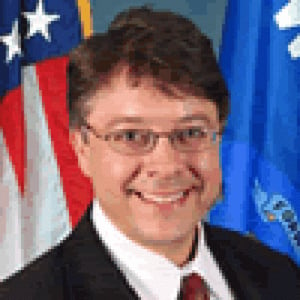
Partner, Bell Giftos St. John LLC
Kevin St. John is a partner with Bell Giftos St. John LLC in Madison, Wisconsin. From 2011 to 2015, he served as Wisconsin’s Deputy Attorney General. Prior to his government service St. John practiced law with the Madison office of Michael Best & Friedrich LLP and the Washington D.C. office of Gibson, Dunn & Crutcher LLP. St. John is a graduate of the University of Wisconsin-Madison and earned his law degree from the University of Chicago.
St. John has contributed to Federalist Society as a speaker and in commentaries on topics including redistricting, free speech, and separation of powers.
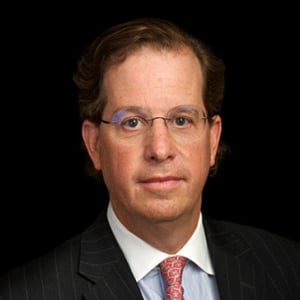
Managing Partner, Cooper & Kirk PLLC
David Thompson is the Managing Partner of Cooper & Kirk and joined the firm at its founding. Mr. Thompson has extensive trial and appellate experience in a wide range of matters and has secured victories worth billions of dollars. He has successfully challenged numerous laws on Second Amendment grounds. He has also litigated cases in over 30 federal district courts, argued in each of the 13 federal circuit courts of appeal, and argued before the U.S. Supreme Court, as well as many state courts. Mr. Thompson was awarded an A.B. degree, magna cum laude, from Harvard University in 1991, where he was elected to Phi Beta Kappa. In 1994, Mr. Thompson received a J.D. degree, cum laude, from Harvard Law School.
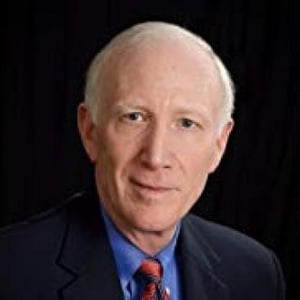
President, The Free State Foundation
Randolph J. May is Founder and President of The Free State Foundation. The Free State Foundation is an independent, non-profit free market-oriented think tank founded in 2006.
From October 1999-May 2006, May was a Senior Fellow and Director of Communications Policy Studies at The Progress & Freedom Foundation, a Washington, DC-based think tank. Prior to joining PFF, he practiced communications, administrative, and regulatory law as a partner at major national law firms. From 1978 to 1981, May served as Assistant General Counsel and Associate General Counsel at the Federal Communication Commission.
May has held numerous leadership positions in bar associations. He is a past Chair of the American Bar Association’s Section of Administrative Law and Regulatory Practice. He is a Fellow of the National Academy of Public Administration. Mr. May also has served as a Public Member of the Administrative Conference of the United States and currently is a Senior Fellow at ACUS.
Mr. May has published more than two hundred articles and essays on communications, administrative and constitutional law topics. He is author of A Call for a Radical New Communications Policy: Proposals for Free Market Reform, and co-author of #CommActUpdate: A Communications Law Fit for the Digital Age and The Constitutional Foundations of Intellectual Property. Mr. May is editor of two books, Communications Law and Policy in the Digital Age: The Next Five Years and New Directions in Communications Policy. In addition, he is the co-editor of two other books, Net Neutrality or Net Neutering: Should Broadband Internet Services Be Regulated? and Communications Deregulation and FCC Reform. In the past, Mr. May has written regular columns on legal and regulatory affairs for Legal Times and the National Law Journal, leading national legal periodicals.
He received his A.B. from Duke University and his J.D. from Duke Law School, where he serves as a member of the Board of Visitors.
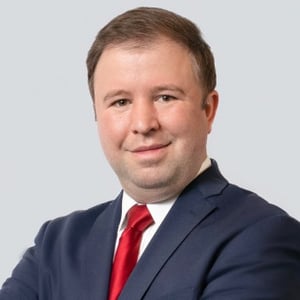
Partner, Wiley Rein LLP
Tom has over 15 years’ experience in private practice and public service at the federal and state levels representing clients in high-stakes appellate and regulatory litigation matters. Tom has argued appeals in the Fourth, Fifth, Ninth, D.C. and Federal Circuits, and the West Virginia Supreme Court of Appeals.
Prior to joining Wiley, Tom was the General Counsel at the Federal Communications Commission (FCC), where he served as the agency’s chief legal officer and briefed dozens of appeals – personally arguing two – in the federal courts of appeals in constitutional and administrative law challenges to the FCC’s orders. Tom managed a team of over 70 attorneys and staff and provided consultation and advice on a wide range of practice areas relating to the FCC’s work, including administrative law, appellate and trial litigation, bankruptcy, ethics, fiscal law, fraud, labor and employment, and public records requests. He has spent his career advising clients on all stages of federal agency rulemaking, adjudication, and litigation, in fields ranging from communications to environmental law to securities to labor and employment. He frequently speaks and writes on legal issues and his articles have appeared in the Wall Street Journal, Washington Post, National Review, Forbes, and Newark Star-Ledger.
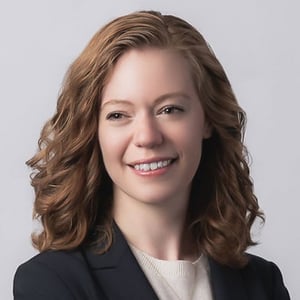
Associate, Wiley Rein LLP
Krystal represents and advises clients in a variety of complex litigation and appellate matters in state and federal courts. She has served in legal capacities in both public and private entities, including the U.S. Department of Justice and federal trial and appellate courts, and has extensive litigation experience ranging from pre-complaint investigations and discovery disputes to critical motions practice, trial preparation, and appeals. Krystal specializes in providing creative litigation solutions to give her clients a strategic advantage, both in and out of the courtroom.
Her experience spans a wide variety of practice areas, including government contracts, intellectual property, environment and product regulation, telecommunications, health care, as well as election law and government ethics. Krystal’s appellate work, including before the U.S. Supreme Court, has focused on significant First Amendment issues.
Krystal served as a law clerk for the Honorable Mark S. Davis on the U.S. District Court for the Eastern District of Virginia (the “Rocket Docket”). In addition, she served as a law clerk for the Honorable Alice M. Batchelder on the U.S. Court of Appeals for the Sixth Circuit.
Krystal also maintains an active pro bono practice, and for two consecutive years has won firm awards for her contributions. Most recently, she briefed and argued a multi-issue appeal of a trial verdict in the Ninth Circuit, and successfully obtained remand from the Board of Immigration Appeals after her client was denied protection under the U.N. Convention Against Torture.
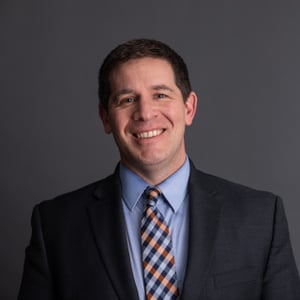
Vice President for Legal Strategy, Stand Together
Casey Mattox is Vice President for Legal Strategy at Stand Together and Senior Advisor at
Americans for Prosperity. In these roles he advocates for and creates strategies and
partnerships to ensure a constitutionally limited government that protects the civil liberties of all
Americans. Prior to joining Stand Together and AFP Casey’s legal career focused on defending
the First Amendment rights of students, faculty, healthcare workers and religious organizations.
Casey has a J.D. from Boston College School of Law and an undergraduate degree from the
University of Virginia. You can find him on Twitter at @CaseyMattox_ and on LinkedIn at
@Casey-Mattox-ST.
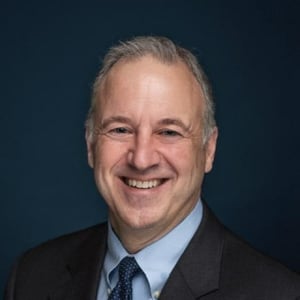
Senior Counsel, Litigation, Defense of Freedom Institute
Don Daugherty is Senior Counsel, Litigation, at the Defense of Freedom Institute for Policy Studies. He previously served as a Senior Counsel at the Institute for Free Speech and the Wisconsin Institute for Law & Liberty. Before that, he was a partner at three of Wisconsin’s largest firms, with nearly 30 years of trial and appellate litigation experience. He has been consistently recognized as among the “Best Lawyers in America,” as well as Wisconsin’s “Super Lawyers.” He received his B.A. from the University of Virginia and his J.D. from Northwestern University Law School. After law school, he served as a clerk to the Honorable Roger J. Miner of the United States Court of Appeals for the Second Circuit.
Don is on the Board of Advisors for the Milwaukee Lawyers’ Chapter of the Federalist Society, and on the Executive Committee of the Federalist Society’s Litigation Practice Group.
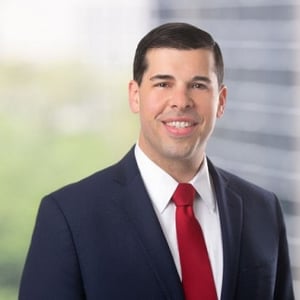
Partner, Boies Schiller Flexner LLP
Jesse, the former third-ranking official at the U.S. Department of Justice, helps clients with their most difficult litigation and regulatory issues─whether that means defending against an enforcement action, pursuing high-stakes litigation and appeals, navigating regulatory thickets at federal and state agencies, or crafting a comprehensive strategy to manage a crisis. He approaches these problems with the knowledge gained both from his broad private-practice experience and from having served at the highest levels of federal and state government.
Jesse has experience across a range of substantive and regulatory areas. He has sued the federal government and has also been one of its top law-enforcement officials; he has represented states and has also navigated their regulatory agencies on behalf of clients; and he has represented companies in business disputes, both as defendants and plaintiffs.
Before joining the firm, Jesse was the Acting Associate Attorney General at the United States Department of Justice. In that role, he oversaw the civil and criminal work of the Antitrust, Civil, Civil Rights, Environment and Natural Resources, and Tax Divisions. During Jesse’s tenure, the Associate’s office closely managed the Department’s most significant litigation, including matters involving large financial institutions, healthcare companies, automakers, energy companies, and state and local governments. In addition, Jesse served as Chair of DOJ’s Regulatory Reform Task Force and Vice Chair of DOJ’s Task Force on Market Integrity and Consumer Fraud. Jesse regularly provided legal and strategic advice to the highest-level decision makers in the federal government, including the Attorney General and Deputy Attorney General, general counsels across the spectrum of federal agencies, and White House officials.
Jesse served for three years as the secretary of Florida’s labor, economic-development, and land-use agency, the Florida Department of Economic Opportunity. Before that, he served as Governor (now Senator) Rick Scott’s general counsel.
Jesse maintains offices in both Washington D.C. and Florida. From Washington, he focuses on federal litigation and crisis management. In Florida, in addition to federal litigation, Jesse employs his knowledge of state government and regulation to help clients in courts across the state, from trial through the Florida Supreme Court.
Jesse currently serves on the Florida Supreme Court Judicial Nominating Commission, the body that provides the governor with nominees for appointment to the Florida Supreme Court. Jesse is also a fellow at the Center for the Study of the Administrative State at the Scalia Law School at George Mason University, where he writes and speaks about administrative law.
Professor of Law, Widener University Commonwealth Law School
Vice President for Legal Strategy, Stand Together
Casey Mattox is Vice President for Legal Strategy at Stand Together and Senior Advisor at
Americans for Prosperity. In these roles he advocates for and creates strategies and
partnerships to ensure a constitutionally limited government that protects the civil liberties of all
Americans. Prior to joining Stand Together and AFP Casey’s legal career focused on defending
the First Amendment rights of students, faculty, healthcare workers and religious organizations.
Casey has a J.D. from Boston College School of Law and an undergraduate degree from the
University of Virginia. You can find him on Twitter at @CaseyMattox_ and on LinkedIn at
@Casey-Mattox-ST.
Associate, Wiley Rein LLP
Krystal represents and advises clients in a variety of complex litigation and appellate matters in state and federal courts. She has served in legal capacities in both public and private entities, including the U.S. Department of Justice and federal trial and appellate courts, and has extensive litigation experience ranging from pre-complaint investigations and discovery disputes to critical motions practice, trial preparation, and appeals. Krystal specializes in providing creative litigation solutions to give her clients a strategic advantage, both in and out of the courtroom.
Her experience spans a wide variety of practice areas, including government contracts, intellectual property, environment and product regulation, telecommunications, health care, as well as election law and government ethics. Krystal’s appellate work, including before the U.S. Supreme Court, has focused on significant First Amendment issues.
Krystal served as a law clerk for the Honorable Mark S. Davis on the U.S. District Court for the Eastern District of Virginia (the “Rocket Docket”). In addition, she served as a law clerk for the Honorable Alice M. Batchelder on the U.S. Court of Appeals for the Sixth Circuit.
Krystal also maintains an active pro bono practice, and for two consecutive years has won firm awards for her contributions. Most recently, she briefed and argued a multi-issue appeal of a trial verdict in the Ninth Circuit, and successfully obtained remand from the Board of Immigration Appeals after her client was denied protection under the U.N. Convention Against Torture.

Why Proportional Representation Will Not Stem Redistricting Litigation But Will Undermine Normative Representative Values
Kevin St. John
Note from the Editor: The Federalist Society takes no positions on particular legal and public...
NY State Rifle & Pistol Association Inc. v. City of New York Post-Decision SCOTUScast
David H. Thompson
On April 27, 2020, the U.S. Supreme Court released its opinion in New York State...
Topics
Broadcast Journalism and the First Amendment
In late March, Free Press, a D.C.-based advocacy organization, filed a petition with the Federal Communications...
Broadcast Journalism and the First Amendment: A Conversation with the FCC’s General Counsel
Randolph May, Thomas M. Johnson
Broadcasters—not the FCC—are responsible for selecting the material that they air. This is why the...
Topics
Religious Schools and the Ministerial Exception
On Monday, the Court heard oral argument in two important First Amendment cases—Our Lady of...
United States Agency for International Development v. Alliance for Open Society International, Inc. - Post-Argument SCOTUScast
Krystal Brunner Swendsboe, Casey Mattox
On May 5, 2020, the Supreme Court heard oral argument in United States Agency for...
Courthouse Steps Oral Argument Teleforum: Our Lady of Guadalupe School v. Morrissey-Berru
TeleforumCourthouse Steps Oral Argument: Barr v. American Association of Political Consultants Inc.
TeleforumCourthouse Steps Oral Argument: USAID v. Alliance for Open Society International, Inc.
TeleforumAn Imagined Bloc and Other Figments
Donald A. Daugherty
A review of American Justice 2019: The Roberts Court Arrives, by Mark Joseph Stern (University...