

Tazewell Taylor Professor of Law and William H. Cabell Research Professor, William & Mary Law School
Jonathan H. Adler joined the William & Mary law faculty as the Tazwell Taylor Professor of Law and William H. Cabell Research Professor in 2025. Prior to joining the faculty, he was the inaugural Johan Verheij Memorial Professor of Law and the founding Director of the Coleman P. Burke Center for Environmental Law at the Case Western Reserve University School of Law.
Professor Adler is the author or editor of seven books, including Climate Liberalism: Perspectives on Liberty, Property and Pollution (Palgrave, 2023), Marijuana Federalism: Uncle Sam and Mary Jane (Brookings Institution Press, 2020), Business and the Roberts Court (Oxford University Press, 2016) and Rebuilding the Ark: New Perspectives on Endangered Species Act Reform (AEI Press, 2011).
His articles have appeared in publications ranging from the Harvard Environmental Law Review and Yale Journal on Regulation to the Wall Street Journal, New York Times, and Washington Post. He has testified before Congress a dozen times, and his work has been cited in the U.S. Supreme Court. A 2024 study identified Professor Adler as the seventh most cited legal academic in administrative and environmental law from 2019 to 2023.
Professor Adler is a contributing editor to Civitas Outlook and a regular contributor to the popular legal blog, The Volokh Conspiracy. A regular commentator on constitutional and regulatory issues, he has appeared on numerous radio and television programs, ranging from the PBS Newshour and National Public Radio to the Fox News Channel and Entertainment Tonight.
Professor Adler is a senior fellow at the Property & Environment Research Center in Bozeman, Montana. In 2018, Professor Adler was elected to membership in the American Law Institute and helped co-found the organization Checks and Balances. In 2024, Professor Adler was appointed a public member of the Administrative Conference of the United States.
Professor Adler clerked for the Honorable David B. Sentelle on the U.S. Court of Appeals for the District of Columbia Circuit.
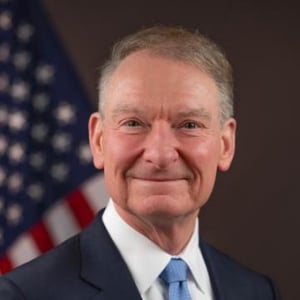
Chairman of the Securities and Exchange Commission
Paul S. Atkins was sworn into office as the 34th Chairman of the Securities and Exchange Commission on April 21, 2025, after being nominated by President Donald J. Trump on January 20, 2025, and confirmed by the U.S. Senate on April 9, 2025.
Prior to returning to the SEC, Chairman Atkins was most recently chief executive of Patomak Global Partners, a company he founded in 2009. Chairman Atkins helped lead efforts to develop best practices for the digital asset sector. He served as an independent director and non-executive chairman of the board of BATS Global Markets, Inc. from 2012 to 2015.
Chairman Atkins was appointed by President George W. Bush to serve as a Commissioner of the SEC from 2002 to 2008. During his tenure, he advocated for transparency, consistency, and the use of cost-benefit analysis at the agency. Chairman Atkins also represented the SEC at meetings of the President’s Working Group on Financial Markets and the U.S.-EU Transatlantic Economic Council. From 2009 to 2010, he was appointed a member of the Congressional Oversight Panel for the Troubled Asset Relief Program.
Before serving as an SEC Commissioner, Chairman Atkins was a consultant on securities and investment management industry matters, especially regarding issues of strategy, regulatory compliance, risk management, new product development, and organizational control.
From 1990 to 1994, Chairman Atkins served on the staff of two chairmen of the SEC, Richard C. Breeden and Arthur Levitt, ultimately as chief of staff and counselor, respectively. He received the SEC’s 1992 Law and Policy Award for work regarding corporate governance matters.
Chairman Atkins began his career as a lawyer in New York, focusing on a wide range of corporate transactions for U.S. and foreign clients, including public and private securities offerings and mergers and acquisitions. He was resident for 2½ years in his firm's Paris office and admitted as conseil juridique in France.
A member of the New York and Florida bars, Chairman Atkins received his J.D. from Vanderbilt University School of Law in 1983 and was Senior Student Writing Editor of the Vanderbilt Law Review. He received his A.B., Phi Beta Kappa, from Wofford College in 1980.
Originally from Lillington, North Carolina, Chairman Atkins grew up in Tampa, Florida. He and his wife Sarah have three sons.
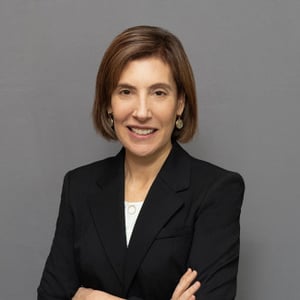
Partner, Williams & Connolly
Lisa Blatt serves as Chair of Williams & Connolly’s Supreme Court and Appellate practice. Lisa has argued 53 cases before the United States Supreme Court, prevailing in 86% of them. The National Law Journal has called her a "visionary" and one of "the 100 most influential lawyers in America." Bloomberg has described her as a "legendary high court litigator" while The National Journal likewise has referred to her as a "SCOTUS legend." In 2021, The American Lawyer recognized Lisa as the "Litigator of the Year." Lisa’s appellate work has been highlighted by multiple publications and has earned her rankings in Chambers USA, Benchmark Litigation, The Legal 500, and Washingtonian magazine. Lisa was selected as one of the “Top 10 Women in Litigation” in the United States by Benchmark Litigation in 2020 and 2021. Managing IP named her the 2021 “Practitioner of the Year (Appellate)” for her work as lead counsel to Booking.com before the Supreme Court. In 2021, Chambers USA reported that clients describe Lisa as “one of the best advocates today. She is extremely strong on her feet, connects with judges and has an unmatched win record,” and her “command of the case law and the way she presents is a work of art.”
Lisa has argued and briefed numerous appeals on a wide range of business law issues in federal and state courts of appeal. The American Lawyer Litigation Daily has twice named her "Litigator of the Week" – for her work in Price v. Philip Morris, Inc. in overturning reinstatement of a $10 billion verdict against client Philip Morris in a "light" cigarette case, and in SmithKline Beecham Corp. v. Abbott Laboratories, a landmark case on behalf of GlaxoSmithKline finding that the Equal Protection Clause bars peremptory challenges of jurors based on sexual orientation. Lisa also represented Marvin Gaye’s heirs in their copyright dispute over the hit songs “Got To Give It Up” and “Blurred Lines,” and the Washington Redskins football team in its dispute with the U.S. Patent and Trademark Office over the team's trademarks.
Lisa has substantial experience with trademark law and the pharmaceutical industry. Her Supreme Court cases also have addressed a broad range of issues, involving First Amendment, arbitration, antitrust, civil procedure, preemption, employment and ERISA, and bankruptcy.
Lisa began her career at Williams & Connolly as an associate before joining the general counsel’s office at the Department of Energy, followed by thirteen years in the Office of the Solicitor General.
Lisa received her J.D. summa cum laude from the University of Texas School of Law before clerking for The Honorable Ruth Bader Ginsburg on the U.S. Court of Appeals for the District of Columbia Circuit.
Lisa assists the U.S. Chamber of Commerce in selecting cases for amicus participation, and is on the Advisory Boards for Georgetown University Law Center's Supreme Court Institute and the Washington Legal Foundation. She also teaches at Georgetown University’s Law Center.
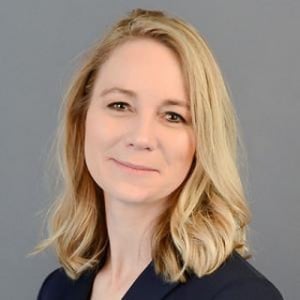
Supreme Court & Appellate Litigation Chair, Lex Politica; Of Counsel, Alliance Defending Freedom
Erin Morrow Hawley serves as Chair of Lex Politica's Supreme Court and Appellate Practice overseeing the firm’s strategic appellate litigation and critical motions practice in the trial courts. Erin is an experienced litigator who represents clients in constitutional, regulatory, and appellate matters in federal and state courts throughout the country.
Erin has represented dozens of clients before the Supreme Court of the United States, served as lead counsel in high-profile cases raising novel constitutional and statutory issues, and authored numerous successful petitions for certiorari and briefs in opposition. She has argued in state and federal appellate and trial courts throughout the country, including the Supreme Court of the United States. Erin represents diverse clients in high-stakes litigation from state governments to faith-based nonprofits to Fortune 100 companies. She possesses expertise on a wide range of subject matters including administrative law, the First Amendment, religious liberty, federal jurisdiction, federal preemption, equitable jurisdiction, tax law, the Affordable Care Act, and Title IX.
Erin represents clients in cases where public communications strategy is paramount. She is a sought-after speaker and writer, has testified multiple times before Congress, and is a frequent presenter on constitutional and administrative law issues, including at the Oxford Union, the National Federalist Society Convention, and university campuses across the country. She is a frequent commentator to media outlets, including Fox News, MSNBC, the Wall Street Journal, WORLD, USA Today, the Federalist, and the Hill.
Erin previously oversaw Alliance Defending Freedom’s--where she still serves as Of Counsel--litigation strategies to empower women and protect the dignity of life, defend pregnancy centers’ First Amendment rights from government overreach, and safeguard Americans’ freedoms from the ever-encroaching administrative state.

Editor, SCOTUSblog
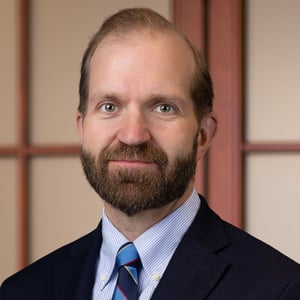
Partner, McGuireWoods
John Moran is a member of the firm’s nationally recognized Government Investigations and White Collar Litigation department. A former senior official at the U.S. Department of Justice (DOJ) and the White House and an experienced litigator and counselor, John draws on his broad experience from private practice and government service to advise and represent clients in government enforcement, congressional investigations, high-stakes civil disputes, and regulatory litigation. He also serves as co-chair of the firm’s Congressional Investigations practice, representing both companies and individuals in congressional investigations and hearings and is a member of the firm’s Appeals & Issues group.
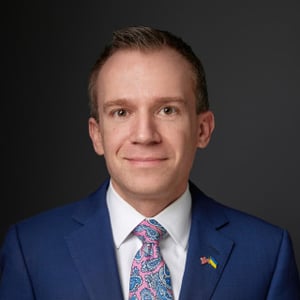
Supervising Senior Attorney, Foundation for Individual Rights and Expression (FIRE)
Conor Fitzpatrick comes to FIRE by way of Detroit, Michigan, where he was a principal at Miller, Canfield, Paddock and Stone. Conor has extensive litigation experience at the state and federal level. He has first-chaired multiple jury trials and briefed and argued several eight-figure cases on appeal.
Conor also comes to FIRE with a track record of supporting civil liberties and the First Amendment. Before joining FIRE, he taught First Amendment law as an adjunct professor at the University of Detroit Mercy School of Law. He has extensive experience litigating First Amendment cases pro bono on behalf of the incarcerated: His First Amendment work for inmates includes trying a First Amendment free exercise case to a federal jury, which resulted in a six-figure, mid-trial settlement following his cross examination of the key defendant. In another case, Conor secured a published decision from the Sixth Circuit denying qualified immunity to five prison employees, cementing his client’s First Amendment right to peacefully criticize government employees. Conor’s work on these and other cases earned him the 2018 Richard J. Seryak Award for Pro Bono Service.
When not thinking about the First Amendment, Conor enjoys reading, running, and eating sushi. He also avidly supports Detroit’s sports teams, but he rarely enjoys it.
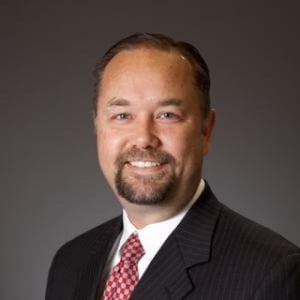
Senior Counsel, Director of Center for Academic Freedom, Alliance Defending Freedom
Tyson Langhofer serves as senior counsel and director of the Center for Academic Freedom with Alliance Defending Freedom.
Langhofer represents students and faculty at public high schools and colleges in defending their First Amendment rights. For example, in Denton v. Hecht, he successfully defended a Florida State University student after he was removed as Student Senate President simply for sharing his Catholic views in a private group chat. In Cross v. Loudoun County Public Schools, he successfully defended an elementary school gym teacher after the school suspended him for peacefully sharing his views on a proposed policy at a public school board meeting.
Langhofer has extensive experience in civil litigation and constitutional law. Before joining ADF, Langhofer was a partner with Stinson LLP, where he worked as a commercial litigation attorney from 2000 until he joined ADF in 2015.
Langhofer is Peer Review Rated AV® Preeminent in Martindale-Hubbell. He is a sought-after speaker on legal and cultural issues. He regularly comments on free speech issues in television, radio, and print media. He has appeared as a guest and written pieces for numerous major media outlets, including The Washington Post, The Washington Times, USA Today, Townhall, The Federalist, and The Daily Wire.
Langhofer earned his Juris Doctor from Regent University School of Law in 1999, graduating cum laude. Langhofer is admitted to practice in multiple states, the Supreme Court, and numerous federal district and appellate courts.
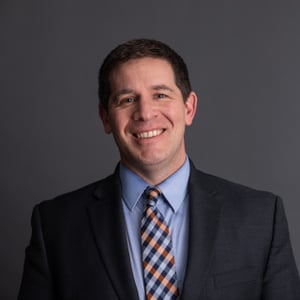
Vice President for Legal Strategy, Stand Together
Casey Mattox is Vice President for Legal Strategy at Stand Together and Senior Advisor at
Americans for Prosperity. In these roles he advocates for and creates strategies and
partnerships to ensure a constitutionally limited government that protects the civil liberties of all
Americans. Prior to joining Stand Together and AFP Casey’s legal career focused on defending
the First Amendment rights of students, faculty, healthcare workers and religious organizations.
Casey has a J.D. from Boston College School of Law and an undergraduate degree from the
University of Virginia. You can find him on Twitter at @CaseyMattox_ and on LinkedIn at
@Casey-Mattox-ST.
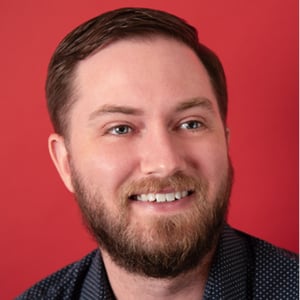
Attorney, Pacific Legal Foundation
Caleb Trotter is an attorney at Pacific Legal Foundation, where he litigates on behalf of individuals and small businesses fighting for their constitutional rights to free speech, economic liberty, and equal protection under the law.
Caleb’s practice at PLF is primarily focused on free speech rights that allow people to pursue the profession of their choice in the manner they see fit. He successfully represented Peggy Fontenot in a challenge to an Oklahoma law that prevented her from truthfully marketing her art as American Indian-made.
Caleb also has taken the lead in fighting for students to participate in school athletics free from oppressive sex-based quotas. He has successfully represented Dmitri Moua, Zachary Greenwald, and Freddie Linden in challenging rules in Minnesota and South Dakota that prohibited them from participating on high school competitive dance teams.
Prior to PLF, Caleb clerked for the Institute for Justice and externed for the public defender’s office in Jefferson Parish, Louisiana. Before starting his legal career, he worked in real estate, banking, and investments.
Upon witnessing government screw-ups at every level following Hurricane Katrina, and due to absorbing the laissez-faire culture of New Orleans over many years, Caleb came to see the importance of individualism to human flourishing. He was inspired to dedicate his career to advancing liberty through the law after reading story after story in Reason magazine of organizations like PLF fighting to protect individual rights.
Caleb attended law school at Loyola University New Orleans, where he graduated cum laude and served as a member of the Loyola Law Review and moot court program. He also earned a BSM in finance and legal studies in business at Tulane University. He lives in Sacramento with his wife, Ashlee, and cat, Frank. Caleb loves traveling—he’s been to all 50 states—following his beloved Texas Rangers, photography, and Mardi Gras. If you’re ever in PLF’s Sacramento office, be sure to check out his bobblehead collection.
Supervising Senior Attorney, Foundation for Individual Rights and Expression (FIRE)
Conor Fitzpatrick comes to FIRE by way of Detroit, Michigan, where he was a principal at Miller, Canfield, Paddock and Stone. Conor has extensive litigation experience at the state and federal level. He has first-chaired multiple jury trials and briefed and argued several eight-figure cases on appeal.
Conor also comes to FIRE with a track record of supporting civil liberties and the First Amendment. Before joining FIRE, he taught First Amendment law as an adjunct professor at the University of Detroit Mercy School of Law. He has extensive experience litigating First Amendment cases pro bono on behalf of the incarcerated: His First Amendment work for inmates includes trying a First Amendment free exercise case to a federal jury, which resulted in a six-figure, mid-trial settlement following his cross examination of the key defendant. In another case, Conor secured a published decision from the Sixth Circuit denying qualified immunity to five prison employees, cementing his client’s First Amendment right to peacefully criticize government employees. Conor’s work on these and other cases earned him the 2018 Richard J. Seryak Award for Pro Bono Service.
When not thinking about the First Amendment, Conor enjoys reading, running, and eating sushi. He also avidly supports Detroit’s sports teams, but he rarely enjoys it.
Senior Counsel, Director of Center for Academic Freedom, Alliance Defending Freedom
Tyson Langhofer serves as senior counsel and director of the Center for Academic Freedom with Alliance Defending Freedom.
Langhofer represents students and faculty at public high schools and colleges in defending their First Amendment rights. For example, in Denton v. Hecht, he successfully defended a Florida State University student after he was removed as Student Senate President simply for sharing his Catholic views in a private group chat. In Cross v. Loudoun County Public Schools, he successfully defended an elementary school gym teacher after the school suspended him for peacefully sharing his views on a proposed policy at a public school board meeting.
Langhofer has extensive experience in civil litigation and constitutional law. Before joining ADF, Langhofer was a partner with Stinson LLP, where he worked as a commercial litigation attorney from 2000 until he joined ADF in 2015.
Langhofer is Peer Review Rated AV® Preeminent in Martindale-Hubbell. He is a sought-after speaker on legal and cultural issues. He regularly comments on free speech issues in television, radio, and print media. He has appeared as a guest and written pieces for numerous major media outlets, including The Washington Post, The Washington Times, USA Today, Townhall, The Federalist, and The Daily Wire.
Langhofer earned his Juris Doctor from Regent University School of Law in 1999, graduating cum laude. Langhofer is admitted to practice in multiple states, the Supreme Court, and numerous federal district and appellate courts.
Vice President for Legal Strategy, Stand Together
Casey Mattox is Vice President for Legal Strategy at Stand Together and Senior Advisor at
Americans for Prosperity. In these roles he advocates for and creates strategies and
partnerships to ensure a constitutionally limited government that protects the civil liberties of all
Americans. Prior to joining Stand Together and AFP Casey’s legal career focused on defending
the First Amendment rights of students, faculty, healthcare workers and religious organizations.
Casey has a J.D. from Boston College School of Law and an undergraduate degree from the
University of Virginia. You can find him on Twitter at @CaseyMattox_ and on LinkedIn at
@Casey-Mattox-ST.
Attorney, Pacific Legal Foundation
Caleb Trotter is an attorney at Pacific Legal Foundation, where he litigates on behalf of individuals and small businesses fighting for their constitutional rights to free speech, economic liberty, and equal protection under the law.
Caleb’s practice at PLF is primarily focused on free speech rights that allow people to pursue the profession of their choice in the manner they see fit. He successfully represented Peggy Fontenot in a challenge to an Oklahoma law that prevented her from truthfully marketing her art as American Indian-made.
Caleb also has taken the lead in fighting for students to participate in school athletics free from oppressive sex-based quotas. He has successfully represented Dmitri Moua, Zachary Greenwald, and Freddie Linden in challenging rules in Minnesota and South Dakota that prohibited them from participating on high school competitive dance teams.
Prior to PLF, Caleb clerked for the Institute for Justice and externed for the public defender’s office in Jefferson Parish, Louisiana. Before starting his legal career, he worked in real estate, banking, and investments.
Upon witnessing government screw-ups at every level following Hurricane Katrina, and due to absorbing the laissez-faire culture of New Orleans over many years, Caleb came to see the importance of individualism to human flourishing. He was inspired to dedicate his career to advancing liberty through the law after reading story after story in Reason magazine of organizations like PLF fighting to protect individual rights.
Caleb attended law school at Loyola University New Orleans, where he graduated cum laude and served as a member of the Loyola Law Review and moot court program. He also earned a BSM in finance and legal studies in business at Tulane University. He lives in Sacramento with his wife, Ashlee, and cat, Frank. Caleb loves traveling—he’s been to all 50 states—following his beloved Texas Rangers, photography, and Mardi Gras. If you’re ever in PLF’s Sacramento office, be sure to check out his bobblehead collection.
Tazewell Taylor Professor of Law and William H. Cabell Research Professor, William & Mary Law School
Jonathan H. Adler joined the William & Mary law faculty as the Tazwell Taylor Professor of Law and William H. Cabell Research Professor in 2025. Prior to joining the faculty, he was the inaugural Johan Verheij Memorial Professor of Law and the founding Director of the Coleman P. Burke Center for Environmental Law at the Case Western Reserve University School of Law.
Professor Adler is the author or editor of seven books, including Climate Liberalism: Perspectives on Liberty, Property and Pollution (Palgrave, 2023), Marijuana Federalism: Uncle Sam and Mary Jane (Brookings Institution Press, 2020), Business and the Roberts Court (Oxford University Press, 2016) and Rebuilding the Ark: New Perspectives on Endangered Species Act Reform (AEI Press, 2011).
His articles have appeared in publications ranging from the Harvard Environmental Law Review and Yale Journal on Regulation to the Wall Street Journal, New York Times, and Washington Post. He has testified before Congress a dozen times, and his work has been cited in the U.S. Supreme Court. A 2024 study identified Professor Adler as the seventh most cited legal academic in administrative and environmental law from 2019 to 2023.
Professor Adler is a contributing editor to Civitas Outlook and a regular contributor to the popular legal blog, The Volokh Conspiracy. A regular commentator on constitutional and regulatory issues, he has appeared on numerous radio and television programs, ranging from the PBS Newshour and National Public Radio to the Fox News Channel and Entertainment Tonight.
Professor Adler is a senior fellow at the Property & Environment Research Center in Bozeman, Montana. In 2018, Professor Adler was elected to membership in the American Law Institute and helped co-found the organization Checks and Balances. In 2024, Professor Adler was appointed a public member of the Administrative Conference of the United States.
Professor Adler clerked for the Honorable David B. Sentelle on the U.S. Court of Appeals for the District of Columbia Circuit.
Chairman of the Securities and Exchange Commission
Paul S. Atkins was sworn into office as the 34th Chairman of the Securities and Exchange Commission on April 21, 2025, after being nominated by President Donald J. Trump on January 20, 2025, and confirmed by the U.S. Senate on April 9, 2025.
Prior to returning to the SEC, Chairman Atkins was most recently chief executive of Patomak Global Partners, a company he founded in 2009. Chairman Atkins helped lead efforts to develop best practices for the digital asset sector. He served as an independent director and non-executive chairman of the board of BATS Global Markets, Inc. from 2012 to 2015.
Chairman Atkins was appointed by President George W. Bush to serve as a Commissioner of the SEC from 2002 to 2008. During his tenure, he advocated for transparency, consistency, and the use of cost-benefit analysis at the agency. Chairman Atkins also represented the SEC at meetings of the President’s Working Group on Financial Markets and the U.S.-EU Transatlantic Economic Council. From 2009 to 2010, he was appointed a member of the Congressional Oversight Panel for the Troubled Asset Relief Program.
Before serving as an SEC Commissioner, Chairman Atkins was a consultant on securities and investment management industry matters, especially regarding issues of strategy, regulatory compliance, risk management, new product development, and organizational control.
From 1990 to 1994, Chairman Atkins served on the staff of two chairmen of the SEC, Richard C. Breeden and Arthur Levitt, ultimately as chief of staff and counselor, respectively. He received the SEC’s 1992 Law and Policy Award for work regarding corporate governance matters.
Chairman Atkins began his career as a lawyer in New York, focusing on a wide range of corporate transactions for U.S. and foreign clients, including public and private securities offerings and mergers and acquisitions. He was resident for 2½ years in his firm's Paris office and admitted as conseil juridique in France.
A member of the New York and Florida bars, Chairman Atkins received his J.D. from Vanderbilt University School of Law in 1983 and was Senior Student Writing Editor of the Vanderbilt Law Review. He received his A.B., Phi Beta Kappa, from Wofford College in 1980.
Originally from Lillington, North Carolina, Chairman Atkins grew up in Tampa, Florida. He and his wife Sarah have three sons.
Partner, Williams & Connolly
Lisa Blatt serves as Chair of Williams & Connolly’s Supreme Court and Appellate practice. Lisa has argued 53 cases before the United States Supreme Court, prevailing in 86% of them. The National Law Journal has called her a "visionary" and one of "the 100 most influential lawyers in America." Bloomberg has described her as a "legendary high court litigator" while The National Journal likewise has referred to her as a "SCOTUS legend." In 2021, The American Lawyer recognized Lisa as the "Litigator of the Year." Lisa’s appellate work has been highlighted by multiple publications and has earned her rankings in Chambers USA, Benchmark Litigation, The Legal 500, and Washingtonian magazine. Lisa was selected as one of the “Top 10 Women in Litigation” in the United States by Benchmark Litigation in 2020 and 2021. Managing IP named her the 2021 “Practitioner of the Year (Appellate)” for her work as lead counsel to Booking.com before the Supreme Court. In 2021, Chambers USA reported that clients describe Lisa as “one of the best advocates today. She is extremely strong on her feet, connects with judges and has an unmatched win record,” and her “command of the case law and the way she presents is a work of art.”
Lisa has argued and briefed numerous appeals on a wide range of business law issues in federal and state courts of appeal. The American Lawyer Litigation Daily has twice named her "Litigator of the Week" – for her work in Price v. Philip Morris, Inc. in overturning reinstatement of a $10 billion verdict against client Philip Morris in a "light" cigarette case, and in SmithKline Beecham Corp. v. Abbott Laboratories, a landmark case on behalf of GlaxoSmithKline finding that the Equal Protection Clause bars peremptory challenges of jurors based on sexual orientation. Lisa also represented Marvin Gaye’s heirs in their copyright dispute over the hit songs “Got To Give It Up” and “Blurred Lines,” and the Washington Redskins football team in its dispute with the U.S. Patent and Trademark Office over the team's trademarks.
Lisa has substantial experience with trademark law and the pharmaceutical industry. Her Supreme Court cases also have addressed a broad range of issues, involving First Amendment, arbitration, antitrust, civil procedure, preemption, employment and ERISA, and bankruptcy.
Lisa began her career at Williams & Connolly as an associate before joining the general counsel’s office at the Department of Energy, followed by thirteen years in the Office of the Solicitor General.
Lisa received her J.D. summa cum laude from the University of Texas School of Law before clerking for The Honorable Ruth Bader Ginsburg on the U.S. Court of Appeals for the District of Columbia Circuit.
Lisa assists the U.S. Chamber of Commerce in selecting cases for amicus participation, and is on the Advisory Boards for Georgetown University Law Center's Supreme Court Institute and the Washington Legal Foundation. She also teaches at Georgetown University’s Law Center.
Supreme Court & Appellate Litigation Chair, Lex Politica; Of Counsel, Alliance Defending Freedom
Erin Morrow Hawley serves as Chair of Lex Politica's Supreme Court and Appellate Practice overseeing the firm’s strategic appellate litigation and critical motions practice in the trial courts. Erin is an experienced litigator who represents clients in constitutional, regulatory, and appellate matters in federal and state courts throughout the country.
Erin has represented dozens of clients before the Supreme Court of the United States, served as lead counsel in high-profile cases raising novel constitutional and statutory issues, and authored numerous successful petitions for certiorari and briefs in opposition. She has argued in state and federal appellate and trial courts throughout the country, including the Supreme Court of the United States. Erin represents diverse clients in high-stakes litigation from state governments to faith-based nonprofits to Fortune 100 companies. She possesses expertise on a wide range of subject matters including administrative law, the First Amendment, religious liberty, federal jurisdiction, federal preemption, equitable jurisdiction, tax law, the Affordable Care Act, and Title IX.
Erin represents clients in cases where public communications strategy is paramount. She is a sought-after speaker and writer, has testified multiple times before Congress, and is a frequent presenter on constitutional and administrative law issues, including at the Oxford Union, the National Federalist Society Convention, and university campuses across the country. She is a frequent commentator to media outlets, including Fox News, MSNBC, the Wall Street Journal, WORLD, USA Today, the Federalist, and the Hill.
Erin previously oversaw Alliance Defending Freedom’s--where she still serves as Of Counsel--litigation strategies to empower women and protect the dignity of life, defend pregnancy centers’ First Amendment rights from government overreach, and safeguard Americans’ freedoms from the ever-encroaching administrative state.
Editor, SCOTUSblog
Partner, McGuireWoods
John Moran is a member of the firm’s nationally recognized Government Investigations and White Collar Litigation department. A former senior official at the U.S. Department of Justice (DOJ) and the White House and an experienced litigator and counselor, John draws on his broad experience from private practice and government service to advise and represent clients in government enforcement, congressional investigations, high-stakes civil disputes, and regulatory litigation. He also serves as co-chair of the firm’s Congressional Investigations practice, representing both companies and individuals in congressional investigations and hearings and is a member of the firm’s Appeals & Issues group.
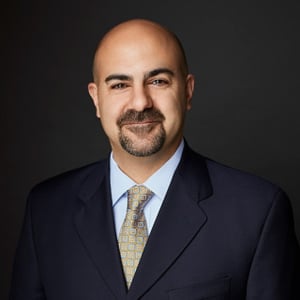
Special Counsel, Campus Advocacy, Foundation for Individual Rights and Expression (FIRE)
One of FIRE’s longest-serving employees, Robert Shibley began at FIRE straight out of Duke Law School in 2003, with the intention of doing nonprofit work for a couple of years before finding a permanent job. This lasted 19 years, including six as FIRE’s executive director. During his time at FIRE, Robert launched FIRE’s first major litigation initiative, traveled to dozens of campuses to speak about the First Amendment and Title IX issues on campus, and oversaw FIRE’s expansion into off-campus issues before a stint representing students and faculty members in private practice at the firm of Allen Harris PLLC.
Having realized things on campus were even worse than he had believed, Robert returned to FIRE as Special Counsel for Campus Advocacy in order to finish the job he started: restoring free speech and due process to America’s college campuses. Robert is the author of Twisting Title IX, from Encounter Books. His writing has appeared everywhere from The Wall Street Journal to The Washington Post, USA Today, and TIME, and he has appeared on national and international broadcasts including the BBC and NPR, The O’Reilly Factor, CNN Tonight, Tucker Carlson Tonight, and (perhaps most famously) Dr. Phil.
Vice President for Legal Strategy, Stand Together
Casey Mattox is Vice President for Legal Strategy at Stand Together and Senior Advisor at
Americans for Prosperity. In these roles he advocates for and creates strategies and
partnerships to ensure a constitutionally limited government that protects the civil liberties of all
Americans. Prior to joining Stand Together and AFP Casey’s legal career focused on defending
the First Amendment rights of students, faculty, healthcare workers and religious organizations.
Casey has a J.D. from Boston College School of Law and an undergraduate degree from the
University of Virginia. You can find him on Twitter at @CaseyMattox_ and on LinkedIn at
@Casey-Mattox-ST.
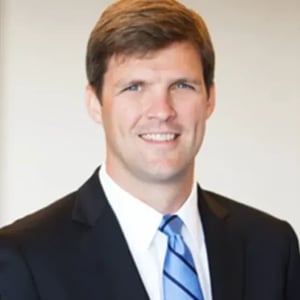
Judge, United States District Court for the Western District of Kentucky
Prior to joining the bench, Judge Beaton was a Partner at Squire Patton Boggs LLP, where he co-chaired the firm’s Appellate & Supreme Court practice group. Judge Beaton’s represented clients engaged in complex commercial litigation in Federal and State courts, and before administrative agencies. Judge Beaton also served as an adjunct professor at the University of Louisville Brandeis School of Law, where he taught constitutional interpretation. Before joining Squire Patton Boggs, Judge Beaton practiced in the Washington, D.C. office of Sidley Austin, LLP, and also served as a legal fellow with the International Justice Mission in Kampala, Uganda. Upon graduation from law school, Judge Beaton served as a law clerk to Justice Ruth Bader Ginsburg of the United States Supreme Court, and to Judge A. Raymond Randolph of the United States Court of Appeals for the D.C. Circuit. Judge Beaton earned his B.A., summa cum laude, from Centre College, and his J.D. from Columbia Law School, where he served as an Articles Editor on the Columbia Law Review.
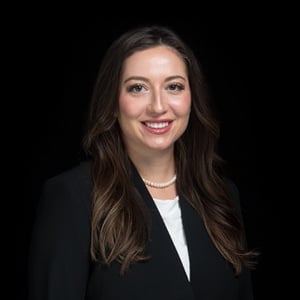
Associate Attorney, Cooper & Kirk PLLC
Athie Livas rejoined Cooper & Kirk in 2022. Prior to joining the firm, Ms. Livas clerked for Justice Brett M. Kavanaugh on the United States Supreme Court. Ms. Livas also previously clerked for Judge Amul R. Thapar on the United States Court of Appeals for the Sixth Circuit and Judge Dabney L. Friedrich on the United States District Court for the District of Columbia.
Ms. Livas graduated from Yale Law School, where she served as President of the Yale Federalist Society, co-President of the Barristers’ Union trial competition, Student Director of the Supreme Court Litigation Clinic, and Editor on the Yale Law Journal. Ms. Livas is admitted to the bar of the Commonwealth of Kentucky.
Supervising Senior Attorney, Foundation for Individual Rights and Expression (FIRE)
Conor Fitzpatrick comes to FIRE by way of Detroit, Michigan, where he was a principal at Miller, Canfield, Paddock and Stone. Conor has extensive litigation experience at the state and federal level. He has first-chaired multiple jury trials and briefed and argued several eight-figure cases on appeal.
Conor also comes to FIRE with a track record of supporting civil liberties and the First Amendment. Before joining FIRE, he taught First Amendment law as an adjunct professor at the University of Detroit Mercy School of Law. He has extensive experience litigating First Amendment cases pro bono on behalf of the incarcerated: His First Amendment work for inmates includes trying a First Amendment free exercise case to a federal jury, which resulted in a six-figure, mid-trial settlement following his cross examination of the key defendant. In another case, Conor secured a published decision from the Sixth Circuit denying qualified immunity to five prison employees, cementing his client’s First Amendment right to peacefully criticize government employees. Conor’s work on these and other cases earned him the 2018 Richard J. Seryak Award for Pro Bono Service.
When not thinking about the First Amendment, Conor enjoys reading, running, and eating sushi. He also avidly supports Detroit’s sports teams, but he rarely enjoys it.
Senior Counsel, Director of Center for Academic Freedom, Alliance Defending Freedom
Tyson Langhofer serves as senior counsel and director of the Center for Academic Freedom with Alliance Defending Freedom.
Langhofer represents students and faculty at public high schools and colleges in defending their First Amendment rights. For example, in Denton v. Hecht, he successfully defended a Florida State University student after he was removed as Student Senate President simply for sharing his Catholic views in a private group chat. In Cross v. Loudoun County Public Schools, he successfully defended an elementary school gym teacher after the school suspended him for peacefully sharing his views on a proposed policy at a public school board meeting.
Langhofer has extensive experience in civil litigation and constitutional law. Before joining ADF, Langhofer was a partner with Stinson LLP, where he worked as a commercial litigation attorney from 2000 until he joined ADF in 2015.
Langhofer is Peer Review Rated AV® Preeminent in Martindale-Hubbell. He is a sought-after speaker on legal and cultural issues. He regularly comments on free speech issues in television, radio, and print media. He has appeared as a guest and written pieces for numerous major media outlets, including The Washington Post, The Washington Times, USA Today, Townhall, The Federalist, and The Daily Wire.
Langhofer earned his Juris Doctor from Regent University School of Law in 1999, graduating cum laude. Langhofer is admitted to practice in multiple states, the Supreme Court, and numerous federal district and appellate courts.
Vice President for Legal Strategy, Stand Together
Casey Mattox is Vice President for Legal Strategy at Stand Together and Senior Advisor at
Americans for Prosperity. In these roles he advocates for and creates strategies and
partnerships to ensure a constitutionally limited government that protects the civil liberties of all
Americans. Prior to joining Stand Together and AFP Casey’s legal career focused on defending
the First Amendment rights of students, faculty, healthcare workers and religious organizations.
Casey has a J.D. from Boston College School of Law and an undergraduate degree from the
University of Virginia. You can find him on Twitter at @CaseyMattox_ and on LinkedIn at
@Casey-Mattox-ST.
Attorney, Pacific Legal Foundation
Caleb Trotter is an attorney at Pacific Legal Foundation, where he litigates on behalf of individuals and small businesses fighting for their constitutional rights to free speech, economic liberty, and equal protection under the law.
Caleb’s practice at PLF is primarily focused on free speech rights that allow people to pursue the profession of their choice in the manner they see fit. He successfully represented Peggy Fontenot in a challenge to an Oklahoma law that prevented her from truthfully marketing her art as American Indian-made.
Caleb also has taken the lead in fighting for students to participate in school athletics free from oppressive sex-based quotas. He has successfully represented Dmitri Moua, Zachary Greenwald, and Freddie Linden in challenging rules in Minnesota and South Dakota that prohibited them from participating on high school competitive dance teams.
Prior to PLF, Caleb clerked for the Institute for Justice and externed for the public defender’s office in Jefferson Parish, Louisiana. Before starting his legal career, he worked in real estate, banking, and investments.
Upon witnessing government screw-ups at every level following Hurricane Katrina, and due to absorbing the laissez-faire culture of New Orleans over many years, Caleb came to see the importance of individualism to human flourishing. He was inspired to dedicate his career to advancing liberty through the law after reading story after story in Reason magazine of organizations like PLF fighting to protect individual rights.
Caleb attended law school at Loyola University New Orleans, where he graduated cum laude and served as a member of the Loyola Law Review and moot court program. He also earned a BSM in finance and legal studies in business at Tulane University. He lives in Sacramento with his wife, Ashlee, and cat, Frank. Caleb loves traveling—he’s been to all 50 states—following his beloved Texas Rangers, photography, and Mardi Gras. If you’re ever in PLF’s Sacramento office, be sure to check out his bobblehead collection.

Supreme Court Preview: What Is in Store for October Term 2024?
Jonathan H. Adler, Paul S. Atkins, Lisa S. Blatt, Erin M. Hawley, Sarah Isgur, John S. Moran
On October 1, 2024, the Federalist Society's Faculty Division and Practice Groups will host a panel at...
Supreme Court Preview: What Is in Store for October Term 2024?
Co-Sponsored by the Faculty Division and Practice Groups
Washington, DCTopics
Let the Algorithm Speak?: Third Circuit Indicates in Anderson v. TikTok That the First Amendment and Section 230 are Inversely Related
Social media platforms sift user-generated content through a variety of algorithms, some of which collect...
Navigating Campus Protests and the First Amendment
North Carolina Student Chapter
Chapel Hill, NCChecks and Balances and the First Amendment
Texas A&M Student Chapter
Fort Worth, TXLouisville Supreme Court Roundup
Louisville Lawyers Chapter
Louisville, KYTopics
U.S. Navy SEALs 1-26 v. Biden: A New Settlement Agreement Protects Religious Servicemembers
When the United States military mandated COVID-19 vaccinations and categorically denied religious accommodations, servicemembers whose...
Litigation Update: Free Speech Rights of K-12 Students
Conor Fitzpatrick, Tyson Langhofer, Casey Mattox, Caleb Trotter
The free speech rights (or lack thereof) of K-12 students has always been a unique...
Litigation Update: Free Speech Rights of K-12 Students
Conor Fitzpatrick, Tyson Langhofer, Casey Mattox, Caleb Trotter
The free speech rights (or lack thereof) of K-12 students has always been a unique...
Litigation Update: Free Speech Rights of K-12 Students