
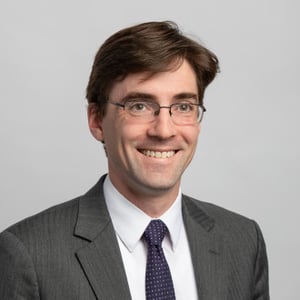
Deputy Litigation Director, Institute for Justice
Robert McNamara serves as Deputy Litigation Director with the Institute for Justice. He joined the Institute in August 2006 and litigates cutting-edge constitutional cases protecting free speech, property rights, economic liberty and other individual liberties in both federal and state courts.
Robert’s work has resulted in court victories for property owners fighting eminent domain abuse, tour guides fighting unconstitutional restrictions on their speech, taxi drivers seeking the right to own their own business, and many others. Robert also litigates in defense of innovation and entrepreneurship in medical care and was co-counsel in Flynn v. Holder, IJ’s landmark challenge to the federal prohibition on compensating bone marrow donors.
Robert’s writing has been published by outlets including The New York Times, The Wall Street Journal, The Washington Post and dozens more nationwide. His opinions and views on legal issues have been featured in radio and television programs ranging from National Public Radio’s All Things Considered to Fox News Channel’s Hannity & Colmes.
Robert is a graduate of Boston University and the New York University School of Law, where he was a founding member and eventual editor-in-chief of the NYU Journal of Law & Liberty. He currently lives in Virginia with his wife and children.
Robert McNamara is a member of the Virginia bar.
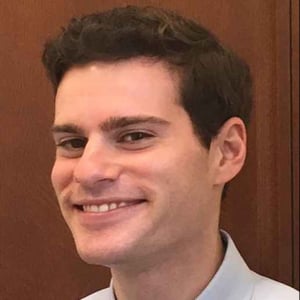
Michael primarily litigates cases related to police misconduct and racial discrimination. He graduated Harvard Law School, cum laude, and Brandeis University, summa cum laude. Previously, Michael clerked for the Hon. John R. Fisher on the District of Columbia Court of Appeals and interned with the Special Litigation Section of DOJ’s Civil Rights Division. He has also represented tenants facing eviction and prisoners in disciplinary hearings. In addition to his legal experience, Michael has worked on a political campaign and served as a fellow at an organization that helps people on public assistance find employment.
Michael enjoys running and, one day, hopes to learn how to dance.

Professor of Law, University of Michigan Law School
Christopher J. Walker is a Professor of Law at the University of Michigan. Prior to joining Michigan law faculty in 2022, he spent a decade teaching at The Ohio State University Moritz College of Law. He previously clerked for Justice Anthony Kennedy of the U.S. Supreme Court, worked on the Civil Appellate Staff at the U.S. Department of Justice, and served on the Senate Judiciary Committee staff for the Gorsuch Supreme Court confirmation. Professor Walker’s research focuses on administrative law, regulation, and law and policy at the agency level. Outside the law school, he chaired the American Bar Association’s Section of Administrative Law and Regulatory Practice in 2020-21 and served as one of forty Public Members of the Administrative Conference of the United States from 2016-2022, and he continues to serve in both organizations in various capacities. He also works of counsel at the U.S. Chamber Litigation Center. In 2022, he received the Federalist Society’s Joseph Story Award.
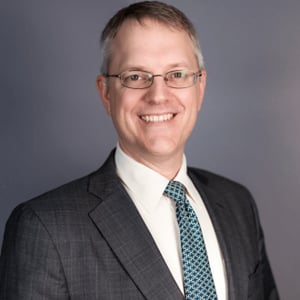
President and General Counsel, New Civil Liberties Alliance
NCLA’s President and General Counsel, Mark Chenoweth, has observed the administrative state up close and personal from perches in all four branches of the federal government. Mark served as the first chief of staff to Congressman Mike Pompeo, as legal counsel to Commissioner Anne Northup at the U.S. Consumer Product Safety Commission, as an attorney advisor in the Office of Legal Policy at the U.S. Department of Justice, and as a law clerk to the Hon. Danny J. Boggs on the U.S. Court of Appeals for the Sixth Circuit.
Mark has worked in several different roles in the private sector as well. He began his legal career in D.C. as a regulatory associate at Wilmer, Cutler & Pickering. He then returned to his home state of Kansas to serve as in-house counsel for Koch Industries. Most recently he spent over four years as general counsel of the Washington Legal Foundation.
Mark is a graduate of Yale College and the University of Chicago Law School, where he co-founded the Institute for Justice Clinic on Entrepreneurship and became a Tony Patiño Fellow. Mark has been widely quoted and/or published in newspapers and websites including the New York Times, San Francisco Chronicle, New Hampshire Union Leader, and Metropolitan Corporate Counsel. He has also had recurring op-eds in the Los Angeles Daily Journal, and at Forbes.com.
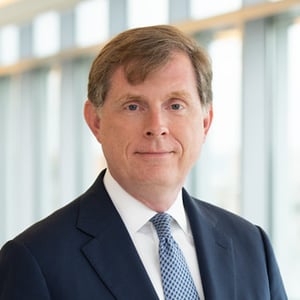
Partner, Arnold & Porter
John Elwood is the head of Arnold & Porter’s Appellate and Supreme Court practice. He has argued before the Supreme Court nine times, and appeared before most of the federal courts of appeals. He has successfully argued cases across a broad cross-section of subjects, with particular experience in environmental law, the False Claims Act, government contracting, and federal criminal law
Mr. Elwood’s work has earned him recognition as one of Washington’s top Supreme Court lawyers (Washingtonian, 2013), as one of “a small group of lawyers” with an “outsized influence at the U.S. Supreme Court” (Reuters, 2014), and as one of the country’s most innovative lawyers (Financial Times, 2014). Chambers USA reports that “[t]he much-admired John Elwood is praised for his advocacy skills” (2013), and describes Mr. Elwood as “phenomenal” (2014), “incredibly talented” (2012), and “a much-loved and widely respected lawyer who is quick on his feet” (2010).
Before joining the firm, Mr. Elwood served in senior-level positions in the U.S. Department of Justice. Beginning as an Assistant to the Solicitor General, and continuing with the firm, he has briefed more than 20 merits cases before the Supreme Court of the United States, and has briefed approximately 135 cases at the certiorari stage. As the senior Deputy in the Office of Legal Counsel, he advised the White House and federal agencies on a range of constitutional, statutory, and regulatory issues.
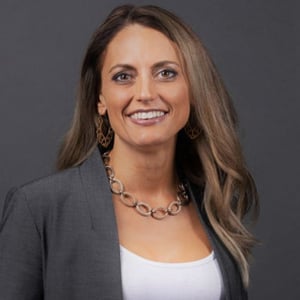
Judge, U.S. Court of Appeals for the Third Circuit
Hon. Jennifer Mascott served as Associate Professor of Law and Director of the Separation of Powers Institute at The Catholic University of America’s Columbus School of Law before her appointment to the federal bench. On July 16, 2025, President Donald J. Trump nominated her to the U.S. Court of Appeals for the Third Circuit (Delaware), and she was confirmed on October 9, 2025.
Prior to her confirmation, Judge Mascott wrote extensively in administrative and constitutional law, statutory interpretation, and the separation of powers. Her scholarship—published in leading journals including the Stanford Law Review, Notre Dame Law Review, and Supreme Court Review—was cited by the U.S. Supreme Court and multiple federal courts. She also contributed Supreme Court commentary for NBC Universal.
Before joining Catholic Law, she was an Assistant Professor and Co-Director of The C. Boyden Gray Center at George Mason University’s Antonin Scalia Law School. In 2022 she became co-author of Beermann, Cass & Diver’s Administrative Law: Cases and Materials (9th ed.). In 2023 she received the Justice Joseph Story Award for excellence in scholarship, teaching, and advancing the rule of law.
Judge Mascott also served as a Council Member of the ABA’s Administrative Law Section and as a Public Member of the Administrative Conference of the United States. She frequently testified before Congress on executive power, regulatory reform, and judicial jurisdiction, and participated in multiple Supreme Court confirmation hearings.
From 2019 to 2021, she took leave from academia to serve as Deputy Assistant Attorney General in the Department of Justice’s Office of Legal Counsel and later as Associate Deputy Attorney General, where she argued federal cases and assisted with Justice Amy Coney Barrett’s confirmation. Earlier in her career, she clerked for Justice Clarence Thomas and for then-Judge Brett M. Kavanaugh on the D.C. Circuit.
Judge Mascott earned her J.D. summa cum laude from the George Washington University Law School and her B.A. from the same institution.
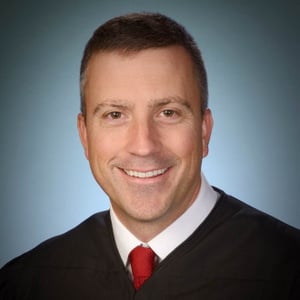
Judge, United States District Court, District of Columbia
Judge Trevor N. McFadden was appointed to the United States District Court for the District of Columbia in 2017. He received his B.A. in 2001 from Wheaton College, IL, magna cum laude. In 2006, he received his J.D. from the University of Virginia School of Law, where he graduated Order of the Coif and was an editor for the Virginia Law Review.
Following graduation from law school, Judge McFadden clerked for Judge Steven Colloton, U.S. Court of Appeals for the Eighth Circuit. He then joined the U.S. Department of Justice, where he served as Counsel to the Deputy Attorney General and as Assistant U.S. Attorney in the District of Columbia. Judge McFadden subsequently became a partner at Baker & McKenzie LLP in Washington, DC, where he focused on white collar investigations. He is also co-author of a treatise, Corporate Settlement Tools: DPAs, NPAs, and Cooperation Agreements.
After four years in private practice, Judge McFadden returned to the U.S. Department of Justice, where he was Deputy Assistant Attorney General and acted as the second-in-command of the Department's Criminal Division. As Deputy Assistant Attorney General, he managed the Division's Fraud and Appellate Sections.
Judge McFadden also has extensive experience in law enforcement. He served as an officer with the Fairfax County, VA, Police Department and as a deputy sheriff in Madison County, VA.
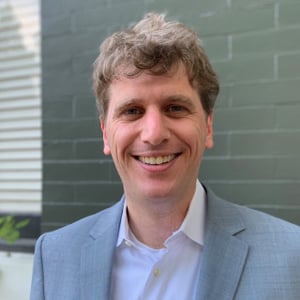
Director of Research, American Economic Liberties Project
Matt Stoller is a public intellectual who writes about the American anti-monopoly
tradition. He is the author of the Simon and Schuster book Goliath: The Hundred Year
War Between Monopoly Power and Democracy. Stoller is the Director of Research at
the American Economic Liberties Project. He publishes an email newsletter called BIG.
Stoller is a former policy advisor to the Senate Budget Committee, and worked in the House of Representatives on the Dodd–Frank Wall Street Reform Act.
He has lectured on competition policy and media at Columbia University, Harvard Law, Duke Law, Bertelsmann Foundation, Vrije Universiteit Brussel, West Point and the National Communications Commission of Taiwan. His writing has appeared in the Washington Post, the New York Times, Fast Company, Foreign Policy, the Guardian, Vice, The American Conservative, and the Baffler.
He has also produced for MSNBC and starred in a short-lived television show on FX called Brand X with Russell Brand.
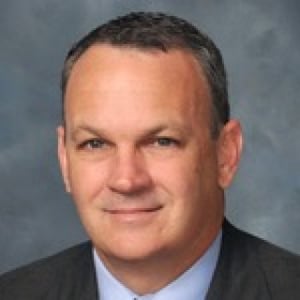
Interim President, New College of Florida
Richard Corcoran moved to Florida as a child in 1976. Both of his parents grew up during the Great Depression and fought in World War II. They instilled a great sense of pride in public service and duty in him at an early age.
From them, Mr. Corcoran developed the principles by which he and his wife of over 24 years, Anne, who is also an attorney, teach their six children today.
Mr. Corcoran grew up in Pasco County, Florida where he graduated from Hudson High School. He earned a Bachelor’s Degree from St. Leo College in 1989 and a Juris Doctorate from Regent University in 1996. While enrolled in college, Richard also served in the U.S. Naval Reserve (1987-1993).
Mr. Corcoran has been a practicing attorney in Florida for almost 20 years. He also served as the Speaker of the Florida House from 2016-2018. During his tenure in the state House, he pushed through over $10 billion in tax cuts, the elimination of over 5,000 regulations, the massive expansion of school choice, and the strongest ethics and transparency laws in state history.
Mr. Corcoran is a passionate advocate for improving the education system in Florida. He fully believes every child can learn and that all children deserve the opportunity to receive a world-class education.
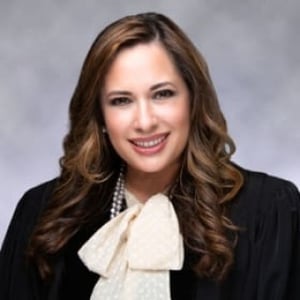
Judge, Florida Third District Court of Appeal
Prior to her appointment to the Court, Judge Gordo served as a Circuit Court Judge for over 8 years presiding in the Criminal, Civil and Family trial court divisions. Judge Gordo also served as Associate Administrative Judge of the Circuit Court Appellate Division in Miami-Dade County.
Judge Gordo is a member of the Education Committee of the Florida Conference of Circuit Court Judges and has taught judicial education courses on criminal sentencing enhancements and mitigation, career criminal designation, Florida corporate business entities and injunctions, receiverships and family rules of procedure relating to default judgments.
Prior to her service on the bench, Judge Gordo served as an Assistant State Attorney for over 11 years where she was a Division Chief responsible for supervising a felony division and investigating, indicting and seeking justice in homicide cases. While at the State Attorney’s Office, she also served as a senior member of the Career Criminal Prosecution Unit and Gang Strike Force Unit. Judge Gordo served on the Board of Directors for the Cuban American Bar Association and the League of Prosecutors.
Judge Gordo is an Adjunct Professor at the University of Miami School of Law teaching trial skills. Throughout her career as an Assistant State Attorney and Judge she has been actively involved in mentoring students and has sat as a volunteer for moot court competitions and mock trials for both Florida International University and the University of Miami School of Law. For the past four years she has presided over the mock trial final for homeschooled students throughout Miami-Dade County to assist homeschooled children develop a basic understanding of our court system.
Judge Gordo received her Juris Doctorate Degree cum laude from the University of Miami School of Law and is a member of the University’s Iron Arrow Honor Society. She currently serves as a member of the Law School Alumni Board of Directors. Judge Gordo received her Bachelor of Business Administration and graduated with honors from the University of Miami School of Business.
Judge Gordo resides in Coral Gables with her husband, Albert, to whom she has been married for 19 years, and they have two sons—Jacob, 17, and Julian, 11.
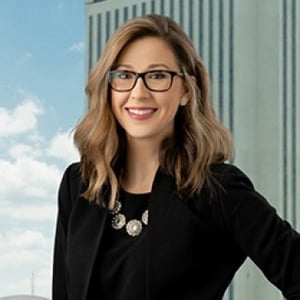
Shareholder, GrayRobinson
Ashley is a shareholder in GrayRobinson’s Tallahassee office. Ashley practices general civil litigation in state and federal court, representing private clients as well as state and local government entities at the trial court and appellate court levels. Ashley also practices administrative law, including rulemaking and licensing disputes, and has represented both property owners and condemning authorities in eminent domain proceedings. Ashley also has experience in election law matters and litigation involving constitutional claims and defenses.
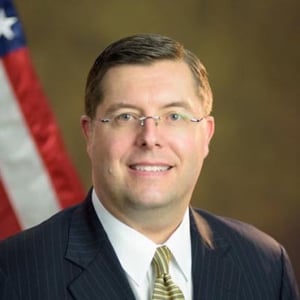
Chief Deputy Attorney General
Ryan Newman is currently Chief Deputy Attorney General for Florida Office of the Attorney General.
During the first Trump Administration, he served as Counselor to the United States Attorney General for national security and international affairs, Deputy General Counsel (Legal Counsel) for the Department of Defense, and Acting Assistant Attorney General for the Office of Legal Policy at the Department of Justice. Prior to serving in the Executive Branch, Ryan was Chief Counsel to United States Senator Ted Cruz during the 114th Congress.
Ryan served as a law clerk to the Honorable Samuel A. Alito, Jr. on the United States Supreme Court, the Honorable Richard J. Leon on the United States District Court for the District of Columbia, and the Honorable J.L. Edmondson on the United States Court of Appeals for the Eleventh Circuit.
Prior to law school, Ryan was an armor officer in the United States Army assigned to the 1st Squadron, 10th U.S. Cavalry Regiment (Buffalo Soldiers). He deployed to Iraq in 2003 for Operation Iraqi Freedom.
Ryan graduated from the United States Military Academy at West Point in 1998. He earned his law degree with high honors from The University of Texas School of Law in 2007.

Senior Fellow and Director of Constitutional Studies, Manhattan Institute
Ilya Shapiro is a senior fellow and director of constitutional studies at the Manhattan Institute and a contributing editor of City Journal. Previously he was executive director and senior lecturer at the Georgetown Center for the Constitution, and before that a vice president of the Cato Institute.
Shapiro is the author of Lawless: The Miseducation of America’s Elites (2025) and Supreme Disorder: Judicial Nominations and the Politics of America’s Highest Court (2020), coauthor of Religious Liberties for Corporations? (2014), and editor of 11 volumes of the Cato Supreme Court Review (2008-18). He has contributed to a variety of academic, popular, and professional publications, including the Wall Street Journal, Harvard Journal of Law & Public Policy, Washington Post, Los Angeles Times, USA Today, National Review, and Newsweek. He also regularly provides commentary for various media outlets, writes the Shapiro’s Gavel newsletter on Substack, and once appeared on the Colbert Report.
Shapiro has testified many times before Congress and state legislatures and has filed more than 500 amicus curiae “friend of the court” briefs in the Supreme Court. He lectures regularly on behalf of the Federalist Society, is a member of the board of fellows of the Jewish Policy Center, was an inaugural Washington Fellow at the National Review Institute, and has been an adjunct law professor at the George Washington University and University of Mississippi. He is also the chairman of the board of advisers of the Mississippi Justice Institute, a barrister in the Edward Coke Appellate Inn of Court, and a former member of the Virginia Advisory Committee to the U.S. Commission on Civil Rights.
Earlier in his career, Shapiro was a special assistant/adviser to the Multi-National Force in Iraq on rule-of-law issues and practiced at Patton Boggs and Cleary Gottlieb. Before entering private practice, he clerked for Judge E. Grady Jolly of the U.S. Court of Appeals for the Fifth Circuit. He holds an AB from Princeton University, an MSc from the London School of Economics, and a JD from the University of Chicago Law School.
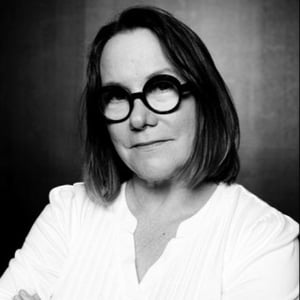
Independent Analyst, None
Allison Hayward most recently served as the Head of Case Selection at the Oversight Board. Previously, she was a Commissioner at the California Fair Political Practices Commission, a Board Member at the Office of Congressional Ethics, and an Assistant Professor of Law at George Mason University School of Law. She also previously worked as Chief of Staff and Counsel in the office of Federal Election Commission Commissioner Bradley A. Smith and practiced election law in California and in Washington DC.
In 1994-1995, Professor Hayward was a judicial clerk for the Honorable Danny J. Boggs, United States Court of Appeal for the Sixth Circuit.
She is a member of the State Bar of California and the District of Columbia Bar.
Independent Analyst, None
Allison Hayward most recently served as the Head of Case Selection at the Oversight Board. Previously, she was a Commissioner at the California Fair Political Practices Commission, a Board Member at the Office of Congressional Ethics, and an Assistant Professor of Law at George Mason University School of Law. She also previously worked as Chief of Staff and Counsel in the office of Federal Election Commission Commissioner Bradley A. Smith and practiced election law in California and in Washington DC.
In 1994-1995, Professor Hayward was a judicial clerk for the Honorable Danny J. Boggs, United States Court of Appeal for the Sixth Circuit.
She is a member of the State Bar of California and the District of Columbia Bar.

Do We Need Qualified Immunity?
Topics
Religious Advertising Bans: Has the Time Finally Arrived for Supreme Court Review?
In theory, the First Amendment prevents the government from banning speech based on viewpoint. But...
Supreme Court Roundup
Sacramento Lawyers Chapter, Pacific Legal Foundation, and America's Future
Sacramento, CA2024 SCOTUS Review: What do the Important Cases Mean for Congress?
Washington, DCPanel 1: Does DEI Contribute to Increased Antisemitism?
2024 Florida Young Lawyers Summit
Coral Gables, FLTopics
Will the Supreme Court's Decision in Murthy v. Missouri Lead to More Government Censorship?
Closing out a year of high profile First Amendment cases, the Supreme Court decided Murthy...
Litigation Update: AAER v. Fearless Fund
Courthouse Steps Decision: NetChoice Cases
Allison R. Hayward
Two cases involving NetChoice, a company that represents social media giants like Facebook, Twitter, Google,...
Courthouse Steps Decision: NetChoice Cases
Topics
Union membership is now political. So can the government still require people to associate with a union?
The Webbs saw this coming. Writing in the late 19th century, Sidney and Beatrice Webb...