
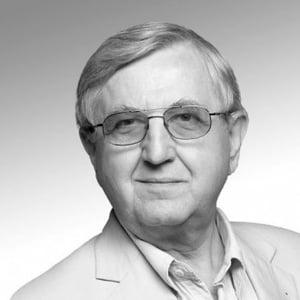
Former Czech Minister
Co-owner of the consulting company Euroffice Praha-Brusel as, former Czech minister. In December 1989, together with twelve other people, he founded ODA in his apartment. From January to June 1990, he worked at the headquarters of OF as vice-president of its foreign department and then for two years as a member of the Federal Assembly. This was followed by four years as a deputy at the Ministry of Foreign Affairs of the Czech Republic and, since 1996, 18 months in the Czech government as a minister without a portfolio. Since 1998, he has worked as a consultant for advocating for the interests of clients in the EU institutions and its Member States.
He was born in Bratislava on March 14, 1946. His mother was Czech, his father Slovak. In the identity card he therefore wrote: Slovak nationality. He studied solid state physics at the Faculty of Nuclear and Technical Physics, CTU. From July 1968 to November 1969 he was in the Netherlands, where he worked for a year on his diploma thesis in physics at the Technische Hogeschool in Delft and the rest of his stay in various manual jobs. On August 21, 1968, he specifically worked as a welder at the engineering plant in Dordrecht. During the Soviet occupation, he first worked at the Academy of Sciences as an aspirant. Due to political non-involvement, he was prevented from completing and defending his candidate's thesis, and his employment was terminated in 1974. For the next 7 years he worked as a technical officer at the Institute of Technical Development and Information, but in 1981 he was fired this time for political involvement, but on the "wrong" side. He spent one year as a cleaner in the Prague metro and the last seven years of the regime as a fireman in Metrostav.

Laurence A. Tisch Professor of Law and Director, Classical Liberal Institute, New York University School of Law; Director, Classical Liberal Institute, Civitas Institute University of Texas at Austin
Richard A. Epstein is the Laurence A. Tisch Professor of Law, at New York University, a senior research fellow at the Civitas Institute at the University of Texas Austin, and a senior Lecturer, the University of Chicago. He received an LL.D., h.c . from the University of Ghent, 2003 , and an LLD h.c . from the University of Siegen in 2018 and the Bradley Prize in 2011. He has been a member of the American Academy of Arts and Sciences since 1985. He has edited both the Journal of Legal Studies (1981-1991) and the Journal of Law and Economics (1991-2001). He is also a founder and director of the Classical Liberal Institute at NYU Law School. His most recent book is The Classical Liberal Constitution: The Uncertain Quest for Limited Government (2014). His other books include Takings: Private Property and the Power of Eminent Domain ( 1985); Bargaining with the State (1993); Simple Rules for a Complex World (1995); Principles for a Free Society: Reconciling Individual Liberty and the Common Good (1998); Skepticism and Freedom: A Modern Theory of Classical Liberalism (2003); Design for Liberty: Private Property, Public Administration and the Rule of Law (2011), and most recently, The Myth of Birthright citizenship—and Beyond (2026). He has taught courses in , administrative law, antitrust, constitutional, contracts, environmental law, land use planning; real property, torts and water law. He has written and spoken extensively on a wide range of topics, and is writes a regular column for Defining Ideas.
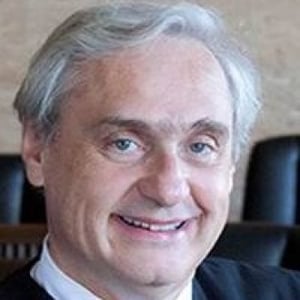
Former Judge, United States Court of Appeals, Ninth Circuit
Judge Kozinski served as a United States Circuit Judge for the Ninth Circuit from November 1985 until December 2017. He served as Chief Judge from 2007 to 2014. He graduated from UCLA, receiving an A.B. degree in 1972, and from UCLA Law School, receiving a J.D. degree in 1975.
Prior to his appointment to the appellate bench, Judge Kozinski served as Chief Judge of the United States Claims Court, 1982-85; Special Counsel, Merit Systems Protection Board, 1981-82; Assistant Counsel, Office of Counsel to the President, 1981; Deputy Legal Counsel, Office of President-Elect Reagan, 1980-81; Attorney, Covington & Burling, 1979-81; Attorney, Forry Golbert Singer & Gelles, 1977-79; Law Clerk to Chief Justice Warren E. Burger, 1976-77; and Law Clerk to Circuit Judge Anthony M. Kennedy, 1975-76.
Judge Kozinski is married to Marcy Jane Tiffany and has three children: Yale, Wyatt and Clayton, and three grandchildren: Quinn, Owen and Anna.
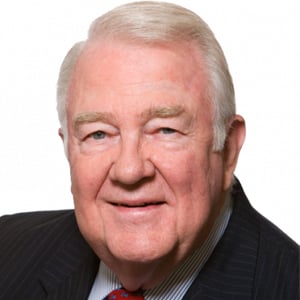
Ronald Reagan Distinguished Fellow Emeritus, The Heritage Foundation
Edwin Meese III, the prominent conservative leader, thinker and elder statesman, continues a quarter-century formal association with The Heritage Foundation as the leading think tank’s Ronald Reagan Distinguished Fellow Emeritus.
In that capacity, Meese oversees special projects and acts as an ambassador for Heritage within the conservative movement.
Meese was chairman of Heritage’s Center for Legal and Judicial Studies from its founding in 2001 until what he calls his “semi-retirement” on Feb. 1, 2013.
He joined Heritage in 1988 as the think tank's first Ronald Reagan Distinguished Fellow -- the only policy chair in the country to be officially named for the 40th president. His work focused on keeping President Reagan’s legacy of conservative principles alive in public debate and discourse.
The legal center now bears his name, in recognition of Meese’s contributions to the rule of law and the nation’s understanding of constitutional law. Its mission is to educate government officials, the media and the public about the Constitution and legal principles -- and how they affect public policy.
Perhaps best known as U.S. attorney general during Reagan’s second term, Meese’s service to the conservative icon stretched from the California governor’s mansion in 1966 to the White House in 1981 before he went to the Department of Justice four years later.
His Heritage “hats” kept Meese among the major conservative voices in national policy debates at an age when most men and women enjoyed quiet retirements.
In 2006, for example, Meese was named to the Iraq Study Group, a special presidential commission dedicated to examining the best resolutions for America's involvement in Iraq. In the past few years he wrote and spoke about constitutional topics ranging from religious liberty to the responsibility of Supreme Court justices.
Immediately after Reagan's death in 2004, and in the years since, Meese often agreed to major media appearances to discuss the lasting impact of his old friend, mentor and boss. He has summarized the Reagan legacy in three accomplishments: Reagan cut taxes and kept them low. He worked to defeat and end the Soviet Union and its worldwide push for communism. And he restored America's faith in itself after years of failure and "malaise."
"I admired him as a leader and cherish his friendship," Meese wrote in a 2004 essay for Heritage members and supporters. "Ronald Reagan had strong convictions. He was committed to the principles that had led to the founding of our nation. And he had the courage to follow his convictions against all odds." <[>Edwin Meese III was born Dec. 2, 1931, to Edwin Jr. and Leone Meese in Oakland, Calif. He graduated from Yale University in 1953 and holds a law degree from the University of California-Berkeley.
Meese spent much of his adult life working for Reagan, first after the former actor, sports announcer and athlete was elected as California’s governor in 1966 and then when he sought and won the presidency in 1980.
Reagan never forgot Meese's loyalty and hard work. During a press conference at which reporters questioned Meese's actions at the Justice Department, Reagan replied: "If Ed Meese is not a good man, there are no good men."
During the Reagan governorship, Meese served as executive assistant and chief of staff from 1969 through 1974 and as legal affairs secretary from 1967 through 1968. He previously was deputy district attorney in Alameda County, Calif.
From January 1981 to February 1985, Meese held the position of counsellor to the president -- the senior job on the White House staff -- and functioned as Reagan's chief policy adviser. In 1985, he received Government Executive magazine's annual award for excellence in management.
Meese served as the 75th attorney general of the United States from February 1985 to August 1988. As the nation's chief law enforcement officer, he directed the Justice Department and led international efforts to combat terrorism, drug trafficking and organized crime.
Meese’s relationship with Heritage began when he met with senior management to discuss the think tank's landmark policy guide, Mandate for Leadership, prepared for the incoming administration. Meese later recalled that Reagan personally handed out copies of the 1,093-page book to members of his Cabinet and asked them to read it. Nearly two-thirds of Mandate's 2,000 recommendations would be adopted or attempted by the Reagan administration.
More than a decade after joining Heritage, Meese assumed the chairmanship of its Center for Legal and Judicial Studies. Under his guidance, the center counseled White House staffers, Justice Department officials and Senate Judiciary Committee members on the importance of filling judicial vacancies with qualified men and women who are committed to interpreting the Constitution according to the founding document's original meaning.
The center became known for hosting "moot court" practice sessions to sharpen the arguments of attorneys slated to bring important cases before the Supreme Court. Those cases addressed constitutional issues ranging from property rights to racial preferences in primary and secondary schools to restrictions on free speech in campaign finance law.
Meese headed the legal center's Advisory Board for the writing and editing of the best-selling book, The Heritage Guide to the Constitution (Regnery, 2005). In it, 109 experts walked readers through a clause-by-clause analysis of the Constitution. Sen. Tom Coburn (R-Okla.) was among those keeping the reference work handy during Judiciary Committee hearings on Supreme Court nominees.
Meese's other books include “Leadership, Ethics and Policing” (Prentice Hall, 2004); “Making America Safer” (Heritage, 1997); and “With Reagan: The Inside Story” (Regnery Gateway, 1992).He wrote the Introduction to a well-received 2010 book on the “overcriminalization” trend, “One Nation Under Arrest,” by Heritage veterans Paul Rosenzweig and Brian W. Walsh.
He also is a distinguished visiting fellow at the Hoover Institution at Stanford University in California and lectures, writes and consults throughout the United States on a variety of subjects.
As both attorney general and counsellor to Reagan, Meese was a member of the Cabinet and the National Security Council. He served as chairman of the Domestic Policy Council and the National Drug Policy Board. After Reagan won the White House in the 1980 election, Meese headed the transition team. During the campaign, he was the Reagan-Bush Committee's senior official.
Meese had a career outside government and politics. From 1977 to 1981, he was a law professor at the University of San Diego, where he also directed the Center for Criminal Justice Policy and Management.
He was an executive in the aerospace and transportation industry as vice president for administration of Rohr Industries Inc. in Chula Vista, Calif. He left Rohr to return to the practice of law, doing corporate and general work in San Diego County.
A retired colonel in the Army Reserve, Meese remains active in numerous civic and educational organizations.
He and his wife, Ursula, have two grown children and reside in McLean, Va.
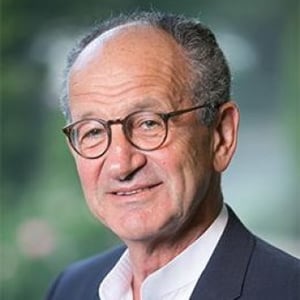
Daniel G. Ross Professor of Law; Joseph Solomon Professor of Wills, Trusts, and Estate Planning, Columbia Law School
A renowned authority on institutional economics, Andrzej Rapacznski works at the intersection of law, economics, philosophy, and political theory, and has published in the areas of constitutional law, institutional economics, and political philosophy. He is a co-founder of Project Syndicate, one of the world’s foremost publishers of commentary and analysis by distinguished economic, political, and cultural experts, business leaders, and civic activists.
With an interdisciplinary background, Rapaczynski is known for his research on the post-communist transition in Eastern Europe. He co-authored several books on the subject including Capitalism With a Comrade’s Face: Studies in the Postcommunist Transition and Privatization in Eastern Europe: Is the State Withering Away? He served as an expert adviser to the parliaments of Poland and the Russian Federation helping draft new constitutions and advised a number of governments on their privatization policies.
Before joining the Columbia Law School faculty in 1982, Rapaczynski was an assistant professor of philosophy at Yale University. He has also taught at the University of Tokyo and Princeton University, and he has been a research professor of economics at Central European University in Prague and Budapest.
Former Lieutenant Governor, Louisiana
Paul Jude Hardy (born October 18, 1942) is a Baton Rouge attorney who was the first Republican to have been elected lieutenant governor of Louisiana since Reconstruction. He served in the second-ranking post from 1988-1992.
Hardy's parents were Florent Hardy, Sr., (1913-2003) and the former Agnes Angelle. He graduated from Cecilia High School in St. Martin Parish in 1960 and from the University of Louisiana at Lafayette (then the University of Southwestern Louisiana), in 1965. While Hardy was on the USL track team, he won the Gulf States Conference high jump competition two years in a row.
In 1966, Hardy received his law degree from Loyola University in New Orleans, and at the age of 23 he began practicing law in St. Martinville with the firm Willis and Hardy.
In 1972 he was elected in an upset as a Democratic state senator for Iberia and St. Martin parishes. The defunct Baton Rouge State Times named him the “Outstanding Newcomer” of the year after his first legislative session.
In 1975, he was elected, again as a Democrat, as secretary of state in another upset. An opening appeared when Secretary of State Wade O. Martin, Jr., who was then a Democrat but later switched to the Republican Party, stepped down to launch an unsuccessful gubernatorial attempt. Hardy came from behind to beat his fellow Democratic opponent, State Representative P.J. Mills of Shreveport. In the primary, Mills had led with 49 percent of the vote. Hardy prevailed in the runoff -- officially the general election in Louisiana. He polled 388,780 votes (51.5 percent) to Mills' 366,510 (48.5 percent).
Because he is fluent in French, Hardy was invited to represent the United States in an international government seminar in Quebec, Canada, in 1976.
Partner, Montgomery Barnett
Harvey Charles Koch, Jr, a native of Hammond La. and a resident of New Orleans for 80 years, was born on August 15, 1934, and died peacefully on July 13, 2020, from cancer at age 85.
Mr. Koch's practice included complex commercial litigation, litigation management, insurance coverage and extra-contractual defense litigation, the construction process, construction litigation and arbitration, contract interpretation, sports and entertainment law, fidelity, surety and financial institution bonds, lawyer's malpractice, errors and omissions, life and long term care and fine arts coverages.
Mr. Koch participated in negotiations in Egypt after the Yom Kippur War leading to removal of ships sunk in the Suez Canal; represented a consortium of companies involved in reconstructing Kuwait and its oil fields after Operation Desert Storm; represented a major international insurance company in developing indemnity agreements, construction bonds, and guarantees for use with contractors in twelve foreign countries; represented the lead insurer in the adjustment of the business interruption claims of the Titan IV rockets manufacturer when the solid rocket fuel manufacturing plant supplying that missile program was destroyed in an explosion. And Mr. Koch has defended parties in complex litigation involving nuclear power and fossil fuel plants; the shipping industry; the former Louisiana Sunday Closing laws; and the resurfacing of both runways of the New Orleans International Airport (MSY) in the 1980's. Mr. Koch currently represents the international construction management firm managing all construction at the New Orleans Louis Armstrong International Airport (MSY).
As an appellate practitioner, Mr. Koch briefed the United States Supreme Court on the Insurance Industry's position on coverage issues regarding the Security Dealer's Blanket Bond, and the New Zealand Supreme Court on the interpretation by United States Courts on coverage issues related to the Financial Institution Bond.
Mr. Koch was listed in Best Lawyers in America (Construction), was a Fellow of the American College of Construction Lawyers (Founder and Former Chair of its Insurance Industry Committee and a former member of its Board of Governors), and was a consultative member of the American Law Institute. Mr. Koch chaired the American Bar Association's Fidelity and Surety Law Committee, Co-Chaired the ABA's first three National Institutes of the Forum on the Construction Industry, chaired six ABA National Law Institutes, founded and served as first Chair of the Louisiana Bar Association's Section on Construction, Fidelity and Surety Law, served as a Vice Chair of the Fidelity and Surety Law Committee of the International Association of Defense Counsel, served on both the Surety Claims Institute Board of Governors and the Advisory Council of the Chief Judge of the Court of Federal Claims in Washington, D.C., was a Trustee of the Federalist Society, was a member of the National Bond Claims Association, was one of the four Advisors Emeritus of the Fidelity Law Association and was a Life Fellow of both the American and Louisiana Bar Foundations.
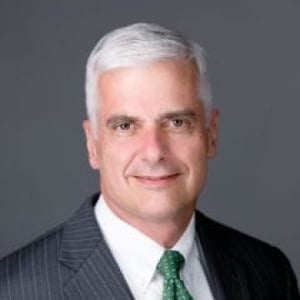
David McIntosh is a leader for the principles of limited constitutional government and individual freedom. He is president of the Club for Growth, the leading advocate for economic liberty.
Former Congressman David McIntosh represented Indiana's 2nd Congressional District in the United States Congress from 1995-2001. As a Freshman, David chaired the Subcommittee on Regulatory Relief. He passed the Congressional Review Act and held extensive oversight and field hearings to build a record of public support for regulatory relief initiatives in energy, biotechnology, pharmaceutical, healthcare, transportation and technology sectors. Another issue that he championed was the elimination of the marriage penalty in the Federal Tax Code.
David served during the Reagan administration as special assistant to Attorney General Edwin Meese III, and as special assistant to President Reagan for Domestic Affairs. During the first Bush administration, he served as executive director of the President's Council on Competitiveness and assistant to the Vice President. The Competitiveness Council coordinated the cost/benefit review of major regulations and promoted legal reform measures.
David is a co-founder of the Federalist Society for Law and Public Policy and serves on the Board of Directors. He remains active with several free market and conservative think tanks and grassroots organizations. David has also had stints at the Hudson Institute and as a Professor of Economics at Ball State School of Business.
Prior to the Club for Growth, David was a partner at Mayer Brown, LLP in Washington, DC.
David graduated from the University of Chicago Law School in 1983, and Yale University, BA, cum laude, in 1980. He and his wife, Ruthie, are the proud parents of Ellie age 17 and Davey age 13.
Former United States Attorney General
Richard Lewis Thornburgh was born on July 16, 1932 in Pittsburgh, Pennsylvania. He graduated with a bachelor’s degree in engineering from Yale University in 1954 and earned his LL.B degree from the University of Pittsburgh in 1957. Mr. Thornburgh also holds honorary degrees from 31 colleges and universities.
Following law school, Mr. Thornburgh worked in private industry until 1959 when he joined the Pittsburgh law firm then known as Kirkpatrick & Lockhart. In 1967, he was elected as a delegate to the Pennsylvania Constitutional Convention. From 1969 to 1975, Mr. Thornburgh was the U.S. Attorney for the Western District of Pennsylvania and was appointed Assistant Attorney General for the Criminal Division in 1975, serving two years in Washington, D.C. in that role before returning to private practice as a partner at Kirkpatrick & Lockhart. Pennsylvania elected Mr. Thornburgh governor in 1979 and he served two terms. Mr. Thornburgh also taught courses at the Harvard University Kennedy School of Government and directed that school’s Institute of Politics from 1987 to 1988.
Appointed by President Reagan, Richard Thornburgh was sworn in as Attorney General on August 12, 1988. President George H.W. Bush reinstated him as Attorney General in 1989 and he served until 1991. In 1992, the American Legion honored Mr. Thornburgh with its highest award, the “Distinguished Services Medal.” He published his autobiography in 2003 entitled, Where the Evidence Leads: The Autobiography of Dick Thornburgh.
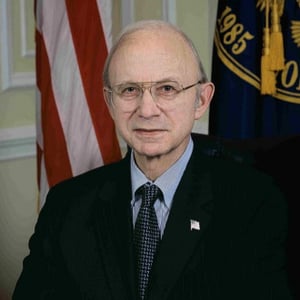
Former Archivist of the United States
Allen Weinstein (September 1, 1937 – June 18, 2015) was an American historian, educator, and federal official who served in several different offices. He was, under the Reagan administration, cofounder of the National Endowment for Democracy in 1983. He served as the Archivist of the United States from February 16, 2005, until his resignation on December 19, 2008. After his resignation, he returned to the International Foundation for Electoral Systems as a senior strategist and was a visiting faculty member at the University of Maryland.
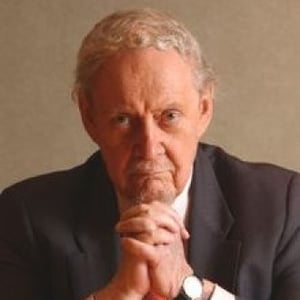
Former Judge, U.S. Court of Appeals, DC Circuit
Robert Heron Bork served as Solicitor General, acting Attorney General, and judge for the United States Court of Appeals for the District of Columbia Circuit. Judge Bork passed away in December 2012.
Tribute to Judge Robert Bork by John McGinnis - Event Audio/Video
Celebration of the Life of Robert Heron Bork 1927-2012
Judge Robert H. Bork: His Life and Legacy - Practice Group Podcast
A Conference Discussing the Contributions of Judge Robert H. Bork - June 26, 2007
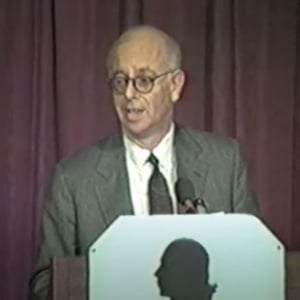
President, The Free Press
Erwin A. Glikes was a leading publisher of nonfiction books for a quarter-century, whose authors included some of the most prestigious figures in American intellectual life.

Clayton J. and Henry R. Barber Professor of Law, Northwestern University Pritzker School of Law and Co-Chairman, Board of Directors, The Federalist Society
STEVEN GOW CALABRESI is the Clayton J. & Henry R. Barber Professor at Northwestern Pritzker School of Law. He has also co-taught in the Fall semester at Yale Law School from 2013 to the present. Calabresi clerked for Justice Antonin Scalia and Judges Robert H. Bork and Ralph K. Winter. He was a Special Assistant to Attorney General Meese from 1985 to 1987 and worked with Ken Cribb as his deputy in 1987 on the second floor of the West Wing of the Reagan White House. Calabresi has written books on presidential power and comparative constitutional law and the origins of judicial review. He and Gary Lawson are the co-editors of a casebook on U.S. Constitutional Law, and Calabresi is also the co-editor of a casebook on comparative constitutional law. He has written over seventy law review articles since 1990.

Founding Partner, Boyden Gray & Associates
Ambassador C. Boyden Gray is the founding partner of Boyden Gray & Associates, a law and strategy firm in Washington, D.C., focused on constitutional and regulatory issues.
Mr. Gray worked in the White House for twelve years, first as counsel to the Vice President during the Reagan administration and then as White House Counsel to President George H.W. Bush. In the Reagan administration, he was Counsel to the Presidential Task Force on Regulatory Relief, for which he wrote the original Executive Order 12291 requiring cost-benefit analysis and White House review of regulations (later renumbered as current EO 12866). In the George H.W. Bush Administration, Mr. Gray was in charge of judicial selection and was also instrumental in the enactment of the Clean Air Act Amendments of 1990, the Energy Policy Act of 1992, and a cap-and-trade system for acid rain emissions. In 1993, he received the Presidential Citizens Medal. Under President George W. Bush, Mr. Gray was U.S. Ambassador to the European Union and U.S. Special Envoy to Europe for Eurasian Energy.
Mr. Gray practiced law for 25 years at the law firm of Wilmer, Cutler & Pickering and was chairman of the Administrative Law and Regulatory Practice Section of the American Bar Association from 2000 to 2002. Early in his career, Mr. Gray helped to develop the Business Roundtable and served as its first counsel. He is an adjunct professor at Antonin Scalia Law School and a former adjunct professor at NYU Law School (teaching energy and environmental law). Mr. Gray is on the Board of Directors of the Atlantic Council, the Federalist Society, Reason Foundation, and the Trust for the National Mall.
Mr. Gray earned his A.B. magna cum laude from Harvard, where he was an editor of the Crimson, and his J.D. with high honors from the University of North Carolina at Chapel Hill, where he was editor-in-chief of the Law Review. Mr. Gray served in the United States Marine Corps, and after law school, he clerked for Earl Warren, Chief Justice of the United States Supreme Court.
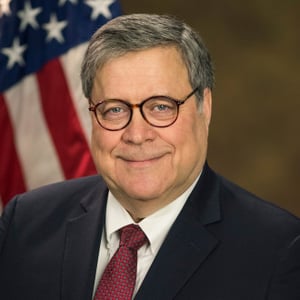
Former United States Attorney General
William P. Barr was born on May 23, 1950 in New York City. Mr. Barr received his A.B. in government from Columbia University in 1971 and his M.A. in government and Chinese studies in 1973. From 1973 to 1977, he served in the Central Intelligence Agency before receiving his J.D. with highest honors from George Washington University Law School in 1977.
In 1978, Mr. Barr served as a law clerk under Judge Malcolm Wilkey of the U.S. Court of Appeals for the District of Columbia Circuit. Following his clerkship, Mr. Barr joined the Washington, D.C. office of the law firm of Shaw, Pittman, Potts & Trowbridge as an associate. He left the firm to work in the White House under President Ronald Reagan from 1982 to 1983 on the domestic policy staff, then returned to the law firm and became a partner in 1985.
Under President George H.W. Bush, Mr. Barr served as the Deputy Attorney General from 1990 to 1991; the Assistant Attorney General of the Office of Legal Counsel from 1989 to 1990; and the 77th Attorney General of the United States from 1991 to 1993. While serving at the Department, Mr. Barr helped create programs and strategies to reduce violent crime and was responsible for establishing new enforcement policies in a number of areas including financial institutions, civil rights, and antitrust merger guidelines. Mr. Barr also led the Department’s response to the Savings & Loan crisis; oversaw the investigation of the Pan Am 103 bombing; directed the successful response to the Talladega prison uprising and hostage taking; and coordinated counter-terrorism activities during the First Gulf War.
From 1994 to 2000, Mr. Barr served as Executive Vice President and General Counsel for GTE Corporation. Mr. Barr then served as Executive Vice President and General Counsel of Verizon from 2000 to 2008. At both GTE and Verizon, Mr. Barr led the legal, regulatory, and government affairs activities of the companies.
After retiring from Verizon in 2008, Mr. Barr advised major corporations on government enforcement matters, as well as regulatory litigation. Mr. Barr served as Of Counsel at Kirkland & Ellis LLP in 2009 and rejoined the firm in 2017.
President Donald Trump announced his intention to nominate Mr. Barr on December 7, 2018, and he was confirmed as the 85th Attorney General of the United States by the U.S. Senate on February 14, 2019. U.S. Supreme Court Chief Justice John Roberts administered the oath of office. Mr. Barr joins John Crittenden (1841 and 1850-1853) as one of only two people in U.S. history to serve twice as Attorney General.
Scholar in Residence, The Constitution Project
Louis Fisher is Scholar in Residence at the Constitution Project. Previously he worked for four decades at the Library of Congress as Senior Specialist in Separation of Powers (Congressional Research Service, from 1970 to 2006) and Specialist in Constitutional Law (the Law Library, from 2006 to 2010). During his service with CRS he was research director of the House Iran-Contra Committee in 1987, writing major sections of the final report. Fisher's specialties include constitutional law, war powers, budget policy, executive-legislative relations, and judicial-congressional relations.
After completing his doctoral work in political science at the New School for Social Research in 1967, he taught full-time at Queens College for three years. Later he taught part-time at Georgetown University, American University, Catholic University law school, Indiana University, Catholic University, the College of William and Mary law school, and Johns Hopkins University. Currently he is a Visiting Professor at the William and Mary law school.
His books include President and Congress (1972), Presidential Spending Power (1975), The Constitution Between Friends (1978), The Politics of Shared Power (4th ed. 1998), Constitutional Conflicts Between Congress and the President (6th ed. 2014), Constitutional Dialogues (1988),American Constitutional Law (with Katy J. Harriger, 10th ed. 2013), Presidential War Power (3rd ed. 2014), Political Dynamics of Constitutional Law (with Neal Devins, 5th ed. 2011), Congressional Abdication on War and Spending (2000), Religious Liberty in America: Political Safeguards (2002), Nazi Saboteurs on Trial: A Military Tribunal & American Law (2003; 2d ed. 2005), The Politics of Executive Privilege (2004), The Democratic Constitution (with Neal Devins, 2004), Military Tribunals and Presidential Power: American Revolution to the War on Terrorism (2005), In the Name of National Security: Unchecked Presidential Power and the Reynolds Case (2006), The Constitution and 9/11: Recurring Threats to America’s Freedoms (2008), The Supreme Court and Congress: Rival Interpretations (2009), On Appreciating Congress: The People’s Branch (2010), Defending Congress and the Constitution (2011), On the Supreme Court: Without Illusion and Idolatry(2013), and The Law of the Executive Branch: Presidential Power (2014). His textbook in constitutional law is available in two paperbacks:Constitutional Structures: Separation of Powers and Federalism and Constitutional Rights: Civil Rights and Civil Liberties. With Leonard W. Levy he edited the four-volume Encyclopedia of the American Presidency (1994).
He has twice won the Louis Brownlow Book Award (for Presidential Spending Power and Constitutional Dialogues). The encyclopedia he co-edited was awarded the Dartmouth Medal. In 1995 he received the Aaron B. Wildavsky Award “For Lifetime Scholarly Achievement in Public Budgeting” from the Association for Budgeting and Financial Management. In 2006 he received the Neustadt Book Award for Military Tribunals and Presidential Power. In 2011 he received the Walter Beach Pi Sigma Alpha Award from the National Capital Area Political Science Association for strengthening the relationship between political science and public service. In 2012 he received the Hubert H. Humphrey Award from the American Political Science Association in recognition of notable public service by a political scientist. The July 2013 issue of PS: Political Science & Politics includes a symposium on "Law and (Disciplinary) Order: A Dialogue about Louis Fisher, Constitutionalism, and Political Science.
Dr. Fisher has been invited to testify before Congress more than 50 times on such issues as war powers, state secrets privilege, NSA surveillance, executive spending discretion, presidential reorganization authority, Congress and the Constitution, the legislative veto, the item veto, the Gramm-Rudman deficit control act, executive privilege, committee subpoenas, executive lobbying, CIA whistleblowing, covert spending, the pocket veto, recess appointments, the budget process, the balanced budget amendment, biennial budgeting, and presidential impoundment powers.
He has been active with CEELI (Central and East European Law Initiative) of the American Bar Association, traveling to Bulgaria, Albania, and Hungary to assist constitution-writers; participating in CEELI conferences in Washington, D.C. with delegations from Bosnia-Herzegovina, Lithuania, Romania, and Russia; serving on CEELI "working groups" on Armenia and Belarus; and assisted in drafting constitutional amendments for the Kyrgyz Republic. As part of CRS delegations he traveled to Russia and Ukraine to assist on constitutional questions. For the International Bar Association he helped analyze the draft constitutions for Swaziland and Zimbabwe.
He is the author of more than 500 articles in law reviews, political science journals, encyclopedias, books, magazines, and newspapers. He has been invited to speak in Albania, Australia, Belgium, Bulgaria, Canada, China, the Czech Republic, Denmark, England, France, Germany, Greece, Israel, Japan, Macedonia, Malaysia, Mexico, the Netherlands, Oman, the Philippines, Poland, Romania, Russia, Slovenia, South Korea, Sweden, Taiwan, Ukraine, and the United Arab Emirates. The topics include a range of constitutional, political, and institutional issues.
Ronald Reagan Distinguished Fellow Emeritus, The Heritage Foundation
Edwin Meese III, the prominent conservative leader, thinker and elder statesman, continues a quarter-century formal association with The Heritage Foundation as the leading think tank’s Ronald Reagan Distinguished Fellow Emeritus.
In that capacity, Meese oversees special projects and acts as an ambassador for Heritage within the conservative movement.
Meese was chairman of Heritage’s Center for Legal and Judicial Studies from its founding in 2001 until what he calls his “semi-retirement” on Feb. 1, 2013.
He joined Heritage in 1988 as the think tank's first Ronald Reagan Distinguished Fellow -- the only policy chair in the country to be officially named for the 40th president. His work focused on keeping President Reagan’s legacy of conservative principles alive in public debate and discourse.
The legal center now bears his name, in recognition of Meese’s contributions to the rule of law and the nation’s understanding of constitutional law. Its mission is to educate government officials, the media and the public about the Constitution and legal principles -- and how they affect public policy.
Perhaps best known as U.S. attorney general during Reagan’s second term, Meese’s service to the conservative icon stretched from the California governor’s mansion in 1966 to the White House in 1981 before he went to the Department of Justice four years later.
His Heritage “hats” kept Meese among the major conservative voices in national policy debates at an age when most men and women enjoyed quiet retirements.
In 2006, for example, Meese was named to the Iraq Study Group, a special presidential commission dedicated to examining the best resolutions for America's involvement in Iraq. In the past few years he wrote and spoke about constitutional topics ranging from religious liberty to the responsibility of Supreme Court justices.
Immediately after Reagan's death in 2004, and in the years since, Meese often agreed to major media appearances to discuss the lasting impact of his old friend, mentor and boss. He has summarized the Reagan legacy in three accomplishments: Reagan cut taxes and kept them low. He worked to defeat and end the Soviet Union and its worldwide push for communism. And he restored America's faith in itself after years of failure and "malaise."
"I admired him as a leader and cherish his friendship," Meese wrote in a 2004 essay for Heritage members and supporters. "Ronald Reagan had strong convictions. He was committed to the principles that had led to the founding of our nation. And he had the courage to follow his convictions against all odds." <[>Edwin Meese III was born Dec. 2, 1931, to Edwin Jr. and Leone Meese in Oakland, Calif. He graduated from Yale University in 1953 and holds a law degree from the University of California-Berkeley.
Meese spent much of his adult life working for Reagan, first after the former actor, sports announcer and athlete was elected as California’s governor in 1966 and then when he sought and won the presidency in 1980.
Reagan never forgot Meese's loyalty and hard work. During a press conference at which reporters questioned Meese's actions at the Justice Department, Reagan replied: "If Ed Meese is not a good man, there are no good men."
During the Reagan governorship, Meese served as executive assistant and chief of staff from 1969 through 1974 and as legal affairs secretary from 1967 through 1968. He previously was deputy district attorney in Alameda County, Calif.
From January 1981 to February 1985, Meese held the position of counsellor to the president -- the senior job on the White House staff -- and functioned as Reagan's chief policy adviser. In 1985, he received Government Executive magazine's annual award for excellence in management.
Meese served as the 75th attorney general of the United States from February 1985 to August 1988. As the nation's chief law enforcement officer, he directed the Justice Department and led international efforts to combat terrorism, drug trafficking and organized crime.
Meese’s relationship with Heritage began when he met with senior management to discuss the think tank's landmark policy guide, Mandate for Leadership, prepared for the incoming administration. Meese later recalled that Reagan personally handed out copies of the 1,093-page book to members of his Cabinet and asked them to read it. Nearly two-thirds of Mandate's 2,000 recommendations would be adopted or attempted by the Reagan administration.
More than a decade after joining Heritage, Meese assumed the chairmanship of its Center for Legal and Judicial Studies. Under his guidance, the center counseled White House staffers, Justice Department officials and Senate Judiciary Committee members on the importance of filling judicial vacancies with qualified men and women who are committed to interpreting the Constitution according to the founding document's original meaning.
The center became known for hosting "moot court" practice sessions to sharpen the arguments of attorneys slated to bring important cases before the Supreme Court. Those cases addressed constitutional issues ranging from property rights to racial preferences in primary and secondary schools to restrictions on free speech in campaign finance law.
Meese headed the legal center's Advisory Board for the writing and editing of the best-selling book, The Heritage Guide to the Constitution (Regnery, 2005). In it, 109 experts walked readers through a clause-by-clause analysis of the Constitution. Sen. Tom Coburn (R-Okla.) was among those keeping the reference work handy during Judiciary Committee hearings on Supreme Court nominees.
Meese's other books include “Leadership, Ethics and Policing” (Prentice Hall, 2004); “Making America Safer” (Heritage, 1997); and “With Reagan: The Inside Story” (Regnery Gateway, 1992).He wrote the Introduction to a well-received 2010 book on the “overcriminalization” trend, “One Nation Under Arrest,” by Heritage veterans Paul Rosenzweig and Brian W. Walsh.
He also is a distinguished visiting fellow at the Hoover Institution at Stanford University in California and lectures, writes and consults throughout the United States on a variety of subjects.
As both attorney general and counsellor to Reagan, Meese was a member of the Cabinet and the National Security Council. He served as chairman of the Domestic Policy Council and the National Drug Policy Board. After Reagan won the White House in the 1980 election, Meese headed the transition team. During the campaign, he was the Reagan-Bush Committee's senior official.
Meese had a career outside government and politics. From 1977 to 1981, he was a law professor at the University of San Diego, where he also directed the Center for Criminal Justice Policy and Management.
He was an executive in the aerospace and transportation industry as vice president for administration of Rohr Industries Inc. in Chula Vista, Calif. He left Rohr to return to the practice of law, doing corporate and general work in San Diego County.
A retired colonel in the Army Reserve, Meese remains active in numerous civic and educational organizations.
He and his wife, Ursula, have two grown children and reside in McLean, Va.
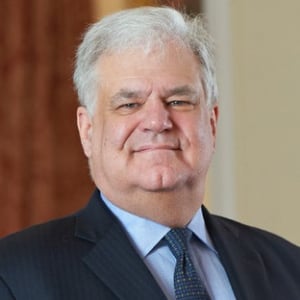
Stuyvesant P. Comfort Professor of Law; Director, Center for Financial Institutions; and Co-Director, Center for Civil Justice, New York University School of Law
Geoffrey Miller is an author or editor of a dozen books and more than 200 articles in the fields of financial institutions, contract law, corporate and securities law, constitutional law, civil procedure, legal history, jurisprudence, and ancient law. He has taught a wide range of subjects including law and economics, corporations, compliance and risk management, property, regulation of financial institutions, land development, securities law, the legal profession, and legal theory. Miller received his BA magna cum laude from Princeton in 1973 and his JD from Columbia in 1978, where he was a Stone Scholar and editor-in-chief of the Columbia Law Review. He clerked for Judge Carl McGowan of the US Court of Appeals for the District of Columbia Circuit and Justice Byron White of the US Supreme Court. After two years as an attorney adviser at the Office of Legal Counsel of the US Department of Justice and one year with a Washington, DC, law firm, he joined the faculty of the University of Chicago Law School in 1983 and NYU School of Law in 1995.
Miller has been a visiting professor or visiting scholar at Columbia University, Harvard University, University of Minnesota, University of Basel (Switzerland), University of Genoa (Italy), Collegio Carlo Alberto (Italy), Study Center Gerzensee (Switzerland), Vanderbilt University, University of St. Gallen (Switzerland), University of Frankfurt (Germany), University of Sydney (Australia), University of Auckland (New Zealand), and the Bank of Japan. Miller is a founder of the Society for Empirical Legal Studies, a scholarly organization devoted to promoting statistical and other empirical techniques in the study of legal institutions. He is founder and director of NYU School of Law’s Center for Financial Institutions, co-director of the Center for Civil Justice, co-founder of and Senior Academic Fellow at NYU's Program on Corporate Compliance and Enforcement, co-convener of the Global Economic Policy Forum, a member of the board of directors of State Farm Bank, and a fellow in the American Academy of Arts and Sciences.
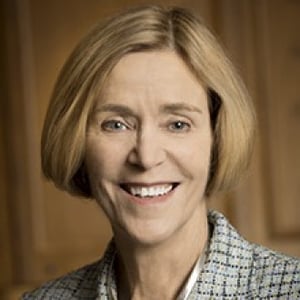
Lafayette S. Foster Professor of Law, Yale Law School
Kate Stith, Lafayette S. Foster Professor of Law at Yale Law School, teaches and writes in the areas of criminal law, criminal procedure, and constitutional law. Prior to joining the faculty at Yale, Professor Stith was an Assistant United States Attorney for the Southern District of New York, where she prosecuted white-collar and organized-crime cases. Professor Stith is serving or has served as an Adviser for the American Law Institute project Model Penal Code Sentencing; on the Committee on Law and Justice of the National Research Council; on the Professional Ethics Committee in the State of Connecticut; as a Commissioner of the Permanent Commission on the Status of Women in Connecticut; as President of the Connecticut Bar Foundation; on the Dartmouth College Board of Trustees; as faculty sponsor and director of the Women's Campaign School at Yale; as Deputy Dean of Yale Law School; and, by appointment of the Chief Justice of the United States, on the Advisory Committee for the Federal Rules of Criminal Procedure. Her book on the federal sentencing guidelines, Fear of Judging (with J.A. Cabranes), was awarded a Certificate of Merit by the ABA in 1999. A graduate of Dartmouth College, the Kennedy School of Government, and Harvard Law School, she clerked for Judge Carl McGowan of the U.S. Court of Appeals for the District of Columbia and for Supreme Court Justice Byron R.White.
Former United States Attorney General
Griffin Boyette Bell was born in Americus, Georgia, on October 31, 1918. He attended Georgia Southwestern College, and received an LL.B. degree cum laude from Mercer University Law School in Macon, Georgia. In addition, he received the Order of the Coif from Vanderbilt Law School, and honorary degrees from a number of colleges and universities.
Mr. Bell served in the U. S. Army from 1941 to 1946, attaining the rank of major.
He was admitted to the Georgia bar in 1947, and practiced in Savannah and Rome, Georgia, before joining the Atlanta law firm of King & Spalding in 1953. From January 1959 to October 1961, Bell held the honorary position of chief of staff to Georgia Governor Ernest Vandiver.
In 1961 President Kennedy appointed him to serve on the U. S. Court of Appeals for the Fifth Circuit. In March 1976, he returned to King & Spalding as a senior partner. He resigned from the firm on December 31, 1976, after being nominated for the office of Attorney General by President Carter. Confirmed by the Senate on January 25, 1977, Bell was sworn in on January 26, receiving the oath of office from Chief Justice Warren E. Burger.
During his career, Bell served as Chairman of the Committee on Innovation and Development of the Federal Judicial Center, of the American Bar Association's Division of Judicial Administration and of the Pound Conference Follow-Up Task Force.
His memberships included the American Law Institute, the American Bar Association's Commission on Standards of Judicial Administration, the Board of Directors of the Federal Judicial Center, the American College of Trial Lawyers, and the Visiting Committee of Vanderbilt Law School. He was a trustee of Mercer University and an attorney with the law firm King & Spalding. Bell died January 5, 2009 in Atlanta, Georgia.
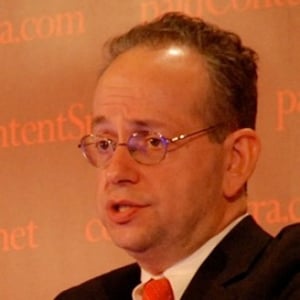
Columnist, The Wall Street Journal
Gordon Crovitz is the former "Information Age" columnist for the Wall Street Journal's Editorial Page. He is a media and information industry adviser and executive, including former publisher of The Wall Street Journal, executive vice president of Dow Jones and president of its Consumer Media Group. He has been active in digital media since the early 1990s, overseeing the growth of The Wall Street Journal Online to more than one million paying subscribers, making WSJ.com the largest paid news site on the Web. He launched the Factiva business-search service and led the acquisition for Dow Jones of the MarketWatch Web site, VentureOne database, Private Equity Analyst newsletter and online news services VentureWire (Silicon Valley), e-Financial News (London) and VWD (Frankfurt).
In 2009, he co-founded Press+, which was acquired by RR Donnelley in 2011.
He is a member of the board of directors of Blurb, Business Insider, Houghton Mifflin Harcourt, Marin Software, Minneapolis Star Tribune and ProQuest. He is an angel investor and is on the board of advisors of several early-stage companies, including Halogen Media, Quid, Skift, SkyGrid, SocialMedian (sold to XING) and WatchUp. He is an investor in Betaworks, a New York incubator for startups.
Earlier in his career, Gordon wrote the "Rule of Law" column for the Journal and won several awards including the Gerald Loeb Award for business commentary. He was editor and publisher of the Far Eastern Economic Review in Hong Kong and editorial-page editor of The Wall Street Journal Europe in Brussels.
He graduated from the University of Chicago and has law degrees from Wadham College, Oxford University, which he attended as a Rhodes scholar, and Yale Law School.
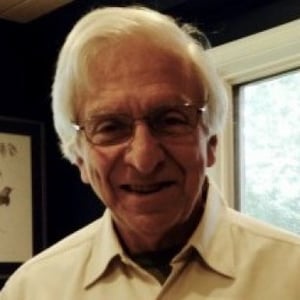
Former General Counsel, United States Senate Intelligence Committee
Between 2003 and 2011, Michael Davidson served first as Minority Counsel and then General Counsel at the Senate Intelligence Committee. In 1997 and 1998, he participated in representing Senators Byrd, Moynihan, and Levin in their challenge to the constitutionality of the Line Item Veto Act. After teaching clinical law at the State University of New York in Buffalo and then two years as chief staff counsel at the DC Circuit, he served as the first Senate Legal Counsel (1979-95), where his responsibilities included representing the Senate in separation of powers cases. After graduation from the University of Chicago Law School in 1964, Davidson served as a Peace Corps volunteer in Kenya, and then as an Assistant Counsel at the NAACP Legal Defense Fund.
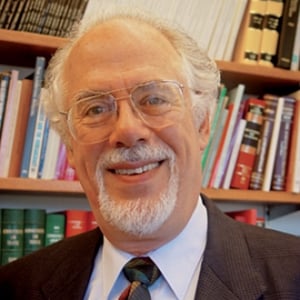
Betts Professor Emeritus of Law, Columbia Law School
Peter L. Strauss is the Betts Professor of Law at Columbia Law School. He teaches courses in administrative law, legal methods, and legislation. He joined the faculty in 1971, and has twice served as vice dean.
He received his LL.B. from Yale Law School in 1964 and his A.B. from Harvard College in 1961. Before joining the Law School, he clerked for David L. Bazelon and William J. Brennan in Washington, D.C.; spent two years lecturing on criminal law in the national university of Ethiopia; and three years as an attorney in the Office of the Solicitor General, briefing and arguing cases before the U.S. Supreme Court. During 1975 to 1977, Strauss was on leave from Columbia as the first general counsel of the United States Nuclear Regulatory Commission.
In 1987, the American Bar Association's section of administrative law and regulatory practice presented Strauss with its third annual award for distinguished scholarship in administrative law. From 1992 to 1993, he served as chair of the section. He has been a reporter for rulemaking on its APA and European Union administrative law projects, and was a member of its E-Rulemaking task force. In 2008, the American Constitution Society awarded him the first Richard Cudahy prize for his essay “Overseer or 'The Decider'? The President in Administrative Law.”
Strauss has been a visitor at the European University Institute, Harvard University, the Max Planck Institute for Comparative Public and International Law, and New York University, and has lectured widely on American administrative law abroad, including programs in Argentina, Australia, Belarus, Brazil, China, Colombia, England, France, Germany, Hong Kong, India, Italy, Japan, the Netherlands, New Zealand, Turkey, and Venezuela. During 2008 to 2009, he was Fernand Braudel Senior Fellow at the European Law Institute and Parsons Fellow at the University of Sydney Law School.
A life member of the American Law Institute, Strauss was elected in 2010 to the American Academy of Arts & Sciences. He has also long been a faculty member on the board of the Law School's Public Interest Law Foundation.
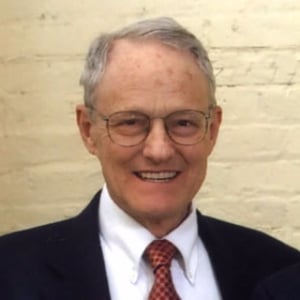
U.S. Court of Appeals, D.C. Circuit
Judge Williams practiced law in New York City (at the firm of Debevoise Plimpton and as an Assistant U.S. Attorney) and then taught law at the University of Colorado Law School from 1969 to 1986, with visiting years at UCLA, SMU, and the University of Chicago (where he was also a fellow in law and economics). He was appointed to the U.S. Court of Appeals for the D.C. Circuit in 1986. His most recent book is a biography of Vasily Maklakov, The Reformer: How One Liberal Fought to Preempt the Russian Revolution (Encounter Books, 2017).
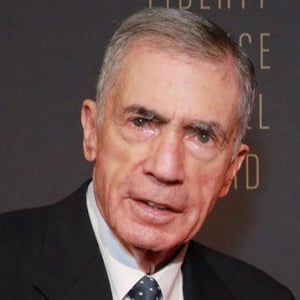
Former Governor of Virginia and United States Senator
Charles Spittal Robb is an American politician from Virginia and former officer in the United States Marine Corps. A member of the Democratic Party, he served as the 64th Governor of Virginia from 1982 to 1986 and a United States Senator from 1989 until 2001. In 2004, he co-chaired the Iraq Intelligence Commission.
Former Archivist of the United States
Allen Weinstein (September 1, 1937 – June 18, 2015) was an American historian, educator, and federal official who served in several different offices. He was, under the Reagan administration, cofounder of the National Endowment for Democracy in 1983. He served as the Archivist of the United States from February 16, 2005, until his resignation on December 19, 2008. After his resignation, he returned to the International Foundation for Electoral Systems as a senior strategist and was a visiting faculty member at the University of Maryland.

U.S. Court of Appeals, Seventh Circuit
Frank H. Easterbrook is a judge of the United States Court of Appeals for the Seventh Circuit and a Senior Lecturer at the Law School of the University of Chicago. He was Chief Judge from 2006–2013. Before joining the court in 1985, he was the Lee andBrena Freeman Professor of Law at the University of Chicago, where he taught and wrote in antitrust, securities, corporate law, jurisprudence, and criminal procedure. He has published The Economic Structure of Corporate Law (with Daniel R. Fischel) and about 100 scholarly articles. He served as Co-Editor of the Journal of Law and Economics from 1982 to 1991 and as a member of the Judicial Conference’s Standing Committee on Rules of Practice and Procedure from 1991 to 1997. Before joining the faculty of the Law School in 1979, Judge Easterbrook was Deputy Solicitor General of the United States. He holds degrees from Swarthmore College (B.A. with high honors, 1970) and the University of Chicago (J.D. cum laude, 1973), and is a member of the American Academy of Arts and Sciences, the American Law Institute, the Mont Pelerin Society, Phi Beta Kappa, and the Order of the Coif.
David McIntosh is a leader for the principles of limited constitutional government and individual freedom. He is president of the Club for Growth, the leading advocate for economic liberty.
Former Congressman David McIntosh represented Indiana's 2nd Congressional District in the United States Congress from 1995-2001. As a Freshman, David chaired the Subcommittee on Regulatory Relief. He passed the Congressional Review Act and held extensive oversight and field hearings to build a record of public support for regulatory relief initiatives in energy, biotechnology, pharmaceutical, healthcare, transportation and technology sectors. Another issue that he championed was the elimination of the marriage penalty in the Federal Tax Code.
David served during the Reagan administration as special assistant to Attorney General Edwin Meese III, and as special assistant to President Reagan for Domestic Affairs. During the first Bush administration, he served as executive director of the President's Council on Competitiveness and assistant to the Vice President. The Competitiveness Council coordinated the cost/benefit review of major regulations and promoted legal reform measures.
David is a co-founder of the Federalist Society for Law and Public Policy and serves on the Board of Directors. He remains active with several free market and conservative think tanks and grassroots organizations. David has also had stints at the Hudson Institute and as a Professor of Economics at Ball State School of Business.
Prior to the Club for Growth, David was a partner at Mayer Brown, LLP in Washington, DC.
David graduated from the University of Chicago Law School in 1983, and Yale University, BA, cum laude, in 1980. He and his wife, Ruthie, are the proud parents of Ellie age 17 and Davey age 13.
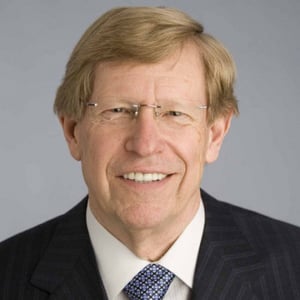
Partner, Gibson Dunn & Crutcher LLP
Theodore B. Olson is a Partner in Gibson, Dunn & Crutcher’s Washington, D.C. office; a founder of the Firm’s Crisis Management, Sports Law, and Appellate and Constitutional Law Practice Groups.
Mr. Olson was Solicitor General of the United States during the period 2001-2004. From 1981-1984, he was Assistant Attorney General in charge of the Office of Legal Counsel in the U.S. Department of Justice. Except for those two intervals, he has been a lawyer with Gibson, Dunn & Crutcher in Los Angeles and Washington, D.C. since 1965.
Selected by Time magazine in 2010 as one of the 100 most influential people in the world, Mr. Olson is one of the nation’s premier appellate and United States Supreme Court advocates. He has argued 65 cases in the Supreme Court and has prevailed in over 75% of those cases. These include the two Bush v Gore cases arising out of the 2000 presidential election; Citizens United v Federal Election Commission; Hollingsworth v Perry, the case affirming the overturning of California’s Proposition 8, banning same-sex marriages; Murphy v NCAA, overturning a federal law prohibiting states from authorizing sports betting; and U.S. Dept. of Homeland Security v Regents of the Univ. of Calif., challenging the Trump Administration’s rescission of the Deferred Action for Childhood Arrivals (“DACA”). Mr. Olson’s practice is concentrated on appellate and constitutional law, federal legislation, media and commercial disputes, and assisting clients with strategies for the containment, management and resolution of major legal crises. He has handled cases at all levels of state and federal court systems throughout the United States. Mr. Olson co-authored “Redeeming the Dream, the Case for Marriage Equality” with David Boies. Both were featured in HBO’s award-winning documentary, “The Case Against 8.”
Mr. Olson's Supreme Court arguments have included cases involving separation of powers; federalism; voting rights; the Tenth Amendment; the First Amendment; the Equal Protection and Due Process Clauses; jury trial rights; punitive damages; takings of property; the Commerce Clause; administrative law; taxation; criminal law; sports wagering; copyright, patent and antitrust; securities; campaign finance; foreign sovereign immunities; telecommunications; the environment; the internet; the Supremacy Clause; and other federal constitutional and statutory questions. As Solicitor General, during the presidency of George W. Bush, Mr. Olson was the Government's principal advocate in the United States Supreme Court, responsible for supervising and coordinating all appellate litigation of the United States, and a legal adviser to the President and the Attorney General. As Assistant Attorney General for the Office of Legal Counsel during the Reagan Administration, Mr. Olson was the Executive Branch's principal legal adviser, rendering legal guidance to the President and to the heads of the Executive Branch departments on a wide range of constitutional and federal statutory questions, and assisting in formulating and articulating the Executive Branch's position on constitutional issues.
Mr. Olson has served as private counsel to two Presidents, Ronald W. Reagan and George W. Bush, in addition to serving those two Presidents in high-level positions in the Department of Justice. He has twice been awarded the United States Department of Justice's Edmund J. Randolph Award, its highest award for public service and leadership, and also received the Department of Defense's Distinguished Public Service Award, its highest civilian award, for his advocacy in the courts of the United States, including the Supreme Court. He also received the American Bar Association Medal, its highest award for “exceptionally distinguished service by a lawyer or lawyers to the cause of American jurisprudence.” Mr. Olson is to receive the 2021 Jack Valenti Friend of the White House Fellows Award in the Fall of 2021 to be presented by the White House Fellows Foundation and Association.
Mr. Olson is a member of the Commission on White House Fellowships; a member of the Board of Trustees of the Ronald Reagan Presidential Foundation; a member of the Board of Visitors of the Federalist Society; the Board of Directors of the Knight First Amendment Institute at Columbia University; and the 9/11 Pentagon Memorial Foundation. He was a visiting scholar at the National Constitution Center in 2007. He served on the President's Privacy and Civil Liberties Oversight Board from 2006 to 2008; and of the Council of the Administrative Conference of the United States from 2010 to 2020. He was Co-Chair of the Knight Commission on the Information Needs of Communities in a Democracy from 2008-2009, and served two terms on the Board of Directors of the National Center for State Courts.
Mr. Olson is a Fellow of both the American College of Trial Lawyers and the American Academy of Appellate Lawyers. He has been repeatedly listed in legal publications as one of the nation’s leading appellate lawyers. The late New York Times columnist William Safire described Mr. Olson as his generation's "most persuasive advocate" before the Supreme Court and "the most effective Solicitor General in decades.”
Mr. Olson received his law degree in 1965 from the University of California at Berkeley (Boalt Hall) where he was a member of the California Law Review and Order of the Coif. He received his bachelor's degree from the University of the Pacific, where he was recognized as the outstanding graduating student in both forensics and journalism. He has written and lectured extensively on appellate advocacy, oral communication in the courtroom, civil justice reform, and constitutional and administrative law.
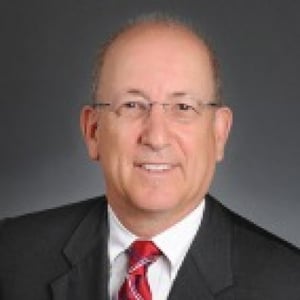
Partner, Akin Gump Strauss Hauer & Feld LLP
Steven Ross has extensive public- and private-sector experience in representing corporations, institutions, boards and individuals in all manner of investigations, including congressional, criminal and regulatory proceedings and related civil litigation. He concentrates on congressional investigations, internal investigations, governmental ethics, federal election law, white collar criminal defense and constitutional issues.
From 1983 to 1993, Steven served as the General Counsel of the U.S. House of Representatives, advising and representing its members, leadership, committees and employees from both political parties. He has also counseled the leadership and relevant committees on numerous congressional investigations.
In private practice, Steven guides clients through complex congressional inquiries and related litigation. He represents clients in investigations conducted by various federal executive branch departments, commissions and agencies, including the U.S. departments of Justice, Education, Health and Human Services, Defense and the Interior, as well as the Federal Election Commission and the Food and Drug Administration.
Steven has significant litigation experience, ranging from trials before U.S. district courts to arguments before the Supreme Court and numerous federal courts of appeals. He was actively involved in defending the constitutionality of multiple federal statutes, including the Independent Counsel Act, the Competition in Contracting Act and the Gramm-Rudman-Hollings Deficit Reduction Act.
Over the course of his career, Steven has litigated seminal cases regarding the scope of Congress’ oversight and investigations power, both on behalf of Congress and as counsel to private parties implicated by such inquiries. He has taught constitutional law as an adjunct professor at George Mason University Law School and served as a guest lecturer on the topic of congressional investigations at a number of law schools, including NYU, Fordham and the Georgetown University Law Center.
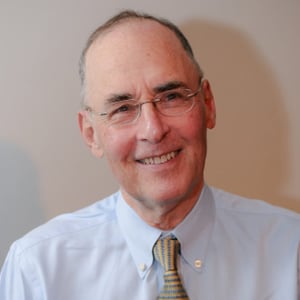
Trustee Professor of Law, New York Law School
From 1972-79, Schoenbrod served as one of the leaders of the Natural Resources Defense Council, where he campaigned to reduce lead in gasoline, resurrect the then-decrepit New York City subway, and protect the environment of Puerto Rico. Previously, he was Director of Program Development at the community development project that Senator Robert Kennedy established in Bedford Stuyvesant. He has also been a senior fellow at the Cato Institute and the American Enterprise Institute.
His books include
D.C. Confidential: Inside the Five Tricks of Washington (Encounter Books, 2017) with forewords by Governor Howard Dean and Senator Mike Lee;
Breaking the Logjam: Environmental Protection That Will Work (Yale University Press, 2010)(with Richard B. Stewart and Katrina M. Wyman);
Saving Our Environment from Washington: How Congress Grabs Power, Shirks Responsibility, and Shortchanges the People (Yale University Press, 2005);
Democracy by Decree: What Happens When Courts Run Government (Yale University Press, 2003) (with Ross Sandler); and
Power Without Responsibility: How Congress Abuses the People Through Delegation (Yale University Press, 1993).
In addition to writing scholarly articles, he has frequently contributed opinion pieces to the Wall Street Journal, The Hill, the New York Times, and other publications.
He has an undergraduate degree from Yale College, a graduate degree in economics from Oxford University, which he attended as a Marshall Scholar, and a law degree from Yale Law School.
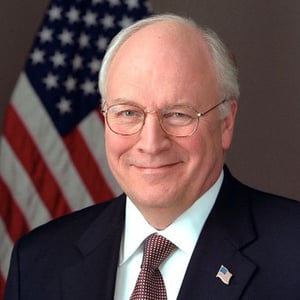
Former Vice President of the United States
Vice President Richard B. Cheney has had a distinguished career as a businessman and public servant, serving four Presidents and as an elected official. Throughout his service, Mr. Cheney served with duty, honor, and unwavering leadership, gaining him the respect of the American people during trying military times.
Mr. Cheney was born in Lincoln, Nebraska, on January 30, 1941 and grew up in Casper, Wyoming. He earned his bachelor's and master's of arts degrees from the University of Wyoming. His career in public service began in 1969 when he joined the Nixon Administration, serving in a number of positions at the Cost of Living Council, at the Office of Economic Opportunity, and within the White House.
When Gerald Ford assumed the Presidency in August 1974, Mr. Cheney served on the transition team and later as Deputy Assistant to the President. In November 1975, he was named Assistant to the President and White House Chief of Staff, a position he held throughout the remainder of the Ford Administration.
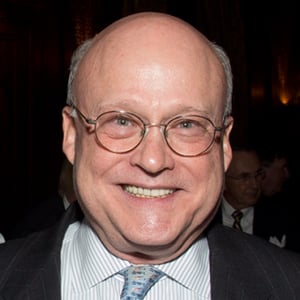
President Emeritus, Intercollegiate Studies Institute
T. Kenneth Cribb Jr. is the former president of the Intercollegiate Studies Institute. Mr. Cribb was Assistant to the President for Domestic Affairs in the Reagan administration, serving as President Reagan’s top adviser on domestic matters. Earlier in the administration he held the position of Counselor to the Attorney General. He also served as Vice Chairman of the Fulbright Foreign Scholarship Board from 1989 to 1992.

Property Rights and the New Legal Order [Archived Collection]
1990 National Lawyers Convention
New Orleans, LAWelcome & Opening Address by Richard Thornburgh [Archive Collection]
1990 National Lawyers Convention
New Orleans, LA1990 National Lawyers Convention
Legal Systems in Transition: New Directions for Eastern Europe
New Orleans, LAAddress by Judge Robert H. Bork [Archive Collection]
The Presidency and Congress
Washington, DCLuncheon Address by White House Counsel C. Boyden Gray: The Neutral Application of Rules to Each of the Three Branches [Archive Collection]
The Presidency and Congress
Washington, DCPanel IV: The Appropriation Power and the Necessary and Proper Clause [Archive Collection]
The Presidency and Congress
Washington, DCPanel III: Congressional Control of the Administration of Government: Hearings, Investigations, Oversight, and Legislative History [Archive Collection]
The Presidency and Congress
Washington, DCOpening Address by Senator Charles Robb [Archive Collection]
The Presidency and Congress
Washington, DCPanel II: Presidential Lawmaking Powers: Vetoes, Line Item Vetoes, Signing Statements, Executive Orders, and Delegations of Rulemaking Authority [Archive Collection]
The Presidency and Congress
Washington, DCAddress by Secretary of Defense Richard Cheney [Archive Collection]
The Presidency and Congress
Washington, DC