
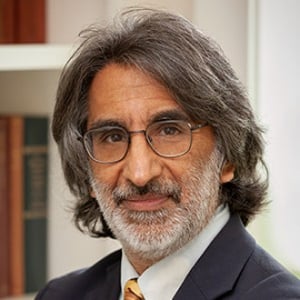
Sterling Professor of Law, Yale Law School
Akhil Reed Amar is Sterling Professor of Law and Political Science at Yale University, where he teaches constitutional law in both Yale College and Yale Law School. After graduating from Yale College, summa cum laude, in 1980 and from Yale Law School in 1984, and clerking for Judge (later Justice) Stephen Breyer, Amar joined the Yale faculty in 1985 at the age of 26. He is Yale’s only living professor to have won the University’s unofficial triple crown — the Sterling Chair for scholarship, the DeVane Medal for teaching, and the Lamar Award for alumni service.
Amar’s work has won awards from both the American Bar Association and the Federalist Society, and he has been cited by Supreme Court justices across the spectrum in more than 50 cases — tops among scholars under age 70. According to both Fred Shapiro’s landmark 2021 study of lifetime scholarly citations and Heinonline’s most recent tabulation of lifetime law-review citations, Amar is America’s second most-cited legal scholar still under age 70. He is a member of the American Academy of Arts and Sciences and has written widely for popular publications, including The New York Times, The Washington Post, The Wall Street Journal, Time, and The Atlantic. He was an informal consultant to the popular TV show The West Wing and his scholarship has been showcased on many broadcasts, including The Colbert Report, Morning Joe, AC360, Velshi, Fox News @ Night with Shannon Bream, Fareed Zakaria GPS, Erin Burnett Outfront, and Constitution USA with Peter Sagal.
He is the author of more than a hundred law review articles and several books, including The Bill of Rights (1998 — winner of the Yale University Press Governors’ Award), America’s Constitution (2005 — winner of the ABA’s Silver Gavel Award), America’s Unwritten Constitution (2012 — named one of the year’s 100 best nonfiction books by The Washington Post), and The Constitution Today (2016 — named one of the year’s top ten nonfiction books by Time magazine). The first volume of his ambitious trilogy on American constitutional history from the Founding to the present, The Words That Made Us: America’s Constitutional Conversation, 1760-1840, came out in May 2021. The second volume, Born Equal: Remaking America’s Constitution, 1840-1920, will be published in September 2025 and is already available for pre-order. All together, his nonfiction books have won two starred reviews from Publishers Weekly and three starred reviews from Kirkus—tops, it is believed, among legal scholars under age 70. Together with Vikram David Amar (YLS ’88), he has a bi-weekly column on the Supreme Court on the distinguished website SCOTUSblog. Along with Andy Lipka, he co-hosts a popular and free weekly podcast, Amarica’s Constitution, whose listeners are eligible for CLE credit in most American jurisdictions. A wide assortment of his articles and op-eds and video links to many of his public lectures and free online courses may be found at akhilamar.com.
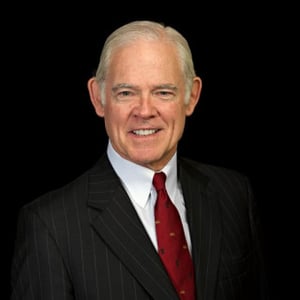
Founding Partner, Cooper & Kirk PLLC
Charles J. Cooper is a founding member and the chairman of Cooper & Kirk, PLLC, “one of the Nation’s leading litigation boutiques” (Above The Law 2017). The National Law Journal recently wrote that Mr. Cooper’s “brilliant legal career has so far spanned five decades and thrust Cooper into the spotlight in some of the most historic moments of the country’s modern history.” He has argued nine cases before the United States Supreme Court and scores of appeals before each of the 13 federal courts of appeals and several state supreme courts. He has been lead trial counsel in numerous complex, weeks-long trials in federal courts throughout the country. Named by the National Law Journal as one of the 10 best litigators in Washington D.C., Mr. Cooper’s work has been reported in numerous press accounts, and he has been called a “powerhouse attorney” (Fortune 2015), “a hard-nosed litigator” (Washington Post 2017), and “one of the country’s most in-demand civil litigators and a Washington legal institution unto himself” (The American Spectator 2014).
After graduating from the University of Alabama School of Law in 1977, where he ranked first in his class and served as Editor-in-Chief of the Alabama Law Review, Mr. Cooper began his career as a law clerk to Judge Paul Roney on the Fifth Circuit Court of Appeals and to Justice William H. Rehnquist in 1978–79. He then practiced law in Atlanta for two years before joining the Civil Rights Division of the U.S. Department of Justice, where he served as the Deputy Assistant Attorney General in charge of, among other things, appellate matters. In 1985 President Reagan appointed him to the position of Assistant Attorney General for the Office of Legal Counsel, which is the office responsible for providing legal opinions and advice to the White House, the Attorney General, and Executive Branch departments and agencies on issues covering the full spectrum of federal constitutional, statutory, and regulatory law.
In 1988 he returned to private practice as a litigation partner in the Washington, D.C. office of McGuireWoods. From 1990 until the founding of Cooper & Kirk in 1996, he was a partner at Shaw Pittman (now Pillsbury Winthrop Shaw Pittman), where he headed the firm’s Constitutional and Government Litigation Group.
Mr. Cooper has represented a wide range of public and private clients in highly complex constitutional, civil rights, antitrust, healthcare, banking, intellectual property, elections, campaign finance, administrative, commercial, and government contract cases. He has led trial teams in cases that have won judgments and settlements valued in the billions of dollars and that have established ground-breaking constitutional precedents.
Much of Mr. Cooper’s practice has involved representing high-profile clients in nationally prominent matters, including: the State of Florida in a First Amendment suit brought by the Disney Company concerning its autonomous regulatory authority over its Disney World property; the Commonwealth of Virginia in a suit seeking to enjoin the removal of noncitizens from its voter rolls; 38 members of the Duke Lacrosse team falsely accused of rape by officials of Duke University and the City of Durham; Harper Lee in a copyright dispute with the heirs of Gregory Peck; high-ranking former government officials such as former Attorneys General John Ashcroft, Jeff Sessions, and William Barr, and Ambassador John Bolton; several Governors and United States Senators; over 100 Members of Congress; and many state, territorial, and local government bodies and officials. He has also represented and advised government officials and public figures in connection with sensitive private issues that needed to be, and were, resolved discreetly without becoming matters of public record.
In 1998 Chief Justice Rehnquist appointed Mr. Cooper to the Standing Committee on Rules of Practice and Procedure of the Judicial Conference of the United States, where he served for three terms. He also served as a Public Member, appointed by President George H.W. Bush, of the National Commission on Judicial Discipline and Removal. He is a member of numerous professional associations, including the American Law Institute (since 1993) and the American Academy of Appellate Lawyers (since 1996). He is also an active member of the Federalist Society and the Republican National Lawyers Association, which in 2010 named him Republican Lawyer of the Year and in 2016 honored him with its Edwin Meese III Award.
Mr. Cooper has published scores of articles and spoken extensively on constitutional and legal policy topics. He has appeared before congressional committees on 26 occasions, testifying as an expert on a wide variety of legal issues, including the Chevron doctrine of judicial deference to administrative agencies, the diversity of citizenship jurisdiction of federal courts, statehood bills for Puerto Rico and the District of Columbia, and the impeachment of President Clinton.
A. W. Walker Centennial Chair in Law, University of Texas at Austin School of Law
Professor Graglia has written widely in constitutional law--especially on judicial review, constitutional interpretation, race discrimination, and affirmative action--and also teaches and writes in the area of antitrust. He is the author of Disaster by Decree: The Supreme Court Decisions on Race and the Schools (Cornell, 1976) and many articles, including recently "Church of the Lukumi Babalu Aye: Of Animal Sacrifice and Religious Persecution" (Georgetown Law Journal, 1996). He has been a Visiting Professor at the University of Virginia School of Law.
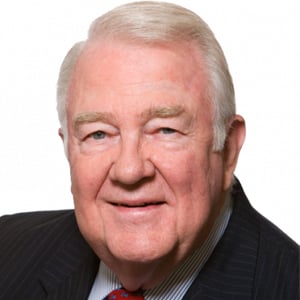
Ronald Reagan Distinguished Fellow Emeritus, The Heritage Foundation
Edwin Meese III, the prominent conservative leader, thinker and elder statesman, continues a quarter-century formal association with The Heritage Foundation as the leading think tank’s Ronald Reagan Distinguished Fellow Emeritus.
In that capacity, Meese oversees special projects and acts as an ambassador for Heritage within the conservative movement.
Meese was chairman of Heritage’s Center for Legal and Judicial Studies from its founding in 2001 until what he calls his “semi-retirement” on Feb. 1, 2013.
He joined Heritage in 1988 as the think tank's first Ronald Reagan Distinguished Fellow -- the only policy chair in the country to be officially named for the 40th president. His work focused on keeping President Reagan’s legacy of conservative principles alive in public debate and discourse.
The legal center now bears his name, in recognition of Meese’s contributions to the rule of law and the nation’s understanding of constitutional law. Its mission is to educate government officials, the media and the public about the Constitution and legal principles -- and how they affect public policy.
Perhaps best known as U.S. attorney general during Reagan’s second term, Meese’s service to the conservative icon stretched from the California governor’s mansion in 1966 to the White House in 1981 before he went to the Department of Justice four years later.
His Heritage “hats” kept Meese among the major conservative voices in national policy debates at an age when most men and women enjoyed quiet retirements.
In 2006, for example, Meese was named to the Iraq Study Group, a special presidential commission dedicated to examining the best resolutions for America's involvement in Iraq. In the past few years he wrote and spoke about constitutional topics ranging from religious liberty to the responsibility of Supreme Court justices.
Immediately after Reagan's death in 2004, and in the years since, Meese often agreed to major media appearances to discuss the lasting impact of his old friend, mentor and boss. He has summarized the Reagan legacy in three accomplishments: Reagan cut taxes and kept them low. He worked to defeat and end the Soviet Union and its worldwide push for communism. And he restored America's faith in itself after years of failure and "malaise."
"I admired him as a leader and cherish his friendship," Meese wrote in a 2004 essay for Heritage members and supporters. "Ronald Reagan had strong convictions. He was committed to the principles that had led to the founding of our nation. And he had the courage to follow his convictions against all odds." <[>Edwin Meese III was born Dec. 2, 1931, to Edwin Jr. and Leone Meese in Oakland, Calif. He graduated from Yale University in 1953 and holds a law degree from the University of California-Berkeley.
Meese spent much of his adult life working for Reagan, first after the former actor, sports announcer and athlete was elected as California’s governor in 1966 and then when he sought and won the presidency in 1980.
Reagan never forgot Meese's loyalty and hard work. During a press conference at which reporters questioned Meese's actions at the Justice Department, Reagan replied: "If Ed Meese is not a good man, there are no good men."
During the Reagan governorship, Meese served as executive assistant and chief of staff from 1969 through 1974 and as legal affairs secretary from 1967 through 1968. He previously was deputy district attorney in Alameda County, Calif.
From January 1981 to February 1985, Meese held the position of counsellor to the president -- the senior job on the White House staff -- and functioned as Reagan's chief policy adviser. In 1985, he received Government Executive magazine's annual award for excellence in management.
Meese served as the 75th attorney general of the United States from February 1985 to August 1988. As the nation's chief law enforcement officer, he directed the Justice Department and led international efforts to combat terrorism, drug trafficking and organized crime.
Meese’s relationship with Heritage began when he met with senior management to discuss the think tank's landmark policy guide, Mandate for Leadership, prepared for the incoming administration. Meese later recalled that Reagan personally handed out copies of the 1,093-page book to members of his Cabinet and asked them to read it. Nearly two-thirds of Mandate's 2,000 recommendations would be adopted or attempted by the Reagan administration.
More than a decade after joining Heritage, Meese assumed the chairmanship of its Center for Legal and Judicial Studies. Under his guidance, the center counseled White House staffers, Justice Department officials and Senate Judiciary Committee members on the importance of filling judicial vacancies with qualified men and women who are committed to interpreting the Constitution according to the founding document's original meaning.
The center became known for hosting "moot court" practice sessions to sharpen the arguments of attorneys slated to bring important cases before the Supreme Court. Those cases addressed constitutional issues ranging from property rights to racial preferences in primary and secondary schools to restrictions on free speech in campaign finance law.
Meese headed the legal center's Advisory Board for the writing and editing of the best-selling book, The Heritage Guide to the Constitution (Regnery, 2005). In it, 109 experts walked readers through a clause-by-clause analysis of the Constitution. Sen. Tom Coburn (R-Okla.) was among those keeping the reference work handy during Judiciary Committee hearings on Supreme Court nominees.
Meese's other books include “Leadership, Ethics and Policing” (Prentice Hall, 2004); “Making America Safer” (Heritage, 1997); and “With Reagan: The Inside Story” (Regnery Gateway, 1992).He wrote the Introduction to a well-received 2010 book on the “overcriminalization” trend, “One Nation Under Arrest,” by Heritage veterans Paul Rosenzweig and Brian W. Walsh.
He also is a distinguished visiting fellow at the Hoover Institution at Stanford University in California and lectures, writes and consults throughout the United States on a variety of subjects.
As both attorney general and counsellor to Reagan, Meese was a member of the Cabinet and the National Security Council. He served as chairman of the Domestic Policy Council and the National Drug Policy Board. After Reagan won the White House in the 1980 election, Meese headed the transition team. During the campaign, he was the Reagan-Bush Committee's senior official.
Meese had a career outside government and politics. From 1977 to 1981, he was a law professor at the University of San Diego, where he also directed the Center for Criminal Justice Policy and Management.
He was an executive in the aerospace and transportation industry as vice president for administration of Rohr Industries Inc. in Chula Vista, Calif. He left Rohr to return to the practice of law, doing corporate and general work in San Diego County.
A retired colonel in the Army Reserve, Meese remains active in numerous civic and educational organizations.
He and his wife, Ursula, have two grown children and reside in McLean, Va.
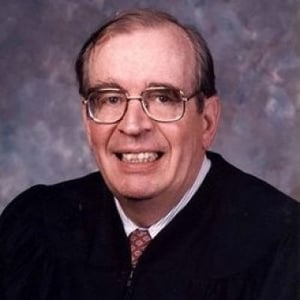
Judge, United States Court of Appeals, Fifth Circuit
William Lockhart Garwood (October 29, 1931 – July 14, 2011) was a United States Circuit Judge of the United States Court of Appeals for the Fifth Circuit. Garwood joined the court in 1981 after being nominated by President Ronald Reagan. He was serving on senior status at the time of his death.
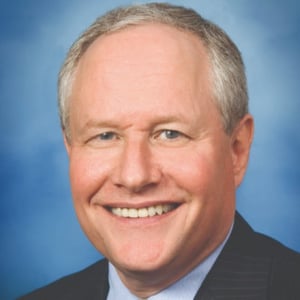
Editor, The Weekly Standard
William Kristol is the editor of The Weekly Standard. He is also a regular panelist on Fox News Sunday, a contributor for the Fox News Channel, and a monthly columnist for the Washington Post. Before starting the Weekly Standard in 1995, Mr. Kristol led the Project for the Republican Future, where he helped shape the strategy that produced the 1994 Republican congressional victory. Prior to that, Mr. Kristol served as chief of staff to Vice President Dan Quayle during the first Bush Administration, and to Education Secretary William Bennett under President Reagan. Before coming to Washington in 1985, Mr. Kristol was on the faculty of Harvard University’s Kennedy School of Government and the Department of Political Science at the University of Pennsylvania.
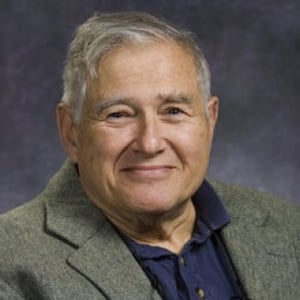
Heller Professor of Political Science, University of California, Berkeley
Nelson Woolf Polsby (October 25, 1934 – February 6, 2007) was an American political scientist. He specialized in the study of the United States presidency, the United States Congress and how governmental policies and practices evolve.
Polsby was the Heller Professor of Political Science at the University of California, Berkeley. He was the editor of the American Political Science Review from 1971–77 and the founding editor of the Annual Review of Political Science from 1998 until his death in 2007.

Professor Emeritus, Paul M. Hebert Law Center, Louisiana State University
In memoriam
Dr. John Baker is Professor Emeritus of Law, and previously the Dale E. Bennett Professor of Law, at Louisiana State University Law School. He is currently Visiting Professor at Peking University School of Transnational Law (via Zoom) and has been Visiting Professor at The Center for the Constitution, Georgetown Law School (2013-2020). He has also been a Visiting Fellow at Oriel College, the University of Oxford (2012-2014) and taught at Blackfriars Hall, Oxford in 2014. Dr. Baker has also been an adjunct Fellow at the Heritage Foundation (Spring, 2008) and a Distinguished Scholar at the Catholic University of America Law School (2011-12). He has taught at Tulane Law School, George Mason Law School, Pepperdine Law School, New York Law School, Hong Kong University, and the University of Dallas, School of Management and also taught and/or lectured in 17 foreign countries. Notable among his foreign visits are the
following: Visiting Professor at the University of Lyon III (France) (1999-2011); Visiting Professor at the Universidad de los Andes, Chile (2012), as a Fulbright Specialist (2006); and a Fulbright Scholar at various universities in the Philippines. Dr. Baker received his J.D., with honors, from the University of Michigan Law School and his B.A., magna cum laude, from the University of Dallas. He also earned a Ph.D. in Political Thought from the University of London. Baker has taught over a dozen different subjects, mostly courses in public law. His main areas of interest are Constitutional Law (particularly federalism and separation of powers), Criminal Law, Anti-Terrorism Law, International Law, Health Care Law, Mediation, and Comparative Law.
In addition to law review articles and book chapters, Dr. Baker’s academic publications include Hall's Criminal Law: Cases and Materials (with Benson, Force and George; 5th ed. Michie, 1993); An Introduction to the Law of the United States (ed. with Levasseur; University Press of America, 1992). He has also published on Forbes.com, FoxNews.com, in The Washington Times, and a number of times in The Wall Street Journal. He argues in federal court, including two oral arguments in the U.S. Supreme Court. For many years, he co-taught courses for the Federalist Society on separation of powers with the late Supreme Court Justice Antonin Scalia. In September 2016, he co-taught a Supreme Court seminar in China with Justice Samuel Alito. Following law school, he served as a law clerk in federal district court and as an assistant district attorney in New Orleans before joining LSU in 1975. While a professor, he has been as a consultant to USAID, USIA (since rolled into the State Department), the Justice Department, the U.S. Senate Judiciary Subcommittee on Separation of Powers, and the Office of Planning in the White House. He served on an ABA Task Force which issued the report, The Federalization of Crime (1998) and later as a consultant to the “Bi-Partisan Task Force on the Over- federalization of Crime” (2012-2014) created by the U.S. House Judiciary Subcommittee on Crime. Dr. Baker was a co-founder of the first iteration (1995) of Stratfor Inc., a global intelligence agency. He co-authored its first book: The Intelligence Edge (with Friedman, Friedman and Chapman; Crown Books/Random House 1997). In 2022, he began a short, weekly video podcast available on YouTube and Rumble, The Baker Brief.
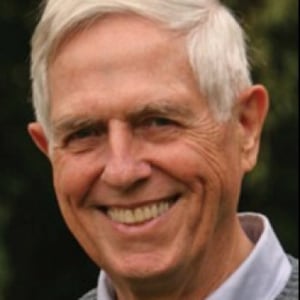
U.S. Court of Appeals for the D.C. Circuit (ret.) and former U.S. Senator
James L. Buckley was born in New York City in 1923, grew up in rural Connecticut, and received his B.A. degree from Yale. Following service as a naval officer in World War II, he returned to New Haven to secure his law degree. After several years in private practice, he joined a group of small companies engaged in oil exploration abroad. He was elected to the United States Senate in 1970 as the candidate of New York's Conservative Party. He failed of re-election; but he has since served as an under secretary of state in the Reagan administration, as president of Radio Free Europe/Radio Liberty in Munich, Germany, and, most recently, as a judge on the U.S. Court of Appeals for the District of Columbia Circuit. He retired in 2000 and now resides in Bethesda, Maryland.
Robert E. Scott Distinguished Professor of Law Emeritus, University of Virginia School of Law; Alice McKean Young Regents Chair in Law Emeritus, University of Texas
Douglas Laycock is perhaps the nation’s leading authority on the law of religious liberty and also on the law of remedies. He has taught and written about these topics for more than four decades at the University of Chicago, the University of Texas, the University of Michigan and the University of Virginia. He retired from teaching at UVA Law School in May 2023.
Laycock has testified frequently before Congress and has argued many cases in the courts, including the U.S. Supreme Court, where he has served as lead counsel in six cases and has also filed influential amicus briefs. He is the author (co-author in the most recent edition) of the leading casebook Modern American Remedies, the award-winning monograph The Death of the Irreparable Injury Rule and many articles in leading law reviews. He co-edited a collection of essays, Same-Sex Marriage and Religious Liberty.
His many writings on religious liberty have been republished in a five-volume collection:
Laycock resigned from the council and as first vice president of the American Law Institute to become co-reporter for the Restatement (Third) of Torts: Remedies. He is a fellow of the American Academy of Arts and Sciences. He earned his B.A. from Michigan State University and his J.D. from the University of Chicago.
Stuyvesant P. Comfort Professor of Law; Director, Center for Financial Institutions; and Co-Director, Center for Civil Justice, New York University School of Law
Geoffrey Miller is an author or editor of a dozen books and more than 200 articles in the fields of financial institutions, contract law, corporate and securities law, constitutional law, civil procedure, legal history, jurisprudence, and ancient law. He has taught a wide range of subjects including law and economics, corporations, compliance and risk management, property, regulation of financial institutions, land development, securities law, the legal profession, and legal theory. Miller received his BA magna cum laude from Princeton in 1973 and his JD from Columbia in 1978, where he was a Stone Scholar and editor-in-chief of the Columbia Law Review. He clerked for Judge Carl McGowan of the US Court of Appeals for the District of Columbia Circuit and Justice Byron White of the US Supreme Court. After two years as an attorney adviser at the Office of Legal Counsel of the US Department of Justice and one year with a Washington, DC, law firm, he joined the faculty of the University of Chicago Law School in 1983 and NYU School of Law in 1995.
Miller has been a visiting professor or visiting scholar at Columbia University, Harvard University, University of Minnesota, University of Basel (Switzerland), University of Genoa (Italy), Collegio Carlo Alberto (Italy), Study Center Gerzensee (Switzerland), Vanderbilt University, University of St. Gallen (Switzerland), University of Frankfurt (Germany), University of Sydney (Australia), University of Auckland (New Zealand), and the Bank of Japan. Miller is a founder of the Society for Empirical Legal Studies, a scholarly organization devoted to promoting statistical and other empirical techniques in the study of legal institutions. He is founder and director of NYU School of Law’s Center for Financial Institutions, co-director of the Center for Civil Justice, co-founder of and Senior Academic Fellow at NYU's Program on Corporate Compliance and Enforcement, co-convener of the Global Economic Policy Forum, a member of the board of directors of State Farm Bank, and a fellow in the American Academy of Arts and Sciences.
Earl Warren Professor of Public Law (Emeritus), UC Berkeley School of Law
Jesse Choper served as law clerk to Chief Justice Earl Warren of the U.S. Supreme Court following graduation from law school. He taught at the Wharton School of the University of Pennsylvania from 1957 to 1960, and at the University of Minnesota Law School from 1961 to 1965. He joined the Berkeley Law faculty in 1965. Choper has been a visiting professor at Harvard Law School, Fordham Law School, University of Milan, Free University in Amsterdam, Autonoma University in Barcelona, University of New South Wales in Sydney, University of Lucerne in Switzerland, and Catholic University of Portugal in Lisbon and Porto. He served as Berkeley Law’s dean from 1982 to 1992.
From 1979 to 1998, Choper was one of the three major lecturers at U.S. Law Week’s Annual Constitutional Law Conference in Washington, D.C. He has delivered 20 titled lectures at major universities throughout the country, including the Cooley Lectures at Michigan, the Stevens Lecture at Cornell, the Baum Lecture at Illinois, and the Lockhart Lecture at Minnesota. He has served on the executive committee of the Association of American Law Schools, and on the executive council of the American Academy of Arts and Sciences (of which he was vice president for more than ten years). He was national president of the Order of the Coif and is a member of the American Law Institute. In 1998 he received the UC Berkeley Distinguished Teaching Award and the Rutter Award for Teaching Distinction at Berkeley Law in 2006. In 2005 the Berkeley Law Alumni Association presented Choper with the Faculty Lifetime Achievement Award and the University of Pennsylvania Law School gave him the James Wilson Award, its highest award for alumni.
Choper’s major publications include the books, Judicial Review and the National Political Process: A Functional Reconsideration of the Role of the Supreme Court, which received the Order of the Coif Triennial Book Award in 1982, and Securing Religious Liberty: Principles for Judicial Interpretation of the Religion Clauses. His recent publications include the thirteenth edition of his Constitutional Law casebooks; the eighth edition of his Corporations casebook; the second edition of The Supreme Court and Its Justices; “The Political Question Doctrine: Suggested Criteria,” in Duke Law Journal (2005); “Wartime Process: A Dialogue on Congressional Power to Remove Issues From the Federal Courts,” in California Law Review (2007) (co-author); and “Who’s Afraid of the Eleventh Amendment? The Limited Impact of the Court’s Sovereign Immunity Rulings,” in Columbia Law Review (2006) (co-author).

U.S. Court of Appeals, Seventh Circuit
Frank H. Easterbrook is a judge of the United States Court of Appeals for the Seventh Circuit and a Senior Lecturer at the Law School of the University of Chicago. He was Chief Judge from 2006–2013. Before joining the court in 1985, he was the Lee andBrena Freeman Professor of Law at the University of Chicago, where he taught and wrote in antitrust, securities, corporate law, jurisprudence, and criminal procedure. He has published The Economic Structure of Corporate Law (with Daniel R. Fischel) and about 100 scholarly articles. He served as Co-Editor of the Journal of Law and Economics from 1982 to 1991 and as a member of the Judicial Conference’s Standing Committee on Rules of Practice and Procedure from 1991 to 1997. Before joining the faculty of the Law School in 1979, Judge Easterbrook was Deputy Solicitor General of the United States. He holds degrees from Swarthmore College (B.A. with high honors, 1970) and the University of Chicago (J.D. cum laude, 1973), and is a member of the American Academy of Arts and Sciences, the American Law Institute, the Mont Pelerin Society, Phi Beta Kappa, and the Order of the Coif.
Author
David F. Epstein is the author of The Political Theory of The Federalist.
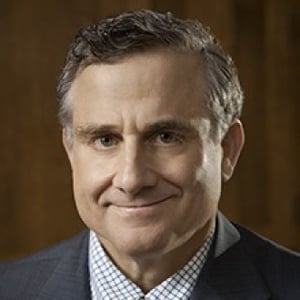
Sam Harris Professor of Corporate Law, Corporate Finance, and Securities Law, Yale Law School
Jonathan R. Macey is Sam Harris Professor of Corporate Law, Corporate Finance, and Securities Law at Yale University, and Professor in the Yale School of Management. From 1991 – 2004, Professor Macey was J. DuPratt White Professor of Law, Director of the John M. Olin Program in Law and Economics at Cornell Law School, and Professor of Law and Business at the Cornell University Johnson Graduate School of Business. Professor Macey earned his B.A. cum laude from Harvard in 1977, and his J.D. from Yale Law School in 1982, where he was Article and Book Review editor of The Yale Law Journal. In 1996, Professor Macey received a Ph.D. honoris causa from the Stockholm School of Economics. Following law school, Professor Macey was law clerk to Judge Henry J. Friendly on the U.S. Court of Appeals for the Second Circuit.
Professor Macey is the author of several books including the two-volume treatise, Macey on Corporation Laws, published in 1998 (Aspen Law & Business), and co-author of two leading casebooks, Corporations: Including Partnerships and Limited Liability Companies (2003 Thomson West), which is in its eighth edition, and Banking Law and Regulation (2002 Aspen Law & Business), which is now in its third edition. He also is the author of over 100 scholarly articles. His recent articles have appeared in the Banking Law Journal, the University of Chicago Law Review, the Stanford Law Review, The Yale Law Journal, the Cornell Law Review, the Journal of Law and Economics, and the Brookings Wharton Papers on Financial Institutions. He has published numerous editorials in such publications as The Wall Street Journal, Forbes, The Los Angeles Times, and The National Law Journal.
Professor Macey has taught at major universities throughout the world, including Bocconi University (Milan), the University of Tokyo; the University of Toronto; the University of Turin, the University of Amsterdam Department of Finance, and the Stockholm School of Economics, Department of Law. He also has been Professor of Law at the University of Chicago (1990) and Visiting Professor of Law at Harvard Law School (1999). Professor Macey is a Senior Research Fellow at the International Centre for Economic Research (ICER) in Turin, Italy. Professor Macey also serves on the Academic Advisory Board (Comitato Scientifico) of the Associazione Disiano Preite for the study of corporate law (per lo studio del diritto dell’impresa). In 1995, Professor Macey was awarded the Paul M. Bator prize for excellence in Teaching, Scholarship and Public Service by the Federalist Society for Law and Public Policy. In 1996, he received a Ph.D., honoris causa from the Stockholm School of Economics. And in 1998, he received the D.P. Jacobs prize for the most significant paper in volume 6 of the Journal of Financial Intermediation for his paper (co-authored with Maureen O’Hara), “The Law & Economics of Best Execution.”
In 1999 Professor Macey was made an honorary Fellow of the Society For Advanced Legal Studies. In 2000, Professor Macey became a member of the Legal Advisory Committee to the Board of Directors of the New York Stock Exchange. In 2001 Professor Macey was appointed a Bertil Daniellson Distinguished Visiting Professor in Banking and Finance at the Stockholm School of Economics. In 2002 Professor Macey was appointed to the Economic Advisory Board of the National Association of Securities Dealers (NASD). In 2004 Professor Macey was awarded a Teaching Award by the Yale Law Women in recognition of his “commitment to excellence in teaching, mentoring and inspiring.” In 2005 Professor Macey became a member of the Board of Editors of Thomson West Publishing Company.
Judge (ret.), United States Court of Appeals, Sixth Circuit
James Leo Ryan is a federal judge on senior status with the United States Court of Appeals for the 6th Circuit. He joined the court in 1985 after being nominated by President Ronald Reagan.
Nicholas Rosenbaum Professor of Law, University of Colorado Law School
Hal Bruff was Dean of the University of Colorado Law School 1996-2003. Professor Bruff, a native of Colorado, received his B.A. in American history and literature from Williams College, where he was elected to Phi Beta Kappa. He received his J.D. magna cum laude from Harvard Law School, and was an editor of the Harvard Law Review. After graduation, he served as a lieutenant in the U.S. Coast Guard Reserve in San Francisco, performing general duties as a legal officer. Hal has served on the law faculties of Arizona State University, the University of Texas (as the John S. Redditt Professor of Law), and the George Washington University Law School (as the Donald Rothschild Research Professor of Law). From 1979 to 1981, he served as senior attorney and advisor for the Office of Legal Counsel in the U.S. Department of Justice. In this position, he advised the DOJ, the White House, and executive agencies on issues of constitutional and administrative law. He also served as consultant to the chairman of the President's Commission on the accident at Three Mile Island. He has testified before Congress on numerous occasions in his areas of expertise. Professor Bruff's research and teaching interests include constitutional and administrative law. He has co-authored a casebook on separation of powers law, and has written two books about separation of powers and numerous law review articles. His recent public service activities include work on the Council of the Administrative Law Section of the American Bar Association and on Colorado's Judicial Advisory Council.

Laurence A. Tisch Professor of Law and Director, Classical Liberal Institute, New York University School of Law; Director, Classical Liberal Institute, Civitas Institute University of Texas at Austin
Richard A. Epstein is the Laurence A. Tisch Professor of Law, at New York University, a senior research fellow at the Civitas Institute at the University of Texas Austin, and a senior Lecturer, the University of Chicago. He received an LL.D., h.c . from the University of Ghent, 2003 , and an LLD h.c . from the University of Siegen in 2018 and the Bradley Prize in 2011. He has been a member of the American Academy of Arts and Sciences since 1985. He has edited both the Journal of Legal Studies (1981-1991) and the Journal of Law and Economics (1991-2001). He is also a founder and director of the Classical Liberal Institute at NYU Law School. His most recent book is The Classical Liberal Constitution: The Uncertain Quest for Limited Government (2014). His other books include Takings: Private Property and the Power of Eminent Domain ( 1985); Bargaining with the State (1993); Simple Rules for a Complex World (1995); Principles for a Free Society: Reconciling Individual Liberty and the Common Good (1998); Skepticism and Freedom: A Modern Theory of Classical Liberalism (2003); Design for Liberty: Private Property, Public Administration and the Rule of Law (2011), and most recently, The Myth of Birthright citizenship—and Beyond (2026). He has taught courses in , administrative law, antitrust, constitutional, contracts, environmental law, land use planning; real property, torts and water law. He has written and spoken extensively on a wide range of topics, and is writes a regular column for Defining Ideas.
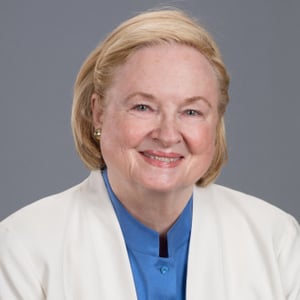
Learned Hand Professor of Law, Emeritus, Harvard Law School
Mary Ann Glendon is the Learned Hand Professor of Law, emerita, at Harvard University, and a former U.S. Ambassador to the Holy See. She writes in the fields of human rights, comparative law, and political theory. Glendon chaired the U.S. State Department Commission on Unalienable Rights (2019-2020) and served as a member of the Commission on International Religious Freedom (2012-2016), and the U.S. President's Council on Bioethics (2001-2004). She received the National Humanities Medal in 2006. In 1991 she was elected to the American Academy of Arts and Sciences. She was President of the Pontifical Academy of Social Sciences from 2003 to 2013, a member of the Board of Supervisors of the Institute of Religious Works (Vatican Bank) from 2013 to 2018, and represented the Holy See at various conferences including the 1995 U.N. Women's conference in Beijing where she headed the Vatican delegation. Glendon has contributed to legal and social thought in several widely translated works, bringing a comparative approach to a variety of subjects. They include The Forum and the Tower (2011), a series of biographical essays exploring the relation between political philosophy and politics-in-action; Traditions in Turmoil (2006), a collection of essays on law, culture and human rights; A World Made New: Eleanor Roosevelt and the Universal Declaration of Human Rights (2001), a history of the framing of the UDHR; A Nation Under Lawyers (1996), a portrait of turbulence in the legal profession, analyzing the implications of changes in legal culture for a democratic polity that entrusts crucial roles to legally trained men and women; Rights Talk (1991), a critique of the impoverishment of political discourse; The Transformation of Family Law (1989), winner of the legal academy’s highest honor, the Order of the Coif Triennial Book Award; Abortion and Divorce in Western Law (1987), winner of the Scribes Book Award for best writing on a legal subject; The New Family and the New Property (1981), and textbooks on comparative legal traditions.
Robert E. Scott Distinguished Professor of Law Emeritus, University of Virginia School of Law; Alice McKean Young Regents Chair in Law Emeritus, University of Texas
Douglas Laycock is perhaps the nation’s leading authority on the law of religious liberty and also on the law of remedies. He has taught and written about these topics for more than four decades at the University of Chicago, the University of Texas, the University of Michigan and the University of Virginia. He retired from teaching at UVA Law School in May 2023.
Laycock has testified frequently before Congress and has argued many cases in the courts, including the U.S. Supreme Court, where he has served as lead counsel in six cases and has also filed influential amicus briefs. He is the author (co-author in the most recent edition) of the leading casebook Modern American Remedies, the award-winning monograph The Death of the Irreparable Injury Rule and many articles in leading law reviews. He co-edited a collection of essays, Same-Sex Marriage and Religious Liberty.
His many writings on religious liberty have been republished in a five-volume collection:
Laycock resigned from the council and as first vice president of the American Law Institute to become co-reporter for the Restatement (Third) of Torts: Remedies. He is a fellow of the American Academy of Arts and Sciences. He earned his B.A. from Michigan State University and his J.D. from the University of Chicago.
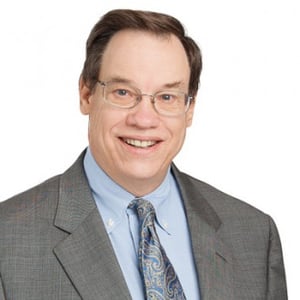
Partner, Baker Botts L.L.P.
Thomas R. Phillips, retired Chief Justice of the Supreme Court of Texas, joined the Austin office of Baker Botts in September 2005, after nearly a quarter-century of judicial service.
After graduating from law school, Mr. Phillips clerked for Justice Ruel C. Walker of the Supreme Court of Texas and practiced law in the trial department of the Houston office of Baker Botts. From 1981 to 1988, he served as judge of the 280th District Court in Harris County, Texas, and from 1988 to 2004, he was chief justice. Initially appointed to both judicial offices by Governor William P. Clements, he was elected without opposition to the district bench in 1982 and 1986 and elected in contested races to the Supreme Court in 1988, 1990, 1996 and 2002.
Special Counsel, Milbank, Tweed, Hadley & McCloy LLP
Mr. Alexander D. Forger was a Partner with Milbank, Tweed, Hadley & McCloy LLP since 1958, and served as Chairman of the Firm from April 1984 through April 1992. He now serves as Special Counsel to the Firm.
Mr. Forger has extensive experience in trusts and estates and in domestic relations and personal law. He is a Fellow of the American College of Trust and Estate Counsel and the International Academy of Estate and Trust Law.
As a member of the New York State Bar Association, he served as President from 1980 to 1981, and is a member of the House of Delegates. Mr. Forger was a Director of the Legal Aid Society from 1976 to 1993, President from 1977 to 1979 and Chairman of the Board from 1984 to 1993. He served as President of the Legal Services Corporation from 1994 to 1997.
He currently serves as a member of the Board of the Lawyers Committee for Civil Rights under Law, Chair of the Volunteer Lawyers Aids project, Vice President and Director of the Dorothea L. Leonhardt Foundation, Board of the Children's Advocacy Center, Director of The Gerard B. Lambert Memorial Foundation, Inc. and as National Chairman of the Advisory Committee of the Inter Press Alliance.
Mr. Forger is Trustee-Emeritus of The Rockefeller University and Trustee and former Chairman of the Board of New York Law School
A graduate of Princeton University School of Public and International Affairs, Mr. Forger earned his law degree at Yale Law School.
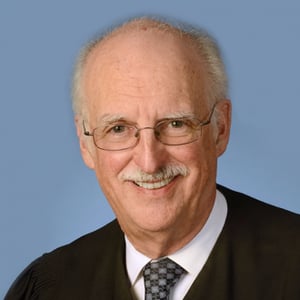
Senior Judge, United States Court of Appeals, District of Columbia Circuit
Circuit Judge Douglas H. Ginsburg was appointed to the United States Court of Appeals for the District of Columbia in 1986. After receiving his B.S. from Cornell University in 1970, and his J.D. from the University of Chicago Law School in 1973, he clerked on the D.C. Circuit and for Justice Thurgood Marshall on the United States Supreme Court. Thereafter, Judge Ginsburg was a professor at the Harvard Law School, the Deputy Assistant and then Assistant Attorney General for the Antitrust Division of the Department of Justice, as well as the Administrator of the Office of Information and Regulatory Affairs in the Office of Management and Budget. Concurrent with his service as a federal judge, Judge Ginsburg has taught at the University of Chicago Law School and the New York University School of Law. Judge Ginsburg is currently a Professor of Law at the George Mason University and a visiting professor at University College London, Faculty of Laws.
Judge Ginsburg is the Chairman of the International Advisory Board of the Global Antitrust Institute at the Law and Economics Center of the George Mason University School of Law. He also serves on the Advisory Boards of: Competition Policy International; the Harvard Journal of Law and Public Policy; the Journal of Competition Law and Economics; the Journal of Law, Economics & Policy; the Supreme Court Economic Review; the University of Chicago Law Review; the New York University Journal of Law and Liberty; and, at University College London, both the Centre for Law, Economics and Society and the Jevons Institute for Competition Law and Economics.
In 2020, Judge Ginsburg was the 11th recipient of the John Sherman Award, presented by the Antitrust Division of the Department of Justice in recognition of the awardee’s Lifetime Contributions to Antitrust Law and Policy.
In 2014, Judge Ginsburg received the Lifetime Achievement Award given annually by the Global Competition Review.
He is the author or co-author of several books and more than 100 articles on competition and regulation, including, most recently, Growing Convergence: The Limited Role of Antitrust in Standard Essential Patent Disputes, in CPI Antitrust Chronicle, Summer 2021, Vol. 1, No. 2.
Sam Harris Professor of Corporate Law, Corporate Finance, and Securities Law, Yale Law School
Jonathan R. Macey is Sam Harris Professor of Corporate Law, Corporate Finance, and Securities Law at Yale University, and Professor in the Yale School of Management. From 1991 – 2004, Professor Macey was J. DuPratt White Professor of Law, Director of the John M. Olin Program in Law and Economics at Cornell Law School, and Professor of Law and Business at the Cornell University Johnson Graduate School of Business. Professor Macey earned his B.A. cum laude from Harvard in 1977, and his J.D. from Yale Law School in 1982, where he was Article and Book Review editor of The Yale Law Journal. In 1996, Professor Macey received a Ph.D. honoris causa from the Stockholm School of Economics. Following law school, Professor Macey was law clerk to Judge Henry J. Friendly on the U.S. Court of Appeals for the Second Circuit.
Professor Macey is the author of several books including the two-volume treatise, Macey on Corporation Laws, published in 1998 (Aspen Law & Business), and co-author of two leading casebooks, Corporations: Including Partnerships and Limited Liability Companies (2003 Thomson West), which is in its eighth edition, and Banking Law and Regulation (2002 Aspen Law & Business), which is now in its third edition. He also is the author of over 100 scholarly articles. His recent articles have appeared in the Banking Law Journal, the University of Chicago Law Review, the Stanford Law Review, The Yale Law Journal, the Cornell Law Review, the Journal of Law and Economics, and the Brookings Wharton Papers on Financial Institutions. He has published numerous editorials in such publications as The Wall Street Journal, Forbes, The Los Angeles Times, and The National Law Journal.
Professor Macey has taught at major universities throughout the world, including Bocconi University (Milan), the University of Tokyo; the University of Toronto; the University of Turin, the University of Amsterdam Department of Finance, and the Stockholm School of Economics, Department of Law. He also has been Professor of Law at the University of Chicago (1990) and Visiting Professor of Law at Harvard Law School (1999). Professor Macey is a Senior Research Fellow at the International Centre for Economic Research (ICER) in Turin, Italy. Professor Macey also serves on the Academic Advisory Board (Comitato Scientifico) of the Associazione Disiano Preite for the study of corporate law (per lo studio del diritto dell’impresa). In 1995, Professor Macey was awarded the Paul M. Bator prize for excellence in Teaching, Scholarship and Public Service by the Federalist Society for Law and Public Policy. In 1996, he received a Ph.D., honoris causa from the Stockholm School of Economics. And in 1998, he received the D.P. Jacobs prize for the most significant paper in volume 6 of the Journal of Financial Intermediation for his paper (co-authored with Maureen O’Hara), “The Law & Economics of Best Execution.”
In 1999 Professor Macey was made an honorary Fellow of the Society For Advanced Legal Studies. In 2000, Professor Macey became a member of the Legal Advisory Committee to the Board of Directors of the New York Stock Exchange. In 2001 Professor Macey was appointed a Bertil Daniellson Distinguished Visiting Professor in Banking and Finance at the Stockholm School of Economics. In 2002 Professor Macey was appointed to the Economic Advisory Board of the National Association of Securities Dealers (NASD). In 2004 Professor Macey was awarded a Teaching Award by the Yale Law Women in recognition of his “commitment to excellence in teaching, mentoring and inspiring.” In 2005 Professor Macey became a member of the Board of Editors of Thomson West Publishing Company.
U.S. Court of Appeals, Seventh Circuit
Frank H. Easterbrook is a judge of the United States Court of Appeals for the Seventh Circuit and a Senior Lecturer at the Law School of the University of Chicago. He was Chief Judge from 2006–2013. Before joining the court in 1985, he was the Lee andBrena Freeman Professor of Law at the University of Chicago, where he taught and wrote in antitrust, securities, corporate law, jurisprudence, and criminal procedure. He has published The Economic Structure of Corporate Law (with Daniel R. Fischel) and about 100 scholarly articles. He served as Co-Editor of the Journal of Law and Economics from 1982 to 1991 and as a member of the Judicial Conference’s Standing Committee on Rules of Practice and Procedure from 1991 to 1997. Before joining the faculty of the Law School in 1979, Judge Easterbrook was Deputy Solicitor General of the United States. He holds degrees from Swarthmore College (B.A. with high honors, 1970) and the University of Chicago (J.D. cum laude, 1973), and is a member of the American Academy of Arts and Sciences, the American Law Institute, the Mont Pelerin Society, Phi Beta Kappa, and the Order of the Coif.
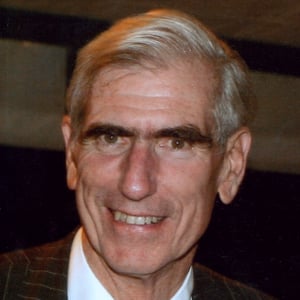
Founding Partner, Boyden Gray & Associates
Ambassador C. Boyden Gray is the founding partner of Boyden Gray & Associates, a law and strategy firm in Washington, D.C., focused on constitutional and regulatory issues.
Mr. Gray worked in the White House for twelve years, first as counsel to the Vice President during the Reagan administration and then as White House Counsel to President George H.W. Bush. In the Reagan administration, he was Counsel to the Presidential Task Force on Regulatory Relief, for which he wrote the original Executive Order 12291 requiring cost-benefit analysis and White House review of regulations (later renumbered as current EO 12866). In the George H.W. Bush Administration, Mr. Gray was in charge of judicial selection and was also instrumental in the enactment of the Clean Air Act Amendments of 1990, the Energy Policy Act of 1992, and a cap-and-trade system for acid rain emissions. In 1993, he received the Presidential Citizens Medal. Under President George W. Bush, Mr. Gray was U.S. Ambassador to the European Union and U.S. Special Envoy to Europe for Eurasian Energy.
Mr. Gray practiced law for 25 years at the law firm of Wilmer, Cutler & Pickering and was chairman of the Administrative Law and Regulatory Practice Section of the American Bar Association from 2000 to 2002. Early in his career, Mr. Gray helped to develop the Business Roundtable and served as its first counsel. He is an adjunct professor at Antonin Scalia Law School and a former adjunct professor at NYU Law School (teaching energy and environmental law). Mr. Gray is on the Board of Directors of the Atlantic Council, the Federalist Society, Reason Foundation, and the Trust for the National Mall.
Mr. Gray earned his A.B. magna cum laude from Harvard, where he was an editor of the Crimson, and his J.D. with high honors from the University of North Carolina at Chapel Hill, where he was editor-in-chief of the Law Review. Mr. Gray served in the United States Marine Corps, and after law school, he clerked for Earl Warren, Chief Justice of the United States Supreme Court.
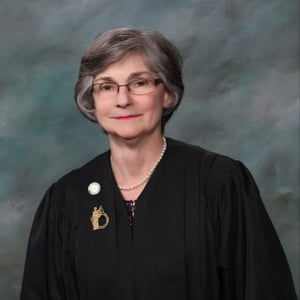
Judge, United States Court of Appeals, Fifth Circuit
Edith Jones graduated from Alamo Heights High School, where she was a National Merit Scholar. In 1971, she received her B.A. in Economics from Cornell University, graduating with honors. In 1974, she was awarded her J.D. at the University of Texas Law School, where she was a law review editor and received the Order of the Coif.
Judge Jones was the first female partner at Andrews, Kurth, Campbell & Jones (now Hunton Andrews Kurth) where she practiced various types of litigation and bankruptcy cases. Judge Jones went on the federal bench on June 1, 1985.
Judge Jones served as a former member of the National Bankruptcy Review Commission, and as a member of the Judicial Conference Commission on Bankruptcy Rules. Judge Jones served on the White House Fellows Commission. Judge Jones served on the board of the Sam Houston Area Council of the Boy Scouts of America. She has been a member of the Garland Walker Inn of Court in Houston for more than 20 years and its President for at least ten years. Judge Jones is also on the Board of the Calvin Coolidge Presidential Foundation.
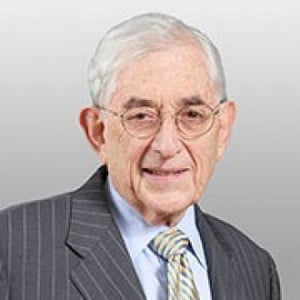
Retired Partner, Covington & Burling LLP
With the exception of two periods of United States Government service, Harris Weinstein practiced law with Covington's Washington office as an associate, partner, and senior counsel between 1962 and his retirement from practice in 2009. He was with the Department of Justice during the period 1967-1969 as an Assistant to the Solicitor General of the United States and with the Department of the Treasury during 1990-1992 as Chief Counsel of the then Office of Thrift Supervision. Before joining Covington, Mr. Weinstein was law clerk to Judge William H. Hastie of the United States Court of Appeals for the Third Circuit.
His private practice focused on civil litigation, including disputes under antitrust, securities, tax and banking laws, and patent and related trade issues. He has appeared in federal trial and appellate courts throughout the United States and, as a government attorney, argued nine cases in the United States Supreme Court.
From January 2007 through December 2016, Mr. Weinstein served as a Distinguished Lecturer on the faculty of the Columbus School of Law of The Catholic University of America, teaching International Commercial Arbitration as well as other subjects. He also coached the law school’s team in the Willem C. Vis International Commercial Arbitration Moot. He has taught the arbitration course at the University of California, Davis and lectured on the subject at Penn State Law School and the University of Lisbon, Portugal.
Mr. Weinstein’s teaching activity has included lectures on banking law or corporate fiduciary issues at American University, George Washington University, and the Universities of Illinois, Michigan and Virginia. He has also taught one-week courses on Banking and International Arbitration under United States Law as part of Catholic University’s American Law program at the Jagiellonian University in Krakow, Poland.
In his pro bono work, Mr. Weinstein was a member of the Administrative Conference of the United States and chaired the Conference’s Committee on Government Processes. He also has been a member of the Corporation of the Massachusetts Institute of Technology, President of its alumni/ae association, and Chair of its Alumni/ae Fund; Counsel to the Contests and Credentials Committees of the Republican National Conventions of 1984 and 1988; and a member of the initial advisory committee of the Commonwealth Institute (Richmond, VA).
His law degree is from Columbia University, where he was editor-in-chief of the Columbia Law Review. He received S.B. and S.M. degrees in mathematics from M.I.T. and was elected an associate member of the Sigma Xi science honorary society.
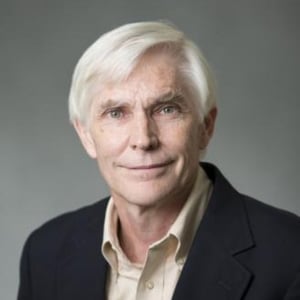
Senior Fellow, Manhattan Institute
Peter Huber, who died in 2021, was a senior fellow at the Manhattan Institute, where he wrote on drug development, energy, technology, and the law. He was the author of The Cure in the Code: How 20th Century Law Is Undermining 21st Century Medicine (2013); The Bottomless Well: The Twilight of Fuel, the Virtue of Waste, and Why We Will Never Run Out of Energy (2005), coauthored with Mark P. Mills, which Bill Gates said “is the only book I’ve ever seen that really explains energy, its history and what it will be like going forward”; and Hard Green: Saving the Environment from the Environmentalists (2000), which William F. Buckley, Jr., called “the richest contribution ever made to the greening of the political mind” and which set out a new conservative manifesto on the environment that advocates a return to conservation and environmental policy based on sound science and market economics.
Huber’s other books included Judging Science: Scientific Knowledge and the Federal Courts (1999), Law and Disorder in Cyberspace: Abolish the FCC and Let Common Law Rule the Telecosm (1997), Orwell’s Revenge: The 1984 Palimpsest (1994), Galileo’s Revenge: Junk Science in the Courtroom (1991), and Liability: The Legal Revolution and Its Consequences (1988). He published articles in scholarly journals, such as the Harvard Law Review and Yale Law Journal, and in such publications as Science, Wall Street Journal, Reason, Regulation, and National Review. He appeared on numerous TV and radio programs, including Face the Nation and The NewsHour with Jim Lehrer.
Before joining MI, Huber was an associate professor at MIT. He clerked on the D.C. Circuit Court of Appeals for Ruth Bader Ginsburg and on the U.S. Supreme Court for Sandra Day O’Connor. Huber was a partner at the Washington, D.C., law firm Kellogg, Huber, Hansen and Todd. He held a J.D. from Harvard University and a Ph.D. in mechanical engineering from MIT.
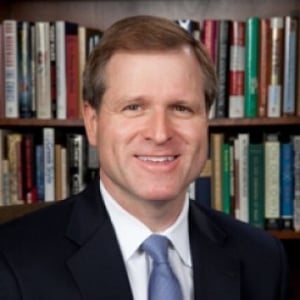
Executive Speechwriter and Public Speaker
A longtime senior speechwriter for President George W. Bush and Vice President Dick Cheney, John P. McConnell was part of the three-person team responsible for all of the 43rd president’s major addresses, including the speech to the Joint Session of Congress after September 11, 2001 and four State of the Union messages. McConnell served all eight years of the Bush-Cheney administration, holding the unique position of both deputy assistant to the president and assistant to the vice president. Previously he had worked as a speechwriter for Vice President Dan Quayle and Senator Bob Dole, and traveled extensively with both during national campaigns. He is a former resident fellow at Harvard’s Institute of Politics in the John F. Kennedy School of Government and is currently a trustee of Wayland Academy and serves as Chairman of the Selection Committee for the annual Gerald R. Ford Journalism Prize for Distinguished Reporting on the Presidency.
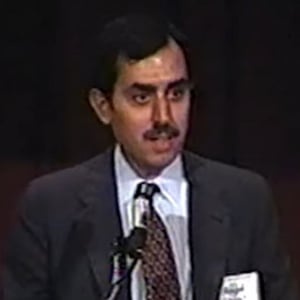
Distinguished Professor of Law, Wayne State University Law School
Professor Grano received his A.B. and J.D. degrees from Temple University in 1965 and 1968. He received an LL.M. from the University of Illinois in 1970. He was an Assistant District Attorney in Philadelphia in 1970-1971. In 1971 he joined the University of Detroit School of Law faculty, where he remained until 1975, serving as Interim Dean during the 1974-5 school year. He joined the Wayne State University Law School as a Professor of Law in 1975 and was named Distinguished Professor of Law in 1984. Professor Grano has also visited at the University of California Berkeley Law School, Cornell Law School, University of Illinois College of Law, and Temple University School of Law.
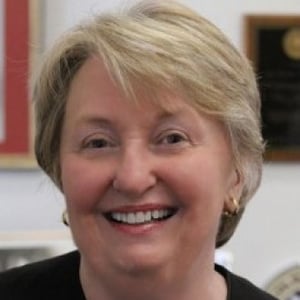
Judge, Contra Costa County Superior Court in California
Judge Haight was appointed to Contra Costa County Superior Court by Governor Pete Wilson in 1993.
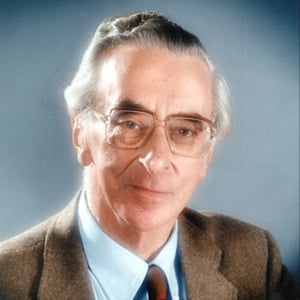
Julius Kreeger Professor of Law and Criminology Emeritus, University of Chicago Law School
Norval Morris was the Julius Kreeger Professor of Law and Criminology Emeritus, former Dean of the University of Chicago Law School (1975-78), and founding director of the Law School’s Center for Studies in Criminal Justice.
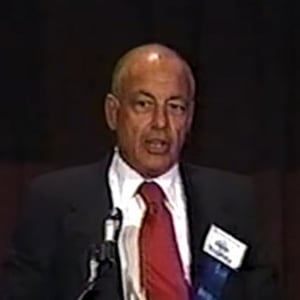
President, Center for Research on Institutions & Social Policy, Inc. (CRISP)
Adam Walinsky was born on January 10, 1937 in New York City. He received his Bachelor of Arts from Cornell University in 1957 and his Bachelor of Laws from Yale University in 1961.
Career
Bar: New York 1962, United States District Court (southern district) New York 1971, United States Court 2nd District Court of Appea circuit) 1971, Supreme Court of the United States Court 1982. Law clerk United States Court Appeals for 2d Circuit, New York City, 1961-1962. Associate Winthrop, Stimson, Putnam & Roberts, New York City, 1962-1963.
Attorney Department Justice, Washington, 1963-1964.
Legislation assistant to Senator Robert F. Kennedy, Washington, 1964-1968. Partner Kronish, Lieb, Weiner & Hellman, New York City, 1971-1994.
President Center for Research on Institutions and Social Policy, 1994. Chairman New York State communications of Investigation, 1978-1981.

Panel IV: The Anti-Federalists after 200 Years: Pundits or Prophets?
1992 National Student Symposium
Austin, TXDebate: The Federalist and the Contemporary Debate on Term Limits [Archive Collection]
1992 National Student Symposium
Austin, TXPanel III: Liberty and Constitutional Architecture [Archive Collection]
1992 National Student Symposium
Austin, TXPanel II: To Govern and Be Governed: The Federalist's Vision of Representative Democracy [Archive Collection]
1992 National Student Symposium
Austin, TXPanel I: Philosophical Foundations of The Federalist: The Nature of Law and the Nature of Man [Archive Collection]
1992 National Student Symposium
Austin, TX1992 National Student Symposium
The Legacy of the Federalist Papers
Austin, TXMandatory Pro Bono: Collective Discharge of Duty or Compelled Free Service? [Archive Collection]
1991 Annual Lawyers Convention
Washington, DCSocialization of Risk: Bankruptcy Law & Financial Institutions [Archive Collection]
1991 Annual Lawyers Convention
Washington, DCLuncheon Address by Dr. Peter Huber [Archive Collection]
1991 Annual Lawyers Convention
Washington, DCPersonal Responsibility in Criminal Law [Archive Collection]
1991 Annual Lawyers Convention
Washington, DC