
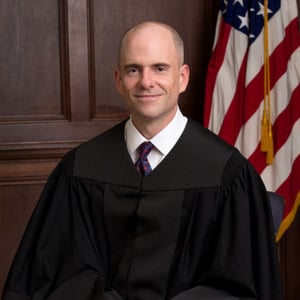
Judge, United States Court of Appeals, Eleventh Circuit
Judge Kevin C. Newsom is a member of the United States Court of Appeals for the Eleventh Circuit. He sits in Birmingham, Alabama.
Before his appointment to the bench, Judge Newsom was the head of the appellate practice group at Bradley Arant Boult Cummings LLP and, before that, the Solicitor General of Alabama. As a practicing lawyer, Judge Newsom argued four cases in the Supreme Court of the United States, and nearly 40 more in the United States Courts of Appeals and state supreme and appellate courts.
Judge Newsom graduated summa cum laude from Samford University and magna cum laude from Harvard Law School, where he was an articles editor on the Harvard Law Review. Following law school, Judge Newsom clerked for Judge Diarmuid F. O’Scannlain of the United States Court of Appeals for the Ninth Circuit and Justice David H. Souter of the Supreme Court of the United States.
Judge Newsom teaches at Harvard Law School, Yale Law School, Stanford Law School, and the University of Chicago Law School. His published work has appeared in the Yale Law Journal and the Harvard Law Review.
Justice, Supreme Court of Alabama (Retired); Professor of Law, Belmont University College of Law?
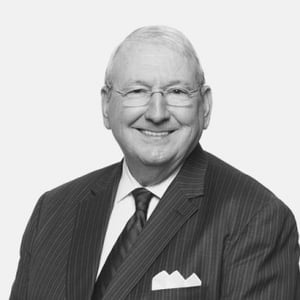
Shareholder, Maynard Cooper & Gale
Tommy’s trial practice concentrates on complex mass tort, environmental, and product liability cases, often handling the defense of class actions or mass consolidated cases throughout the South. He has handled cases in Alabama, Virginia, California, Texas, Ohio, West Virginia, Pennsylvania, Indiana, Illinois, Tennessee, Georgia, Mississippi and the District of Columbia. Tommy is active in the American Bar Association, having served as the Association’s President in 2008-2009. His skills as a litigator have been highly recognized throughout the years, including being listed in The Best Lawyers in America© and one of Alabama’s Top Ten attorneys in Super Lawyers®. He is a Fellow of the International Academy of Trial Lawyers, the Litigation Counsel of America and the American College of Environmental Lawyers.
Former Solicitor General of Texas
Gregory Scott Coleman was an American lawyer and the first Solicitor General of Texas, serving in that capacity from 1999 to 2001.
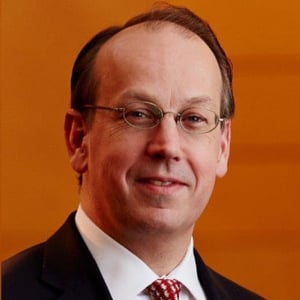
Partner, Clement & Murphy, PLLC
Paul served as the 43rd Solicitor General of the United States from June 2005 until June 2008. Before his confirmation as Solicitor General, he served as Acting Solicitor General for nearly a year and as Principal Deputy Solicitor General for over three years.
Paul has argued over 100 cases before the United States Supreme Court, including McConnell v. FEC, Tennessee v. Lane, United States v. Booker, MGM v. Grokster, Hobby Lobby v. Burwell, Epic Systems Corp. v. Lewis, Rucho v. Common Cause, Facebook v. Duguid, and TransUnion v. Ramirez. Paul has argued more Supreme Court cases since 2000 than any lawyer in or out of government. He has also argued many important cases in the lower courts, including Walker v. Cheney, United States v. Moussaoui and NFL v. Brady.
Paul’s practice focuses on appellate matters, constitutional litigation and strategic counseling. He represents a broad array of clients in the Supreme Court and in federal and state appellate courts. Last year, for example, he successfully argued Supreme Court cases involving significant issues of energy regulation, statutory interpretation, state sovereign immunity and Article III standing, and successfully argued a trademark appeal in the Fourth Circuit, and a constitutional appeal before the en banc Eleventh Circuit.
Paul focuses on high-stakes appeals. In recent years, he successfully defended a $1.2 billion jury verdict for clients in a Tenth Circuit case, while securing the reversal of an over $2 billion jury verdict for another client in the Seventh Circuit and the approval of a nearly $1 billion dollar class action settlement in the Third Circuit. He has initiated major administrative law challenges and constitutional litigation against the federal government, such as the successful challenge to the HHS drug-pricing rule and threatened challenges that led to the withdrawal of the Treasury Department’s proposed cryptocurrency regulations. He also counsels clients on a variety of strategic legal questions, whether arising from pending legislation, government inquiries or ongoing litigation.
Paul has undertaken substantial pro bono engagements in the Supreme Court, such as twice successfully representing the defendant in Bond v. United States and successfully representing the Omaha Tribe in Nebraska v. Parker, the guardian ad litem in Adoptive Couple v. Baby Girl, the defendant in Sekhar v. United States, a high school football coach in Kennedy v. Bremerton, and the Little Sisters of the Poor. Paul’s pro bono representation also precipitated the federal government’s confession of error in United States v. Rojas.
Following law school, Paul clerked for Judge Laurence H. Silberman of the U.S. Court of Appeals for the D.C. Circuit and for Associate Justice Antonin Scalia of the U.S. Supreme Court. After his clerkships, he went on to serve as Chief Counsel of the U.S. Senate Subcommittee on the Constitution, Federalism and Property Rights.
Paul is a Distinguished Lecturer in Law at the Georgetown University Law Center, where he has taught in various capacities since 1998. He also serves as a Senior Fellow of the Law Center’s Supreme Court Institute. He is the Justice Joseph Story Distinguished Practitioner in Residence at the Gray Center at Scalia Law School.
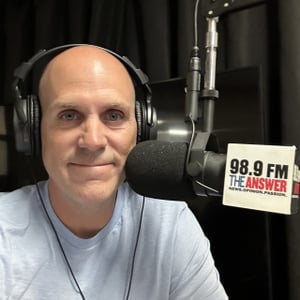
Ohio, Opportunity
Matt A. Mayer is the President of Opportunity Ohio and weekly contributor on Columbus-Dayton-Cincinnati radio. In his role, he develops strategic policy positions, advises policymakers on a wide-range of issues, designs and evaluates public opinion surveys, creates educational videos and collateral material aimed at key constituencies, engages with all elements of the media, conducts fact-finding missions, and speaks to groups in America and Europe on a variety of topics. Mayer led a nine-state campaign to stop the expansion of Medicaid, and has conducted strategic policy summits for top state and national groups. Opportunity Ohio’s targeted educational videos have received more than 18.4 million views on social media in the last seven years. Mayer accurately predicted BREXIT, the election of Donald Trump, the budget deficit in Ohio in 2017-2018, the enormous enrollment in Medicaid that surpassed government estimates, Ohio’s continued mediocre private sector job market, and the Joe Biden-Kamala Harris 2020 Democratic ticket.
In 2023, Mayer spent nine months exploring an outsider run for Ohio Governor that involved speaking to thousands of Ohioans in fifty-six out of Ohio’s eighty-eight counties. Ultimately, Mayer ended the exploratory effort after not reaching internal non-financial benchmarks and determining that a major non-Establishment figure likely would run and overwhelm Mayer with his personal fortune and extensive media exposure.
Mayer has written and spoken extensively on the importance of competitive federalism in renewing the American promise. Previously, Mayer served as a monthly columnist for The Spectator USA and U.S. News & World Report, a Visiting Fellow for the American Enterprise Institute, and a Visiting Scholar for the Heritage Foundation in Washington, D.C. where he wrote extensively on national security issues. You can follow him on Twitter (@ohiomatt) and all of his op-eds can be found on his Substack page, The Patriot Mind.
Mayer has worked in public policy and politics at both the state and federal levels. He was a senior official at the U.S. Department of Homeland Security where he provided DHS leaders with policy and operational advice as the Counselor to the Deputy Secretary, including participating in crisis management activities following Hurricane Katrina. He also headed the $3.5 billion terrorism preparedness office charged with developing initiatives to transform America to meet the demands of a post-9/11 environment. Mayer engaged in bilateral counterterrorism exchanges with the United Kingdom and Israel, did briefings in The White House Situation Room and at NATO, and headed America’s largest full-scale national exercise focused on a pandemic virus attack (fifteen years before the COVID pandemic).
Mayer came to DHS from Colorado where he served as the Deputy Director for the Department of Regulatory Agencies under Colorado Governor Bill Owens. He co-developed Colorado’s Regulatory Notice system that utilizes electronic mail to notify stakeholders of all proposed regulations before those regulations become final. The Regulatory Notice system earned the Denver Business Journal’s 2003 “Innovative Product/Service Award” for making government more transparent and accountable. Mayer’s concept of restoring federalism received the runner-up prize in the 2012 Better Government Competition.
Mayer was a 2007 Lincoln Fellow with The Claremont Institute for the Study of Statesmanship and Political Philosophy and a 2006 American Marshall Memorial Fellow with the German Marshall Fund of the United States. In September 2005, The Ohio State University Alumni Association awarded Mayer the William Thompson Oxley Award for early career achievement. Mayer received the Colorado Statesman’s “Rising Star Award” for his management of a congressional campaign and as a deputy on a U.S. Senate campaign in Colorado. At the age of 29, the Denver Business Journal recognized Mayer as one of Colorado’s young leaders by naming him to its “Forty Under 40” list–one of only three recipients under the age of 30 (one of the other two was current Colorado Governor Jared Polis).
Mayer has written three books: The Founding Debate: Where Should the Power Over Our Lives Reside, Taxpayers Don’t Stand a Chance: How Battleground Ohio Loses No Matter Who Wins (and What to Do About It), and Homeland Security and Federalism: Protecting America from Outside the Beltway (with Foreword by the Honorable Edwin Meese III). He has written articles for law reviews, public policy journals, and newspapers, including the Wall Street Journal, CNN, Fox News, USA Today, and Politico; given testimony to the U.S. Congress, the Texas House and Senate, and the Ohio House and Senate; and appeared on Fox News, C-SPAN, ABC, NBC, and other major media outlets.
Mayer graduated from the University of Dayton and received his law degree from The Ohio State University College of Law.
Associate Professor of Political Science, Johns Hopkins University
Steven Teles is associate professor of political science at Johns Hopkins University and fellow at the New America Foundation.
He is the author, most recently, of the Rise of the Conservative Legal Movement: The Battle for Control of the Law (Princeton University Press, 2008), and before that Whose Welfare: AFDC and Elite Politics (University Press of Kansas, 1996). He is the co-editor of two books: Conservatism and American Political Development (Oxford University Press, 2009, with Brian Glenn) and Ethnicity, Social Mobility and Public Policy: Comparing the US and UK (Cambridge University Press, 2005, with Glenn Loury and Tariq Modood). Professor Teles is also the editor of Oxford University Press' book series on Contemporary American Political Development. He is currently working on two co-authored books. The first, with Mark Kleiman of UCLA, tentatively calledThe Statesman's Discipline: The Art of Asking the Right Questions. His second project, with Peter Frumkin, is a developmental study of foundations over the past half-century.
Professor Teles has also published articles in the New Statesman, American Prospect, Public Interest, National Affairs, The American Interest, Prospect (UK) and Boston Reviews, appeared on bloggingheads.tv and blogs occasionally at samefacts.com.
He received his PhD in government and foreign affairs from the University of Virginia in 1995, and his BA in political science from George Washington University in 1989.
Professor of Law, Case Western Reserve University School of Law
Professor Dent taught law at New York University, Cardozo, and the New York Law School before joining the faculty in 1990. Earlier he had clerked for Judge Paul R. Hays of the U.S. Court of Appeals, Second Circuit, and practiced corporate law in New York with Debevoise, Plimpton, Lyons & Gates. He teaches Business Associations, Mergers and Acquisitions, and Business Planning and is the faculty supervisor for the Business Organizations Concentration. He has published many articles on corporate and securities law, including “Academics in Wonderland: The Team Production and Director Primacy Models of Corporate Governance,” Houston Law Review (2008); “Corporate Governance: Still Broke, No Fix in Sight,” Journal of Corporation Law (2005); “Lawyers and Trust in Business Alliances,” Business Lawyer (2002); and “Gap Fillers and Fiduciary Duties in Strategic Alliances,” The Business Lawyer (2001). He also writes on law and religion, as in “Civil Rights for Whom: Gay Rights Versus Religious Freedom,” University of Kentucky Law Journal (2006-07); and “How Does Same-Sex Marriage Threaten You?,” Rutgers Law Review (2007). Mr. Dent serves as a director of the National Association of Scholars and as president of the Ohio Association of Scholars. He serves as an officer of Cleveland Chapter of the Federalist Society. He heads the Law Section of the Association for the Study of Free Institutions. He is chairman of the Ohio State Advisory Committee to the U.S. Commission on Civil Rights.
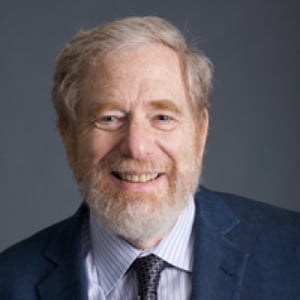
Carmack Waterhouse Professor of Constitutional Law, Georgetown Law
After graduating from Harvard Law School in 1971, Professor Seidman served as a law clerk for J. Skelly Wright of the D.C. Circuit and U.S. Supreme Court Justice Thurgood Marshall. He then was a staff attorney with the D.C. Public Defender Service until joining the Law Center faculty in 1976. He teaches a variety of courses in the fields of constitutional and criminal law. He is co-author of a constitutional law casebook and the author of many articles concerning criminal justice and constitutional law. His most recent books are Silence and Freedom (Stanford 2007), Our Unsettled Constitution: A New Defense of Constitutionalism and Judicial Review (Yale 2001) and Equal Protection of the Laws (Foundation 2002).
Counsel, The Judicial Confirmation Network
Wendy Long is legal counsel to the Judicial Confirmation Network. Until March 2005, she was a litigation partner in the New York office of Kirkland & Ellis LLP. Wendy was a law clerk to U.S. Supreme Court Justice Clarence Thomas and to Judge Ralph Winter of the U.S. Court of Appeals for the Second Circuit in New York. She is a graduate of Northwestern University School of Law, cum laude and Order of the Coif, where she was articles editor of the Northwestern University Law Review, and of Dartmouth College. She previously served as a press secretary in the U.S. Senate, for former U.S. Senator Bill Armstrong (R-Colo.) and former U.S. Senator Gordon Humphrey (R-N.H.).
Director, William E. and Carol G. Simon Center on Religion and t, The Witherspoon Institute
Matthew J. Franck is the Director of the William E. and Carol G. Simon Center on Religion and the Constitution at the Witherspoon Institute in Princeton, New Jersey. He is Professor Emeritus of Political Science at Radford University, in Virginia, where he taught constitutional law, American politics, and political philosophy from 1989 to 2010, and was Chairman of the Department of Political Science from 1995 to 2010. He is also a Visiting Lecturer in Politics at Princeton University.
Professor Franck earned his B.A. in political science from Virginia Wesleyan College, and his M.A. and Ph.D. in political science from Northern Illinois University. He has taught at Marquette University and Southern Illinois University, and was a Fulbright Professor of American Studies at the Graduate School of International Studies, Yonsei University, Seoul, Korea, in 1998, and a Visiting Fellow in the James Madison Program in American Ideals and Institutions at Princeton University, in 2008-09.
He is the author, editor of, or contributor to several books on religious freedom, constitutional law, the Supreme Court, and American politics, and has published essays and reviews in numerous academic journals, as well as many general-interest articles and commentaries in newspapers, magazines, and online, including the Washington Post, First Things, National Review, and Public Discourse, the daily online essay publication of the Witherspoon Institute.
Professor Franck is a regular blogger on National Review Online’s “Bench Memos” page and the “First Thoughts” page at First Things magazine, and has appeared numerous times on Bill Bennett’s “Morning in America” radio show, as well as on CNN, Fox News Channel, NPR, and Relevant Radio.
Partner, Goldstein & Russell PC
Thomas C. Goldstein has argued 28 cases before the Supreme Court, including matters involving federal patent law, class action practice, labor and employment, and disability law. In addition to practicing law, Tom teaches Supreme Court Litigation at Harvard Law School and taught at Stanford Law School as well from 2004-2012.
In the Supreme Court and elsewhere, Mr. Goldstein litigates and advises clients in a broad range of issues. For example, he regularly litigates and lectures on questions of federal patent law. Mr. Goldstein frequently advises clients, litigates, and consults on legislative matters relating to the First Amendment. And he regularly represents parties in questions relating to the game of poker, including its lawfulness as a matter of federal and state law. Tom's clients include plaintiffs, criminal defendants, and major corporations such as BG Group, Home Depot, Humana, IMS Health, Nike, PokerStars, POM Wonderful, and Pemex.
In addition to practicing law, Tom founded, and is the publisher of, SCOTUSblog, which in 2013 became the only weblog ever to receive the Peabody Award for excellence in electronic media. It also won the 2013 Society of Professional Journalists (Sigma Delta Chi) prize for deadline reporting for its coverage of the Supreme Court’s healthcare ruling. In 2010, it became the first blog to receive the American Bar Association’s Silver Gavel Award for fostering the American public’s understanding of law and the legal system.
Tom has been repeatedly recognized as a leading member of the bar. In 2010, The National Law Journal named him one of the 40 most influential lawyers of the decade; Tom notably was ten years younger than any other law firm partner listed. Legal Times named him one of the “90 Greatest Washington Lawyers of the Last 30 Years” and praised him for “transforming the practice” of law before the Supreme Court. He is also included in both of the National Law Journal’s most recent lists of the nation’s 100 most influential lawyers (2006 and 2013). He has been repeatedly recognized as one of the nation’s top appellate advocates. GQ Magazine named him one of the 50 most powerful people in Washington, D.C.
Tom is an elected Fellow of the American Academy of Appellate Lawyers, and a member of the American Law Institute. He is involved with a number of professional organizations. He serves as the vice chair of the Amicus Committee of the ABA’s Intellectual Property Section and previously served for two years on the ABA’s Standing Committee on Amicus Curiae Briefs. In those capacities, he has authored several Supreme Court amicus briefs for the ABA. In addition, Tom serves on the boards of advisors of the Washington Legal Foundation and the Georgetown University Supreme Court Institute.
Before founding Goldstein & Howe in 1999, Tom practiced law at Boies & Schiller, LLP and at Jones Day Reavis & Pogue. Tom left the firm he founded in 2006 to create the Supreme Court Practice at Akin, Gump, Strauss, Hauer & Feld, where he also was a partner and principal co-chair of the firmwide litigation practice. He returned to what is now Goldstein & Russell in 2011.
Tom clerked for the Honorable Patricia M. Wald of the U.S. Court of Appeals for the D.C. Circuit.
Associate Professor of Law, University of Colorado Law School
Scott Moss joined CU Law School in 2007 after six years as an attorney in New York City and three years as a professor at Marquette Law School, where he was the 2007 recipient of the James D. Ghiardi Faculty Award for Outstanding Teaching, Student Body Support, and Scholarship. In New York, Professor Moss was a law clerk to U.S. District Judge Constance Baker Motley and then a plaintiff's employment lawyer at Outten & Golden LLP, the largest plaintiff-side employment law practice in the country, where he litigated individual and class action cases of discrimination, harassment, and minimum/overtime wage violations. He also has argued and briefed appeals of employment cases and has undertaken pro bono projects such as First Amendment right-to-protest litigation with the New York Civil Liberties Union, low-income worker clinics in lower Manhattan, and court-sponsored mediations for pro se litigants. Professor Moss received his J.D. (magna cum laude) in 1998 from Harvard Law School, where he was a Senior Editor of the Harvard Civil Rights-Civil Liberties Law Review; his B.A. (Economics) and M.A. (Media Studies) are from Stanford University. Professor Moss's research interests have included employment law, discrimination, constitutional law, various civil procedure rules, and economic analysis of all of the preceding topics.
B.A., Stanford
M.A., Stanford
J.D., Harvard

Judge, United States Court of Appeals, Eighth Circuit
David Stras became a judge on the United States Court of Appeals for the Eighth Circuit on January 31, 2018. Before serving on the Eighth Circuit, Judge Stras was an Associate Justice of the Minnesota Supreme Court, a position he occupied from July 1, 2010 until his appointment to the Eighth Circuit.
Prior to becoming a judge, Stras was a member of the faculty of the University of Minnesota Law School from 2004 through 2010. He taught and wrote in the areas of federal courts and jurisdiction, constitutional law, criminal law, and law and politics.
Judge Stras received his Bachelor of Arts degree, with highest distinction, in 1995 and his Master of Business Administration in 1999, both from the University of Kansas. He also received his law degree from the University of Kansas School of Law in 1999, where he served as Editor-in-Chief of the Criminal Procedure Edition of the Kansas Law Review.
Following law school, Stras clerked for The Honorable Melvin Brunetti of the United States Court of Appeals for the Ninth Circuit and then for The Honorable J. Michael Luttig of the United States Court of Appeals for the Fourth Circuit.
From 2001 to 2002, he practiced white-collar criminal and appellate litigation with the Washington, D.C., office of Sidley Austin Brown & Wood. Following his year in practice, he clerked for The Honorable Clarence Thomas of the Supreme Court of the United States.
Distinguished Senior Fellow and Antonin Scalia Chair in Constitutional Studies, Ethics and Public Policy Center
Edward Whelan is a Distinguished Senior Fellow of the Ethics and Public Policy Center and holds EPPC’s Antonin Scalia Chair in Constitutional Studies. He is the longest-serving President in EPPC’s history, having held that position from March 2004 through January 2021.
Mr. Whelan directs EPPC’s program on The Constitution, the Courts, and the Culture. His areas of expertise include constitutional law and the judicial confirmation process. As a contributor to National Review Online’s Bench Memos blog, he has been a leading commentator on nominations to the Supreme Court and the lower courts and on issues of constitutional law. He has written essays and op-eds for leading newspapers—including the Wall Street Journal, the New York Times, and the Washington Post—opinion journals, and academic symposia and law reviews. The National Law Journal has named Mr. Whelan among its “Champions and Visionaries” in the practice of law in D.C.
Mr. Whelan is co-editor of three volumes of Supreme Court Justice Antonin Scalia’s work: Scalia Speaks: Reflections on Law, Faith, and Life Well Lived (Crown Forum, 2017), a New York Times bestselling collection of speeches by Justice Scalia; On Faith: Lessons from an American Believer (Crown Forum, 2019), a collection of Justice Scalia’s writings on faith and religion; and The Essential Scalia: On the Constitution, the Courts, and the Rule of Law (Crown Forum, 2020), a collection of Justice Scalia’s views on legal issues.
Mr. Whelan, a lawyer and a former law clerk to Justice Scalia, has served in positions of responsibility in all three branches of the federal government. From just before the terrorist attacks of September 11, 2001, until joining EPPC in 2004, Mr. Whelan was the Principal Deputy Assistant Attorney General for the Office of Legal Counsel in the U.S. Department of Justice. In that capacity, he advised the White House Counsel’s Office, the Attorney General and other senior DOJ officials, and departments and agencies throughout the executive branch on difficult and sensitive legal questions. Mr. Whelan previously served on Capitol Hill as General Counsel to the U.S. Senate Committee on the Judiciary. In addition to clerking for Justice Scalia, he was a law clerk to Judge J. Clifford Wallace of the U.S. Court of Appeals for the Ninth Circuit.
In 1981 Mr. Whelan graduated with honors from Harvard College and was inducted into Phi Beta Kappa. He received his J.D. magna cum laude in 1985 from Harvard Law School, where he was a member of the Board of Editors of the Harvard Law Review.
For more on Mr. Whelan’s background, see this interview.
Managing Director, Alvarez & Marsal Healthcare Industry Group
With prior service as Deputy General Counsel of the U.S. Department of Health and Human Services and as Executive Vice President and General Counsel of Tenet Healthcare, he brings more than 20 years of experience in addressing challenging healthcare issues in government and private industry.
Mr. Urbanowicz regularly advises boards of directors, senior management, investors and lenders of health care organizations facing significant regulatory, compliance, financial or operating challenges. His clients include healthcare providers, payors and suppliers.
Recent engagements include: serving as a federally-appointed hospital restructuring and safety monitor; compliance and operational improvements for publicly-traded and not-for-profit Medicare Advantage plans, Medicare Prescription Drug Plans (PDP) and Medicaid managed care companies; renegotiating of government debt for a major hospital system; restructuring advisory services to the Medicaid program of a large state; numerous internal and government investigations involving healthcare providers including: academic health systems, medical device companies, pharmaceutical manufacturers, long term care hospital companies, hospice providers, dental services companies and disease management companies.
Mr. Urbanowicz also serves on the board of directors of Maxim Healthcare Services, one of the nation’s largest home health services companies, and chairs the company’s compliance committee.
As Deputy General Counsel of HHS, from 2001 to 2003, Mr. Urbanowicz served as the senior legal adviser to the Secretary of Health and Human Services on significant federal healthcare policy issues including Medicare and Medicaid provider payment and fraud and abuse enforcement policy. He was part of the team that drafted the historic Medicare Prescription Drug Act of 2003.
During his tenure at Tenet, Mr. Urbanowicz was responsible for successfully resolving several major federal criminal investigations and civil lawsuits facing Tenet by the U.S. Department of Justice, the Securities and Exchange Commission, and the HHS Office of Inspector General. Prior to his government service, he was a partner in the law firm of Locke, Liddell & Sapp.
Mr. Urbanowicz earned a bachelor of arts’ degree and a Juris Doctor degree from Tulane University. He is admitted to the bars of the District of Columbia, the U.S. Supreme Court and the Louisiana Supreme Court, and is a member of the American Law Institute.
Carmack Waterhouse Professor of Constitutional Law, Georgetown Law
After graduating from Harvard Law School in 1971, Professor Seidman served as a law clerk for J. Skelly Wright of the D.C. Circuit and U.S. Supreme Court Justice Thurgood Marshall. He then was a staff attorney with the D.C. Public Defender Service until joining the Law Center faculty in 1976. He teaches a variety of courses in the fields of constitutional and criminal law. He is co-author of a constitutional law casebook and the author of many articles concerning criminal justice and constitutional law. His most recent books are Silence and Freedom (Stanford 2007), Our Unsettled Constitution: A New Defense of Constitutionalism and Judicial Review (Yale 2001) and Equal Protection of the Laws (Foundation 2002).
Counsel, The Judicial Confirmation Network
Wendy Long is legal counsel to the Judicial Confirmation Network. Until March 2005, she was a litigation partner in the New York office of Kirkland & Ellis LLP. Wendy was a law clerk to U.S. Supreme Court Justice Clarence Thomas and to Judge Ralph Winter of the U.S. Court of Appeals for the Second Circuit in New York. She is a graduate of Northwestern University School of Law, cum laude and Order of the Coif, where she was articles editor of the Northwestern University Law Review, and of Dartmouth College. She previously served as a press secretary in the U.S. Senate, for former U.S. Senator Bill Armstrong (R-Colo.) and former U.S. Senator Gordon Humphrey (R-N.H.).
Partner, Goldstein & Russell PC
Thomas C. Goldstein has argued 28 cases before the Supreme Court, including matters involving federal patent law, class action practice, labor and employment, and disability law. In addition to practicing law, Tom teaches Supreme Court Litigation at Harvard Law School and taught at Stanford Law School as well from 2004-2012.
In the Supreme Court and elsewhere, Mr. Goldstein litigates and advises clients in a broad range of issues. For example, he regularly litigates and lectures on questions of federal patent law. Mr. Goldstein frequently advises clients, litigates, and consults on legislative matters relating to the First Amendment. And he regularly represents parties in questions relating to the game of poker, including its lawfulness as a matter of federal and state law. Tom's clients include plaintiffs, criminal defendants, and major corporations such as BG Group, Home Depot, Humana, IMS Health, Nike, PokerStars, POM Wonderful, and Pemex.
In addition to practicing law, Tom founded, and is the publisher of, SCOTUSblog, which in 2013 became the only weblog ever to receive the Peabody Award for excellence in electronic media. It also won the 2013 Society of Professional Journalists (Sigma Delta Chi) prize for deadline reporting for its coverage of the Supreme Court’s healthcare ruling. In 2010, it became the first blog to receive the American Bar Association’s Silver Gavel Award for fostering the American public’s understanding of law and the legal system.
Tom has been repeatedly recognized as a leading member of the bar. In 2010, The National Law Journal named him one of the 40 most influential lawyers of the decade; Tom notably was ten years younger than any other law firm partner listed. Legal Times named him one of the “90 Greatest Washington Lawyers of the Last 30 Years” and praised him for “transforming the practice” of law before the Supreme Court. He is also included in both of the National Law Journal’s most recent lists of the nation’s 100 most influential lawyers (2006 and 2013). He has been repeatedly recognized as one of the nation’s top appellate advocates. GQ Magazine named him one of the 50 most powerful people in Washington, D.C.
Tom is an elected Fellow of the American Academy of Appellate Lawyers, and a member of the American Law Institute. He is involved with a number of professional organizations. He serves as the vice chair of the Amicus Committee of the ABA’s Intellectual Property Section and previously served for two years on the ABA’s Standing Committee on Amicus Curiae Briefs. In those capacities, he has authored several Supreme Court amicus briefs for the ABA. In addition, Tom serves on the boards of advisors of the Washington Legal Foundation and the Georgetown University Supreme Court Institute.
Before founding Goldstein & Howe in 1999, Tom practiced law at Boies & Schiller, LLP and at Jones Day Reavis & Pogue. Tom left the firm he founded in 2006 to create the Supreme Court Practice at Akin, Gump, Strauss, Hauer & Feld, where he also was a partner and principal co-chair of the firmwide litigation practice. He returned to what is now Goldstein & Russell in 2011.
Tom clerked for the Honorable Patricia M. Wald of the U.S. Court of Appeals for the D.C. Circuit.
Associate Professor of Law, University of Colorado Law School
Scott Moss joined CU Law School in 2007 after six years as an attorney in New York City and three years as a professor at Marquette Law School, where he was the 2007 recipient of the James D. Ghiardi Faculty Award for Outstanding Teaching, Student Body Support, and Scholarship. In New York, Professor Moss was a law clerk to U.S. District Judge Constance Baker Motley and then a plaintiff's employment lawyer at Outten & Golden LLP, the largest plaintiff-side employment law practice in the country, where he litigated individual and class action cases of discrimination, harassment, and minimum/overtime wage violations. He also has argued and briefed appeals of employment cases and has undertaken pro bono projects such as First Amendment right-to-protest litigation with the New York Civil Liberties Union, low-income worker clinics in lower Manhattan, and court-sponsored mediations for pro se litigants. Professor Moss received his J.D. (magna cum laude) in 1998 from Harvard Law School, where he was a Senior Editor of the Harvard Civil Rights-Civil Liberties Law Review; his B.A. (Economics) and M.A. (Media Studies) are from Stanford University. Professor Moss's research interests have included employment law, discrimination, constitutional law, various civil procedure rules, and economic analysis of all of the preceding topics.
B.A., Stanford
M.A., Stanford
J.D., Harvard
Judge, United States Court of Appeals, Eighth Circuit
David Stras became a judge on the United States Court of Appeals for the Eighth Circuit on January 31, 2018. Before serving on the Eighth Circuit, Judge Stras was an Associate Justice of the Minnesota Supreme Court, a position he occupied from July 1, 2010 until his appointment to the Eighth Circuit.
Prior to becoming a judge, Stras was a member of the faculty of the University of Minnesota Law School from 2004 through 2010. He taught and wrote in the areas of federal courts and jurisdiction, constitutional law, criminal law, and law and politics.
Judge Stras received his Bachelor of Arts degree, with highest distinction, in 1995 and his Master of Business Administration in 1999, both from the University of Kansas. He also received his law degree from the University of Kansas School of Law in 1999, where he served as Editor-in-Chief of the Criminal Procedure Edition of the Kansas Law Review.
Following law school, Stras clerked for The Honorable Melvin Brunetti of the United States Court of Appeals for the Ninth Circuit and then for The Honorable J. Michael Luttig of the United States Court of Appeals for the Fourth Circuit.
From 2001 to 2002, he practiced white-collar criminal and appellate litigation with the Washington, D.C., office of Sidley Austin Brown & Wood. Following his year in practice, he clerked for The Honorable Clarence Thomas of the Supreme Court of the United States.
Distinguished Senior Fellow and Antonin Scalia Chair in Constitutional Studies, Ethics and Public Policy Center
Edward Whelan is a Distinguished Senior Fellow of the Ethics and Public Policy Center and holds EPPC’s Antonin Scalia Chair in Constitutional Studies. He is the longest-serving President in EPPC’s history, having held that position from March 2004 through January 2021.
Mr. Whelan directs EPPC’s program on The Constitution, the Courts, and the Culture. His areas of expertise include constitutional law and the judicial confirmation process. As a contributor to National Review Online’s Bench Memos blog, he has been a leading commentator on nominations to the Supreme Court and the lower courts and on issues of constitutional law. He has written essays and op-eds for leading newspapers—including the Wall Street Journal, the New York Times, and the Washington Post—opinion journals, and academic symposia and law reviews. The National Law Journal has named Mr. Whelan among its “Champions and Visionaries” in the practice of law in D.C.
Mr. Whelan is co-editor of three volumes of Supreme Court Justice Antonin Scalia’s work: Scalia Speaks: Reflections on Law, Faith, and Life Well Lived (Crown Forum, 2017), a New York Times bestselling collection of speeches by Justice Scalia; On Faith: Lessons from an American Believer (Crown Forum, 2019), a collection of Justice Scalia’s writings on faith and religion; and The Essential Scalia: On the Constitution, the Courts, and the Rule of Law (Crown Forum, 2020), a collection of Justice Scalia’s views on legal issues.
Mr. Whelan, a lawyer and a former law clerk to Justice Scalia, has served in positions of responsibility in all three branches of the federal government. From just before the terrorist attacks of September 11, 2001, until joining EPPC in 2004, Mr. Whelan was the Principal Deputy Assistant Attorney General for the Office of Legal Counsel in the U.S. Department of Justice. In that capacity, he advised the White House Counsel’s Office, the Attorney General and other senior DOJ officials, and departments and agencies throughout the executive branch on difficult and sensitive legal questions. Mr. Whelan previously served on Capitol Hill as General Counsel to the U.S. Senate Committee on the Judiciary. In addition to clerking for Justice Scalia, he was a law clerk to Judge J. Clifford Wallace of the U.S. Court of Appeals for the Ninth Circuit.
In 1981 Mr. Whelan graduated with honors from Harvard College and was inducted into Phi Beta Kappa. He received his J.D. magna cum laude in 1985 from Harvard Law School, where he was a member of the Board of Editors of the Harvard Law Review.
For more on Mr. Whelan’s background, see this interview.

Caperton vs. A.T. Massey Coal Company
Birmingham, AlabamaThe Growing Clash Between Religious Freedom and the Gay Movement
George W. Dent
I want to thank the Federalist Society for inviting me today. At many law schools...
The Sotomayor Nomination, Part III
Louis Michael Seidman, Wendy Long, Matthew J. Franck, Thomas C. Goldstein, Scott Moss, David R. Stras, Edward Whelan
On May 26th, President Obama nominated Sonia Sotomayor to replace David Souter as an Associate...
United States Supreme Court Update: A Review of the 2008-2009 Term With A View From the Lectern
Austin Lawyers Chapter
Austin6th Annual Supreme Court Roundup: The Roberts Court in Transition
Philadelphia, PennsylvaniaHomeland Security & Federalism: Protecting America from Outside the Beltway
An Insider’s Look at Judicial Confirmation
Constitutional Implications of an “Individual Mandate” in Health Care Reform
Dennis G. Smith, Peter Urbanowicz
The Federalist Society takes no position on particular legal or public policy initiatives. Any expressions...
The Sotomayor Nomination, Part I
Louis Michael Seidman, Wendy Long, Thomas C. Goldstein, Scott Moss, David R. Stras, Edward Whelan
On May 26, President Obama nominated Sonia Sotomayor to replace David Souter as an Associate...
The History of the Federalist Society