

U.S. Court of Appeals, First Circuit
David Barron was appointed to the United States Court of Appeals for the First Circuit in May 2014. He graduated from Harvard College in 1989 and Harvard Law School in 1994. From 1989 to 1991, he worked as a newspaper reporter. After graduating from law school, he clerked for Judge Stephen R. Reinhardt of the United States Court of Appeals for the Ninth Circuit, from 1994 to 1995, and for Justice John Paul Stevens of the United States Supreme Court, from 1995 to 1996. He then worked as an attorney advisor for the Office of Legal Counsel of the United States Department of Justice, from 1996 to 1999. In 1999, Barron became an Assistant Professor at Harvard Law School. He became a full Professor at Harvard Law School in 2004, where he worked until he rejoined the Justice Department as Acting Assistant Attorney General for the Office of Legal Counsel, from 2009 to 2010. He then returned to the Harvard Law School faculty in 2010, where he was named the S. William Green Professor of Public Law in 2011, and worked until his appointment to the federal bench in 2014. Currently, Barron is the Honorable S. William Green Visiting Professor of Public Law at Harvard Law School. Barron has published articles in the Harvard Law Review, the Stanford Law Review, and the Yale Law Journal. His book, Waging War, won the 2017 William E. Colby Award.

Director, Independent Women's Law Center, Independent Women's
Jennifer C. Braceras, a member of the Federalist Society Board of Visitors, is the director of Independent Women’s Law Center and a former member of the U.S. Commission on Civil Rights.
Ms. Braceras is a graduate of the Harvard Law School, where she served as an editor of the Law Review. After law school, she clerked for two federal judges and practiced labor and employment law with the Boston law firm Ropes & Gray.
A long time political columnist and editor, Ms. Braceras's writing has appeared in a variety of publications, including the Wall Street Journal, the Boston Globe, the Hill, and National Review Online. She co-hosts At the Bar, a bimonthly virtual happy hour discussion about issues at the intersection of law, politics, and culture.
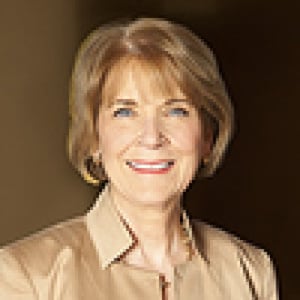
Of Counsel, Foley Hoag LLP
Former Massachusetts Attorney General Martha Coakley is of counsel in Foley Hoag's Litigation Department. She focuses her practice on government and internal investigations, litigation, and data privacy and security. Martha has substantial experience in civil and criminal litigation in all state and federal courts including the U.S. Supreme Court. She has performed extensive grand jury work and defended federal grand juries and has considerable experience conducting complex investigations.
As the first female Attorney General of Massachusetts, Martha has been a national leader in addressing the economic crisis by holding banks accountable and keeping residents in their homes; protected civil rights as the first Attorney General to successfully challenge the Defense of Marriage Act; investigated fraud and corruption; championed major initiatives to address health care and energy costs; and recovered hundreds of millions of dollars back for the taxpayers of the Commonwealth of Massachusetts. She served as Attorney General from 2007-2015.
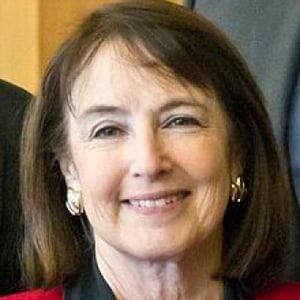
Senior Lecturer on Law, Harvard Law School
Nancy Gertner is a former U.S. federal judge who built her career around standing up for women’s rights, civil liberties and justice for all. Gertner was appointed to the federal bench of the U.S. District Court of Massachusetts by President Bill Clinton in 1994. She retired from the bench in 2011 to teach at Harvard Law School.
Named one of “The Most Influential Lawyers of the Past 25 Years” by Massachusetts Lawyers Weekly, Gertner has written and spoken throughout the U.S., Europe and Asia. She has published widely on sentencing, discrimination, and forensic evidence; women’s rights; and the jury system. Her autobiography, “In Defense of Women: Memoirs of an Unrepentant Advocate,” was published in 2011.
She is a graduate of Barnard College, Columbia University, and holds a M.A in Political Science and J.D. from Yale University. She has received numerous awards, including the Margaret Brent Award from the ABA commission on the status of Women, Massachusetts Bar Association’s Hennessey Award for judicial excellence in 2011; the Morton A. Brody Distinguished Judicial Service Award from Colby College in 2010; the National Association of Women Lawyers’ highest honor, the Arabella Babb Mansfield Award, in 2011,The Women's Bar Association's highest award, The Lelia Robinson Award, in 2012, and, in 2008, the Thurgood Marshall Award from the American Bar Association, Section of Individual Rights and Responsibilities, which recognized her contributions to advancing human rights and civil liberties. The Marshall award has been given to one other woman, Justice Ruth Ginsburg.
In November 2014, she gave the Pope and John lecture at Northwestern University. In October 2014, she was a resident scholar at the Rockefeller Foundation in Bellagio, Italy; In September she gave the keynote address at the 18th Anniversary Celebration of the Jewish Women’s archive (September 14, 2014).
Gertner is presently working on her second book, Incomplete Sentences, concerning the men who she sentenced over her 17 year career as a federal judge. In addition to writing about them, highlighting the unfairness and disproportionality of their sentences, she is assisting in clemency petitions where appropriate.
Drawing on her wide ranging experience in practice and as a judge, Gertner also consults and litigates in civil right cases (she is of counsel to Neufeld, Scheck & Brustin, a civil rights firm in New York City), white collar criminal case (she is of counsel to Fick and Marx, a white collar criminal defense firm in Boston), as well as in employment discrimination and false claims cases.
Drawing on her judicial experience, Gertner engages in mediation and arbitration with Resolutions, LLC. (with Eric Green) and the Southeast Regional Mediation, Arbitration and Compliance Association (with Bill Nettles and Paul Zwier).
U.S. District Court Judge, District of Massachusetts
Nathaniel M. Gorton is a federal judge for the United States District Court for the District of Massachusetts. He joined the court in 1992 after being nominated by President George H.W. Bush. At the time of appointment, he was a private practice in Massachusetts.
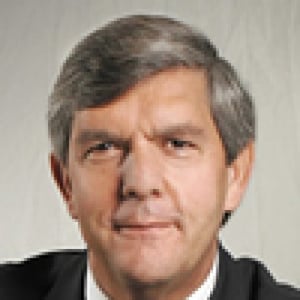
Of Counsel, K&L Gates LLP
Mr. Greco is a commercial litigator, arbitrator, mediator and appellate lawyer with more than 40 years of experience in resolving complex business and other disputes throughout the United States and internationally, and in strategically advising business entities and individuals regarding internal and governmental investigations. Mr. Greco is former President of the American Bar Association.
He has represented a wide range of business clients in high stakes commercial litigation and arbitrations, and has served as litigator, arbitrator and mediator in disputes involving for example, national and international financial institutions, national accounting firms, bio-technology firms, architects, engineers, insurers, insureds, professional sports and athletes, intellectual property firms, consulting firms, contractors, real estate developers, national airlines, and corporations and key executives in governmental and internal investigations.

Op-Ed Columnist, The Boston Globe
Jeff Jacoby, who has been a columnist for The Boston Globe since 1994, is a conservative writer with a national reputation.
A native of Cleveland, Jeff has degrees from George Washington University and from Boston University Law School. Before entering journalism, he (briefly) practiced law at the prominent firm of Baker & Hostetler, worked on several political campaigns in Massachusetts, and was an assistant to Dr. John Silber, the president of Boston University. In 1999, Jeff became the first recipient of the Breindel Prize, a major award for excellence in opinion journalism. In 2014, he was included in the “Forward 50,” a list of the most influential American Jews.

Partner, McCarter & English, LLP
Daniel Kelly brings over thirty years of experience to the firm’s government contracts group. His practice combines both counseling and acting as an advocate on behalf of clients doing business in the government marketplace. Dan has knowledge of the government contracting process both on a federal and state level, and the specific laws, regulations, contract clauses and dispute resolution mechanisms in this specialized area. He provides advice and guidance to clients who are in the government supply chain, either as prime contractors, subcontractors or vendors. He reviews government solicitations with clients, prepares proposals, and negotiates teaming arrangements and subcontracts with other suppliers. He helps clients build and enhance their compliance programs. He assists clients in protecting their intellectual property and proprietary information concerning their businesses when doing business with the government. He advocates for clients who wrongfully were passed over for a contract award. He prepares claims arising under government contracts as a result of change orders, delays, and terminations for default or convenience. Dan’s practice extends to a broad spectrum of industries and federal and state authorities for whom they supply research, products and services, including emerging and established biomedical, intelligence, pharma, security, and textile R&D, manufacturing and production houses working under prime and subcontracts, SBIRs, CRADAs, OTAs, and grants for DoD and civilian agencies; Medicare and Medicaid audit and investigation service providers; commercial software developers who modify their software for military applications; professional services providers; and raw materials and component suppliers to large military prime contractors.
Dan is the author of the August 2018 edition Thomson Reuters’ Briefing Papers, which provides a comprehensive review of patent rights under “Other Transaction Agreements” (OTAs) with DoD and NASA. Heavily promoted by Congress, and only partially understood by industry, OTAs are quickly becoming DoD’s and NASA’s contractual vehicle of choice to lure commercial companies to sell the Government their latest and greatest technologies. However, OTAs are not governed by standard government contracts laws and regulations, meaning there are significant changes to the common provisions of ownership and license rights incident to government contracts and grants. The Briefing Paper should be required reading before entities enter into an OTA as a vehicle for developing new technologies for NASA and DoD to ensure their company’s intellectual property efforts are properly protected
In the matters, AdvanceMed Corporation, B-415360,B-415360.2,B-415360.3 (Dec 19, 2017), and AdvanceMed Corporation, B-414373.3 (Jan 10, 2018) Dan and the Government Contracts team at McCarter successfully defended its client Health Integrity, LLC (now Qlarant) against protests launched at the Government Accountability Office challenging awards by the Centers for Medicare and Medicaid Services (CMS) for Medicare and Medicaid audit and program integrity services.
Dan serves on the Board of Directors for NCMA Boston (National Contract Management Association) and NDIA New England (National Defense Industrial Association), and is a frequent speaker at NCMA and NDIA events.
Dan serves as an adjunct member of the faculty at Suffolk University Law School where he has taught Government Contracts.
Dan receives Mentor of the Year Award in recognition of his contributions and support to NCMA Boston Chapter’s 2017-2018 Program Year.
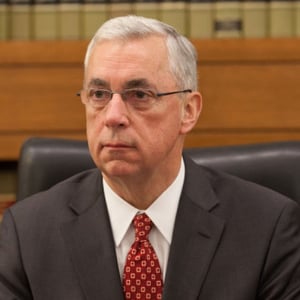
U.S. District Court Judge, District of Massachusetts
Nominated by William J. Clinton on April 4, 1995, to a new seat created by 104 Stat. 5089; Confirmed by the Senate on May 25, 1995, and received commission on May 26, 1995.

Executive Vice President, The Federalist Society
Dean Reuter is Executive Vice President at the Federalist Society for Law and Public Policy Studies. He has served in two federal government agency Offices of the Inspector General, as Counsel to the Inspector General and Deputy Inspector General, responsible for policing the use of federal funds granted and contracted through those agencies. As such, he helped conduct and oversee criminal investigations across the country. He is the principal author of the non-fiction book, The Hidden Nazi: The Untold Story of America's Deal with the Devil, and editor of Liberty’s Nemesis: The Unchecked Expansion of the State and Confronting Terror: 9/11 and the Future of American National Security. He was appointed by the President and served as Vice-Chairman of the Board of Directors of the Corporation for National and Community Service, and recently served as an appointee on the U.S. Commission on Presidential Scholars. He is a graduate of Hood College (BA with Honors) and the University of Maryland School of Law.
Executive Director, ACLU of Massachusetts
Carol Rose is executive director of the ACLU of Massachusetts. A lawyer and journalist, Carol has spent her career advocating for human rights and civil liberties both in the United States and abroad, including Afghanistan, Pakistan, Nepal, Japan, Sri Lanka, Israel, the West Bank and Gaza, Northern Ireland, and Vietnam. Prior to assuming her position at the helm of the ACLU of Massachusetts in January 2003, she worked as an attorney at the Boston law firm of Hill & Barlow, where she specialized in First Amendment and media law, intellectual property, civil rights, and international human rights law. She clerked for U.S. District Court Judge Patti Saris. She holds degrees from Stanford University, the London School of Economics, and Harvard Law School.
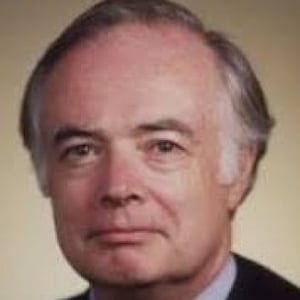
U.S. District Court Judge, District of Massachusetts
Douglas Preston Woodlock is a federal judge for the U.S. District Court for the District of Massachusetts. He joined the court in 1986 after being nominated by President Ronald Reagan. At the time of appointment, Woodlock served as Chairman of the Massachusetts Committee for Public Counsel Services.
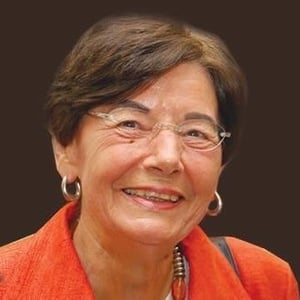
U.S. District Court Judge, District of Massachusetts
Rya Weickert Zobel is a federal judge of the United States District Court for the District of Massachusetts. She joined the court in 1979 after being nominated by President Jimmy Carter. At the time of her appointment, Zobel was a private practice attorney inMassachusetts.
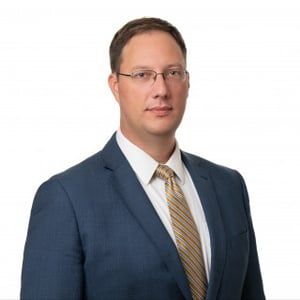
Laurence H. Silberman Chair in Constitutional Governance, American Enterprise Institute; Executive Director, Antonin Scalia Law School’s C. Boyden Gray Center for the Study of the Administrative State
Adam J. White is the Laurence H. Silberman Chair in Constitutional Governance and senior fellow at the American Enterprise Institute, where he focuses on the Supreme Court and the administrative state. He also directs the Antonin Scalia Law School’s C. Boyden Gray Center for the Study of the Administrative State.
He writes on regulation and constitutional government for a variety of publications. He practiced law in Washington, D.C., after clerking for the D.C. Circuit's Judge David Sentelle. He also has been chairman of the ABA's Administrative Law Section.
In 2021, he served on the Presidential Commission on the Supreme Court of the United States, where he criticized “Court packing” and other efforts to restructure the Supreme Court.
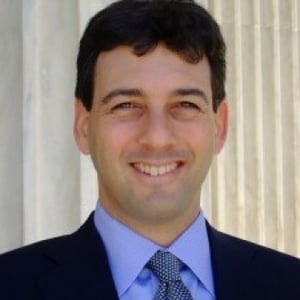
Vice President for Litigation, Institute for Free Speech
Alan joined the Institute for Free Speech as Vice President for Litigation in February 2021. In this role, Alan directs the Institute’s litigation and legal advocacy, leads our in-house legal team, and manages and works to expand our network of volunteer attorneys.
Prior to joining the Institute, Alan litigated complex federal matters for twenty years, in his own practice and as a partner in various Washington-area firms. He argued and won landmark constitutional cases in the United States Supreme Court and has appeared before numerous appellate and district courts throughout the country. Alan often speaks at law schools and continuing legal education seminars. He also teaches strategic/public interest litigation as an adjunct professor at the Georgetown University Law Center.
Alan began his career clerking for the Hon. Terrence W. Boyle, United States District Judge for the Eastern District of North Carolina. He has also served as a Deputy Attorney General for the State of California, a litigation associate at the Washington office of Sidley Austin, and as counsel to the United States Senate Judiciary Committee.
Alan earned his J.D. at Georgetown (1995) and his B.A. at Cornell University (1992). He is an active member in good standing of the Virginia, District of Columbia, and California bars, the Bar of the United States Supreme Court, and various federal appellate and district court bars.
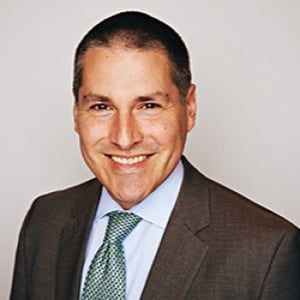
Partner, Supreme Court & Appellate Litigation Practice, Paul, Weiss, Rifkind, Wharton & Garrison LLP
Willy Jay is a partner at Paul, Weiss, Rifkind, Wharton & Garrison LLP, and head of the firm’s Supreme Court & Appellate Litigation Practice.
Prior to joining Paul, Weiss, Willy Jay was a partner in Goodwin’s Appellate and Supreme Court Litigation practice. After ten years leading that practice, he became co-chair of Goodwin’s broader Complex Litigation and Dispute Resolution practice. Willy used his deep experience litigating before the U.S. Supreme Court and U.S. Courts of Appeals, including more than 80 oral arguments, to help clients formulate winning appellate strategy. His appellate skill led Benchmark Litigation to name him the nationwide Appellate Lawyer of the Year for 2020. A former Assistant to the Solicitor General and Supreme Court clerk, he has argued 19 cases before the Supreme Court, briefed more than 60 Supreme Court cases on the merits, and briefed more than 150 cases at the certiorari stage. In recent years he argued five of the most significant intellectual-property cases at the Court, involving patent, copyright, and trademark law.
Willy has handled cases in every federal court of appeals as well. He has filed more than 300 briefs in federal and state appeals courts and argued in 11 federal circuits. He is a prominent advocate at the Federal Circuit, where he has argued 30 times, filed more than 120 briefs in patent appeals, and been recognized as “Appellate Litigator of the Year" by both Managing IP and LMG Life Sciences. Willy also regularly counsels clients on appellate strategy at the trial level, preparing and arguing key motions and post-trial briefing before district courts and federal and state administrative agencies.
Willy is recognized in Band 1 in two different appellate categories in Chambers USA: America’s Leading Lawyers for Business, where clients praise him for being "a rocket scientist" whose "spectacular brief writing" and "keen and analytical mind" enable him to “take any issue on appeal.” Another client noted that Willy "is an extraordinary litigator" who "has a unique way of synthesizing complex arguments and making them understandable." Other clients comment that Willy is “A super-efficient appellate litigator who is able to cut straight to the most critical issues and construct simple, persuasive arguments from extremely complex legal and factual records." Forbes named him to its inaugural list of America’s Top 200 Lawyers. Willy is also listed in Legal500 and Best Lawyers in America. Law360 named him an “Appellate MVP.” He has been named “Litigator of the Week” by the AmLaw Litigation Daily.
Willy has particular experience in appellate cases involving intellectual property (including patent, copyright, and trademark law), financial services, administrative law (with a particular focus on pharmaceutical regulation), environmental law, class action practice, federal preemption of state law, and the First Amendment (including campaign finance regulation, election law, and election crimes).
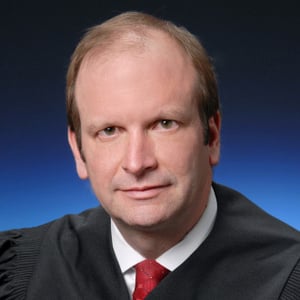
Associate Justice, Supreme Court of Ohio
Justice Pat DeWine began his six-year term on the Supreme Court of Ohio on Jan. 2, 2017, following his statewide election in November 2016. An excellent writer, Justice DeWine is known for the quality and thoroughness of his legal opinions. His opinions reflect his strong belief in judicial restraint and his respect for the constitutional roles of the other coequal branches of government.
Justice DeWine has served at all levels of the Ohio judiciary. Prior to his election to the Supreme Court, Justice DeWine served for four years on the First District Court of Appeals, and prior to that, for four years on the Hamilton County Common Pleas Court.
Justice DeWine has a strong commitment to furthering the rule of law through education. He is an adjunct professorat the University of Cincinnati College of Law where he teaches Appellate Practice and Procedure. In addition, he has taught undergraduate courses at the University of Cincinnati in Ohio Government & Politics and American Courts.
Justice DeWine has strong academic credentials. He graduated from the University of Michigan Law School in the top ten percent of his class with Order of the Coif honors. As an undergraduate student at Miami University, he maintained a perfect 4.0 grade point average and received summa cum laude honors. He was also a member of the Varsity Track and Cross Country teams.
After law school, he was selected for a clerkship on United States Court of Appeals for the Sixth Circuit. He served under the Honorable David A. Nelson, who had been appointed to the Sixth Circuit by President Ronald Reagan.
Justice DeWine understands the litigant’s perspective, having practiced law for 13 years with one of Cincinnati’s top law firms, Keating, Muething & Klekamp. He represented clients in appellate matters in Ohio and in federal courts across the country. He handled a diverse range of litigation matters, including mass tort bankruptcies, securities fraud litigation, and constitutional issues.
Other Public Service
Justice DeWine brings a unique perspective to the bench because of his public service as a County Commissioner and a member of Cincinnati City Council.
As a member of the Hamilton County Board of Commissioners, he focused on reforming County government, lowering the tax burden, eliminating unnecessary bureaucracy and promoting public safety. He led the citizens referendum that ultimately repealed the nearly $1 billion sales tax increase that was enacted by his colleagues on the Commission. The Reason Foundation named him an “Innovator in Action,” along with such leaders as Rudy Giuliani and Jeb Bush, for his efforts to reform County government.
On Cincinnati City Council, he was known as a taxpayer watchdog, successfully rooting out wasteful spending and abuse in city government. He helped eliminate unnecessary regulations, led the effort to crack down on quality of life issues affecting city neighborhoods and created a development fund that leveraged private capital to spur new housing development downtown and across city neighborhoods. He also led the Issue Four charter change that created a more accountable city government by allowing the city to hire the most qualified individuals for key positions in city government.
He was a founder of the Build Cincinnati reform group that successfully passed a charter amendment to allow Cincinnati voters to directly elect the Mayor.athon.
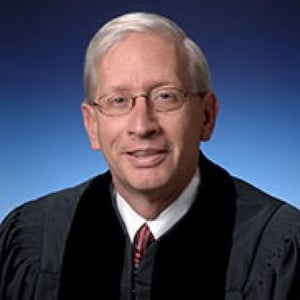
Justice, Ohio Supreme Court
Justice Patrick F. Fischer began his six-year term on the Supreme Court of Ohio on Jan. 1, 2017, following his election in November 2016. Previously, he was elected to serve as a judge on the Ohio First District Court of Appeals in 2010, and was re-elected in 2012.
Justice Fischer has dedicated himself to the practice of law for more than 30 years. An honors graduate of Harvard Law School and Harvard College, as a practicing lawyer he tried cases throughout the country, and was named to Best Lawyers in America, one of the Top 50 Lawyers in Cincinnati, and one of the Top 100 Lawyers in Ohio. He was routinely named to Ohio Super Lawyers.
A respected member of the legal community, from 2012 to 2013 then-Judge Fischer served as president of the Ohio State Bar Association. He previously had served on the Ohio State Bar Association’s Board of Governors, chaired its budget and headquarters committee, and served on numerous other Ohio State Bar Association committees and task forces, and in its House of Delegates. Justice Fischer recently completed his second tenure on the board of the Ohio Lawyers Assistance Program. He also was elected by his peers to serve as president of the Cincinnati Bar Association for 2006 through 2007.
Justice Fischer has an abiding interest in ethics and professionalism. As an attorney he served two terms on the Ohio Supreme Court's Commission on Professionalism, including serving as vice chair. He also chaired the Cincinnati Bar Association's ethics and professional responsibility, as well as its professionalism, committees.
Having represented plaintiffs and defendants while an attorney, Justice Fischer knows the importance of being able to see and listen to both sides of an issue. Knowing and understanding the law as he does, Justice Fischer is keenly aware of how important it is that the law be applied properly to the facts in each case. The late chief justice of the Supreme Court of Ohio, Thomas J. Moyer, named him to co-chair a task force to make the Ohio judicial system more efficient and just. Justice Fischer served on the Ohio Constitutional Modernization Commission, and was vice chair of its committee on the judicial branch.
Justice Fischer began his legal career with a clerkship for U.S. District Court Judge William Bertelsman, and in 1987, he began working for the law firm of Keating Muething & Klekamp. Just four years later, he became a partner in the trial department. Although on inactive status, he also is a licensed attorney in Texas.
In his free time, Justice Fischer is a dedicated public servant. He served on numerous local boards such as the Hamilton County Mental Health & Recovery Services Board, Visions Community Services Board, St. Ursula Villa, and the Pleasant Ridge Community Council. He was a founding member of the Cincinnati Children’s Museum and served on its board.
Justice Fischer, his wife Jane, and their dog live in Cincinnati. He has one married daughter who is a practicing attorney in Ohio, and two grandsons. A graduate of St. Xavier High School, Justice Fischer also is an active, long-time member of St. Xavier Catholic Church in downtown Cincinnati, serving as both a lector and Eucharistic minister.
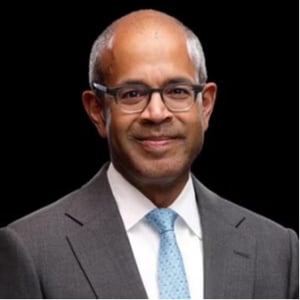
Partner, Davis Polk & Wardwell LLP
Kannon is the head of our Supreme Court & Appellate practice. He has argued 39 cases before the U.S. Supreme Court and has argued more than 150 appeals in courts across the country, including every federal court of appeals and numerous state courts.
Kannon is ranked as a “Star Individual” in appellate law by Chambers USA, where a client notes, “It’s hard to think of enough superlatives to describe his talent, his judgment, his ability, his experience – he is as good as it gets.” Legal 500 U.S. recognizes Kannon in its Hall of Fame for appellate work. A client shares, “His work is the best in the business, and he is a wonderful human being in addition to being a world-class appellate litigator.”
In 2024 and 2022, Kannon was a finalist for the American Lawyer’s “Litigator of the Year” award. He was named “Appellate Litigator of the Year” by Benchmark Litigation in 2021 and was a 2026 finalist for that recognition.
Before entering private practice, Kannon served as an Assistant to the Solicitor General at the U.S. Department of Justice.
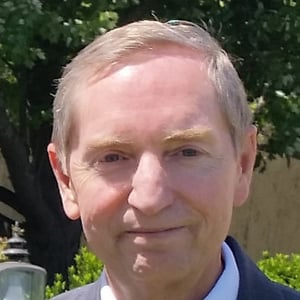
Legal Director & General Counsel, Criminal Justice Legal Foundation
Kent S. Scheidegger has been the Legal Director of the Criminal Justice Legal Foundation since December 1986. He also served as Chairman of the Criminal Law Practice Group of the Federalist Society 2003 to 2005. His articles on criminal and constitutional law have been published in law reviews, national legal publications, and congressional reports. Legal arguments authored by Mr. Scheidegger have been cited and incorporated in several precedent-setting United States Supreme Court decisions.
After receiving a degree in physics with honors from New Mexico State University in 1976, Mr. Scheidegger served for six years in the United States Air Force as a Nuclear Research Officer. He took his law degree with distinction from the University of the Pacific, McGeorge School of Law in 1982 and practiced civil law in Northern California. He was general counsel of California Cooler, Inc. from 1984 until 1986, when he joined the Foundation.
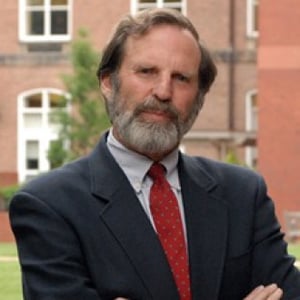
Adjunct Professor, George Washington University Law School
Vice President for Legal Affairs, Cato Institute
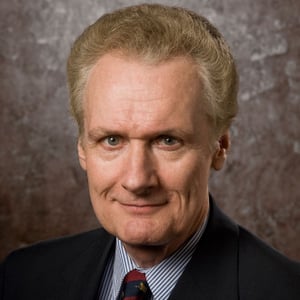
Roger Pilon is the Cato’s Institute’s vice president for legal affairs, the founding director of Cato’s Robert A. Levy Center for Constitutional Studies, the inaugural holder of Cato’s B. Kenneth Simon Chair in Constitutional Studies, and the founding publisher of the Cato Supreme Court Review.
Prior to joining Cato, Pilon held five senior posts in the Reagan administration, including at State and Justice, and was a national fellow at Stanford’s Hoover Institution. In 1989 the Bicentennial Commission presented him with its Benjamin Franklin Award for excellence in writing on the U.S. Constitution. In 2001 Columbia University’s School of General Studies awarded him its Alumni Medal of Distinction. Pilon lectures and debates at universities and law schools across the country and testifies often before Congress.
His writing has appeared in the Wall Street Journal, the Washington Post, the New York Times, the Los Angeles Times, Legal Times, National Law Journal, Harvard Journal of Law and Public Policy, Stanford Law and Policy Review, and elsewhere. He has appeared on ABC’s Nightline, CBS’s 60 Minutes II, Fox News Channel, NPR, CNN, MSNBC, CNBC, C-SPAN, and other media.
Pilon holds a BA from Columbia University, an MA and a PhD from the University of Chicago, and a JD from the George Washington University School of Law.
Vice President for Legal Affairs, Goldwater Institute
U.S. Court of Appeals, D.C. Circuit
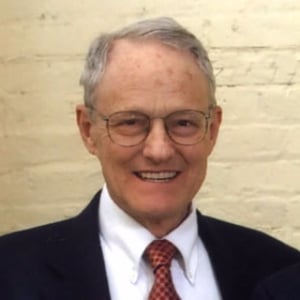
Judge Williams practiced law in New York City (at the firm of Debevoise Plimpton and as an Assistant U.S. Attorney) and then taught law at the University of Colorado Law School from 1969 to 1986, with visiting years at UCLA, SMU, and the University of Chicago (where he was also a fellow in law and economics). He was appointed to the U.S. Court of Appeals for the D.C. Circuit in 1986. His most recent book is a biography of Vasily Maklakov, The Reformer: How One Liberal Fought to Preempt the Russian Revolution (Encounter Books, 2017).

Shakespeare & the Law: Julius Caesar
David Barron, Jennifer C. Braceras, Martha Coakley, David French, Nancy Gertner, Nathaniel M. Gorton, Michael Greco, Jeff Jacoby, Daniel J. Kelly, George O'Toole, Dean Reuter, Carol Rose, F Saylor, Douglas P. Woodlock, Rya W. Zobel
Julius Caesar is Shakespeare’s classic depiction of the abuse of power, political assassination and intrigue –...
The Second Amendment at the Supreme and Lower Courts
New Orleans, LouisianaAlexander Hamilton on Judicial Independence
Adam White
What is the proper role of the Supreme Court in the government and in society?...
U.S. Supreme Court, Roundup of Last Term and Preview of the Next
Louisville, KentuckySupreme Court Candidates Forum
Columbus Lawyers Chapter
Columbus, OHFedSoc members at the Constitutional Court of Ukraine
From October 7-8, in association with the celebration of the 20th anniversary of the Constitutional...
U.S. Supreme Court Roundup
Indianapolis, IndianaCompeting Views on California's Death Penalty
Sacramento, CaliforniaThe Permission Society
How the Ruling Class Turns Our Freedoms into Privileges and What We Can Do about It
Washington, DCSan Diego City Attorney Debate
San Diego, California