
Author and Contributing Editor, National Affairs
James Poulos is one of America’s most original social theorists. A contributing editor of National Affairs, he has mapped the future of human freedom and equality at publications ranging from Foreign Policy to The Federalist and from Good to Vice. Holding degrees from Duke and the University of Southern California, he was a doctoral fellow of the Tocqueville Forum at Georgetown University. James is a columnist for The Week and the Southern California News Group, and fronts the band Night Years in Los Angeles, where he lives with his son.
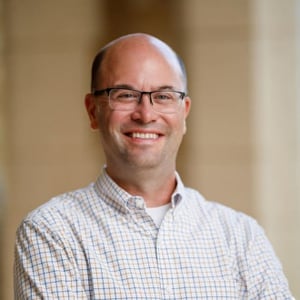
Paul J. Schierl Professor of Law, University of Notre Dame Law School
Professor Richard W. Garnett teaches and writes in the areas of constitutional law, criminal law, the First Amendment, and law and religion. He is a leading authority on questions and debates regarding religious freedom and church-state relations, and is the founding director of Notre Dame Law School’s Program on Church, State, and Society.
Garnett clerked for the late Chief Justice of the United States, William H. Rehnquist, and also for the late Chief Judge of the United States Court of Appeals for the Eighth Circuit, Richard S. Arnold. He earned his J.D. from Yale Law School in 1995 and his B.A., summa cum laude, from Duke University in 1990. He joined the faculty in 1999 after practicing law in Washington, D.C. with Miller, Cassidy, Larroca & Lewin.

Richard and Frances Mallery Professor of Law and Faculty Director, Constitutional Law Center, Stanford Law School
Michael W. McConnell is the Richard and Frances Mallery Professor and Faculty Director of the Constitutional Law Center at Stanford Law School, and a Senior Fellow at the Hoover Institution. From 2002 to 2009, he served as a Circuit Judge on the United States Court of Appeals for the Tenth Circuit. He was nominated by President George W. Bush, a Republican, and confirmed by a Democratic Senate by unanimous consent. McConnell has previously held chaired professorships at the University of Chicago and the University of Utah, and visiting professorships at Harvard and NYU. He teaches courses on constitutional law, constitutional history, First Amendment, and interpretive theory. He has published widely in the fields of constitutional law and theory, especially church and state, equal protection, and separation of powers. His book, “The President Who Would Not Be King: Executive Power Under the Constitution,” was published by Princeton University Press in 2020, based on the Tanner Lectures in Human Values, which he delivered at Princeton in 2019. His latest book, co-authored with Nathan Chapman, “Agreeing to Disagree: How the Establishment Clause Protects Religious Diversity and Freedom of Conscience,” was published by Oxford University Press in mid-2023. McConnell has argued sixteen cases in the United States Supreme Court, most recently Carney v. Adams (2020). defending a provision of the Delaware Constitution requiring political balance on that state’s courts. More recently, he was co-counsel in Gonzalez v. Google. He earned his B.A. from Michigan State University and his J.D. from the University of Chicago, and has received honorary degrees from Notre Dame University and Michigan State. He served as law clerk to Supreme Court Justice William J. Brennan, Jr. and D.C. Circuit Chief Judge J. Skelly Wright. He has been Assistant General Counsel of the Office of Management & Budget, Assistant to the Solicitor General of the Department of Justice, and a member of the President’s Intelligence Oversight Board. He is Senior of Counsel to the law firm Wilson, Sonsini, Goodrich & Rosati, and is co-chair of Meta’s Oversight Review Board.

Thomas M. Siebel Senior Fellow, The Hoover Institution, Stanford University; Gary T. Schwartz Distinguished Professor of Law Emeritus, UCLA School of Law
Eugene Volokh is the Thomas M. Siebel Senior Fellow at the Hoover Institution (Stanford), as well as the Gary T. Schwartz Distinguished Professor of Law Emeritus and Distinguished Research Professor at UCLA School of Law. He recently retired from teaching at UCLA, after 30 years there, and is now focusing on research.
Volokh is the author of the textbooks The First Amendment and Related Statutes (8th ed. 2023), and Academic Legal Writing (5th ed. 2016), as well as over 100 academic law journal articles, mostly on First Amendment law. He is a member of The American Law Institute; the editor-in-chief of the Journal of Free Speech Law; and the creator and coauthor of The Volokh Conspiracy, a leading legal blog founded in 2002 (hosted at the Washington Post from 2014 to 2017 and now at Reason Magazine).
Attorney
Maya M. Noronha is a civil rights attorney.
As special counsel for external affairs at First Liberty Institute, Maya worked for the largest legal organization in the United States dedicated exclusively to defending religious liberty for all Americans.
Previously, Maya worked at the U.S. Department of Health and Human Services, as acting chief of staff of the Administration for Children and Families; principal advisor to the Commissioner of the Administration on Children, Youth, and Families; and senior advisor to the Director of the Office for Civil Rights and regulatory reform officer. She provided advice on federal civil rights laws that prohibit discrimination on the basis of conscience, religion, race, color, national origin, limited English proficiency, sex, disability, age, and health information in both health care and human services.
In the area of election law, Maya has advised officials elected to or candidates for President, U.S. Senate, U.S. House of Representatives, Governor, state legislature, city council, and magisterial district judge. She practiced law at Baker Hostetler LLP, where she was on the Political Law and Federal Advocacy Teams, advising clients on voting rights, redistricting, election integrity, campaign finance, financial reporting, ethics compliance, as well as conducting trial and appellate litigation. She also has delivered legislative testimony, planned continuing legal education conferences on election law, and published about voting rights and election administration.
In addition to addressing the Federalist Society, she has delivered remarks to the White House Initiative on Asian American Pacific Islanders, United States Senate, Women in Government Relations, Georgetown University, George Mason University School of Law, the Columbus School of Law at the Catholic University of America, and Arizona State University Cronkite School of Journalism.
Maya is in Phi Beta Kappa, a member of the Alpha Sigma Nu Jesuit Honor Society, and a John Carroll Scholar. Forbes Magazine recognized Maya as one of its 30 under 30 in Law and Public Policy.
She serves concurrently on the Federalist Society’s Free Speech & Election Law Executive Committee and the American Bar Association’s Standing Committee on Election Law.
Education
· J.D., Georgetown University Law Center, 2011
· A.B., Georgetown University, 2005

Former President & CEO, The Federalist Society for Law and Public Policy Studies
Eugene B. Meyer, former President and CEO of the Federalist Society, has served as Executive Director, CEO, and/or President of the organization for more than 40 years. He is responsible for shepherding the organization from a small group of law students to a community of 90,000 lawyers, law students, academics, judges, and others interested in the rule of law. The Society now includes a Student Chapter at nearly every ABA-accredited law school in the country and Lawyers Chapters in 220 major cities across the nation. Gene earned his B.A. in history at Yale in 1975 and his M.A. in political science from the London School of Economics in 1976. Gene currently serves on the boards of the U.S. Chess Center, the Holman Foundation, the Sarah Scaife Foundation, and the advisory board of the Adam Smith Society. He holds the title of International Chess Master.
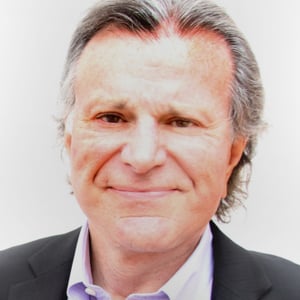
H.H. Macaulay Endowed Professor of Economics, Clemson College of Business
Thomas Hazlett is the Hugh H. Macaulay Endowed Professor of Economics at Clemson University. He has previously held faculty positions at George Mason University, the University of California, Davis, and the Wharton School, and served as Chief Economist of the Federal Communications Commission. A noted expert in regulatory economics and information markets, his research has appeared in academic forums such as the Journal of Law & Economics, RAND Journal of Economics, the Journal of Financial Economics, the University of Pennsylvania Law Review and the Columbia Law Review. He has also written for such popular periodicals as the Wall Street Journal, The Economist, Slate, the N.Y. Times, N.Y. Daily News, Reuters.com, Business Week, The New Republic and the Financial Times. His most recent book, The Political Spectrum: The Tumultuous Liberation of Wireless Technology, from Herbert Hoover to the Smartphone, (Yale, 2017), was featured as one of the top tech books of the year at CES 2018.
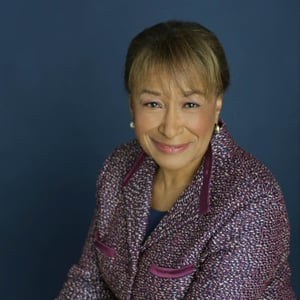
Judge, United States Court of Appeals, District of Columbia Circuit (ret.)
The Honorable Janice Rogers Brown was confirmed to the United States Court of Appeals for the District of Columbia Circuit on June 8, 2005. She retired from the court in 2017. From 1996 to 2005, she was an associate justice of the California Supreme Court. Prior to this, she served as associate justice of the Third District Court of Appeals in Sacramento and as legal affairs secretary to California Governor Pete Wilson. Earlier in her career, she served as Deputy Secretary and General Counsel for California’s Business, Transportation and Housing Agency after having worked in the criminal appellate and civil trial divisions of the California Attorney General’s Office. She currently chairs the Advisory Board of the New Civil Liberties Alliance, and serves on the Board of the Coolidge Foundation and the Association of College Trustees and Alumni. She is the Darling Foundation Jurist-in-Residence and visiting professor of Law at the University of California Boalt School of Law. Brown has been honored with the Jurisprudence Award of Claremont Institute’s Center for Constitutional Jurisprudence, the Baroness Thatcher Award of the Pacific Research Institute, the Edwin Meese III, Originalism and Religious Liberty Award from the Alliance Defending Freedom, the James Wilson Institute Leadership and the Law Award, and the 2019 Bradley Award. She earned her law degree from the University of California – Los Angeles School of Law, and a Master of Laws in judicial process from the University of Virginia School of Law.
General Counsel, Pacific Legal Foundation
Milton R. Underwood Chair in Free Enterprise, Vanderbilt University Law School
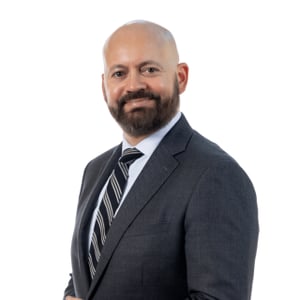
Brian Fitzpatrick is the Milton R. Underwood Chair in Free Enterprise and Professor of Law at Vanderbilt Law School, where his research focuses on class action litigation, federal courts, judicial selection, and constitutional law. He is best known for his empirical studies of class action settlements as well as his book The Conservative Case for Class Actions (University of Chicago Press, 2019). Professor Fitzpatrick joined Vanderbilt's law faculty in 2007 after serving as the John M. Olin Fellow at New York University School of Law. He graduated first in his class from Harvard Law School and went on to clerk for Judge Diarmuid O'Scannlain on the U.S. Court of Appeals for the Ninth Circuit and Justice Antonin Scalia on the U.S. Supreme Court. After his clerkships, Professor Fitzpatrick practiced commercial and appellate litigation for several years at Sidley Austin in Washington, D.C., and served as Special Counsel for Supreme Court Nominations to U.S. Senator John Cornyn. Before earning his law degree, Fitzpatrick graduated summa cum laude with a bachelor's of science in chemical engineering from the University of Notre Dame. He has received the Hall-Hartman Outstanding Professor Award, which recognizes excellence in classroom teaching, for his Civil Procedure and Federal Courts courses.

Why Read Tocqueville?
James Poulos
What can a nineteenth-century Frenchman teach us about modern America? Author James Poulos presents his...
The Political Spectrum
The Tumultuous Liberation of Wireless Technology, from Herbert Hoover to the Smartphone
TeleforumThe Blaine Amendments: State Constitutions & School Choice
Richard W. Garnett
What are the Blaine Amendments, and should they dictate where state funds can and cannot...
Universities & the First Amendment
Michael W. McConnell
What is the status of free speech on college campuses? Professor Michael McConnell of Stanford...
Annual Dinner for the San Diego Federalist Society
San Diego, CaliforniaMurr v. Wisconsin: The Supreme Court and The Takings Clause
Sacramento, CaliforniaA Nationwide Speech Code for Lawyers?
Eugene Volokh
Is it a violation of the first amendment for the American Bar Association to impose...
New Applications of Section 2 of the Voting Rights Act to Vote Denial Cases
Maya Noronha
Note from the Editor: This article discusses recent federal appellate court decisions with respect to...
Annual Report 2016
Eugene B. Meyer
The Federalist Society enjoyed great success in 2016. This past year has seen the expansion...
A Court Divided? Whether to Split the Ninth Circuit?
Los Angeles, California