
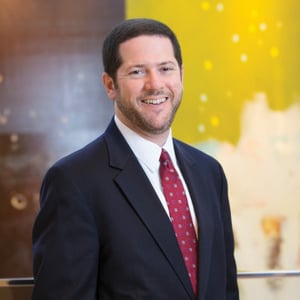
Partner, Co-chair of the Litigation & Trial Practice Group, Alston & Bird LLP
Adam Biegel is co-chair of Alston & Bird’s Litigation & Trial Practice Group and former co-chair of its Antitrust Team. He has substantial experience representing clients on antitrust counseling and litigation matters, including those involving government and internal investigations, mergers and joint ventures, pricing and distribution, compliance counseling and training, pre-merger reviews under the Hart-Scott-Rodino (HSR) Act, and multidistrict litigation. He regularly represents clients before the U.S. Department of Justice (DOJ) Antitrust Division, Federal Trade Commission (FTC) and state attorneys general, and in federal courts.
Adam is recognized for his antitrust experience by Chambers USA and selected to The Best Lawyers in America®, including his recognition as “Lawyer of the Year” for Antitrust Litigation in Washington, D.C., in 2022. He is a longtime member of the American Bar Association Antitrust Law Section’s leadership, currently serving as co-chair of its In-House Counsel Task Force and previously having served on its board, and chaired its Corporate Counseling Committee, Long Range Planning Committee, and Spring Meeting conference. He also serves on the board of the Federalist Society’s antitrust practice group.
Adam served as a law clerk to the Hon. Frank M. Hull, U.S. Court of Appeals for the Eleventh Circuit. Before attending law school, he worked as a newspaper reporter in Arkansas and on the legislative staff of U.S. Senator Orrin Hatch.
Deputy Director of the Bureau of Competition, Federal Trade Commission
Ian Conner serves as the Deputy Director of the Bureau of Competition at the Federal Trade Commission. He previously was a partner in the Antitrust & Competition practice at Kirkland & Ellis LLP in Washington, DC. Prior to entering private practice, Mr. Conner was a Trial Attorney in the Transportation, Energy and Agriculture Section of the Antitrust Division of the U.S. Department of Justice.
Senior Antitrust Counsel,, Tennessee Attorney General’s Office
Vic is Senior Antitrust Counsel in the Tennessee Attorney General’s Office and serves as Tennessee’s chief counsel for all state and multistate antitrust investigations and litigation. He also enforces Tennessee’s Nonprofit Act with a special focus on hospital transactions and conducts investigations on behalf of the Tennessee Ethics Commission. He is admitted to practice before all state courts in Tennessee, the U. S. Supreme Court, the United States Court of Appeals for the Sixth Circuit and United States District Courts for the Eastern, Middle and Western Districts of Tennessee. Vic was named Chair of the NAAG Antitrust Task Force in 2015 and has served as a member of the Long Range Planning Committee of the Antitrust Law Section of the American Bar Association and as a Co-Chair of the State Enforcement Committee. He has written and spoken on numerous antitrust and nonprofit matters and is currently on the Editorial Board of the ABA publication Antitrust Law Developments Updates. He has also planned or participated as a panelist on several ABA teleconferences programs and Spring Meeting sessions. Vic received his J.D. from Rutgers University School of Law and has a B.A. in Economics from Vanderbilt University
Senior Associate, Baker Botts L.L.P., Washington, DC
Jeffrey Oliver is an Associate in the firm’s Antitrust and Competition Practice. Mr. Oliver advises clients on all aspects of antitrust law, with an emphasis on U.S. and international merger reviews. Mr. Oliver has obtained antitrust clearance for transactions in a wide variety of industries, with significant experience in oil and gas, pharmaceuticals, chemicals and trade associations.
Prior to joining Baker Botts, Mr. Oliver was a Staff Attorney at the Federal Trade Commission, Bureau of Competition. There, Mr. Oliver’s practice focused on merger and conduct investigations in the oil and gas industry. Mr. Oliver has experience in all phases of the FTC’s investigation process, from reviewing HSR filings to challenging mergers in litigation.

Senior Deputy Attorney General, Antitrust Section, Pennsylvania Attorney General’s Office
Jennifer A. Thomson serves as a Senior Deputy Attorney General in the Antitrust Section of the Pennsylvania Office of Attorney General, which she joined in March of 2003. She practices Antitrust Law, specializing in Intellectual Property, Healthcare and Airline matters, along with a wide array of other industries. Ms. Thomson has given presentations with the American Bar Association, the National Association of Attorneys General, the United States Department of Justice, the American Antitrust Institute and the United States Patent and Trademark Office. She authored several papers on topics such as the proposed merger of Highmark and Independence Blue Cross, State Action of the states' objection to the Google Book Search Settlement.
Ms. Thomson earned her J.D. in 2002 from the University of Pittsburgh School of Law, where she was an inaugural Fellow for the Samuelson/Glusko Fellowship in IP/Technology Law. As part of this fellowship, she prepared a paper on antitrust in the motion picture industry, which received from the University of Pittsburgh faculty the Thomas M. Cooley, II Legal Writing Award for Most Distinguished Paper. She is admitted to the bars of the Commonwealth of Pennsylvania, the United States District Courts for the Western, Middle and Eastern Districts of Pennsylvania, the Untied States District Court for the District of Columbia and the United States Court of Appeals for the Third Circuit. She is a member of the American Bar Association Antitrust Section and the State Enforcement Committee. She has been designated by the Chief Attorney General to sit on their behalf on the State Board of Cosmetology from 2003-2017, the Real Estate Commission Since Fall, 2017, and was recently appointed to serve as part of the Advisory Committee of the Review of the State Professional and Occupational Licensure Board Requirements and Processes pursuant to Pennsylvania Governor Tom Wolf's Executive Order 2017-03.
Retired
Tom Gede retired in 2023 as a principal in Morgan Lewis Consulting LLC and of counsel to the firm. He currently consults on a variety of legal and policy matters for both public and private clients. Tom has a national reputation and distinguished background in federal Indian law. Prior to retirement, he represented clients in complex governmental matters in litigation, administrative and regulatory proceedings, including high-profile matters involving state governments. A former senior deputy in the California Attorney General’s office, Tom was amicus coordinator and Supreme Court counsel, and argued cases in the US Supreme Court, the California Supreme Court, and numerous state and federal appellate courts.
Tom also served as executive director of the Conference of Western Attorneys General (CWAG), coordinating activities on key legal and policy issues, such as federal Indian law, energy, environmental, public lands, financial services, and telecommunications, for the attorneys general of 18 western states and territories. In 2016, Tom was elected as a Member of the American Law Institute (ALI), and served as an Adviser on the Restatement of the Law Third - The Law of American Indians. Tom also taught federal Indian law as an adjunct law professor at the University of the Pacific - McGeorge School of Law. He served as an assistant editor for and the author of the Indian gaming chapter in CWAG’s American Indian Law Deskbook (2d & 3d eds.). He has been engaged in Indian gaming and Indian law matters for more than three decades, having focused on the gaming compacts with Indian tribes, as well as complex civil and criminal jurisdiction, land, natural resources, water and law enforcement issues in Indian country. He has testified before Congress on American Indian and Native Alaskan issues. In 2012 he was appointed by Speaker John Boehner to serve on the United States Indian Law and Order Commission, where he examined criminal justice issues in Indian country and Alaska, resulting in the issuance of an important report to the President and Congress.
Senior Vice President, HSBC Bank USA, N.A.’s Office of Public Affairs
Michael Geffroy is Senior Vice President in HSBC Bank USA, N.A.’s Office of Public Affairs, where he is responsible for public policy and government affairs at the federal level.
Prior to joining HSBC, Mr. Geffroy had extensive experience in the U.S Congress, and in the Executive Branch. Most recently, he was the General Counsel for the U.S. Senate Select Committee on Intelligence (2014-2017), and he previously served in the U.S. House of Representatives as the Deputy Chief of Staff and Chief Counsel to the Committee on Homeland Security (2012-2014).
Mr. Geffroy’s tenure in the Executive branch includes his time as the Assistant Director for Enforcement at the Department of the Treasury’s Office of Foreign Assets Control, Counselor to the Assistant Attorney General of the Criminal Division, Department of Justice, and as an Assistant U.S. Attorney in the District of Columbia.
Mr. Geffroy is a Lieutenant Colonel in the U.S. Marine Corps Reserve (ret). His military service includes tours of duty in Afghanistan and Iraq.
Mr. Geffroy is admitted to practice law in the District of Columbia, Maryland, Rhode Island, and Massachusetts. He is a graduate of Brown University and the Columbus School of Law at the Catholic University of America.
Partner, Eversheds Sutherland LLP
Michael Bahar, a partner in the Washington DC office of Eversheds Sutherland (US) LLP, is the US leader of the global cybersecurity and privacy practice and a member of the firm’s Litigation practice. As former Deputy Legal Advisor to the National Security Council at the White House, former Minority Staff Director and General Counsel for the US House Intelligence Committee, and as a former Active Duty Navy JAG, Mr. Bahar provides advice on cybersecurity and privacy, international law and national security law. While with the House Intelligence Committee, he was lead drafter and negotiator for the Cybersecurity Act of 2015, the USA Freedom Act (which reformed certain key surveillance authorities) and four annual Intelligence Authorization Acts. More recently, he was a leader of the Committee’s investigation into the Russian hacking of the 2016 election. Michael offers clients a wealth of knowledge about cybersecurity, information sharing, privacy, crisis management and establishing cybersecurity programs that are not only in accordance with evolving laws and regulations but that also find business opportunities.
His in-depth knowledge and deep understanding of these topics—particularly in assessing the appropriate levels of cybersecurity investment based on litigation and regulatory risk analysis—allows Mr. Bahar to effectively advise clients and has made him a sought-after speaker at industry and corporate conferences across the country.
Mr. Bahar’s previous experience includes serving nearly 10 years on Active Duty with the Navy's Judge Advocate General (JAG) Corps, where he litigated felony court-martials, dealt with cutting-edge legal issues involving the laws of war, led the capture and investigation of the US Navy’s first set of captured pirates in generations, led a team of lawyers deployed to Afghanistan in support of a Special Operations Task Force, and completed two Pentagon tours. He has received two Defense Meritorious Service Medals, six Navy Commendation Medals and one Navy Achievement Medal, in addition to earning his Navy Parachutist Wings.
Mr. Bahar is admitted to the New York State Bar. He has submitted his application to The District of Columbia Bar. His work is supervised by District of Columbia Bar members.
Executive Vice President, Chief Legal Officer, Gates Corporation
Matthew R. A. Heiman joined the Company in May 2026 and has served as the Company’s Chief Legal Officer and Corporate Secretary since June 2026. As Chief Legal Officer, Mr. Heiman is responsible for all legal functions for Gates, including securities and corporate governance, M&A, litigation, commercial, regulatory, compliance, patents and trademarks, real estate, employment and labor, sustainability and environmental matters. Prior to joining Gates, Mr. Heiman held senior legal leadership roles at Waystar, where he served as Chief Legal & Administrative Officer from 2023 to 2025 and as General Counsel and Corporate Secretary from 2020 to 2023. Prior to that, he was with Johnson Controls, where he served as Vice President, Corporate Secretary, and Associate General Counsel. Mr. Heiman has been a Senior Fellow for the National Security Institute at George Mason University’s Antonin Scalia School of Law since 2018.
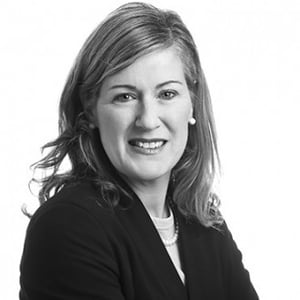
Senior Vice President, Cornerstone Government Affairs
Heather Molino joined Cornerstone in 2015 after two decades of Capitol Hill and communications experience, where she developed significant expertise in cyber, defense, space, intelligence and national security. Prior to joining Cornerstone, Ms. Molino was the minority staff director for the House Permanent Select Committee on Intelligence (HPSCI) under Ranking Member C.A. Dutch Ruppersberger (D-MD).
As staff director, Ms. Molino helped returned the House Intelligence Committee to the business of passing budget bills and other important legislation. Her achievements include helping pass into law five Intelligence Authorization Acts in four years, for Fiscal Year 2011 through 2015. Heather and her team helped create a coalition of business support to pass the most prominent cyber legislation in the House, the Cyber Intelligence Sharing and Protection Act (CISPA), as well as major intelligence reform legislation, the USA Freedom Act, all by strong bipartisan margins.
In her role, Ms. Molino was also responsible for advising Members of the Committee on policy, politics and communications to ensure U.S. intelligence professionals have the resources, capabilities and authorities needed to keep our country safe. Heather also organized and managed Democratic staff, handled the committee’s budget, oversaw press strategy and ensured proper and efficient oversight of our nation’s intelligence agencies. Before joining the committee, Heather served as deputy chief of staff and director of communications in Congressman Ruppersberger’s personal office.
Prior to Capitol Hill, Ms. Molino worked in broadcast journalism for over 10 years. She was a TV reporter and anchor in Washington, D.C., Virginia, Washington State and North Carolina. Ms. Molino holds a B.A. in Economics and Government from Cornell University. She is married to West Point graduate, Michael Molino. The couple has three small children.

Professor of Law, South Texas College of Law Houston
Josh Blackman is a national thought leader on constitutional law and the United States Supreme Court. Josh’s work was quoted during two presidential impeachment trials. He has testified before Congress and advises federal and state lawmakers. Josh regularly appears on TV, including NBC, CBS, ABC, Fox, and the BBC. Josh is also a frequent guest on NPR and other syndicated radio programs. He has published commentaries in the New York Times, Wall Street Journal, Washington Post, and leading national publications.
Since 2012, Josh has served as a professor at the South Texas College of Law Houston. He holds the Centennial Chair of Constitutional Law. Josh is an Adjunct Fellow at the Manhattan Institute. Josh has written more than seven dozen law review articles that have been cited more than a thousand times. Josh was selected as the Jurist of the Year by the Texas Journal of Law & Public Policy, received the inaugural Meese III Originalism Award, and was awarded the Inaugural Joseph Story Award. Josh was selected by Forbes Magazine for the “30 Under 30” in Law and Policy. Josh is the President of the Harlan Institute, and founded FantasySCOTUS, the Internet’s Premier Supreme Court Fantasy League. He blogs at the Volokh Conspiracyand posts@JoshMBlackman.

Professor of Law, Antonin Scalia Law School, George Mason University
ILYA SOMIN is Professor of Law at George Mason University and the B. Kenneth Simon Chair in Constitutional Studies at the Cato Institute. His research focuses on constitutional law, property law, democratic theory, federalism, and migration rights. He is the author of Free to Move: Foot Voting, Migration, and Political Freedom (Oxford University Press, revised and expanded edition, 2022), Democracy and Political Ignorance: Why Smaller Government is Smarter (Stanford University Press, revised and expanded second edition, 2016), and The Grasping Hand: Kelo v. City of New London and the Limits of Eminent Domain (University of Chicago Press, 2015, rev. paperback ed., 2016), coauthor of A Conspiracy Against Obamacare: The Volokh Conspiracy and the Health Care Case (Palgrave Macmillan, 2013), and co-editor of Eminent Domain: A Comparative Perspective (Cambridge University Press, 2017). Democracy and Political Ignorance has been translated into Italian and Japanese.
Somin’s work has appeared in numerous scholarly journals, including the Yale Law Journal, Stanford Law Review, Northwestern University Law Review, Georgetown Law Journal, Critical Review, and others. Somin has also published articles in a variety of popular press outlets, including the New York Times, Washington Post, Wall Street Journal, Los Angeles Times, CNN, NBC, The Atlantic, USA Today, Boston Globe, US News and World Report, South China Morning Post, National Law Journal and Reason. He has been quoted or interviewed by the New York Times, Washington Post, Wall Street Journal, Time, Newsweek, The Economist, the Christian Science Monitor, the Financial Times, The Guardian, the Associated Press, CBS, MSNBC, NPR, BBC, Reuters, the Canadian Broadcasting Corporation, the Australian Broadcasting Corporation, Radio Free Europe/Radio Liberty, Al Jazeera, and the Voice of America, among other media.
Somin’s writings have been cited in decisions by the United States Supreme Court, multiple state supreme courts and lower federal courts, and the Supreme Court of Israel. He is co-counsel for the plaintiffs in VOS Selections, Inc. v. Trump, a case challenging the constitutionality of President Trump’s “Liberation Day” tariffs. Somin has testified on the use of drones for targeted killing in the War on Terror before the US Senate Judiciary Subcommittee on the Constitution, Civil Rights, and Human Rights. In 2009, he testified on property rights issues at the United States Senate Judiciary Committee confirmation hearings for Supreme Court Justice Sonia Sotomayor. Somin writes regularly for the popular Volokh Conspiracy law and politics blog, now affiliated with Reason magazine (previously affiliated with the Washington Post from 2014 to 2017). From 2006 to 2013, he served as Co-Editor of the Supreme Court Economic Review, one of the country’s top-rated law and economics journals.
Somin has served as a visiting professor at the University of Pennsylvania Law School. He has also been a visiting professor or scholar at the Georgetown University Law Center, the University of Hamburg, Germany, the University of Torcuato Di Tella in Buenos Aires, Argentina, Uriel Reichman University in Israel, and Zhengzhou University in China. He is a University Affiliate of the Schar School of Policy and Government at George Mason University, and an affiliated faculty member of the George Mason University Institute for Immigration Research. Before joining the faculty at George Mason, Somin was the John M. Olin Fellow in Law at Northwestern University Law School in 2002-2003. In 2001-2002, he clerked for the Hon. Judge Jerry E. Smith of the U.S. Court of Appeals for the Fifth Circuit. Professor Somin earned his B.A., Summa Cum Laude, at Amherst College, M.A. in Political Science from Harvard University, and J.D. from Yale Law School.
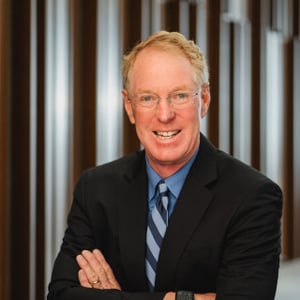
Ronald N. Boyce Presidential Professor of Criminal Law and University Distinguished Professor of Law, The University of Utah College of Law
Paul G. Cassell is an internationally recognized legal scholar on criminal and civil justice, crime victims' rights, constitutional law, evidence, judicial process, and other legal issues. Cassell received a B.A. (1981) and a J.D. (1984) from Stanford University, where he graduated Order of the Coif and was President of the Stanford Law Review. He clerked for then-Judge Antonin Scalia when Scalia was on the U.S. Court of Appeals for the D.C. Circuit (1984-85) and for Chief Justice Warren Burger of the United States Supreme Court (1985-86). Cassell then served as an Associate Deputy Attorney General with the U.S. Justice Department (1986-88) and as an Assistant U.S. Attorney for the Eastern District of Virginia (1988 to 1991). Cassell joined the faculty at the College of Law in 1992, where he taught full-time until he was sworn in as a U.S. District Court Judge for the District of Utah in July 2002. In November 2007, he resigned his judgeship to return full-time to the College of Law to teach, write, and litigate concerning issues relating to crime victims' rights and criminal and civil justice reform. Professor Cassell has also published numerous law review articles in journals such as the Stanford Law Review, the Michigan Law Review, the Harvard Journal of Law and Public Policy, and the Journal of Criminal Law and Criminology. He is a co-author of the nation's only law school textbook on crime victims' rights, Victims in Criminal Procedure (various editions, most recently in its fifth edition published in 2025). Professor Cassell has argued pro bono cases relating to criminal procedure and crime victims' rights before the United States Supreme Court, the 2nd, 4th, 5th, 6th, 7th, 8th, 9th, 10th, 11th, and D.C. Circuits (including the 5th and 11th Circuits en banc), several U.S. District Courts, the Utah Supreme Court, and the Arizona Supreme Court. In 2020, Cassell received the Ronald Wilson Reagan Public Policy Award - National Crime Victims' Service Award from the U.S. Department of Justice. Cassell is a member of the American Law Institute, a fellow of the American Bar Foundation, and an inaugural member of the Council on Criminal Justice. He is also an occasional blogger at The Volokh Conspiracy.
Justice Thurgood Marshall Distinguished Professor of Law, University of Virginia School of Law
Brandon L. Garrett joined the law faculty in 2005. His research and teaching interests include criminal procedure, wrongful convictions, habeas corpus, corporate crime, scientific evidence, civil rights, civil procedure and constitutional law. Garrett’s recent research includes studies of DNA exonerations and organizational prosecutions. The research web pages below provide data related to those studies.
Garrett’s recent book examining corporate prosecutions, titled “Too Big to Jail: How Prosecutors Compromise with Corporations,” was published by Harvard University Press in Fall 2014. Translations are forthcoming in Spain and Taiwan. A new book titled “End of its Rope: How Killing the Death Penalty Can Revive Criminal Justice,” examining the implications of the decline of the death penalty, is forthcoming in Fall 2017 from Harvard University Press. In 2011, Harvard University Press published Garrett’s book, "Convicting the Innocent: Where Criminal Prosecutions Go Wrong," examining the cases of the first 250 people to be exonerated by DNA testing. That book was the subject of a symposium issue in New England Law Review, and received an A.B.A. Silver Gavel Award, Honorable Mention, and a Constitutional Commentary Award. It was translated for editions in China, Japan and Taiwan. In 2013, Foundation Press published Garrett’s casebook, “Federal Habeas Corpus: Executive Detention and Post-Conviction Litigation,” co-authored with Lee Kovarsky. Garrett’s work has been widely cited by courts, including the U.S. Supreme Court, lower federal courts, state supreme courts, and courts in other countries, such as the Supreme Courts of Canada and Israel. Garrett also frequently speaks about criminal justice matters before legislative and policymaking bodies, groups of practicing lawyers, law enforcement, and to local and national media.
Garrett attended Columbia Law School, where he was an articles editor of the Columbia Law Review and a Kent Scholar. After graduating, he clerked for the Hon. Pierre N. Leval of the U.S. Court of Appeals for the Second Circuit. He then worked as an associate at Neufeld, Scheck & Brustin LLP in New York City.

Amelia D. Lewis Professor of Constitutional and Criminal Law, Sandra Day O'Connor College of Law at Arizona State University
Erik Luna is the Amelia D. Lewis Professor of Constitutional and Criminal Law in the Sandra Day O'Connor College of Law at Arizona State University.
Professor Luna teaches and writes primarily in the areas of criminal law and criminal procedure. Luna has received two Fulbright awards. In 2000, he served as the senior Fulbright Scholar to New Zealand at Victoria University Law School (Wellington, NZ). In 2016-17, he was the Fulbright Distinguished Chair at the University of Birmingham (Birmingham, UK). Luna has also been a visiting scholar with the Max Planck Institute for Foreign and International Criminal Law (Freiburg, DE), a visiting professor with the Cuban Society of Penal Sciences (Havana, CU), a visiting professional in the Office of the Prosecutor of the International Criminal Court (The Hague, NL), and a research fellow with the Alexander von Humboldt Foundation (Bonn, DE). Prior to coming to ASU, Luna was the Sydney & Frances Lewis Professor of Law at Washington and Lee University, and before that, he was the Hugh B. Brown Chair in Law at the University of Utah. Luna is a member of the American Law Institute and an adjunct scholar with the Cato Institute. He graduated summa cum laude from the University of Southern California and received his J.D. with honors from Stanford Law School. Upon graduation, Luna was a prosecutor in the San Diego District Attorney’s Office and a fellow and lecturer at the University of Chicago Law School.
Partner, Co-chair of the Litigation & Trial Practice Group, Alston & Bird LLP
Adam Biegel is co-chair of Alston & Bird’s Litigation & Trial Practice Group and former co-chair of its Antitrust Team. He has substantial experience representing clients on antitrust counseling and litigation matters, including those involving government and internal investigations, mergers and joint ventures, pricing and distribution, compliance counseling and training, pre-merger reviews under the Hart-Scott-Rodino (HSR) Act, and multidistrict litigation. He regularly represents clients before the U.S. Department of Justice (DOJ) Antitrust Division, Federal Trade Commission (FTC) and state attorneys general, and in federal courts.
Adam is recognized for his antitrust experience by Chambers USA and selected to The Best Lawyers in America®, including his recognition as “Lawyer of the Year” for Antitrust Litigation in Washington, D.C., in 2022. He is a longtime member of the American Bar Association Antitrust Law Section’s leadership, currently serving as co-chair of its In-House Counsel Task Force and previously having served on its board, and chaired its Corporate Counseling Committee, Long Range Planning Committee, and Spring Meeting conference. He also serves on the board of the Federalist Society’s antitrust practice group.
Adam served as a law clerk to the Hon. Frank M. Hull, U.S. Court of Appeals for the Eleventh Circuit. Before attending law school, he worked as a newspaper reporter in Arkansas and on the legislative staff of U.S. Senator Orrin Hatch.
Deputy Director of the Bureau of Competition, Federal Trade Commission
Ian Conner serves as the Deputy Director of the Bureau of Competition at the Federal Trade Commission. He previously was a partner in the Antitrust & Competition practice at Kirkland & Ellis LLP in Washington, DC. Prior to entering private practice, Mr. Conner was a Trial Attorney in the Transportation, Energy and Agriculture Section of the Antitrust Division of the U.S. Department of Justice.
Senior Antitrust Counsel,, Tennessee Attorney General’s Office
Vic is Senior Antitrust Counsel in the Tennessee Attorney General’s Office and serves as Tennessee’s chief counsel for all state and multistate antitrust investigations and litigation. He also enforces Tennessee’s Nonprofit Act with a special focus on hospital transactions and conducts investigations on behalf of the Tennessee Ethics Commission. He is admitted to practice before all state courts in Tennessee, the U. S. Supreme Court, the United States Court of Appeals for the Sixth Circuit and United States District Courts for the Eastern, Middle and Western Districts of Tennessee. Vic was named Chair of the NAAG Antitrust Task Force in 2015 and has served as a member of the Long Range Planning Committee of the Antitrust Law Section of the American Bar Association and as a Co-Chair of the State Enforcement Committee. He has written and spoken on numerous antitrust and nonprofit matters and is currently on the Editorial Board of the ABA publication Antitrust Law Developments Updates. He has also planned or participated as a panelist on several ABA teleconferences programs and Spring Meeting sessions. Vic received his J.D. from Rutgers University School of Law and has a B.A. in Economics from Vanderbilt University
Senior Associate, Baker Botts L.L.P., Washington, DC
Jeffrey Oliver is an Associate in the firm’s Antitrust and Competition Practice. Mr. Oliver advises clients on all aspects of antitrust law, with an emphasis on U.S. and international merger reviews. Mr. Oliver has obtained antitrust clearance for transactions in a wide variety of industries, with significant experience in oil and gas, pharmaceuticals, chemicals and trade associations.
Prior to joining Baker Botts, Mr. Oliver was a Staff Attorney at the Federal Trade Commission, Bureau of Competition. There, Mr. Oliver’s practice focused on merger and conduct investigations in the oil and gas industry. Mr. Oliver has experience in all phases of the FTC’s investigation process, from reviewing HSR filings to challenging mergers in litigation.
Senior Deputy Attorney General, Antitrust Section, Pennsylvania Attorney General’s Office
Jennifer A. Thomson serves as a Senior Deputy Attorney General in the Antitrust Section of the Pennsylvania Office of Attorney General, which she joined in March of 2003. She practices Antitrust Law, specializing in Intellectual Property, Healthcare and Airline matters, along with a wide array of other industries. Ms. Thomson has given presentations with the American Bar Association, the National Association of Attorneys General, the United States Department of Justice, the American Antitrust Institute and the United States Patent and Trademark Office. She authored several papers on topics such as the proposed merger of Highmark and Independence Blue Cross, State Action of the states' objection to the Google Book Search Settlement.
Ms. Thomson earned her J.D. in 2002 from the University of Pittsburgh School of Law, where she was an inaugural Fellow for the Samuelson/Glusko Fellowship in IP/Technology Law. As part of this fellowship, she prepared a paper on antitrust in the motion picture industry, which received from the University of Pittsburgh faculty the Thomas M. Cooley, II Legal Writing Award for Most Distinguished Paper. She is admitted to the bars of the Commonwealth of Pennsylvania, the United States District Courts for the Western, Middle and Eastern Districts of Pennsylvania, the Untied States District Court for the District of Columbia and the United States Court of Appeals for the Third Circuit. She is a member of the American Bar Association Antitrust Section and the State Enforcement Committee. She has been designated by the Chief Attorney General to sit on their behalf on the State Board of Cosmetology from 2003-2017, the Real Estate Commission Since Fall, 2017, and was recently appointed to serve as part of the Advisory Committee of the Review of the State Professional and Occupational Licensure Board Requirements and Processes pursuant to Pennsylvania Governor Tom Wolf's Executive Order 2017-03.
Partner, Eversheds Sutherland LLP
Michael Bahar, a partner in the Washington DC office of Eversheds Sutherland (US) LLP, is the US leader of the global cybersecurity and privacy practice and a member of the firm’s Litigation practice. As former Deputy Legal Advisor to the National Security Council at the White House, former Minority Staff Director and General Counsel for the US House Intelligence Committee, and as a former Active Duty Navy JAG, Mr. Bahar provides advice on cybersecurity and privacy, international law and national security law. While with the House Intelligence Committee, he was lead drafter and negotiator for the Cybersecurity Act of 2015, the USA Freedom Act (which reformed certain key surveillance authorities) and four annual Intelligence Authorization Acts. More recently, he was a leader of the Committee’s investigation into the Russian hacking of the 2016 election. Michael offers clients a wealth of knowledge about cybersecurity, information sharing, privacy, crisis management and establishing cybersecurity programs that are not only in accordance with evolving laws and regulations but that also find business opportunities.
His in-depth knowledge and deep understanding of these topics—particularly in assessing the appropriate levels of cybersecurity investment based on litigation and regulatory risk analysis—allows Mr. Bahar to effectively advise clients and has made him a sought-after speaker at industry and corporate conferences across the country.
Mr. Bahar’s previous experience includes serving nearly 10 years on Active Duty with the Navy's Judge Advocate General (JAG) Corps, where he litigated felony court-martials, dealt with cutting-edge legal issues involving the laws of war, led the capture and investigation of the US Navy’s first set of captured pirates in generations, led a team of lawyers deployed to Afghanistan in support of a Special Operations Task Force, and completed two Pentagon tours. He has received two Defense Meritorious Service Medals, six Navy Commendation Medals and one Navy Achievement Medal, in addition to earning his Navy Parachutist Wings.
Mr. Bahar is admitted to the New York State Bar. He has submitted his application to The District of Columbia Bar. His work is supervised by District of Columbia Bar members.
Senior Vice President, HSBC Bank USA, N.A.’s Office of Public Affairs
Michael Geffroy is Senior Vice President in HSBC Bank USA, N.A.’s Office of Public Affairs, where he is responsible for public policy and government affairs at the federal level.
Prior to joining HSBC, Mr. Geffroy had extensive experience in the U.S Congress, and in the Executive Branch. Most recently, he was the General Counsel for the U.S. Senate Select Committee on Intelligence (2014-2017), and he previously served in the U.S. House of Representatives as the Deputy Chief of Staff and Chief Counsel to the Committee on Homeland Security (2012-2014).
Mr. Geffroy’s tenure in the Executive branch includes his time as the Assistant Director for Enforcement at the Department of the Treasury’s Office of Foreign Assets Control, Counselor to the Assistant Attorney General of the Criminal Division, Department of Justice, and as an Assistant U.S. Attorney in the District of Columbia.
Mr. Geffroy is a Lieutenant Colonel in the U.S. Marine Corps Reserve (ret). His military service includes tours of duty in Afghanistan and Iraq.
Mr. Geffroy is admitted to practice law in the District of Columbia, Maryland, Rhode Island, and Massachusetts. He is a graduate of Brown University and the Columbus School of Law at the Catholic University of America.
Executive Vice President, Chief Legal Officer, Gates Corporation
Matthew R. A. Heiman joined the Company in May 2026 and has served as the Company’s Chief Legal Officer and Corporate Secretary since June 2026. As Chief Legal Officer, Mr. Heiman is responsible for all legal functions for Gates, including securities and corporate governance, M&A, litigation, commercial, regulatory, compliance, patents and trademarks, real estate, employment and labor, sustainability and environmental matters. Prior to joining Gates, Mr. Heiman held senior legal leadership roles at Waystar, where he served as Chief Legal & Administrative Officer from 2023 to 2025 and as General Counsel and Corporate Secretary from 2020 to 2023. Prior to that, he was with Johnson Controls, where he served as Vice President, Corporate Secretary, and Associate General Counsel. Mr. Heiman has been a Senior Fellow for the National Security Institute at George Mason University’s Antonin Scalia School of Law since 2018.
Senior Vice President, Cornerstone Government Affairs
Heather Molino joined Cornerstone in 2015 after two decades of Capitol Hill and communications experience, where she developed significant expertise in cyber, defense, space, intelligence and national security. Prior to joining Cornerstone, Ms. Molino was the minority staff director for the House Permanent Select Committee on Intelligence (HPSCI) under Ranking Member C.A. Dutch Ruppersberger (D-MD).
As staff director, Ms. Molino helped returned the House Intelligence Committee to the business of passing budget bills and other important legislation. Her achievements include helping pass into law five Intelligence Authorization Acts in four years, for Fiscal Year 2011 through 2015. Heather and her team helped create a coalition of business support to pass the most prominent cyber legislation in the House, the Cyber Intelligence Sharing and Protection Act (CISPA), as well as major intelligence reform legislation, the USA Freedom Act, all by strong bipartisan margins.
In her role, Ms. Molino was also responsible for advising Members of the Committee on policy, politics and communications to ensure U.S. intelligence professionals have the resources, capabilities and authorities needed to keep our country safe. Heather also organized and managed Democratic staff, handled the committee’s budget, oversaw press strategy and ensured proper and efficient oversight of our nation’s intelligence agencies. Before joining the committee, Heather served as deputy chief of staff and director of communications in Congressman Ruppersberger’s personal office.
Prior to Capitol Hill, Ms. Molino worked in broadcast journalism for over 10 years. She was a TV reporter and anchor in Washington, D.C., Virginia, Washington State and North Carolina. Ms. Molino holds a B.A. in Economics and Government from Cornell University. She is married to West Point graduate, Michael Molino. The couple has three small children.
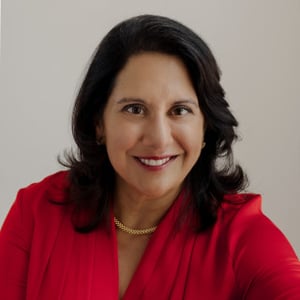
Judge, United States Court of Appeals, District of Columbia Circuit
Judge Rao was appointed to the United States Court of Appeals for the District of Columbia Circuit in March 2019. She graduated from Yale College in 1995 and the University of Chicago Law School in 1999. Following graduation, she served as a law clerk to Judge J. Harvie Wilkinson III of the U.S. Court of Appeals for the Fourth Circuit and, in the 2001 October Term, as law clerk to Justice Clarence Thomas of the U.S. Supreme Court. Between her clerkships, Judge Rao served as counsel for nominations and constitutional law to the U.S. Senate Committee on the Judiciary. In 2002, she joined the international arbitration group of Clifford Chance LLP in London, England. From 2005-2006, she served as Special Assistant and Associate White House Counsel to President George W. Bush. From 2006 to 2017, Judge Rao was a professor at the Antonin Scalia Law School at George Mason University, where she taught constitutional law, legislation and statutory interpretation, and the history and foundations of the administrative state. In 2014, she founded the Center for the Study of the Administrative State, a non-profit Center that promotes academic scholarship and public policy debates about administrative law. In July 2017, she was appointed to serve as the Administrator of the Office of Information and Regulatory Affairs in the Office of Management Budget. She served in this position until her appointment to the D.C. Circuit.

Executive Vice President, The Federalist Society
Dean Reuter is Executive Vice President at the Federalist Society for Law and Public Policy Studies. He has served in two federal government agency Offices of the Inspector General, as Counsel to the Inspector General and Deputy Inspector General, responsible for policing the use of federal funds granted and contracted through those agencies. As such, he helped conduct and oversee criminal investigations across the country. He is the principal author of the non-fiction book, The Hidden Nazi: The Untold Story of America's Deal with the Devil, and editor of Liberty’s Nemesis: The Unchecked Expansion of the State and Confronting Terror: 9/11 and the Future of American National Security. He was appointed by the President and served as Vice-Chairman of the Board of Directors of the Corporation for National and Community Service, and recently served as an appointee on the U.S. Commission on Presidential Scholars. He is a graduate of Hood College (BA with Honors) and the University of Maryland School of Law.
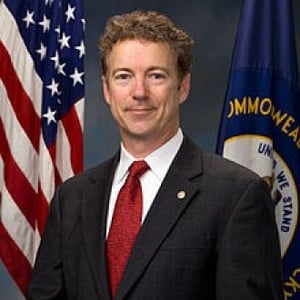
United States Senator, Kentucky
U.S. Senator Rand Paul, M.D. was elected to represent Kentucky in the United States Senate in 2010. He serves on the Senate Foreign Relations Committee, the Health, Education, Labor and Pensions Committee, the Homeland Security and Government Affairs Committee, and the Small Business and Entrepreneurship Committee.
Dr. Paul is the third of five children born to Carol and Ron Paul. He grew up in Lake Jackson, Tex., and attended Baylor University. He graduated from Duke Medical School in 1988. Dr. Paul completed a general surgery internship at Georgia Baptist Medical Center in Atlanta, Ga., and completed his residency in ophthalmology at Duke University Medical Center. Upon completion of his training in 1993, Dr. Paul and Kelley moved to Bowling Green to start their family and begin his ophthalmology practice. Dr. Paul has been married for 25 years to Kelley Ashby Paul of Russellville, Ky., and they have three sons together: William, 22; Duncan, 19; and Robert, 16.

Trial Attorney, Department of Justice - Criminal Division
Professor of Law, South Texas College of Law Houston
Josh Blackman is a national thought leader on constitutional law and the United States Supreme Court. Josh’s work was quoted during two presidential impeachment trials. He has testified before Congress and advises federal and state lawmakers. Josh regularly appears on TV, including NBC, CBS, ABC, Fox, and the BBC. Josh is also a frequent guest on NPR and other syndicated radio programs. He has published commentaries in the New York Times, Wall Street Journal, Washington Post, and leading national publications.
Since 2012, Josh has served as a professor at the South Texas College of Law Houston. He holds the Centennial Chair of Constitutional Law. Josh is an Adjunct Fellow at the Manhattan Institute. Josh has written more than seven dozen law review articles that have been cited more than a thousand times. Josh was selected as the Jurist of the Year by the Texas Journal of Law & Public Policy, received the inaugural Meese III Originalism Award, and was awarded the Inaugural Joseph Story Award. Josh was selected by Forbes Magazine for the “30 Under 30” in Law and Policy. Josh is the President of the Harlan Institute, and founded FantasySCOTUS, the Internet’s Premier Supreme Court Fantasy League. He blogs at the Volokh Conspiracyand posts@JoshMBlackman.
Professor of Law, Antonin Scalia Law School, George Mason University
ILYA SOMIN is Professor of Law at George Mason University and the B. Kenneth Simon Chair in Constitutional Studies at the Cato Institute. His research focuses on constitutional law, property law, democratic theory, federalism, and migration rights. He is the author of Free to Move: Foot Voting, Migration, and Political Freedom (Oxford University Press, revised and expanded edition, 2022), Democracy and Political Ignorance: Why Smaller Government is Smarter (Stanford University Press, revised and expanded second edition, 2016), and The Grasping Hand: Kelo v. City of New London and the Limits of Eminent Domain (University of Chicago Press, 2015, rev. paperback ed., 2016), coauthor of A Conspiracy Against Obamacare: The Volokh Conspiracy and the Health Care Case (Palgrave Macmillan, 2013), and co-editor of Eminent Domain: A Comparative Perspective (Cambridge University Press, 2017). Democracy and Political Ignorance has been translated into Italian and Japanese.
Somin’s work has appeared in numerous scholarly journals, including the Yale Law Journal, Stanford Law Review, Northwestern University Law Review, Georgetown Law Journal, Critical Review, and others. Somin has also published articles in a variety of popular press outlets, including the New York Times, Washington Post, Wall Street Journal, Los Angeles Times, CNN, NBC, The Atlantic, USA Today, Boston Globe, US News and World Report, South China Morning Post, National Law Journal and Reason. He has been quoted or interviewed by the New York Times, Washington Post, Wall Street Journal, Time, Newsweek, The Economist, the Christian Science Monitor, the Financial Times, The Guardian, the Associated Press, CBS, MSNBC, NPR, BBC, Reuters, the Canadian Broadcasting Corporation, the Australian Broadcasting Corporation, Radio Free Europe/Radio Liberty, Al Jazeera, and the Voice of America, among other media.
Somin’s writings have been cited in decisions by the United States Supreme Court, multiple state supreme courts and lower federal courts, and the Supreme Court of Israel. He is co-counsel for the plaintiffs in VOS Selections, Inc. v. Trump, a case challenging the constitutionality of President Trump’s “Liberation Day” tariffs. Somin has testified on the use of drones for targeted killing in the War on Terror before the US Senate Judiciary Subcommittee on the Constitution, Civil Rights, and Human Rights. In 2009, he testified on property rights issues at the United States Senate Judiciary Committee confirmation hearings for Supreme Court Justice Sonia Sotomayor. Somin writes regularly for the popular Volokh Conspiracy law and politics blog, now affiliated with Reason magazine (previously affiliated with the Washington Post from 2014 to 2017). From 2006 to 2013, he served as Co-Editor of the Supreme Court Economic Review, one of the country’s top-rated law and economics journals.
Somin has served as a visiting professor at the University of Pennsylvania Law School. He has also been a visiting professor or scholar at the Georgetown University Law Center, the University of Hamburg, Germany, the University of Torcuato Di Tella in Buenos Aires, Argentina, Uriel Reichman University in Israel, and Zhengzhou University in China. He is a University Affiliate of the Schar School of Policy and Government at George Mason University, and an affiliated faculty member of the George Mason University Institute for Immigration Research. Before joining the faculty at George Mason, Somin was the John M. Olin Fellow in Law at Northwestern University Law School in 2002-2003. In 2001-2002, he clerked for the Hon. Judge Jerry E. Smith of the U.S. Court of Appeals for the Fifth Circuit. Professor Somin earned his B.A., Summa Cum Laude, at Amherst College, M.A. in Political Science from Harvard University, and J.D. from Yale Law School.

Antitrust Enforcement by State Attorney Generals
Adam Biegel, Ian Conner, Victor Domen, Jeffrey S. Oliver, Jennifer A. Thomson
State Attorneys General often investigate antitrust violations – ranging from price fixing to anticompetitive mergers...
Upper Skagit Indian Tribe v. Lundgren
Thomas F. Gede
On March 21, 2018, the Supreme Court heard argument in Upper Skagit Indian Tribe v....
Criminal Justice Reform Discussion
TeleforumThe Role of Congressional Intelligence Committees
Michael Geffroy, Michael Bahar, Matthew R. A. Heiman, Heather Molino
Former Minority Staff Director and General Counsel for the House Permanent Select Committee on Intelligence...
Antitrust Enforcement by State Attorney Generals
TeleforumPreview: Trump v. Hawaii
Josh Blackman, Ilya Somin
On April 25, the Supreme Court will hear oral argument in Trump v. Hawaii, the...
The Role of Congressional Intelligence Committees
International & National Security Law Practice Group and Article I Teleforum
TeleforumOpening Address by Neomi Rao
Sixth Annual Executive Branch Review Conference
Washington, DCGeorgetown Law Federalist Society's Lifetime Service Award
Georgetown Student Chapter
Washington, DCPreview: Trump v. Hawaii
International & National Security Law Practice Group Teleforum
Teleforum