
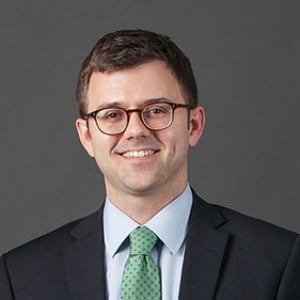
Partner, Consovoy McCarthy Park PLLC
Mr. Connolly represents clients in discovery, motions practice, trials, and appeals in state and federal courts across the country. He has litigated in a diverse range of subject areas, including civil rights litigation, challenges to administrative actions, contractual and employment disputes, and election law. Mr. Connolly has particular expertise in litigation involving the Federal Arbitration Act, the Voting Rights Act, the Communications Act, the Civil Rights Act, and the Freedom of Information Act. Mr. Connolly recently argued in the U.S. Court of Appeals for the D.C. Circuit on behalf of a trade industry and served on the trial team in a high-profile, three-week trial in the U.S. District Court for the District of Massachusetts.
Mr. Connolly is a former law clerk to Judge Jerome A. Holmes of the United States Court of Appeals for the Tenth Circuit. Mr. Connolly is also the director of the Free Speech Clinic at the Antonin Scalia Law School at George Mason University.
Mr. Connolly earned his B.A. from the University of Kansas, where he graduated with distinction and his J.D. from New York University School of Law. Mr. Connolly is a member of the Virginia and District of Columbia bars.
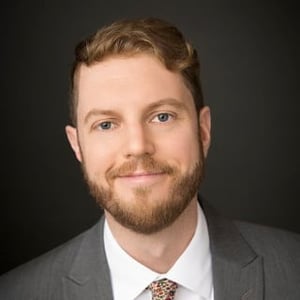
Legal Director, Foundation for Individual Rights and Expression
Will began defending student and faculty rights for FIRE in 2006 after graduating from New York University School of Law, where he served as an associate executive editor for the New York University Law Review. Will has appeared on national cable television and radio on behalf of FIRE and has spoken to students, faculty, administrators, and attorneys at events across the country. Will’s writing has been published by The New York Times, the Wall Street Journal, The Washington Post, the Chronicle of Higher Education, Jurist, Inside Higher Ed, Daily Journal, the Charleston Law Review, and many other outlets. Will edited the second edition of FIRE’s Guide to Due Process and Campus Justice, co-edited the second edition of FIRE’s Guide to Free Speech on Campus, and has coauthored amicus curiae briefs submitted to a number of courts, including the Supreme Court of the United States and the United States Courts of Appeals for the Third, Ninth, and Eleventh Circuits. Will has taught FIRE’s Continuing Legal Education programs in New York, Pennsylvania, and online. A member of the New York State Bar and the First Amendment Lawyers Association, Will serves as Co-Chair of the Education Subcommittee of the American Bar Association’s Section of Administrative Law and Regulatory Practice.
Will graduated magna cum laude from New York University’s Gallatin School of Individualized Study in 2003. A proud native of Buffalo, New York, Will now lives in New Jersey with his wife and two children.
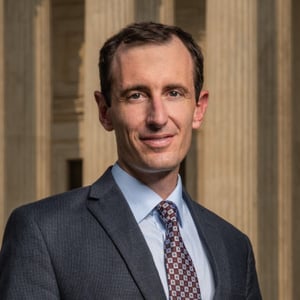
Vice President & Senior Counsel, Becket
Luke Goodrich is the author of Free to Believe: The Battle over Religious Liberty in America and vice president and senior counsel at the Becket Fund for Religious Liberty.
While at Becket, Luke has argued and won precedent-setting cases in the Third, Fifth, Seventh, Ninth, and Eleventh Circuits, and has helped Becket win four major Supreme Court cases in the last seven years: including victories for the Little Sisters of the Poor and Hobby Lobby against the contraception mandate, a victory for a Muslim prisoner under the Religious Land Use and Institutionalized Persons Act, and a unanimous victory in the Supreme Court’s first decision ever on the ministerial exception, which The Wall Street Journal called one of “the most important religious liberty cases in a half century.”
He frequently discusses religious freedom on networks such as CNN, Fox News, ABC, and NPR, and in publications like the Wall Street Journal, USA Today, and New York Times magazine. He also serves as an adjunct professor at the University of Utah S.J. Quinney College of Law, where he teaches constitutional law.
Before joining Becket, he clerked for Judge Michael W. McConnell on the U.S. Court of Appeals for the Tenth Circuit and graduated from the University of Chicago Law School with high honors as a member of the Law Review and the Order of the Coif.
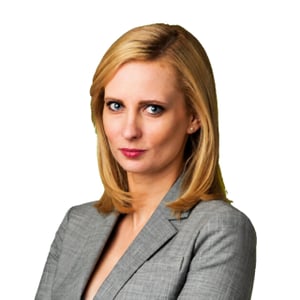
Executive Director, Committee for Justice
Ashley Baker is Executive Director of the Committee for Justice and founder of the Alliance on Antitrust coalition. Her work focuses on antitrust law, technology regulation, administrative-agency authority, the Supreme Court, and judicial nominations. She closely follows the Federal Trade Commission and the Department of Justice’s Antitrust Division, with particular attention to merger review, agency procedure, and the effects of regulation on American innovation and competitiveness. She is also founder of the Alliance on Antitrust Coalition.
Ashley has testified before the United States Senate on antitrust law. Her writing has appeared in Fox News, USA Today, The Boston Globe, The Hill, RealClearPolitics, The American Spectator, and other national publications. She also provides policy analysis through congressional testimony and correspondence, regulatory comments, and public commentary.
Ashley serves on the Federalist Society’s Regulatory Transparency Project and Antitrust and Consumer Protection Practice Group Executive Committee. She is also active in the Republican National Lawyers Association and has spoken on the Supreme Court and the federal judiciary. An authority on the judicial-confirmation process, she worked closely on the successful confirmation efforts for Justices Neil Gorsuch and Brett Kavanaugh, as well as multiple federal appellate judges.
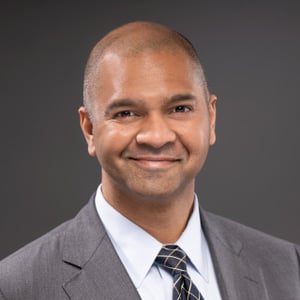
Senior Fellow, Stand Together Trust
Vikrant Reddy is a senior fellow at Stand Together Trust, specializing in the area of criminal justice reform. Reddy previously served as a senior policy analyst at the Texas Public Policy Foundation (TPPF), where he managed the launch of TPPF’s national Right on Crime initiative in 2010. He has worked as a research assistant at the Cato Institute, as a judicial clerk to the Hon. Gina M. Benavides in Texas, and as an attorney in private practice. He is a member of the State Bar of Texas, and he serves on the Executive Committee of the Criminal Law Practice Group of the Federalist Society. He is also an appointee to the U.S. Commission on Civil Rights Texas State Advisory Committee.
Reddy’s research and scholarly opinions have appeared in a range of national media outlets, including USA Today, National Review, The Federalist, and others.
Reddy earned his law degree from the Southern Methodist University School of Law. He received his undergraduate degree from the University of Texas at Austin.
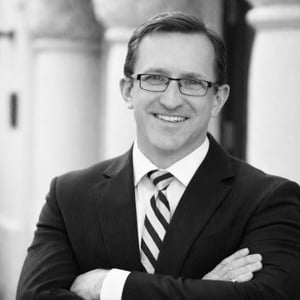
VP and Senior Counsel, Becket Fund
Eric Baxter joined The Becket Fund as Senior Counsel in 2011. Since then he has represented religious organizations and individuals in a wide array of religious liberty disputes at both the trial and appellate level. Recent victories including a Ninth Circuit ruling upholding the “Big Mountain Jesus” statue that has stood on Forest Service land near Kalispell, Montana, for more than sixty years, and a rare Pentagon decision allowing a Sikh soldier to maintain his full beard and turban while serving in the Army. Mr. Baxter has extensive experience fighting efforts under state Blaine amendments to exclude religious organizations and individuals from participating on equal terms in the public square. He also regularly advises religious institutions of higher education in defending their religious missions against government encroachment.
Mr. Baxter has frequently appeared in the national media to discuss religious liberty issues, including appearances on Fox News (Kelly File, Fox & Friends), WSJ Live, CBS New York, Christian Broadcasting Network, Newsmax TV, and Al Jazeera. He has also written op-eds and been quoted in many major newspapers and other print media, including the New York Times, Washington Post, LA Times, Fox News, New York Post, Washington Times, and New Boston Post.
Before joining the Becket Fund, Mr. Baxter was a partner at Arent Fox LLP in Washington, DC, where he maintained a commercial complex litigation practice representing clients primarily in employment, intellectual property, and biotechnology disputes. He also served for many years as outside counsel to a DC church and its affiliated school. In 2007, he was awarded the Albert E. Arent Pro Bono Award for his work representing several parents adopting a total of seven children from foster care.
From 2000 to 2002, Mr. Baxter clerked for the Honorable Robert H. Cleland in the United States District Court for the Eastern District of Michigan (Detroit). Mr. Baxter received a B.A. in Russian Literature and Linguistics from Brigham Young University and graduated magna cum laude from the J. Reuben Clark Law School at BYU, where he served as Executive Editor of the Law Review and was elected to the Order of the Coif. Eric speaks Russian and some Spanish. He and his wife have seven children and an amateur family bluegrass band.
Mr. Baxter has been featured on the Kelly File, Al Jazeera, WSJ Video, and NewsmaxTV.
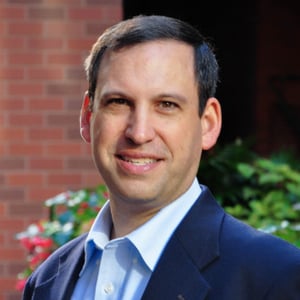
President, Becket Fund for Religious Liberty; Professor of Law and Co-Director of the Center for Religious Liberty, Catholic University; Visiting Professor, Harvard Law School
Mark joined the Becket team in 2011 and splits his time as Associate Professor at The Catholic University of America, Columbus School of Law, and as Visiting Professor at Harvard Law School. Mark teaches constitutional law, religious liberty, torts, and evidence. He has been voted Teacher of the Year three years in a row by the Law School’s Student Bar Association.
Mark has broad experience litigating First Amendment religious exercise and free speech cases. He has represented the winning parties in a variety of Supreme Court First Amendment cases including Hobby Lobby, Little Sisters, Wheaton College, and Holt. In January 2014, Mark argued before the Supreme Court in McCullen v. Coakley, a First Amendment challenge to a Massachusetts speech restriction outside of abortion clinics. The Justices ruled in favor of his clients 9-0. Mark also led a successful eight-year litigation battle against Governor Blagojevich’s effort to force religious pharmacists to distribute the morning-after and week-after pills.
Mark’s academic writing focuses on the First and Fourteenth Amendments, and has appeared in a variety of prestigious journals, including the Harvard Law Review.
Mark is a widely sought after speaker on constitutional issues, particularly concerning abortion and the First Amendment. Professor Rienzi has been invited to discuss these issues at Harvard Law School, Columbia University Law School, Georgetown University Law Center, Boston College Law School, Notre Dame Law School, the National Press Club, and the Capitol. He has been quoted on constitutional law issues on NPR, in the Washington Times, The New York Daily News, and the Chicago Sun-Times. Mark has also been featured on the Kelly File, Fox News Sunday, Your World with Neil Cavuto, Geraldo at Large, CNN Tonight, CNN Live, Andrea Mitchell Reports, and Wall Street Journal Live.
Prior to joining Becket, Mark served as counsel for the litigation department and the intellectual property litigation practice group of WilmerHale LLP. His practice focused on complex civil and appellate litigation with a particular emphasis on intellectual property and First Amendment issues. Prior to joining WilmerHale, he served as law clerk to the Hon. Stephen F. Williams, senior circuit judge for the U.S. Court of Appeals for the D.C. Circuit. Prior to that, Mark was an editor of the Harvard Law Review, and earned his J.D. from Harvard Law School and B.A. from Princeton University, both with honors.
Vice President and Director, Center for Monetary and Financial Alternatives, Cato Institute
Norbert Michel is vice president and director of the Cato Institute’s Center for Monetary and Financial Alternatives, where he specializes on issues pertaining to financial markets and monetary policy. Michel was most recently the Director for Data Analysis at the Heritage Foundation where he edited, and contributed chapters, to two books: The Case Against Dodd–Frank: How the “Consumer Protection” Law Endangers Americans, and Prosperity Unleashed: Smarter Financial Regulation
Michel was previously a tenured professor at Nicholls State University’s College of Business, teaching finance, economics and statistics. Before that, he worked at Heritage as a tax policy analyst in the think tank’s Center for Data Analysis from 2002 to 2005. He previously was with the global energy company Entergy, where he worked on models to help predict bankruptcies of commercial clients.
Michel holds a doctoral degree in financial economics from the University of New Orleans. He received his bachelor of business administration degree in finance and economics from Loyola University. He currently resides in Virginia.
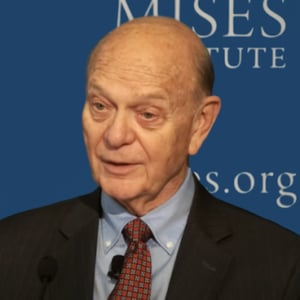
Senior Fellow, Mises Institute
Alex J. Pollock is a Senior Fellow with the Mises Institute, providing thought and policy leadership on financial issues and the study of financial systems. His work includes cycles of booms and busts, financial crises with their political responses, housing finance, government-sponsored enterprises, risk and uncertainty, central banking, banking and financial regulation, corporate governance, retirement finance, student loans, and the politics of finance.
He previously served as the Principal Deputy Director of the Office of Financial Research in the U.S. Treasury Department 2019-2021. He was a Distinguished Senior Fellow with the R Street Institute 2015-2019 and 2021, and a resident fellow at the American Enterprise Institute, 2004-2015. Among the many aspects of his AEI work, he developed the One Page Mortgage Form to give borrowers in clear form the key information they need in order to know what they are committing themselves to. He was President and CEO of the Federal Home Loan Bank of Chicago from 1991 to 2004. There he invented the Mortgage Partnership Finance program, which successfully created front-end mortgage credit risk sharing beginning in 1997. His decades of banking experience include being a Visiting Scholar at the Federal Reserve Bank of St. Louis, 1991.
Pollock was a director of the CME Group 2004-2019 and of Ascendium Education Group 1989-2019. He is a director and past-chairman of the Great Books Foundation and a past president of the International Union for Housing Finance.
He is the co-author of Surprised Again! - The COVID Crisis and the New Market Bubble (2022), and the author of Finance and Philosophy—Why We’re Always Surprised (2018) and Boom and Bust: Financial Cycles and Human Prosperity (2011), as well as numerous articles and Congressional testimony.
Pollock is a graduate of Williams College, the University of Chicago, and Princeton University.
His work is available on alexjpollock.com.

Campus Free Speech: Litigation Update
J. Michael Connolly, William Creeley
Free speech and open inquiry on campus have long been a fundamental part of higher...
The Federalist Paper, Winter 2019
The Federalist Society hosted the annual National Lawyers Convention this past November at the Mayflower...
Atlanta Young Lawyers Chapter Kickoff
Atlanta, GACourthouse Steps Oral Argument: The World War I Cross Cases
TeleforumCourthouse Steps Preview: The Maryland Peace Cross (American Legion v. American Humanist Association)
Luke Goodrich
Do crosses on public land violate the Establishment Clause? More importantly, how should the Supreme...
Justice Gorsuch, Carpenter, & the Fourth Amendment [POLICYbrief]
Ashley Baker
Though Justice Neil Gorsuch filed one of the four dissenting opinions in Carpenter v. United...
Federal Reserve Independence
Financial Services Practice Group and Regulatory Transparency Project Teleforum
TeleforumHappy Hour
DC Young Lawyers Chapter
Washington, DCCourthouse Steps Decision Teleforum: Timbs v. Indiana
Vikrant P. Reddy
In Timbs v. Indiana today, the Supreme Court held that the Eighth Amendment prohibition against...
Litigation Update: BLinC v. U Iowa and the Future of CLS v. Martinez
Eric Baxter
Last week a federal judge issued a ruling for Business Leaders in Christ (“BLinC”), a...