
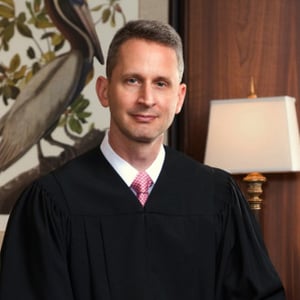
Judge, United States Court of Appeals, Fifth Circuit
Judge Duncan received his B.A. from Louisiana State University in 1994, his J.D. from the Paul M. Hebert Law Center at Louisiana State University in 1997, and his LL.M. from Columbia Law School in 2004.
After graduating from law school, he clerked for Louisiana-based Circuit Judge John Malcolm Duhé Jr. of the United States Court of Appeals for the Fifth Circuit.
From 2008–2012, Duncan served as Appellate Chief for Louisiana's Attorney General's office. From 2012–2014, he served as general counsel of the Becket Fund for Religious Liberty. From 2004-2008, he was an assistant professor of law at the University of Mississippi School of Law.
Before becoming a judge, Duncan practiced at the Washington, D.C. firm of Schaerr Duncan LLP, where he was a founding partner. He was appointed by President Trump to the United States Court of Appeals for the Fifth Circuit on May 1, 2018.
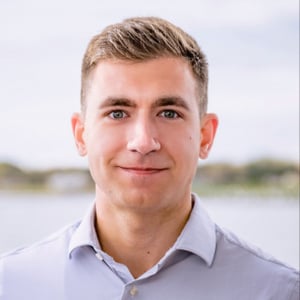
Policy Adviser, American Compass
Mark DiPlacido is a Policy Adviser at American Compass. Before that, he worked on Governor Ron DeSantis's campaign for President. He has also worked as the Deputy Assistant Trade Representative for Public Affairs at the Office of the U.S. Trade Representative, Heritage Action, and the U.S. Senate. He is a graduate of Yale University.
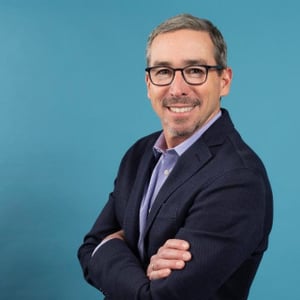
Peter Wertheim Professor in Urban Policy, Harvard Kennedy School
Gordon Hanson is the Peter Wertheim Professor in Urban Policy at Harvard Kennedy School (Remembrance for Peter Wertheim) and Academic Dean for Strategy and Engagement at Harvard Kennedy School. He is best known for his research on the labor market consequences of globalization, including pioneering work on the China trade shock. Hanson’s current research addresses the causes and consequences of regional job loss, the effectiveness of place-based policies in alleviating regional economic distress, and how the energy transition will affect local labor markets. This work is part of the Reimagining the Economy project at the Kennedy School, which Hanson co-directs with Dani Rodrik. Hanson’s related scholarship touches upon immigration, the globalization of production, and economic geography. He has published extensively in top economics journals, is widely cited for his research by scholars from across the social sciences and is frequently quoted in major media outlets. Hanson is a research associate at the National Bureau of Economic Research, a member of the Council on Foreign Relations, and past co-editor of the Journal of Economic Perspectives, the Review of Economics and Statistics, and the Journal of Development Economics. He received his PhD in economics from MIT in 1992 and his BA in economics from Occidental College in 1986. Prior to joining Harvard in 2020, he spent two decades at UC San Diego, where held the Pacific Economic Cooperation Chair in International Economic Relations at UC San Diego and was founding director of the Center on Global Transformation. Hanson previously served on the economics faculties of the University of Michigan and the University of Texas.
Partner, Sullivan & Cromwell LLP
Eric Kadel is engaged in a wide variety of corporate, transactional and regulatory matters. He is a member of the Firm’s Corporate and Finance, Financial Services, Investment Management, Alternative Investment Management, Cybersecurity, and Commodities, Futures and Derivatives Groups. With regard to financings, Mr. Kadel regularly represents participants in capital markets transactions, and dealers and end users in connection with structuring and documenting a wide variety of swaps and other derivatives, including equity, credit default and commodity swaps, options and forwards. Mr. Kadel’s work in the investment management area includes advising public and private investment companies and investment advisers on a wide variety of transactional, regulatory, compliance and other matters, including registration and regulation. Mr. Kadel also advises clients of the Firm regarding developments in the laws regulating the financial services industry and on cybersecurity issues. Mr. Kadel is currently an adjunct professor at George Washington University Law School.
In addition, Mr. Kadel is one of the principal partners in the Firm’s International Trade and Investment practice. He counsels and represents clients on questions about U.S. economic sanctions, including those administered by the Treasury Department’s Office of Foreign Assets Control (“OFAC”), United States antiboycott requirements under the Export Administration Regulations administered and enforced by the Commerce Department’s Office of Antiboycott Compliance within the Bureau of Industry and Security, Bank Secrecy Act/anti‐money laundering laws and the U.S. Foreign Corrupt Practices Act (“FCPA”). Mr. Kadel’s practice includes analysis of proposed transactions and business relationships; due diligence and design and review of compliance procedures and strategies; and internal investigations, voluntary disclosures and government enforcement actions. Mr. Kadel also regularly advises clients regarding questions arising under Exon-Florio and the transaction review process administered by the Committee on Foreign Investment in the United States (“CFIUS”), and has represented clients before CFIUS on many national security reviews.
Policy Adviser, American Compass
Mark DiPlacido is a Policy Adviser at American Compass. Before that, he worked on Governor Ron DeSantis's campaign for President. He has also worked as the Deputy Assistant Trade Representative for Public Affairs at the Office of the U.S. Trade Representative, Heritage Action, and the U.S. Senate. He is a graduate of Yale University.
Peter Wertheim Professor in Urban Policy, Harvard Kennedy School
Gordon Hanson is the Peter Wertheim Professor in Urban Policy at Harvard Kennedy School (Remembrance for Peter Wertheim) and Academic Dean for Strategy and Engagement at Harvard Kennedy School. He is best known for his research on the labor market consequences of globalization, including pioneering work on the China trade shock. Hanson’s current research addresses the causes and consequences of regional job loss, the effectiveness of place-based policies in alleviating regional economic distress, and how the energy transition will affect local labor markets. This work is part of the Reimagining the Economy project at the Kennedy School, which Hanson co-directs with Dani Rodrik. Hanson’s related scholarship touches upon immigration, the globalization of production, and economic geography. He has published extensively in top economics journals, is widely cited for his research by scholars from across the social sciences and is frequently quoted in major media outlets. Hanson is a research associate at the National Bureau of Economic Research, a member of the Council on Foreign Relations, and past co-editor of the Journal of Economic Perspectives, the Review of Economics and Statistics, and the Journal of Development Economics. He received his PhD in economics from MIT in 1992 and his BA in economics from Occidental College in 1986. Prior to joining Harvard in 2020, he spent two decades at UC San Diego, where held the Pacific Economic Cooperation Chair in International Economic Relations at UC San Diego and was founding director of the Center on Global Transformation. Hanson previously served on the economics faculties of the University of Michigan and the University of Texas.
Partner, Sullivan & Cromwell LLP
Eric Kadel is engaged in a wide variety of corporate, transactional and regulatory matters. He is a member of the Firm’s Corporate and Finance, Financial Services, Investment Management, Alternative Investment Management, Cybersecurity, and Commodities, Futures and Derivatives Groups. With regard to financings, Mr. Kadel regularly represents participants in capital markets transactions, and dealers and end users in connection with structuring and documenting a wide variety of swaps and other derivatives, including equity, credit default and commodity swaps, options and forwards. Mr. Kadel’s work in the investment management area includes advising public and private investment companies and investment advisers on a wide variety of transactional, regulatory, compliance and other matters, including registration and regulation. Mr. Kadel also advises clients of the Firm regarding developments in the laws regulating the financial services industry and on cybersecurity issues. Mr. Kadel is currently an adjunct professor at George Washington University Law School.
In addition, Mr. Kadel is one of the principal partners in the Firm’s International Trade and Investment practice. He counsels and represents clients on questions about U.S. economic sanctions, including those administered by the Treasury Department’s Office of Foreign Assets Control (“OFAC”), United States antiboycott requirements under the Export Administration Regulations administered and enforced by the Commerce Department’s Office of Antiboycott Compliance within the Bureau of Industry and Security, Bank Secrecy Act/anti‐money laundering laws and the U.S. Foreign Corrupt Practices Act (“FCPA”). Mr. Kadel’s practice includes analysis of proposed transactions and business relationships; due diligence and design and review of compliance procedures and strategies; and internal investigations, voluntary disclosures and government enforcement actions. Mr. Kadel also regularly advises clients regarding questions arising under Exon-Florio and the transaction review process administered by the Committee on Foreign Investment in the United States (“CFIUS”), and has represented clients before CFIUS on many national security reviews.

George C. Dix Professor in Constitutional Law, Northwestern University Pritzker School of Law
John O. McGinnis is a graduate of Harvard College and Harvard Law School where he was an editor of the Harvard Law Review. He also has an MA degree from Balliol College, Oxford, in philosophy and theology. Professor McGinnis clerked on the U.S. Court of Appeals for the District of Columbia. From 1987 to 1991, he was deputy assistant attorney general in the Office of Legal Counsel at the Department of Justice. He is the author of Accelerating Democracy: Transforming Government Through Technology (Princeton 2013) and Originalism and the Good Constitution (Harvard 2013) (with M. Rappaport). He is a past winner of the Paul Bator award given by the Federalist Society to an outstanding academic under 40. He has been listed by the United States on the roster of panelists who may be called upon to decide World Trade Organization Disputes.
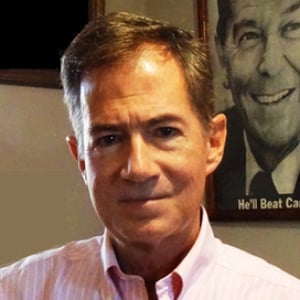
Former General Counsel of the U.S. Immigration and Naturalization, Former United States Ambassador to East Timor
Grover Joseph Rees is a Louisiana native whose family has lived in the Breaux Bridge/Lafayette area since the 1700s.
His first job after college was as an assistant to Congressman Dave Treen (R-LA3), who had just been elected as the first Republican Congressman from Louisiana since Reconstruction.
Rees graduated with honors from LSU Law School, where he served as Editor-in-Chief of the Louisiana Law Review. While in law school he worked on Ronald Reagan’s 1976 presidential campaign and was a Reagan delegate from Louisiana to the Republican National Convention. He also served as a member of the Lafayette Parish Republican Executive Committee and as a board member of Acadiana Right to Life.
In 1979, when Congressman Treen ran successfully for Governor, he asked Rees to write his authorized biography. The book, Dave Treen of Louisiana, was read and discussed widely during the campaign and after Treen’s election.
In 1985-86 Rees served as Special Counsel for Judicial Selection in President Reagan’s Justice Department, working closely with Attorney General Ed Meese to reorganize the judicial selection process to make it more philosophically oriented. These efforts resulted in the appointment of over 100 federal judges and were widely credited with transforming the federal judiciary.
From 1986 through 1991 Rees served as Chief Justice of the High Court of American Samoa, an Article I federal judicial position.
From 1991 through 1993 he was General Counsel of the U.S. Immigration and Naturalization Service.
In 1995 Rees went to work for the new Republican Congress as staff director and chief counsel of the Subcommittee on International Operations and Human Rights. He worked with subcommittee chairman Chris Smith (R.-N.J.) to cut U.S. funding for the International Planned Parenthood Federation and other organizations that perform and promote abortions overseas. Rees also worked on the drafting and enactment of the International Religious Freedom Act, the Trafficking Victims Protection Act, and other legislation that has helped to bring U.S. foreign policy into closer alignment not only with our national interests but also with our values.
In 2001-2002 Rees worked for Congressman Henry Hyde (R.-Ill.), who was then serving as Chairman of the House International Relations Committee.
From 2002 until 2006 Rees served as the first United States Ambassador to newly independent East Timor.
From 2006 until 2009 Ambassador Rees was the United States Special Representative for Social Issues, responsible for representing the United States on issues relating to vulnerable persons and the family within the United Nations system.
Ambassador Rees retired from government service in January 2009 and returned to Lafayette. He is married to Lan Dai Nguyen Rees and is a member of St. Genevieve’s Catholic parish in Lafayette. He was recently elected to serve as a member of the Louisiana Republican State Central Committee.
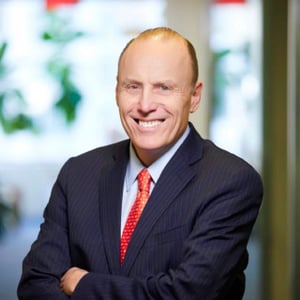
Senior Vice President, UN Foundation and President, the Better World Campaign
One of nation’s most esteemed experts on U.S.-UN affairs, Peter Yeo leads the Better World Campaign’s strategic engagement with Congress, the Administration, and organizations supporting stronger American leadership on the world stage. Yeo’s leadership has helped advance critical legislation in the U.S. Congress to ensure the country meets its obligations to the United Nations, UN Peacekeeping Operations, and UN agencies and organizations.
Yeo joined the Better World Campaign in 2009 with over twenty years of legislative, analytical, and management experience, including senior roles on Capitol Hill and in the State Department. Prior to arriving at UN Foundation, Yeo spent a decade as Deputy Staff Director on the House Foreign Affairs Committee. He has worked on a broad range of foreign policy and foreign aid issues, including leading negotiations for the landmark HIV/AIDS, Tuberculosis and Malaria Act of 2003 — PEPFAR — as well as the $50 billion reauthorization of the law in 2008. He also shepherded into law several measures dealing with China, Tibet, Burma, and East Timor.
Prior to his work with the Committee, Yeo served as a Deputy Assistant Secretary at the U.S. State Department, where he successfully advocated for repayment of the U.S. arrears to the UN, and was part of the U.S. delegation to the climate negotiations in Kyoto.
Yeo holds an master’s in East Asian Studies from Harvard University and a bachelor’s in East Asian Studies from Wesleyan University. He is a member of the Council on Foreign Relations and a Board Member of the U.S. Global Leadership Coalition.

Topics
Lina Khan Left a Robinson-Patman Mess for the FTC: How Will the Commissioners Clean It Up?
Nobody likes to lose an election. But in the spirit of facilitating the peaceful transition...
Tavern Debate - Co-hosted with the Institute for Justice
2025 Western Chapters Conference
Westlake Village, CA2025 Western Chapters Conference
Simi Valley, CATopics
Independent Law Journal: A New Publication Aims to Defeat Groupthink and Improve Publishing in Legal Academia
Legal academia is unique among academic fields in that publishing is largely controlled by graduate...
The Corruption of Law Schools and the Health of Our Democracy
Stuart Kyle Duncan
A review of Ilya Shapiro, Lawless: The Miseducation of America’s Elites (2025) The legal scholar...
The Art of the Tariff: The Trump Administration and Trade
Mark DiPlacido, Gordon Hanson, Eric J. Kadel
Join the Federalist Society for a debate on the role of tariffs during the Trump...
The Art of the Tariff: The Trump Administration and Trade
Mark DiPlacido, Gordon Hanson, Eric J. Kadel
Join the Federalist Society for a debate on the role of tariffs during the Trump...
Daniel Webster Debate Series: Does the First Amendment Permit (or Require?) Public Funding of Religious Charter Schools?
The Federalist Society's Georgetown Law Chapter'sDaniel Webster Debate Series presents Daniel Webster Debate Series: Does...
Daniel Webster Debate Series: Does the First Amendment Permit (or Require?) Public Funding of Religious Charter Schools?
Reform or Withdraw? The United States and the Future of the United Nations
John O. McGinnis, Grover Joseph Rees, Peter Yeo
The United Nations was founded to promote peace, security, and international cooperation, but critics argue...