
Partner, Morris, Manning, & Martin
Donald B. Cameron, Jr. is a Partner in Morris, Manning, & Martin’s International Trade practice. He has over three decades of experience representing multinational businesses, foreign governments, foreign trade associations and U.S. importers in litigation under U.S. antidumping, countervailing duty, and safeguards law. He also advises clients from around the globe in international trade disputes and market access issues, and has particular experience defending clients in industry sectors that are politically sensitive. Mr. Cameron has represented foreign producers and importers in sectors such as footwear, lumber, textiles, electronic products, and steel products. He practices regularly before the U.S. Department of Commerce, the U.S. International Trade Commission, the Office of the U.S. Trade Representative, the U.S. Court of International Trade and the U.S. Court of Appeals for the Federal Circuit.
Mr. Cameron has extensive experience representing private-sector interests and governments in dispute settlement proceedings before the World Trade Organization (WTO) and its predecessor, the General Agreement on Tariffs and Trade (GATT) in Geneva, and has argued on behalf of clients before the WTO Panels and WTO Appellate Body. He has also defended clients in North American Free Trade Agreement (NAFTA) Chapter 19 proceedings and has argued before NAFTA Panels. Mr. Cameron also advised the Government of Korea in the successful WTO challenges to the U.S. safeguard actions on line pipe and certain steel products (AB-2001-9 and AB-2003-3).
As counsel for foreign manufacturers, Mr. Cameron has also advised and assisted foreign governments in a variety of bilateral and multilateral trade negotiations, most prominent being the steel Voluntary Restraint Arrangements negotiations, bilateral subsidies negotiations and the OECD shipbuilding negotiations.

President, Cass & Associates, PC
Ronald A. Cass is Dean Emeritus of Boston University School of Law (where he was Dean from 1990-2004), President of Cass & Associates, PC, former Vice-Chairman and Commissioner of the U.S. International Trade Commission, former faculty member at Boston University School of Law and the University of Virginia Law School, and Distinguished Senior Fellow at the C. Boyden Gray Center for the Study of the Administrative State. Dean Cass also sits as an arbitrator for commercial, international, and intellectual property rights disputes, and is a former United States member of the Panel of Conciliators of the International Centre for Settlement of Investment Disputes. He is a member of the Council of the Administrative Conference of the United States and has received seven presidential appointments, spanning Presidents Ronald Reagan to Donald J. Trump.
As a law professor, lecturer, and scholar, Dean Cass has been teaching and writing about a wide array of legal issues on topics such as administrative law and regulation, antitrust, constitutional law, communications, intellectual property, international trade, separation of powers, and legal process. He has published more than 160 scholarly books, chapters, articles, and papers, including a leading casebook on administrative law. Dean Cass has taught judges as well as students in schools of law, economics, business, and public policy and has held academic appointments in the United States, Europe, and Latin America.
In addition to his academic work, Dean Cass has participated in numerous important legal cases as an amicus, consultant, or expert, and has advised businesses, law firms, investment funds, and government agencies on a range of trade, antitrust, intellectual property, and regulatory issues. He has a broad range of affiliations with professional groups, and has received numerous honors, fellowships and awards.
Dean Cass is a graduate of the University of Virginia and the University of Chicago Law School.
U.S. Department of Commerce, International Trade Administration, Assistant Secretary of Commerce for Enforcement and Compliance
Jeffrey I. Kessler was confirmed unanimously by the U.S. Senate on April 3, 2019 and assumed his position as Assistant Secretary of Commerce for Enforcement and Compliance on April 11, 2019. In his role, Mr. Kessler administers U.S. antidumping and countervailing duty laws, works to ensure foreign compliance with trade agreements, supports the negotiation and implementation of international trade agreements to open foreign markets, and administers the Foreign Trade Zones program – all with the goal of promoting U.S. jobs and economic growth.
Prior to joining the Department of Commerce, Mr. Kessler worked as an international trade attorney in private practice. In that capacity, Mr. Kessler advised leading global companies and U.S. industry associations on a wide range of high-profile, cutting-edge international trade, investment, and market access issues. Mr. Kessler was also involved in litigating several precedent-setting World Trade Organization cases, with successful challenges to foreign country trade practices that restrict billions of dollars of international trade per year, as well as successful defenses of U.S. trade practices.
Mr. Kessler also assisted U.S. companies and industry associations – especially those in innovative, IP-intensive industries – to decipher and navigate foreign trade and investment barriers. Mr. Kessler earned a BA magna cum laude from Yale University, an MA from the University of Chicago, and an JD and MA from Stanford University, where he was an Articles Editor of the Stanford Law Review and a John M. Olin Law and Economics fellow. Additionally,
Mr. Kessler is a member of the American Bar Association and a Term Member of the Council on Foreign Relations. Mr. Kessler resides in Arlington, Virginia with his wife Bethany and their two daughters, Lucy and Diana.

Executive Vice President, The Federalist Society
Dean Reuter is Executive Vice President at the Federalist Society for Law and Public Policy Studies. He has served in two federal government agency Offices of the Inspector General, as Counsel to the Inspector General and Deputy Inspector General, responsible for policing the use of federal funds granted and contracted through those agencies. As such, he helped conduct and oversee criminal investigations across the country. He is the principal author of the non-fiction book, The Hidden Nazi: The Untold Story of America's Deal with the Devil, and editor of Liberty’s Nemesis: The Unchecked Expansion of the State and Confronting Terror: 9/11 and the Future of American National Security. He was appointed by the President and served as Vice-Chairman of the Board of Directors of the Corporation for National and Community Service, and recently served as an appointee on the U.S. Commission on Presidential Scholars. He is a graduate of Hood College (BA with Honors) and the University of Maryland School of Law.
Secretary of Commerce, Department of Commerce
Wilbur L. Ross, Jr. was sworn in by Vice President Mike Pence as the 39th Secretary of Commerce on February 28, 2017. Secretary Ross is the principal voice of business in the Trump Administration, ensuring that U.S. entrepreneurs and businesses have the tools they need to create jobs and economic opportunity.
Secretary Ross is the former Chairman and Chief Strategy Officer of WL Ross & Co. LLC and has over 55 years of investment banking and private equity experience. He has restructured over $400 billion of assets in the airline, apparel, auto parts, banking, beverage, chemical, credit card, electric utility, food service, furniture, gypsum, homebuilding, insurance, marine transport, mortgage origination and servicing, oil and gas, railcar manufacturing and leasing, real estate, restaurant, shipyard, steel, textile and trucking industries. Secretary Ross has been chairman or lead director of more than 100 companies operating in more than 20 different countries.
Named by Bloomberg Markets as one of the 50 most influential people in global finance, Secretary Ross is the only person elected to both the Private Equity Hall of Fame and the Turnaround Management Hall of Fame. He previously served as privatization adviser to New York City Mayor Rudy Giuliani and was appointed by President Bill Clinton to the board of the U.S.-Russia Investment Fund. President Kim Dae-jung awarded Secretary Ross a medal for helping South Korea during its financial crisis and, in November 2014, the Emperor of Japan awarded him the Order of the Rising Sun, Gold and Silver Star.
As a philanthropist, Secretary Ross has served as Chairman of the Japan Society, Trustee of the Brookings Institution and Chairman of its Economic Studies Council, International Counsel Member of the Musée des Arts Décoratifs in Paris, Trustee of the Blenheim Foundation, President of the American Friends of the Rene Magritte Museum in Brussels and Director of the Palm Beach Civic Association. He also was an Advisory Board Member of Yale University School of Management.
Secretary Ross is a graduate of Yale University and Harvard Business School (with distinction). He and his wife Hilary Geary Ross have four children, Jessica Ross, Amanda Ross, Ted Geary and Jack Geary.
Director, GW Regulatory Studies Center & Distinguished Professor of Practice, Trachtenberg School of Public Policy & Public Administration, The George Washington University
Susan Dudley is the Founder and Director of the George Washington University Regulatory Studies Center, established in 2009 to raise awareness of regulations’ effects and improve regulatory policy through research, education, and outreach. She is also a distinguished professor of practice in the Trachtenberg School of Public Policy and Public Administration. She is past-president of the Society for Benefit Cost Analysis, a senior fellow of the Administrative Conference of the United States, and on the Regulatory Transparency Project Regulatory Practice Working Group. Her book, Regulation: A Primer, with Jerry Brito, is available on Amazon.com.
From April 2007 through January 2009, Professor Dudley served as the Presidentially-appointed Administrator of the Office of Information and Regulatory Affairs in the U.S. Office of Management and Budget and was responsible for the review of draft executive branch regulations under Executive Order 12866, the collection of federal-government-wide information under the Paperwork Reduction Act, the development and implementation of government-wide policies in the areas of information policy, privacy, and statistical policy, and international regulatory cooperation efforts.
Prior to OIRA, she directed the Regulatory Studies Program at the Mercatus Center at George Mason University, and taught courses on regulation at the George Mason University School of Law. Earlier in her career, Professor Dudley served as an economist at OIRA, as well as the Environmental Protection Agency and the Commodity Futures Trading Commission. She was also a consultant to government and private clients at Economists Incorporated. She holds a Master of Science degree from the Sloan School of Management at MIT and a Bachelor of Science degree (summa cum laude) in Resource Economics from the University of Massachusetts, Amherst.
Samuel Candler Dobbs Professor of Economics Emeritus, Emory University
Paul H. Rubin is the Samuel Candler Dobbs Professor of Economics Emeritus in the Economics Department of Emory University and a former Professor of Law and Economics at the School of Law. He served as editor-in-chief of Managerial and Decision Economics. In addition, he is associated with the Mont Peleron Society, the Independent Institute, and the American Enterprise Institute, and a Fellow of the Public Choice Society and former President of the Southern Economics Association. Professor Rubin was Senior Economist at the Council of Economic Advisers under President Reagan, Chief Economist at the U.S. Consumer Product Safety Commission, Director of Advertising Economics at the Federal Trade Commission, and Vice-President of Glassman-Oliver Economic Consultants, Inc., a litigation consulting firm in Washington. He has taught economics at the University of Georgia, City University of New York, VPI, and law and economics at George Washington University Law School. Professor Rubin has written or edited several books, and has published over one hundred articles and chapters on economics, law, and regulation.
Much of Professor Rubin's writing is in law and economics, with a focus on tort, crime and contract issues. His areas of research interest include law and economics, industrial organization, transaction cost economics, government and business, public choice, regulation and price theory, and evolution and economics. His work has been cited in the professional literature over 11,100 times. He has consulted widely on litigation related matters, and has addressed numerous business, professional, policy and academic audiences. He has testified three times before Congress, and has served as an advisor on tort issues to the Congressional Budget Office.
Professor Rubin is the author of the well known paper "Why Is the Common Law efficient?" Journal of Legal Studies, 1977, which has been reprinted eight times, in English, Spanish and French.
Senior Vice President, Spectrum Strategy & Technology Policy, Qualcomm
Dean Brenner is Senior Vice President, Government Affairs for Qualcomm Incorporated. He directs Qualcomm’s global spectrum acquisitions and strategy and is responsible for global technology policy. He represents Qualcomm before the Federal Communications Commission and other agencies of the United States and Canadian governments responsible for spectrum and telecommunications policy and interacts with spectrum regulators around the world. He also leads Qualcomm’s policy initiatives relating to mobile healthcare.
Mr. Brenner led Qualcomm’s bidding team in recent spectrum auctions in India (the 2.3 GHz band), the United States (the 700 MHz band), and the United Kingdom (the L Band). In addition, he was responsible for obtaining the regulatory approvals for Qualcomm’s sale of 700 MHz spectrum to AT&T in 2011. In 2006, he obtained the regulatory approvals to launch FLO TV, a mobile TV service. He has spoken at conferences on spectrum policy in the United States, Canada, South Korea, Belgium, Great Britain, and elsewhere around the world. He joined Qualcomm in November 2003.
Mr. Brenner received his A.B. degree, magna cum laude with distinction in public policy studies, from Duke in 1982. He won a prize for the best paper on communications policy, and he was a recipient for four years of a CBS Scholarship. He received his J.D., cum laude, from Georgetown University in 1985. He is admitted to the Bars of the District of Columbia, Maryland, and the U.S. Supreme Court, the U.S. Courts of Appeal for the D.C., Third, and Eleventh Circuits, and the U.S. District Court for the District of Columbia.
Mr. Brenner is a member of the Federal Advisory Board for Space-Based Positioning, Navigation, & Timing, which advises the Executive Branch on policy matters impacting the Global Positioning System. He is also a member of the Board of Governors of 4G Americas, the Board for Jewish Life at Duke University, and the Board of Trustees of the Field School. He lives in Washington, DC with his wife Robin Shaffert and their two sons, Michael and Steven.

Director (Group Manager), Technology and Innovation Policy, Toyota North America
Hilary Cain is Director of Technology and Innovation Policy for Toyota. In this position, she handles policy issues relating to connected and automated vehicle technology, including artificial intelligence, data privacy, cybersecurity, and telecommunications.
Prior to joining Toyota, Cain was on the staff of the U.S. House of Representatives’ Committee on Science, Space, and Technology. She served as Staff Director of the Subcommittee on Technology and Innovation with jurisdiction over matters relating to competitiveness, technology, standards, and innovation. Previously, as a Counsel to the Committee, she handled parliamentary, procedural, and jurisdictional matters and participated in the development and implementation of legislative strategy. Before joining the Committee staff, Cain served as Legislative Director and Ways and Means Counsel for individual Members of Congress.
She holds a J.D. and a M.A. in Public Affairs from the University of Texas, and a B.A. in Political Science with honors from the University of Washington.

Vice President & Associate General Counsel, NCTA- The Internet & Television Association
Danielle J. Piñeres is a Vice President & Associate General Counsel at NCTA – The Internet & Television Association, where she focuses on wireless spectrum policy issues. Prior to her employment at NCTA, Ms. Piñeres worked as an associate with the law firm of Harris, Wiltshire & Grannis LLP in Washington, D.C., where she practiced in the areas of telecommunications (including spectrum regulation), international trade and foreign investment, and appellate litigation. Before joining HWG, Ms. Piñeres clerked for the Honorable Emily C. Hewitt at the United States Court of Federal Claims. Ms. Piñeres received her J.D. magna cum laude from the Georgetown University Law Center.
Professor of Law, University of Michigan Law School
Christopher J. Walker is a Professor of Law at the University of Michigan. Prior to joining Michigan law faculty in 2022, he spent a decade teaching at The Ohio State University Moritz College of Law. He previously clerked for Justice Anthony Kennedy of the U.S. Supreme Court, worked on the Civil Appellate Staff at the U.S. Department of Justice, and served on the Senate Judiciary Committee staff for the Gorsuch Supreme Court confirmation. Professor Walker’s research focuses on administrative law, regulation, and law and policy at the agency level. Outside the law school, he chaired the American Bar Association’s Section of Administrative Law and Regulatory Practice in 2020-21 and served as one of forty Public Members of the Administrative Conference of the United States from 2016-2022, and he continues to serve in both organizations in various capacities. He also works of counsel at the U.S. Chamber Litigation Center. In 2022, he received the Federalist Society’s Joseph Story Award.
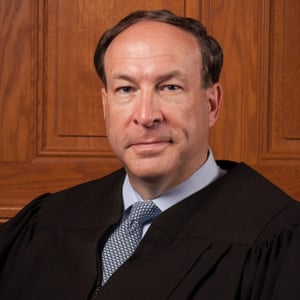
Judge, United States Court of Appeals, Seventh Circuit
Michael B. Brennan was confirmed and sworn in as a Circuit Judge for the U.S. Court of Appeals for the Seventh Circuit in May 2018.
He previously worked as a partner in the Milwaukee law firm of Gass Weber Mullins LLC, where he tried cases and handled appeals in federal and state courts, as a judge on the Milwaukee County Circuit, where he presided over a variety of criminal and civil calendars, and as an assistant district attorney in the Milwaukee County District Attorney’s office.
Brennan’s undergraduate degree is from the University of Notre Dame, and his law degree from Northwestern University School of Law, where he was an editor on the law review and the moot court champion. He served as a law clerk on the U.S. District Court for the Eastern District of Wisconsin and the U.S. Court of Appeals for the Seventh Circuit.
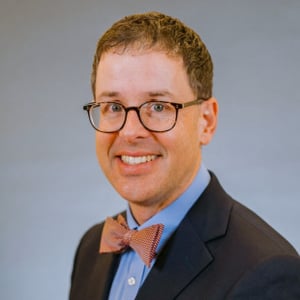
Senior Counsel and VP, Appellate Advocacy, Alliance Defending Freedom
John Bursch is senior counsel and vice president of appellate advocacy with Alliance Defending Freedom. Bursch has argued 12 U.S. Supreme Court cases and more than 30 state supreme court cases since 2011, and a recent study concluded that among all frequent Supreme Court advocates who did not work for the federal government, he had the 3rd highest success rate for persuading justices to adopt his legal position.
Bursch served as solicitor general for the state of Michigan from 2011-2013. He has argued multiple Michigan Supreme Court cases in eight of the last ten terms and has successfully litigated hundreds of matters nationwide, including six with at least $1 billion at stake. As part of his private firm, Bursch Law PLLC, he has represented Fortune 500 companies, foreign and domestic governments, top public officials, and industry associations in high-profile cases, primarily on appeal. He was inducted into the American Academy of Appellate Lawyers and serves as a member of the American Law Institute. His work has resulted in repeated listings in Michigan Super Lawyers and Best Lawyers.
Before entering private practice, Bursch served as a law clerk to the Honorable James B. Loken on the U.S. Court of Appeals for the 8th Circuit. He received his J.D. magna cum laude in 1997 from the University of Minnesota Law School, where he served as Chief Note & Comment Editor for the Minnesota Law Review. Prior to that, he attended Western Michigan University, where he received degrees in mathematics and music performance summa cum laude.
Director, GW Regulatory Studies Center & Distinguished Professor of Practice, Trachtenberg School of Public Policy & Public Administration, The George Washington University
Susan Dudley is the Founder and Director of the George Washington University Regulatory Studies Center, established in 2009 to raise awareness of regulations’ effects and improve regulatory policy through research, education, and outreach. She is also a distinguished professor of practice in the Trachtenberg School of Public Policy and Public Administration. She is past-president of the Society for Benefit Cost Analysis, a senior fellow of the Administrative Conference of the United States, and on the Regulatory Transparency Project Regulatory Practice Working Group. Her book, Regulation: A Primer, with Jerry Brito, is available on Amazon.com.
From April 2007 through January 2009, Professor Dudley served as the Presidentially-appointed Administrator of the Office of Information and Regulatory Affairs in the U.S. Office of Management and Budget and was responsible for the review of draft executive branch regulations under Executive Order 12866, the collection of federal-government-wide information under the Paperwork Reduction Act, the development and implementation of government-wide policies in the areas of information policy, privacy, and statistical policy, and international regulatory cooperation efforts.
Prior to OIRA, she directed the Regulatory Studies Program at the Mercatus Center at George Mason University, and taught courses on regulation at the George Mason University School of Law. Earlier in her career, Professor Dudley served as an economist at OIRA, as well as the Environmental Protection Agency and the Commodity Futures Trading Commission. She was also a consultant to government and private clients at Economists Incorporated. She holds a Master of Science degree from the Sloan School of Management at MIT and a Bachelor of Science degree (summa cum laude) in Resource Economics from the University of Massachusetts, Amherst.
Samuel Candler Dobbs Professor of Economics Emeritus, Emory University
Paul H. Rubin is the Samuel Candler Dobbs Professor of Economics Emeritus in the Economics Department of Emory University and a former Professor of Law and Economics at the School of Law. He served as editor-in-chief of Managerial and Decision Economics. In addition, he is associated with the Mont Peleron Society, the Independent Institute, and the American Enterprise Institute, and a Fellow of the Public Choice Society and former President of the Southern Economics Association. Professor Rubin was Senior Economist at the Council of Economic Advisers under President Reagan, Chief Economist at the U.S. Consumer Product Safety Commission, Director of Advertising Economics at the Federal Trade Commission, and Vice-President of Glassman-Oliver Economic Consultants, Inc., a litigation consulting firm in Washington. He has taught economics at the University of Georgia, City University of New York, VPI, and law and economics at George Washington University Law School. Professor Rubin has written or edited several books, and has published over one hundred articles and chapters on economics, law, and regulation.
Much of Professor Rubin's writing is in law and economics, with a focus on tort, crime and contract issues. His areas of research interest include law and economics, industrial organization, transaction cost economics, government and business, public choice, regulation and price theory, and evolution and economics. His work has been cited in the professional literature over 11,100 times. He has consulted widely on litigation related matters, and has addressed numerous business, professional, policy and academic audiences. He has testified three times before Congress, and has served as an advisor on tort issues to the Congressional Budget Office.
Professor Rubin is the author of the well known paper "Why Is the Common Law efficient?" Journal of Legal Studies, 1977, which has been reprinted eight times, in English, Spanish and French.
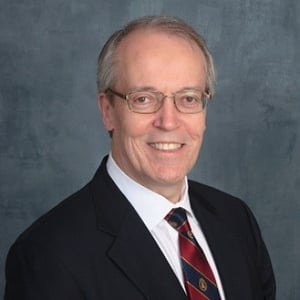
Professor of History, Western Connecticut State University
Kevin R. C. Gutzman is the New York Times best-selling author of five books, including the new Thomas Jefferson—Revolutionary: A Radical’s Struggle to Remake America, a History Book Club Selection. Gutzman is Professor and former Chairman in the Department of History at Western Connecticut State University and a faculty member at LibertyClassroom.com . He holds a bachelor's degree (With Honors and With Special Honors in History), a master of public affairs degree, and a law degree from the University of Texas at Austin, as well as an MA and a PhD in American history from the University of Virginia.
Dr. Gutzman's first book was the New York Times best-seller The Politically Incorrect Guide to the Constitution, which was a Main Selection of the Conservative Book Club. It is the only Jeffersonian account of American constitutional history. His second book, Virginia’s American Revolution: From Dominion to Republic, 1776-1840, explores the issue what the Revolutionaries made of the Revolution in Thomas Jefferson’s home state. After that, he co-authored Who Killed the Constitution? The Federal Government vs. American Liberty from World War I to Barack Obama with New York Times best-selling author Thomas E. Woods, Jr. His fourth book, James Madison and the Making of America, a Main Selection of the History Book Club, received positive reviews from The Wall Street Journal, The Journal of Southern History, The Washington Times, and numerous other publications. His latest book, Thomas Jefferson—Revolutionary: A Radical’s Struggle to Remake America, published on January 31, 2017, was a Selection of the History Book Club.
Gutzman's essay “Lincoln as Jeffersonian: The Colonization Chimera” appeared in Lincoln Emancipated: The President and the Politics of Race, and his “James Madison and Ratification: A Triumph Over Adversity” appeared in A Companion to James Madison and James Monroe. His scholarly articles have appeared in The Journal of Southern History, The Journal of the Early Republic, The Virginia Magazine of History and Biography, The Review of Politics, and The Journal of the Historical Society, among other publications. He has written a hundred book reviews for outlets scholarly and popular, and he has contributed three dozen essays to historical encyclopedias. Gutzman has written for numerous popular magazines and newspapers, including Canada’s National Post, the San Antonio Express-News, and the Richmond Times-Dispatch, among others.
Kevin R. C. Gutzman has appeared on hundreds of radio programs, such as NPR’s “Backstory With the American History Guys” and many of the most prominent commercial programs, terrestrial and satellite, as well as on national television programs including C-SPAN 2's “BookTV,” CNN's “Lou Dobbs Tonight,” Fox News's “The Glenn Beck Program” (both with Beck and with Judge Andrew Napolitano), and NewsMax TV, besides on the BBC and several local television broadcasts. He has been interviewed by reporters from major outlets such as the AP, The Washington Times, The Philadelphia Enquirer, The Washington Post, The Hartford Business Journal, The Houston Chronicle online, Investor's Business Daily, Money Magazine, Connecticut Magazine, and The New York Times, among others.
Gutzman was a featured expert in the documentary movies “John Marshall: Citizen, Statesman, Jurist” and “Nullification: The Rightful Remedy.”

Professor of Law, American University Washington College of Law
Robert L. Tsai is Professor of Law at American University and a prize-winning essayist in constitutional law and history. Though he was born in Taiwan, he has always considered America his home. In fact, one of the proudest moments of his life was the day he was sworn in as a U.S. citizen. Tsai spent his formative years in the Pacific Northwest, working in his parents’ cafe in charming Port Townsend, Washington, and dreaming about the world beyond his small town. He left the area for college and earned a B.A. magna cum laude in History and Political Science from the University of California, Los Angeles, where he was elected to Phi Beta Kappa and received the Carey McWilliams Prize for his honors thesis on the political significance of early Christian teachings.
He then headed to Yale Law School, where he helped edit the Yale Law Journal, served on the Board of the Morris Tyler Moot Court, and was awarded Honorable Mention for Oral Advocacy as a Harlan Fiske Stone Prize Finalist. After graduating from law school, he learned the intricacies of America’s justice system by working as a law clerk for federal judges in New York and Boston: U.S. District Judge Denny Chin (later appointed by President Obama to the U.S. Court of Appeals for the Second Circuit) and U.S. Court of Appeals Judge Hugh H. Bownes (a Carter appointee who passed away in 2003).
After two years of judicial tutelage, Tsai relocated to the South to become a civil rights lawyer in Georgia. Those exhilarating years working with students, clergy, protesters, prisoners, and the homeless left a lasting impression. His first teaching gig was at the University of Oregon Law School, where he earned tenure, along with awards for teaching and research from the law school and the university.
Tsai is the author of three books, Practical Equality: Forging Justice in a Divided Nation (W.W. Norton Feb. 19, 2019), America’s Forgotten Constitutions: Defiant Visions of Power and Community (Harvard 2014), and Eloquence and Reason: Creating a First Amendment Culture (Yale 2008). Practical Equality, which will be published by W.W. Norton in February 2019, is a call to arms to do the hard work of equality, brimming with historical lessons for how to make social progress in tough times. America’s Forgotten Constitutions, which explores how citizens have written a wide range of alternative constitutions to resist mainstream constitutional law, has been called “captivating,” “magisterial,” and “a remarkable feat of excavation.” Eloquence and Reason, his book on the development of America’s free speech values, has been described as “fresh,” “sophisticated,” and “compelling.”
Tsai’s research spans constitutional law, legal history, democratic theory, American political culture, social movements, criminal procedure, presidential leadership, and radical constitutionalism. He has written about the legal obstacles placed in the way of black civil rights activists, President Franklin Roosevelt and freedom of religion, the philosophy of John Brown and his followers, modern white supremacy and the militia movement, the Republic of New Afrika’s ideas about the Constitution, the historical treatment of migrants, early socialism in America, the rise and fall of the “one world” movement, President Obama’s reversal on same-sex marriage, and ideas of equality in the poetry and fiction of Langston Hughes.
His work has been published by the Journal of American History, Contemporary Political Theory, Constitutional Commentary, Perspectives on Politics, Yale Law Journal, Michigan Law Review, Georgetown Law Journal, Washington University Law Review, and Boston University Law Review. His popular essays have appeared in Los Angeles Review of Books, Boston Globe, Washington Post, Politico, Boston Review, and Slate. He has been interviewed by the New York Times, NPR, and CNN. He lives with his family in Washington, D.C.
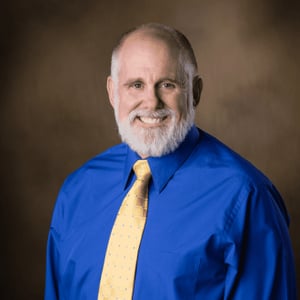
Communications Director, Tenth Amendment Center
Michael Maharrey serves as the national communications director for the Tenth Amendment Center and the managing editor of the SchiffGold blog. He hosts his own podcast, Thoughts from Maharrey Head, as well as the Friday Gold Wrap podcast and the It’s Your Dime interview series for SchiffGold.
Michael is the author of three books. Our Last Hope – Rediscovering the Lost Path to Liberty, makes the historical, philosophical and moral case for nullification. Smashing Myths: Understanding Madison’s Notes on Nullification digs deep into James Madison’s views on nullification, focusing on his writing’s later in life. Finally, Michael joined Tenth Amendment Center executive director Michael Boldin in penning Nullification Objections: Dismantling the Opposition, a book that takes apart the common objections to nullification one at a time. He’s also penned several e-books, including The Power of No: The Historical and Constitutional Basis for State Nullification to Limit Federal Powe and Its Practical Application, The Constitution and the Report of 1800, and The Jefferson Letters, Vol. 1: Kentucky and Virginia Resolutions.
Michael earned a degree in Mass Communications and Media Studies from the University of South Florida St. Petersburg. As a non-traditional student, he won several academic awards and was a member of the school’s ethics bowl team that placed eighth in the nation. Mike played for the USF ice hockey team at the ripe old age of 40, earning American Collegiate Hockey Association Academic All-American honors. He also holds a B.S. degree in Accounting from the University of Kentucky. Along with his formal schooling, he’s had the opportunity to associate with and study under some of the top academics in constitutional history and our founding principles.
Michael speaks at events across the United States, and frequently appears as a guest on local, national and international radio shows advancing constitutional fidelity and liberty through decentralization.
As a working journalist, Michael has written and reported for several newspapers, including the St. Petersburg Times and the Kentucky Gazette, covering local and state politics, and sports. Mike won a pair of 2009 Kentucky Press Association awards while serving as the sports editor for the Woodford Sun in 2009. He also worked for a local television news outlet writing web content for the station’s award-winning website.
Michael lives in Lexington, Ky., with his beautiful wife Cynthia, and has two daughters and a son. Although a native Kentuckian, he spent much of his adult life in Florida and considers the Sunshine state his adopted home. In his spare time, he still plays ice hockey and is equally passionate about defending the Constitution and his crease.

Vice President of Regulatory and Corporate Affairs, Cogeco Inc.
Paul Beaudry is Vice President, Regulatory and Corporate Affairs at Cogeco Inc. He leads Cogeco’s regulatory function in Canada and the United States, and represents the company in proceedings before the CRTC, the Federal Communications Commission and other government departments and regulatory agencies. He also oversees compliance with regulatory requirements imposed on the company at each level of government, in both countries. In addition, Paul leads Cogeco’s Sustainability team and the strategy for public disclosure of ESG matters. He joined Cogeco in November 2020 and has since held progressively larger leadership roles within the organization.
Prior to joining Cogeco, Paul served as Director of Regulatory Affairs at TELUS in Calgary. He also practiced competition and foreign investment law at Stikeman Elliott LLP and Ogilvy Renault LLP (now Norton Rose Fulbright) and served as a senior policy advisor to Canada’s Minister of Industry.
Paul is a graduate of the University of Montreal Faculty of Law and is a member of the Quebec Bar. He serve on the boards of the Institut national de santé publique du Québec, the Cable Public Affairs Channel (CPAC), La Fondation La Rue des Femmes and the Canadian chapter of the International Institute of Communications. He also sits on the Governors Council of Golf Canada.

Chief Executive Officer, OUTtv
Brad Danks is the CEO of OUTtv a Canadian specialty channel and OTT Platform that broadcasts in Canada and around the World. His day to day activities include overseeing all aspects of the channel including all matters relating to dealing with cable companies and affiliates, programming acquisitions and sales, marketing and sales and new media. In addition, he is deeply involved in the development and financing of new film and television properties. He is also an educator that teaches Entertainment and Media issues at a number of institutions and is an Adjunct Professor of Law at the University of Victoria.

Senior Research Fellow, Center for Growth and Opportunity
William Rinehart is a Senior Research Fellow at the Center for Growth and Opportunity at Utah State University.
He specializes in telecommunication, Internet, and data policy, with a focus on emerging technologies and innovation. His work has appeared in The Wall Street Journal, Bloomberg, Wired, Morning Consult, The Hill, Forbes, Reason, Marginal Revolution, Overlawyered, and on BBC Radio and NPR, just to name a few. Rinehart speaks regularly on topics related to tech policy and has been cited in regulatory orders from the FCC as well as Supreme Court petitions.
Rinehart came to the Center from the American Action Forum, where he served as Director of Technology and Innovation Policy. He was also previously a Research Fellow at TechFreedom and the Director of Operations at the International Center for Law & Economics. Additionally, he worked for the Institute for Policy and Civic Engagement as the Research Assistant in Technology and Civic Engagement. Rinehart is currently a Frédéric Bastiat Fellow at the Mercatus Center and previously a Fellow at the Internet Law & Policy Foundry. Additionally, he served on the Federal Communications Commission’s Broadband Deployment Committee and Consumer Advocacy Committee.
Professor of Law, University of Michigan Law School
Christopher J. Walker is a Professor of Law at the University of Michigan. Prior to joining Michigan law faculty in 2022, he spent a decade teaching at The Ohio State University Moritz College of Law. He previously clerked for Justice Anthony Kennedy of the U.S. Supreme Court, worked on the Civil Appellate Staff at the U.S. Department of Justice, and served on the Senate Judiciary Committee staff for the Gorsuch Supreme Court confirmation. Professor Walker’s research focuses on administrative law, regulation, and law and policy at the agency level. Outside the law school, he chaired the American Bar Association’s Section of Administrative Law and Regulatory Practice in 2020-21 and served as one of forty Public Members of the Administrative Conference of the United States from 2016-2022, and he continues to serve in both organizations in various capacities. He also works of counsel at the U.S. Chamber Litigation Center. In 2022, he received the Federalist Society’s Joseph Story Award.
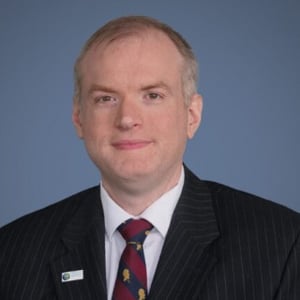
Attorney, Competitive Enterprise Institute
Devin Watkins is an attorney at the Competitive Enterprise Institute. Devin Watkins previously worked at the Cato Institute as a legal associate and interned at the Institute for Justice. At the Cato Institute, Watkins worked on a variety of Supreme Court cases, and one of the briefs he worked on was cited by the Court. His op-eds have appeared in National Review Online, The Hill, Time, and The Federalist among others.
Watkins holds a Juris Doctor cum laude from George Mason University's Antonin Scalia Law School, where he was the development editor on the Mason Law Review. Prior to his legal career Watkins was a senior software developer at Intel and WebMD. He graduated with a Bachelor of Science in Computer Science from Stevens Institute of Technology in Hoboken, New Jersey.
Watkins is a member of the Virginia State Bar, the District of Columbia Bar, the U.S. District Court for the District of Columbia Bar, and the U.S. Court of Appeals for the District of Columbia Circuit Bar.

Views from the Bench – A Discussion with U.S. District Judge Thomas S. Kleeh and Chief Justice Elizabeth D. Walker
Charleston, WVFair Trade: Reinvigorating American Leadership in the 21st Century
International & National Security Law Practice Group
Washington, DCBook Review: The Capitalism Paradox: How Cooperation Enables Free Market Competition
Susan E. Dudley, Paul H. Rubin
In this teleforum, Paul Rubin, the world’s leading expert on cooperative capitalism, will discuss his...
Book Review: The Capitalism Paradox: How Cooperation Enables Free Market Competition
TeleforumWhat Is a Constitutional Crisis? Would You Know it if We Were in One?
Kevin R.C Gutzman, Robert L. Tsai, Michael Maharrey
Is the United States experiencing a constitutional crisis--or multiple crises? How would we even know...
Vertical Integration in Broadcasting: A Cause for Concern?
Paul Beaudry, Brad Danks, William Rinehart
The broadcasting market used to be straightforward. It functioned on a linear model consisting of...
Spectrum Wars
TeleforumWhat is the Federalist Society?
Chicago Student Chapter
Chicago, ILCourthouse Steps Oral Argument: Title VII Cases
TeleforumLitigation Update: Gundy v. U.S.
Christopher J. Walker, Devin Watkins
Last term in Gundy v. U.S., without Justice Kavanaugh the Court was split between a...