

Partner, K&L Gates
Varu Chilakamarri is a partner in the K&L Gates Environment, Land, and Natural Resources practice group. Her practice focuses on litigation services, particularly in appellate matters and in administrative, environmental, and energy law. Varu also counsels clients on government-facing matters, which often involve strategic analysis of legal risks and opportunities presented by statutory and regulatory frameworks.
Varu joined K&L Gates after a 17-year career at the US Department of Justice, where she was a successful federal district and appellate court litigator and held various senior leadership roles. Most recently, she served as Deputy Assistant Attorney General in the DOJ's Civil Division. In this role, Varu was the head of the Torts Branch, an office of over 230 litigators and staff who defend the United States in a wide range of suits for monetary damages—including toxic tort cases arising out of environmental regulatory actions, constitutional tort cases, and cases brought under unique statutory compensation programs.
Before that, Varu was an appellate attorney in the Environment and Natural Resources Division, serving as lead counsel in complex civil and criminal appeals. These included facial challenges to the constitutionality of federal laws and regulations, and challenges to the validity of federal permitting and land use decisions (e.g., cases involving the National Environmental Policy Act, the Endangered Species Act, and the Clean Water Act). She also litigated enforcement cases, including those involving violations of substantive environmental laws, recordkeeping requirements, and various Title 18 provisions. She argued cases before the US Court of Appeals for the Third, Fifth, Ninth, Tenth, D.C., and the Federal Circuit, and she has practiced in several other federal appellate and district courts. Varu was previously appointed as the Division's first counselor for animal welfare matters and served as Chief of Staff to the Assistant Attorney General in DOJ's Environment and Natural Resources Division. Varu's work at the DOJ often centered on novel legal challenges arising from a broad suite of federal statutes, including two preemption lawsuits that went to the US Supreme Court.
Varu joined the DOJ in 2006 through the Attorney General's honors program as a trial attorney in the Civil Division's Federal Programs Branch, and during her tenure, also worked in the office of the Associate Attorney General as Acting Deputy and served on detail to the White House Counsel's Office. Before joining the DOJ, Varu clerked for Judge R. Guy Cole in the US Court of Appeals for the Sixth Circuit and Judge Timothy B. Dyk in the US Court of Appeals for the Federal Circuit.
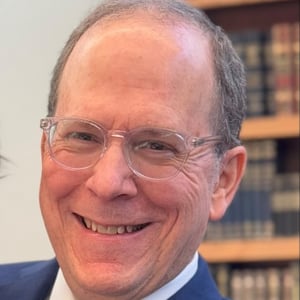
Executive Counsel - Issues and Advocacy, Exxon Mobil Corporation Law Department
Robert Levy serves as Executive Counsel at ExxonMobil, where he leads the company’s legal strategy on advocacy and civil justice reform. His work includes representing ExxonMobil in state and national organizations dedicated to improving the legal system and the rule of law, coordinating amicus support on key policy and litigation matters, and advising on data privacy and information governance. He previously oversaw the company’s eDiscovery compliance and cybersecurity law initiatives.
Robert currently chairs the Board of the American Tort Reform Association and previously served as President of the Civil Justice Reform Group. He is Treasurer of Lawyers for Civil Justice (LCJ), chairs its Discovery Committee, and serves on its Amicus Committee. He is also actively involved with the U.S. Chamber of Commerce’s Institute for Legal Reform and Litigation Center and sits on the Executive Committee of the Texas Civil Justice League. Additionally, he is an active member of the Federalist Society and its In-House Counsel Network.
A long-standing member of the Texas Supreme Court Advisory Committee, Robert has served for over 14 years and currently chairs one of its subcommittees. He also sits on the Advisory Councils of the Atlantic Legal Foundation, the Center for Law & Public Policy, and the Mountain States Legal Foundation. In recognition of his leadership, LCJ awarded him with the Al Cortese Award for his contributions to civil justice reform. Texans for Lawsuit Reform and the Texas Civil Justice League have honored Robert for his years of service to TCJL and Texas civil justice reform.
He has also been deeply engaged in community and bar activities, serving for over a decade on the board of Houston Volunteer Lawyers and on the board of the Houston Jewish Federation. He is a former Chair of the Board of Robert M. Beren Academy, where he was honored with the Dena and Baruch Brody Award for his leadership and service. Additionally, he served as President of United Orthodox Synagogues, reflecting his longstanding commitment to faith-based and civic leadership.
Robert is a frequent speaker at legal conferences and continuing legal education (CLE) programs. Early in his career, he served as a briefing attorney for the Honorable Judge Robert Parker of the U.S. District Court for the Eastern District of Texas. He has practiced law for over 39 years and earned his J.D. with honors from the University of Texas School of Law in 1986.
Before joining ExxonMobil, Robert was a partner at Haynes and Boone, LLP for over 14 years, where he practiced in the Business Litigation Section. He also held positions at Johnson & Gibbs and Weil, Gotshal & Manges.
Robert and his wife Barbara reside in Houston, Texas, where they raised four children and now enjoy their role as proud grandparents to three grandchildren.
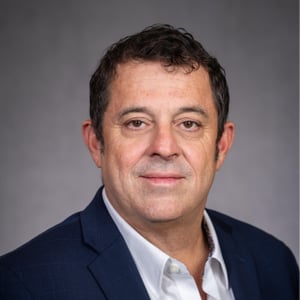
Senior Fellow for Law, Economics, and Technology, The Heritage Foundation; Professor, Florida International University
Mario Loyola is a Senior Fellow for Law, Economics, and Technology at The Heritage Foundation.
Loyola served in the Trump Administration as Associate Director for Regulatory Reform at the White House Council on Environmental Quality. In that role, he was one of the principal drafters of the One Federal Decision policy, which helped to streamline the permitting and environmental review of large infrastructure projects. While at CEQ, he was a member of the U.S. delegation to the USMCA free trade negotiations with Mexico and Canada, as well as the United Nations conference on biodiversity on the high seas. Loyola initially joined the White House in February 2017 as a Presidential Speechwriter, employing his expertise in many areas of foreign and domestic policy.
After beginning his career in M&A and corporate finance law, Loyola served in the Bush 43 Administration as a special assistant to the Undersecretary of Defense for Policy. He left that position to start writing on national defense issues in magazines such as National Review and The Weekly Standard, reporting from the front lines of the war on terrorism in Lebanon, Israel, and Iraq. He finished the Bush Administration as Foreign and Defense Counsel to the U.S. Senate Republican Policy Committee, then under the chairmanship of Senator Kay Bailey Hutchison of Texas. He subsequently moved to Texas and joined the Texas Public Policy Foundation, where he specialized in energy, environment, and federalism.
Loyola is a frequent contributor to The Wall Street Journal, National Review, and The Atlantic, among others. He teaches environmental and administrative law at Florida International University, where he is Founding Director of the Environmental Finance and Risk Management program in FIU’s prestigious Institute of Environment. He received a bachelor’s degree in European history from the University of Wisconsin–Madison and a J.D. from Washington University School of Law.
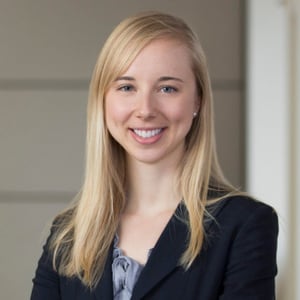
Partner, Vinson & Elkins
Corinne principally practices in environmental law, with an emphasis on litigation, regulatory compliance, internal investigations, and defense against government investigations and enforcement actions.
Corinne draws on wide experience at the U.S. Department of Justice, including serving as Senior Counsel in the Office of the Associate Attorney General, which oversees all civil litigation on behalf of the United States, and as Counselor in the Office of the Attorney General.
Corinne most recently served as Counsel and Chief of Staff in the Environment and Natural Resources Division of the U.S. Department of Justice, where she assisted in managing a 600-person division that included 400 lawyers. In this role she helped manage the Division’s civil and criminal litigation arising under more than 150 environmental and natural resources laws.
She also worked closely with the General Counsel’s Offices for multiple federal agencies, including the EPA, Departments of Interior, Defense, Energy, Commerce, and Agriculture, as well as the White House and Counsel on Environmental Quality to advise high-ranking officials on policy and litigation risks associated with the environmental and natural resource laws.
She has personally argued cases in three U.S. Courts of Appeals, and multiple district courts, and served as the lead or co-lead counsel in district court litigation defending agency regulations, approvals, and permits related to oil and gas operations and other energy extraction projects.
Her roles in government have given her a unique perspective into the decision-making processes in the federal government.
In the private sector, Corinne counsels clients on environmental compliance across a variety of industries, including energy, chemical, manufacturing, and mining sectors. In the transactional context, she assists in the drafting and negotiating of the environmental terms in purchase and sale agreements, lease agreements, credit agreements, and disclosures for debt and equity offerings and public filings. She has also drafted comments on behalf of clients to agencies on proposed rules with significant implications for the oil and gas industry.
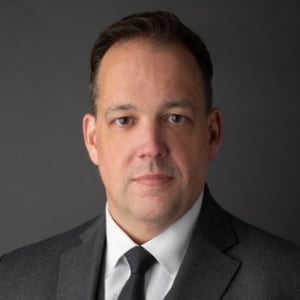
Counsel, Boyden Gray PLLC
Jim Wedeking is counsel at Boyden Gray PLLC. He has extensive experience with environmental regulations, providing compliance counseling for large industrial and agricultural companies and their related trade associations, drafting comments on proposed environmental rulemakings from a variety of federal agencies, and challenging those rules in court. For over 20 years he has helped companies obtain various permits and other authorizations for constructing major infrastructure projects, including fossil fuel-fired power plants, natural gas pipelines, and offshore wind turbines, as well as defend those permits and authorizations through litigation. Mr. Wedeking frequently writes on federal environmental law topics, including for the Washington Legal Foundation.
He has also counseled clients on several Freedom of Information Act matters, including the protection of confidential business information from disclosure to third parties and how the Supreme Court’s Food Marketing Institute v. Argus Leader Media decision increased protections for company information provided to regulatory agencies.
Before joining the firm, Mr. Wedeking was counsel in Sidley Austin’s Washington, D.C. environmental, health, and safety practice group. There, he represented industrial companies in defending against civil and criminal enforcement actions and toxic tort suits.
Mr. Wedeking received a J.D., cum laude, from the Catholic University of America Columbus School of Law and a B.A. in Criminology and Criminal Justice from the University of Maryland.

Vice President, Edwin Meese III Institute for the Rule of Law, Advancing American Freedom
John G. Malcolm oversees Advancing American Freedom’s work to increase understanding of the Constitution and the rule of law as Vice President of the organization’s Edwin Meese III Institute for the Rule of Law. Malcolm brings to the challenge a wealth of legal expertise and experience in both the public and private sectors.
Prior to joining Advancing American Freedom in 2025, Malcolm was the Vice President of the Institute for Constitutional Government and the Director of the Meese Center for Legal and Judicial Studies at the Heritage Foundation. Prior to joining Heritage in 2012, Malcolm was general counsel at the U.S. Commission on International Religious Freedom, as well as a distinguished practitioner in residence at Pepperdine Law School. From 2004 to 2009, Malcolm was executive vice president and director of worldwide anti-piracy operations for the Motion Picture Association.
Malcolm served as a deputy assistant attorney general in the Department of Justice’s Criminal Division from 2001 to 2004, where he oversaw sections on computer crime and intellectual property, domestic security, child exploitation and obscenity, and special investigations. Immediately prior to that, he was a founding partner in the Atlanta law firm of Malcolm & Schroeder, LLP.
From 1990 to 1997, Malcolm was an assistant U.S. attorney in Atlanta, assigned to the fraud and public corruption section, and also an associate independent counsel, investigating fraud and abuse in the Department of Housing and Urban Development. He was honored with the Director’s Award for Superior Performance for his work in connection with the successful prosecution of Walter Leroy Moody Jr., who assassinated an 11th Circuit judge and the head of the Savannah chapter of the NAACP.
A graduate of Harvard Law School and Columbia College, Malcolm began his career as a law clerk to a federal district court judge and a federal appellate court judge, and as an associate at the Atlanta-based law firm of Sutherland, Asbill & Brennan (new Eversheds Sutherland).
Malcolm, who resides in Washington, D.C., serves on the Board of Trustees of the Washington National Opera and is a Senate-confirmed member of the Board of Directors of the Legal Services Corporation, the largest funder of civil legal aid in the United States.

Judge, United States Court of Appeals, Sixth Circuit
Judge Readler earned his undergraduate and law degrees from the University of Michigan. After graduating, he served as a law clerk to Judge Alan Norris of the United States Court of Appeals for the Sixth Circuit. Judge Readler then began practicing law in the Columbus office of the international law firm Jones Day, eventually spending ten years as a partner in the firm’s Issues and Appeals Practice Group. While at Jones Day, Judge Readler appeared in state and federal trial and appellate courts around the country, most frequently the Supreme Court of Ohio and the Sixth Circuit. Judge Readler also successfully argued before the United States Supreme Court in McQuiggin v. Perkins on behalf of an inmate claiming actual innocence. His other pro bono representations include representing capital defendants before the Tenth Circuit and the Supreme Court of Ohio, as well as representing defendants sentenced to life in prison before the Sixth Circuit. While at Jones Day, Judge Readler traveled to Nairobi with Lawyers Without Borders to train Kenyan lawyers in prosecuting domestic violence cases, and he was also a recipient of the American Marshall Memorial Fellowship awarded by the German Marshall Fund of the United States. Following his career in private practice, Judge Readler served as Acting Assistant Attorney General for the Civil Division of the United States Department of Justice from 2017 to 2019. In that role, Judge Readler led and supervised over 1,000 lawyers in the Department’s largest litigating division, briefing and arguing several cases on behalf of the United States in federal courts across the country, including high-profile cases significant to the Administration and the Department. In March 2019, Judge Readler was confirmed to serve as a Circuit Judge on the Sixth Circuit. He resides in Columbus.
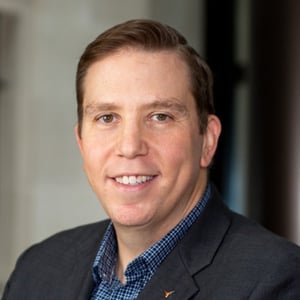
Agnes Williams Sesquicentennial Professor of Federal Courts, Georgetown Law
Stephen I. Vladeck is a professor of law at the Georgetown University Law Center, and is a nationally recognized expert on the federal courts; the Supreme Court; national security law; and military justice.
Vladeck is author of the New York Times bestselling book, “The Shadow Docket: How the Supreme Court Uses Stealth Rulings to Amass Power and Undermine the Republic,” which won the 2023 Writers’ League of Texas Book Award for Non-Fiction and was a finalist for the 2024 ABA Silver Gavel Award for Media and the Arts. Vladeck is also a highly regarded appellate advocate, having argued three cases before the U.S. Supreme Court and over a dozen before various lower federal civilian and military courts. He has received numerous awards for his influential and widely cited legal scholarship, his prolific popular writing, his teaching, and his service to the legal profession—including the 2024 University of Texas President’s Research Impact Award and his selection by the Order of the Coif to serve as its Distinguished Visiting Professor for 2025.
Vladeck is CNN’s Supreme Court analyst and editor and author of “One First,” a popular weekly newsletter about the Supreme Court. Together with Bobby Chesney, Vladeck co-hosts the popular and award-winning “National Security Law Podcast.” He is also a co-author of Aspen Publishers’ leading national security law and counterterrorism law casebooks. And he is a member of the Board of Trustees of EarthJustice—the nation’s premier nonprofit public interest environmental law organization.
Vladeck graduated from Yale Law School in 2004—where he was executive editor of the Yale Law Journal and won the Harlan Fiske Stone Prize for outstanding moot court oralist and shared the Potter Stewart Prize for best moot court team performance. After law school, he clerked for the Honorable Marsha S. Berzon on the U.S. Court of Appeals for the Ninth Circuit and the Honorable Rosemary Barkett on the U.S. Court of Appeals for the Eleventh Circuit. He earned a B.A. summa cum laude with Highest Distinction in History and Mathematics from Amherst College in 2001—where he wrote his senior thesis on “Leipzig’s Shadow: The War Crimes Trials of the First World War and Their Implications from Nuremberg to the Present.” A native New Yorker and hopeless Mets fan, Vladeck lives in the District with his wife, Karen (Founder and Managing Partner of Risepoint Search Partners); their daughters, Madeleine and Sydney; and their eleven-year-old pug, Roxanna.
Partner, K&L Gates
Varu Chilakamarri is a partner in the K&L Gates Environment, Land, and Natural Resources practice group. Her practice focuses on litigation services, particularly in appellate matters and in administrative, environmental, and energy law. Varu also counsels clients on government-facing matters, which often involve strategic analysis of legal risks and opportunities presented by statutory and regulatory frameworks.
Varu joined K&L Gates after a 17-year career at the US Department of Justice, where she was a successful federal district and appellate court litigator and held various senior leadership roles. Most recently, she served as Deputy Assistant Attorney General in the DOJ's Civil Division. In this role, Varu was the head of the Torts Branch, an office of over 230 litigators and staff who defend the United States in a wide range of suits for monetary damages—including toxic tort cases arising out of environmental regulatory actions, constitutional tort cases, and cases brought under unique statutory compensation programs.
Before that, Varu was an appellate attorney in the Environment and Natural Resources Division, serving as lead counsel in complex civil and criminal appeals. These included facial challenges to the constitutionality of federal laws and regulations, and challenges to the validity of federal permitting and land use decisions (e.g., cases involving the National Environmental Policy Act, the Endangered Species Act, and the Clean Water Act). She also litigated enforcement cases, including those involving violations of substantive environmental laws, recordkeeping requirements, and various Title 18 provisions. She argued cases before the US Court of Appeals for the Third, Fifth, Ninth, Tenth, D.C., and the Federal Circuit, and she has practiced in several other federal appellate and district courts. Varu was previously appointed as the Division's first counselor for animal welfare matters and served as Chief of Staff to the Assistant Attorney General in DOJ's Environment and Natural Resources Division. Varu's work at the DOJ often centered on novel legal challenges arising from a broad suite of federal statutes, including two preemption lawsuits that went to the US Supreme Court.
Varu joined the DOJ in 2006 through the Attorney General's honors program as a trial attorney in the Civil Division's Federal Programs Branch, and during her tenure, also worked in the office of the Associate Attorney General as Acting Deputy and served on detail to the White House Counsel's Office. Before joining the DOJ, Varu clerked for Judge R. Guy Cole in the US Court of Appeals for the Sixth Circuit and Judge Timothy B. Dyk in the US Court of Appeals for the Federal Circuit.
Executive Counsel - Issues and Advocacy, Exxon Mobil Corporation Law Department
Robert Levy serves as Executive Counsel at ExxonMobil, where he leads the company’s legal strategy on advocacy and civil justice reform. His work includes representing ExxonMobil in state and national organizations dedicated to improving the legal system and the rule of law, coordinating amicus support on key policy and litigation matters, and advising on data privacy and information governance. He previously oversaw the company’s eDiscovery compliance and cybersecurity law initiatives.
Robert currently chairs the Board of the American Tort Reform Association and previously served as President of the Civil Justice Reform Group. He is Treasurer of Lawyers for Civil Justice (LCJ), chairs its Discovery Committee, and serves on its Amicus Committee. He is also actively involved with the U.S. Chamber of Commerce’s Institute for Legal Reform and Litigation Center and sits on the Executive Committee of the Texas Civil Justice League. Additionally, he is an active member of the Federalist Society and its In-House Counsel Network.
A long-standing member of the Texas Supreme Court Advisory Committee, Robert has served for over 14 years and currently chairs one of its subcommittees. He also sits on the Advisory Councils of the Atlantic Legal Foundation, the Center for Law & Public Policy, and the Mountain States Legal Foundation. In recognition of his leadership, LCJ awarded him with the Al Cortese Award for his contributions to civil justice reform. Texans for Lawsuit Reform and the Texas Civil Justice League have honored Robert for his years of service to TCJL and Texas civil justice reform.
He has also been deeply engaged in community and bar activities, serving for over a decade on the board of Houston Volunteer Lawyers and on the board of the Houston Jewish Federation. He is a former Chair of the Board of Robert M. Beren Academy, where he was honored with the Dena and Baruch Brody Award for his leadership and service. Additionally, he served as President of United Orthodox Synagogues, reflecting his longstanding commitment to faith-based and civic leadership.
Robert is a frequent speaker at legal conferences and continuing legal education (CLE) programs. Early in his career, he served as a briefing attorney for the Honorable Judge Robert Parker of the U.S. District Court for the Eastern District of Texas. He has practiced law for over 39 years and earned his J.D. with honors from the University of Texas School of Law in 1986.
Before joining ExxonMobil, Robert was a partner at Haynes and Boone, LLP for over 14 years, where he practiced in the Business Litigation Section. He also held positions at Johnson & Gibbs and Weil, Gotshal & Manges.
Robert and his wife Barbara reside in Houston, Texas, where they raised four children and now enjoy their role as proud grandparents to three grandchildren.
Senior Fellow for Law, Economics, and Technology, The Heritage Foundation; Professor, Florida International University
Mario Loyola is a Senior Fellow for Law, Economics, and Technology at The Heritage Foundation.
Loyola served in the Trump Administration as Associate Director for Regulatory Reform at the White House Council on Environmental Quality. In that role, he was one of the principal drafters of the One Federal Decision policy, which helped to streamline the permitting and environmental review of large infrastructure projects. While at CEQ, he was a member of the U.S. delegation to the USMCA free trade negotiations with Mexico and Canada, as well as the United Nations conference on biodiversity on the high seas. Loyola initially joined the White House in February 2017 as a Presidential Speechwriter, employing his expertise in many areas of foreign and domestic policy.
After beginning his career in M&A and corporate finance law, Loyola served in the Bush 43 Administration as a special assistant to the Undersecretary of Defense for Policy. He left that position to start writing on national defense issues in magazines such as National Review and The Weekly Standard, reporting from the front lines of the war on terrorism in Lebanon, Israel, and Iraq. He finished the Bush Administration as Foreign and Defense Counsel to the U.S. Senate Republican Policy Committee, then under the chairmanship of Senator Kay Bailey Hutchison of Texas. He subsequently moved to Texas and joined the Texas Public Policy Foundation, where he specialized in energy, environment, and federalism.
Loyola is a frequent contributor to The Wall Street Journal, National Review, and The Atlantic, among others. He teaches environmental and administrative law at Florida International University, where he is Founding Director of the Environmental Finance and Risk Management program in FIU’s prestigious Institute of Environment. He received a bachelor’s degree in European history from the University of Wisconsin–Madison and a J.D. from Washington University School of Law.
Partner, Vinson & Elkins
Corinne principally practices in environmental law, with an emphasis on litigation, regulatory compliance, internal investigations, and defense against government investigations and enforcement actions.
Corinne draws on wide experience at the U.S. Department of Justice, including serving as Senior Counsel in the Office of the Associate Attorney General, which oversees all civil litigation on behalf of the United States, and as Counselor in the Office of the Attorney General.
Corinne most recently served as Counsel and Chief of Staff in the Environment and Natural Resources Division of the U.S. Department of Justice, where she assisted in managing a 600-person division that included 400 lawyers. In this role she helped manage the Division’s civil and criminal litigation arising under more than 150 environmental and natural resources laws.
She also worked closely with the General Counsel’s Offices for multiple federal agencies, including the EPA, Departments of Interior, Defense, Energy, Commerce, and Agriculture, as well as the White House and Counsel on Environmental Quality to advise high-ranking officials on policy and litigation risks associated with the environmental and natural resource laws.
She has personally argued cases in three U.S. Courts of Appeals, and multiple district courts, and served as the lead or co-lead counsel in district court litigation defending agency regulations, approvals, and permits related to oil and gas operations and other energy extraction projects.
Her roles in government have given her a unique perspective into the decision-making processes in the federal government.
In the private sector, Corinne counsels clients on environmental compliance across a variety of industries, including energy, chemical, manufacturing, and mining sectors. In the transactional context, she assists in the drafting and negotiating of the environmental terms in purchase and sale agreements, lease agreements, credit agreements, and disclosures for debt and equity offerings and public filings. She has also drafted comments on behalf of clients to agencies on proposed rules with significant implications for the oil and gas industry.
Counsel, Boyden Gray PLLC
Jim Wedeking is counsel at Boyden Gray PLLC. He has extensive experience with environmental regulations, providing compliance counseling for large industrial and agricultural companies and their related trade associations, drafting comments on proposed environmental rulemakings from a variety of federal agencies, and challenging those rules in court. For over 20 years he has helped companies obtain various permits and other authorizations for constructing major infrastructure projects, including fossil fuel-fired power plants, natural gas pipelines, and offshore wind turbines, as well as defend those permits and authorizations through litigation. Mr. Wedeking frequently writes on federal environmental law topics, including for the Washington Legal Foundation.
He has also counseled clients on several Freedom of Information Act matters, including the protection of confidential business information from disclosure to third parties and how the Supreme Court’s Food Marketing Institute v. Argus Leader Media decision increased protections for company information provided to regulatory agencies.
Before joining the firm, Mr. Wedeking was counsel in Sidley Austin’s Washington, D.C. environmental, health, and safety practice group. There, he represented industrial companies in defending against civil and criminal enforcement actions and toxic tort suits.
Mr. Wedeking received a J.D., cum laude, from the Catholic University of America Columbus School of Law and a B.A. in Criminology and Criminal Justice from the University of Maryland.
Vice President, Edwin Meese III Institute for the Rule of Law, Advancing American Freedom
John G. Malcolm oversees Advancing American Freedom’s work to increase understanding of the Constitution and the rule of law as Vice President of the organization’s Edwin Meese III Institute for the Rule of Law. Malcolm brings to the challenge a wealth of legal expertise and experience in both the public and private sectors.
Prior to joining Advancing American Freedom in 2025, Malcolm was the Vice President of the Institute for Constitutional Government and the Director of the Meese Center for Legal and Judicial Studies at the Heritage Foundation. Prior to joining Heritage in 2012, Malcolm was general counsel at the U.S. Commission on International Religious Freedom, as well as a distinguished practitioner in residence at Pepperdine Law School. From 2004 to 2009, Malcolm was executive vice president and director of worldwide anti-piracy operations for the Motion Picture Association.
Malcolm served as a deputy assistant attorney general in the Department of Justice’s Criminal Division from 2001 to 2004, where he oversaw sections on computer crime and intellectual property, domestic security, child exploitation and obscenity, and special investigations. Immediately prior to that, he was a founding partner in the Atlanta law firm of Malcolm & Schroeder, LLP.
From 1990 to 1997, Malcolm was an assistant U.S. attorney in Atlanta, assigned to the fraud and public corruption section, and also an associate independent counsel, investigating fraud and abuse in the Department of Housing and Urban Development. He was honored with the Director’s Award for Superior Performance for his work in connection with the successful prosecution of Walter Leroy Moody Jr., who assassinated an 11th Circuit judge and the head of the Savannah chapter of the NAACP.
A graduate of Harvard Law School and Columbia College, Malcolm began his career as a law clerk to a federal district court judge and a federal appellate court judge, and as an associate at the Atlanta-based law firm of Sutherland, Asbill & Brennan (new Eversheds Sutherland).
Malcolm, who resides in Washington, D.C., serves on the Board of Trustees of the Washington National Opera and is a Senate-confirmed member of the Board of Directors of the Legal Services Corporation, the largest funder of civil legal aid in the United States.
Judge, United States Court of Appeals, Sixth Circuit
Judge Readler earned his undergraduate and law degrees from the University of Michigan. After graduating, he served as a law clerk to Judge Alan Norris of the United States Court of Appeals for the Sixth Circuit. Judge Readler then began practicing law in the Columbus office of the international law firm Jones Day, eventually spending ten years as a partner in the firm’s Issues and Appeals Practice Group. While at Jones Day, Judge Readler appeared in state and federal trial and appellate courts around the country, most frequently the Supreme Court of Ohio and the Sixth Circuit. Judge Readler also successfully argued before the United States Supreme Court in McQuiggin v. Perkins on behalf of an inmate claiming actual innocence. His other pro bono representations include representing capital defendants before the Tenth Circuit and the Supreme Court of Ohio, as well as representing defendants sentenced to life in prison before the Sixth Circuit. While at Jones Day, Judge Readler traveled to Nairobi with Lawyers Without Borders to train Kenyan lawyers in prosecuting domestic violence cases, and he was also a recipient of the American Marshall Memorial Fellowship awarded by the German Marshall Fund of the United States. Following his career in private practice, Judge Readler served as Acting Assistant Attorney General for the Civil Division of the United States Department of Justice from 2017 to 2019. In that role, Judge Readler led and supervised over 1,000 lawyers in the Department’s largest litigating division, briefing and arguing several cases on behalf of the United States in federal courts across the country, including high-profile cases significant to the Administration and the Department. In March 2019, Judge Readler was confirmed to serve as a Circuit Judge on the Sixth Circuit. He resides in Columbus.
Agnes Williams Sesquicentennial Professor of Federal Courts, Georgetown Law
Stephen I. Vladeck is a professor of law at the Georgetown University Law Center, and is a nationally recognized expert on the federal courts; the Supreme Court; national security law; and military justice.
Vladeck is author of the New York Times bestselling book, “The Shadow Docket: How the Supreme Court Uses Stealth Rulings to Amass Power and Undermine the Republic,” which won the 2023 Writers’ League of Texas Book Award for Non-Fiction and was a finalist for the 2024 ABA Silver Gavel Award for Media and the Arts. Vladeck is also a highly regarded appellate advocate, having argued three cases before the U.S. Supreme Court and over a dozen before various lower federal civilian and military courts. He has received numerous awards for his influential and widely cited legal scholarship, his prolific popular writing, his teaching, and his service to the legal profession—including the 2024 University of Texas President’s Research Impact Award and his selection by the Order of the Coif to serve as its Distinguished Visiting Professor for 2025.
Vladeck is CNN’s Supreme Court analyst and editor and author of “One First,” a popular weekly newsletter about the Supreme Court. Together with Bobby Chesney, Vladeck co-hosts the popular and award-winning “National Security Law Podcast.” He is also a co-author of Aspen Publishers’ leading national security law and counterterrorism law casebooks. And he is a member of the Board of Trustees of EarthJustice—the nation’s premier nonprofit public interest environmental law organization.
Vladeck graduated from Yale Law School in 2004—where he was executive editor of the Yale Law Journal and won the Harlan Fiske Stone Prize for outstanding moot court oralist and shared the Potter Stewart Prize for best moot court team performance. After law school, he clerked for the Honorable Marsha S. Berzon on the U.S. Court of Appeals for the Ninth Circuit and the Honorable Rosemary Barkett on the U.S. Court of Appeals for the Eleventh Circuit. He earned a B.A. summa cum laude with Highest Distinction in History and Mathematics from Amherst College in 2001—where he wrote his senior thesis on “Leipzig’s Shadow: The War Crimes Trials of the First World War and Their Implications from Nuremberg to the Present.” A native New Yorker and hopeless Mets fan, Vladeck lives in the District with his wife, Karen (Founder and Managing Partner of Risepoint Search Partners); their daughters, Madeleine and Sydney; and their eleven-year-old pug, Roxanna.

Senior Fellow and Director of Constitutional Studies, Manhattan Institute
Ilya Shapiro is a senior fellow and director of constitutional studies at the Manhattan Institute and a contributing editor of City Journal. Previously he was executive director and senior lecturer at the Georgetown Center for the Constitution, and before that a vice president of the Cato Institute.
Shapiro is the author of Lawless: The Miseducation of America’s Elites (2025) and Supreme Disorder: Judicial Nominations and the Politics of America’s Highest Court (2020), coauthor of Religious Liberties for Corporations? (2014), and editor of 11 volumes of the Cato Supreme Court Review (2008-18). He has contributed to a variety of academic, popular, and professional publications, including the Wall Street Journal, Harvard Journal of Law & Public Policy, Washington Post, Los Angeles Times, USA Today, National Review, and Newsweek. He also regularly provides commentary for various media outlets, writes the Shapiro’s Gavel newsletter on Substack, and once appeared on the Colbert Report.
Shapiro has testified many times before Congress and state legislatures and has filed more than 500 amicus curiae “friend of the court” briefs in the Supreme Court. He lectures regularly on behalf of the Federalist Society, is a member of the board of fellows of the Jewish Policy Center, was an inaugural Washington Fellow at the National Review Institute, and has been an adjunct law professor at the George Washington University and University of Mississippi. He is also the chairman of the board of advisers of the Mississippi Justice Institute, a barrister in the Edward Coke Appellate Inn of Court, and a former member of the Virginia Advisory Committee to the U.S. Commission on Civil Rights.
Earlier in his career, Shapiro was a special assistant/adviser to the Multi-National Force in Iraq on rule-of-law issues and practiced at Patton Boggs and Cleary Gottlieb. Before entering private practice, he clerked for Judge E. Grady Jolly of the U.S. Court of Appeals for the Fifth Circuit. He holds an AB from Princeton University, an MSc from the London School of Economics, and a JD from the University of Chicago Law School.
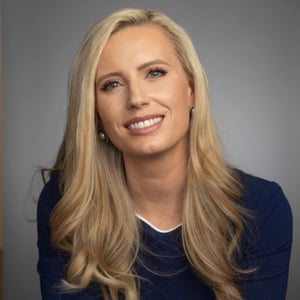
Founder, Civic Renaissance; Adjunct Professor, Indiana University Lilly Family School of Philanthropy
ALEXANDRA O. HUDSON is a writer, popular speaker, and the founder of Civic Renaissance, a publication and intellectual community dedicated to beauty, goodness and truth. She was named the 2020 Novak Journalism Fellow, and contributes to Fox News, CBS News, The Wall Street Journal, USA Today, TIME Magazine, POLITICO Magazine, and Newsweek. She earned a master's degree in public policy at the London School of Economics as a Rotary Scholar, and is an adjunct professor at the Indiana University Lilly School of Philanthropy. She is also the creator of a series for The Teaching Company called Storytelling and The Human Condition. Her first book, The Soul of Civility: Timeless Principles to Heal Society and Ourselves, is forthcoming from St. Martin’s press this October. She lives in Indianapolis, IN with her husband and children.

Energy Emergency: Executive Power and the Future of U.S. Energy
Varu Chilakamarri, Robert L. Levy, Mario Loyola, Corinne Virginia Snow, Jim Wedeking
Energy Emergency: Executive Power and the Future of U.S. Energy Wednesday, May 21 2025 at...
Energy Emergency: Executive Power and the Future of U.S. Energy
Regulatory Transparency Project
Washington, DCDaniel Webster Debate Series: Do Nationwide Injunctions Undermine the President's Lawful Authority?
John G. Malcolm, Chad A. Readler, Stephen I. Vladeck
The Federalist Society's Georgetown Law Chapter'sDaniel Webster Debate Series presents Daniel Webster Debate Series:Do...
Daniel Webster Debate Series: Do Nationwide Injunctions Undermine the President's Lawful Authority?
Legal Perspectives On the Trump Litigation
Co-Sponsored by the St. Louis Lawyers Chapter and the FBA
St. Louis, MOMay Luncheon
Montgomery Lawyers Chapter
Montgomery, AL2025 Wisconsin Chapters Conference
Pewaukee, WITopics
New From FedSoc: State Court Docket Watch Newsletter
Federalism is a central feature of our American system of government. In recognition of the...
Civility Beyond Politeness (Rescheduled)
Orange County Federalist Society
Irvine, CAThirteenth Annual Executive Branch Review Conference — EBRXIII
Theories of Presidential Power
Washington, DC