
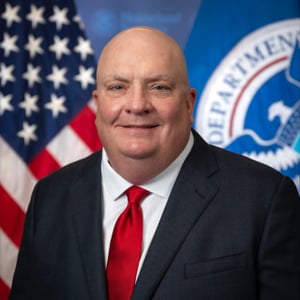
Acting Assistant Commissioner of Customs and Border Protection, Office of Professional Responsibility, U.S. Department of Homeland Security
Brian M. Fish is currently the Senior Advisor to the General Counsel at the Department of Homeland Security where he works on immigration and law enforcement issues. Previously, he was a trial attorney with the United States Immigration and Customs Enforcement, where he represented the Department of Homeland Security in removal hearings before the U.S. Immigration Court. Additionally, he was a Special Assistant United States Attorney and a Baltimore City homicide prosecutor. He is a member of the Federalist Society's Criminal Law & Procedure Practice Group Executive Committee and the President of its Baltimore Lawyers Chapter. He earned his B.A. from LaSalle University in 1992 and his J.D. from Loyola University New Orleans School of Law in 1998.
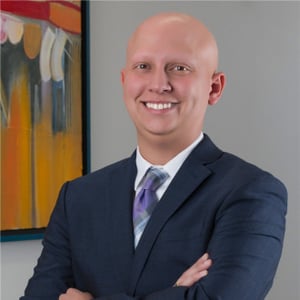
Deputy Solicitor General of Puerto Rico, Puerto Rico Department of Justice
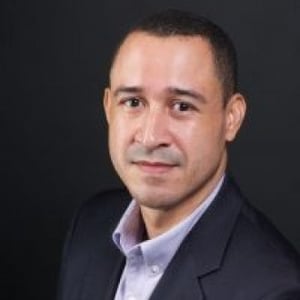
Professor, University of Puerto Rico School of Law
William Vazquez Irizarry is a tenured professor at the University of Puerto Rico School of Law, where he teaches Administrative Law, Constitutional Law and Civil Procedure. Before joining the UPR’s faculty, he served as Executive Assistant to Governor Sila Calderon’s Chief of Staff, legal counsel to Governor Sila Calderón and Attorney General of Puerto Rico.
Vazquez obtained an LL.M. from the London School of Economics. He is known for his lectures and publications on the topic of administrative law in Puerto Rico. Most notably, he has made an in-depth study of the powers of the Office of the Governor of Puerto Rico and the use of executive orders: “Los poderes del Gobernador de Puerto Rico y el uso de órdenes ejecutivas”, 76 Rev. Jur. UPR 715 (2007). More recently, he addressed the issue of lockdowns in Puerto Rico in an opinion piece published at El Nuevo Dia newspaper.
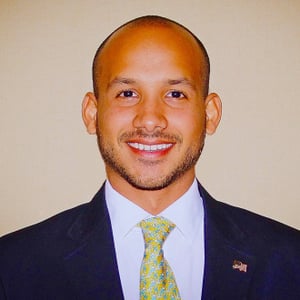
Attorney
John Ross Serrano is an attorney admitted to the practice of law in the Commonwealth of Puerto Rico, the United States District Court for the District of Puerto Rico, and the U.S. Supreme Court. He is currently an active-duty officer in the U.S. Army’s Judge Advocate General Corps.
Prior to beginning his military service, he clerked at the U.S. Bankruptcy Court for the District of Puerto Rico; served as the University of Puerto Rico – Rio Piedras Campus’ Equal Employment Opportunity Compliance Officer; practiced the notarial profession; and undertook pro bono case work. He also taught CLE on issues of bankruptcy and ethics.
He is a founding board member of the Puerto Rico Lawyers’ Chapter of the Federalist Society. Before being admitted to the practice of law, he founded the College Republican Federation of Puerto Rico and was subsequently elected Comptroller of the College Republican National Committee.
John is a product of the University of Puerto Rico, the oldest and largest learning institution in the Caribbean, where he obtained his high school diploma, bachelor of arts, and juris doctor degree.

Senior Fellow and Director of Constitutional Studies, Manhattan Institute
Ilya Shapiro is a senior fellow and director of constitutional studies at the Manhattan Institute and a contributing editor of City Journal. Previously he was executive director and senior lecturer at the Georgetown Center for the Constitution, and before that a vice president of the Cato Institute.
Shapiro is the author of Lawless: The Miseducation of America’s Elites (2025) and Supreme Disorder: Judicial Nominations and the Politics of America’s Highest Court (2020), coauthor of Religious Liberties for Corporations? (2014), and editor of 11 volumes of the Cato Supreme Court Review (2008-18). He has contributed to a variety of academic, popular, and professional publications, including the Wall Street Journal, Harvard Journal of Law & Public Policy, Washington Post, Los Angeles Times, USA Today, National Review, and Newsweek. He also regularly provides commentary for various media outlets, writes the Shapiro’s Gavel newsletter on Substack, and once appeared on the Colbert Report.
Shapiro has testified many times before Congress and state legislatures and has filed more than 500 amicus curiae “friend of the court” briefs in the Supreme Court. He lectures regularly on behalf of the Federalist Society, is a member of the board of fellows of the Jewish Policy Center, was an inaugural Washington Fellow at the National Review Institute, and has been an adjunct law professor at the George Washington University and University of Mississippi. He is also the chairman of the board of advisers of the Mississippi Justice Institute, a barrister in the Edward Coke Appellate Inn of Court, and a former member of the Virginia Advisory Committee to the U.S. Commission on Civil Rights.
Earlier in his career, Shapiro was a special assistant/adviser to the Multi-National Force in Iraq on rule-of-law issues and practiced at Patton Boggs and Cleary Gottlieb. Before entering private practice, he clerked for Judge E. Grady Jolly of the U.S. Court of Appeals for the Fifth Circuit. He holds an AB from Princeton University, an MSc from the London School of Economics, and a JD from the University of Chicago Law School.
Professor, University of Puerto Rico School of Law
William Vazquez Irizarry is a tenured professor at the University of Puerto Rico School of Law, where he teaches Administrative Law, Constitutional Law and Civil Procedure. Before joining the UPR’s faculty, he served as Executive Assistant to Governor Sila Calderon’s Chief of Staff, legal counsel to Governor Sila Calderón and Attorney General of Puerto Rico.
Vazquez obtained an LL.M. from the London School of Economics. He is known for his lectures and publications on the topic of administrative law in Puerto Rico. Most notably, he has made an in-depth study of the powers of the Office of the Governor of Puerto Rico and the use of executive orders: “Los poderes del Gobernador de Puerto Rico y el uso de órdenes ejecutivas”, 76 Rev. Jur. UPR 715 (2007). More recently, he addressed the issue of lockdowns in Puerto Rico in an opinion piece published at El Nuevo Dia newspaper.
Senior Fellow and Director of Constitutional Studies, Manhattan Institute
Ilya Shapiro is a senior fellow and director of constitutional studies at the Manhattan Institute and a contributing editor of City Journal. Previously he was executive director and senior lecturer at the Georgetown Center for the Constitution, and before that a vice president of the Cato Institute.
Shapiro is the author of Lawless: The Miseducation of America’s Elites (2025) and Supreme Disorder: Judicial Nominations and the Politics of America’s Highest Court (2020), coauthor of Religious Liberties for Corporations? (2014), and editor of 11 volumes of the Cato Supreme Court Review (2008-18). He has contributed to a variety of academic, popular, and professional publications, including the Wall Street Journal, Harvard Journal of Law & Public Policy, Washington Post, Los Angeles Times, USA Today, National Review, and Newsweek. He also regularly provides commentary for various media outlets, writes the Shapiro’s Gavel newsletter on Substack, and once appeared on the Colbert Report.
Shapiro has testified many times before Congress and state legislatures and has filed more than 500 amicus curiae “friend of the court” briefs in the Supreme Court. He lectures regularly on behalf of the Federalist Society, is a member of the board of fellows of the Jewish Policy Center, was an inaugural Washington Fellow at the National Review Institute, and has been an adjunct law professor at the George Washington University and University of Mississippi. He is also the chairman of the board of advisers of the Mississippi Justice Institute, a barrister in the Edward Coke Appellate Inn of Court, and a former member of the Virginia Advisory Committee to the U.S. Commission on Civil Rights.
Earlier in his career, Shapiro was a special assistant/adviser to the Multi-National Force in Iraq on rule-of-law issues and practiced at Patton Boggs and Cleary Gottlieb. Before entering private practice, he clerked for Judge E. Grady Jolly of the U.S. Court of Appeals for the Fifth Circuit. He holds an AB from Princeton University, an MSc from the London School of Economics, and a JD from the University of Chicago Law School.
Attorney
John Ross Serrano is an attorney admitted to the practice of law in the Commonwealth of Puerto Rico, the United States District Court for the District of Puerto Rico, and the U.S. Supreme Court. He is currently an active-duty officer in the U.S. Army’s Judge Advocate General Corps.
Prior to beginning his military service, he clerked at the U.S. Bankruptcy Court for the District of Puerto Rico; served as the University of Puerto Rico – Rio Piedras Campus’ Equal Employment Opportunity Compliance Officer; practiced the notarial profession; and undertook pro bono case work. He also taught CLE on issues of bankruptcy and ethics.
He is a founding board member of the Puerto Rico Lawyers’ Chapter of the Federalist Society. Before being admitted to the practice of law, he founded the College Republican Federation of Puerto Rico and was subsequently elected Comptroller of the College Republican National Committee.
John is a product of the University of Puerto Rico, the oldest and largest learning institution in the Caribbean, where he obtained his high school diploma, bachelor of arts, and juris doctor degree.
Deputy Solicitor General of Puerto Rico, Puerto Rico Department of Justice
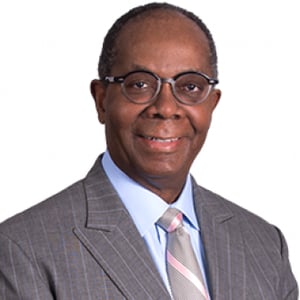
Managing Partner, Crabbe Brown & James LLP
Larry James has been at the heart of the Columbus business, legal, civic, and political scene for the last thirty years. He is a respected litigator, as well as an advisor to local and national leaders. In recognition of his many achievements, the law firm changed its name from Crabbe, Brown, Jones, Potts & Schmidt to Crabbe, Brown & James in January 2001.
In 2011, The Ohio State University selected Mr. James as lead counsel to represent its student athletes in NCAA investigations. In 2013, Armen Keteyian published his book The System: The Glory and Scandal of Big-Time College Football, a chapter of which is dedicated to Larry’s work in representing the OSU football players.
In 2012, Mr. James and his wife, Donna, were awarded the American Red Cross of Greater Columbus’ Humanitarians of the Year Award. In 2015, noted journalist Wil Haygood published his award-winning book Showdown: Thurgood Marshall and the Supreme Court Nomination That Changed America, which he dedicated to Mr. James.
Mr. James is a life member of the Sixth Circuit Judicial Conference, and he has served as General Counsel of the National Fraternal Order of Police since 2001.

Senior Vice President for Legal Studies, Cato Institute
Clark Neily is senior vice president for legal studies at the Cato Institute. His areas of interest include constitutional law, overcriminalization, civil forfeiture, police accountability, and gun rights. Neily is the author of Terms of Engagement: How Our Courts Should Enforce the Constitution’s Promise of Limited Government. His writing has appeared in the Wall Street Journal, Forbes, and National Review Online, as well as various law reviews, including the Harvard Journal of Law and Public Policy, George Mason Law Review, Georgetown Journal of Law and Public Policy, NYU Journal of Law and Liberty, and Texas Review of Law and Politics. Neily is a frequent guest speaker and lecturer for the Federalist Society, Institute for Humane Studies, and American Constitution Society.
Before joining Cato in 2017, Neily was a senior attorney and constitutional litigator at the Institute for Justice and director of the Institute’s Center for Judicial Engagement. He is also an adjunct professor at the University of Texas School of Law, where he teaches constitutional litigation and public-interest law.
Neily served as co-counsel in District of Columbia v. Heller, the historic case in which the Supreme Court held for the first time that the Second Amendment protects an individual right to own a gun for self-defense.
Neily began his legal career as a law clerk to Judge Royce Lamberth on the U.S. District Court for the District of Columbia. After that he spent four years in the trial department of the Dallas-based firm Thompson & Knight. Neily received his undergraduate and law degrees from the University of Texas, where he was Chief Articles Editor of the Texas Law Review.
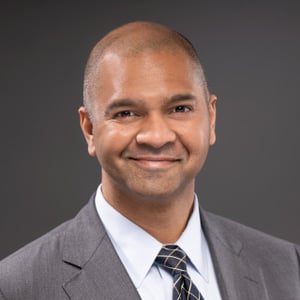
Senior Fellow, Stand Together Trust
Vikrant Reddy is a senior fellow at Stand Together Trust, specializing in the area of criminal justice reform. Reddy previously served as a senior policy analyst at the Texas Public Policy Foundation (TPPF), where he managed the launch of TPPF’s national Right on Crime initiative in 2010. He has worked as a research assistant at the Cato Institute, as a judicial clerk to the Hon. Gina M. Benavides in Texas, and as an attorney in private practice. He is a member of the State Bar of Texas, and he serves on the Executive Committee of the Criminal Law Practice Group of the Federalist Society. He is also an appointee to the U.S. Commission on Civil Rights Texas State Advisory Committee.
Reddy’s research and scholarly opinions have appeared in a range of national media outlets, including USA Today, National Review, The Federalist, and others.
Reddy earned his law degree from the Southern Methodist University School of Law. He received his undergraduate degree from the University of Texas at Austin.
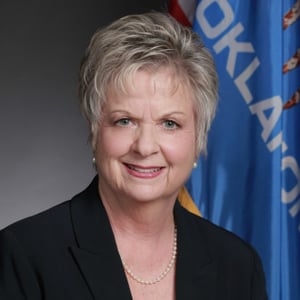
Oklahoma Senate Judiciary Committee Chair
Senator Julie Daniels was elected to the State Senate in 2016. She is honored to represent the people of District 29, which includes Washington, Nowata and northern Rogers Counties.
Prior to her election Julie spent three decades in volunteer leadership in her adopted hometown of Bartlesville. She currently serves on the boards of the Boys & Girls Club of Bartlesville, Arvest Bank Bartlesville, Bluestem Medical Foundation, and the Oklahoma Alliance of Boys & Girls Clubs. She is a member of the Oklahoma Bar Association.
Daniels is a former Mayor of Bartlesville and served eight years on the City Council. During her council tenure she focused on local government reform, long-term water supply, downtown redevelopment, park and recreation improvements and historic preservation projects.
Senator Daniels served on the Oklahoma Tourism and Recreation Commission and the Oklahoma Centennial Commemoration Commission. She participated in the public phase of the preparation of the 2012 State Water Plan. She is a graduate of Leadership Oklahoma and Leadership Bartlesville.
Julie was born and raised in Oklahoma City. She graduated from the University of Oklahoma and the University of Tulsa College of Law. She and husband Charlie have been married forty years. They have two sons, a lovely daughter-in-law and a beautiful granddaughter. The Daniels are members of Bartlesville First United Methodist Church.
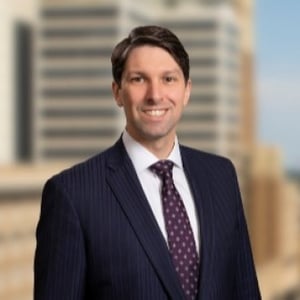
Shareholder and Director, GableGotwals
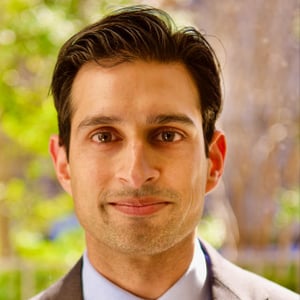
Partner, Lehotsky Cohn
Mithun Mansinghani is an experienced appellate and trial litigator who has argued cases at all levels in state and federal court, including at the U.S. Supreme Court. His practice focuses on commercial litigation, regulatory issues, and appeals. Mr. Mansinghani has been ranked by Chambers & Partners both in Oklahoma and nationwide for his litigation work. He also has been recognized in Lawdragon’s 500X – The Next Generation list for his appellate expertise and Benchmark Litigation’s 40 and Under list for his commercial litigation.
From 2017 to 2022, Mr. Mansinghani served as Oklahoma Solicitor General, the state’s chief advocate on appellate matters, constitutional issues, and challenges to federal regulation. In that role, he also advised the Attorney General, the Governor, the Legislature, and other state leadership on critical and high-stakes legal issues. Mr. Mansinghani has argued more cases before the Justices of the Oklahoma Supreme Court than any other litigator in the last decade.
Mr. Mansinghani has been nationally recognized for amici briefs he authored at the U.S. Supreme Court. These amici briefs have been cited in Supreme Court opinions, referenced by the Justices at argument, and received a National Association of Attorneys General “Best Brief” award. He also provides commentary on U.S. Supreme Court cases for media outlets including NPR, The New York Times, SCOTUSblog, and Bloomberg.
In addition to appellate litigation, Mr. Mansinghani has first-chaired several bench trials to successful verdicts. He has conducted all stages of district court litigation, and has prevailed in numerous cases on summary judgment and motions to dismiss.
Mr. Mansinghani’s extensive experience includes federal and state constitutional law, litigating federal and state regulation, and work with state attorneys general. He has particular expertise in matters related to energy and the environment. Mr. Mansinghani also has significant experience negotiating with Native American tribes and has litigated some of the nation’s most important federal Indian law cases.
Prior to serving in the Oklahoma Attorney General’s Office, Mr. Mansinghani was a litigator with Gibson, Dunn and Crutcher in Washington, D.C. He served as a law clerk to the Hon. Jerry E. Smith on the U.S. Court of Appeals for the Fifth Circuit. Mr. Mansinghani graduated with honors from Harvard Law School, where he was as an editor of The Harvard Law Review.
Oklahoma Senate Judiciary Committee Chair
Senator Julie Daniels was elected to the State Senate in 2016. She is honored to represent the people of District 29, which includes Washington, Nowata and northern Rogers Counties.
Prior to her election Julie spent three decades in volunteer leadership in her adopted hometown of Bartlesville. She currently serves on the boards of the Boys & Girls Club of Bartlesville, Arvest Bank Bartlesville, Bluestem Medical Foundation, and the Oklahoma Alliance of Boys & Girls Clubs. She is a member of the Oklahoma Bar Association.
Daniels is a former Mayor of Bartlesville and served eight years on the City Council. During her council tenure she focused on local government reform, long-term water supply, downtown redevelopment, park and recreation improvements and historic preservation projects.
Senator Daniels served on the Oklahoma Tourism and Recreation Commission and the Oklahoma Centennial Commemoration Commission. She participated in the public phase of the preparation of the 2012 State Water Plan. She is a graduate of Leadership Oklahoma and Leadership Bartlesville.
Julie was born and raised in Oklahoma City. She graduated from the University of Oklahoma and the University of Tulsa College of Law. She and husband Charlie have been married forty years. They have two sons, a lovely daughter-in-law and a beautiful granddaughter. The Daniels are members of Bartlesville First United Methodist Church.
Shareholder and Director, GableGotwals
Partner, Lehotsky Cohn
Mithun Mansinghani is an experienced appellate and trial litigator who has argued cases at all levels in state and federal court, including at the U.S. Supreme Court. His practice focuses on commercial litigation, regulatory issues, and appeals. Mr. Mansinghani has been ranked by Chambers & Partners both in Oklahoma and nationwide for his litigation work. He also has been recognized in Lawdragon’s 500X – The Next Generation list for his appellate expertise and Benchmark Litigation’s 40 and Under list for his commercial litigation.
From 2017 to 2022, Mr. Mansinghani served as Oklahoma Solicitor General, the state’s chief advocate on appellate matters, constitutional issues, and challenges to federal regulation. In that role, he also advised the Attorney General, the Governor, the Legislature, and other state leadership on critical and high-stakes legal issues. Mr. Mansinghani has argued more cases before the Justices of the Oklahoma Supreme Court than any other litigator in the last decade.
Mr. Mansinghani has been nationally recognized for amici briefs he authored at the U.S. Supreme Court. These amici briefs have been cited in Supreme Court opinions, referenced by the Justices at argument, and received a National Association of Attorneys General “Best Brief” award. He also provides commentary on U.S. Supreme Court cases for media outlets including NPR, The New York Times, SCOTUSblog, and Bloomberg.
In addition to appellate litigation, Mr. Mansinghani has first-chaired several bench trials to successful verdicts. He has conducted all stages of district court litigation, and has prevailed in numerous cases on summary judgment and motions to dismiss.
Mr. Mansinghani’s extensive experience includes federal and state constitutional law, litigating federal and state regulation, and work with state attorneys general. He has particular expertise in matters related to energy and the environment. Mr. Mansinghani also has significant experience negotiating with Native American tribes and has litigated some of the nation’s most important federal Indian law cases.
Prior to serving in the Oklahoma Attorney General’s Office, Mr. Mansinghani was a litigator with Gibson, Dunn and Crutcher in Washington, D.C. He served as a law clerk to the Hon. Jerry E. Smith on the U.S. Court of Appeals for the Fifth Circuit. Mr. Mansinghani graduated with honors from Harvard Law School, where he was as an editor of The Harvard Law Review.
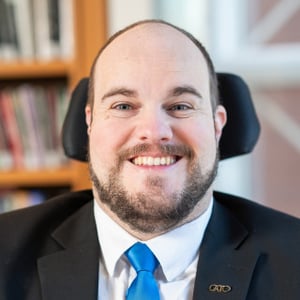
Director, Project on Criminal Justice, Cato Institute
Matthew Cavedon is the Director of the Cato Institute’s Project on Criminal Justice. He focuses on reforming plea-driven mass adjudication, ensuring police accountability, and defending constitutional criminal originalism. Cavedon’s scholarship has been published (or is forthcoming in) publications including the Arizona State Law Journal, Cato Supreme Court Review, Seattle University Law Review, and Georgetown Journal of Law and Public Policy. Formerly a Georgia public defender and fellow at the Institute for Justice, Cavedon has taught law school courses on criminal law and procedure, as well as the First Amendment. Cavedon clerked for a U.S. district court and the Supreme Court of Georgia. He came to Cato following a fellowship at the Emory University Center for the Study of Law and Religion.

Co-Chair, Republican National Lawyers Association
Jennifer Bukowsky is a syndicated talk radio host, Co-Chair of the Republican National Lawyers Association, and Vice-Chair of the Missouri Republican Party.
An accomplished criminal defense attorney, Jennifer has handled more than 1,400 cases ranging from trespass to first-degree murder. She clerked for Missouri Supreme Court Judge Mary R. Russell, served as an Assistant Public Defender, and later built her own firm before launching Show-Me Defenders in 2021.
Her contributions have been widely recognized with awards including the David J. Dixon Appellate Advocacy Award, the President’s Service Award from the Missouri Association of Criminal Defense Attorneys, the Distinguished Recent Alumni Award from the University of Missouri School of Law, and “20 Under 40” honors from the Columbia Business Times. She has helped shape Missouri law as a member of committees that revised the Criminal Code and drafted the state’s expungement bill—both now enacted.
A leader in conservative legal circles, Jennifer serves on the Missouri Supreme Court’s Task Force on Criminal Justice and the Show-Me Institute Board, previously taught the Innocence Clinic at Mizzou, and has deployed multiple times as an election attorney for the Republican National Lawyers Association.
A University of Missouri School of Law graduate with highest honors and Order of the Coif membership, she also holds bachelor’s and master’s degrees in accountancy and is a licensed CPA. She lives in Columbia, Missouri, with her husband and two sons.
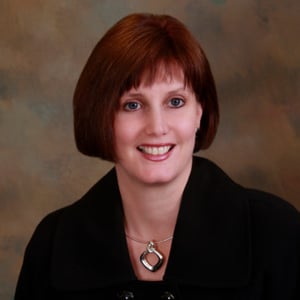
Prosecuting Attorney, Christian County, Missouri
On January 1, 2011, Amy Fite began her first term as the Prosecuting Attorney for Christian County. During her tenure the office has transitioned to a “fileless office”, a “no refusal” policy has been established to allow law enforcement to seek search warrants in cases involving impaired drivers, the office has been structured into teams for better efficiency and accountability. She has implemented a best practice of vertical prosecution – meaning the same prosecutor handles the case from case review through disposition.
After graduating cum laude from St. Louis University School of Law in 1997, Fite began as an Assistant Prosecuting Attorney in Christian County Prosecuting Attorney’s Office. While there she served as the narcotics attorney. Upon leaving Christian County, Fite spent over eight years at the Circuit Attorney’s Office for the City of St. Louis. At the Circuit Attorney’s Office, Fite served in the Drug Court, Domestic Violence Unit, General Felony Trial Staff, Gang Unit, and the Sex Crimes and Child Abuse Unit. She spent more than two years as the Trial Trainer, where she trained incoming Assistant Circuit Attorneys how to prepare and try jury trials. While at the Circuit Attorney’s Office, Fite participated in well over 100 jury trials, including successfully convicting murderers, robbers, rapists and child sex offenders. In 2008, Fite joined in the Greene County Prosecuting Attorney’s Office serving as a 1st Assistant Prosecuting Attorney for the General Crimes Unit. January 1, 2011, she began her first term as Christian County Prosecuting Attorney.
Fite serves on the board of the Missouri Association of Prosecuting Attorneys (MAPA). In 2018, she concluded a two-year term as president for MAPA. She previously served as the president-elect and secretary of MAPA, and as the chair of the Victim Services Sub-committee of MAPA’s Best Practices Committee. She currently serves as a co-chair on the Missouri Supreme Court’s Task Force on Criminal Justice.
Fite was honored as the Prosecutor of the Year in 2018 by the Missouri Association of Prosecuting Attorneys. In 2015, the Missouri Victim Assistance Network honored her with the James P. Damos Award in recognition of her willingness to go above and beyond her designated duties in order to affect a positive change for victims. In 2014, she was honored as the Family and Sexual Violence Hero of the Year by MAPA. That same year, she was named, one of Springfield Business Journal’s Twenty Most Influential Women. In 2006, Fite was named by the Missouri Lawyers Weekly as one of Missouri’s “Up and Coming Lawyers”. Fite’s trial skills were recognized while at the Circuit Attorney’s Office by receiving the Trial Star Award three consecutive years and being a recipient of the Justice Award.
As the elected Prosecutor, Fite serves with 18 other members of the office whose mission is to seek and serve justice. She continues to carry a caseload that includes murders and sexually related crimes.
Fite has presented at national and statewide conferences. In 2016 she co-presented at the Gundersen VIP Summit/When Words Matter conference on the benefits of conducting forensic interviews of children beyond the age of the hearsay exception. She is a member of the “ChildFirst” faculty whose responsibility is training professionals from multiple disciplines who work with child victims or witnesses of child abuse, neglect or other violent crimes. She served several years training new prosecutor from across the state as part of the faculty for the Missouri Office of Prosecution Services Trial Advocacy School. She has also served as faculty on “How to Prosecute the Child Sex Offender”. She was also a member of the original faculty who created the curriculum. She has presented on various topics at the statewide Prosecutors’ Conference. She has regularly presented at various citizen academies hosted by local law enforcement agencies.
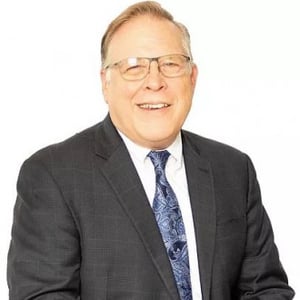
Partner, Wyrsch, Hobbs & Mirakian, PC
Mr. Hobbs has extensive experience in both civil and criminal cases with particular emphasis in white collar criminal defense work. He has tried cases in areas such as criminal enforcement of environmental laws, defense of health care prosecutions, representation of individuals and corporations charged with business crimes, and defense of political corruption prosecutions. Mr. Hobbs has also represented individuals charged with violent offenses and sexual assault cases. His practice also involves grand jury representation and pretrial representation of individuals and corporations under investigation for criminal conduct. Mr. Hobbs is the recipient of numerous awards, and he has served on many boards of organizations advocating for criminal defendants.
Acting Assistant Commissioner of Customs and Border Protection, Office of Professional Responsibility, U.S. Department of Homeland Security
Brian M. Fish is currently the Senior Advisor to the General Counsel at the Department of Homeland Security where he works on immigration and law enforcement issues. Previously, he was a trial attorney with the United States Immigration and Customs Enforcement, where he represented the Department of Homeland Security in removal hearings before the U.S. Immigration Court. Additionally, he was a Special Assistant United States Attorney and a Baltimore City homicide prosecutor. He is a member of the Federalist Society's Criminal Law & Procedure Practice Group Executive Committee and the President of its Baltimore Lawyers Chapter. He earned his B.A. from LaSalle University in 1992 and his J.D. from Loyola University New Orleans School of Law in 1998.
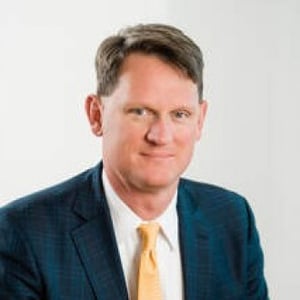
Partner, Ellinger and Associates, LLC
Marc Ellinger is a founding partner of Ellinger and Associates, LLC, and represents businesses, individuals, organizations and committees in disputes. Marc focuses his practice in election law, legislative and rulemaking practice, municipal finance and structuring, issues of state and federal constitutional law, gaming law, and appellate practice and has achieved a Martindale-Hubbell AV Preeminent rating.
Marc served as legal counsel for the Missouri State Auditor in 1993. In that role advised the State Auditor constitutional and tax law matters, as well as matters related to municipal and state debt financing and regularly appeared before the state appellate courts and the Missouri Supreme Court on the Auditor’s behalf. Marc transitioned to private practice in 1999. Prior to founding Ellinger and Associates, LLC, Marc was a member of Blitz, Bardgett & Deutsch, LC.
Marc has more than twenty years of experience in election law and campaign finance compliance, including the representation of candidates, as well as ballot measure campaigns and Political Action Committees across the State of Missouri. Marc has drafted initiative petitions covering a broad range of subjects and has been involved in the coordination of campaigns and litigation on ballot measures, on behalf of both proponents and opponents.
Marc is also actively involved in representing businesses and individuals in gaming law, particularly with respect to the Missouri Gaming Commission license and compliance matters. He represents casino operators, gaming equipment suppliers, game developers and key persons throughout the gaming industry on a broad range of gaming and licensing matters. He is one of only two Missouri attorneys recognized as a General Member of the International Masters of Gaming Law and is recognized as a Super Lawyer in the Gaming Law area.
Marc’s background as a CPA allows him to view tax matters through multiple lenses. Marc has represented numerous clients in administrative and civil cases involving sales, use and property tax law. He also regularly advises clients regarding transaction structuring.
Marc has significant appellate experience in Missouri. He has argued more than twenty cases in the Missouri Supreme Court and dozens more in the Eastern and Western Districts of the Missouri Court of Appeals. From local government issues of first impression, to tax matters, to numerous election law cases, Marc has protected the interests of businesses, individuals and local governments across Missouri.
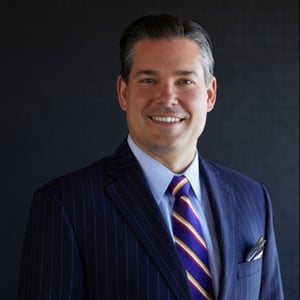
Partner, Graves Garrett Greim LLC
Edward “Eddie” Greim focuses his practice on complex commercial litigation, free speech and election law, and internal investigations and whistleblower claims. He has been recognized for his successful representation of businesses and individuals in commercial litigation while also being named a “go-to” lawyer on policy and constitutional issues.
Eddie was named a Constitutional and Election Law Trailblazer by the National Law Journal in 2020. His free speech and election law practice has included numerous constitutional challenges to election and campaign finance laws; representation of clients in state and federal ethics and campaign finance enforcement actions and investigations; initiative petition drafting and litigation; litigation and advice regarding First Amendment protections for petition circulation; representation of not-for-profit clients before state regulators; litigation of state and federal redistricting issues; and advice on campaign and election law compliance.
Eddie complements his trial work in complex, high-profile commercial and constitutional cases with oral advocacy and briefing in important appeals. Recognized as a Missouri Lawyers Media POWER 30 Appellate Attorney in 2021, he has argued before the Missouri and Kansas supreme courts multiple times, other state appellate courts across the country, and before the Sixth, Seventh, Eighth, and Tenth U.S. Courts of Appeals.
Eddie’s notable work for clients includes:
Recovering substantial compensation and injunctive relief for plaintiffs, in complex multiyear litigation, as lead counsel in the first and only nationwide class action certified against the Internal Revenue Service for violating taxpayer protection statutes when it targeted hundreds of groups based on their political viewpoints.
Successful First Amendment challenge to Missouri’s 2016 campaign finance restrictions.
Successful challenge to a vast, multiyear, secret criminal investigation into Wisconsin political groups and nonprofits, and follow-up challenge to expose role of state ethics board which secretly aided the investigation and was later dissolved by the legislature.
U.S. Supreme Court amicus brief for the National Republican Redistricting Trust in the 2019 Rucho litigation, and federal and state redistricting litigation and advice since 2011.
Challenges under the First Amendment in federal court, and in briefing to the Michigan Supreme Court on state constitutional grounds, to unprecedented emergency powers claimed by Michigan Governor in 2020.
Representation of numerous public officials and private citizens who are subject to “lawfare” attacks based on their political viewpoints or policy objectives.
Oversight of multiple internal investigations.
Eddie received his law degree from Harvard Law School in 2002, where he taught on the Board of Student Advisers, received the Dean’s Award for Leadership, and served as President of the Harvard Catholic Law Students Association. He received two bachelor’s degrees, summa cum laude, in economics and political science from the University of Missouri.
A native of Excelsior Springs, Missouri, Eddie lives in Kansas City with his family. He enjoys Missouri and military history. On many weekends, he can be found with his wife and daughters exploring sites of local interest. He enjoys reading and debating and has given presentations or organized discussions at numerous gatherings, formal and informal, of professional and personal interest.
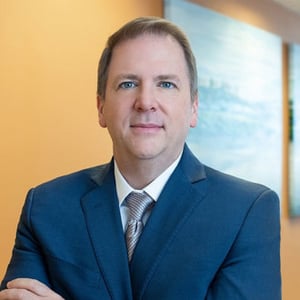
Partner, Stinson LLP
Chuck draws on 25 years’ experience litigating and negotiating very high profile cases, primarily involving some sort of government action, to help offer clients a broad and insightful perspective on Missouri's government and judiciary.
In its annual 100+ List, The Missouri Times newspaper said: Chuck Hatfield's "time at the highest levels of state government have made him very sought after as an attorney in private practice. There is probably no attorney who knows more members of the judiciary and the executive branch in the state. He is also known for his quick wit on social media and willingness to take on tough cases." He has personally handled more than a dozen major cases before the Missouri Supreme Court. Chuck regularly appears before administrative agencies as well as trial and appellate courts at both the state and federal levels.
In his regulatory practice, Chuck has handled matters involving every department of Missouri government. As an outgrowth of his regulatory- based litigation, Chuck is a highly rated commercial litigator. He defends complex high-stakes litigation including class actions involving regulated industries such as securities, insurance and merchandising practices. He chairs the firm’s Financial Services and Class Action Litigation division and its Government Solutions group.
Chuck understands the importance of providing great legal service and value to his clients. As an attorney certified in Legal Project Management (LPM), he has been trained in matter budgeting and management in order to provide transparency and efficiency to his clients.
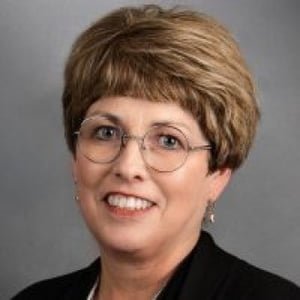
State Senator, Missouri State Senate (MO-18)
Senator Cindy O’Laughlin was sworn into office on Jan. 9, 2019, to serve the residents of Northeast Missouri’s 18th Senatorial District.
In addition to her public service, Sen. O’Laughlin has served as vice president of Leo O’Laughlin, Inc. for the past 26 years. The senator and her husband own and operate a trucking company and ready mix concrete business with locations in Shelbina, Macon, Marceline and LaBelle.
Prior to being elected to the Missouri Senate, Sen. O’Laughlin served as a school bus driver, an administrator at a local Christian school and as a member of her local school board. Now, Sen. O’Laughlin serves as the chair of the Senate Education Committee and works to improve education outcomes for all of Missouri’s children, regardless of where they live.
Senator O’Laughlin has been a member of various civic organizations such as the Shelby County Chamber of Commerce & Industry and the Shelby County Economic Development Board. She has also served on numerous statewide boards such as the Associated Builders and Contractors and the Missouri Club for Growth. Senator O’Laughlin is currently a member of the National Rifle Association, Missouri Cattlemen, the Missouri Farm Bureau and Macon First Baptist Church.
O’Laughlin grew up on a farm and spent much of her childhood around horses, livestock auctions and corn fields. Today, she’s the proud owner of several dogs including Basset Hounds, as well as several rescues dogs.
A current resident of Shelbina, Sen. O’Laughlin has four sons, a foster daughter and six grandchildren. She is a 1978 graduate of the University of Missouri.

Courthouse Steps Decision Teleforum: Pereida v. Wilkinson
Brian M. Fish
In Pereida v. Wilkinson, the Supreme Court held 5-3 that an individual seeking relief from a...
COVID-19: Lockdowns and Other Restrictions on Individual Liberties
Omar J. Andino-Figueroa, William Vazquez Irizarry, John Ross Serrano, Ilya Shapiro
On February 8, 2021, the Federalist Society's Puerto Rico Lawyers Chapter and Puerto Rico Student...
COVID-19: Lockdowns and Other Restrictions on Individual Liberties
William Vazquez Irizarry, Ilya Shapiro, John Ross Serrano, Omar J. Andino-Figueroa
On February 8, 2021, the Federalist Society's Puerto Rico Lawyers Chapter and Puerto Rico Student...
Courthouse Steps Oral Argument Teleforum: Lange v. California
Larry H. James, Clark Neily, Vikrant P. Reddy
In Lange v. California, defendant Arthur Lange challenges the application of the exigent circumstances exception...
2021 Oklahoma Legislative Preview
Julie Daniels, Adam Carl Doverspike, Mithun Mansinghani
On February 4, 2021, Oklahoma State Senator Julie Daniels, the Oklahoma Senate Judiciary Committee Chair,...
2021 Oklahoma Legislative Preview
Julie Daniels, Adam Carl Doverspike, Mithun Mansinghani
On February 4, 2021, Oklahoma State Senator Julie Daniels, the Oklahoma Senate Judiciary Committee Chair,...
Panel III: Bail Me Out?
2021 Federalist Society Missouri State Conference
Courthouse Steps Decision Teleforum: Pereida v. Wilkinson
TeleforumPanel II: A Cleaner Missouri? Redistricting: What We Can Expect
2021 Federalist Society Missouri State Conference
State Court Docket Watch: Commonwealth of Pennsylvania v. Alexander
Matthew P. Cavedon
Pennsylvania’s highest court has extinguished the automobile exception to the warrant requirement. No warrant is...