

Legal Fellow, Center for Constitutional Studies, Cato Institute
Brent Skorup is a legal fellow in the Cato Institute’s Robert A. Levy Center for Constitutional Studies.
Before joining Cato, he was a senior research fellow at the Mercatus Center at the George Mason University. His research areas include free speech, technology law, Fourth Amendment protections, regulation, and property law. Skorup has published pieces in economics and law journals and in popular media, including The Wall Street Journal, The New York Times, Bloomberg Law, Reuters, and Wired. He’s appeared as a TV and radio interview guest for news outlets like C‑SPAN, NPR, CBS News, ABC News, and CNBC Asia.
The Pennsylvania Supreme Court, a dissenting opinion at the Illinois Supreme Court, and the ALI's Restatement of the Law of Property have cited his legal research and he has testified as a technology and legal expert in legislative hearings in several states. Skorup has been appointed to several federal and state advisory bodies and he is currently a member of the Texas Advanced Air Mobility Advisory Committee.
Skorup has a BA in economics from Wheaton College and a law degree from the George Mason University School of Law, where he was articles editor for the Civil Rights Law Journal. He was a legal clerk at the FCC’s wireless bureau and Office of General Counsel and at the Energy and Commerce Committee in the U.S. House of Representatives.
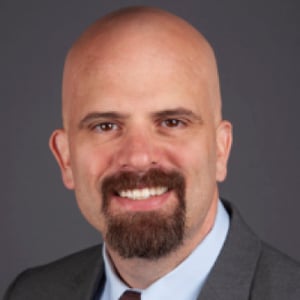
Director of Innovation Policy, International Center for Law & Economics
Kristian Stout, ICLE’s Director of Innovation Policy is an expert in intellectual property, antitrust, telecommunications, and Internet governance. Kristian has been a Fellow at the Internet Law & Policy Foundry, as well as the Eagleton Institute of Politics. Before practicing law, Kristian worked as a technology entrepreneur and a lecturer in the Computer Science Department at Rutgers University. Kristian served on the board of the New Jersey Leadership Program, and wasthe Chair of the Asset Forfeiture Working Group for the NJ State Advisory Committee to the United States Commission on Civil Rights. He has previously served on the Broadband Deployment Advisory Committee for the Federal Communications Commission. Kristian graduated magna cum laude from the Rutgers University School of law, and served on the editorial board of the Rutgers Journal of Law and Public Policy.
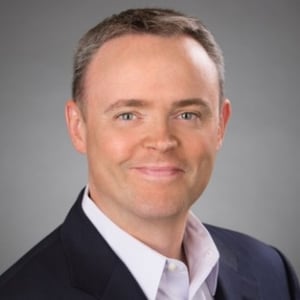
Senior Fellow, R Street Institute
Prior to R Street, Adam spent 12 years as a senior fellow at the Mercatus Center at George Mason University. Before the Mercatus Center, he served as the president of the Progress and Freedom Foundation. Adam has also worked for the Adam Smith Institute, the Heritage Foundation and the Cato Institute.
Adam has published 10 books on a wide range of topics, including online child safety, internet governance, intellectual property, telecommunications policy, media regulation and federalism.
In 2008, Adam received the Family Online Safety Institute’s “Award for Outstanding Achievement.”
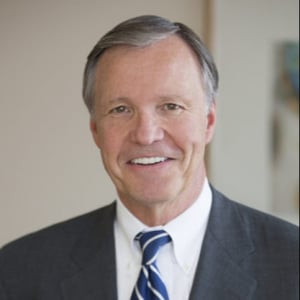
Former Representative, United States House of Representatives, California
Chris Cox serves on the boards of privately held companies in the health care, real estate, regulatory compliance, and technology industries. In 2020 he retired as president of Morgan Lewis Consulting LLC and as partner at the international law firm of Morgan, Lewis & Bockius LLP. His 21-year career in private legal practice also included partnerships at Latham & Watkins LLP and Bingham McCutchen LLP.
During a 23-year Washington career, Chris was a White House counsel to President Ronald Reagan, chairman of the US Securities and Exchange Commission, chairman of the Homeland Security Committee in the US House of Representatives, and the fifth-ranking elected leader in the House. Prior to his Washington service he was a member of the faculty at Harvard Business School.
Chris has recently been recognized by Thomson Reuters as a 2019 "Super Lawyer," by Los Angeles Magazine as one of the "Top Attorneys in Southern California," and by The Best Lawyers in America in the areas of Corporate Governance and Corporate Law, as well as being named Orange County "Corporate Lawyer of the Year" for 2016 and "Corporate Governance Lawyer of the Year" for 2014. He has led numerous corporate governance programs and from 2011 - 2015 served as Chairman of the Forum for Corporate Directors.
In Congress, in addition to his role as chairman of the Committee on Homeland Security, Chris was chairman of the Select Committee on US National Security and a senior member of the Energy and Commerce Committee and the Financial Services Committee. For 10 years he served as chairman of the House Policy Committee. In each of these capacities he was responsible for significant legislation, including the Internet Tax Freedom Act, the Securities Litigation Reform Act, and the Support for Eastern European Democracy Act.
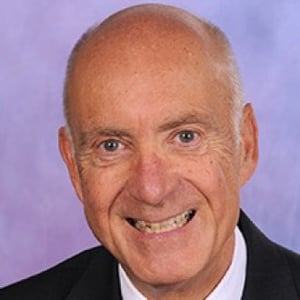
Distinguished Service Professor of Law; Chair, Levin Center at Wayne Law Faculty Committee, Wayne State University Law School
Following graduation with distinction from The University of Michigan Law School in 1964, where he served on the law review and was elected a member of the Order of the Coif, Professor Mogk practiced law with Shearman & Sterling in New York City. In addition to corporate law and litigation, his practice included providing legal counsel to the pioneering program revitalizing the Bedford-Stuyvesant neighborhood of Brooklyn, New York.
He joined the Wayne Law faculty in 1968, one year after Detroit's major civil disturbance, to focus upon critical issues facing America's distressed urban communities. His work has included research, teaching and engagement in the field of urban law and policy on such issues as economic development, neighborhood rehabilitation and intergovernmental cooperation. Professor Mogk frequently contributes editorial commentary on critical urban issues to the major media outlets.
Professor Mogk has assumed many public leadership positions, including his recent position as Chair of the Michigan Council on Labor and Economic Growth and as past Chair of Habitat for Humanity Detroit from 1999 to 2006. He has been an adviser to the state, Wayne County and the city of Detroit on a variety of urban development initiatives, including the Michigan State Housing Development Authority and the City of Detroit Planning and Development Department. He has also served on the Detroit Board of Education, Executive Committee of the Southeast Michigan Council of Governments and Michigan Construction Code Commission. From 1974-1994 he was executive director of the Michigan Energy and Resource Research Association, a nonprofit state, university and industry scientific partnership developing renewable energy policy and projects for Michigan.
He has received special commendations from the Michigan Legislature and Detroit Common Council and was selected Outstanding Professor by the law school student body in 1979, 1983 and 1994, 1997, 2003 and 2016 by the alumni in 1993. Professor Mogk was named one of the Ten Outstanding Young Men in the Unites States (U.S. Jaycees) in 1973.
He teaches courses in Property, State and Local Government Law, Land Use Planning, and Urban Development. Professor Mogk was a visiting fellow at the University of Warwick in England during 1985-86, and the University of Utrecht, the Netherlands, in 2001. He has served as editor of the Michigan International Lawyer, published by the State Bar of Michigan, and a member of the State Bar's Land Title Standards Committee.
Urban Agriculture Policy Paper
Professor Mogk led two former students, Sarah Kwiatkowski and Mary Jo Weindorf, on an urban agriculture policy paper for the city of Detroit. The paper, titled Promoting Urban Agriculture as an Alternative Land Use for Vacant Properties in the City of Detroit: Benefits, Problems and Proposals for a Regulatory Framework for Successful Land Use Integration, was submitted to Detroit Mayor Dave Bing and Detroit City Council President Charles Pugh in August 2010 .

Senior Policy Counsel, Americans for Prosperity Foundation
Cynthia Fleming Crawford is Senior Policy Counsel with Americans for Prosperity Foundation, focusing on regulatory issues, freedom of expression, and educational freedom. Ms. Crawford was counsel of record for AFPF’s amicus brief in support of Petitioners in Liu v. SEC and for Cause of Action Institute amicus briefs in support of Petitioners in Publishers Business Services, Inc. v. FTC and AMG Capital Management, LLC v. FTC.
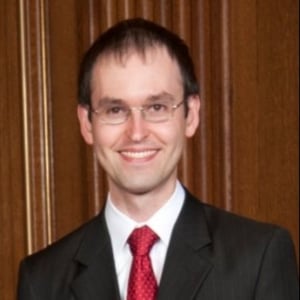
Partner, Cooper & Kirk PLLC
BRIAN W. BARNES has litigated high-stakes cases at all levels of the federal court system and has also argued numerous cases in state trial and appellate courts. He was the principal author of the briefs for the petitioners in Collins v Mnuchin, a multi-billion-dollar administrative law case challenging the nationalization of Fannie Mae and Freddie Mac, which is currently pending in the United States Supreme Court. In related litigation, Mr. Barnes deposed several of the current and former senior executives for Fannie Mae and Freddie Mac, including both companies’ former CEOs. Mr. Barnes also played a central role representing shareholders in disputes over the scope of the government’s discovery obligations in the Fannie Mae/Freddie Mac litigation, successfully persuading the Court of Federal Claims to order the government to show plaintiffs’ counsel most of the documents the government attempted to withhold under the deliberative process and bank examination privileges.
Mr. Barnes also has extensive experience representing plaintiffs in suits filed under the Racketeer Influenced and Corrupt Organizations Act (“RICO”). He briefed and argued St. Luke’s Health Network v. Lancaster General Hospital, 967 F.3d 295 (3d Cir. 2020), in which the Third Circuit reversed dismissal of RICO claims filed as part of a putative class action against a hospital that allegedly defrauded a Pennsylvania program that subsidizes care for indigent patients. Mr. Barnes also helped pioneer the use of RICO to sue state-legalized marijuana businesses: he filed the first such case, successfully argued the case on appeal after it was dismissed, and later helped try the case to a jury on remand. See Safe Streets Alliance v. Hickenlooper, 859 F.3d 865 (10th Cir. 2017).
Mr. Barnes has also worked on a wide range of other matters. He has briefed and argued cases concerning state preemption of local gun regulations in the trial and intermediate appellate courts of Illinois and Pennsylvania. In litigation over the Department of Education’s Title IX regulations, Mr. Barnes represents intervenors who are defending the regulations. And he has an active practice advising institutional investors on the probable outcomes of market-moving litigation in both state and federal courts.
Mr. Barnes clerked for Justice Samuel Alito during the Supreme Court’s 2012 Term and was previously a law clerk to Judge Thomas Griffith of the D.C. Circuit. He is a graduate of Yale Law School, where he was an Articles Editor for the Yale Law Journal and a member of the Yale Supreme Court Clinic. Mr. Barnes received his B.A. from Yale College and is a member of the Colorado and District of Columbia bars.
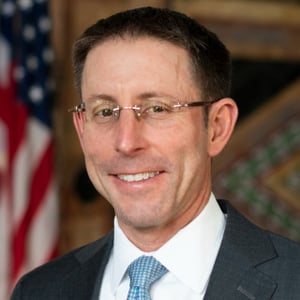
Judge, United States Court of Appeals, Ninth Circuit
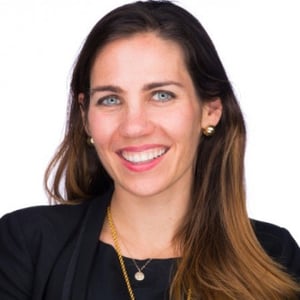
Adjunct Professor of Law, Scalia Law; Google, Corporate Counsel
Kathryn Ciano Mauler currently serves as a Corporate Counsel at Google. Prior to Google, Kathryn was Senior Regulatory Counsel at Uber Technologies, and also spent three years at i360, LLC as General Counsel. Before this, she also worked at a boutique law firm in Washington, D.C. and at the Institute for Justice.
She received her B.A. from the University of Florida. She also received her business degree from the University of Florida - Warrington College of Business, studying at the Ecole supérieure de Commerce de Toulouse in France. Kathryn's J.D. is from the George Mason University School of Law.
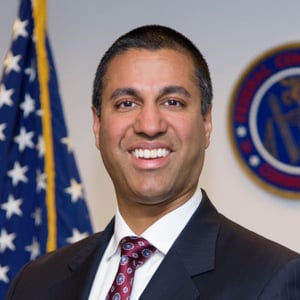
Nonresident Fellow, American Enterprise Institute
Ajit Pai, a former chairman of the Federal Communications Commission (FCC), is a nonresident fellow at the American Enterprise Institute, where he focuses on issues pertaining to technology and innovation, telecommunications regulatory policy, and market-based incentives for investment in broadband deployment. Concurrently, he is a partner at Searchlight Capital Partners, a global investment firm.
Mr. Pai’s distinguished career at the FCC includes two leadership roles following presidential appointments. He was appointed commissioner by President Barack Obama in 2012, designated chairman by President Donald Trump in 2017, and twice confirmed by the US Senate. While at the helm of the FCC, Mr. Pai had a transformative impact on the future of US technology and communications policy, implementing major initiatives to help close the digital divide; advance US leadership in 5G and other wireless technologies; promote innovation; protect consumers, public safety, and national security; and make the agency itself more open, transparent, and data-driven.
Earlier in his career, Mr. Pai served in various public-sector positions in the FCC’s Office of General Counsel, the US Department of Justice, the US Senate Judiciary Committee, and the US District Court for the Eastern District of Louisiana. He also worked as a partner at Jenner & Block and associate general counsel at Verizon Communications.
Mr. Pai graduated with honors from Harvard University, where he received a bachelor’s degree, and from the University of Chicago Law School, where he received a law degree and was an editor on the University of Chicago Law Review.

Thomas M. Siebel Senior Fellow, The Hoover Institution, Stanford University; Gary T. Schwartz Distinguished Professor of Law Emeritus, UCLA School of Law
Eugene Volokh is the Thomas M. Siebel Senior Fellow at the Hoover Institution (Stanford), as well as the Gary T. Schwartz Distinguished Professor of Law Emeritus and Distinguished Research Professor at UCLA School of Law. He recently retired from teaching at UCLA, after 30 years there, and is now focusing on research.
Volokh is the author of the textbooks The First Amendment and Related Statutes (8th ed. 2023), and Academic Legal Writing (5th ed. 2016), as well as over 100 academic law journal articles, mostly on First Amendment law. He is a member of The American Law Institute; the editor-in-chief of the Journal of Free Speech Law; and the creator and coauthor of The Volokh Conspiracy, a leading legal blog founded in 2002 (hosted at the Washington Post from 2014 to 2017 and now at Reason Magazine).
Partner, Baker Botts L.L.P.
Taylor Owings is a partner in the Antitrust and Competition Practice Group of Baker Botts L.L.P. She represents clients in civil merger and non-merger matters both in front of government agencies and in private litigation. She also counsels clients on the application of antitrust law to their business activities, with special experience in issues related to the digital economy.
Prior to joining the firm, Ms. Owings served as Senior Counsel and Chief of Staff in the Antitrust Division of the U.S. Department of Justice from 2018 to 2021. In that role, Ms. Owings was a key advisor to the Assistant Attorney General on the application of antitrust law to technology industries, including in the Department of Justice’s review of the business practices of market-leading online platforms and in the application of antitrust law to the exercise of intellectual property rights and standard setting organizations. As Chief of Staff of the Antitrust Division, Ms. Owings was responsible for ensuring the high quality of all public advocacy issued by the Division, including court filings, policy statements, and speeches.
Ms. Owings has experience crafting both trial and appellate strategy in headline-making antitrust litigations. She has argued in the First and Fourth Circuits. Earlier in her career, she clerked for the Honorable Douglas H. Ginsburg on the U.S. Court of Appeals for the D.C. Circuit, and for the Honorable Richard J. Leon on the U.S. District Court for the District of Columbia.
Ms. Owings handles all aspects of merger review. She draws on her first-hand experience investigating and reviewing mergers at the Antitrust Division to advise clients and to represent them in front of the agencies. She has special experience in merger matters with complex legal questions, for instance vertical mergers, the acquisition of a nascent or potential competitor, and the implications of a merger on innovation and data accumulation.

Section 230, Common Law, and Free Speech
Brent Skorup, Kristian Stout, Adam Thierer
Social media has become a prominent way for lawmakers, public agencies, experts, and governments to...
Section 230 & the First Amendment | Leave A Decent Comment
C. Christopher Cox
When politicians and big tech clash over political bias, fake news, and content moderation, who...
Panel 1 - Power Struggle: Private Digital Platforms and Speech—Where do we go from Biden v. Knight?:
2022 Annual Western Chapters Conference
Simi Valley, CATopics
The Unintended Consequences of Restricting Small Firm Acquisitions in the Tech Sector
Over the last several years, there has been a growing focus on the size and...
Eminent Domain and Public Use | Taking Poletown
John Mogk
In the early 1980s, General Motors found the perfect place to build a new factory...
The Government's Antitrust Lawsuits Against Google and Facebook
Nova Southeastern Student Chapter
Davie, FLState Court Docket Watch: Loudoun County School Board v. Cross
Cynthia Fleming Crawford
On August 30, 2021, the Virginia Supreme Court issued its decision in Loudoun County School...
Topics
Court Rejects Section 230 Immunity from State Intellectual Property Law Claims
In 2021, the debate over the scope of legal immunity for Big Tech social media...
Topics
Considering Copyright on Constitution Day
Constitution Day is September 17—the 234th anniversary of the Constitution's signing in 1787 by the...
Topics
How Snapchat’s Struggle Against Facebook Emphasizes the Need for Patent Protection as an Antitrust Tool
Tech giants like Facebook have faced torrents of criticism for potentially anti-competitive practices, as illustrated...