

Chief Judge, United States Court of Appeals, Eleventh Circuit
William H. Pryor Jr. serves as Chief Circuit Judge on the United States Court of Appeals for the Eleventh Circuit.
In 2013–18, he served on the United States Sentencing Commission and, in 2017–18, served as Acting Chair.
He has taught as a visiting professor at the University of Alabama School of Law and previously taught as an adjunct professor at the Cumberland School of Law of Samford University.
He served as the 45th Attorney General of Alabama from 1997 to 2004. When he took office, he was the youngest attorney general in the nation. In his reelection, he received the highest percentage of votes of any statewide candidate.
He graduated magna cum laude from Tulane Law School where he finished first in the common-law curriculum and was editor in chief of the Tulane Law Review. He then served as a law clerk for Judge John Minor Wisdom of the U.S. Court of Appeals for the Fifth Circuit.
He is a member of The American Law Institute and an Adviser for the RESTATEMENT OF THE LAW THIRD, CONFLICT OF LAWS. He is a coauthor with Bryan Garner, Justices Gorsuch and Kavanaugh, and several other judges of a treatise, THE LAW OF JUDICIAL PRECEDENT. He has published in the Yale Law Journal, Columbia Law Review, Virginia Law Review, Notre Dame Law Review, Harvard Journal of Law & Public Policy, Yale Law & Policy Review, George Mason Law Review, Florida Law Review, Alabama Law Review, Case Western Reserve Law Review, and Tulane Law Review. He has published op-eds in The Wall Street Journal, The New York Times, National Review, and USA Today. He has debated at National Lawyers’ Conventions of the Federalist Society (including on National Public Radio) and at the Oxford Union in the United Kingdom. And he is listed among several “widely admired judicial writers” in Bryan Garner’s The Redbook: A Manual on Legal Style.
He is a member of the Tulane Law School Hall of Fame and has received the Defender of the Constitution Award from the Heritage Foundation, the Jurist of the Year Award from the Texas Review of Law & Politics, and the St. Thomas More Award from the St. Thomas More Society of Atlanta. Judge Pryor is also a proud member of the National Society of the Sons of the American Revolution.
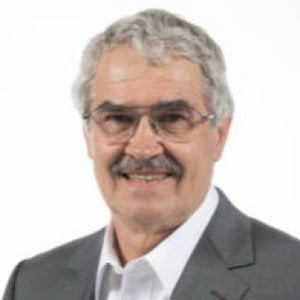
R. B. Price and Isabelle Wade & Paul C. Lyda Professor Emeritus of Law, University of Missouri School of Law
Carl H. Esbeck is R.B. Price Professor and Isabelle Wade & Paul C. Lyda Professor of Law emeritus at the University of Missouri. After attending Cornell University School of Law where he served as an editor on the Cornell Law Review, he held a judicial clerkship with the Honorable Howard C. Bratton, chief judge of the U.S. District Court in New Mexico.
Professor Esbeck publishes widely in the area of religious liberty and church-state relations. He is recognized as the progenitor of "Charitable Choice," an integral part of the 1996 Federal Welfare Reform Act, later made a part of the faith-based initiative and equal-treatment regulations under presidents George W. Bush and Barack Obama. In addition, he has taken the lead in recognizing that the modern Supreme Court has applied the Establishment Clause not as a personal right, but as a structural limit on the government's authority in disputes involving church governance. While on leave from 1999 to 2002, Professor Esbeck directed the Center for Law & Religious Freedom (CLRF) and later served as Senior Counsel to the Deputy Attorney General at the U.S. Department of Justice. While directing the CLRF, Professor Esbeck was a central part of the congressional advocacy behind the Religious Land Use and Institutionalized Persons Act of 2000 (RLUIPA). While at the Department of Justice one of his duties was to direct a task force to remove barriers to the equal-treatment of faith-based organizations applying for social service grants. He is the author of Disestablishment and Religious Dissent: Church-State Relations in the New American States, 1776 - 1833 (U. of MO Press, 2019).
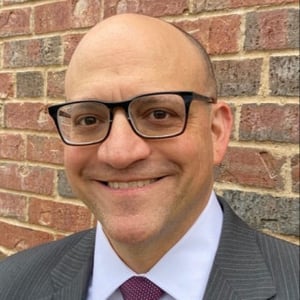
Executive Director & Secretary, American Civil Rights Project
Dan Morenoff is the executive director at the American Civil Rights Project and an adjunct fellow at the Manhattan Institute.
His work focuses on protecting and, where necessary, restoring the primacy of all Americans' shared civil rights against the identitarian alternative.
Before practicing law, Morenoff served on the legislative staff of Sen. Phil Gramm (R-TX). Morenoff holds a B.A. from Columbia College of Columbia University in the City of New York and a J.D. from the University of Chicago Law School. He has also served as an officer or director of several community organizations in Dallas, Texas.
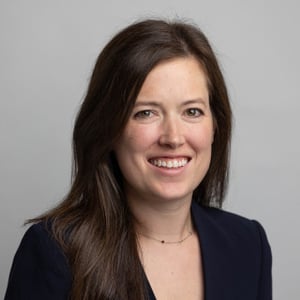
Senior Attorney, Institute of Justice
Kirby Thomas West is a senior attorney at the Institute for Justice, where she is also the co-director of IJ’s National Initiative to End Forfeiture Abuse. She joined IJ in 2018 and litigates cases defending property rights, free speech, and educational choice.
In her time at IJ, Kirby has launched challenges to unconstitutional civil forfeiture and impoundment schemes. She has also litigated educational choice cases, including as part of the IJ team that litigated Carson v. Makin, a landmark educational choice case decided in 2022.
In 2024, Kirby was a Wasserstein Public Interest Fellow at Harvard Law School.
Before joining IJ, Kirby Was an attorney at Baker Botts LLP, in Washington D.C. She clerked for Judge Dennis Shedd of the U.S. Court of Appeals for the Fourth Circuit.
Kirby received her law degree cum laude from Harvard Law School in 2015.
Professor Emeritus of Political Science and Professor Emeritus of Public Policy, Univ. of Maryland Baltimore County
George R. La Noue is Professor Emeritus of Political Science and Professor Emeritus of Public Policy at the University of Maryland Baltimore County. He has served as a trial expert in twenty cases involving public procurement preferences. For thirty years, he was Director of the Project on Civil Rights and Public Contracts at UMBC which recently contributed 289 public contracting disparity studies to the Library of Congress. He has been a consultant to nine governments and trial expert in thirty cases where the validity of disparity studies was at issue.
Prof. La Noue can be reached by email at glanoue@umbc.edu.
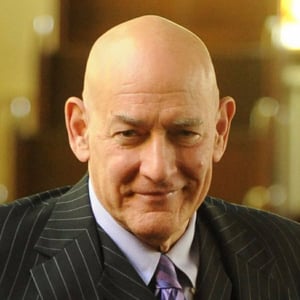
Raoul Berger Professor of Legal History at Northwestern University School of Law
Stephen Presser is a leading American legal historian and expert on shareholder liability for corporate debts. He is frequently an invited witness before committees of the U.S. Senate and House of Representatives on issues of constitutional law. He holds a joint appointment with the J. L. Kellogg Graduate School of Management and also teaches in Northwestern's history department.
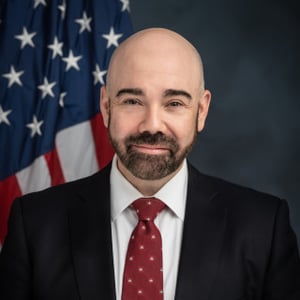
Assistant Secretary for Fair Housing and Equal Opportunity, United States Department of Housing and Urban Development
Craig Trainor is Assistant Secretary for Fair Housing and Equal Opportunity at the United States Department of Housing and Urban Development. President Trump nominated Mr. Trainor for this position on February 11, 2025, and the United States Senate confirmed him on October 7, 2025.
A “Day One” Trump-Vance Administration official, he previously served as Acting Assistant Secretary for Civil Rights and Principal Deputy Assistant Secretary for Civil Rights at the United States Department of Education, where he spearheaded the Department’s efforts to reorient America’s civil rights regime from an unjust spoils system to one that protects the rights of all Americans. Mr. Trainor’s February 14, 2025, “Dear Colleague” letter is widely considered the Trump Administration’s blueprint for enforcing civil rights laws and restoring the Constitution’s promise of equal protection.
Prior to serving in the Trump-Vance Administration, he was Senior Special Counsel with the United States House of Representatives Committee on the Judiciary under Chairman Jim Jordan (R-OH), and Senior Litigation Counsel with the America First Policy Institute under the Honorable Pam Bondi.
For over ten years, Mr. Trainor was a criminal defense and civil rights lawyer in New York City, litigating cases in New York state court and the United States District Court for the Southern and Eastern Districts of New York.
Prior to founding his law practice, he served as a New York City prosecutor, an associate attorney at a white collar criminal defense firm, and a law clerk to Chief Judge Frederick J. Scullin, Jr., United States District Court for the Northern District of New York.

Against Living Common Goodism
William H. Pryor
Today I want to discuss a new version of an old debate. In 1985, then-Attorney...
Topics
Caveat Emptor in the 21st Century: The Forced Sale of Chelsea Football Club
On February 24, 2022, the Russian military invaded Ukraine. International condemnation of Russia and its...
Dyer and Cooper Take on Mississippi's Historical Case
As many readers have probably noticed, tomorrow is a signal moment in our nation. The...
In Dobbs v. Jackson, History is On Mississippi's Side
This post originally appeared at Newsweek and is being republished here with permission. The Supreme...
An Extended Essay on Church Autonomy
Carl H. Esbeck
The doctrine of church autonomy[1] is distinct from the two more familiar lines of cases...
Mistaken Heritage: How a Statutory Misreading Has Denied Congress’ Intended Beneficiaries Protection for Half a Century
Dan Morenoff
When the Voting Rights Act (VRA) came up for renewal of its pre-clearance mechanism for...
Learning to Change: New Takes on Education Reform
Kirby Thomas West
A Review of: The Choice We Face: How Segregation, Race, and Power Have Shaped America’s...
The Race Card in ARPA’s Food Supply Deck
George R. La Noue
It is an old aphorism that a prudent person should not watch the making of...
If the Framers Despaired, Should We?
Stephen B. Presser
A review of Fears of a Setting Sun: The Disillusionment of America’s Founders, by Dennis...
In the Rush to Reform, Prudence Is Among the Highest Duties: How to Responsibly Reform Cash Bail
Craig Trainor
Over the last two decades, the politics of American criminal law has made strange bedfellows....