
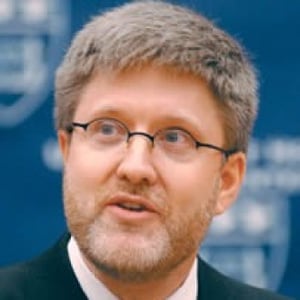
Professor of Law and the Mike and Teresa Baker College Professor, The University of Houston Law Center
Johnny Rex Buckles has been a faculty member of the University of Houston Law Center since August of 2000. He has also served as a Visiting Professor of Law at the Washington & Lee University School of Law. Professor Buckles has taught Taxation of Exempt Organizations, Federal Income Tax, Law & Theology, Estate Planning, Trusts & Wills, Contracts and Tax Policy Seminar. Professor Buckles’ primary research interests are in the law of tax and charity, and in law and theology. His publications include a number of law review articles and contributions to collective works. Professor Buckles holds a Juris Doctorate from the Harvard Law School, a Master of Arts in Biblical Studies from Dallas Theological Seminary, and a Bachelor of Science from Oklahoma State University.
Professor of Law, Ohio Northern University Pettit College of Law
Scott Gerber clerked for U.S. District Judge Ernest C. Torres of the District of Rhode Island and practiced with the Boston-based law firm Bingham, Dana & Gould. He is a member of the Massachusetts, Colorado and Virginia bars as well as the U.S. Supreme Court bar. He is the 2002, 2009, 2011 and 2012 winner of the Fowler V. Harper Award for excellence in legal scholarship and the 2004, 2013 and 2016 recipient of the Daniel S. Guy Award for excellence in legal journalism. He held the Ella & Ernest Fisher chair in law at Ohio Northern University from 2008-10. He has served on the Ohio Advisory Committee of the U.S. Commission on Civil Rights since 2008 and was appointed to the Association of American Law Schools Committee to Review Scholarly Papers for the 2018 Annual Meeting. He is an associated scholar at Brown University's Political Theory Project. StateStats.org named him one of the top law professors in Ohio. He was on sabbatical as a visiting professor at Brown University's Political Theory Project during the 2018-19 academic year.
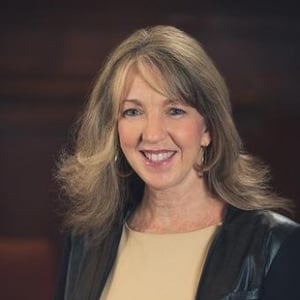
John Brown McCarty Professor of Family Law, Regent University School of Law
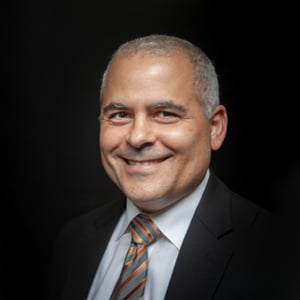
Associate Dean for Academic Affairs and Professor of Law, Ave Maria School of Law
Antony “Tony” Kolenc joined the Ave Maria School of Law faculty in 2022 as the Director of the Veterans and Servicemembers Law Clinic (VSLC), which gives students the opportunity to help those who have served in the U.S. Armed Forces, representing them in litigation, administrative proceedings, and veterans treatment courts. Professor Kolenc taught in several law schools after serving over 21 years in the United States Air Force, retiring as a Lieutenant Colonel from the Judge Advocate General’s (JAG) Corps. During his career as a JAG, he litigated both civil and criminal cases before trial and appellate courts, including the Court of Appeals for the Armed Forces and the U.S. Court of Appeals for the Tenth Circuit. He has also taught at the United States Air Force Academy in Colorado Springs and Florida Coastal School of Law as a tenured professor.
Professor Kolenc received his Juris Doctor degree in 1999, graduating at the top of his class from the University of Florida Levin College of Law. While there, he served as a senior editor on the Florida Law Review and as a competitor and coach on the Justice Campbell Thornal Moot Court Board. He also earned his Master of Arts degree in Theology and Christian Ministry from the Franciscan University of Steubenville. His professional writings have focused on matters of constitutional law and military policy, especially focusing on Freedom of Religion. His articles have appeared in several academic legal journals and magazines. He also writes a regular legal column for homeschooling families in Practical Homeschooling Magazine and has penned an award-winning historical fiction trilogy for teens. He and his wife, Alisa, homeschooled their five children. You can learn more about him at www.antonykolenc.com.
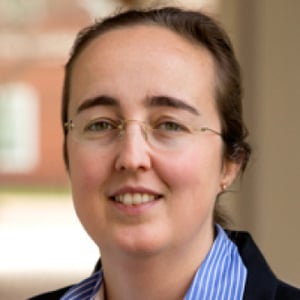
Assistant Professor of Political Science, Old Dominion University
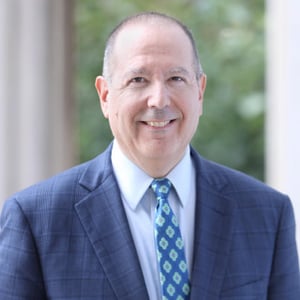
Dean Emeritus and Harvey R. Miller Professor of Law & Economics, Columbia Law School
David Schizer served as Dean of Columbia Law School from 2004 to 2014, and as CEO of the American Jewish Joint Distribution Committee, a global Jewish humanitarian organization, from 2017 to 2019. A co-chair of Columbia University's new task force on antisemitism, he also is a co-founder and co-chair of the Center for Israeli Legal Studies at Columbia Law School; co-founder and co-chair of the Richman Center for Law, Business, and Public Policy; and a Charter Trustee of Ramaz. He served as a law clerk to Justice Ruth Bader Ginsburg on the U.S. Supreme Court.
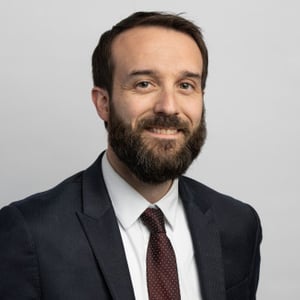
Senior Attorney, Institute for Justice
Sam Gedge is a senior attorney at the Institute for Justice. He joined IJ in June 2015 and litigates cases to promote economic liberty, protect political speech, and secure individuals’ rights to private property.
In 2017, Sam was named IJ’s second Elfie Gallun Fellow for Freedom and the Constitution. The fellowship comes with an emphasis on publishing written materials and speaking to students and others about the vital role the U.S. Constitution plays in protecting our most precious freedoms.
In his time at IJ, Sam has launched cases battling civil forfeiture and overzealous licensing boards, which generated widespread coverage and conversation in media outlets from Wired and The Atlantic to London’s Daily Mail.
Before joining IJ, Sam was an attorney at Wiley Rein LLP, in Washington, D.C., where he focused on litigation and election law. He is a former law clerk to Judge Raymond W. Gruender of the U.S. Court of Appeals for the Eighth Circuit.
Sam received his law degree cum laude from Harvard Law School in 2010.
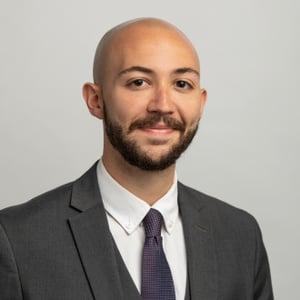
Attorney, Institute for Justice
John Wrench is a Constitutional Law Fellow at the Institute for Justice.
John grew up outside of Ithaca, New York, and received his law degree from the Case Western Reserve University School of Law in 2019. During law school, he served as editor in chief of the Case Western Reserve Journal of International Law and was a member of the Federalist Society. John interned in his law school’s First Amendment Litigation Clinic and was a judicial extern to the Honorable Paul E. Davison in the Southern District of New York. John graduated from Pace University in 2015 with a Bachelor of Arts in Philosophy and Religious Studies.
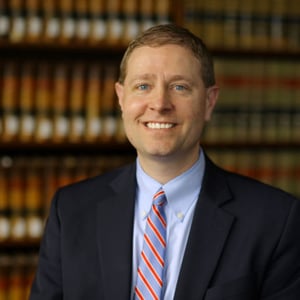
Executive Director, Salmon P. Chase Center for Civics, Culture, and Society, The Ohio State University
Professor Lee J. Strang serves as the inaugural executive director of the Salmon P. Chase Center for Civics, Culture, and Society at The Ohio State University.
Initiated in 2023 by the state of Ohio, the Chase Center will be an academic home at Ohio State for teaching, research, and programing on the foundations of the American constitutional order and its impact on society. As executive director, Professor Strang is responsible for organizing the center, overseeing the hiring and appointment of the center’s faculty, developing curriculum, and delivering student and academic programming. He also holds a faculty appointment in the Moritz College of Law at Ohio State.
Professor Strang is a nationally recognized legal scholar who has published dozens of articles in leading journals in the fields of constitutional law and interpretation, property law, and religion and the First Amendment. He co-edits the textbook Federal Constitutional Law, and his most recent book, Originalism’s Promise: A Natural Law Account of the American Constitution is the first book-length, natural law justification for originalism. He currently is writing on civic thought and leadership, and he is finalizing a book on the history of American Catholic legal education (with John M. Breen).
Before joining Ohio State, Professor Strang served as the inaugural director of the University of Toledo’s Institute of American Constitutional Thought & Leadership. He joined the Toledo College of Law faculty in 2008, was granted tenure in 2010, and was named John W. Stoepler Professor of Law & Values in 2015. The University of Toledo awarded Professor Strang its Outstanding Faculty Research and Scholarship Award in 2017. Before that, he was a visiting professor at Michigan State University College of Law. A graduate of the University of Iowa, where he was articles editor of the Iowa Law Review and Order of the Coif, Professor Strang holds an LL.M. degree from Harvard Law School.
Professor Strang has been a visiting scholar at the Georgetown Center for the Constitution and a visiting fellow at the James Madison Program at Princeton University. In 2016, he was appointed to the Ohio Advisory Committee of the U.S. Commission on Civil Rights and reappointed as chair in 2023.
Prior to teaching, Professor Strang served as a judicial clerk for Judge Alice M. Batchelder of the U.S. Court of Appeals for the Sixth Circuit. He was also an associate for Jenner & Block LLP in Chicago, where he practiced in general and appellate litigation.
Professor Strang is a frequent presenter at scholarly conferences. He is the president of the Board of Trustees of Northwest Ohio Classical Academy, Ohio’s first classical charter school. He is also a regular participant in debates at law schools across the country, a contributor to the media, and a speaker to political, civic, and religious groups.
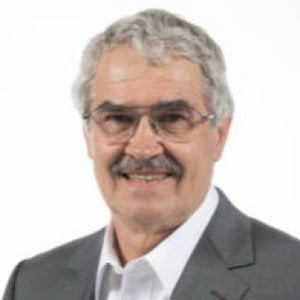
R. B. Price and Isabelle Wade & Paul C. Lyda Professor Emeritus of Law, University of Missouri School of Law
Carl H. Esbeck is R.B. Price Professor and Isabelle Wade & Paul C. Lyda Professor of Law emeritus at the University of Missouri. After attending Cornell University School of Law where he served as an editor on the Cornell Law Review, he held a judicial clerkship with the Honorable Howard C. Bratton, chief judge of the U.S. District Court in New Mexico.
Professor Esbeck publishes widely in the area of religious liberty and church-state relations. He is recognized as the progenitor of "Charitable Choice," an integral part of the 1996 Federal Welfare Reform Act, later made a part of the faith-based initiative and equal-treatment regulations under presidents George W. Bush and Barack Obama. In addition, he has taken the lead in recognizing that the modern Supreme Court has applied the Establishment Clause not as a personal right, but as a structural limit on the government's authority in disputes involving church governance. While on leave from 1999 to 2002, Professor Esbeck directed the Center for Law & Religious Freedom (CLRF) and later served as Senior Counsel to the Deputy Attorney General at the U.S. Department of Justice. While directing the CLRF, Professor Esbeck was a central part of the congressional advocacy behind the Religious Land Use and Institutionalized Persons Act of 2000 (RLUIPA). While at the Department of Justice one of his duties was to direct a task force to remove barriers to the equal-treatment of faith-based organizations applying for social service grants. He is the author of Disestablishment and Religious Dissent: Church-State Relations in the New American States, 1776 - 1833 (U. of MO Press, 2019).
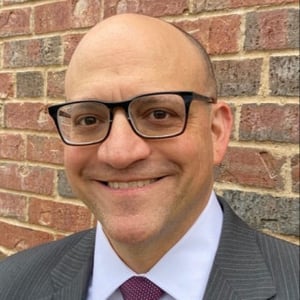
Executive Director & Secretary, American Civil Rights Project
Dan Morenoff is the executive director at the American Civil Rights Project and an adjunct fellow at the Manhattan Institute.
His work focuses on protecting and, where necessary, restoring the primacy of all Americans' shared civil rights against the identitarian alternative.
Before practicing law, Morenoff served on the legislative staff of Sen. Phil Gramm (R-TX). Morenoff holds a B.A. from Columbia College of Columbia University in the City of New York and a J.D. from the University of Chicago Law School. He has also served as an officer or director of several community organizations in Dallas, Texas.
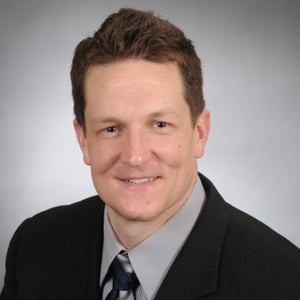
Mike Jayne is an attorney for the U.S. Department of Education. Previously, he worked for the Mercatus Center at George Mason University.

Topics
Incorporation through the Privileges or Immunities Clause
Since the ratification of the Fourteenth Amendment in 1868, the Supreme Court has incrementally incorporated...
Topics
The Forgotten History of the Intellectual Property Clause
The Intellectual Property (IP) Clause of the U.S. Constitution, which empowers Congress to enact both...
7 Minute Presentations of Works in Progress Panel 2-B
23rd Annual Federalist Society Faculty Conference
Topics
Lange v. California: Restoring the Fourth Amendment’s Forgotten Right to Be Secure
The question of when and how police may enter our homes strikes at the core...
Open Questions in Lieu v. Federal Election Commission: Due Process, Adverseness, & Article III Standing
Sam Gedge, John Wrench
Note from the Editor: The Federalist Society takes no positions on particular legal and public...
Can Originalism Constrain the Imperial Presidency?
Lee J. Strang
A review of The Living Presidency: An Originalist Argument Against Its Ever-Expanding Powers, by Saikrishna...
After Espinoza, What’s Left of the Establishment Clause?
Carl H. Esbeck
Note from the Editor: The Federalist Society takes no positions on particular legal and public...
Topics
Safe-Injection Sites and the Importance of Text over Intent
In a corker of a brief filed on May 15, 2020 in the U.S. Court...
Escaping the Goldilocks Problem: A Proposal That Would Enable States to Avoid Redistricting Litigation
Dan Morenoff
Note from the Editor: The Federalist Society takes no positions on particular legal and public...
As Far As Reasonably Practicable: Reimagining the Role of Congress in Agency Rulemaking
Mike Jayne
Note from the Editor: The Federalist Society takes no positions on particular legal and public...