

Judge, U.S. Court of Appeals for the Third Circuit
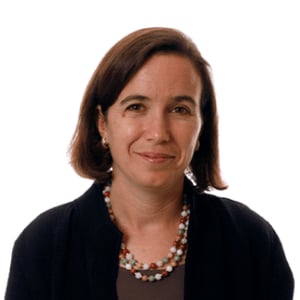
Hon. Jennifer Mascott served as Associate Professor of Law and Director of the Separation of Powers Institute at The Catholic University of America’s Columbus School of Law before her appointment to the federal bench. On July 16, 2025, President Donald J. Trump nominated her to the U.S. Court of Appeals for the Third Circuit (Delaware), and she was confirmed on October 9, 2025.
Prior to her confirmation, Judge Mascott wrote extensively in administrative and constitutional law, statutory interpretation, and the separation of powers. Her scholarship—published in leading journals including the Stanford Law Review, Notre Dame Law Review, and Supreme Court Review—was cited by the U.S. Supreme Court and multiple federal courts. She also contributed Supreme Court commentary for NBC Universal.
Before joining Catholic Law, she was an Assistant Professor and Co-Director of The C. Boyden Gray Center at George Mason University’s Antonin Scalia Law School. In 2022 she became co-author of Beermann, Cass & Diver’s Administrative Law: Cases and Materials (9th ed.). In 2023 she received the Justice Joseph Story Award for excellence in scholarship, teaching, and advancing the rule of law.
Judge Mascott also served as a Council Member of the ABA’s Administrative Law Section and as a Public Member of the Administrative Conference of the United States. She frequently testified before Congress on executive power, regulatory reform, and judicial jurisdiction, and participated in multiple Supreme Court confirmation hearings.
From 2019 to 2021, she took leave from academia to serve as Deputy Assistant Attorney General in the Department of Justice’s Office of Legal Counsel and later as Associate Deputy Attorney General, where she argued federal cases and assisted with Justice Amy Coney Barrett’s confirmation. Earlier in her career, she clerked for Justice Clarence Thomas and for then-Judge Brett M. Kavanaugh on the D.C. Circuit.
Judge Mascott earned her J.D. summa cum laude from the George Washington University Law School and her B.A. from the same institution.
Joseph L. Sax Collegiate Professor of Law and Co-Director of the Environmental and Energy Law Program, University of Michigan Law School

Charles Evans Hughes Professor of Law, Columbia Law School
THOMAS W. MERRILL is the Charles Evans Hughes Professor of Law at Columbia Law School. He previously taught at Northwestern University School of Law and Yale Law School. He has undergraduate degrees from Grinnell College and Oxford University, where he studied as a Rhodes Scholar, and a law degree from the University of Chicago. He clerked on the D.C. Circuit (for Chief Judge David Bazelon) and the U.S. Supreme Court (for Justice Harry Blackmun). From 1987-1990 he served as Deputy Solicitor General, U.S. Department of Justice. Professor Merrill’s writings related to property include Property: Principles and Policies (Foundation Press Second Edition, 2012) (with Henry E. Smith); Property: The Oxford Introductions to U.S. Law (Oxford U. Press, 2010); Property: Takings (Foundation Press, 2002)(with David Dana); and numerous articles, including “The Economics of Public Use” (Cornell Law Review 1986); “The Landscape of Constitutional Property” (Virginia Law Review 2000); and “The Character of the Governmental Action” (Vermont Law Review 2012). He is a member of the American Academy of Arts and Sciences.
Charles I. Francis Professorship in Law, University of Texas at Austin School of Law
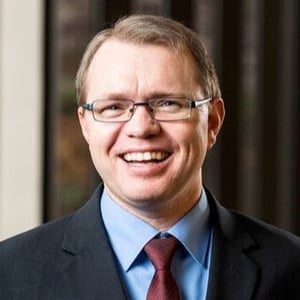
Professor Aaron Nielson lectures and writes in the areas of administrative law, civil procedure, and federal courts. Before joining the faculty, he served as Solicitor General of Texas and represented Texas before the U.S. Supreme Court and the Texas Supreme Court, as well as overseeing all appellate litigation for the State. Earlier in his career, he was a professor at Brigham Young University and an appellate and antitrust partner in the Washington, D.C. office of Kirkland & Ellis LLP. He also clerked for Justice Samuel A. Alito, Jr. of the U.S. Supreme Court, Judge Janice Rogers Brown of the U.S. Court of Appeals for the D.C. Circuit, and Judge Jerry E. Smith of the U.S. Court of Appeals for the Fifth Circuit.
As Solicitor General, Professor Nielson successfully defended against a First Amendment challenge Texas’s law requiring online pornographers to institute age verification. In 2020, the U.S. Supreme Court appointed him to defend the constitutionality of a federal agency. He currently serves as a Senior Fellow of the Administrative Conference of the United States after completing a six-year term as an appointed public member and chair of the Conference’s Administration & Management Committee.
Nielson’s research focuses on administrative law, federal litigation, and the separation of powers. He has published (or soon will publish) in the Harvard Law Review, Columbia Law Review, University of Chicago Law Review, University of Pennsylvania Law Review, Duke Law Journal, Georgetown Law Journal, Cornell Law Review, and Northwestern University Law Review, among others. Nielson has been recognized for teaching for teaching and scholarship and in 2021 received the Federalist Society’s Joseph Story Award, which recognizes a young academic for excellence in legal scholarship, a commitment to teaching, and a concern for students, and who has made a significant public impact in a manner that advances the rule of law in a free society. He is also an elected member of the American Law Institute.
Professor Nielson received his J.D. magna cum laude from Harvard Law School and an LL.M from the University of Cambridge, where he focused his studies on the institutions that regulate global competition and commerce. He received his undergraduate degree summa cum laude from the University of Pennsylvania, majoring in economics and political science.
Associate Professor, University of Notre Dame Law School
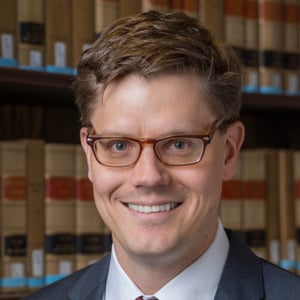
Jeffrey Pojanowski joined the faculty and community of Notre Dame Law School in 2010. He teaches and writes in the areas of administrative law, jurisprudence, and torts. At present, his scholarship focuses on the legal theory of administrative action, as well as the philosophy and intellectual history of legal reasoning.
Prof. Pojanowski earned his A.B. in Public Policy with highest honors from Princeton University and graduated magna cum laude from Harvard Law School in 2004, where he was Articles Co-Chair for the Harvard Law Review. After law school, he served as a law clerk to then-Judge John Roberts on the United States Court of Appeals for the D.C. Circuit and then to Justice Anthony Kennedy on the Supreme Court of the United States. He then practiced law with Latham & Watkins in Washington, D.C., where he specialized in appellate litigation and administrative-law matters.

Judge, United States Court of Appeals, Sixth Circuit
Judge Readler earned his undergraduate and law degrees from the University of Michigan. After graduating, he served as a law clerk to Judge Alan Norris of the United States Court of Appeals for the Sixth Circuit. Judge Readler then began practicing law in the Columbus office of the international law firm Jones Day, eventually spending ten years as a partner in the firm’s Issues and Appeals Practice Group. While at Jones Day, Judge Readler appeared in state and federal trial and appellate courts around the country, most frequently the Supreme Court of Ohio and the Sixth Circuit. Judge Readler also successfully argued before the United States Supreme Court in McQuiggin v. Perkins on behalf of an inmate claiming actual innocence. His other pro bono representations include representing capital defendants before the Tenth Circuit and the Supreme Court of Ohio, as well as representing defendants sentenced to life in prison before the Sixth Circuit. While at Jones Day, Judge Readler traveled to Nairobi with Lawyers Without Borders to train Kenyan lawyers in prosecuting domestic violence cases, and he was also a recipient of the American Marshall Memorial Fellowship awarded by the German Marshall Fund of the United States. Following his career in private practice, Judge Readler served as Acting Assistant Attorney General for the Civil Division of the United States Department of Justice from 2017 to 2019. In that role, Judge Readler led and supervised over 1,000 lawyers in the Department’s largest litigating division, briefing and arguing several cases on behalf of the United States in federal courts across the country, including high-profile cases significant to the Administration and the Department. In March 2019, Judge Readler was confirmed to serve as a Circuit Judge on the Sixth Circuit. He resides in Columbus.

Director, Robert A. Levy Center for Constitutional Studies, Cato Institute
Thomas Berry is the director in the Cato Institute’s Robert A. Levy Center for Constitutional Studies and editor in chief of the Cato Supreme Court Review. Before joining Cato, he was an attorney at Pacific Legal Foundation and clerked for Judge E. Grady Jolly of the U.S. Court of Appeals for the Fifth Circuit. His academic work has appeared in NYU Journal of Law and Liberty, Washington and Lee Law Review Online, and Federalist Society Review. His popular writing has appeared in The Wall Street Journal, National Law Journal, Investor’s Business Daily, National Review Online, and The Hill Online. He has testified before the U.S. Senate, and his work has been cited by the U.S. District Court for the District of Columbia.
Berry holds a J.D. from Stanford Law School, where he was a senior editor on the Stanford Law and Policy Review and a Bradley Student Fellow in the Stanford Constitutional Law Center. He graduated with a B.A. in Liberal Arts from St. John’s College, Santa Fe.
Appellate Counsel, Theodore Cooperstein PLLC
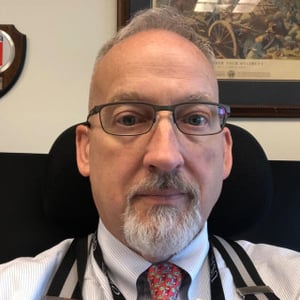
Theodore Cooperstein currently is an appellate attorney in the boutique law firm of Theodore Cooperstein PLLC, available for criminal and civil appeals in both state and federal courts. A former career prosecutor with twenty five years of service in the US Department of Justice, he was an Assistant United States Attorney for the Southern District of Florida and the Southern District of Mississippi, and has served as a Military Intelligence Officer in the Army Reserves from 1989 to 2011, retiring with the rank of Lieutenant Colonel. During the Trump Administration, he was appointed and served as the General Counsel of the U.S. Office of Personnel Management. Prior to joining the Southern District of Florida, Mr. Cooperstein served as a Special Assistant U.S. Attorney in the U.S. Attorney's Office for the District of Maryland. He previously had served as Counsel to the Deputy Attorney General at the Department of Justice, and as Assistant General Counsel in the FBI Office of the General Counsel.
A.B., Dartmouth College; J.D., Stanford University; LL.M., Comparative and International Law, Georgetown University Law Center; Masters of Strategic Studies, U.S. Army War College
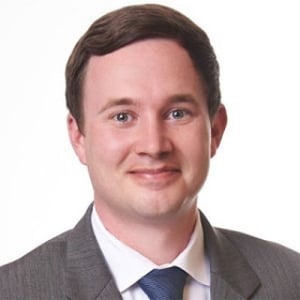
Regulatory Counsel, Americans for Prosperity Foundation
Mike Pepson is regulatory counsel at Americans for Prosperity Foundation, which frequently files amicus briefs in the U.S. Supreme Court, U.S. Courts of Appeals, and state Supreme Courts, as well as public comments in various federal and state regulatory proceedings. Mike assists AFPF with its efforts involving separation of powers, administrative process, criminal justice reform, tech and innovation, and other issues.
He is also Special Counsel for Administrative Law at Cause of Action Institute, where he has been involved in complex civil and criminal litigation in federal district and appellate courts and administrative litigation before federal agencies in a variety of matters, including agency enforcement actions, statutory and constitutional challenges to federal regulations and agency decisions, and Section 1983 challenges to state statutes.
He received his LL.M. from Columbia Law School, J.D. from The Catholic University of America, Columbus School of Law, and B.A. from Loyola College in Baltimore, Maryland.
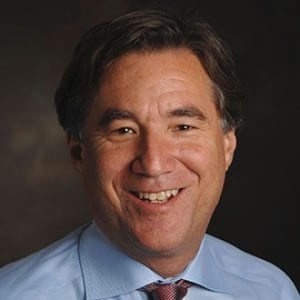
Ashe Family Chair Professor of Law, Georgia State University College of Law
Eric J. Segall graduated from Emory University, Phi Beta Kappa and summa cum laude, and from Vanderbilt Law School, where he was the research editor for the Law Review and member of Order of the Coif. He clerked for the Chief Judge Charles Moye Jr. for the Northern District of Georgia, and Albert J. Henderson of the 11th Circuit Court of Appeals. After his clerkships, Segall worked for Gibson, Dunn & Crutcher and the U.S. Department of Justice, before joining the Georgia State faculty in 1991.
Segall teaches federal courts and constitutional law I and II. He is the author of the books Originalism as Faith and Supreme Myths: Why the Supreme Court is not a Court and its Justices are not Judges. His articles on constitutional law have appeared in, among others, the Harvard Law Review Forum, the Stanford Law Review On Line, the UCLA Law Review, the George Washington Law Review, the Washington University Law Review, the University of Pennsylvania Journal of Constitutional Law, the Northwestern University Law Review Colloquy, and Constitutional Commentary among many others.
Segall’s op-eds and essays have appeared in the New York Times, the LA Times, The Atlantic, SLATE, Vox, Salon, and the Daily Beast, among others. He has appeared on CNN, Fox News, MSNBC, and France 24 and all four of Atlanta’s local television stations. He has also appeared on numerous local and national radio shows.
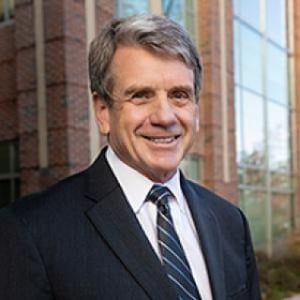
General Counsel, NRB
Dr. Michael P. Farris is a litigator, educator, public advocate, and communicator, and is widely recognized for his successful work on both the national and international stage.
He is the founding president of both the Home School Legal Defense Association (1983) and Patrick Henry College (2000) and continues to serve as Chairman of the Board of HSLDA and Chancellor Emeritus of PHC. Dr. Farris served as the President and CEO of Alliance Defending Freedom and continues to serve in a part-time capacity as Counselor to the President. He currently serves as General Counsel for National Religious Broadcasters.
Fox Family Pavilion Distinguished Scholar in Residence, University of Pennsylvania
MARCI A. HAMILTON is a Fox Family Pavilion Distinguished Scholar in Residence in the Program for Research on Religion and Urban Civil Society at the University of Pennsylvania. She is also the founder, CEO, and Academic Director of CHILD USA, www.childusa.org, a 501(c)(3) nonprofit academic think tank at the University of Pennsylvania dedicated to interdisciplinary, evidence-based research to prevent child abuse and neglect. Before joining the program on religion at Penn, Professor Hamilton was the Paul R. Verkuil Chair in Public Law at Benjamin N. Cardozo School of Law, Yeshiva University.
Hamilton is the leading public intellectual critic of extreme religious liberty and its impact on vulnerable populations including children, LGBTQ, and women. The author of God vs. the Gavel: The Perils of Extreme Religious Liberty (Cambridge University Press), which was nominated for a Pulitzer Prize, she is also a columnist for Verdict on Justia.com. Hamilton successfully challenged the constitutionality of the Religious Freedom Restoration Act (“RFRA”) at the Supreme Court in Boerne v. Flores (1997), and defeated the RFRA claim brought by the Archdiocese of Milwaukee against hundreds of child sex abuse survivors in Committee of Unsecured Creditors v. Listecki (7th Cir. 2015).
Drawing on her experience studying and advising in cases involving clergy sex abuse, Hamilton is the leading expert on child sex abuse statutes of limitations and has submitted testimony and advised legislators in every state where significant reform has occurred. She is the author of Justice Denied: What America Must Do to Protect Its Children (Cambridge University Press), which advocates for the elimination of child sex abuse statutes of limitations. She has also filed countless pro bono amicus briefs for the protection of children at the United States Supreme Court and the state supreme courts. Her textbook, Children and the Law, co-authored with Martin Gardner, will be published Fall 2017 by Carolina Academic Press, formerly Lexis/Nexis.
Hamilton clerked for United States Supreme Court Justice Sandra Day O’Connor and Judge Edward R. Becker of the United States Court of Appeals for the Third Circuit.
Hamilton has been honored with the 2016 Voice Today, Voice of Gratitude Award; the 2015 Religious Liberty Award, American Humanist Association; the 2014 Freethought Heroine Award; the National Crime Victim Bar Association’s Frank Carrington Champion of Civil Justice Award, 2012; the E. Nathaniel Gates Award for outstanding public advocacy and scholarship, 2008; and selected as a Pennsylvania Woman of the Year Award, 2012, among others. She is also frequently quoted in the national media on RFRA, RLUIPA, First Amendment, clergy sex abuse, and statute of limitations issues.
Professor Hamilton is a graduate of Vanderbilt University, B.A., summa cum laude; Pennsylvania State University, M.A. (English, fiction writing, High Honors); M.A. (Philosophy); and the University of Pennsylvania School of Law, J.D., magna cum laude, where she served as Editor-in-Chief of the University of Pennsylvania Law Review. She is a member of Phi Beta Kappa and Order of the Coif.

Judge, United States Court of Appeals, Ninth Circuit
Judge Nelson was confirmed to the Ninth Circuit in October 2018, as the youngest Circuit Judge to serve from Idaho and he has chambers in his hometown of Idaho Falls. Prior to his confirmation, Judge Nelson served for nine years as General Counsel of Idaho Falls-based Melaleuca, Inc., a consumer goods company. He previously worked in Washington, DC, where he served in all three branches of the federal government, including as Special Counsel for Supreme Court nominations to the Ranking Member of the Senate Judiciary Committee; Deputy General Counsel to the White House Office of Management and Budget; Deputy Assistant Attorney General in the Environment and Natural Resources Division of the United States Department of Justice; and a law clerk to Judge Henderson of the United States Court of Appeals for the D.C. Circuit. He has argued in most of the federal courts of appeals and worked on dozens of Supreme Court briefs. He started in the Washington, DC office of Sidley Austin as an appellate lawyer, after clerking for Judges Mosk and Brower of the Iran-U.S. Claims Tribunal at The Hague, and for now-Judge Tom Griffith, then-Senate Legal Counsel, during the impeachment trial of President Clinton. Judge Nelson earned his B.A. from Brigham Young University and his J.D., with honors, from BYU Law School. Judge Nelson has been a member of the Federalist Society since 1998.
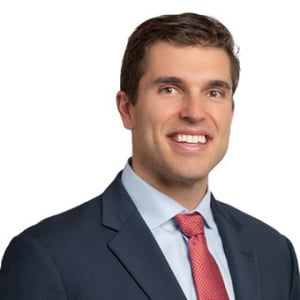
Associate, Dechert LLP
Justin W. Aimonetti is an associate in Dechert’s trials, investigations, and securities group, focusing on trial and appellate matters and advising clients on complex legal issues. Mr. Aimonetti has experience representing individuals and corporations in federal court, as well as in numerous federal agencies and state courts. His experience touches on all parts of the litigation process.
Mr. Aimonetti has published numerous law review articles on a wide range of subjects. His scholarship has appeared in the Virginia Law Review, Yale Law Journal Forum, Stanford Law Review Online, the Pepperdine Law Review, and many other journals and reviews. Mr. Aimonetti has received several awards for his legal scholarship.
Before joining Dechert, Mr. Aimonetti served as a judicial law clerk to the Honorable Carl J. Nichols on the U.S. District Court for the District of Columbia, as a judicial law clerk to the Honorable Chief Judge Jeffrey S. Sutton on the U.S. Court of Appeals for the Sixth Circuit, and as a summer adviser in the Office of Legal Counsel at the Department of Justice. In law school, Mr. Aimonetti contributed as an Articles Editor on the Virginia Law Review and participated in the Supreme Court Litigation Clinic.
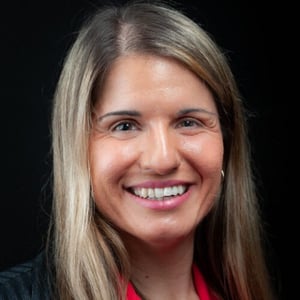
Associate Professor of Law, Ave Maria School of Law
Before arriving at Ave Maria School of Law, Professor Jennifer (Barrow) Jenkins was a Climenko Fellow and Lecturer on Law at Harvard University School of Law. Professor Barrow was born in Plymouth, Massachusetts, and grew up in Tampa, Florida. Professor Barrow received a B.S. in the American Legal System from the United States Military Academy at West Point. She served as an Army intelligence officer in Afghanistan and Iraq, receiving the Bronze Star in 2010. Professor Barrow is a graduate of Harvard Law School and was an editor for the International Law Journal, Journal of Law and Public Policy, Journal on Legislation, and the National Security Journal. After law school, Professor Barrow clerked for Judge Ralph K. Winter on the U.S. Court of Appeals for the Second Circuit. She then served as a Supreme Court Fellow, placed at the U.S. Sentencing Commission, where she helped revise a draft amendment to the career offender provision of the U.S. Sentencing Guidelines. Her primary teaching interests include criminal law and procedure, torts, and military law. Her scholarship focuses on criminal law and military law, with an emphasis on sentencing. Her research scrutinizes the increased power of the legislative, executive, and judicial branches at the expense of the jury and suggests reforms.
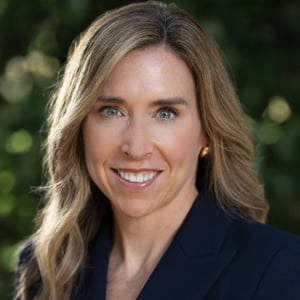
Chief of Staff and Associate Chief Counsel, U.S. Chamber Litigation Center
Stephanie Maloney is chief of staff and associate chief counsel at the U.S. Chamber Litigation Center, the litigation arm of the U.S. Chamber of Commerce. In this capacity, Maloney handles a variety of matters for the Chamber, including environment and energy litigation.
Most recently, Maloney served as Chief of Staff and Counsel in the Environment and Natural Resources Division of the U.S. Department of Justice. In that capacity, she directed litigation strategy, oversaw case briefing, and managed coordination and communication with agency clients in priority cases. And she served as government counsel in cases arising under various environmental and natural resources laws.
Before that, Maloney practiced as an associate in the Appellate and Critical Motions Practice Group at Winston & Strawn LLP. Her work focused on briefing and strategy in complex commercial and appellate litigation at the federal and state level, including merits and amicus curiae briefs to the Supreme Court of the United States.
Maloney served as a law clerk to both the Honorable Edith Brown Clement, of the U.S. Court of Appeals for the Fifth Circuit, and the Honorable Stephen J. Murphy, III, of the U.S. District Court for the Eastern District of Michigan. She graduated cum laude from Notre Dame Law School, where she served as Symposium Editor of the Notre Dame Law Review, and summa cum laude from Loyola University Maryland, where she received a B.A. in Political Science. Maloney also holds a master’s degree in theology from Emory University.
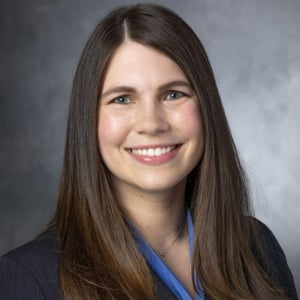
Associate Professor of Law, Emory University School of Law
Lindsey Simon is an associate professor at the Emory University School of Law.
Her research focuses on the bankruptcy system, drawing concepts from bankruptcy structure and procedure to address broader institutional design challenges. Simon’s articles have been published in the Administrative Law Review, the Cardozo Law Review, the Indiana Law Journal and the North Carolina Law Review. Simon’s most recent scholarship addresses the intersection between mass torts and bankruptcy, including an article on non-debtor relief in Chapter 11 forthcoming in the Yale Law Journal. She has assisted academics, judges, members of Congress and many other stakeholders on the subject of mass tort bankruptcies, and her commentary in connection with the Purdue Pharma, Boy Scouts of America and USA Gymnastics bankruptcies has appeared in various media outlets, including The Wall Street Journal, The New York Times, Forbes, The Economist, NPR and Reuters.
Before joining the Emory Law faculty in 2023, Professor Simon served as the Robert Cotten Alston Associate Chair in Corporate Law at the University of Georgia School of Law. Prior to becoming a professor, Simon was an associate at Kilpatrick Townsend & Stockton, where her practice involved a mix of commercial litigation and corporate restructuring matters. She represented corporations, committees and individuals in state and federal litigation, both in and out of the bankruptcy context. Simon also practiced at a litigation boutique in Chicago, Illinois, and served as a judicial clerk for Judge Beverly B. Martin on the U.S. Court of Appeals for the Eleventh Circuit. Additionally, she taught as an adjunct professor at the Georgia State University College of Law.
Simon earned her law degree magna cum laude from the Northwestern University Pritzker School of Law and obtained her Bachelor of Music magna cum laude and her Master of Education from Vanderbilt University.
She is an active member of the American Bankruptcy Institute, where she serves as a member of the ABI Diversity Working Group. She previously served as vice chair and community service co-chair for the Georgia Network of the International Women's Insolvency & Restructuring Confederation and as vice president of the board of directors of the Georgia Latino Law Foundation.
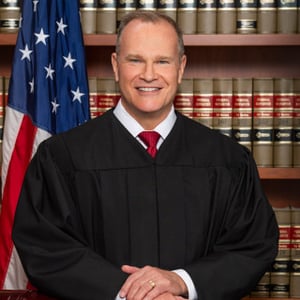
Judge, U.S. District Court for the Central District of California
John W. Holcomb is a U.S. District Judge for the Central District of California, Southern Division, in Santa Ana, California. Judge Holcomb was nominated for that position by President Donald J. Trump in November 2019 and was confirmed by the U.S. Senate in September 2020.
Judge Holcomb earned his S.B. in civil engineering from the Massachusetts Institute of Technology in 1984. For the next five years, Judge Holcomb served as a commissioned officer in the United States Navy, including assignments aboard the battleship U.S.S. New Jersey (BB62) and with the Joint Staff at the Pentagon. In 1993, Judge Holcomb received his M.B.A. from Harvard Business School and his J.D., cum laude, from Harvard Law School. Judge Holcomb then served as a law clerk for Judge Ronald Barliant of the U.S. Bankruptcy Court for the Northern District of Illinois.
Thereafter, Judge Holcomb joined Irell & Manella LLP as an associate, practicing bankruptcy law and general civil litigation. In 1997, Judge Holcomb joined the intellectual property law firm of Knobbe, Martens, Olson & Bear, LLP, and he was elevated to partner in 2002. As a partner at Knobbe Martens, Judge Holcomb participated in several speaking engagements regarding the intersection of intellectual property and bankruptcy law. In 2014, Judge Holcomb co-authored the chapter on U.S. Law in Licenses and Insolvency, A Practical Guide to the Effects of Insolvency on IP License Agreements, which was published by the International Bar Association. Judge Holcomb retired from Knobbe Martens in 2018, and he briefly practiced as a bankruptcy and litigation sole-practitioner before joining the firm Greenberg Gross LLP as a partner in 2019.

U.S. Court of Federal Claims and Jurist-In-Residence Professor of Law, The University of Akron School of Law
Judge Ryan T. Holte was sworn in as a judge on the United States Court of Federal Claims in July 2019. Prior to confirmation he served as the David L. Brennan Professor of Law and Director of the Center for Intellectual Property Law and Technology at The University of Akron School of Law (2017-2019) and an assistant professor of law at Southern Illinois University School of Law (2013-2017). Judge Holte has written and presented widely on patent law subjects and empirical legal studies of Federal Circuit and district court patent law cases. His most recent articles were published in the Iowa Law Review (2019), George Mason Law Review (2018), and Washington Law Review (2017).
In practice, Judge Holte served for six years as general counsel and partner of an electrical engineering technology company and is co-inventor of multiple patents related to Systems and Methods for Countering Satellite-Navigated Munitions. Prior to entering academia, Judge Holte practiced as a litigation attorney at the Federal Trade Commission and an associate in the Intellectual Property Practice Group at Jones Day. Prior to practice, he served as a law clerk to Judge Stanley F. Birch, Jr. on the United States Court of Appeals for the Eleventh Circuit and as a law clerk to Judge Loren A. Smith on the United States Court of Federal Claims.
Judge Holte received his JD from the University of California Davis School of Law and his BS, magna cum laude, in engineering from the California Maritime Academy where he was a First Class graduate of the Corps of Cadets Third Engineering Division and sailed as a U.S. Merchant Marine oiler.

Associate Dean for Academic Affairs, Austin E. Owen Research Scholar & Professor of Law, The University of Richmond School of Law
Dean Kristen Jakobsen Osenga teaches and writes in the areas of patent law, antitrust, and legislation and regulation. Some of her recent scholarship focuses on standard development organizations, patent eligible subject matter, patent licensing firms, litigation and remedies for patent infringement, and patent law reform. She has written numerous law review articles on these and other topics, as well as book chapters and op eds on various aspects of patent law. Additionally, she has spoken on these issues at many academic conferences and bar events. Dean Osenga is Chief Policy Counselor for the Inventors Defense Alliance, as well as an active member of the Federal Circuit Bar Association and the American Intellectual Property Law Association.
Dean Osenga received a B.S. degree in Biomedical Engineering from the University of Iowa, an M.S. degree in Electrical Engineering from Southern Illinois University – Carbondale, and a J.D. from the University of Illinois College of Law, where she graduated magna cum laude. After law school, she practiced at the law firm of Finnegan, Henderson, Farabow, Garrett, & Dunner LLP, (now Finnegan) where she did patent prosecution and litigation. She then clerked for the Judge Richard Linn of the U.S. Court of Appeals for the Federal Circuit. After clerking, she entered academia, teaching first at Chicago-Kent College of Law and then at the University of Richmond, where she has been since 2006. She has also been a Visiting Professor at Emory University School of Law and at William & Mary School of Law.
Vice President and Counsel of Government Affairs, QUALCOMM Incorporated
Laurie Self is Vice President and Counsel of Government Affairs at Qualcomm Incorporated, where she specializes in U.S. patent policy matters at the federal and state level. Based in Washington, D.C., Ms. Self also supports Qualcomm’s government affairs initiatives to promote strong intellectual property rights in emerging markets. Ms. Self’s particular focus is to ensure that U.S. intellectual property laws and policies provide the necessary protections and incentives to support the Company’s R&D-driven business model. Prior to her arrival at Qualcomm in July 2012, Ms. Self was a partner at the law firm Covington & Burling where she chaired the firm’s intellectual property practice group.

Head of Patent Policy, Google
Laura Sheridan is Head of Patent Policy at Google, advocating for an effective patent examination process, a patent litigation system that operates fairly for all participants, and transparency in these areas. She has shared her views on patent issues in numerous policy dialogues, including testifying before Congress on the intersection of AI and patents. Her patent policy work is shaped by years of private practice experience in patent prosecution, litigation, due diligence, and post-grant practice before the Patent Office.
An active member of the IP community, Laura is part of the Intellectual Property Owners Association delegation to IP5 Industry, a group which engages on procedural harmonization matters with the IP5 Offices (the Offices of China, Europe, Japan, Korea, and the US). Laura also helped to form the New York chapter of ChIPs and is a member of the Advisory Board for the NYU Law Engelberg Center on Innovation Law & Policy. Laura studied mechanical engineering at Cornell University and received her J.D. from Fordham Law School.
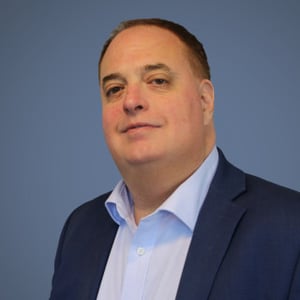
Director of the Center for Energy and Environment and Senior Fellow, Competitive Enterprise Institute
Daren Bakst is Director of the Competitive Enterprise Institute’s Center for Energy and Environment and a Senior Fellow. In this role, he manages, develops, and leads the coalition, advocacy, and research activities of the Center, which is one of the most effective advocates for Free Market Environmentalism.
Before joining CEI as Deputy Director in March, 2023, Daren was a Senior Research Fellow in Environmental Policy and Regulation at the Heritage Foundation, where he played a leading role in the launch of the organization’s new energy and environment center, and created and hosted the Heritage Foundation’s energy and environment podcast the “PowerCast.” During his decade at Heritage, Daren wrote about energy and environmental policy, food and agricultural policy (including editing and co-authoring the book Farms and Free Enterprise), regulation, and trade among other topics.
Daren also worked on environmental policy and regulation at the U.S. Chamber of Commerce, where he was a policy counsel and served as the executive to the association’s Government Oversight, Operations & Consumer Affairs committee, which was responsible for issues such as regulatory process reform. Daren has significant state level experience, working for seven years at the Raleigh, N.C.-based John Locke Foundation, one of the largest state-based, free-market think tanks. As director of legal and regulatory studies, his broad portfolio included energy and environmental policy, regulatory reform, and property rights.
Daren has testified numerous times before Congress, regularly submits comments to federal agencies and has appeared in or been quoted by a wide range of media outlets such as The Wall Street Journal, USA Today, The Washington Times, CNN, Fox Business News, Al-Jazeera America, and U.S. News and World Report. He is a member of the Federalist Society’s Environmental Law and Property Rights Executive Committee and serves on the College Level Advisory Board for Constituting America, an organization that informs and educates about the importance of the U.S. Constitution.
Daren, who hails from Florida, received his bachelor’s and master’s degrees from George Washington University. A licensed attorney, he holds a law degree from the University of Miami and a master of laws degree from American University.

Government Affairs Director, American Conservation Coalition
Morgan Brummund is the Government Affairs Director for ACC. In this role, she leads ACC’s efforts to advance common-sense environmental and climate solutions on Capitol Hill. Morgan joined ACC from the energy policy world and has spent most of her professional career supporting the U.S. Department of Energy. Morgan was also selected for the 2022-2023 cohort of the Women Leaders in Energy and Climate Fellowship through the Atlantic Council.
Before joining DOE, Morgan worked as an energy policy analyst at the Idaho Governor’s Office of Energy and Mineral Resources. Morgan graduated summa cum laude from Boise State University, where her studies and co-curricular activities focused on the environment, the energy transition, and public policy. While at Boise State, she was selected as the Inaugural Cecil D. Andrus Center Scholar and given the opportunity to support the Idaho Bureau of Land Management’s public lands and NEPA portfolio.
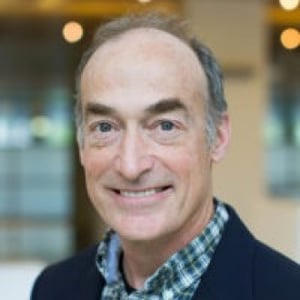
Professor of Law, Georgetown Law
William W. Buzbee is a professor of law at Georgetown University Law Center. In his teaching and scholarship, he specializes in environmental law, legislation and regulation, and administrative law. Recent publications focus on climate regulation, deregulation and law governing agency policy change, and federalism. He also offers seminars on advanced environmental, regulatory, and constitutional law subjects, with his most recent seminar focused on “The Art of Regulatory War.”
Professor Buzbee’s books include the recently published Fighting Westway: Environmental Law, Citizen Activism, and the Regulatory War that Transformed New York City (Cornell University Press 2014) and Preemption Choice: The Theory, Law and Reality of Federalism’s Core Question(Cambridge University Press, hardcover 2009, paperback 2011) (William W. Buzbee editor and contributor). He has been a co-author of the 5th , 6th, 7th and forthcoming 8th editions of Environmental Protection: Law and Policy (Aspen/Wolters Kluwer). Law review scholarship includes publications in New York University Law Review, University of Pennsylvania Law Review, Michigan Law Review, Stanford Law Review (co-authored), Cornell Law Review (co-authored), Duke Law Journal (forthcoming), George Washington Law Review, Iowa Law Review, The Journal of Law and Politics and in an array of other journals, books, news outlets, and blogs. Three of his articles have been named among the 10 best environmental or land use law articles of that year and republished in the Land Use and Environment Law Review. He regularly assists with appellate and Supreme Court environmental, federalism, and regulatory litigation, and also has testified before congressional committees on environmental and regulatory matters. He has published op-eds on regulatory and environmental issues with The New York Times, The Hill, CNN, and been quoted and interviewed by numerous press and media outlets.
Professor Buzbee joined Georgetown from Emory Law School, where he was a professor of law and directed its Environmental and Natural Resources Law Program. He also co-directed Emory’s Center on Federalism and Intersystemic Governance. He has been a visiting professor of law at Columbia, Cornell and Illinois law schools. He has also served as a professor for the Leiden-Amsterdam-Columbia Law School Summer Program in American Law. Professor Buzbee is a founding Member Scholar of the Center for Progressive Reform, a Washington D.C.-based regulatory think tank. Professor Buzbee was awarded the 2007-2008 Emory Williams Teaching Award for excellence in teaching. Professor Buzbee clerked for United States Judge Jose A. Cabranes, and before becoming a professor was an attorney-fellow at the Natural Resources Defense Council, and did environmental, land use and litigation work for the New York City law firm, Patterson, Belknap, Webb & Tyler. JD, Columbia Law School, 1986; BA, Amherst College, magna cum laude, 1983.
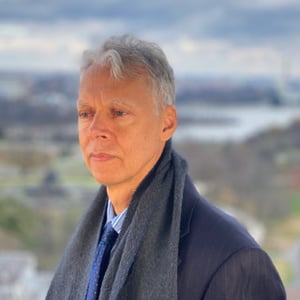
Emeritus Professor and Editor, Emory University and First Things magazine
Mark Bauerlein is an editor at First Things and Professor of English Emeritus at Emory University, where he taught since earning his PhD in English at UCLA in 1989. From 2003 to 2005 he served as Director of the Office of Research and Analysis at the National Endowment for the Arts. He has written or edited 12 books, including Literary Criticism: An Autopsy (1997), The Pragmatic Mind: Explorations in the Psychology of Belief (1997), Negrophobia: A Race Riot in Atlanta, 1906 (2001), The Dumbest Generation: How the Digital Age Stupefies Young Americans and Jeopardizes Our Future (2008), and The Dumbest Generation Grows Up: From Stupefied Youth to Dangerous Adults (2022). His essays have appeared in PMLA, Philosophy and Literature, Partisan Review, Wilson Quarterly, Commentary, and New Criterion, and his commentaries and reviews in the Wall Street Journal, New York Times, Washington Post, Boston Globe, Weekly Standard, Politico, Vox, Slate, The Guardian, Chronicle of Higher Education, and other national periodicals. He has done more than 500 media interviews, including Fox & Friends, CNN, BBC World Today, NPR All Things Considered, ABC Nightline, 20/20, PBS NOVA, and The New Yorker podcast. He hosts a podcast at First Things, which focusses on recent books and runs twice a week. In January 2023, he was appointed a Trustee of New College Florida by Governor DeSantis.
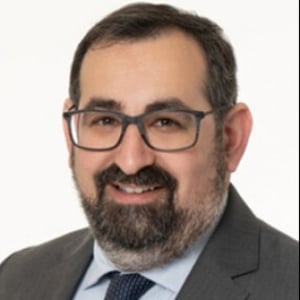
Research Scholar in Law and Executive Director, Center for Academic Freedom and Free Speech, Yale Law School
Joe Cohn is a research scholar in law at Yale Law school and the executive director of the Center for Academic Freedom and Free Speech (CAFFS).
Cohn has served as a staff attorney at the AIDS Law Project of Pennsylvania, a staff attorney for the Court of Appeals for the 3rd Circuit, an adjunct professor of law at the University of Pennsylvania Law School, where he supervised law students representing clients in litigation in state and federal courts, and as the interim legal director for ACLU affiliates in Nevada and Utah.
A majority of Cohn’s career has been dedicated to defending civil liberties on college campuses and free expression in society at large. As the Foundation for Individual Rights and Expression’s (FIRE’s) founding legislative and policy director, from 2012 to 2023, he testified on numerous occasions in legislatures across America and in Congress, drafted legislation on campus free speech, campus due process, and academic freedom that has been enacted in states across the country. Immediately before joining CAFFS, Cohn advocated for open inquiry, viewpoint diversity, and constructive disagreement in higher education as Heterodox Academy’s director of policy.
Cohn writes extensively on civil liberties, with articles published in a wide array of media outlets, including the Wall Street Journal, the Washington Post, Newsweek, the Hill, the New York Daily News, the Chicago Tribune, the Las Vegas Review Journal, the Minnesota Star Tribune, the Chronicle of Higher Education, Inside Higher Ed, and the Volokh Conspiracy.
He earned his bachelor of arts from the University of Nevada at Las Vegas in 2000. He is a 2004 graduate of the University of Pennsylvania Carey School of Law and the Fels Institute of Government Administration, where he earned his J.D. and M.A. in Government Administration.

Judge, United States Court of Appeals, Fifth Circuit
Judge Duncan received his B.A. from Louisiana State University in 1994, his J.D. from the Paul M. Hebert Law Center at Louisiana State University in 1997, and his LL.M. from Columbia Law School in 2004.
After graduating from law school, he clerked for Louisiana-based Circuit Judge John Malcolm Duhé Jr. of the United States Court of Appeals for the Fifth Circuit.
From 2008–2012, Duncan served as Appellate Chief for Louisiana's Attorney General's office. From 2012–2014, he served as general counsel of the Becket Fund for Religious Liberty. From 2004-2008, he was an assistant professor of law at the University of Mississippi School of Law.
Before becoming a judge, Duncan practiced at the Washington, D.C. firm of Schaerr Duncan LLP, where he was a founding partner. He was appointed by President Trump to the United States Court of Appeals for the Fifth Circuit on May 1, 2018.
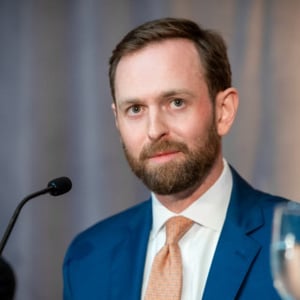
Commissioner, Federal Trade Commission
Andrew N. Ferguson was sworn in April 2, 2024 as a Commissioner of the Federal Trade Commission. President Joe Biden named Ferguson to a term that expires on September 25, 2030.
Ferguson most recently served as solicitor general of the Commonwealth of Virginia. Prior to that position, he served as chief counsel to U.S. Sen. Mitch McConnell of Kentucky, the Republican leader, and as a Republican counsel on the U.S. Senate Judiciary Committee. He also practiced law at several Washington, D.C. law firms. He earned his undergraduate degree and law degree from the University of Virginia. After law school, Ferguson clerked for Judge Karen L. Henderson on the U.S. Court of Appeals for the D.C. Circuit and U.S. Supreme Court Justice Clarence Thomas.
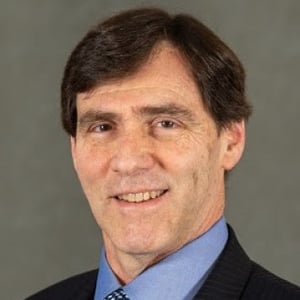
Professor of Business and Professor of Law (by courtesy) | Executive Director, Georgetown Institute for the Study of Markets and Ethics McDonough School of Business, Georgetown University
John Hasnas is a professor of business at Georgetown's McDonough School of Business and a professor of law (by courtesy) at Georgetown University Law Center in Washington, DC, where he teaches courses in ethics and law.
Professor Hasnas is also the executive director of the Georgetown Institute for the Study of Markets and Ethics, whose tripartite mission is to produce high-quality research on matters related to the ethics of market activity, improve ethics pedagogy, and educate the broader, non-academic community about ethical issues related to the functioning of markets.
Professor Hasnas has held previous appointments as associate professor of law at George Mason University School of Law, visiting associate professor of law at Duke University School of Law and the Washington College of Law at American University, and Law and Humanities Fellow at Temple University School of Law. Professor Hasnas has also been a visiting scholar at the Kennedy Institute of Ethics in Washington, DC and the Social Philosophy and Policy Center in Bowling Green, Ohio.
He received his B.A. in Philosophy from Lafayette College, his J.D. and Ph.D. in Legal Philosophy from Duke University, and his LL.M. in Legal Education from Temple Law School. His scholarship concerns ethics and white collar crime, jurisprudence, and legal history.
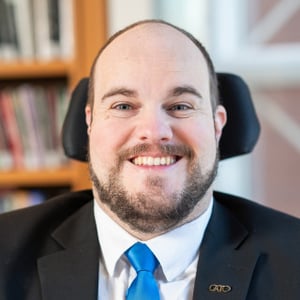
Director, Project on Criminal Justice, Cato Institute
Matthew Cavedon is the Director of the Cato Institute’s Project on Criminal Justice. He focuses on reforming plea-driven mass adjudication, ensuring police accountability, and defending constitutional criminal originalism. Cavedon’s scholarship has been published (or is forthcoming in) publications including the Arizona State Law Journal, Cato Supreme Court Review, Seattle University Law Review, and Georgetown Journal of Law and Public Policy. Formerly a Georgia public defender and fellow at the Institute for Justice, Cavedon has taught law school courses on criminal law and procedure, as well as the First Amendment. Cavedon clerked for a U.S. district court and the Supreme Court of Georgia. He came to Cato following a fellowship at the Emory University Center for the Study of Law and Religion.

Interim Executive Director, Foundation Against Intolerance and Racism
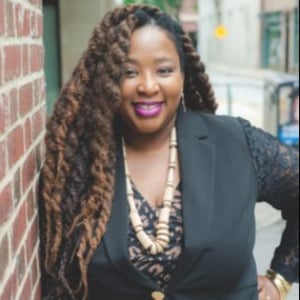
Public Policy Director, Southern Center for Human Rights
Tiffany Williams Roberts is Director of the Public Policy Unit at Southern Center for Human Rights. She joined the organization in April 2018 as the Community Engagement & Movement Building Counsel. She has practiced criminal defense since 2008, first as a public defender with the Atlanta Judicial Circuit Public Defender and later as a solo practitioner. As a public defender, Tiffany represented hundreds of indigent clients facing felony prosecution and graduated from Gideon’s Promise trial advocacy training program. She expanded her private practice to include civil rights litigation for victims of police abuse.
Emeritus Professor and Editor, Emory University and First Things magazine
Mark Bauerlein is an editor at First Things and Professor of English Emeritus at Emory University, where he taught since earning his PhD in English at UCLA in 1989. From 2003 to 2005 he served as Director of the Office of Research and Analysis at the National Endowment for the Arts. He has written or edited 12 books, including Literary Criticism: An Autopsy (1997), The Pragmatic Mind: Explorations in the Psychology of Belief (1997), Negrophobia: A Race Riot in Atlanta, 1906 (2001), The Dumbest Generation: How the Digital Age Stupefies Young Americans and Jeopardizes Our Future (2008), and The Dumbest Generation Grows Up: From Stupefied Youth to Dangerous Adults (2022). His essays have appeared in PMLA, Philosophy and Literature, Partisan Review, Wilson Quarterly, Commentary, and New Criterion, and his commentaries and reviews in the Wall Street Journal, New York Times, Washington Post, Boston Globe, Weekly Standard, Politico, Vox, Slate, The Guardian, Chronicle of Higher Education, and other national periodicals. He has done more than 500 media interviews, including Fox & Friends, CNN, BBC World Today, NPR All Things Considered, ABC Nightline, 20/20, PBS NOVA, and The New Yorker podcast. He hosts a podcast at First Things, which focusses on recent books and runs twice a week. In January 2023, he was appointed a Trustee of New College Florida by Governor DeSantis.
Research Scholar in Law and Executive Director, Center for Academic Freedom and Free Speech, Yale Law School
Joe Cohn is a research scholar in law at Yale Law school and the executive director of the Center for Academic Freedom and Free Speech (CAFFS).
Cohn has served as a staff attorney at the AIDS Law Project of Pennsylvania, a staff attorney for the Court of Appeals for the 3rd Circuit, an adjunct professor of law at the University of Pennsylvania Law School, where he supervised law students representing clients in litigation in state and federal courts, and as the interim legal director for ACLU affiliates in Nevada and Utah.
A majority of Cohn’s career has been dedicated to defending civil liberties on college campuses and free expression in society at large. As the Foundation for Individual Rights and Expression’s (FIRE’s) founding legislative and policy director, from 2012 to 2023, he testified on numerous occasions in legislatures across America and in Congress, drafted legislation on campus free speech, campus due process, and academic freedom that has been enacted in states across the country. Immediately before joining CAFFS, Cohn advocated for open inquiry, viewpoint diversity, and constructive disagreement in higher education as Heterodox Academy’s director of policy.
Cohn writes extensively on civil liberties, with articles published in a wide array of media outlets, including the Wall Street Journal, the Washington Post, Newsweek, the Hill, the New York Daily News, the Chicago Tribune, the Las Vegas Review Journal, the Minnesota Star Tribune, the Chronicle of Higher Education, Inside Higher Ed, and the Volokh Conspiracy.
He earned his bachelor of arts from the University of Nevada at Las Vegas in 2000. He is a 2004 graduate of the University of Pennsylvania Carey School of Law and the Fels Institute of Government Administration, where he earned his J.D. and M.A. in Government Administration.
Judge, United States Court of Appeals, Fifth Circuit
Judge Duncan received his B.A. from Louisiana State University in 1994, his J.D. from the Paul M. Hebert Law Center at Louisiana State University in 1997, and his LL.M. from Columbia Law School in 2004.
After graduating from law school, he clerked for Louisiana-based Circuit Judge John Malcolm Duhé Jr. of the United States Court of Appeals for the Fifth Circuit.
From 2008–2012, Duncan served as Appellate Chief for Louisiana's Attorney General's office. From 2012–2014, he served as general counsel of the Becket Fund for Religious Liberty. From 2004-2008, he was an assistant professor of law at the University of Mississippi School of Law.
Before becoming a judge, Duncan practiced at the Washington, D.C. firm of Schaerr Duncan LLP, where he was a founding partner. He was appointed by President Trump to the United States Court of Appeals for the Fifth Circuit on May 1, 2018.
Commissioner, Federal Trade Commission
Andrew N. Ferguson was sworn in April 2, 2024 as a Commissioner of the Federal Trade Commission. President Joe Biden named Ferguson to a term that expires on September 25, 2030.
Ferguson most recently served as solicitor general of the Commonwealth of Virginia. Prior to that position, he served as chief counsel to U.S. Sen. Mitch McConnell of Kentucky, the Republican leader, and as a Republican counsel on the U.S. Senate Judiciary Committee. He also practiced law at several Washington, D.C. law firms. He earned his undergraduate degree and law degree from the University of Virginia. After law school, Ferguson clerked for Judge Karen L. Henderson on the U.S. Court of Appeals for the D.C. Circuit and U.S. Supreme Court Justice Clarence Thomas.
Professor of Business and Professor of Law (by courtesy) | Executive Director, Georgetown Institute for the Study of Markets and Ethics McDonough School of Business, Georgetown University
John Hasnas is a professor of business at Georgetown's McDonough School of Business and a professor of law (by courtesy) at Georgetown University Law Center in Washington, DC, where he teaches courses in ethics and law.
Professor Hasnas is also the executive director of the Georgetown Institute for the Study of Markets and Ethics, whose tripartite mission is to produce high-quality research on matters related to the ethics of market activity, improve ethics pedagogy, and educate the broader, non-academic community about ethical issues related to the functioning of markets.
Professor Hasnas has held previous appointments as associate professor of law at George Mason University School of Law, visiting associate professor of law at Duke University School of Law and the Washington College of Law at American University, and Law and Humanities Fellow at Temple University School of Law. Professor Hasnas has also been a visiting scholar at the Kennedy Institute of Ethics in Washington, DC and the Social Philosophy and Policy Center in Bowling Green, Ohio.
He received his B.A. in Philosophy from Lafayette College, his J.D. and Ph.D. in Legal Philosophy from Duke University, and his LL.M. in Legal Education from Temple Law School. His scholarship concerns ethics and white collar crime, jurisprudence, and legal history.

Panel I: How We Got Here – The Supreme Court’s “Anti-Administrativist” Turn?
Jenn L. Mascott, Nina A. Mendelson, Thomas W. Merrill, Aaron Nielson, Jeffrey Pojanowski, Chad A. Readler
Featuring: Prof. Jeffrey Pojanowski, Biolchini Family Professor of Law, Notre Dame Law School Prof. Jennifer...
Can the Federal Government Ban At-Home Distilling?
Thomas Berry, Theodore Cooperstein, Michael D. Pepson, Eric J. Segall
After the U.S. Supreme Court in Morrison v. Olson (1988) and U.S. v. Lopez (1995)...
Daniel Webster Debate Series: Does the Constitution Protect Parental Rights?
Michael P. Farris, Marci A. Hamilton, Ryan D. Nelson
The Federalist Society's Georgetown Law Chapter'sDaniel Webster Debate Series presents Daniel Webster Debate Series:Does...
A Seat at the Sitting - December 2023
Justin Aimonetti, Jennifer Jenkins, Stephanie Ann Maloney, Lindsey Simon
Each month, a panel of constitutional experts convenes to discuss the Court’s upcoming docket sitting...
The Injunction Function: Is IP Law Promoting Markets for Innovators and Creators?
John W. Holcomb, Ryan T. Holte, Kristen Osenga, Laurie Self, Laura Sheridan
In patent and copyright law, injunctions are now a subject of significant policy debate. Innovators...
[Film Screening & Discussion] Sackett v. EPA: A Tale of Wetland Regulations
Daren Bakst, Morgan Brummund, William W. Buzbee
Join the Federalist Society and the American Conservation Coalition for a film screening and discussion...
Panel 4: Academic Freedom in Higher Education: The Role of States Defending Freedom of Thought
Mark Bauerlein, Joe Cohn, Stuart Kyle Duncan, Andrew N. Ferguson, John Hasnas
What policies and practices can states adopt to encourage freedom of thought within higher education?...
Panel 4: Academic Freedom in Higher Education: The Role of States Defending Freedom of Thought
State Power Review Conference
Washington, DCState Power Review: Considering the Role of States in Preserving Freedom
2023 Freedom of Thought Conference
Washington, DCPublic Defenders and Political Advocacy: What Is a Public Defender's Role?
Matthew P. Cavedon, Maud Maron, Tiffany Williams Roberts
Over the past several years, a debate has erupted within the world of indigent defense:...