

Jeremy Kidd graduated in 2007 with honors from George Mason University School of Law, where he was Executive Editor for the Journal of Law, Economics & Policy. He holds a BA in economics and political science and a Ph.D. in economics from Utah State University.
After law school, he practiced as a real estate associate with Ballard Spahr Andrews & Ingersoll in Washington, D.C. and later as a litigation associate with Strong & Hanni in Salt Lake City, Utah. He clerked for the Honorable Ted Stewart on the U.S. District Court for the District of Utah and the Honorable Alice Batchelder, Chief Judge of the U.S. Court of Appeals for the Sixth Circuit.
Professor Kidd's primary teaching interests are in the areas of business associations, torts, contracts, and law and economics. He was a Visiting Assistant Professor at George Mason University School of Law and has taught courses in business law and economics at Utah State University and Weber State University.

Professor, Cleveland State University College of Law
Professor Christa Laser comes to Cleveland Marshall after nearly a decade of practice experience as an intellectual property litigator at the law firms WilmerHale and Kirkland & Ellis LLP. She has deep expertise in patents, trademarks, copyrights, false advertising, pharmaceutical litigation and regulation, and technology law. She has represented leading life sciences and technology companies in all stages of trial and appellate matters and consulted on legislative changes to intellectual property laws.
Professor Laser's research focuses on intellectual property and innovation. Her patent law scholarship has been cited by numerous scholars, by judges of the U.S. Court of Appeals for the Federal Circuit, and in briefs to the U.S. Supreme Court. Her research envisions an intellectual property system that supports innovation, investment, and competition across all technology areas.
Professor Laser was the World Champion of the Lachs Space Law Moot Court Competition. Prior to law school, she worked as a scientific researcher, where her work studying protein dynamics of photosynthesis using genetically modified bacteria and laser spectroscopy was published in the prestigious journal Science.
Senior Associate, Intellectual Property Litigation, WilmerHale; Associate, Kirkland & Ellis LLP; judicial intern for Chief Judge Randall R. Rader, U.S. Court of Appeals for the Federal Circuit, and Judge Roger W. Titus, U.S. District Court for the District of Maryland; Scientific Researcher, The BioDesign Institute at Arizona State University, Department of BioOptical Nanotechnology.
J.D., The George Washington University Law School (World Champion, International & North American Lachs Space Law Moot Court Competition; Research Assistant, Professor Lawrence Cunningham; Notes Editor, American Intellectual Property Law Association Quarterly Journal); B.S., Arizona State University, Barrett Honors College (Beckman Scholar; Biochemistry Award).
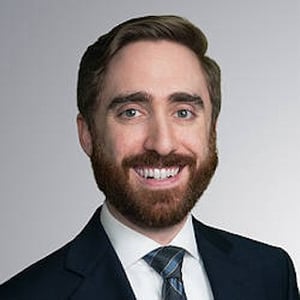
Harry A. Bigelow Teaching Fellow and Lecturer in Law, University of Chicago Law School
Brian Lipshutz is a Harry A. Bigelow Teaching Fellow and Lecturer in Law at the University of Chicago Law School. He studies administrative law and statutory interpretation. His current projects explore agencies' refusal to consider constitutional challenges to statutory provisions and judicial deference to contemporaneous and consistent administrative interpretations of statutes. His past work has examined the ability of plaintiffs to bypass agency adjudication by challenging presidential and non-final agency actions in court, as well as the intersection between originalism and administrative law. His scholarship has been published or is forthcoming in the University of Chicago Law Review, the Washington University Law Review, and the Yale Law Journal Forum.
Brian was previously a member of the Supreme Court and Appellate Practice at Paul, Weiss, Rifkind, Wharton & Garrison LLP, where he worked on a variety of statutory interpretation, administrative law, and constitutional law matters. He also served as a law clerk to the Honorable Clarence Thomas of the Supreme Court of the United States, the Honorable Gregory G. Katsas of the U.S. Court of Appeals for the D.C. Circuit, and the Honorable William H. Pryor Jr. of the U.S. Court of Appeals for the Eleventh Circuit.
Brian received his JD from Yale Law School, where he was a comments editor on the Yale Law Journal. He received his AB in Politics with highest honors from Princeton University.
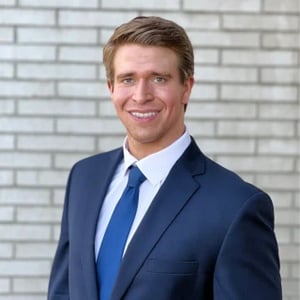
Olin-Searle-Smith Fellow in Law, Harvard Law School
Brad Niederschulte is the Olin-Searle-Smith Fellow at Harvard Law School. He is a scholar of antitrust, securities, and public law, and a litigator of diverse practice experience. His current research explores ways of enhancing antitrust doctrine through the use of common-law methods for interpreting legal texts.
Before coming to Harvard, Brad was an attorney at Cravath, Swaine & Moore, where he successfully litigated antitrust, securities, and other cases, and advised the U.S. District Court for the Southern District of New York on constitutional reform of the New York City Police Department.
Brad received his JD from Stanford Law School, where he was an articles editor of the Stanford Law Review. He received his AB from Washington University in St. Louis with highest honors.
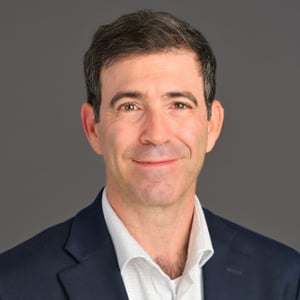
DeMuth Chair of Business Law, University of Colorado Law School
Andrew A. Schwartz joined the Colorado Law faculty in 2008 and was promoted to full professor in 2017. He teaches and publishes on corporate, securities and contract law, and has become an internationally recognized expert on investment crowdfunding. In 2017, Professor Schwartz served as a Fulbright Research Scholar and visiting professor at the University of Auckland Law School in New Zealand.
Professor Schwartz earned an Sc.B. in Civil Engineering from Brown University and a J.D. from Columbia University, where he served on the Columbia Law Review and was named a James Kent Scholar (top honors) all three years. Before entering academia, he clerked for Judge William A. Fletcher of the U.S. Court of Appeals for the Ninth Circuit and Judge Naomi Reice Buchwald of the U.S. District Court for the Southern District of New York. Following his clerkships, Professor Schwartz practiced corporate law in New York at Wachtell, Lipton, Rosen & Katz.
Professor Schwartz is the author of one book, Investment Crowdfunding, forthcoming from the Oxford University Press, as well as more than forty scholarly publications. His major articles have appeared in leading flagship law reviews including the UCLA Law Review, Minnesota Law Review, and Notre Dame Law Review, top specialty journals such as the Yale Journal on Regulation and Harvard Business Law Review, and peer-reviewed journals like the New Zealand Law Review.
Professor Schwartz has won numerous national awards for his scholarship, including the AALS Scholarly Paper Competition and the Federalist Society Young Legal Scholars Paper Competition. At Colorado Law, Professor Schwartz has received the Provost's Award for Faculty Achievement, the Gilbert Goldstein Faculty Fellowship, and the Outstanding New Faculty Award. His research is frequently cited and relied upon by courts and commentators across the country and around the world, including numerous citations by the Delaware Court of Chancery, the nation's leading venue for corporate law.
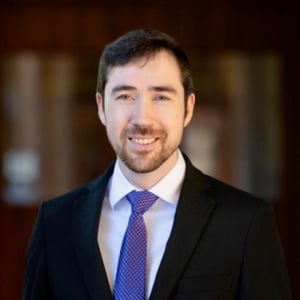
Visiting Assistant Professor, Notre Dame Law School
Daniel Slate teaches data privacy law at Notre Dame Law School and writes on law and technology, emergency powers, and constitutional history. He holds a J.D., Ph.D. (Political Science), and B.A. (Philosophy, with honors and distinction) from Stanford University. He previously worked at Palantir with the product management, business development, and privacy and civil liberties teams and is co-author of The Architecture of Privacy. He is also a Faculty Affiliate of the AI Trust and Reliability Lab at Notre Dame's Lucy Family Institute for Data & Society.
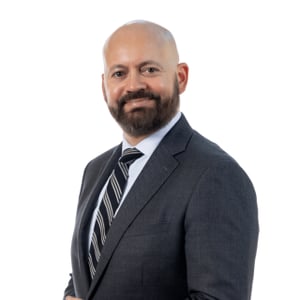
Milton R. Underwood Chair in Free Enterprise, Vanderbilt University Law School
Brian Fitzpatrick is the Milton R. Underwood Chair in Free Enterprise and Professor of Law at Vanderbilt Law School, where his research focuses on class action litigation, federal courts, judicial selection, and constitutional law. He is best known for his empirical studies of class action settlements as well as his book The Conservative Case for Class Actions (University of Chicago Press, 2019). Professor Fitzpatrick joined Vanderbilt's law faculty in 2007 after serving as the John M. Olin Fellow at New York University School of Law. He graduated first in his class from Harvard Law School and went on to clerk for Judge Diarmuid O'Scannlain on the U.S. Court of Appeals for the Ninth Circuit and Justice Antonin Scalia on the U.S. Supreme Court. After his clerkships, Professor Fitzpatrick practiced commercial and appellate litigation for several years at Sidley Austin in Washington, D.C., and served as Special Counsel for Supreme Court Nominations to U.S. Senator John Cornyn. Before earning his law degree, Fitzpatrick graduated summa cum laude with a bachelor's of science in chemical engineering from the University of Notre Dame. He has received the Hall-Hartman Outstanding Professor Award, which recognizes excellence in classroom teaching, for his Civil Procedure and Federal Courts courses.
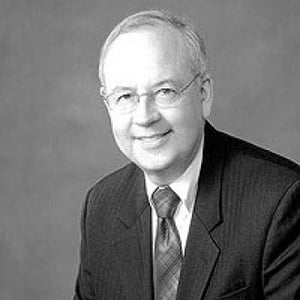
U.S. Court of Appeals, District of Columbia Circuit (1983-1989); U.S. Solicitor General (1989-1993)
Kenneth Starr is a former United States Federal Court of Appeals Judge, U.S. Solicitor General, and Independent Counsel. He is the former President and Chancellor of Baylor University where he held the Louise L. Morrison Chair of Constitutional Law at Baylor University Law School.

7 Minute Presentations of Works in Progress Panel 2-A
New Orleans, LA7 Minute Presentations of Works in Progress Panel 1-C
New Orleans, LA7 Minute Presentations of Works in Progress Panel 1-B
San Francisco, CAThe Conservative Case for Class Actions
Iowa Lawyers Chapter
Des Moines, IAReception with Special Guest Ken Starr
Des Moines, IowaOn Cloning
Cancelled: Recess Appointments and NLRB v. Noel Canning
Des MoinesThe Impact of the 2012 Election on the U.S. Supreme Court: A Panel Discussion
Des Moines, IowaEnough Is Enough: The Roberts Court & the Rebirth of the First Amendment in the Campaign Finance Debate
DC v. Heller