
Visiting Scholar, Center for Citizenship & Constitutional Government, University of Notre Dame
Clerk, U.S. Court of Appeals for the Third Circuit
Attorney, Institute for Justice
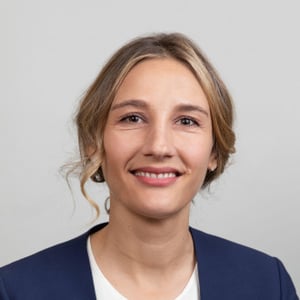
Anya Bidwell (née Cherkasova) leads IJ’s Project on Immunity and Accountability (“PIA”). Through this project, Anya works to promote judicial engagement and ensure that government officials are held to account when they violate individuals’ constitutional rights. Anya also serves as an adviser on the American Law Institute’s Restatement of the Law, Constitutional Torts project.
One of Anya’s PIA cases—Gonzalez v. Trevino—was heard by the United States Supreme Court on March 20, 2024. She argued the case for the petitioner, with the goal of convincing the Justices that retaliatory arrests not involving on-the-spot decisions by police officers should be actionable under the First Amendment regardless of probable cause. The decision is expected in June.
This was Anya’s third appearance before the U.S. Supreme Court. She second-chaired Brownback v. King (an excessive force case) and Tennessee Wine & Spirits Retailers Association v. Thomas (a commerce clause case) in November 2020 and January 2019 respectfully.
Before joining IJ, Anya worked for a top national law firm, handling cases in trial and appellate courts. She earned her J.D. with honors from the University of Texas. Two years prior to entering law school, Anya received a master’s degree in Global Policy Studies, also from the University of Texas, and wrote a thesis on asymmetric warfare.
Anya spent her childhood in Ukraine and Kyrgyzstan. At 16, she left her family behind and came to America on a university scholarship. Her upbringing motivated her to study law and become an advocate for a strong, independent judiciary.
Anya’s work has been featured in numerous publications, including the Washington Post, the Wall Street Journal, the New York Times, USA Today, and the Guardian. She is also the host of live recordings of our Short Circuit podcast and a co-producer of our documentary-style podcast Bound by Oath.
Senior Counsel, Litigation, Defense of Freedom Institute
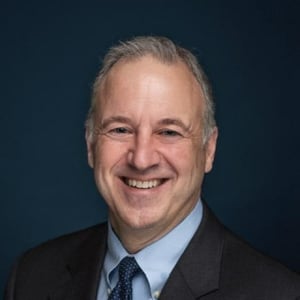
Don Daugherty is Senior Counsel, Litigation, at the Defense of Freedom Institute for Policy Studies. He previously served as a Senior Counsel at the Institute for Free Speech and the Wisconsin Institute for Law & Liberty. Before that, he was a partner at three of Wisconsin’s largest firms, with nearly 30 years of trial and appellate litigation experience. He has been consistently recognized as among the “Best Lawyers in America,” as well as Wisconsin’s “Super Lawyers.” He received his B.A. from the University of Virginia and his J.D. from Northwestern University Law School. After law school, he served as a clerk to the Honorable Roger J. Miner of the United States Court of Appeals for the Second Circuit.
Don is on the Board of Advisors for the Milwaukee Lawyers’ Chapter of the Federalist Society, and on the Executive Committee of the Federalist Society’s Litigation Practice Group.

R. B. Price and Isabelle Wade & Paul C. Lyda Professor Emeritus of Law, University of Missouri School of Law
Carl H. Esbeck is R.B. Price Professor and Isabelle Wade & Paul C. Lyda Professor of Law emeritus at the University of Missouri. After attending Cornell University School of Law where he served as an editor on the Cornell Law Review, he held a judicial clerkship with the Honorable Howard C. Bratton, chief judge of the U.S. District Court in New Mexico.
Professor Esbeck publishes widely in the area of religious liberty and church-state relations. He is recognized as the progenitor of "Charitable Choice," an integral part of the 1996 Federal Welfare Reform Act, later made a part of the faith-based initiative and equal-treatment regulations under presidents George W. Bush and Barack Obama. In addition, he has taken the lead in recognizing that the modern Supreme Court has applied the Establishment Clause not as a personal right, but as a structural limit on the government's authority in disputes involving church governance. While on leave from 1999 to 2002, Professor Esbeck directed the Center for Law & Religious Freedom (CLRF) and later served as Senior Counsel to the Deputy Attorney General at the U.S. Department of Justice. While directing the CLRF, Professor Esbeck was a central part of the congressional advocacy behind the Religious Land Use and Institutionalized Persons Act of 2000 (RLUIPA). While at the Department of Justice one of his duties was to direct a task force to remove barriers to the equal-treatment of faith-based organizations applying for social service grants. He is the author of Disestablishment and Religious Dissent: Church-State Relations in the New American States, 1776 - 1833 (U. of MO Press, 2019).
General Counsel, The Center for Individual Rights
Michael E. Rosman is CIR’s General Counsel. He graduated summa cum laude from the University of Rochester in 1981, majoring in economics and political science. He received his J.D. in 1984 from Yale Law School. Mr. Rosman worked as an associate at Rosenman & Colin in New York City from 1984-93.
Mr. Rosman joined CIR in March 1994. Mr. Rosman is the author of several articles, including: “Ambiguity and the First Amendment: Some Thoughts On All-White Advertising,” 61 Tenn. L. Rev. 289 (1993); and “Standing Alone: Standing Under The Fair Housing Act,” 60 Mo. L. Rev. 547 (1995), “Thoughts on Bakke and Its Effect on Race- Conscious Decision-Making,” 2002 U. Chi. Legal F. 45 Book Review of Kent Greenawalt’s Fighting Words, 13 Constitutional Commentary 317 (1996)
Mr. Rosman has litigated throughout the federal court system, and has argued many times in the federal courts of appeals. He also successfully argued on behalf of CIR client Tony Morrison in the United States Supreme Court in the landmark case of United States v. Morrison, 529 U.S. 598 (2000).
Partner, King & Spalding LLP
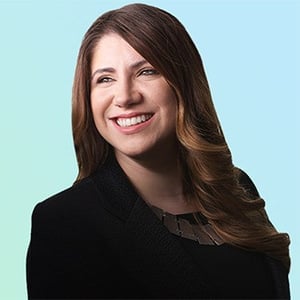
A partner in the FDA and Life Sciences practice at King & Spalding LLP, Marisa Maleck focuses on litigation, regulatory matters and public policy, with a focus on consumer products. As a former senior counsel at a bio-tech company and in private practice, Marisa has substantial experience with and is skilled in providing creative solutions in the face of uncertainty.
Marisa represents clients in a variety of matters with a focus on FDA-regulated products like food, beverages, pharmaceuticals, medical devices, wellness products, cosmetics, tobacco and cannabis. As a former senior counsel at an FDA-regulated biotech company and as a former partner in King & Spalding’s Litigation and Global Disputes practice group, she handled hundreds of suits in a multi-district litigation, multiple agency inquiries, an FTC lawsuit and 10+ state Attorney Generals actions. With a special focus on consumer fraud, social-media marketing and personal injury/wrongful death lawsuits, Marisa has successfully drafted and/or argued appellate briefs and critical motions in numerous cases—including class actions and complex litigation—before the U.S. Supreme Court, federal and state courts of appeals, and federal and state trial courts. She has also advocated tirelessly for her clients through engagement with agencies and policy-makers. She also advises her clients about legal risk (and how to avoid it) in investigations, enforcement actions, private litigation and private-equity investments.
Marisa also advocates for her clients’ interests in the court of public opinion. She is often solicited for her balanced legal analysis by members of the media. Marisa has appeared on (tv/radio) MSNBC, MSN, CNBC and NPR, and in (print) Newsweek, the National Law Journal, The Wall Street Journal, The Washington Post and Politico.
In addition, Marisa has an active pro-bono practice representing indigent defendants through federal appellate appointments as part of the Criminal Justice Act program and as a screener for the Mid-Atlantic Innocence Project.

Rights Talk in a Post-Liberal Age: Mary Ann Glendon's Enduring Insight Into the American Rights Tradition
Gabrielle M. Girgis
Gross human rights violations occur every day, often invisibly to most of us. Media coverage...
Topics
Academic Freedom and Public Employee Speech in Florida
The University of Florida sparked an ongoing First Amendment controversy by trying to prevent three...
An Academic Freedom Exception to Government Control of Employee Speech
Nick Cordova
Public employee speech cases often arise as Section 1983 actions in which a public employee...
Topics
Caretaking at the Court: Community-Caretaking Exception Not Applicable to Warrantless Searches of the Home
Supreme Court Justice Clarence Thomas didn’t mince words. His short, four-page opinion in the case...
State Court Docket Watch: Hamen v. Hamlin County
Anya Bidwell
Note from the Editor: The Federalist Society takes no positions on particular legal and public...
Last Hurrah for the Minimalist Court?
Donald A. Daugherty
A review of SCOTUS 2020: Major Decisions and Developments of the U.S. Supreme Court, edited...
Topics
Timeless Concepts for a Trying Time: The Separation of Powers and Judicial Review
If men were angels, no government would be necessary. If angels were to govern men,...
After Espinoza, What’s Left of the Establishment Clause?
Carl H. Esbeck
Note from the Editor: The Federalist Society takes no positions on particular legal and public...
Is It Time to Revisit the Constitutionality of Unauthorized Practice of Law Rules?
Michael E. Rosman
Note from the Editor: The Federalist Society takes no positions on particular legal and public...
The Misapplication of eBay v. MercExchange, LLC
Marisa Maleck
Note from the Editor: This article discusses the Supreme Court’s decision in eBay Inc. v....