
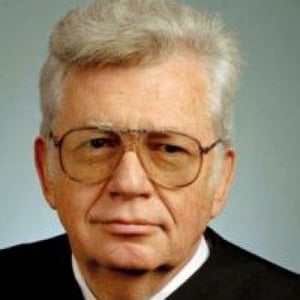
Judge, U.S. Court of Appeals, District of Columbia Circuit
Judge Sentelle was appointed United States Circuit Judge in October 1987, served as Chief Judge from February 11, 2008 until February 11, 2013, and took senior status on February 12, 2013. He is a 1968 graduate of the University of North Carolina Law School. Following law school, he practiced with the firm of Uzzell & DuMont until he became an Assistant U.S. Attorney in Charlotte, N.C. in 1970. From 1974 to 1977, he served as a North Carolina State District Judge but left the bench in 1977 to become a partner with the firm of Tucker, Hicks, Sentelle, Moon & Hodge. In 1985, Judge Sentelle joined the U.S. District Court, Western District of North Carolina, in Asheville, where he served until his appointment to the D.C. Circuit. Judge Sentelle was the Presiding Judge of the Special Division for the Purpose of Appointing Independent Counsels (1992-2006). He also served as the Chair of the U.S. Judicial Conference's Executive Committee (2010-2013). Judge Sentelle served for over 20 years as President of the Edward Bennett Williams Inn of the American Inns of Court.
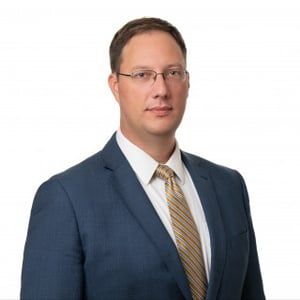
Laurence H. Silberman Chair in Constitutional Governance, American Enterprise Institute; Executive Director, Antonin Scalia Law School’s C. Boyden Gray Center for the Study of the Administrative State
Adam J. White is the Laurence H. Silberman Chair in Constitutional Governance and senior fellow at the American Enterprise Institute, where he focuses on the Supreme Court and the administrative state. He also directs the Antonin Scalia Law School’s C. Boyden Gray Center for the Study of the Administrative State.
He writes on regulation and constitutional government for a variety of publications. He practiced law in Washington, D.C., after clerking for the D.C. Circuit's Judge David Sentelle. He also has been chairman of the ABA's Administrative Law Section.
In 2021, he served on the Presidential Commission on the Supreme Court of the United States, where he criticized “Court packing” and other efforts to restructure the Supreme Court.
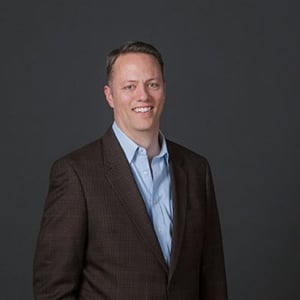
Partner, Consovoy McCarthy PLLC
Thomas R. McCarthy is a partner at Consovoy McCarthy Park PLLC. Mr. McCarthy assists clients with a wide array of issues in federal district and appellate courts across the country. He frequently represents clients in complex litigation involving diverse legal issues arising under the First Amendment, the Equal Protection Clause, the Commerce Clause, and other provisions of the U.S. Constitution. Mr. McCarthy also represents clients in litigation matters involving numerous federal statutes such as the Administrative Procedure Act, the Federal Arbitration Act, the Sherman Act, the Communications Act, the Voting Rights Act, and the Patent Act. He also represents clients with regulatory matters before the Federal Communications Commission, the Federal Trade Commission, and various other federal agencies.
Mr. McCarthy is a former law clerk to Judge David B. Sentelle of the United States Court of Appeals for the D.C. Circuit, and Judge Frank W. Bullock, Jr. of the United States District Court for the Middle District of North Carolina. Since 2011, McCarthy has been the co-director of the George Mason University School of Law Supreme Court Clinic. He previously taught an advanced constitutional law seminar at Mason Law.
Mr. McCarthy earned his BS from the University of Notre Dame, where he was a Notre Dame Scholar, and his JD magna cum laude from George Mason University School of Law. Mr. McCarthy is a member of the Virginia and District of Columbia bars.
Judge, U.S. Court of Appeals, District of Columbia Circuit
Judge Sentelle was appointed United States Circuit Judge in October 1987, served as Chief Judge from February 11, 2008 until February 11, 2013, and took senior status on February 12, 2013. He is a 1968 graduate of the University of North Carolina Law School. Following law school, he practiced with the firm of Uzzell & DuMont until he became an Assistant U.S. Attorney in Charlotte, N.C. in 1970. From 1974 to 1977, he served as a North Carolina State District Judge but left the bench in 1977 to become a partner with the firm of Tucker, Hicks, Sentelle, Moon & Hodge. In 1985, Judge Sentelle joined the U.S. District Court, Western District of North Carolina, in Asheville, where he served until his appointment to the D.C. Circuit. Judge Sentelle was the Presiding Judge of the Special Division for the Purpose of Appointing Independent Counsels (1992-2006). He also served as the Chair of the U.S. Judicial Conference's Executive Committee (2010-2013). Judge Sentelle served for over 20 years as President of the Edward Bennett Williams Inn of the American Inns of Court.
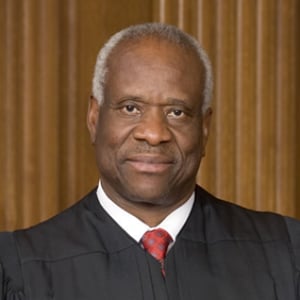
Associate Justice, Supreme Court of the United States
Clarence Thomas, Associate Justice, was born in the Pinpoint community near Savannah, Georgia on June 23, 1948. He attended Conception Seminary from 1967-1968 and received an A.B., cum laude, from Holy Cross College in 1971 and a J.D. from Yale Law School in 1974. He was admitted to law practice in Missouri in 1974, and served as an Assistant Attorney General of Missouri, 1974-1977; an attorney with the Monsanto Company, 1977-1979; and Legislative Assistant to Senator John Danforth, 1979-1981. From 1981–1982 he served as Assistant Secretary for Civil Rights, U.S. Department of Education, and as Chairman of the U.S. Equal Employment Opportunity Commission, 1982-1990. From 1990–1991, he served as a Judge on the United States Court of Appeals for the District of Columbia Circuit. President Bush nominated him as an Associate Justice of the Supreme Court and he took his seat October 23, 1991. He married Virginia Lamp on May 30, 1987 and has one child, Jamal Adeen by a previous marriage.

Laurence A. Tisch Professor of Law and Director, Classical Liberal Institute, New York University School of Law; Director, Classical Liberal Institute, Civitas Institute University of Texas at Austin
Richard A. Epstein is the Laurence A. Tisch Professor of Law, at New York University, a senior research fellow at the Civitas Institute at the University of Texas Austin, and a senior Lecturer, the University of Chicago. He received an LL.D., h.c . from the University of Ghent, 2003 , and an LLD h.c . from the University of Siegen in 2018 and the Bradley Prize in 2011. He has been a member of the American Academy of Arts and Sciences since 1985. He has edited both the Journal of Legal Studies (1981-1991) and the Journal of Law and Economics (1991-2001). He is also a founder and director of the Classical Liberal Institute at NYU Law School. His most recent book is The Classical Liberal Constitution: The Uncertain Quest for Limited Government (2014). His other books include Takings: Private Property and the Power of Eminent Domain ( 1985); Bargaining with the State (1993); Simple Rules for a Complex World (1995); Principles for a Free Society: Reconciling Individual Liberty and the Common Good (1998); Skepticism and Freedom: A Modern Theory of Classical Liberalism (2003); Design for Liberty: Private Property, Public Administration and the Rule of Law (2011), and most recently, The Myth of Birthright citizenship—and Beyond (2026). He has taught courses in , administrative law, antitrust, constitutional, contracts, environmental law, land use planning; real property, torts and water law. He has written and spoken extensively on a wide range of topics, and is writes a regular column for Defining Ideas.
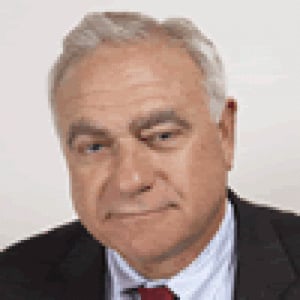
Senior Vice President and Chief Economist, U.S. Chamber Of Commerce
Dr. Martin A. Regalia is senior vice president for economic and tax policy and chief economist at the United States Chamber of Commerce.
Prior to coming to the Chamber in April 1993, Regalia served as the director of research for the Savings and Community Bankers of America (SCBA). Before that, in June 1992 when the group was founded, Regalia was executive vice president of policy development and chief economist for the National Council of Community Bankers—one of SCBA’s predecessor organizations.
Regalia also served as a principal analyst in the Fiscal Analysis Division at the Congressional Budget Office, as an economist for the board of governors of the Federal Reserve System in both the Banking and Capital Markets Sections, and as a financial economist for the Federal Deposit Insurance Corporation.
In addition, he served as a consultant to the Thrift Institutions Advisory Council to the board of governors of the Federal Reserve System and was a visiting instructor at The George Washington University School of Government and Business.
Regalia appears regularly on national television news and debate programs, testifies before congressional committees, authors articles and publications on a variety of economic topics, and speaks to many groups across the country.
USA Today named Regalia one of the top 10 economists in the nation. Regalia and the other economic experts received this recognition for the accuracy of their 2008 forecasts.
Regalia has a B.A. with honors in economics from the University of Santa Clara as well as an M.A. in economics and a Ph.D. in monetary economics from the University of Wisconsin.
Judge, U.S. Court of Appeals, District of Columbia Circuit
Judge Sentelle was appointed United States Circuit Judge in October 1987, served as Chief Judge from February 11, 2008 until February 11, 2013, and took senior status on February 12, 2013. He is a 1968 graduate of the University of North Carolina Law School. Following law school, he practiced with the firm of Uzzell & DuMont until he became an Assistant U.S. Attorney in Charlotte, N.C. in 1970. From 1974 to 1977, he served as a North Carolina State District Judge but left the bench in 1977 to become a partner with the firm of Tucker, Hicks, Sentelle, Moon & Hodge. In 1985, Judge Sentelle joined the U.S. District Court, Western District of North Carolina, in Asheville, where he served until his appointment to the D.C. Circuit. Judge Sentelle was the Presiding Judge of the Special Division for the Purpose of Appointing Independent Counsels (1992-2006). He also served as the Chair of the U.S. Judicial Conference's Executive Committee (2010-2013). Judge Sentelle served for over 20 years as President of the Edward Bennett Williams Inn of the American Inns of Court.
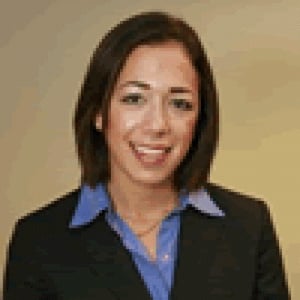
Senior Legal and Policy Adviser, Office of Investment, AFL-CIO
Heather Slavkin is the Senior Legal and Policy Advisor for the AFL-CIO Office of Investment. Ms. Slavkin's work focuses on legal, regulatory and corporate governance issues that impact union- and other worker-based pension, health and savings funds. She is the lead policy advisor on financial regulatory reform for the AFL-CIO and focuses on issues related to hedge funds and private equity, derivatives, systemic risk and corporate governance. Ms. Slavkin works with legislators, political organizations, pension funds and union affiliates to build support for policies that improve investor protections and regulatory oversight. She is also the chair of the Americans for Financial Reform task force on derivatives regulation.
Prior to joining the AFL-CIO, Ms. Slavkin was Assistant Counsel at BISYS Fund Services where she provided legal services related to establishing and maintaining mutual funds, money market funds and registered hedge funds of funds. Ms. Slavkin received her J.D. from Boston University School of Law and a B.S. in journalism from the University of Florida.
Judge, U.S. Court of Appeals, District of Columbia Circuit
Judge Sentelle was appointed United States Circuit Judge in October 1987, served as Chief Judge from February 11, 2008 until February 11, 2013, and took senior status on February 12, 2013. He is a 1968 graduate of the University of North Carolina Law School. Following law school, he practiced with the firm of Uzzell & DuMont until he became an Assistant U.S. Attorney in Charlotte, N.C. in 1970. From 1974 to 1977, he served as a North Carolina State District Judge but left the bench in 1977 to become a partner with the firm of Tucker, Hicks, Sentelle, Moon & Hodge. In 1985, Judge Sentelle joined the U.S. District Court, Western District of North Carolina, in Asheville, where he served until his appointment to the D.C. Circuit. Judge Sentelle was the Presiding Judge of the Special Division for the Purpose of Appointing Independent Counsels (1992-2006). He also served as the Chair of the U.S. Judicial Conference's Executive Committee (2010-2013). Judge Sentelle served for over 20 years as President of the Edward Bennett Williams Inn of the American Inns of Court.
Judge, U.S. Court of Appeals, District of Columbia Circuit
Judge Sentelle was appointed United States Circuit Judge in October 1987, served as Chief Judge from February 11, 2008 until February 11, 2013, and took senior status on February 12, 2013. He is a 1968 graduate of the University of North Carolina Law School. Following law school, he practiced with the firm of Uzzell & DuMont until he became an Assistant U.S. Attorney in Charlotte, N.C. in 1970. From 1974 to 1977, he served as a North Carolina State District Judge but left the bench in 1977 to become a partner with the firm of Tucker, Hicks, Sentelle, Moon & Hodge. In 1985, Judge Sentelle joined the U.S. District Court, Western District of North Carolina, in Asheville, where he served until his appointment to the D.C. Circuit. Judge Sentelle was the Presiding Judge of the Special Division for the Purpose of Appointing Independent Counsels (1992-2006). He also served as the Chair of the U.S. Judicial Conference's Executive Committee (2010-2013). Judge Sentelle served for over 20 years as President of the Edward Bennett Williams Inn of the American Inns of Court.
Laurence A. Tisch Professor of Law and Director, Classical Liberal Institute, New York University School of Law; Director, Classical Liberal Institute, Civitas Institute University of Texas at Austin
Richard A. Epstein is the Laurence A. Tisch Professor of Law, at New York University, a senior research fellow at the Civitas Institute at the University of Texas Austin, and a senior Lecturer, the University of Chicago. He received an LL.D., h.c . from the University of Ghent, 2003 , and an LLD h.c . from the University of Siegen in 2018 and the Bradley Prize in 2011. He has been a member of the American Academy of Arts and Sciences since 1985. He has edited both the Journal of Legal Studies (1981-1991) and the Journal of Law and Economics (1991-2001). He is also a founder and director of the Classical Liberal Institute at NYU Law School. His most recent book is The Classical Liberal Constitution: The Uncertain Quest for Limited Government (2014). His other books include Takings: Private Property and the Power of Eminent Domain ( 1985); Bargaining with the State (1993); Simple Rules for a Complex World (1995); Principles for a Free Society: Reconciling Individual Liberty and the Common Good (1998); Skepticism and Freedom: A Modern Theory of Classical Liberalism (2003); Design for Liberty: Private Property, Public Administration and the Rule of Law (2011), and most recently, The Myth of Birthright citizenship—and Beyond (2026). He has taught courses in , administrative law, antitrust, constitutional, contracts, environmental law, land use planning; real property, torts and water law. He has written and spoken extensively on a wide range of topics, and is writes a regular column for Defining Ideas.
Senior Vice President and Chief Economist, U.S. Chamber Of Commerce
Dr. Martin A. Regalia is senior vice president for economic and tax policy and chief economist at the United States Chamber of Commerce.
Prior to coming to the Chamber in April 1993, Regalia served as the director of research for the Savings and Community Bankers of America (SCBA). Before that, in June 1992 when the group was founded, Regalia was executive vice president of policy development and chief economist for the National Council of Community Bankers—one of SCBA’s predecessor organizations.
Regalia also served as a principal analyst in the Fiscal Analysis Division at the Congressional Budget Office, as an economist for the board of governors of the Federal Reserve System in both the Banking and Capital Markets Sections, and as a financial economist for the Federal Deposit Insurance Corporation.
In addition, he served as a consultant to the Thrift Institutions Advisory Council to the board of governors of the Federal Reserve System and was a visiting instructor at The George Washington University School of Government and Business.
Regalia appears regularly on national television news and debate programs, testifies before congressional committees, authors articles and publications on a variety of economic topics, and speaks to many groups across the country.
USA Today named Regalia one of the top 10 economists in the nation. Regalia and the other economic experts received this recognition for the accuracy of their 2008 forecasts.
Regalia has a B.A. with honors in economics from the University of Santa Clara as well as an M.A. in economics and a Ph.D. in monetary economics from the University of Wisconsin.
Judge, U.S. Court of Appeals, District of Columbia Circuit
Judge Sentelle was appointed United States Circuit Judge in October 1987, served as Chief Judge from February 11, 2008 until February 11, 2013, and took senior status on February 12, 2013. He is a 1968 graduate of the University of North Carolina Law School. Following law school, he practiced with the firm of Uzzell & DuMont until he became an Assistant U.S. Attorney in Charlotte, N.C. in 1970. From 1974 to 1977, he served as a North Carolina State District Judge but left the bench in 1977 to become a partner with the firm of Tucker, Hicks, Sentelle, Moon & Hodge. In 1985, Judge Sentelle joined the U.S. District Court, Western District of North Carolina, in Asheville, where he served until his appointment to the D.C. Circuit. Judge Sentelle was the Presiding Judge of the Special Division for the Purpose of Appointing Independent Counsels (1992-2006). He also served as the Chair of the U.S. Judicial Conference's Executive Committee (2010-2013). Judge Sentelle served for over 20 years as President of the Edward Bennett Williams Inn of the American Inns of Court.
Senior Legal and Policy Adviser, Office of Investment, AFL-CIO
Heather Slavkin is the Senior Legal and Policy Advisor for the AFL-CIO Office of Investment. Ms. Slavkin's work focuses on legal, regulatory and corporate governance issues that impact union- and other worker-based pension, health and savings funds. She is the lead policy advisor on financial regulatory reform for the AFL-CIO and focuses on issues related to hedge funds and private equity, derivatives, systemic risk and corporate governance. Ms. Slavkin works with legislators, political organizations, pension funds and union affiliates to build support for policies that improve investor protections and regulatory oversight. She is also the chair of the Americans for Financial Reform task force on derivatives regulation.
Prior to joining the AFL-CIO, Ms. Slavkin was Assistant Counsel at BISYS Fund Services where she provided legal services related to establishing and maintaining mutual funds, money market funds and registered hedge funds of funds. Ms. Slavkin received her J.D. from Boston University School of Law and a B.S. in journalism from the University of Florida.
Laurence A. Tisch Professor of Law and Director, Classical Liberal Institute, New York University School of Law; Director, Classical Liberal Institute, Civitas Institute University of Texas at Austin
Richard A. Epstein is the Laurence A. Tisch Professor of Law, at New York University, a senior research fellow at the Civitas Institute at the University of Texas Austin, and a senior Lecturer, the University of Chicago. He received an LL.D., h.c . from the University of Ghent, 2003 , and an LLD h.c . from the University of Siegen in 2018 and the Bradley Prize in 2011. He has been a member of the American Academy of Arts and Sciences since 1985. He has edited both the Journal of Legal Studies (1981-1991) and the Journal of Law and Economics (1991-2001). He is also a founder and director of the Classical Liberal Institute at NYU Law School. His most recent book is The Classical Liberal Constitution: The Uncertain Quest for Limited Government (2014). His other books include Takings: Private Property and the Power of Eminent Domain ( 1985); Bargaining with the State (1993); Simple Rules for a Complex World (1995); Principles for a Free Society: Reconciling Individual Liberty and the Common Good (1998); Skepticism and Freedom: A Modern Theory of Classical Liberalism (2003); Design for Liberty: Private Property, Public Administration and the Rule of Law (2011), and most recently, The Myth of Birthright citizenship—and Beyond (2026). He has taught courses in , administrative law, antitrust, constitutional, contracts, environmental law, land use planning; real property, torts and water law. He has written and spoken extensively on a wide range of topics, and is writes a regular column for Defining Ideas.
Senior Vice President and Chief Economist, U.S. Chamber Of Commerce
Dr. Martin A. Regalia is senior vice president for economic and tax policy and chief economist at the United States Chamber of Commerce.
Prior to coming to the Chamber in April 1993, Regalia served as the director of research for the Savings and Community Bankers of America (SCBA). Before that, in June 1992 when the group was founded, Regalia was executive vice president of policy development and chief economist for the National Council of Community Bankers—one of SCBA’s predecessor organizations.
Regalia also served as a principal analyst in the Fiscal Analysis Division at the Congressional Budget Office, as an economist for the board of governors of the Federal Reserve System in both the Banking and Capital Markets Sections, and as a financial economist for the Federal Deposit Insurance Corporation.
In addition, he served as a consultant to the Thrift Institutions Advisory Council to the board of governors of the Federal Reserve System and was a visiting instructor at The George Washington University School of Government and Business.
Regalia appears regularly on national television news and debate programs, testifies before congressional committees, authors articles and publications on a variety of economic topics, and speaks to many groups across the country.
USA Today named Regalia one of the top 10 economists in the nation. Regalia and the other economic experts received this recognition for the accuracy of their 2008 forecasts.
Regalia has a B.A. with honors in economics from the University of Santa Clara as well as an M.A. in economics and a Ph.D. in monetary economics from the University of Wisconsin.
Judge, U.S. Court of Appeals, District of Columbia Circuit
Judge Sentelle was appointed United States Circuit Judge in October 1987, served as Chief Judge from February 11, 2008 until February 11, 2013, and took senior status on February 12, 2013. He is a 1968 graduate of the University of North Carolina Law School. Following law school, he practiced with the firm of Uzzell & DuMont until he became an Assistant U.S. Attorney in Charlotte, N.C. in 1970. From 1974 to 1977, he served as a North Carolina State District Judge but left the bench in 1977 to become a partner with the firm of Tucker, Hicks, Sentelle, Moon & Hodge. In 1985, Judge Sentelle joined the U.S. District Court, Western District of North Carolina, in Asheville, where he served until his appointment to the D.C. Circuit. Judge Sentelle was the Presiding Judge of the Special Division for the Purpose of Appointing Independent Counsels (1992-2006). He also served as the Chair of the U.S. Judicial Conference's Executive Committee (2010-2013). Judge Sentelle served for over 20 years as President of the Edward Bennett Williams Inn of the American Inns of Court.
Senior Legal and Policy Adviser, Office of Investment, AFL-CIO
Heather Slavkin is the Senior Legal and Policy Advisor for the AFL-CIO Office of Investment. Ms. Slavkin's work focuses on legal, regulatory and corporate governance issues that impact union- and other worker-based pension, health and savings funds. She is the lead policy advisor on financial regulatory reform for the AFL-CIO and focuses on issues related to hedge funds and private equity, derivatives, systemic risk and corporate governance. Ms. Slavkin works with legislators, political organizations, pension funds and union affiliates to build support for policies that improve investor protections and regulatory oversight. She is also the chair of the Americans for Financial Reform task force on derivatives regulation.
Prior to joining the AFL-CIO, Ms. Slavkin was Assistant Counsel at BISYS Fund Services where she provided legal services related to establishing and maintaining mutual funds, money market funds and registered hedge funds of funds. Ms. Slavkin received her J.D. from Boston University School of Law and a B.S. in journalism from the University of Florida.

11th Annual Lifetime Achievment Award Honoring Judge David B. Sentelle
Washington, District of ColumbiaConservative & Libertarian Legal Scholarship: Criminal Law and Procedure
[Return to Table of Contents] XI. Criminal Law & Procedure Criminality and Responsibility Gary Becker,...
Challenging the Dodd-Frank Act: The Constitution and the Future of the Regulatory State
Des Moines, IowaAn Overview of Fisher v. University of Texas
HoustonReflections from the Bench
Charlotte, North CarolinaCorporations: Deficit Reduction and the Role of the Federal Government in Regulating Business
Richard A. Epstein, Martin A. Regalia, David B. Sentelle, Heather L. Slavkin
The Corporations, Securities & Antitrust Practice Group hosted this panel on "Deficit Reduction and the...
Corporations: Deficit Reduction and the Role of the Federal Government in Regulating Business
Richard A. Epstein, Martin A. Regalia, David B. Sentelle, Heather L. Slavkin
The Corporations, Securities & Antitrust Practice Group hosted this panel on "Deficit Reduction and the...
Corporations: Deficit Reduction and the Role of the Federal Government in Regulating Business
2011 National Lawyers Convention
Washington, DCNational Security Law: The Changing Role of the Courts
Raleigh, North CarolinaThe Role of the Courts in National Security
Houston, Texas