
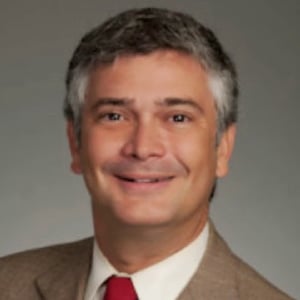
Instructor of Accounting, University of Central Florida College of Business
Professor F. E. Guerra-Pujol was born in Los Angeles, Calif., to Francisco Guerra and Oilda Pujol. He attended college at the University of California at Santa Barbara, graduating with highest honors, and received his Juris Doctorate from Yale Law School. After practicing business law for several years, Professor Guerra-Pujol began his academic career at the Pontifical Catholic University of Puerto Rico. He is currently teaching at the University of Central Florida. His areas of research include markets, property rights and the philosophy of law. He is also the author of many scholarly papers, journal articles and book chapters, including “Gödel’s Loophole,” “A Bayesian Model of Litigation” and “The Poker-Litigation Game.” You can access his work here:
https://papers.ssrn.com/sol3/cf_dev/AbsByAuth.cfm?per_id=649450

Professor of Law, Antonin Scalia Law School, George Mason University
ILYA SOMIN is Professor of Law at George Mason University and the B. Kenneth Simon Chair in Constitutional Studies at the Cato Institute. His research focuses on constitutional law, property law, democratic theory, federalism, and migration rights. He is the author of Free to Move: Foot Voting, Migration, and Political Freedom (Oxford University Press, revised and expanded edition, 2022), Democracy and Political Ignorance: Why Smaller Government is Smarter (Stanford University Press, revised and expanded second edition, 2016), and The Grasping Hand: Kelo v. City of New London and the Limits of Eminent Domain (University of Chicago Press, 2015, rev. paperback ed., 2016), coauthor of A Conspiracy Against Obamacare: The Volokh Conspiracy and the Health Care Case (Palgrave Macmillan, 2013), and co-editor of Eminent Domain: A Comparative Perspective (Cambridge University Press, 2017). Democracy and Political Ignorance has been translated into Italian and Japanese.
Somin’s work has appeared in numerous scholarly journals, including the Yale Law Journal, Stanford Law Review, Northwestern University Law Review, Georgetown Law Journal, Critical Review, and others. Somin has also published articles in a variety of popular press outlets, including the New York Times, Washington Post, Wall Street Journal, Los Angeles Times, CNN, NBC, The Atlantic, USA Today, Boston Globe, US News and World Report, South China Morning Post, National Law Journal and Reason. He has been quoted or interviewed by the New York Times, Washington Post, Wall Street Journal, Time, Newsweek, The Economist, the Christian Science Monitor, the Financial Times, The Guardian, the Associated Press, CBS, MSNBC, NPR, BBC, Reuters, the Canadian Broadcasting Corporation, the Australian Broadcasting Corporation, Radio Free Europe/Radio Liberty, Al Jazeera, and the Voice of America, among other media.
Somin’s writings have been cited in decisions by the United States Supreme Court, multiple state supreme courts and lower federal courts, and the Supreme Court of Israel. He is co-counsel for the plaintiffs in VOS Selections, Inc. v. Trump, a case challenging the constitutionality of President Trump’s “Liberation Day” tariffs. Somin has testified on the use of drones for targeted killing in the War on Terror before the US Senate Judiciary Subcommittee on the Constitution, Civil Rights, and Human Rights. In 2009, he testified on property rights issues at the United States Senate Judiciary Committee confirmation hearings for Supreme Court Justice Sonia Sotomayor. Somin writes regularly for the popular Volokh Conspiracy law and politics blog, now affiliated with Reason magazine (previously affiliated with the Washington Post from 2014 to 2017). From 2006 to 2013, he served as Co-Editor of the Supreme Court Economic Review, one of the country’s top-rated law and economics journals.
Somin has served as a visiting professor at the University of Pennsylvania Law School. He has also been a visiting professor or scholar at the Georgetown University Law Center, the University of Hamburg, Germany, the University of Torcuato Di Tella in Buenos Aires, Argentina, Uriel Reichman University in Israel, and Zhengzhou University in China. He is a University Affiliate of the Schar School of Policy and Government at George Mason University, and an affiliated faculty member of the George Mason University Institute for Immigration Research. Before joining the faculty at George Mason, Somin was the John M. Olin Fellow in Law at Northwestern University Law School in 2002-2003. In 2001-2002, he clerked for the Hon. Judge Jerry E. Smith of the U.S. Court of Appeals for the Fifth Circuit. Professor Somin earned his B.A., Summa Cum Laude, at Amherst College, M.A. in Political Science from Harvard University, and J.D. from Yale Law School.
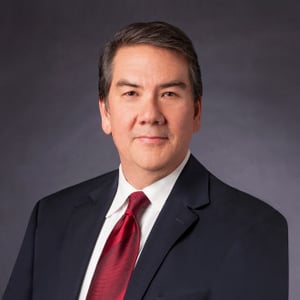
Director of Property Rights Litigation, Pacific Legal Foundation
Robert Thomas is Pacific Legal Foundation’s director of its Property Rights practice group. He is an expert on property rights, takings, land use, and eminent domain issues.
After more than three decades in private practice in Hawaii and California representing property owners in takings, eminent domain, and land use cases, Robert joined PLF’s team of freedom fighters in 2021.
He has litigated cases in both state and federal court. As counsel for the property owners in County of Hawaii v. C&J Coupe Family Limited Partnership, he helped establish the rule that courts are not mere “rubber stamps” when a local government is taking property by eminent domain. Another case, Hamilton ex rel. Lethem v. Lethem, held that a parent’s liberty interest in raising and disciplining his child included a right to fair procedures, including notice and a judicial hearing before the family court could restrict parent-child contact.
Robert is a frequent speaker on property rights, takings, land use, and eminent domain issues nationwide. He also regularly publishes scholarly and practical articles in his area of practice, most recently including, “Hoist the Yellow Flag and Spam® Up: The Separation of Powers Limitation on Hawaii’s Emergency Authority”, 43 U. Haw. L. Rev. 71 (2020) and “Evaluating Emergency Takings: Flattening the Economic Curve”, 29 Wm. & Mary Bill Rts. J. 1145 (2021).
An elected member of the American Law Institute, Robert received his LLM, with honors, from Columbia Law School, where he was a Harlan Fiske Stone Scholar, and his JD from the University of Hawaii School of Law, where he served as editor of the Law Review. He also serves as the inaugural Joseph T. Waldo Visiting Chair in Property Rights Law at William & Mary Law School in Williamsburg, Virginia, where he teaches upper-division courses in eminent domain, land use, property rights, and property law.
When he’s not working, you might find Robert writing and publishing his blog on land use, property, and takings law, inversecondemnation.com, one of the most widely read blogs on those subjects.
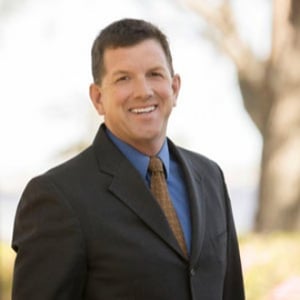
Partner, Creed & Gowdy
Bryan Gowdy is a board-certified appellate lawyer. His practice is limited to handling appeals, post-conviction motions, and trial support for matters likely to be appealed. His practice encompasses all substantive areas of the law, including plaintiff's injury and products liability, commercial cases, criminal law, and family law. He has briefed and orally argued appeals before the U.S. Supreme Court, the U.S. Court of Appeals for the Eleventh Circuit, the Supreme Court of Florida, and Florida's district courts of appeal. He also has handled appeals in the U.S. Courts of Appeals for the First, Fourth, Fifth, and Ninth Circuits. He is AV-rated by Martindale Hubbell and has been selected as a Top 100 in Florida Super Lawyer, Top 25 in Jacksonville Super Lawyer, and a "Legal Elite" by Florida Trend Magazine. In 2019, Mr. Gowdy began serving as the Chair for the Florida Justice Association Amicus Curiae Committee.
Before joining the firm, Mr. Gowdy was with the national law firm of McGuireWoods LLP, where he primarily handled commercial litigation at the trial and appellate level. Mr. Gowdy began his legal career as a law clerk for federal judges at the trial and appellate level. Mr. Gowdy attended the University of Florida Levin College of Law, where he was first in his class, a member of the Order of the Coif, and the management editor of the Florida Law Review.
Before law school, Mr. Gowdy was an active-duty surface warfare officer in the United States Navy, and he graduated from the School of Foreign Service at Georgetown University.
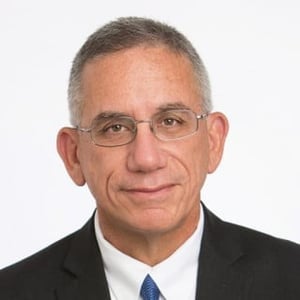
Of Counsel, GrayRobinson
Charlie Trippe practiced civil litigation for the 14 years between 1980 and 1994, most of that with Jones Day, where he was a partner in the New York office. He was the chief litigation counsel of CSX Transportation, Inc., one of the country’s largest freight railroads, from 1994 through 2001. He returned to private practice in Jacksonville in 2001, continuing to practice in the area of civil litigation. He also served as General Counsel to both the Governor of Florida (2010-2011) and the Attorney General of Florida (2020-2022), and as the Chief Counsel of the Federal Aviation Administration (2017-2019). Since 2025 he has been Of Counsel to the Florida firm of GrayRobinson. He is a Florida Supreme Court Certified Circuit Civil Mediator, as well as an experienced arbitrator.
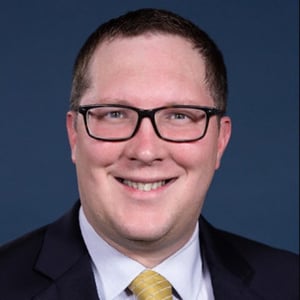
Attorney, Pacific Legal Foundation
Luke A. Wake is an attorney at the Pacific Legal Foundation. Prior to joining PLF, he was a senior staff attorney at the NFIB Small Business Legal Center.
Wake has particular expertise on environmental and land use issues, and has worked on numerous other constitutional issues and matters of importance to small business owners. He is an ardent defender of private property rights, which he believes are essential to the free enterprise system and the foundation of American liberty. As a strong advocate of individual rights and economic liberties, he has built his career defending small business interests.
Wake has focused on a whole host of issues, from employment law matters to regulatory compliance. In addition to serving as a resource for small business owners, Wake is committed to ensuring that the voice of small business is heard in the nation’s courts. As an appellate practitioner, Wake has focused particularly on informing the courts on matters of administrative law and on issues under the Fifth Amendment’s Takings Clause. He is also working to advance small business interests in law review articles, and was recently published in the Berkeley Journal of Law & Ecology. See R.S. Radford & Luke A. Wake, Deciphering and Extrapolating: Searching for Sense in Penn Central, 38 Ecology L.Q. 731, 746-747 (2011).
Before joining the Legal Center’s team, Wake completed a prestigious two-year fellowship as an attorney in the Pacific Legal Foundation’s College of Public Interest Law. Wake is a graduate of Case Western Reserve University School of Law in Cleveland Ohio, and is a member of the California Bar. He completed his undergraduate studies at Elon University in North Carolina in 2006 where he focused on political theory and corporate communications.
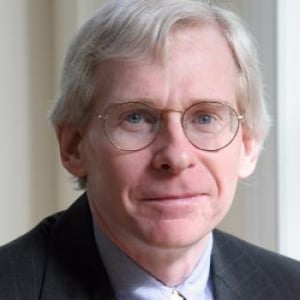
James Madison Distinguished Professor of Law and Class of 1941 Research Professor of Law, University of Virginia School of Law
Professor John C. Harrison is the James Madison Distinguished Professor of Law and Class of 1941 Research Professor of Law at the University of Virginia School of Law. He joined the faculty at University of Virginia in 1993 as an associate professor of law after a distinguished career with the U.S. Department of Justice. His teaching subjects include constitutional history, federal courts, remedies, corporations, civil procedure, legislation and property. In 2008 he was on leave from the Law School to serve as counselor on international law in the Office of the Legal Adviser at the U.S. Department of State.
A 1977 graduate of the University of Virginia, Harrison earned his law degree in 1980 at Yale, where he served as editor of the Yale Law Journal and editor and articles editor of the Yale Studies in World Public Order. He was an associate at Patton Boggs & Blow in Washington, D.C., and clerked for Judge Robert Bork on the U.S. Court of Appeals for the District of Columbia Circuit. He worked with the Department of Justice from 1983-93, serving in numerous capacities, including deputy assistant attorney general in the Office of Legal Counsel (1990-93).

President, Harned Strategies LLC
Karen Harned is President at Harned Strategies LLC. Previously, she served as Executive Director of the National Federation of Independent Business Small Business Legal Center, a post she held from 2002-2022. Prior to joining the Legal Center, Ms. Harned was an attorney at a Washington, D.C. law firm specializing in food and drug law, where she represented several small and large businesses and their respective trade associations before Congress and federal agencies. She also served as Assistant Press Secretary to U.S. Senator Don Nickles of Oklahoma from August of 1989 to March of 1993. Ms. Harned received her B.A. from the University of Oklahoma in 1989 and her J.D. from The George Washington University National Law Center in 1995. She is admitted to practice in the District of Columbia.
As Executive Director of the NFIB Small Business Legal Center, Ms. Harned commented regularly on small business cases before federal and state courts, as well as the U.S. Supreme Court. She has appeared on Fox News, Fox Business, NBC Nightly News, CNN, CNBC and MSNBC, as well as National Public Radio, CBS Radio, and radio outlets across the country. Her opinion editorials and articles regarding healthcare, lawsuit abuse, regulation, and other issues important to small business have been published in newspapers and other publications nationwide.
Ms. Harned has testified before Congress on the small business impact of regulation and the civil justice system. Additionally, she has conducted numerous webinars and legal compliance seminars for small business owners across the country on issues relating to employment law, including unionization and immigration.
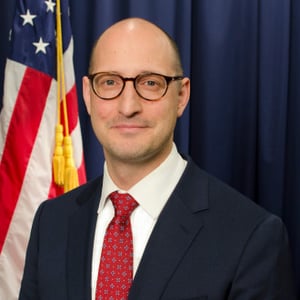
Partner, Cravath, Swaine & Moore LLP
Noah Joshua Phillips is Co-Chair of the Antitrust Practice and previously served as a Commissioner of the Federal Trade Commission. He advises clients on a range of antitrust issues, including mergers and acquisitions, business conduct and compliance, litigation and investigations, and data security and privacy.
On the FTC, Mr. Phillips played an integral role in precedent setting enforcement actions and regulatory efforts concerning antitrust, consumer protection and privacy. He decided dozens of merger and other antitrust enforcement matters across the economy, including in the consumer product, defense, energy, entertainment, healthcare, technology, pharmaceutical and retail industries. Mr. Phillips’ written antitrust opinions were consistently upheld by federal appellate courts.
As Commissioner, Mr. Phillips frequently testified before Congress and represented the FTC before international bodies, including the G7, the Competition Committee of the Organisation for Economic Co-operation and Development, and the International Conference of Data Protection and Privacy Commissioners. He speaks and writes frequently on a range of antitrust, consumer protection and privacy issues.
Prior to the FTC, Mr. Phillips served as Chief Counsel to U.S. Senator John Cornyn, of Texas, on the Senate Judiciary Committee. He advised Senator Cornyn on a variety of legal and policy issues, as well as judicial nominations.
Mr. Phillips received an A.B. magna cum laude from Dartmouth College in 2000 and a J.D. from Stanford Law School in 2005. He began his career at a New York-based investment bank. After law school, Mr. Phillips clerked for Hon. Edward C. Prado of the U.S. Court of Appeals for the Fifth Circuit and joined Cravath’s Litigation Department in 2006. He left the Firm in 2010, and he rejoined Cravath as a partner in December 2022.
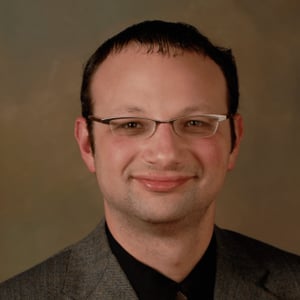
Chief Policy Counsel, Council on Criminal Justice and Senior Advisor, Right on Crime
Marc A. Levin is the Chief Policy Counsel for the Council on Criminal Justice (counciloncj.org) and Senior Advisor for Right on Crime.
An attorney and accomplished author on legal and public policy issues, Marc began the Foundation’s criminal justice program in 2005. This work contributed to nationally praised policy changes that have been followed by dramatic declines in crime and incarceration in Texas. Building on this success, in 2010, Levin developed the concept for the Right on Crime initiative, a TPPF project in partnership with Prison Fellowship and the American Conservative Union Foundation. Right on Crime has become the national clearinghouse for conservative criminal justice reforms and has contributed to the adoption of policies in dozens of states that fight crime, support victims, and protect taxpayers.
In 2014, Levin was named one of the “Politico 50” in the magazine’s annual “list of thinkers, doers, and dreamers who really matter in this age of gridlock and dysfunction.”
Marc has testified on criminal justice policy on four occasions before Congress and has testified before legislatures in states including Texas, Nevada, Kansas, Wisconsin, and California. He also has met personally with leaders such as U.S. Presidents, Speakers of the House, and the Justice Commtitee of the United Kingdom Parliament to share his ideas on criminal justice reform. In 2007, he was honored in a resolution unanimously passed by the Texas House of Representatives that stated, “Mr. Levin’s intellect is unparalleled and his research is impeccable.”
Since 2005, Marc has published dozens of policy papers on topics such as sentencing, probation, parole, reentry, and overcriminalization which are available on the TPPF website. Levin’s articles on law and public policy have been featured in publications such as the Wall Street Journal, USA Today, Texas Review of Law & Politics, National Law Journal, New York Daily News, Jerusalem Post, Toronto Star, Atlanta Journal-Constitution, Philadelphia Inquirer, San Francisco Chronicle, Washington Times, Los Angeles Daily Journal, Charlotte Observer, Dallas Morning News, Houston Chronicle, Austin American-Statesman, San Antonio Express-News and Reason Magazine.
In 1999, Marc graduated with honors from the University of Texas with a B.A. in Plan II Honors and Government. In 2002, Marc received his J.D. with honors from the University of Texas School of Law. Marc was a Charles G. Koch Summer Fellow in 1996. He served as a law clerk to Judge Will Garwood on the U.S. Court of Appeals for the Fifth Circuit and Staff Attorney at the Texas Supreme Court.
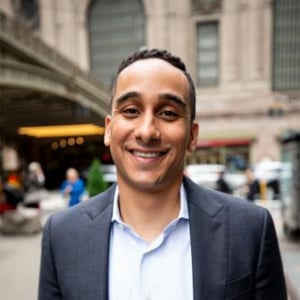
Nick Ohnell Fellow, The Manhattan Institute
Rafael Mangual is the Nick Ohnell Fellow at the Manhattan Institute, a contributing editor of City Journal, and a member of the Council on Criminal Justice. His first book, Criminal (In)Justice, was released in July 2022. He has authored and coauthored a number of MI reports and op-eds on issues ranging from urban crime and jail violence to broader matters of criminal and civil justice reform. His work has been featured and mentioned in a wide array of publications, including the Wall Street Journal, The Atlantic, New York Post, The New York Times, The Washington Post, Philadelphia Inquirer and City Journal. Mangual also regularly appears on Fox News and has made a number of national and local television and radio appearances on outlets such as C-SPAN and Bloomberg Radio. In 2020, he was appointed to serve a four-year term as a member of the New York State Advisory Committee of the U.S. Commission on Civil Rights.
Prior to joining MI in 2015, Rafael worked in corporate communications for the International Trademark Association. He holds a B.A. in corporate communications from the City University of New York’s Baruch College and a J.D. from DePaul University in Chicago, where he was president of the Federalist Society and vice president of the Appellate Moot Court team. After graduating from law school, Mangual was inducted into the Order of the Barristers, a national honor society for excellence in oral and written advocacy.
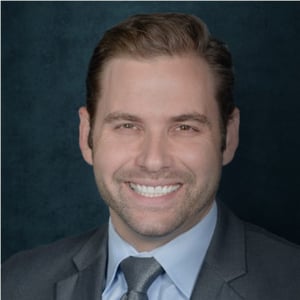
Vice President for the Program on Technology, Criminal Justice and Civil Liberties, Lincoln Network
Arthur Rizer is the Vice President for the Program on Technology, Criminal Justice and Civil Liberties at Lincoln Network. In addition to his work at Lincoln, Arthur is a visiting lecturer at University College London, and an adjunct professor at George Mason University’s Antonin Scalia Law School. Arthur is also a member of Columbia University Justice Lab’s Executive Session for the Future of Justice Policy, the Federalist Society’s Executive Committee of the Criminal Law Practice Group, the Virginia Advisory Committee to the U.S. Commission on Civil Rights, and other advisory bodies.
Before joining Lincoln, Arthur was founding director of the R Street Institute’s program on criminal justice and civil liberties. Prior to that, Arthur taught at West Virginia University’s College of Law, and was a visiting professor at Georgetown University Law Center. He also served as a trial attorney with the U.S. Justice Department, primarily as a federal prosecutor in the Criminal Division, where he targeted command-and-control drug cartel leaders and narco-terrorists. He also served as a prosecutor in the U.S. Attorney’s Office for the Southern District of California and in the civil division. Earlier in his career, Arthur served in the U.S. Army, originally enlisting as a private before later receiving a commission. He served as an armor officer, later becoming the commander of a military police company and a Reserve Officers’ Training Corps assistant professor. He deployed to Fallujah, Iraq, with the mission to train the Iraqi Infantry and served as an MP acting battalion commander and executive officer. He retired as a lieutenant colonel from the U.S. Army (WVNG). During his Army career, Arthur received the Bronze Star, Purple Heart, Meritorious Service and Iraq Campaign medals.
Arthur is the author of three books: Lincoln’s Counsel (2010); The National Security Implications of Immigration Law (2013); and Jefferson’s Pen: The Art of Persuasion (2016).
Arthur earned his bachelor’s degree in political science from Pacific Lutheran University; a master of laws, with distinction, from Georgetown University’s Law Center; and his JD, magna cum laude, from Gonzaga University School of Law. He is also a graduate of the U.S. Marine Corps’ Command Staff College. He is in the final stages of a doctorate at the University of Oxford, Faculty of Law, Centre of Criminology that focuses on policing.
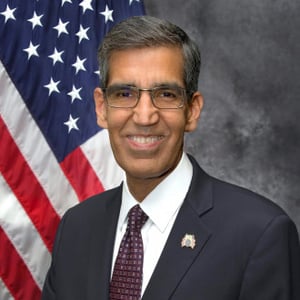
Acting Administrator, Drug Enforcement Administration (DEA)
Uttam Dhillon was appointed Acting Administrator of the Drug Enforcement Administration (DEA) on July 2, 2018. As Acting Administrator, Mr. Dhillon leads a workforce of over 15,000 and oversees a budget of $3.2 billion. He is responsible for DEA’s enforcement, intelligence, administrative, and regulatory activities worldwide. He currently serves on the Board of Directors for the International Association of Chiefs of Police (IACP), and is co-chair of the IACP Narcotics and Dangerous Drugs Committee.
Before joining DEA, Mr. Dhillon served as Deputy Counsel and Deputy Assistant to the President of the United States.
In 2006, Mr. Dhillon was confirmed by the United States Senate as the first Director of the Office of Counternarcotics Enforcement at the Department of Homeland Security (DHS). In that role, he worked closely with other federal agencies to coordinate the federal government’s anti-drug efforts. Prior to DHS, Mr. Dhillon served as an Associate Deputy Attorney General in the United States Department of Justice.
Earlier in his career, Mr. Dhillon served as an Assistant United States Attorney in the Central District of California. In that role, he successfully prosecuted complex investigations involving drug trafficking, money laundering, alien smuggling, and gun possession. He also argued multiple appeals before the Ninth Circuit Court of Appeals.
Mr. Dhillon also has significant experience in the Legislative Branch, holding several senior roles, including Chief Oversight Counsel for the House Financial Services Committee, Chief Counsel and Deputy Staff Director for the House Select Committee on Homeland Security, and Senior Investigative Counsel for the House Committee on Oversight and Government Reform.
Mr. Dhillon graduated from Boalt Hall School of Law at the University of California, Berkeley. He earned a Master of Arts degree in psychology from the University of California, San Diego and a Bachelor of Arts degree in psychology from California State University, Sacramento. He is a member of the District of Columbia Bar.
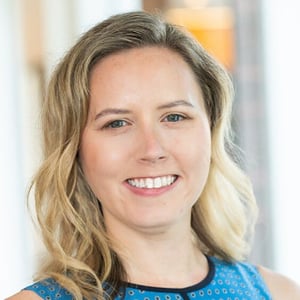
Senior Fellow, Technology Policy, Cato Institute
Jennifer’s research focuses on the intersection of emerging technology and law with a particular interest in the interactions between technology and the administrative state. Her work covers topics including judicial deference, liability protection for Internet platforms, autonomous vehicles and other disruptive transportation technologies, the regulation of data privacy, and the benefits of technology and innovation. Her work has appeared in USA Today, the Chicago Tribune, the New York Daily News, the Sacramento Bee, the Washington Times, Real Clear Policy, and U.S. News and World Report. Jennifer has a JD from the University of Alabama School of Law and a BA in political science at Wellesley College.
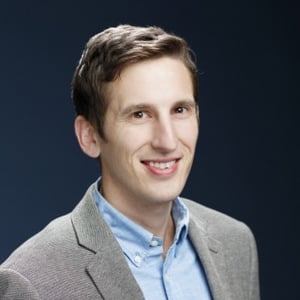
Legal Fellow, Center for Constitutional Studies, Cato Institute
Brent Skorup is a legal fellow in the Cato Institute’s Robert A. Levy Center for Constitutional Studies.
Before joining Cato, he was a senior research fellow at the Mercatus Center at the George Mason University. His research areas include free speech, technology law, Fourth Amendment protections, regulation, and property law. Skorup has published pieces in economics and law journals and in popular media, including The Wall Street Journal, The New York Times, Bloomberg Law, Reuters, and Wired. He’s appeared as a TV and radio interview guest for news outlets like C‑SPAN, NPR, CBS News, ABC News, and CNBC Asia.
The Pennsylvania Supreme Court, a dissenting opinion at the Illinois Supreme Court, and the ALI's Restatement of the Law of Property have cited his legal research and he has testified as a technology and legal expert in legislative hearings in several states. Skorup has been appointed to several federal and state advisory bodies and he is currently a member of the Texas Advanced Air Mobility Advisory Committee.
Skorup has a BA in economics from Wheaton College and a law degree from the George Mason University School of Law, where he was articles editor for the Civil Rights Law Journal. He was a legal clerk at the FCC’s wireless bureau and Office of General Counsel and at the Energy and Commerce Committee in the U.S. House of Representatives.

Topics
Broadcast Journalism and the First Amendment
In late March, Free Press, a D.C.-based advocacy organization, filed a petition with the Federal Communications...
COVID-19 & Property Rights: Do Government Actions in Response to the Coronavirus Pandemic Create Compensable Takings?
TeleforumCOVID-19, State Power, and Civil Liberties: An Historical Perspective
John C. Harrison
In 1787, there existed a well-developed body of law on the subject of infectious diseases. Over the...
Surviving COVID-19: The Small Business Perspective
Karen Harned
As small businesses across the country grapple with the current and potential impacts associated with...
Capital Conversations: Noah Phillips, Commissioner, Federal Trade Commission
Noah Joshua Phillips
Commissioner Phillips will join us to discuss data privacy and the COVID pandemic. Other topics...
Constitutionality of Proposed Federal Liability Limitations for COVID-19 Exposure Claims
By Michael A. Carvin & Yaakov M. Roth Over the past weeks, the COVID-19 pandemic...
Constitutional Limits on the Emergency Powers of the Political Branches of Government - The COVID-19 Executive Orders
Jacksonville Lawyers Chapter - Online Event
Next Steps in Justice Reform After the First Step Act Amid COVID-19 Crisis
Marc Levin, Rafael A. Mangual, Arthur Rizer
The COVID-19 crisis has exacerbated strains on all parts of our justice system from police...
Capital Conversations: Uttam Dhillon, Acting Administrator of the Drug Enforcement Administration
Uttam Dhillon
Join us as Uttam Dhillon, the Acting Administrator of the Drug Enforcement Administration, discusses the response...
Explainer Episode 13 – COVID-19 Contact-Tracing and Data Privacy
Jennifer Huddleston, Brent Skorup
As countries, states, and locales have worked to get a handle on the spread of...