
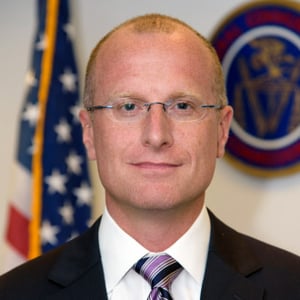
Chairman, Federal Communications Commission
Brendan Carr is the Chairman of the Federal Communications Commission. He previously served as the senior Republican Commissioner and as the FCC’s General Counsel. Nominated by both President Trump and President Biden, Carr has been confirmed unanimously by the Senate three times.
Described by Axios as “the FCC’s 5G crusader,” Carr has led the FCC’s work to modernize its infrastructure rules and accelerate the buildout of high-speed networks. His reforms cut billions of dollars in red tape, enabled the private sector to construct high-speed networks in communities across the country, and extended America’s global leadership in 5G.
Chairman Carr is also focused on expanding America’s skilled workforce—the tower climbers and construction crews needed to build next-gen networks. His jobs initiative promotes community colleges and apprenticeships as a pipeline for good-paying 5G jobs. He is recognizing America’s talented tower crews through a series of “5G Ready” Hard Hat presentations.
Chairman Carr leads a groundbreaking telehealth initiative at the FCC. The Connected Care Pilot Program supports the delivery of high-quality care to low-income Americans and veterans.
Chairman Carr’s time outside of Washington helps inform his approach to the job. He regularly hits the road to hear directly from community members and learn how changes in federal policies could help improve their lives.
Chairman Carr brings nearly 20 years of private and public sector experience in communications and tech policy to his position. Before joining the FCC as a staffer back in 2012, he worked as an attorney at Wiley Rein LLP in the firm’s appellate, litigation, and telecom practices. Previously, Chairman Carr clerked on the U.S. Court of Appeals for the Fourth Circuit for Judge Dennis Shedd. After attending Georgetown University for his undergrad, Chairman Carr earned his J.D. magna cum laude from the Catholic University of America’s Columbus School of Law where he served as an editor of the Catholic University Law Review.

President, The Free State Foundation
Randolph J. May is Founder and President of The Free State Foundation. The Free State Foundation is an independent, non-profit free market-oriented think tank founded in 2006.
From October 1999-May 2006, May was a Senior Fellow and Director of Communications Policy Studies at The Progress & Freedom Foundation, a Washington, DC-based think tank. Prior to joining PFF, he practiced communications, administrative, and regulatory law as a partner at major national law firms. From 1978 to 1981, May served as Assistant General Counsel and Associate General Counsel at the Federal Communication Commission.
May has held numerous leadership positions in bar associations. He is a past Chair of the American Bar Association’s Section of Administrative Law and Regulatory Practice. He is a Fellow of the National Academy of Public Administration. Mr. May also has served as a Public Member of the Administrative Conference of the United States and currently is a Senior Fellow at ACUS.
Mr. May has published more than two hundred articles and essays on communications, administrative and constitutional law topics. He is author of A Call for a Radical New Communications Policy: Proposals for Free Market Reform, and co-author of #CommActUpdate: A Communications Law Fit for the Digital Age and The Constitutional Foundations of Intellectual Property. Mr. May is editor of two books, Communications Law and Policy in the Digital Age: The Next Five Years and New Directions in Communications Policy. In addition, he is the co-editor of two other books, Net Neutrality or Net Neutering: Should Broadband Internet Services Be Regulated? and Communications Deregulation and FCC Reform. In the past, Mr. May has written regular columns on legal and regulatory affairs for Legal Times and the National Law Journal, leading national legal periodicals.
He received his A.B. from Duke University and his J.D. from Duke Law School, where he serves as a member of the Board of Visitors.

Professor of Law, Notre Dame Law School
Professor Derek Muller is a nationally-recognized scholar in the field of election law. His research focuses on the role of states in the administration of federal elections, the constitutional contours of voting rights and election administration, the limits of judicial power in the domain of elections, and the Electoral College.
He has published more than two dozen academic works, and his op-eds have appeared in the New York Times, the Los Angeles Times, and the Wall Street Journal. He has testified before Congress, and he is a contributor at the Election Law Blog. He is a co-author on a Federal Courts casebook published by Carolina Academic Press. He is also the co-reporter on a new Restatement of the Law, Election Litigation, an effort led by the American Law Institute.
Professor Muller teaches Election Law, Civil Procedure, and Evidence.

Partner, Klaros Group
Jonah Crane is an experienced advisor to financial technology companies with innovative products or business models. Jonah provides creative advice on business and product strategy, regulatory and compliance risk, and regulatory engagement. He excels where business model and product innovations don't fit easily within existing regulatory frameworks, and has helped companies such as Plaid and Monzo navigate complex regulatory frameworks. Jonah has also helped financial regulators around the World develop policy frameworks to facilitate innovation and financial inclusion, and led the drafting of the first comprehensive code of conduct for trading digital assets. Jonah served as a Senior Advisor and Deputy Assistant Secretary in the U.S. Treasury Department from 2013-2017, with responsibility for financial stability and regulatory coordination. Prior to that, Jonah was an advisor to U.S. Senator Chuck Schumer on financial regulatory policy, including the Dodd-Frank Act and JOBS Act. Jonah was previously a mergers and acquisitions lawyer at Milbank LLP in New York City.
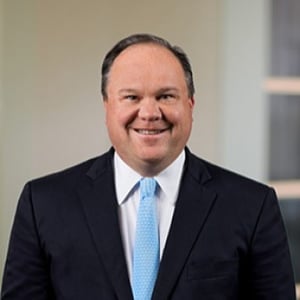
Counsel, BakerHostetler
Kevin Edgar’s extensive career in public policy, strategy, financial services and the macro-political process spans from work in the New York Stock Exchange to the United States House of Representatives. Kevin joined the firm after working for more than a decade on Capitol Hill, first as a senior counsel and then Chief Counsel of the House Financial Services Committee. He served on the Committee staff during the financial crisis and the enactment of the Dodd-Frank Wall Street Reform and Consumer Protection Act (P.L. 111-203). Kevin communicates public policy goals, analyzes and develops regulatory and legislative initiatives. He possesses a deep understanding of legislative and regulatory processes, and how government agencies interact with one another. Utilizing his substantial comprehension of financial laws and regulations, Kevin provides strategic advice and advises clients on compliance measures and industry best practices. Additionally, his market intel and broad network enable him to counsel clients on how the Congress and regulatory agencies can impact corporate governance, lending, investing, innovation and growth. With over 20 years of experience, Kevin brings a wealth of industry and public policy insight to his clients’ matters.

Partner, Mayer Brown
Andrew Olmem is a partner in Mayer Brown’s Washington DC office and a member of its Public Policy, Regulatory & Government Affairs, and Financial Services Regulatory & Enforcement practices. His practice focuses on complex financial services regulatory and public policy matters.
Andrew previously served as the Deputy Assistant to the President for Economic Policy and Deputy Director of the National Economic Council (NEC), where he oversaw the development and coordination of the administrations’ domestic economic policies, including for financial services, technology, telecom, energy, and infrastructure.
Earlier, he also served as the Republican Chief Counsel and Deputy Staff Director at the U.S. Senate Committee on Banking, Housing and Urban Affairs. Andrew began his legal career practicing corporate and securities law at Mayer Brown in New York City. Prior to attending law school, he served as an Assistant Economist at the Federal Reserve Bank of Richmond.
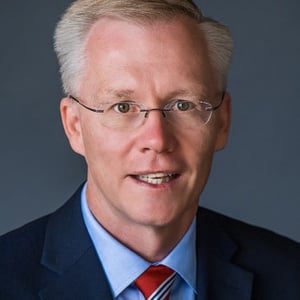
Executive Director, Milken Institute Center for Financial Markets
Michael S. Piwowar is the executive director of the Milken Institute Center for Financial Markets. Dr. Piwowar served as a Commissioner at the U.S. Securities and Exchange Commission from August 15, 2013 to July 6, 2018. He was first appointed to the SEC by President Barack Obama and was designated Acting Chairman of the Commission by President Donald Trump from January 23, 2017 to May 4, 2017. He was previously the Republican chief economist for the U.S. Senate Committee on Banking, Housing, and Urban Affairs under Senators Mike Crapo (R-ID) and Richard Shelby (R-AL) and served as the lead Republican economist on the four SEC-related titles of the Dodd-Frank Act and the JOBS Act. During the financial crisis and its immediate aftermath, Dr. Piwowar served in a one-year fixed-term position at the White House as a senior economist at the President’s Council of Economic Advisers (CEA) in both the George W. Bush and Barack Obama Administrations. Before joining the White House, Dr. Piwowar worked as a Principal at the Securities Litigation and Consulting Group (SLCG). He received a B.A. in Foreign Service and International Politics from the Pennsylvania State University, an M.B.A. from Georgetown University, and a Ph.D. in Finance from the Pennsylvania State University.
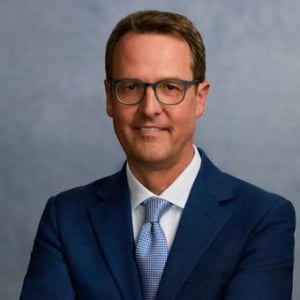
Partner, Orrick, Herrington & Sutcliffe LLP
Andy excels at solving complex problems for his clients using a variety of effective strategies. As former Chief Deputy Attorney General for the State of Wisconsin, Andy Cook has extensive experience representing businesses before state Attorneys General involving investigations and lawsuits. His strong relationships with Attorneys General and their senior staff frequently facilitate the successful resolution of client issues through diplomacy and negotiations. When litigation becomes necessary, Andy effectively advocates for clients throughout the litigation process.
Andy combines his legal expertise in numerous areas of law covered by state Attorneys General, an understanding of how state AG offices operate, and vast knowledge of legal and regulatory issues facing his clients. This substantive and comprehensive legal approach is crucial to effectively representing clients before state Attorneys General. Andy also has substantial experience drafting and enacting complex civil liability reforms before state legislatures to successfully address client goals.
Andy’s main practice focuses on advising Fortune 500 companies before state Attorneys General in the areas of antitrust, consumer protection, False Claims Act, environmental law, and cybersecurity and data privacy. Andy, in collaboration with a team of attorneys, successfully navigated a client through antitrust regulatory review by state Attorneys General in one of the nation’s largest mergers of two major telecommunication companies. Andy also worked with a team of lawyers representing a large corporation involving the multistate opioids litigation brought by state Attorneys General.
Andy gained valuable experience serving as Deputy Attorney General for the State of Wisconsin where he was the second in command of the 700-plus state agency. In his role as Chief Deputy Attorney General, Andy oversaw the day-to-day operations at the Wisconsin Department of Justice (DOJ); directed the State’s litigation strategy; negotiated, reviewed, and approved all settlements; drafted and reviewed attorney general opinions; managed the agency’s budget; oversaw civil and criminal investigations handled by DOJ; and managed DOJ’s legislative agenda.
Andy played college hockey and remains active by running, cross country skiing, and playing golf. On the weekends, Andy and his wife enjoy watching their kids’ sporting events, including soccer, baseball, gymnastics, and track. In his rare spare time, Andy reads history books.
Partner, Klaros Group
Jonah Crane is an experienced advisor to financial technology companies with innovative products or business models. Jonah provides creative advice on business and product strategy, regulatory and compliance risk, and regulatory engagement. He excels where business model and product innovations don't fit easily within existing regulatory frameworks, and has helped companies such as Plaid and Monzo navigate complex regulatory frameworks. Jonah has also helped financial regulators around the World develop policy frameworks to facilitate innovation and financial inclusion, and led the drafting of the first comprehensive code of conduct for trading digital assets. Jonah served as a Senior Advisor and Deputy Assistant Secretary in the U.S. Treasury Department from 2013-2017, with responsibility for financial stability and regulatory coordination. Prior to that, Jonah was an advisor to U.S. Senator Chuck Schumer on financial regulatory policy, including the Dodd-Frank Act and JOBS Act. Jonah was previously a mergers and acquisitions lawyer at Milbank LLP in New York City.
Counsel, BakerHostetler
Kevin Edgar’s extensive career in public policy, strategy, financial services and the macro-political process spans from work in the New York Stock Exchange to the United States House of Representatives. Kevin joined the firm after working for more than a decade on Capitol Hill, first as a senior counsel and then Chief Counsel of the House Financial Services Committee. He served on the Committee staff during the financial crisis and the enactment of the Dodd-Frank Wall Street Reform and Consumer Protection Act (P.L. 111-203). Kevin communicates public policy goals, analyzes and develops regulatory and legislative initiatives. He possesses a deep understanding of legislative and regulatory processes, and how government agencies interact with one another. Utilizing his substantial comprehension of financial laws and regulations, Kevin provides strategic advice and advises clients on compliance measures and industry best practices. Additionally, his market intel and broad network enable him to counsel clients on how the Congress and regulatory agencies can impact corporate governance, lending, investing, innovation and growth. With over 20 years of experience, Kevin brings a wealth of industry and public policy insight to his clients’ matters.
Partner, Mayer Brown
Andrew Olmem is a partner in Mayer Brown’s Washington DC office and a member of its Public Policy, Regulatory & Government Affairs, and Financial Services Regulatory & Enforcement practices. His practice focuses on complex financial services regulatory and public policy matters.
Andrew previously served as the Deputy Assistant to the President for Economic Policy and Deputy Director of the National Economic Council (NEC), where he oversaw the development and coordination of the administrations’ domestic economic policies, including for financial services, technology, telecom, energy, and infrastructure.
Earlier, he also served as the Republican Chief Counsel and Deputy Staff Director at the U.S. Senate Committee on Banking, Housing and Urban Affairs. Andrew began his legal career practicing corporate and securities law at Mayer Brown in New York City. Prior to attending law school, he served as an Assistant Economist at the Federal Reserve Bank of Richmond.
Executive Director, Milken Institute Center for Financial Markets
Michael S. Piwowar is the executive director of the Milken Institute Center for Financial Markets. Dr. Piwowar served as a Commissioner at the U.S. Securities and Exchange Commission from August 15, 2013 to July 6, 2018. He was first appointed to the SEC by President Barack Obama and was designated Acting Chairman of the Commission by President Donald Trump from January 23, 2017 to May 4, 2017. He was previously the Republican chief economist for the U.S. Senate Committee on Banking, Housing, and Urban Affairs under Senators Mike Crapo (R-ID) and Richard Shelby (R-AL) and served as the lead Republican economist on the four SEC-related titles of the Dodd-Frank Act and the JOBS Act. During the financial crisis and its immediate aftermath, Dr. Piwowar served in a one-year fixed-term position at the White House as a senior economist at the President’s Council of Economic Advisers (CEA) in both the George W. Bush and Barack Obama Administrations. Before joining the White House, Dr. Piwowar worked as a Principal at the Securities Litigation and Consulting Group (SLCG). He received a B.A. in Foreign Service and International Politics from the Pennsylvania State University, an M.B.A. from Georgetown University, and a Ph.D. in Finance from the Pennsylvania State University.

Closing the Digital Divide: The Future of Broadband Access
Telecommunications & Electronic Media Practice Group Teleforum
TeleforumTopics
Federalism is Still a Priority in a Pandemic
The COVID-19 pandemic has upended the lives of billions of people across the globe. State...
Topics
Does The First Amendment Allow States To Require Religious Organizations To Pay for Abortions?
New York issued a new mandate that requires houses of worship to pay for abortions....
State Court Docket Watch: Fabick v. Evers
Andrew Cook
Note from the Editor: The Federalist Society takes no positions on particular legal and public...
Why the Legal Challenges to the 2020 Presidential Election Results Failed
New Mexico Lawyers Chapter
Albuquerque, NMTopics
Remembering a Time When Broadband Policy Was Bipartisan
Last week, the House Energy and Commerce Committee held a hearing entitled Broadband Equity: Addressing...
Panel 1: Did Dodd-Frank Live Up to Its Promise?
Sponsored by the Financial Services & E-Commerce Practice Group
Panel 1: Did Dodd-Frank Live Up to Its Promise?
Jonah Crane, Kevin R. Edgar, Andrew Olmem, Michael Piwowar
Ten years after its passage, the Dodd-Frank Act remains the subject of much debate. The...
The Dodd-Frank Act Post Covid-19 and the Future of Financial Regulation
Sponsored by the Financial Services & E-Commerce Practice Group
The First 100 Days: Discuss
DC Young Lawyers Chapter Event
N/A