
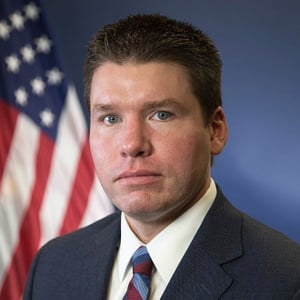
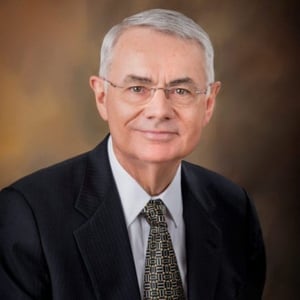
United States Attorney, Eastern District of Kentucky
Robert M. Duncan, Jr. is the United States Attorney for the Eastern District of Kentucky. He was nominated by President Donald Trump on August 3, 2017, and confirmed by the United States Senate on November 9, 2017.
Prior to his appointment, Duncan had served for more than a decade as an Assistant United States Attorney in the Eastern District of Kentucky. Beginning in 2011 and continuing until his appointment as United States Attorney, Duncan focused on the prosecution of Organized Crime Drug Enforcement Task Force cases, working with federal, state, and local law enforcement personnel to disrupt and dismantle complex drug trafficking and money laundering organizations operating in the District and elsewhere. From 2007 to 2013, Duncan served as coordinator of the office’s Project Safe Neighborhoods Program, a Department of Justice initiative to reduce gun and gang crime through education, community outreach, and prosecution.
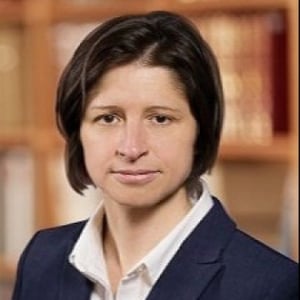
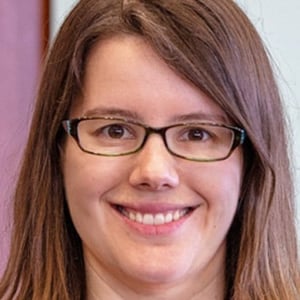
Attorney, Sheehey Furlong & Behm P.C.
Christina E. Nolan, the former United States Attorney for Vermont, is a principal in the firm. She focuses on complex civil litigation, defense of government enforcement actions, false claims act defense and enforcement, white collar and serious felony criminal defense, and internal investigations. Having previously served as a state and federal prosecutor, Christina has tried more than a dozen cases to juries, regularly handled evidentiary hearings before federal and state trial courts, and appeared several times before the United States Court of Appeals for the Second Circuit.
Christina, a native Vermonter, was employed from 2010 to 2021 at the U.S. Attorney’s Office in Vermont (USAO), serving first as an Assistant U.S. Attorney in the Criminal Division for nearly 8 years, and then leading the office as U.S. Attorney from November 2017 until March 2021. Following the bipartisan recommendation of Senator Patrick Leahy and Governor Phil Scott, Christina was nominated for the chief law enforcement officer post by the President and unanimously confirmed by the U.S. Senate. As U.S. Attorney, Christina supervised all federal criminal and civil investigations and prosecutions in Vermont, served as chief spokesperson for federal law enforcement and the USAO, and partnered with community leaders and government officials to promote criminal justice policies and launch community-based and law enforcement initiatives.
U.S. Attorney General William Barr selected Christina as one of a dozen U.S. Attorneys to sit on the Attorney General’s Advisory Committee, which advises the Attorney General on all aspects of criminal and civil policy. Christina chaired the Advisory Committee’s Controlled Substances Subcommittee (CSS), and was a member of its Health Care Fraud and Domestic Violence Working Groups. Christina also cochaired the Justice Department’s initiative to combat sexual harassment in housing during the pandemic and helped lead the Attorney General’s effort to implement police reform pursuant to the 2020 Executive Order on Safe Policing for Safe Communities. In her capacity as leader of the CSS, Christina testified before the U.S. Senate Judiciary Committee concerning fentanyl enforcement policy and proposed fentanyl legislation. In Vermont, Christina sat on Governor Scott’s Opioid Coordination, Substance Misuse, and Emergency Preparedness Councils and cochaired the Vermont Human Trafficking Task Force.
As U.S. Attorney, Christina actively supervised a range of criminal and civil cases involving drug trafficking; firearms and violence; human trafficking; organized crime; child exploitation; wire, health care, bank, and securities fraud; embezzlement and money laundering; government contracting fraud; medical malpractice; and federal False Claims Act enforcement. Under Christina’s leadership, the USAO resolved criminal felony antikickback charges and civil False Claims Act claims against Purdue Pharma L.P. as part of the largest criminal resolution ever reached against a pharmaceutical company; charged the largest fraud case in Vermont history relating to the EB-5/Jay Peak financial scandal in the Northeast Kingdom and obtained a guilty plea from the lead defendant; and secured unprecedented False Claims Act civil and criminal settlements against healthcare companies that garnered national attention.
As a federal prosecutor, Christina investigated and prosecuted financial, narcotics, violent, child exploitation, and other crimes. She tried six federal cases to juries, each trial resulting in conviction. Among her most notable cases was the prosecution and conviction of Richard Monroe for the drug-related murder of University of Vermont student, Kevin DeOliveira, in Burlington. Monroe is serving a 25-year sentence. As Assistant U.S. Attorney, Christina was also tasked with oversight of all opioid trafficking prosecutions and investigations in Eastern Vermont and served as the USAO’s Violent Crime Coordinator.
Before joining the USAO, Christina served as an Assistant District Attorney in Middlesex County, Massachusetts, where she tried numerous cases to juries and prosecuted a variety of state crimes, including DUI, drug trafficking, firearms, and domestic violence matters. From 2005 to 2009, Nolan worked as a litigation associate at Goodwin Procter, LLP, a large Boston law firm. In that role, she represented white collar defendants, conducted internal investigation, supervised complex civil litigation, and played a managerial role in the representation of a corporate executive in a high-profile federal securities fraud prosecution. The securities fraud case ended in dismissal of charges against the client.
After law school, Christina clerked for The Honorable F. Dennis Saylor, IV of the United States District Court for the District of Massachusetts.
Christina graduated magna cum laude from Boston College Law School in 2004, where she served a Senior Editor on the Boston College Law Review. She earned her Bachelor’s degrees in political science and history from the University of Vermont, where she graduated summa cum laude.
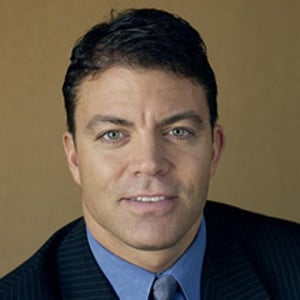
Daniel Levin Professor of Public Policy, The University of Chicago
Tomas J. Philipson is the Daniel Levin Professor of Public Policy Studies at the University of Chicago Harris School of Public Policy and directs the Becker Friedman Institute’s Program on Foundational Research in Health Care Markets and Policies within the Health Economics Initiative. He is also an associate member of the Department of Economics and a former senior lecturer at the Law School. His research focuses on health economics, and he teaches master's and PhD courses in microeconomics and health economics at the University.
Philipson is a US citizen but was born and raised in Sweden where he obtained his undergraduate degree in mathematics at Uppsala University. He received his MA and PhD in economics from the Wharton School at the University of Pennsylvania. He has been a visiting faculty member at Yale University and a visiting senior fellow at the World Bank.
Philipson has served in several public sector positions. He served in the second Bush Administration as the senior economic advisor to the head of the Food and Drug Administration and subsequently as the senior economic advisor to the head of the Centers for Medicare and Medicaid Services. He served as a health care advisor to Senator John McCain during his campaign for President of the United States. He was appointed by the Speaker of the US House of Representatives to the Key Indicator Commission created by the Affordable Care Act. He has served as a scientific advisor to Congress on the 21st Century Cures legislation and on the steering committee of Vice President Biden's Cancer Moon Shot Initiative.
Philipson is the recipient of numerous international and national research awards. He has twice been the recipient of the highest honor of his field: the Kenneth Arrow Award of the International Health Economics Association (for best paper in the field of health economics). In addition, he was awarded the Garfield Award by Research America, The Prêmio Haralambos Simeonidisand from the Brazilian Economic Association, and the Distinguished Economic Research Award from the Milken Institute. Philipson has been awarded numerous grants and awards from both public and private agencies, including the National Institutes of Health, the National Science Foundation, the Rockefeller Foundation, the Alfred P. Sloan Foundation, the John M. Olin Foundation, and the Royal Swedish Academy of Sciences.
Philipson is a founding editor of the journal Forums for Health Economics & Policy of Berkeley Electronic Press and has been on the editorial board of the journal Health Economics and The European Journal of Health Economics. His research has been published widely in all leading academic journals of economics such as the American Economic Review, Journal of Political Economy, Quarterly Journal of Economics, Journal of Economic Theory, Journal of Health Economics, Health Affairs, and Econometrica.
Philipson is a fellow, board member, or associate of a number of other organizations outside the University of Chicago, including the National Bureau of Economic Research, the American Enterprise Institute, the Manhattan Institute (where he was chairman of Project FDA), the Heartland Institute, the Milken Institute, the RAND Corporation, and the USC Shaeffer Center for Health Economics and Policy. At the University of Chicago, he is affiliated with the John M. Olin Program of Law & Economics, the George J. Stigler Center for the Study of the Economy and the State, the Population Research Center, and NORC. He has served on the University-wide Council on Research and on the Advisory Committee to the University's Office of Intellectual Property and Technology Transfer.
Philipson has done executive consulting for both private corporations, including many US Fortune 100 companies, as well as government organizations domestically and internationally. This has included work for the President's Council on Science and Technology, the National Academy of Sciences, and the UK National Health Service. It has also included work for multi-lateral organizations such as the World Bank, the World Intellectual Property Organization, and the OECD. In 2007 he co-founded Precision Heath Economics LLC, which was sold in 2015 to Precision for Medicine Group LLC.
Philipson’s research is frequently disseminated through the popular press. He is a monthly op-ed contributor for Forbes magazine and frequently appears in numerous popular media outlets such as CNN, CBS, FOX News, Bloomberg TV, National Public Radio, New York Times, Wall Street Journal, Businessweek, The Economist, Washington Post, Investor's Business Daily, and USA Today. He is a frequent keynote speaker at many domestic and international health care events and conferences.
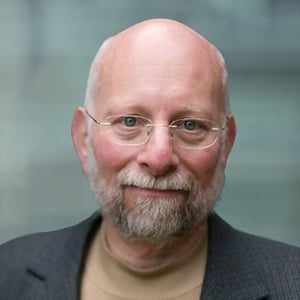
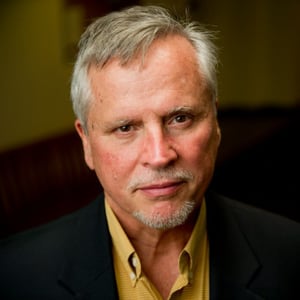
Senior Fellow, Cato Institute
Jeffrey A. Singer is a senior fellow at the Cato Institute and works in the Department of Health Policy Studies. He is principal and founder of Valley Surgical Clinics Ltd., the largest and oldest group private surgical practice in Arizona, and has been in private practice as a general surgeon for more than 35 years.
He is also a visiting fellow at the Goldwater Institute in Phoenix. Singer is a member of the Board of Scientific Advisors of the American Council on Science and Health. From 1994 to 2016, he was a regular contributor to Arizona Medicine, the journal of the Arizona Medical Association. He served on the Advisory Board Council of the Center for Political Thought and Leadership at Arizona State University from 2014 to 2018 and is an adjunct instructor in the Program on Political History and Leadership at ASU. He writes and speaks extensively on regional and national public policy, with a specific focus on the areas of health care policy and the harmful effects of drug prohibition.
He received his BA from Brooklyn College (City University of New York) and his MD from New York Medical College. He is a fellow of the American College of Surgeons.
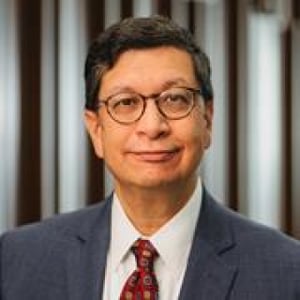
Distinguished University Professor of Global Affairs and Director, Center for Global Economic and Environmental Opportunity, University of Central Florida
James Bacchus is the Distinguished University Professor of Global Affairs and Director of the Center for Global Economic and Environmental Opportunity at the University of Central Florida. He was a founding judge and was twice the Chairman – the chief judge – of the highest court of world trade, the Appellate Body of the World Trade Organization in Geneva, Switzerland. He is a former Member of the Congress of the United States, from Florida, and also a former international trade negotiator for the United States. He is a Global Fellow of the Centre for International Governance Innovation in Canada and an Adjunct Scholar of the Cato Institute in Washington, D.C. He is the Pao Yue – Kong Chair Professor at Zhejiang University in Hangzhou, China. He served on the High-Level Advisory Panel to the Conference of Parties of the United Nations Framework Convention on Climate Change, chairs the global Commission on Trade and Investment Policy of the International Chamber of Commerce, and chaired the global sustainability council of the World Economic Forum. For more than fourteen years, he chaired the global practice of the largest law firm in the United States and one of the largest in the world. Professor Bacchus is the author of the books Trade and Freedom, published by Cameron May in London in 2004, and The Willing World: Shaping and Sharing a Sustainable Global Prosperity, published by Cambridge University Press in 2018. The Financial Times named The Willing World one of the “Best Books of 2018.” He is a frequent writer in leading publications and a frequent speaker on prominent platforms worldwide on numerous topics relating to international law and international political economy.
Professor of Law, Northeastern University School of Law
Professor Baker teaches disability discrimination law, negotiations and a new course on human rights, intellectual property, and access to medicines. He taught and consulted in South African law schools and law school clinics between 1997-2012. Professor Baker is an honorary research fellow at the University of KwaZulu Natal in Durban, South Africa.
Professor Baker is also a senior policy analyst for Health GAP (Global Access Project) and is actively engaged in campaigns for universal access to treatment, prevention, and care for people living with HIV/AIDS, especially expanded and improved medical treatment. More recently he has been working on accelerating research on and equitable global access to vaccines, medicines, and diagnostics to respond to the COVID-19 pandemic. He has written and consulted extensively on intellectual property rights, trade, investor-state dispute settlement, access to medicines, and medicines regulatory policy, including with the African Union, NEPAD, South Africa, Uganda, ASEAN, Thailand, Indonesia, Brazil, Venezuela, CARICOM, UK DfID, the World Health Organization, the Millennium Development Goals Project, the Global Fund to Fight AIDS, Tuberculosis and Malaria, Open Society Institute, UNAIDS, UNDP, Unitaid, the Medicines Patent Pool, the Global Commission on HIV and the Law and others. He has served as a key, alternative board member and board member of the NGO delegation to Unitaid, which acts to improve market dynamics and early market entry of medicines and diagnostics needed to address HIV/AIDS, TB, Hepatitis C and malaria. He presently is a civil society representative to the Therapeutics Pillar of the Access to COVID-19 Tools Acclerator.
Professor Baker also works on policy issues concerning the Global Fund and the US PEPFAR Program, and how those priority disease initiatives might contribute more broadly to improving health care delivery in developing countries. Finally, he analyzes resource needs for global health, innovative financing mechanisms and IMF macroeconomic policies that restrict increased government and donor spending on health and education in developing countries.
James T. Jensen Endowed Professor for Transactional Law & Director of the Program on Intellectual Property and Technology Law, University of Utah S.J. Quinney College of Law
Jorge L. Contreras is a Distinguished University Professor, the James T. Jensen Endowed Professor for Transactional Law and Director of the Program on Intellectual Property and Technology Law. He teaches and researches in the areas of intellectual property, property law, technical standardization, antitrust and science policy. In 2020 he received the University of Utah's Distinguished Research Award and is an elected member of the American Law Institute. He has testified before the U.S. Senate and House Subcommittees on Intellectual Property, and was awarded the Rossman Memorial Award by the Patent & Trademark Office Society in 2022.
Professor Contreras has written or edited fourteen books and published more than 150 scholarly articles and chapters. His book, The Genome Defense: Inside the Epic Legal Battle to Determine Who Owns Your DNA (NY: Hachette/Algonquin, 2021), has been praised by the NY Times, Wall St. Journal, Nature and numerous other outlets, and was named "Best Patent Law Book of the Year" by the international IPKat blog. His scholarly articles have appeared in leading scientific, legal and policy journals including Science, Nature, NYU Law Review, Georgetown Law Journal, Iowa Law Review and Antitrust Law Journal. He has been quoted by media outlets around the world including the New York Times, Wall Street Journal, Economist, Bloomberg, Washington Post, Korea Times and has been featured on C-SPAN, NPR, PRI and BBC shows and a range of podcasts and online news programs.
Professor Contreras currently serves Co-Chair of the Interdisciplinary Division of the ABA's Section of Science & Technology Law and a member of the Advisory Board of the American Antitrust Institute. He has previously served as Co-Chair of the National Conference of Lawyers and Scientists, a member of the National Academy of Sciences (NAS) Committee on Intellectual Property Management in Standard-Setting Processes, the National Institutes of Health (NIH) Council of Councils, the Advisory Council of NIH's National Center for the Advancement of Translational Sciences (NCATS), the National Advisory Council for Human Genome Research, and the Intellectual Property Rights Policy Committee of the American National Standards Institute (ANSI). In 2021 he served as Chair of the Art Law Section of the Association of American Law Schools (AALS) and currently serves as Chair of the AALS Remedies Section.
Professor Contreras has previously taught at American University Washington College of Law and Washington University in St. Louis. Prior to entering academia he was a partner at the international law firm Wilmer Cutler Pickering Hale and Dorr LLP, where he practiced transactional and intellectual property law in Boston, London and Washington DC. He is a cum laude graduate of Harvard Law School (JD) and Rice University (BA, BSEE) and clerked for Chief Justice Thomas R. Philips of the Texas Supreme Court.
Assistant Professor, Saint Louis University School of Law
Rutschman has published and presented widely on topics related to health law, food and drug regulation, intellectual property, innovation in the life sciences, and law and technology. Recent presentations have covered topics related to vaccines and other biotechnologies, healthcare blockchain, e-health and artificial intelligence in medicine. Her legal scholarship has appeared or is forthcoming in UCLA Law Review, Emory Law Journal, Arizona Law Review, Yale Law Journal Forum, University of Chicago Legal Forum, Michigan Law Review Online, Annals of Health Law and Duke Law and Technology Review, among others. Her peer-reviewed work has appeared in the Journal of Law and the Biosciences, the American Journal of Infection Control and Emerging Infectious Diseases. Her commentary pieces have been published by The Huffington Post and The Conversation and reprinted in Scientific American, Newsweek Japan and newspapers around the U.S., including the Chicago Tribune. Her ongoing book, Vaccines as Technology: Innovation, Barriers and the Public Interest, is under contract with Cambridge University Press.
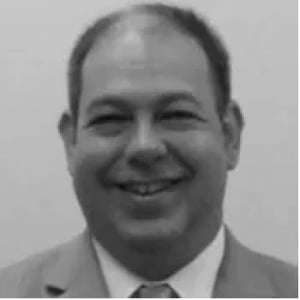
CoFounder, RightsClick
Steven’s extensive background in IP law and policy began as an attorney for the U.S. Senate Judiciary Committee, after which, he served as senior counsel for Policy and International Affairs at the U.S. Copyright Office and then as Chief Intellectual Property Counsel for the Global Intellectual Property Center of the U.S. Chamber of Commerce. Before co-founding RightsClick, he started the IP consultancy Sentinel Worldwide, and teaches copyright law at George Washington University Law School.
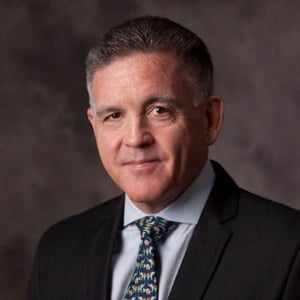
George R. Killam Jr. Chair of Criminal Law; Director, Center for Military Law & Policy, Texas Tech University School of Law
Geoffrey S. Corn is the George R. Killam Jr. Chair of Criminal Law and Director of the Center for Military Law and Policy.
Professor Corn comes to Texas Tech University School of Law from South Texas College of Law Houston where he was the Gary A. Kuiper Distinguished Professor of National Security.
Prior to joining the South Texas College of Law Houston faculty in 2005, Professor Corn served in the U.S. Army for 21 years as an officer, and a final year as a civilian legal advisor, retiring in the rank of Lieutenant Colonel. Professor Corn’s teaching and scholarship focuses on the law of armed conflict, national security law, criminal law and procedure, and prosecutorial ethics. He has appeared an expert witness at the Military Commission in Guantanamo, the International Criminal Tribunal for the Former Yugoslavia, and in federal court.
He is co-author of Criminal Law: Classroom to Courtroom (forthcoming), The Law of Armed Conflict: An Operational Perspective, The Laws of War and the War on Terror, National Security Law and the Constitution, National Security Law and Policy: a Student Treatise, The Law in War: A Concise Overview, and Principles of Counter-Terrorism Law.
His Army career included service as the Army’s senior law of war expert advisor, tactical intelligence officer in Panama; supervisory defense counsel for the Western United States; Chief of International Law for US Army Europe; Professor of International and National Security Law at the US Army Judge Advocate General’s School; and Chief Prosecutor for the 101st Airborne Division. He earned is B.A. from Hartwick College in Oneonta, NY, his J.D. with highest honors from George Washington University, his LLM as the distinguished graduate from the U.S. Army Judge Advocate General’s School. He is also a distinguished military graduate of U.S. Army Officer Candidate School, and a graduate of U.S. Army Command and General Staff Course.
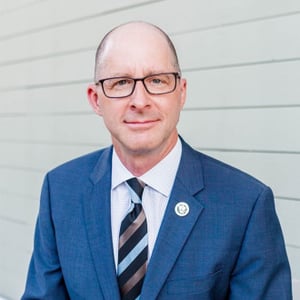
Judge, U.S. District Court for the Southern District of Texas
Hon. Charles Eskridge, Judge, United States District Court for the Southern District of Texas, Houston Division, was born in Cleveland, Ohio, and arrived in Houston, Texas, at the age of 11 with his parents in 1974.
Judge Eskridge received a B.S. from Trinity University and a J.D. from Pepperdine University School of Law. He served as a law clerk to Chief Judge Charles Clark of the United States Court of Appeals for the Fifth Circuit, as a law clerk to Justice Byron White of the Supreme Court of the United States, and as a special assistant to the Hon. Howard Holtzmann of the Iran/U.S. Claims Tribunal in The Hague.
From 1994 to 2019, Judge Eskridge was in private practice in Houston, Texas, litigating complex commercial disputes. He teaches Origins of the Federal Constitution at the University of Houston Law Center and has served as the Distinguished Visiting Practitioner of Law at the Pepperdine University School of Law.
President Donald J. Trump nominated him to the federal bench on May 3, 2019. Following confirmation by the Senate, Judge Eskridge took his seat on October 22, 2019.
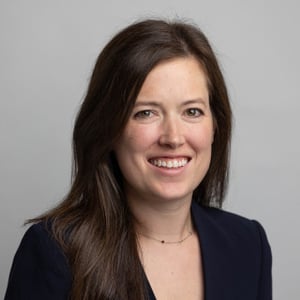
Senior Attorney, Institute of Justice
Kirby Thomas West is a senior attorney at the Institute for Justice, where she is also the co-director of IJ’s National Initiative to End Forfeiture Abuse. She joined IJ in 2018 and litigates cases defending property rights, free speech, and educational choice.
In her time at IJ, Kirby has launched challenges to unconstitutional civil forfeiture and impoundment schemes. She has also litigated educational choice cases, including as part of the IJ team that litigated Carson v. Makin, a landmark educational choice case decided in 2022.
In 2024, Kirby was a Wasserstein Public Interest Fellow at Harvard Law School.
Before joining IJ, Kirby Was an attorney at Baker Botts LLP, in Washington D.C. She clerked for Judge Dennis Shedd of the U.S. Court of Appeals for the Fourth Circuit.
Kirby received her law degree cum laude from Harvard Law School in 2015.
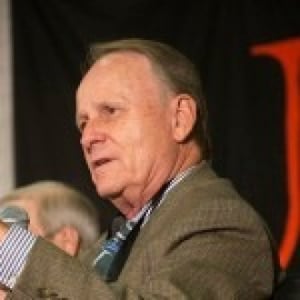
Professor Emeritus of Political Science and Professor Emeritus of Public Policy, Univ. of Maryland Baltimore County
George R. La Noue is Professor Emeritus of Political Science and Professor Emeritus of Public Policy at the University of Maryland Baltimore County. He has served as a trial expert in twenty cases involving public procurement preferences. For thirty years, he was Director of the Project on Civil Rights and Public Contracts at UMBC which recently contributed 289 public contracting disparity studies to the Library of Congress. He has been a consultant to nine governments and trial expert in thirty cases where the validity of disparity studies was at issue.
Prof. La Noue can be reached by email at glanoue@umbc.edu.
Distinguished University Professor of Global Affairs and Director, Center for Global Economic and Environmental Opportunity, University of Central Florida
James Bacchus is the Distinguished University Professor of Global Affairs and Director of the Center for Global Economic and Environmental Opportunity at the University of Central Florida. He was a founding judge and was twice the Chairman – the chief judge – of the highest court of world trade, the Appellate Body of the World Trade Organization in Geneva, Switzerland. He is a former Member of the Congress of the United States, from Florida, and also a former international trade negotiator for the United States. He is a Global Fellow of the Centre for International Governance Innovation in Canada and an Adjunct Scholar of the Cato Institute in Washington, D.C. He is the Pao Yue – Kong Chair Professor at Zhejiang University in Hangzhou, China. He served on the High-Level Advisory Panel to the Conference of Parties of the United Nations Framework Convention on Climate Change, chairs the global Commission on Trade and Investment Policy of the International Chamber of Commerce, and chaired the global sustainability council of the World Economic Forum. For more than fourteen years, he chaired the global practice of the largest law firm in the United States and one of the largest in the world. Professor Bacchus is the author of the books Trade and Freedom, published by Cameron May in London in 2004, and The Willing World: Shaping and Sharing a Sustainable Global Prosperity, published by Cambridge University Press in 2018. The Financial Times named The Willing World one of the “Best Books of 2018.” He is a frequent writer in leading publications and a frequent speaker on prominent platforms worldwide on numerous topics relating to international law and international political economy.
Professor of Law, Northeastern University School of Law
Professor Baker teaches disability discrimination law, negotiations and a new course on human rights, intellectual property, and access to medicines. He taught and consulted in South African law schools and law school clinics between 1997-2012. Professor Baker is an honorary research fellow at the University of KwaZulu Natal in Durban, South Africa.
Professor Baker is also a senior policy analyst for Health GAP (Global Access Project) and is actively engaged in campaigns for universal access to treatment, prevention, and care for people living with HIV/AIDS, especially expanded and improved medical treatment. More recently he has been working on accelerating research on and equitable global access to vaccines, medicines, and diagnostics to respond to the COVID-19 pandemic. He has written and consulted extensively on intellectual property rights, trade, investor-state dispute settlement, access to medicines, and medicines regulatory policy, including with the African Union, NEPAD, South Africa, Uganda, ASEAN, Thailand, Indonesia, Brazil, Venezuela, CARICOM, UK DfID, the World Health Organization, the Millennium Development Goals Project, the Global Fund to Fight AIDS, Tuberculosis and Malaria, Open Society Institute, UNAIDS, UNDP, Unitaid, the Medicines Patent Pool, the Global Commission on HIV and the Law and others. He has served as a key, alternative board member and board member of the NGO delegation to Unitaid, which acts to improve market dynamics and early market entry of medicines and diagnostics needed to address HIV/AIDS, TB, Hepatitis C and malaria. He presently is a civil society representative to the Therapeutics Pillar of the Access to COVID-19 Tools Acclerator.
Professor Baker also works on policy issues concerning the Global Fund and the US PEPFAR Program, and how those priority disease initiatives might contribute more broadly to improving health care delivery in developing countries. Finally, he analyzes resource needs for global health, innovative financing mechanisms and IMF macroeconomic policies that restrict increased government and donor spending on health and education in developing countries.
James T. Jensen Endowed Professor for Transactional Law & Director of the Program on Intellectual Property and Technology Law, University of Utah S.J. Quinney College of Law
Jorge L. Contreras is a Distinguished University Professor, the James T. Jensen Endowed Professor for Transactional Law and Director of the Program on Intellectual Property and Technology Law. He teaches and researches in the areas of intellectual property, property law, technical standardization, antitrust and science policy. In 2020 he received the University of Utah's Distinguished Research Award and is an elected member of the American Law Institute. He has testified before the U.S. Senate and House Subcommittees on Intellectual Property, and was awarded the Rossman Memorial Award by the Patent & Trademark Office Society in 2022.
Professor Contreras has written or edited fourteen books and published more than 150 scholarly articles and chapters. His book, The Genome Defense: Inside the Epic Legal Battle to Determine Who Owns Your DNA (NY: Hachette/Algonquin, 2021), has been praised by the NY Times, Wall St. Journal, Nature and numerous other outlets, and was named "Best Patent Law Book of the Year" by the international IPKat blog. His scholarly articles have appeared in leading scientific, legal and policy journals including Science, Nature, NYU Law Review, Georgetown Law Journal, Iowa Law Review and Antitrust Law Journal. He has been quoted by media outlets around the world including the New York Times, Wall Street Journal, Economist, Bloomberg, Washington Post, Korea Times and has been featured on C-SPAN, NPR, PRI and BBC shows and a range of podcasts and online news programs.
Professor Contreras currently serves Co-Chair of the Interdisciplinary Division of the ABA's Section of Science & Technology Law and a member of the Advisory Board of the American Antitrust Institute. He has previously served as Co-Chair of the National Conference of Lawyers and Scientists, a member of the National Academy of Sciences (NAS) Committee on Intellectual Property Management in Standard-Setting Processes, the National Institutes of Health (NIH) Council of Councils, the Advisory Council of NIH's National Center for the Advancement of Translational Sciences (NCATS), the National Advisory Council for Human Genome Research, and the Intellectual Property Rights Policy Committee of the American National Standards Institute (ANSI). In 2021 he served as Chair of the Art Law Section of the Association of American Law Schools (AALS) and currently serves as Chair of the AALS Remedies Section.
Professor Contreras has previously taught at American University Washington College of Law and Washington University in St. Louis. Prior to entering academia he was a partner at the international law firm Wilmer Cutler Pickering Hale and Dorr LLP, where he practiced transactional and intellectual property law in Boston, London and Washington DC. He is a cum laude graduate of Harvard Law School (JD) and Rice University (BA, BSEE) and clerked for Chief Justice Thomas R. Philips of the Texas Supreme Court.
Assistant Professor, Saint Louis University School of Law
Rutschman has published and presented widely on topics related to health law, food and drug regulation, intellectual property, innovation in the life sciences, and law and technology. Recent presentations have covered topics related to vaccines and other biotechnologies, healthcare blockchain, e-health and artificial intelligence in medicine. Her legal scholarship has appeared or is forthcoming in UCLA Law Review, Emory Law Journal, Arizona Law Review, Yale Law Journal Forum, University of Chicago Legal Forum, Michigan Law Review Online, Annals of Health Law and Duke Law and Technology Review, among others. Her peer-reviewed work has appeared in the Journal of Law and the Biosciences, the American Journal of Infection Control and Emerging Infectious Diseases. Her commentary pieces have been published by The Huffington Post and The Conversation and reprinted in Scientific American, Newsweek Japan and newspapers around the U.S., including the Chicago Tribune. Her ongoing book, Vaccines as Technology: Innovation, Barriers and the Public Interest, is under contract with Cambridge University Press.
CoFounder, RightsClick
Steven’s extensive background in IP law and policy began as an attorney for the U.S. Senate Judiciary Committee, after which, he served as senior counsel for Policy and International Affairs at the U.S. Copyright Office and then as Chief Intellectual Property Counsel for the Global Intellectual Property Center of the U.S. Chamber of Commerce. Before co-founding RightsClick, he started the IP consultancy Sentinel Worldwide, and teaches copyright law at George Washington University Law School.
Distinguished University Professor of Global Affairs and Director, Center for Global Economic and Environmental Opportunity, University of Central Florida
James Bacchus is the Distinguished University Professor of Global Affairs and Director of the Center for Global Economic and Environmental Opportunity at the University of Central Florida. He was a founding judge and was twice the Chairman – the chief judge – of the highest court of world trade, the Appellate Body of the World Trade Organization in Geneva, Switzerland. He is a former Member of the Congress of the United States, from Florida, and also a former international trade negotiator for the United States. He is a Global Fellow of the Centre for International Governance Innovation in Canada and an Adjunct Scholar of the Cato Institute in Washington, D.C. He is the Pao Yue – Kong Chair Professor at Zhejiang University in Hangzhou, China. He served on the High-Level Advisory Panel to the Conference of Parties of the United Nations Framework Convention on Climate Change, chairs the global Commission on Trade and Investment Policy of the International Chamber of Commerce, and chaired the global sustainability council of the World Economic Forum. For more than fourteen years, he chaired the global practice of the largest law firm in the United States and one of the largest in the world. Professor Bacchus is the author of the books Trade and Freedom, published by Cameron May in London in 2004, and The Willing World: Shaping and Sharing a Sustainable Global Prosperity, published by Cambridge University Press in 2018. The Financial Times named The Willing World one of the “Best Books of 2018.” He is a frequent writer in leading publications and a frequent speaker on prominent platforms worldwide on numerous topics relating to international law and international political economy.
Professor of Law, Northeastern University School of Law
Professor Baker teaches disability discrimination law, negotiations and a new course on human rights, intellectual property, and access to medicines. He taught and consulted in South African law schools and law school clinics between 1997-2012. Professor Baker is an honorary research fellow at the University of KwaZulu Natal in Durban, South Africa.
Professor Baker is also a senior policy analyst for Health GAP (Global Access Project) and is actively engaged in campaigns for universal access to treatment, prevention, and care for people living with HIV/AIDS, especially expanded and improved medical treatment. More recently he has been working on accelerating research on and equitable global access to vaccines, medicines, and diagnostics to respond to the COVID-19 pandemic. He has written and consulted extensively on intellectual property rights, trade, investor-state dispute settlement, access to medicines, and medicines regulatory policy, including with the African Union, NEPAD, South Africa, Uganda, ASEAN, Thailand, Indonesia, Brazil, Venezuela, CARICOM, UK DfID, the World Health Organization, the Millennium Development Goals Project, the Global Fund to Fight AIDS, Tuberculosis and Malaria, Open Society Institute, UNAIDS, UNDP, Unitaid, the Medicines Patent Pool, the Global Commission on HIV and the Law and others. He has served as a key, alternative board member and board member of the NGO delegation to Unitaid, which acts to improve market dynamics and early market entry of medicines and diagnostics needed to address HIV/AIDS, TB, Hepatitis C and malaria. He presently is a civil society representative to the Therapeutics Pillar of the Access to COVID-19 Tools Acclerator.
Professor Baker also works on policy issues concerning the Global Fund and the US PEPFAR Program, and how those priority disease initiatives might contribute more broadly to improving health care delivery in developing countries. Finally, he analyzes resource needs for global health, innovative financing mechanisms and IMF macroeconomic policies that restrict increased government and donor spending on health and education in developing countries.
James T. Jensen Endowed Professor for Transactional Law & Director of the Program on Intellectual Property and Technology Law, University of Utah S.J. Quinney College of Law
Jorge L. Contreras is a Distinguished University Professor, the James T. Jensen Endowed Professor for Transactional Law and Director of the Program on Intellectual Property and Technology Law. He teaches and researches in the areas of intellectual property, property law, technical standardization, antitrust and science policy. In 2020 he received the University of Utah's Distinguished Research Award and is an elected member of the American Law Institute. He has testified before the U.S. Senate and House Subcommittees on Intellectual Property, and was awarded the Rossman Memorial Award by the Patent & Trademark Office Society in 2022.
Professor Contreras has written or edited fourteen books and published more than 150 scholarly articles and chapters. His book, The Genome Defense: Inside the Epic Legal Battle to Determine Who Owns Your DNA (NY: Hachette/Algonquin, 2021), has been praised by the NY Times, Wall St. Journal, Nature and numerous other outlets, and was named "Best Patent Law Book of the Year" by the international IPKat blog. His scholarly articles have appeared in leading scientific, legal and policy journals including Science, Nature, NYU Law Review, Georgetown Law Journal, Iowa Law Review and Antitrust Law Journal. He has been quoted by media outlets around the world including the New York Times, Wall Street Journal, Economist, Bloomberg, Washington Post, Korea Times and has been featured on C-SPAN, NPR, PRI and BBC shows and a range of podcasts and online news programs.
Professor Contreras currently serves Co-Chair of the Interdisciplinary Division of the ABA's Section of Science & Technology Law and a member of the Advisory Board of the American Antitrust Institute. He has previously served as Co-Chair of the National Conference of Lawyers and Scientists, a member of the National Academy of Sciences (NAS) Committee on Intellectual Property Management in Standard-Setting Processes, the National Institutes of Health (NIH) Council of Councils, the Advisory Council of NIH's National Center for the Advancement of Translational Sciences (NCATS), the National Advisory Council for Human Genome Research, and the Intellectual Property Rights Policy Committee of the American National Standards Institute (ANSI). In 2021 he served as Chair of the Art Law Section of the Association of American Law Schools (AALS) and currently serves as Chair of the AALS Remedies Section.
Professor Contreras has previously taught at American University Washington College of Law and Washington University in St. Louis. Prior to entering academia he was a partner at the international law firm Wilmer Cutler Pickering Hale and Dorr LLP, where he practiced transactional and intellectual property law in Boston, London and Washington DC. He is a cum laude graduate of Harvard Law School (JD) and Rice University (BA, BSEE) and clerked for Chief Justice Thomas R. Philips of the Texas Supreme Court.
Assistant Professor, Saint Louis University School of Law
Rutschman has published and presented widely on topics related to health law, food and drug regulation, intellectual property, innovation in the life sciences, and law and technology. Recent presentations have covered topics related to vaccines and other biotechnologies, healthcare blockchain, e-health and artificial intelligence in medicine. Her legal scholarship has appeared or is forthcoming in UCLA Law Review, Emory Law Journal, Arizona Law Review, Yale Law Journal Forum, University of Chicago Legal Forum, Michigan Law Review Online, Annals of Health Law and Duke Law and Technology Review, among others. Her peer-reviewed work has appeared in the Journal of Law and the Biosciences, the American Journal of Infection Control and Emerging Infectious Diseases. Her commentary pieces have been published by The Huffington Post and The Conversation and reprinted in Scientific American, Newsweek Japan and newspapers around the U.S., including the Chicago Tribune. Her ongoing book, Vaccines as Technology: Innovation, Barriers and the Public Interest, is under contract with Cambridge University Press.
CoFounder, RightsClick
Steven’s extensive background in IP law and policy began as an attorney for the U.S. Senate Judiciary Committee, after which, he served as senior counsel for Policy and International Affairs at the U.S. Copyright Office and then as Chief Intellectual Property Counsel for the Global Intellectual Property Center of the U.S. Chamber of Commerce. Before co-founding RightsClick, he started the IP consultancy Sentinel Worldwide, and teaches copyright law at George Washington University Law School.
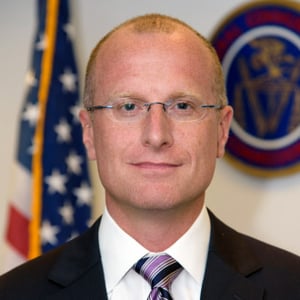
Chairman, Federal Communications Commission
Brendan Carr is the Chairman of the Federal Communications Commission. He previously served as the senior Republican Commissioner and as the FCC’s General Counsel. Nominated by both President Trump and President Biden, Carr has been confirmed unanimously by the Senate three times.
Described by Axios as “the FCC’s 5G crusader,” Carr has led the FCC’s work to modernize its infrastructure rules and accelerate the buildout of high-speed networks. His reforms cut billions of dollars in red tape, enabled the private sector to construct high-speed networks in communities across the country, and extended America’s global leadership in 5G.
Chairman Carr is also focused on expanding America’s skilled workforce—the tower climbers and construction crews needed to build next-gen networks. His jobs initiative promotes community colleges and apprenticeships as a pipeline for good-paying 5G jobs. He is recognizing America’s talented tower crews through a series of “5G Ready” Hard Hat presentations.
Chairman Carr leads a groundbreaking telehealth initiative at the FCC. The Connected Care Pilot Program supports the delivery of high-quality care to low-income Americans and veterans.
Chairman Carr’s time outside of Washington helps inform his approach to the job. He regularly hits the road to hear directly from community members and learn how changes in federal policies could help improve their lives.
Chairman Carr brings nearly 20 years of private and public sector experience in communications and tech policy to his position. Before joining the FCC as a staffer back in 2012, he worked as an attorney at Wiley Rein LLP in the firm’s appellate, litigation, and telecom practices. Previously, Chairman Carr clerked on the U.S. Court of Appeals for the Fourth Circuit for Judge Dennis Shedd. After attending Georgetown University for his undergrad, Chairman Carr earned his J.D. magna cum laude from the Catholic University of America’s Columbus School of Law where he served as an editor of the Catholic University Law Review.
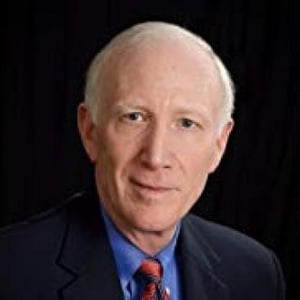
President, The Free State Foundation
Randolph J. May is Founder and President of The Free State Foundation. The Free State Foundation is an independent, non-profit free market-oriented think tank founded in 2006.
From October 1999-May 2006, May was a Senior Fellow and Director of Communications Policy Studies at The Progress & Freedom Foundation, a Washington, DC-based think tank. Prior to joining PFF, he practiced communications, administrative, and regulatory law as a partner at major national law firms. From 1978 to 1981, May served as Assistant General Counsel and Associate General Counsel at the Federal Communication Commission.
May has held numerous leadership positions in bar associations. He is a past Chair of the American Bar Association’s Section of Administrative Law and Regulatory Practice. He is a Fellow of the National Academy of Public Administration. Mr. May also has served as a Public Member of the Administrative Conference of the United States and currently is a Senior Fellow at ACUS.
Mr. May has published more than two hundred articles and essays on communications, administrative and constitutional law topics. He is author of A Call for a Radical New Communications Policy: Proposals for Free Market Reform, and co-author of #CommActUpdate: A Communications Law Fit for the Digital Age and The Constitutional Foundations of Intellectual Property. Mr. May is editor of two books, Communications Law and Policy in the Digital Age: The Next Five Years and New Directions in Communications Policy. In addition, he is the co-editor of two other books, Net Neutrality or Net Neutering: Should Broadband Internet Services Be Regulated? and Communications Deregulation and FCC Reform. In the past, Mr. May has written regular columns on legal and regulatory affairs for Legal Times and the National Law Journal, leading national legal periodicals.
He received his A.B. from Duke University and his J.D. from Duke Law School, where he serves as a member of the Board of Visitors.
Chairman, Federal Communications Commission
Brendan Carr is the Chairman of the Federal Communications Commission. He previously served as the senior Republican Commissioner and as the FCC’s General Counsel. Nominated by both President Trump and President Biden, Carr has been confirmed unanimously by the Senate three times.
Described by Axios as “the FCC’s 5G crusader,” Carr has led the FCC’s work to modernize its infrastructure rules and accelerate the buildout of high-speed networks. His reforms cut billions of dollars in red tape, enabled the private sector to construct high-speed networks in communities across the country, and extended America’s global leadership in 5G.
Chairman Carr is also focused on expanding America’s skilled workforce—the tower climbers and construction crews needed to build next-gen networks. His jobs initiative promotes community colleges and apprenticeships as a pipeline for good-paying 5G jobs. He is recognizing America’s talented tower crews through a series of “5G Ready” Hard Hat presentations.
Chairman Carr leads a groundbreaking telehealth initiative at the FCC. The Connected Care Pilot Program supports the delivery of high-quality care to low-income Americans and veterans.
Chairman Carr’s time outside of Washington helps inform his approach to the job. He regularly hits the road to hear directly from community members and learn how changes in federal policies could help improve their lives.
Chairman Carr brings nearly 20 years of private and public sector experience in communications and tech policy to his position. Before joining the FCC as a staffer back in 2012, he worked as an attorney at Wiley Rein LLP in the firm’s appellate, litigation, and telecom practices. Previously, Chairman Carr clerked on the U.S. Court of Appeals for the Fourth Circuit for Judge Dennis Shedd. After attending Georgetown University for his undergrad, Chairman Carr earned his J.D. magna cum laude from the Catholic University of America’s Columbus School of Law where he served as an editor of the Catholic University Law Review.
President, The Free State Foundation
Randolph J. May is Founder and President of The Free State Foundation. The Free State Foundation is an independent, non-profit free market-oriented think tank founded in 2006.
From October 1999-May 2006, May was a Senior Fellow and Director of Communications Policy Studies at The Progress & Freedom Foundation, a Washington, DC-based think tank. Prior to joining PFF, he practiced communications, administrative, and regulatory law as a partner at major national law firms. From 1978 to 1981, May served as Assistant General Counsel and Associate General Counsel at the Federal Communication Commission.
May has held numerous leadership positions in bar associations. He is a past Chair of the American Bar Association’s Section of Administrative Law and Regulatory Practice. He is a Fellow of the National Academy of Public Administration. Mr. May also has served as a Public Member of the Administrative Conference of the United States and currently is a Senior Fellow at ACUS.
Mr. May has published more than two hundred articles and essays on communications, administrative and constitutional law topics. He is author of A Call for a Radical New Communications Policy: Proposals for Free Market Reform, and co-author of #CommActUpdate: A Communications Law Fit for the Digital Age and The Constitutional Foundations of Intellectual Property. Mr. May is editor of two books, Communications Law and Policy in the Digital Age: The Next Five Years and New Directions in Communications Policy. In addition, he is the co-editor of two other books, Net Neutrality or Net Neutering: Should Broadband Internet Services Be Regulated? and Communications Deregulation and FCC Reform. In the past, Mr. May has written regular columns on legal and regulatory affairs for Legal Times and the National Law Journal, leading national legal periodicals.
He received his A.B. from Duke University and his J.D. from Duke Law School, where he serves as a member of the Board of Visitors.

Opioids in 2021: Enforcement Strategies and Policy Prescriptions
Criminal Law & Procedure Practice Group Teleforum
TeleforumLearning to Change: New Takes on Education Reform
Kirby Thomas West
A Review of: The Choice We Face: How Segregation, Race, and Power Have Shaped America’s...
The Race Card in ARPA’s Food Supply Deck
George R. La Noue
It is an old aphorism that a prudent person should not watch the making of...
Covid-19 Vaccines and Intellectual Property
James Bacchus, Brook K. Baker, Jorge L. Contreras, Ana Santos Rutschman, Steven M. Tepp
In October 2020, two countries, India and South Africa, that had been hit particularly hard...
Covid-19 Vaccines and Intellectual Property
James Bacchus, Brook K. Baker, Jorge L. Contreras, Ana Santos Rutschman, Steven M. Tepp
In October 2020, two countries, India and South Africa, that had been hit particularly hard...
Covid-19 Vaccines and Intellectual Property
Practice Groups Teleforum
TeleforumRe-Opening the Courts: Constitutional Issues and Status of the Courts
Houston Lawyers Chapter Event
Houston, TXRe-Opening the Courts: Constitutional Issues and Status of the Courts
Houston Lawyers Chapter Event
Houston, TXClosing the Digital Divide: The Future of Broadband Access
Brendan Carr, Randolph May
On June 15, 2021, The Federalist Society's Telecommunications & Electronic Media Practice Group sponsored a...
Closing the Digital Divide: The Future of Broadband Access
Brendan Carr, Randolph May
On June 15, 2021, The Federalist Society's Telecommunications & Electronic Media Practice Group sponsored a...