
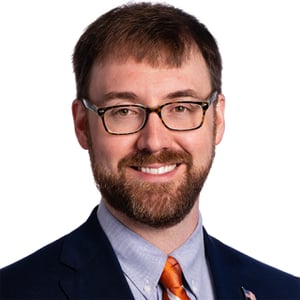
Senior Legal Fellow, Courts and the Constitution, Legal Policy Center, The Heritage Foundation
Zack is a Senior Legal Fellow of Courts and the Constitution at The Heritage Foundation.
He previously served for several years as an Assistant United States Attorney in the Northern District of Florida. Prior to that, he spent two years as an associate in the Washington, D.C. office of Cleary Gottlieb Steen & Hamilton, which he joined after clerking for the Hon. Emmett R. Cox on the United States Court of Appeals for the Eleventh Circuit.
Smith received his undergraduate, master’s, and law degrees from the University of Florida. During law school, Smith served as the Editor in Chief of the Florida Law Review and served on the executive boards of several student organizations, including the UF Chapter of the Federalist Society.
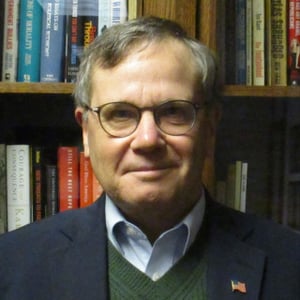
Senior Fellow in Constitutional Jurisprudence, Independence Institute
Professor Robert G. Natelson is a constitutional scholar and author.
Rob’s constitutional scholarship has been cited repeatedly by justices and parties at the U.S. Supreme Court—as well as by federal appeals courts, and at least 18 state supreme courts.
Rob’s research into the Constitution’s original meaning has carried him to libraries throughout the United States and in Britain, including four months at Oxford University. His books and articles span many different parts of the Constitution, including groundbreaking studies of the Necessary and Proper Clause, the Indian Commerce Clause, federalism, Founding-Era interpretation, regulation of elections, and the amendment process of Article V. He created the first-ever online bibliography for 18th century materials used in constitutional research. He is a contributing author to the Encyclopedia of the Supreme Court of the United States (on Magna Carta). He contributed eight essays to the third edition of the Heritage Guide to the Constitution: five on the amendment procedure and one each on the Guarantee Clause, the Postal Clause, and the Recess Appointments Clause.
U.S. Supreme Court justices have relied explicitly on Rob’s research in 41 citations in 13 separate cases.
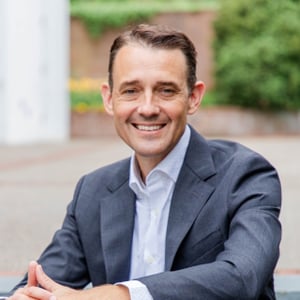
Senior Vice President, Strategic Initiatives & Special Counsel to the President, Alliance Defending Freedom
Ryan Bangert serves as senior vice president for strategic initiatives and special counsel to the president at Alliance Defending Freedom. He oversees ADF’s regulatory practice, government relations, and corporate engagement teams. He also advises executive leadership with strategic initiatives and appears as counsel for ADF clients.
Before joining ADF, Bangert served as deputy first assistant attorney general and deputy for legal counsel in the office of the Texas attorney general. In those roles, he oversaw the state’s Special Litigation Unit, which handled critical litigation against the federal government, and oversaw multiple divisions within the office. Prior to that, he served as deputy for civil litigation for Missouri Attorney General Josh Hawley, overseeing the state’s civil litigation divisions, including the consumer protection and antitrust divisions, with over 200 attorneys and staff. During his time in government service, Bangert handled a diverse array of matters involving Big Tech, election law, civil rights, multistate antitrust and consumer protection investigations, and many other issues.
Prior to his government service, Bangert was a litigation partner at Baker Botts L.L.P., where he was a member of the firm’s commercial litigation and appellate practice sections. A seasoned trial attorney, The Texas Lawyer ranked the verdict Bangert achieved in the Janvey v. Maldonado case as the #1 verdict in the securities category for 2015-2019, and The National Law Journal ranked it in its “Top 100 Verdicts of 2015.” He was named a “Texas Rising Star” for multiple years by Texas Lawyer and Law and Politics magazines. While at Baker Botts, he was a volunteer attorney for ADF and served as amicus counsel in numerous cases, including Trinity Lutheran v. Comer and Salazar v. Buono, receiving the firm’s Opus Justitae Award in recognition of his outstanding commitment to pro bono service.
Bangert earned his J.D. from Southern Methodist University, where he was a Hatton Sumner’s scholar and graduated first in his class. He also participated in ADF’s Blackstone program and is a Blackstone Fellow. Following law school, he clerked for the Honorable Patrick E. Higginbotham on the Fifth Circuit Court of Appeals.
Bangert is a member of the Philadelphia Society and Federalist Society. He is admitted to practice law in Texas, California (inactive), Missouri (inactive), the U.S. Supreme Court and numerous federal district and appellate courts. A frequent op-ed contributor, his work has appeared in National Review, Daily Wire, The Hill, Washington Examiner, The Federalist, Fox News, and RealClear Religion. He speaks nationally on constitutional, cultural, and religious liberty issues.

Arthur B. Hanson Professor of Law, William & Mary Law School
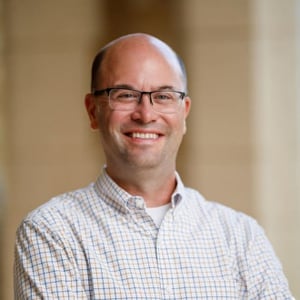
Paul J. Schierl Professor of Law, University of Notre Dame Law School
Professor Richard W. Garnett teaches and writes in the areas of constitutional law, criminal law, the First Amendment, and law and religion. He is a leading authority on questions and debates regarding religious freedom and church-state relations, and is the founding director of Notre Dame Law School’s Program on Church, State, and Society.
Garnett clerked for the late Chief Justice of the United States, William H. Rehnquist, and also for the late Chief Judge of the United States Court of Appeals for the Eighth Circuit, Richard S. Arnold. He earned his J.D. from Yale Law School in 1995 and his B.A., summa cum laude, from Duke University in 1990. He joined the faculty in 1999 after practicing law in Washington, D.C. with Miller, Cassidy, Larroca & Lewin.
Senior Vice President, Strategic Initiatives & Special Counsel to the President, Alliance Defending Freedom
Ryan Bangert serves as senior vice president for strategic initiatives and special counsel to the president at Alliance Defending Freedom. He oversees ADF’s regulatory practice, government relations, and corporate engagement teams. He also advises executive leadership with strategic initiatives and appears as counsel for ADF clients.
Before joining ADF, Bangert served as deputy first assistant attorney general and deputy for legal counsel in the office of the Texas attorney general. In those roles, he oversaw the state’s Special Litigation Unit, which handled critical litigation against the federal government, and oversaw multiple divisions within the office. Prior to that, he served as deputy for civil litigation for Missouri Attorney General Josh Hawley, overseeing the state’s civil litigation divisions, including the consumer protection and antitrust divisions, with over 200 attorneys and staff. During his time in government service, Bangert handled a diverse array of matters involving Big Tech, election law, civil rights, multistate antitrust and consumer protection investigations, and many other issues.
Prior to his government service, Bangert was a litigation partner at Baker Botts L.L.P., where he was a member of the firm’s commercial litigation and appellate practice sections. A seasoned trial attorney, The Texas Lawyer ranked the verdict Bangert achieved in the Janvey v. Maldonado case as the #1 verdict in the securities category for 2015-2019, and The National Law Journal ranked it in its “Top 100 Verdicts of 2015.” He was named a “Texas Rising Star” for multiple years by Texas Lawyer and Law and Politics magazines. While at Baker Botts, he was a volunteer attorney for ADF and served as amicus counsel in numerous cases, including Trinity Lutheran v. Comer and Salazar v. Buono, receiving the firm’s Opus Justitae Award in recognition of his outstanding commitment to pro bono service.
Bangert earned his J.D. from Southern Methodist University, where he was a Hatton Sumner’s scholar and graduated first in his class. He also participated in ADF’s Blackstone program and is a Blackstone Fellow. Following law school, he clerked for the Honorable Patrick E. Higginbotham on the Fifth Circuit Court of Appeals.
Bangert is a member of the Philadelphia Society and Federalist Society. He is admitted to practice law in Texas, California (inactive), Missouri (inactive), the U.S. Supreme Court and numerous federal district and appellate courts. A frequent op-ed contributor, his work has appeared in National Review, Daily Wire, The Hill, Washington Examiner, The Federalist, Fox News, and RealClear Religion. He speaks nationally on constitutional, cultural, and religious liberty issues.
Arthur B. Hanson Professor of Law, William & Mary Law School
Paul J. Schierl Professor of Law, University of Notre Dame Law School
Professor Richard W. Garnett teaches and writes in the areas of constitutional law, criminal law, the First Amendment, and law and religion. He is a leading authority on questions and debates regarding religious freedom and church-state relations, and is the founding director of Notre Dame Law School’s Program on Church, State, and Society.
Garnett clerked for the late Chief Justice of the United States, William H. Rehnquist, and also for the late Chief Judge of the United States Court of Appeals for the Eighth Circuit, Richard S. Arnold. He earned his J.D. from Yale Law School in 1995 and his B.A., summa cum laude, from Duke University in 1990. He joined the faculty in 1999 after practicing law in Washington, D.C. with Miller, Cassidy, Larroca & Lewin.
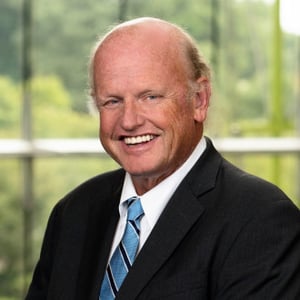
In his 35 years at the Justice Department and in private practice, Mike Carvin was one of the leading appellate and trial lawyers challenging state and federal regulations on constitutional and statutory grounds, with 10 Supreme Court arguments and numerous high-profile victories. In addition to his numerous cases in the United States Supreme Court, he argued in virtually every federal appeals court. His major cases include the recent constitutional challenge to the Affordable Care Act and the decisions invalidating Sarbanes-Oxley's accounting board, preventing the Justice Department from obtaining monetary relief against the tobacco industry under RICO, overturning the federal government's plan to statistically adjust the census, limiting the Justice Department's ability to create "majority-minority" districts, and upholding Proposition 209's ban on racial preferences in California.
Mike was one of the lead lawyers, and argued before the Florida Supreme Court, on behalf of George W. Bush in the 2000 presidential election Florida recount controversy. He also has represented state governments, financial institutions, telecommunications, and energy companies in "takings," First Amendment, civil rights, and statutory challenges to federal government actions.

Professor of Law, University of San Diego School of Law (Retired)
Gail Heriot is a recently retired law professor from the University of San Diego. She also served as a member of the U.S. Commission on Civil Rights from 2007 to 2025. She is also the chairman of the board of the American Civil Rights Project and the chair emerita of the Civil Rights practice group at the Federalist Society for Law & Public Policy.
Professor Heriot is a prolific writer in the area of civil rights. She is the author of many law review articles. She is also the editor (along with Maimon Schwarzschild) of the 2021 anthology, A Dubious Expediency: How Race Preferences Damage Higher Education. Her upcoming book is entitled, Why We Walk on Eggshell: How Our Civil Rights Laws Helped Bring About the Woke Era—And the Trump Era, Too.
Her writings for a general audience have appeared in the Wall Street Journal, the San Diego Union-Tribune, the National Review and many other newspapers and magazines.
In 1996, she co-chaired the successful “Yes on Proposition 209” campaign, which amended the California Constitution to prohibit state-sponsored discrimination or preferential treatment based on race, sex, color, ethnicity or national origin. In 2020, she co-chaired the “No on Proposition 16” campaign, which successfully prevented Proposition 209’s repeal.
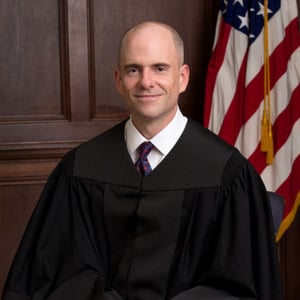
Judge, United States Court of Appeals, Eleventh Circuit
Judge Kevin C. Newsom is a member of the United States Court of Appeals for the Eleventh Circuit. He sits in Birmingham, Alabama.
Before his appointment to the bench, Judge Newsom was the head of the appellate practice group at Bradley Arant Boult Cummings LLP and, before that, the Solicitor General of Alabama. As a practicing lawyer, Judge Newsom argued four cases in the Supreme Court of the United States, and nearly 40 more in the United States Courts of Appeals and state supreme and appellate courts.
Judge Newsom graduated summa cum laude from Samford University and magna cum laude from Harvard Law School, where he was an articles editor on the Harvard Law Review. Following law school, Judge Newsom clerked for Judge Diarmuid F. O’Scannlain of the United States Court of Appeals for the Ninth Circuit and Justice David H. Souter of the Supreme Court of the United States.
Judge Newsom teaches at Harvard Law School, Yale Law School, Stanford Law School, and the University of Chicago Law School. His published work has appeared in the Yale Law Journal and the Harvard Law Review.
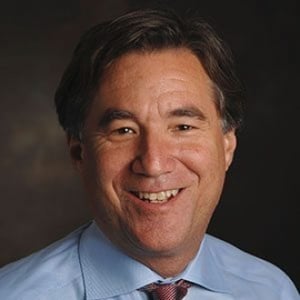
Ashe Family Chair Professor of Law, Georgia State University College of Law
Eric J. Segall graduated from Emory University, Phi Beta Kappa and summa cum laude, and from Vanderbilt Law School, where he was the research editor for the Law Review and member of Order of the Coif. He clerked for the Chief Judge Charles Moye Jr. for the Northern District of Georgia, and Albert J. Henderson of the 11th Circuit Court of Appeals. After his clerkships, Segall worked for Gibson, Dunn & Crutcher and the U.S. Department of Justice, before joining the Georgia State faculty in 1991.
Segall teaches federal courts and constitutional law I and II. He is the author of the books Originalism as Faith and Supreme Myths: Why the Supreme Court is not a Court and its Justices are not Judges. His articles on constitutional law have appeared in, among others, the Harvard Law Review Forum, the Stanford Law Review On Line, the UCLA Law Review, the George Washington Law Review, the Washington University Law Review, the University of Pennsylvania Journal of Constitutional Law, the Northwestern University Law Review Colloquy, and Constitutional Commentary among many others.
Segall’s op-eds and essays have appeared in the New York Times, the LA Times, The Atlantic, SLATE, Vox, Salon, and the Daily Beast, among others. He has appeared on CNN, Fox News, MSNBC, and France 24 and all four of Atlanta’s local television stations. He has also appeared on numerous local and national radio shows.
Senior Vice President, Strategic Initiatives & Special Counsel to the President, Alliance Defending Freedom
Ryan Bangert serves as senior vice president for strategic initiatives and special counsel to the president at Alliance Defending Freedom. He oversees ADF’s regulatory practice, government relations, and corporate engagement teams. He also advises executive leadership with strategic initiatives and appears as counsel for ADF clients.
Before joining ADF, Bangert served as deputy first assistant attorney general and deputy for legal counsel in the office of the Texas attorney general. In those roles, he oversaw the state’s Special Litigation Unit, which handled critical litigation against the federal government, and oversaw multiple divisions within the office. Prior to that, he served as deputy for civil litigation for Missouri Attorney General Josh Hawley, overseeing the state’s civil litigation divisions, including the consumer protection and antitrust divisions, with over 200 attorneys and staff. During his time in government service, Bangert handled a diverse array of matters involving Big Tech, election law, civil rights, multistate antitrust and consumer protection investigations, and many other issues.
Prior to his government service, Bangert was a litigation partner at Baker Botts L.L.P., where he was a member of the firm’s commercial litigation and appellate practice sections. A seasoned trial attorney, The Texas Lawyer ranked the verdict Bangert achieved in the Janvey v. Maldonado case as the #1 verdict in the securities category for 2015-2019, and The National Law Journal ranked it in its “Top 100 Verdicts of 2015.” He was named a “Texas Rising Star” for multiple years by Texas Lawyer and Law and Politics magazines. While at Baker Botts, he was a volunteer attorney for ADF and served as amicus counsel in numerous cases, including Trinity Lutheran v. Comer and Salazar v. Buono, receiving the firm’s Opus Justitae Award in recognition of his outstanding commitment to pro bono service.
Bangert earned his J.D. from Southern Methodist University, where he was a Hatton Sumner’s scholar and graduated first in his class. He also participated in ADF’s Blackstone program and is a Blackstone Fellow. Following law school, he clerked for the Honorable Patrick E. Higginbotham on the Fifth Circuit Court of Appeals.
Bangert is a member of the Philadelphia Society and Federalist Society. He is admitted to practice law in Texas, California (inactive), Missouri (inactive), the U.S. Supreme Court and numerous federal district and appellate courts. A frequent op-ed contributor, his work has appeared in National Review, Daily Wire, The Hill, Washington Examiner, The Federalist, Fox News, and RealClear Religion. He speaks nationally on constitutional, cultural, and religious liberty issues.
Arthur B. Hanson Professor of Law, William & Mary Law School
Paul J. Schierl Professor of Law, University of Notre Dame Law School
Professor Richard W. Garnett teaches and writes in the areas of constitutional law, criminal law, the First Amendment, and law and religion. He is a leading authority on questions and debates regarding religious freedom and church-state relations, and is the founding director of Notre Dame Law School’s Program on Church, State, and Society.
Garnett clerked for the late Chief Justice of the United States, William H. Rehnquist, and also for the late Chief Judge of the United States Court of Appeals for the Eighth Circuit, Richard S. Arnold. He earned his J.D. from Yale Law School in 1995 and his B.A., summa cum laude, from Duke University in 1990. He joined the faculty in 1999 after practicing law in Washington, D.C. with Miller, Cassidy, Larroca & Lewin.

Topics
Ohio Supreme Court Rules on Noneconomic Damages Cap
On December 16, in Brandt v. Pompa, a divided 4-3 Ohio Supreme Court found the...
State Court Docket Watch: Tennessee v. Deberry
Zack Smith
Does a state statute only mean what it says and nothing more? In a...
The Meaning of "Regulate Commerce" to the Constitution's Ratifiers
Robert G. Natelson
I. Previous Scholarship[1] A. Views of “Commerce”: Traditional and “Mega” The Constitution grants Congress power...
Parental Rights and Religious Liberty: Examining New Conflicts Between Parents and the State
Ryan L. Bangert, James Dwyer, Richard W. Garnett
The Supreme Court has articulated that parents have the unenumerated right rooted in the Fourteenth Amendment...
Parental Rights and Religious Liberty: Examining New Conflicts Between Parents and the State
Ryan L. Bangert, James Dwyer, Richard W. Garnett
The Supreme Court has articulated that parents have the unenumerated right rooted in the Fourteenth Amendment...
Parental Rights and Religious Liberty: Examining New Conflicts Between Parents and the State
TeleforumTopics
Is Crypto Insider Trading Really “Insider Trading”?: Prosecuting Fraud in the Crypto Space
Cryptocurrency conjures images of both the Wild West and the Wolf of Wall Street. Crypto...
Topics
Protecting Kids From Social Media: Time for a Legal Reappraisal?
Future generations will look back at the early 21st century and see an extraordinary experiment:...
Topics
DC Court of Appeals Holds That Judicial Intervention Is Inappropriate In a Religious Schism
The District of Columbia Court of Appeals recently declined to intervene in a religious dispute...
Students for Fair Admissions v. Harvard: Affirmative Action Goes to Court
Michael A. Carvin, Gail L. Heriot, Kevin C. Newsom, Eric J. Segall
The panel is sponsored by our Civil Rights practice group and will focus on the...