
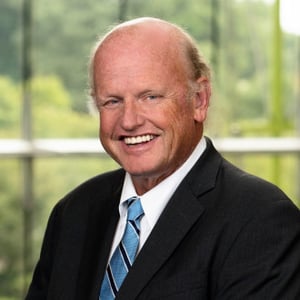
In his 35 years at the Justice Department and in private practice, Mike Carvin was one of the leading appellate and trial lawyers challenging state and federal regulations on constitutional and statutory grounds, with 10 Supreme Court arguments and numerous high-profile victories. In addition to his numerous cases in the United States Supreme Court, he argued in virtually every federal appeals court. His major cases include the recent constitutional challenge to the Affordable Care Act and the decisions invalidating Sarbanes-Oxley's accounting board, preventing the Justice Department from obtaining monetary relief against the tobacco industry under RICO, overturning the federal government's plan to statistically adjust the census, limiting the Justice Department's ability to create "majority-minority" districts, and upholding Proposition 209's ban on racial preferences in California.
Mike was one of the lead lawyers, and argued before the Florida Supreme Court, on behalf of George W. Bush in the 2000 presidential election Florida recount controversy. He also has represented state governments, financial institutions, telecommunications, and energy companies in "takings," First Amendment, civil rights, and statutory challenges to federal government actions.
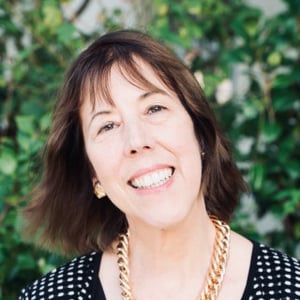
Professor of Law, University of San Diego School of Law (Retired)
Gail Heriot is a recently retired law professor from the University of San Diego. She also served as a member of the U.S. Commission on Civil Rights from 2007 to 2025. She is also the chairman of the board of the American Civil Rights Project and the chair emerita of the Civil Rights practice group at the Federalist Society for Law & Public Policy.
Professor Heriot is a prolific writer in the area of civil rights. She is the author of many law review articles. She is also the editor (along with Maimon Schwarzschild) of the 2021 anthology, A Dubious Expediency: How Race Preferences Damage Higher Education. Her upcoming book is entitled, Why We Walk on Eggshell: How Our Civil Rights Laws Helped Bring About the Woke Era—And the Trump Era, Too.
Her writings for a general audience have appeared in the Wall Street Journal, the San Diego Union-Tribune, the National Review and many other newspapers and magazines.
In 1996, she co-chaired the successful “Yes on Proposition 209” campaign, which amended the California Constitution to prohibit state-sponsored discrimination or preferential treatment based on race, sex, color, ethnicity or national origin. In 2020, she co-chaired the “No on Proposition 16” campaign, which successfully prevented Proposition 209’s repeal.
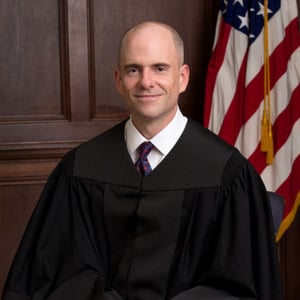
Judge, United States Court of Appeals, Eleventh Circuit
Judge Kevin C. Newsom is a member of the United States Court of Appeals for the Eleventh Circuit. He sits in Birmingham, Alabama.
Before his appointment to the bench, Judge Newsom was the head of the appellate practice group at Bradley Arant Boult Cummings LLP and, before that, the Solicitor General of Alabama. As a practicing lawyer, Judge Newsom argued four cases in the Supreme Court of the United States, and nearly 40 more in the United States Courts of Appeals and state supreme and appellate courts.
Judge Newsom graduated summa cum laude from Samford University and magna cum laude from Harvard Law School, where he was an articles editor on the Harvard Law Review. Following law school, Judge Newsom clerked for Judge Diarmuid F. O’Scannlain of the United States Court of Appeals for the Ninth Circuit and Justice David H. Souter of the Supreme Court of the United States.
Judge Newsom teaches at Harvard Law School, Yale Law School, Stanford Law School, and the University of Chicago Law School. His published work has appeared in the Yale Law Journal and the Harvard Law Review.
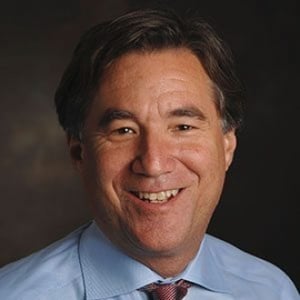
Ashe Family Chair Professor of Law, Georgia State University College of Law
Eric J. Segall graduated from Emory University, Phi Beta Kappa and summa cum laude, and from Vanderbilt Law School, where he was the research editor for the Law Review and member of Order of the Coif. He clerked for the Chief Judge Charles Moye Jr. for the Northern District of Georgia, and Albert J. Henderson of the 11th Circuit Court of Appeals. After his clerkships, Segall worked for Gibson, Dunn & Crutcher and the U.S. Department of Justice, before joining the Georgia State faculty in 1991.
Segall teaches federal courts and constitutional law I and II. He is the author of the books Originalism as Faith and Supreme Myths: Why the Supreme Court is not a Court and its Justices are not Judges. His articles on constitutional law have appeared in, among others, the Harvard Law Review Forum, the Stanford Law Review On Line, the UCLA Law Review, the George Washington Law Review, the Washington University Law Review, the University of Pennsylvania Journal of Constitutional Law, the Northwestern University Law Review Colloquy, and Constitutional Commentary among many others.
Segall’s op-eds and essays have appeared in the New York Times, the LA Times, The Atlantic, SLATE, Vox, Salon, and the Daily Beast, among others. He has appeared on CNN, Fox News, MSNBC, and France 24 and all four of Atlanta’s local television stations. He has also appeared on numerous local and national radio shows.
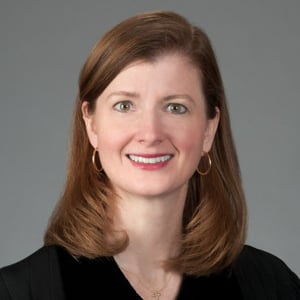
Judge, United States Court of Appeals, Eleventh Circuit
On March 20, 2018, Judge Elizabeth L. Branch (Lisa) was sworn in as a United States Circuit Judge for the Eleventh Circuit.
Judge Branch attended and graduated from Davidson College in North Carolina (B.A., cum laude, 1990), and Emory University School of Law (J.D., with distinction, 1994).
After graduating from law school, Judge Branch served as a federal law clerk to The Honorable J. Owen Forrester of the U.S. District Court for the Northern District of Georgia from 1994 to 1996. Following her clerkship, Judge Branch joined the litigation department of Smith, Gambrell & Russell, LLP in Atlanta as an associate and then a partner.
From 2004 to 2008, Judge Branch was a senior official in the Administration of President George W. Bush in Washington, D.C. She served first as the Associate General Counsel for Rules and Legislation at the U.S. Department of Homeland Security and then as the Counselor to the Administrator of the Office of Information and Regulatory Affairs at the U. S. Office of Management and Budget.
She returned to Smith Gambrell in 2008 as a litigation partner. Judge Branch then was appointed to the Court of Appeals of Georgia by Governor Nathan Deal, taking office on September 4, 2012, where she served until March 19, 2018.
Judge Branch is a member of the Board of Advisors of the Atlanta Lawyers Chapter for the Federalist Society for Law and Public Policy Studies.
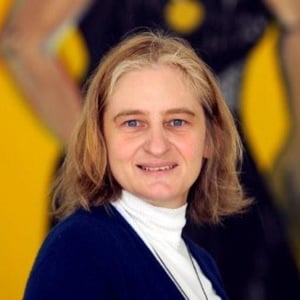
Arnold I. Shure Professor of Law, University of Chicago Law School
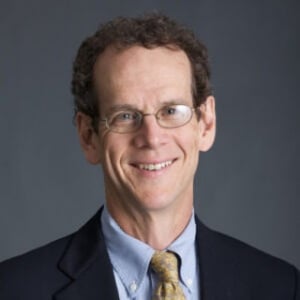
Hon. George J. Mitchell Professor in Law and Public Policy, Georgetown Law
David Cole is the Honorable George J. Mitchell Professor in Law and Public Policy and former National Legal Director of the American Civil Liberties Union (ACLU). He writes about and teaches constitutional law, freedom of speech, and constitutional criminal procedure. He is a regular contributor to The New York Review of Books and is the legal affairs correspondent for The Nation.
David has published widely in law journals and the popular press, including The Yale Law Journal, California Law Review, Stanford Law Review, The New York Times, The Washington Post, The New Yorker, The Atlantic, and The New Republic. He is the author or editor of ten books, several of which have won awards. Less Safe, Less Free: Why America Is Losing the War on Terror, published in 2007, and co-authored with Jules Lobel, won the Palmer Civil Liberties Prize for best book on national security and civil liberties. Enemy Aliens: Double Standards and Constitutional Freedoms in the War on Terrorism received the American Book Award in 2004. No Equal Justice: Race and Class in the American Criminal Justice System was named Best Non-Fiction Book of 1999 by the Boston Book Review and best book on an issue of national policy in1999 by the American Political Science Association.
David received his bachelor’s degree and law degree from Yale University. He worked as a staff attorney for the Center for Constitutional Rights from 1985 to 1990. He has continued to litigate as a professor and, from 2017 to 2024, as National Legal Director of the ACLU. He has litigated many significant constitutional cases at the Supreme Court, including Texas v. Johnson (1989), which extended First Amendment protection to flag burning; Bostock v. Clayton County (2020), which held that discrimination on the basis of sexual orientation and gender identity are prohibited forms of sex discrimination under Title VII; Mahanoy Area Sch. Dist. v. B.L. (2021), which protected student online speech from school discipline; and National Rifle Association v. Vullo (2024), which held that government officials violate the First Amendment when they use their regulatory authority to coerce private parties to blacklist a disfavored political group.
David has received two honorary degrees and numerous awards for his work, including the inaugural Norman Dorsen Presidential Prize from the ACLU for lifetime commitment to civil liberties. The late New York Times columnist Anthony Lewis called David “one of the country’s great legal voices for civil liberties today.” Nat Hentoff called him “a one-man Committee of Correspondence in the tradition of patriot Sam Adams.”
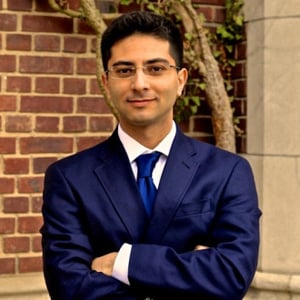
Associate Professor of Law, University of Notre Dame Law School
Sherif Girgis joined Notre Dame Law School in 2021. Prior to joining Notre Dame Law, Sherif practiced law at Jones Day in Washington, D.C., where he focused on appellate and complex civil litigation. Before that, Girgis served as a law clerk to Justice Samuel Alito, Jr., of the U.S. Supreme Court and Judge Thomas B. Griffith of the U.S. Court of Appeals for the D.C. Circuit. Now completing his Ph.D. in philosophy at Princeton, Girgis earned his J.D. at Yale Law School, where he served as an editor of the Yale Law Journal and won the Felix S. Cohen Prize for best paper in legal philosophy. Before law school, he earned a master's degree (B.Phil.) in philosophy from the University of Oxford as a Rhodes Scholar, and his bachelor's degree in philosophy from Princeton, Phi Beta Kappa and summa cum laude. Girgis is coauthor of What Is Marriage? Man and Woman: A Defense, cited in a dissent in United States v. Windsor, and Debating Religious Liberty and Discrimination, released by Oxford University Press in 2017. His work at the intersection of philosophy and law--including criminal law, constitutional liberties, and jurisprudence--has appeared in academic and popular venues including the Yale Law Journal, the Virginia Law Review, the University of Pennsylvania Law Review, the Harvard Journal of Law and Public Policy, the American Journal of Jurisprudence, the Cambridge Companion to Philosophy of Law, The New York Times, and The Wall Street Journal.
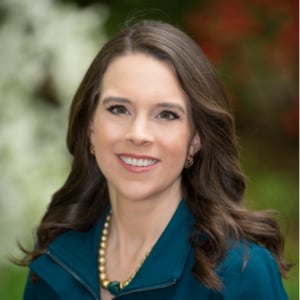
President, JCN
Carrie Campbell Severino is the president of the JCN, and co-author with Mollie Hemingway of the bestselling book Justice on Trial: The Kavanaugh Confirmation and the Future of the Court. As a go-to expert on the confirmation process, Mrs. Severino has been extensively quoted in the media. She regularly appears on television, including FOX, CNN, MSNBC, C-SPAN, and ABC’s This Week.
Severino writes and speaks on a wide range of judicial issues, including the constitutional limits on government, the federal nomination process, and state judicial selection. She has testified before Congress on constitutional questions and briefed Senators on judicial nominations, and regularly files briefs in high-profile Supreme Court cases. She was a law clerk to Supreme Court Justice Clarence Thomas and to Judge David B. Sentelle of the U.S. Court of Appeals for the D.C. Circuit, and is a graduate of Harvard Law School (J.D.), Duke University (B.A., Biology), and Michigan State University (M.A., Linguistics).
Judge, United States Court of Appeals, Eleventh Circuit
On March 20, 2018, Judge Elizabeth L. Branch (Lisa) was sworn in as a United States Circuit Judge for the Eleventh Circuit.
Judge Branch attended and graduated from Davidson College in North Carolina (B.A., cum laude, 1990), and Emory University School of Law (J.D., with distinction, 1994).
After graduating from law school, Judge Branch served as a federal law clerk to The Honorable J. Owen Forrester of the U.S. District Court for the Northern District of Georgia from 1994 to 1996. Following her clerkship, Judge Branch joined the litigation department of Smith, Gambrell & Russell, LLP in Atlanta as an associate and then a partner.
From 2004 to 2008, Judge Branch was a senior official in the Administration of President George W. Bush in Washington, D.C. She served first as the Associate General Counsel for Rules and Legislation at the U.S. Department of Homeland Security and then as the Counselor to the Administrator of the Office of Information and Regulatory Affairs at the U. S. Office of Management and Budget.
She returned to Smith Gambrell in 2008 as a litigation partner. Judge Branch then was appointed to the Court of Appeals of Georgia by Governor Nathan Deal, taking office on September 4, 2012, where she served until March 19, 2018.
Judge Branch is a member of the Board of Advisors of the Atlanta Lawyers Chapter for the Federalist Society for Law and Public Policy Studies.
Arnold I. Shure Professor of Law, University of Chicago Law School
Hon. George J. Mitchell Professor in Law and Public Policy, Georgetown Law
David Cole is the Honorable George J. Mitchell Professor in Law and Public Policy and former National Legal Director of the American Civil Liberties Union (ACLU). He writes about and teaches constitutional law, freedom of speech, and constitutional criminal procedure. He is a regular contributor to The New York Review of Books and is the legal affairs correspondent for The Nation.
David has published widely in law journals and the popular press, including The Yale Law Journal, California Law Review, Stanford Law Review, The New York Times, The Washington Post, The New Yorker, The Atlantic, and The New Republic. He is the author or editor of ten books, several of which have won awards. Less Safe, Less Free: Why America Is Losing the War on Terror, published in 2007, and co-authored with Jules Lobel, won the Palmer Civil Liberties Prize for best book on national security and civil liberties. Enemy Aliens: Double Standards and Constitutional Freedoms in the War on Terrorism received the American Book Award in 2004. No Equal Justice: Race and Class in the American Criminal Justice System was named Best Non-Fiction Book of 1999 by the Boston Book Review and best book on an issue of national policy in1999 by the American Political Science Association.
David received his bachelor’s degree and law degree from Yale University. He worked as a staff attorney for the Center for Constitutional Rights from 1985 to 1990. He has continued to litigate as a professor and, from 2017 to 2024, as National Legal Director of the ACLU. He has litigated many significant constitutional cases at the Supreme Court, including Texas v. Johnson (1989), which extended First Amendment protection to flag burning; Bostock v. Clayton County (2020), which held that discrimination on the basis of sexual orientation and gender identity are prohibited forms of sex discrimination under Title VII; Mahanoy Area Sch. Dist. v. B.L. (2021), which protected student online speech from school discipline; and National Rifle Association v. Vullo (2024), which held that government officials violate the First Amendment when they use their regulatory authority to coerce private parties to blacklist a disfavored political group.
David has received two honorary degrees and numerous awards for his work, including the inaugural Norman Dorsen Presidential Prize from the ACLU for lifetime commitment to civil liberties. The late New York Times columnist Anthony Lewis called David “one of the country’s great legal voices for civil liberties today.” Nat Hentoff called him “a one-man Committee of Correspondence in the tradition of patriot Sam Adams.”
Associate Professor of Law, University of Notre Dame Law School
Sherif Girgis joined Notre Dame Law School in 2021. Prior to joining Notre Dame Law, Sherif practiced law at Jones Day in Washington, D.C., where he focused on appellate and complex civil litigation. Before that, Girgis served as a law clerk to Justice Samuel Alito, Jr., of the U.S. Supreme Court and Judge Thomas B. Griffith of the U.S. Court of Appeals for the D.C. Circuit. Now completing his Ph.D. in philosophy at Princeton, Girgis earned his J.D. at Yale Law School, where he served as an editor of the Yale Law Journal and won the Felix S. Cohen Prize for best paper in legal philosophy. Before law school, he earned a master's degree (B.Phil.) in philosophy from the University of Oxford as a Rhodes Scholar, and his bachelor's degree in philosophy from Princeton, Phi Beta Kappa and summa cum laude. Girgis is coauthor of What Is Marriage? Man and Woman: A Defense, cited in a dissent in United States v. Windsor, and Debating Religious Liberty and Discrimination, released by Oxford University Press in 2017. His work at the intersection of philosophy and law--including criminal law, constitutional liberties, and jurisprudence--has appeared in academic and popular venues including the Yale Law Journal, the Virginia Law Review, the University of Pennsylvania Law Review, the Harvard Journal of Law and Public Policy, the American Journal of Jurisprudence, the Cambridge Companion to Philosophy of Law, The New York Times, and The Wall Street Journal.
President, JCN
Carrie Campbell Severino is the president of the JCN, and co-author with Mollie Hemingway of the bestselling book Justice on Trial: The Kavanaugh Confirmation and the Future of the Court. As a go-to expert on the confirmation process, Mrs. Severino has been extensively quoted in the media. She regularly appears on television, including FOX, CNN, MSNBC, C-SPAN, and ABC’s This Week.
Severino writes and speaks on a wide range of judicial issues, including the constitutional limits on government, the federal nomination process, and state judicial selection. She has testified before Congress on constitutional questions and briefed Senators on judicial nominations, and regularly files briefs in high-profile Supreme Court cases. She was a law clerk to Supreme Court Justice Clarence Thomas and to Judge David B. Sentelle of the U.S. Court of Appeals for the D.C. Circuit, and is a graduate of Harvard Law School (J.D.), Duke University (B.A., Biology), and Michigan State University (M.A., Linguistics).
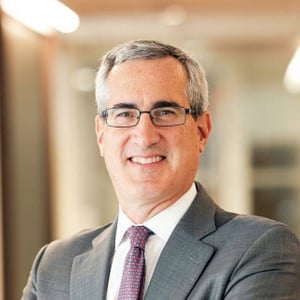
Partner and Chair, Appellate & Supreme Court Practice, Jenner & Block LLP
Ian Gershengorn is chair of Jenner & Block’s Appellate and Supreme Court Practice and is one of the nation’s premier Supreme Court and appellate advocates, having argued before the U.S. Supreme Court 16 times. Before rejoining the firm in 2017, he served in the Office of the Solicitor General during the Obama Administration, first as Principal Deputy Solicitor General and then as Acting Solicitor General of the United States. While there, Ian supervised the federal government’s briefing in a range of high-profile cases, including those involving the Affordable Care Act, Dodd-Frank, election law and redistricting, immigration reform, Title VII, and same-sex marriage.
Since leaving the federal government and returning to Jenner & Block, Ian has advised clients on a range of complex litigation and strategy problems, and he has appeared regularly in the state and federal appellate courts, representing arguing on behalf of corporate clients such as the Recording Industry Association of America, FirstTrust Bank, General Dynamics, Tsubaki, and Charter Communications.
Ian currently teaches a seminar on The Roberts Court at Harvard Law School.
Ian graduated Harvard College, magna cum laude, and Harvard Law School, magna cum laude, where he was a member of the Harvard Law Review. He served as a law clerk for Judge Amalya L. Kearse of the U.S. Court of Appeals for the Second Circuit and then for Associate Justice John Paul Stevens of the U.S. Supreme Court.
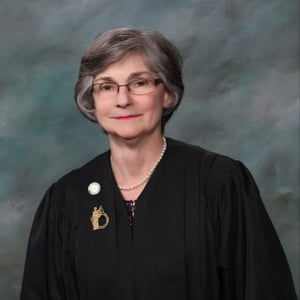
Judge, United States Court of Appeals, Fifth Circuit
Edith Jones graduated from Alamo Heights High School, where she was a National Merit Scholar. In 1971, she received her B.A. in Economics from Cornell University, graduating with honors. In 1974, she was awarded her J.D. at the University of Texas Law School, where she was a law review editor and received the Order of the Coif.
Judge Jones was the first female partner at Andrews, Kurth, Campbell & Jones (now Hunton Andrews Kurth) where she practiced various types of litigation and bankruptcy cases. Judge Jones went on the federal bench on June 1, 1985.
Judge Jones served as a former member of the National Bankruptcy Review Commission, and as a member of the Judicial Conference Commission on Bankruptcy Rules. Judge Jones served on the White House Fellows Commission. Judge Jones served on the board of the Sam Houston Area Council of the Boy Scouts of America. She has been a member of the Garland Walker Inn of Court in Houston for more than 20 years and its President for at least ten years. Judge Jones is also on the Board of the Calvin Coolidge Presidential Foundation.
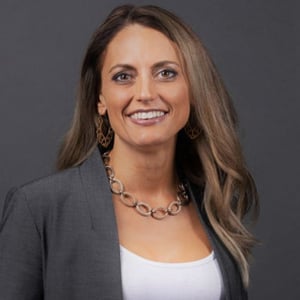
Judge, U.S. Court of Appeals for the Third Circuit
Hon. Jennifer Mascott served as Associate Professor of Law and Director of the Separation of Powers Institute at The Catholic University of America’s Columbus School of Law before her appointment to the federal bench. On July 16, 2025, President Donald J. Trump nominated her to the U.S. Court of Appeals for the Third Circuit (Delaware), and she was confirmed on October 9, 2025.
Prior to her confirmation, Judge Mascott wrote extensively in administrative and constitutional law, statutory interpretation, and the separation of powers. Her scholarship—published in leading journals including the Stanford Law Review, Notre Dame Law Review, and Supreme Court Review—was cited by the U.S. Supreme Court and multiple federal courts. She also contributed Supreme Court commentary for NBC Universal.
Before joining Catholic Law, she was an Assistant Professor and Co-Director of The C. Boyden Gray Center at George Mason University’s Antonin Scalia Law School. In 2022 she became co-author of Beermann, Cass & Diver’s Administrative Law: Cases and Materials (9th ed.). In 2023 she received the Justice Joseph Story Award for excellence in scholarship, teaching, and advancing the rule of law.
Judge Mascott also served as a Council Member of the ABA’s Administrative Law Section and as a Public Member of the Administrative Conference of the United States. She frequently testified before Congress on executive power, regulatory reform, and judicial jurisdiction, and participated in multiple Supreme Court confirmation hearings.
From 2019 to 2021, she took leave from academia to serve as Deputy Assistant Attorney General in the Department of Justice’s Office of Legal Counsel and later as Associate Deputy Attorney General, where she argued federal cases and assisted with Justice Amy Coney Barrett’s confirmation. Earlier in her career, she clerked for Justice Clarence Thomas and for then-Judge Brett M. Kavanaugh on the D.C. Circuit.
Judge Mascott earned her J.D. summa cum laude from the George Washington University Law School and her B.A. from the same institution.
Charles Evans Hughes Professor of Law, Columbia Law School
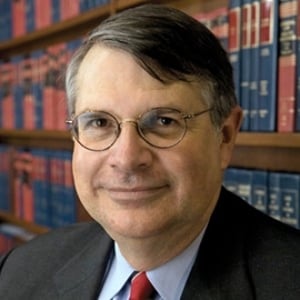
THOMAS W. MERRILL is the Charles Evans Hughes Professor of Law at Columbia Law School. He previously taught at Northwestern University School of Law and Yale Law School. He has undergraduate degrees from Grinnell College and Oxford University, where he studied as a Rhodes Scholar, and a law degree from the University of Chicago. He clerked on the D.C. Circuit (for Chief Judge David Bazelon) and the U.S. Supreme Court (for Justice Harry Blackmun). From 1987-1990 he served as Deputy Solicitor General, U.S. Department of Justice. Professor Merrill’s writings related to property include Property: Principles and Policies (Foundation Press Second Edition, 2012) (with Henry E. Smith); Property: The Oxford Introductions to U.S. Law (Oxford U. Press, 2010); Property: Takings (Foundation Press, 2002)(with David Dana); and numerous articles, including “The Economics of Public Use” (Cornell Law Review 1986); “The Landscape of Constitutional Property” (Virginia Law Review 2000); and “The Character of the Governmental Action” (Vermont Law Review 2012). He is a member of the American Academy of Arts and Sciences.
Jones Day, Partner
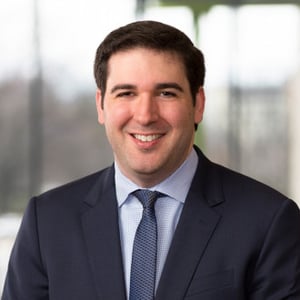
Yaakov Roth's goal is to strategically develop and effectively present the key legal arguments that will secure victory for clients through appellate advocacy and dispositive motions. He has represented clients in high-profile Supreme Court cases, argued appeals in the federal Courts of Appeals, and prepared motions to dismiss and for summary judgment across a range of substantive areas.
Yaakov's most recent Supreme Court experience includes vindicating former Virginia Gov. Bob McDonnell from political corruption charges, narrowing the geographic scope of private civil RICO lawsuits, and pursuing a major challenge to the Affordable Care Act from inception through high court review. At the appellate level, Yaakov's oral advocacy has included pressing a First Amendment challenge to an Ohio law prohibiting "false" campaign statements, seeking disclosure of a Justice Department policy manual concerning criminal discovery, and protecting the religious freedom rights of Death Row inmates. He has successfully defended his clients against defamation, antitrust, Title VII, and ERISA claims — including nationwide class actions — and pursued a host of challenges to federal, state, and local regulations. His ERISA experience also includes a series of withdrawal liability arbitrations and related litigation.
Yaakov speaks and writes about the Supreme Court and First Amendment issues and maintains an active pro bono practice centered around religious freedom and criminal justice.
Partner and Chair, Appellate & Supreme Court Practice, Jenner & Block LLP
Ian Gershengorn is chair of Jenner & Block’s Appellate and Supreme Court Practice and is one of the nation’s premier Supreme Court and appellate advocates, having argued before the U.S. Supreme Court 16 times. Before rejoining the firm in 2017, he served in the Office of the Solicitor General during the Obama Administration, first as Principal Deputy Solicitor General and then as Acting Solicitor General of the United States. While there, Ian supervised the federal government’s briefing in a range of high-profile cases, including those involving the Affordable Care Act, Dodd-Frank, election law and redistricting, immigration reform, Title VII, and same-sex marriage.
Since leaving the federal government and returning to Jenner & Block, Ian has advised clients on a range of complex litigation and strategy problems, and he has appeared regularly in the state and federal appellate courts, representing arguing on behalf of corporate clients such as the Recording Industry Association of America, FirstTrust Bank, General Dynamics, Tsubaki, and Charter Communications.
Ian currently teaches a seminar on The Roberts Court at Harvard Law School.
Ian graduated Harvard College, magna cum laude, and Harvard Law School, magna cum laude, where he was a member of the Harvard Law Review. He served as a law clerk for Judge Amalya L. Kearse of the U.S. Court of Appeals for the Second Circuit and then for Associate Justice John Paul Stevens of the U.S. Supreme Court.
Judge, United States Court of Appeals, Fifth Circuit
Edith Jones graduated from Alamo Heights High School, where she was a National Merit Scholar. In 1971, she received her B.A. in Economics from Cornell University, graduating with honors. In 1974, she was awarded her J.D. at the University of Texas Law School, where she was a law review editor and received the Order of the Coif.
Judge Jones was the first female partner at Andrews, Kurth, Campbell & Jones (now Hunton Andrews Kurth) where she practiced various types of litigation and bankruptcy cases. Judge Jones went on the federal bench on June 1, 1985.
Judge Jones served as a former member of the National Bankruptcy Review Commission, and as a member of the Judicial Conference Commission on Bankruptcy Rules. Judge Jones served on the White House Fellows Commission. Judge Jones served on the board of the Sam Houston Area Council of the Boy Scouts of America. She has been a member of the Garland Walker Inn of Court in Houston for more than 20 years and its President for at least ten years. Judge Jones is also on the Board of the Calvin Coolidge Presidential Foundation.
Judge, U.S. Court of Appeals for the Third Circuit
Hon. Jennifer Mascott served as Associate Professor of Law and Director of the Separation of Powers Institute at The Catholic University of America’s Columbus School of Law before her appointment to the federal bench. On July 16, 2025, President Donald J. Trump nominated her to the U.S. Court of Appeals for the Third Circuit (Delaware), and she was confirmed on October 9, 2025.
Prior to her confirmation, Judge Mascott wrote extensively in administrative and constitutional law, statutory interpretation, and the separation of powers. Her scholarship—published in leading journals including the Stanford Law Review, Notre Dame Law Review, and Supreme Court Review—was cited by the U.S. Supreme Court and multiple federal courts. She also contributed Supreme Court commentary for NBC Universal.
Before joining Catholic Law, she was an Assistant Professor and Co-Director of The C. Boyden Gray Center at George Mason University’s Antonin Scalia Law School. In 2022 she became co-author of Beermann, Cass & Diver’s Administrative Law: Cases and Materials (9th ed.). In 2023 she received the Justice Joseph Story Award for excellence in scholarship, teaching, and advancing the rule of law.
Judge Mascott also served as a Council Member of the ABA’s Administrative Law Section and as a Public Member of the Administrative Conference of the United States. She frequently testified before Congress on executive power, regulatory reform, and judicial jurisdiction, and participated in multiple Supreme Court confirmation hearings.
From 2019 to 2021, she took leave from academia to serve as Deputy Assistant Attorney General in the Department of Justice’s Office of Legal Counsel and later as Associate Deputy Attorney General, where she argued federal cases and assisted with Justice Amy Coney Barrett’s confirmation. Earlier in her career, she clerked for Justice Clarence Thomas and for then-Judge Brett M. Kavanaugh on the D.C. Circuit.
Judge Mascott earned her J.D. summa cum laude from the George Washington University Law School and her B.A. from the same institution.
Charles Evans Hughes Professor of Law, Columbia Law School
THOMAS W. MERRILL is the Charles Evans Hughes Professor of Law at Columbia Law School. He previously taught at Northwestern University School of Law and Yale Law School. He has undergraduate degrees from Grinnell College and Oxford University, where he studied as a Rhodes Scholar, and a law degree from the University of Chicago. He clerked on the D.C. Circuit (for Chief Judge David Bazelon) and the U.S. Supreme Court (for Justice Harry Blackmun). From 1987-1990 he served as Deputy Solicitor General, U.S. Department of Justice. Professor Merrill’s writings related to property include Property: Principles and Policies (Foundation Press Second Edition, 2012) (with Henry E. Smith); Property: The Oxford Introductions to U.S. Law (Oxford U. Press, 2010); Property: Takings (Foundation Press, 2002)(with David Dana); and numerous articles, including “The Economics of Public Use” (Cornell Law Review 1986); “The Landscape of Constitutional Property” (Virginia Law Review 2000); and “The Character of the Governmental Action” (Vermont Law Review 2012). He is a member of the American Academy of Arts and Sciences.
Jones Day, Partner
Yaakov Roth's goal is to strategically develop and effectively present the key legal arguments that will secure victory for clients through appellate advocacy and dispositive motions. He has represented clients in high-profile Supreme Court cases, argued appeals in the federal Courts of Appeals, and prepared motions to dismiss and for summary judgment across a range of substantive areas.
Yaakov's most recent Supreme Court experience includes vindicating former Virginia Gov. Bob McDonnell from political corruption charges, narrowing the geographic scope of private civil RICO lawsuits, and pursuing a major challenge to the Affordable Care Act from inception through high court review. At the appellate level, Yaakov's oral advocacy has included pressing a First Amendment challenge to an Ohio law prohibiting "false" campaign statements, seeking disclosure of a Justice Department policy manual concerning criminal discovery, and protecting the religious freedom rights of Death Row inmates. He has successfully defended his clients against defamation, antitrust, Title VII, and ERISA claims — including nationwide class actions — and pursued a host of challenges to federal, state, and local regulations. His ERISA experience also includes a series of withdrawal liability arbitrations and related litigation.
Yaakov speaks and writes about the Supreme Court and First Amendment issues and maintains an active pro bono practice centered around religious freedom and criminal justice.
Deputy Counsel, the President
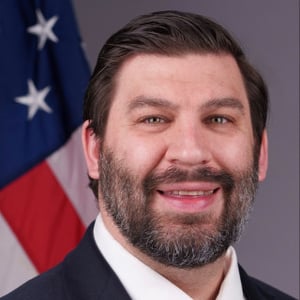
Gary currently is the Deputy Counsel to the President. He was previously a partner at the Dhillon Law Group and worked at the Department of the Interior and Federal Election Commission. He is a native of Virginia, and earned his B.A. and J.D. from the University of Virginia.
Deputy Counsel, the President
Gary currently is the Deputy Counsel to the President. He was previously a partner at the Dhillon Law Group and worked at the Department of the Interior and Federal Election Commission. He is a native of Virginia, and earned his B.A. and J.D. from the University of Virginia.
Deputy Counsel, the President
Gary currently is the Deputy Counsel to the President. He was previously a partner at the Dhillon Law Group and worked at the Department of the Interior and Federal Election Commission. He is a native of Virginia, and earned his B.A. and J.D. from the University of Virginia.

Students for Fair Admissions v. Harvard: Affirmative Action Goes to Court
Michael A. Carvin, Gail L. Heriot, Kevin C. Newsom, Eric J. Segall
The panel is sponsored by our Civil Rights practice group and will focus on the...
Special Session I: Dobbs, Roe, Casey, and the Rule of Law
Lisa Branch, Mary Anne Case, David D. Cole, Sherif Girgis, Carrie Campbell Severino
On June 24, 2022, the U.S. Supreme Court released a 6-3 decision in Dobbs v....
Special Session I: Dobbs, Roe, Casey, and the Rule of Law
Lisa Branch, Mary Anne Case, David D. Cole, Sherif Girgis, Carrie Campbell Severino
On June 24, 2022, the U.S. Supreme Court released a 6-3 decision in Dobbs v....
The Major Questions Doctrine: West Virginia v. EPA
Ian Heath Gershengorn, Edith H. Jones, Jenn L. Mascott, Thomas W. Merrill, Yaakov M. Roth
Supreme Court actions during the 2021-2022 term - opinions, grants and denials of petitions for...
The Major Questions Doctrine: West Virginia v. EPA
Ian Heath Gershengorn, Edith H. Jones, Jenn L. Mascott, Thomas W. Merrill, Yaakov M. Roth
Supreme Court actions during the 2021-2022 term - opinions, grants and denials of petitions for...
Post-Oral Argument Courthouse Steps: Percoco v. United States
Gary Lawkowski
On November 28, 2022, the U.S. Supreme Court is set to hear oral argument in...
Post-Oral Argument Courthouse Steps: Percoco v. United States
Gary Lawkowski
On November 28, 2022, the U.S. Supreme Court is set to hear oral argument in...
Post-Oral Argument Courthouse Steps: Percoco v. United States
The New Supreme Court: Stories from the Front Lines
Alaska Lawyers Chapter
Anchorage, AKThe New Supreme Court: Stories from the Front Lines
Alaska Lawyers Chapter
Anchorage, AK