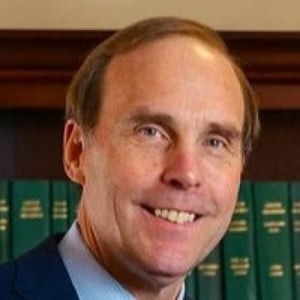
Professor Emeritus of Political Science and Professor Emeritus of Public Policy, Univ. of Maryland Baltimore County
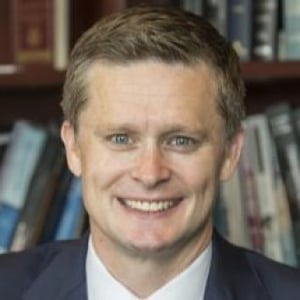
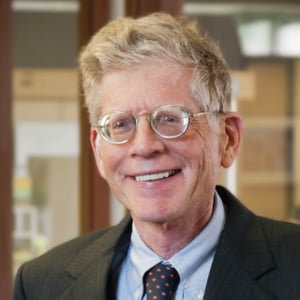
George R. La Noue is Professor Emeritus of Political Science and Professor Emeritus of Public Policy at the University of Maryland Baltimore County. He has served as a trial expert in twenty cases involving public procurement preferences. For thirty years, he was Director of the Project on Civil Rights and Public Contracts at UMBC which recently contributed 289 public contracting disparity studies to the Library of Congress. He has been a consultant to nine governments and trial expert in thirty cases where the validity of disparity studies was at issue.
Prof. La Noue can be reached by email at [email protected].
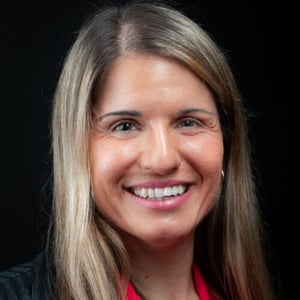
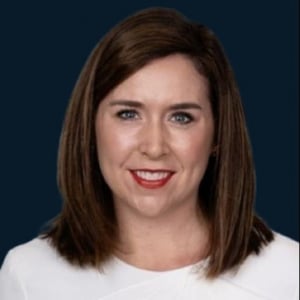
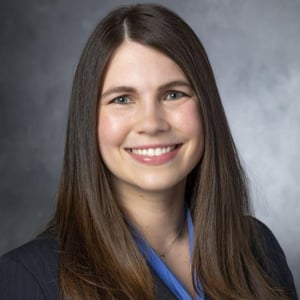
Tammy McCutchen is a leading authority on federal and state wage-hour laws and prevailing wage laws. She counsels businesses on wage-hour compliance, including conducting internal audits on independent contractor status, overtime exemptions, and other pay practices. She also represents employers during investigations by the U.S. Department of Labor and serves as an expert witness in wage-hour class actions. She was a founding officer of ComplianceHR, a law and technology company, where she created AI-based applications to evaluate independent contractor and overtime exempt status.
Ms. McCutchen served as Administrator of the U.S. Department of Labor’s Wage and Hour Division, appointed by President Bush and confirmed by the Senate in 2001. She was the primary architect of the 2004 revisions to the overtime exemption regulations, the first major changes to the regulations in 55 years.
Before joining DOL, she was senior counsel for the Hershey Company in Hershey, Pennsylvania.
Ms. McCutchen has been a volunteer leader of the Federalist Society since 1989. She served in leadership roles for the Northwestern Student Chapter and Chicago Lawyers Chapter. She currently serves in leadership for the Labor & Employment Practice Group, the Regulatory Transparency Project, and the Knoxville, TN Lawyers Chapter. She served on the Editorial Advisory Board of Law360, the Labor Committee of the U.S. Chamber of Commerce, the Small Business Legal Advisory Board of the National Federation of Independent Business, and a Policy Fellow at the ACU Foundation.
Ms. McCutchen is a graduate of Western Illinois University and Northwestern University School of Law. She clerked for the Hon. Daniel Manion on the U.S. Court of Appeals for the Seventh Circuit.
Special Counsel, Cooley LLP
Bronwyn handles commercial and employment matters for clients ranging from early-stage startups to Fortune 100 companies. She has a broad-based practice in the area of employment, helping clients to minimize risk and resolve disputes through practical employment solutions and, when necessary, litigation. She has conducted numerous high-profile, sensitive investigations of employee misconduct and disloyalty, and she has helped guide employers through difficult resolutions.
Bronwyn represents technology and life sciences businesses in employment litigation matters, including the defense of employment discrimination cases, restrictive covenant litigation, wrongful discharge cases, wage and hour claims, employment contract matters, and trade secret and noncompetition cases. She is a first chair trial lawyer with extensive courtroom experience, and she regularly appears before state and federal courts, as well as the Massachusetts Commission Against Discrimination, for which she is an advisory board member advising the governor and the commission on policy matters.
Bronwyn counsels businesses on employment matters, including the preparation of human resource policies, hiring and recruiting, wage and hour compliance, worker classification, mobility issues, whistleblower allegations, discrimination, harassment, and reductions in force, as well as handling COVID-19 employment and workplace issues. Bronwyn regularly conducts, directs and advises on workplace investigations. She also provides corporate training on various employment issues.
Partner, Gibson Dunn & Crutcher
Jason C. Schwartz is a litigation partner in the Washington, D.C. office of Gibson Dunn, co-chair of the Labor & Employment Practice Group, General Counsel of the law firm and a member of the firm’s Executive Committee. Jason was recognized as an MVP in employment law five times, awarded by Law360 to “attorneys whose achievements in major litigation or transactions have set a new standard for accomplishment in corporate law.” Law360 referred to Jason as “an expert dismantler of worker class actions.”
Jason is ranked in Band 1 in Labor & Employment by Chambers USA, which stated, “He is a whip-smart, results-oriented and zealous advocate who is really committed to the client. His judgment is impeccable.” According to Chambers USA, “[c]lients note: He’s an excellent litigator with a good sense of the client’s needs in a business environment. He’s just a pleasure to work with. He’s disciplined, a great writer and gets great results.” Jason has been recognized as a Top 20 Labor & Employment Litigator in the U.S. by Benchmark Litigation; on the Top 100 list of the Nation’s Most Powerful Employment Attorneys by Human Resource Executive magazine; as a Top Lawyer in Employment Defense by Washingtonian Magazine; as a Leading Lawyer in Labor & Employment Disputes by The Legal 500 US; by Lawdragon 500 Leading Corporate Employment Lawyers for Labor & Employment (Litigation); in The Best Lawyers in America in the Employment Law-Management category; as a Super Lawyer by Washington, D.C. Super Lawyers; and as an Am Law Litigation Daily “Litigator of the Week” for his win in an independent contractor misclassification/wage-and-hour class action. He is a Fellow of the College of Labor & Employment Lawyers.
The practice group Jason co-leads was named by The American Lawyer as the Labor & Employment Litigation Department of the Year in its most recent competition. The American Lawyer noted, “with novel labor and employment issues swirling, Gibson Dunn’s litigators set standards and settle the law,” and that a case “typical for Gibson Dunn’s labor and employment team” is “high-profile,” “cutting-edge,” and “a victory.” The group was also recognized ten times as a Law360 Employment Practice Group of the Year and won The National Law Journal’s D.C. Labor & Employment Litigation Department of the Year competition for the last seven years in a row.
Jason’s practice includes sensitive workplace investigations, high-profile trade secret and non-compete matters, wage-hour and discrimination class actions, Sarbanes-Oxley and other whistleblower protection claims, executive and other significant employment disputes, labor union controversies, and workplace safety litigation.
Recent representative matters include:
Jason has also successfully tried several sensitive whistleblower matters for major national employers, and he prevailed in a precedent-setting Labor Department appeal of one of the first Sarbanes-Oxley whistleblower cases to proceed to trial. He prevailed for Enterprise Rent-A-Car in a case of first impression in which the U.S. Court of Appeals for the Third Circuit created a new joint employer test (the Enterprise test) and affirmed summary judgment for a parent corporation in a series of wage-hour class actions, defeating the plaintiffs’ effort to form a nationwide class (In re Enterprise Rent-A-Car Wage & Hour Employment Practices Litig. (3rd Cir. 2012)). In another case of first impression, he successfully argued in the Utah Supreme Court against the recognition of a tort for spoliation of evidence. In addition, he served as lead trial counsel for a retailer in a highly-publicized OSHA enforcement action relating to crowd control at a day-after-Thanksgiving sale.
Jason also has significant experience in administrative law and rulemakings. He served as counsel to the Fair Labor Standards Reform Coalition, and he played a leading role in preparing comments on behalf of the business community relating to the U.S. Department of Labor’s overtime exemption regulations.
Jason served for many years as the Secretary of the Retail Litigation Center, and he testified before Congress regarding OSHA enforcement programs on behalf of the U.S. Chamber. He frequently speaks and writes on employment law and trade secret related topics. He is the co-author of the treatise Whistleblower Law: A Practitioner’s Guide, published by American Lawyer Media/Law Journal Press, and he previously authored the annual “Trade Secrets Litigation Round-Up” published by Bloomberg BNA.
Jason earned his law degree magna cum laude from Georgetown University Law Center, where he was elected to the Order of the Coif and received the George Brent Mickum III Prize and the Charles A. Keigwin Award for the best academic record in first year courses. From 1995 to 1996, he worked as a Legislative Assistant to Congressman Jon D. Fox. Jason received a B.A. degree in international affairs cum laude in 1994 from The George Washington University.
Jason is admitted to practice in the District of Columbia, Virginia and Maryland, as well as in numerous federal courts. He served for many years as an officer and board member of the Charles E. Smith Jewish Day School, currently serves as a member of the Washington Lawyers Committee of the U.S. Holocaust Memorial Museum, and provides pro bono employment counsel to numerous community organizations.
Associate, Dechert LLP
Justin W. Aimonetti is an associate in Dechert’s trials, investigations, and securities group, focusing on trial and appellate matters and advising clients on complex legal issues. Mr. Aimonetti has experience representing individuals and corporations in federal court, as well as in numerous federal agencies and state courts. His experience touches on all parts of the litigation process.
Mr. Aimonetti has published numerous law review articles on a wide range of subjects. His scholarship has appeared in the Virginia Law Review, Yale Law Journal Forum, Stanford Law Review Online, the Pepperdine Law Review, and many other journals and reviews. Mr. Aimonetti has received several awards for his legal scholarship.
Before joining Dechert, Mr. Aimonetti served as a judicial law clerk to the Honorable Carl J. Nichols on the U.S. District Court for the District of Columbia, as a judicial law clerk to the Honorable Chief Judge Jeffrey S. Sutton on the U.S. Court of Appeals for the Sixth Circuit, and as a summer adviser in the Office of Legal Counsel at the Department of Justice. In law school, Mr. Aimonetti contributed as an Articles Editor on the Virginia Law Review and participated in the Supreme Court Litigation Clinic.
Associate Professor of Law, Ave Maria School of Law
Before arriving at Ave Maria School of Law, Professor Jennifer (Barrow) Jenkins was a Climenko Fellow and Lecturer on Law at Harvard University School of Law. Professor Barrow was born in Plymouth, Massachusetts, and grew up in Tampa, Florida. Professor Barrow received a B.S. in the American Legal System from the United States Military Academy at West Point. She served as an Army intelligence officer in Afghanistan and Iraq, receiving the Bronze Star in 2010. Professor Barrow is a graduate of Harvard Law School and was an editor for the International Law Journal, Journal of Law and Public Policy, Journal on Legislation, and the National Security Journal. After law school, Professor Barrow clerked for Judge Ralph K. Winter on the U.S. Court of Appeals for the Second Circuit. She then served as a Supreme Court Fellow, placed at the U.S. Sentencing Commission, where she helped revise a draft amendment to the career offender provision of the U.S. Sentencing Guidelines. Her primary teaching interests include criminal law and procedure, torts, and military law. Her scholarship focuses on criminal law and military law, with an emphasis on sentencing. Her research scrutinizes the increased power of the legislative, executive, and judicial branches at the expense of the jury and suggests reforms.
Chief of Staff and Associate Chief Counsel, U.S. Chamber Litigation Center
Stephanie Maloney is chief of staff and associate chief counsel at the U.S. Chamber Litigation Center, the litigation arm of the U.S. Chamber of Commerce. In this capacity, Maloney handles a variety of matters for the Chamber, including environment and energy litigation.
Most recently, Maloney served as Chief of Staff and Counsel in the Environment and Natural Resources Division of the U.S. Department of Justice. In that capacity, she directed litigation strategy, oversaw case briefing, and managed coordination and communication with agency clients in priority cases. And she served as government counsel in cases arising under various environmental and natural resources laws.
Before that, Maloney practiced as an associate in the Appellate and Critical Motions Practice Group at Winston & Strawn LLP. Her work focused on briefing and strategy in complex commercial and appellate litigation at the federal and state level, including merits and amicus curiae briefs to the Supreme Court of the United States.
Maloney served as a law clerk to both the Honorable Edith Brown Clement, of the U.S. Court of Appeals for the Fifth Circuit, and the Honorable Stephen J. Murphy, III, of the U.S. District Court for the Eastern District of Michigan. She graduated cum laude from Notre Dame Law School, where she served as Symposium Editor of the Notre Dame Law Review, and summa cum laude from Loyola University Maryland, where she received a B.A. in Political Science. Maloney also holds a master’s degree in theology from Emory University.
Associate Professor of Law, Emory University School of Law
Lindsey Simon is an associate professor at the Emory University School of Law.
Her research focuses on the bankruptcy system, drawing concepts from bankruptcy structure and procedure to address broader institutional design challenges. Simon’s articles have been published in the Administrative Law Review, the Cardozo Law Review, the Indiana Law Journal and the North Carolina Law Review. Simon’s most recent scholarship addresses the intersection between mass torts and bankruptcy, including an article on non-debtor relief in Chapter 11 forthcoming in the Yale Law Journal. She has assisted academics, judges, members of Congress and many other stakeholders on the subject of mass tort bankruptcies, and her commentary in connection with the Purdue Pharma, Boy Scouts of America and USA Gymnastics bankruptcies has appeared in various media outlets, including The Wall Street Journal, The New York Times, Forbes, The Economist, NPR and Reuters.
Before joining the Emory Law faculty in 2023, Professor Simon served as the Robert Cotten Alston Associate Chair in Corporate Law at the University of Georgia School of Law. Prior to becoming a professor, Simon was an associate at Kilpatrick Townsend & Stockton, where her practice involved a mix of commercial litigation and corporate restructuring matters. She represented corporations, committees and individuals in state and federal litigation, both in and out of the bankruptcy context. Simon also practiced at a litigation boutique in Chicago, Illinois, and served as a judicial clerk for Judge Beverly B. Martin on the U.S. Court of Appeals for the Eleventh Circuit. Additionally, she taught as an adjunct professor at the Georgia State University College of Law.
Simon earned her law degree magna cum laude from the Northwestern University Pritzker School of Law and obtained her Bachelor of Music magna cum laude and her Master of Education from Vanderbilt University.
She is an active member of the American Bankruptcy Institute, where she serves as a member of the ABI Diversity Working Group. She previously served as vice chair and community service co-chair for the Georgia Network of the International Women's Insolvency & Restructuring Confederation and as vice president of the board of directors of the Georgia Latino Law Foundation.
Professor of Law, University of Pittsburgh School of Law
Arthur D. Hellman, a professor of law (emeritus) at the University of Pittsburgh, is a nationally recognized scholar of the federal courts who has also written in the area of the First Amendment. His publications include numerous articles and several books, including casebooks in both areas, Federal Courts: Cases and Materials on Judicial Federalism and the Lawyering Process (5th edition 2022) (with David R. Stras, Ryan W. Scott, F. Andrew Hessick, and Derek T. Muller); and First Amendment Law: Freedom of Speech and Freedom of Religion (5th edition 2022) (with William D. Araiza, Thomas E. Baker, and Ashutosh A. Bhagwat).
In addition to his casebooks and academic writing, Processor Hellman has worked with the Judiciary Committees in the House and Senate in drafting federal courts legislation, including the most recent (2002) revision of the Judicial Conduct and Disability Act (Title 28, Chapter 16). The legislative histories of two major jurisdictional statutes – the Federal Courts Jurisdiction and Venue Clarification Act of 2011 and the “Holmes Group Fix” (enacted as part of the America Invents Act) – acknowledge his contributions.
Professor Hellman has testified as an invited witness at numerous hearings of both Judiciary Committees. His testimony has focused on a wide variety of legislative issues related to the federal courts, including the jurisdiction of the Supreme Court; proposals to divide the Ninth Circuit Court of Appeals; federal judicial discipline; unpublished appellate opinions; and the constitutionality of legislative restrictions on the powers of the federal courts.
In 2005 Professor Hellman was appointed as the inaugural holder of the Sally Ann Semenko Endowed Chair at the University. In 2002 he received the Chancellor’s Distinguished Research Award “as a faculty member who has an outstanding and continuing record of research and scholarly activity.”
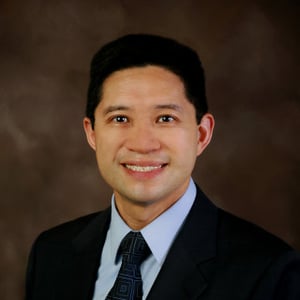
Founder, Original Jurisdiction
David Lat is a lawyer turned writer. He publishes Original Jurisdiction, a newsletter on Substack about law and legal affairs, and he writes for newspapers and magazines, including the New York Times, Washington Post, and Wall Street Journal. Prior to launching Original Jurisdiction, David founded Above the Law, one of the nation's most widely read legal news websites, and Underneath Their Robes, a popular blog about federal judges that he wrote under a pseudonym. He is also the author of a novel set in the world of the federal courts, Supreme Ambitions. Before entering the media world, David worked as a federal prosecutor in Newark, New Jersey; a litigation associate at Wachtell, Lipton, Rosen & Katz, in New York; and a law clerk to Judge Diarmuid F. O’Scannlain of the U.S. Court of Appeals for the Ninth Circuit. David graduated from Harvard College and Yale Law School, where he served as an editor of the Yale Law Journal.
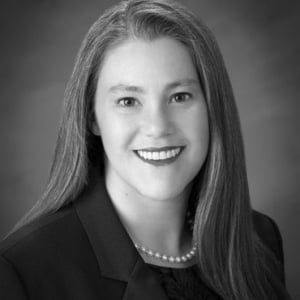
Judge, Arizona Court of Appeals, Division One
The Honorable Jennifer M. Perkins began service on the Arizona Court of Appeals, Division One, on October 30, 2017. At the time of her appointment by Governor Douglas Ducey, Judge Perkins was Assistant Solicitor General for the State of Arizona.
Judge Perkins was born in Portales, New Mexico, and primarily raised in Albuquerque. She attended the prestigious Albuquerque Academy from 1988-1995, before moving to Washington D.C. to attend the Elliott School of International Affairs at the George Washington University as a National Merit Scholar. Therafter, she relocated again to Dallas, Texas, and earned her juris doctor from the SMU Dedman School of Law, graduating cum laude in 2002.
Judge Perkins started her career at the law firm of Browning & Peifer (now Peifer, Hanson, Mullins, and Baker) in Albuquerque, New Mexico. While there, she litigated complex commercial matters including class action plaintiff and defense work, and assisted with employment and contract litigation. In 2003, the judge accompanied the Honorable James O. Browning in transitioning to the federal district court bench, serving as his first law clerk.
After her clerkship, Judge Perkins moved to Arizona to work for the Institute for Justice, Arizona Chapter, a public interest law firm. She spent five years with IJ-AZ litigating civil rights cases in Arizona and across the country. In 2009, the judge became Disciplinary Counsel for the Arizona Commission on Judicial Conduct, where she reviewed and prosecuted ethics complaints against state court judges throughout Arizona. After five years serving the state in this capacity, Judge Perkins entered private practice by joining an appellate law firm in Phoenix. While there, she worked on state and federal appeals involving a wide range of legal subjects, including complex business disputes, property rights, judicial ethics, and personal injury matters.
In January 2015, Judge Perkins joined the Office of the Arizona Attorney General to serve as the first Assistant Solicitor General; in that capacity, she was responsible for oversight of Attorney General Opinions and served as ethics counsel to the entire office. In addition to these two primary roles, the judge assisted on a variety of matters including trial and appellate litigation of election-related matters; federal appellate litigation with the Federalism Unit; state criminal appeals; and drafting amicus briefs on behalf of Arizona in state and federal courts.
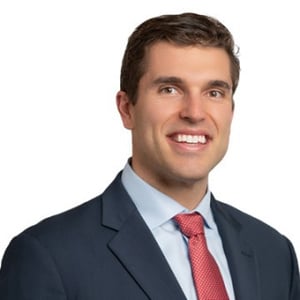
Legal Counsel, Alliance Defending Freedom
Rachel Rouleau serves as legal counsel for the Center for Conscience Initiatives with Alliance Defending Freedom. She focuses on protecting the conscience rights of individuals forced to compromise their beliefs under threat of fines and punishment.
Rouleau joined ADF in 2019 as a litigation fellow and worked on the Life, Legislative Advocacy, Center for Christian Ministries, and Center for Conscience Initiatives teams.
Rouleau earned her J.D. from William and Mary Law School in 2019. She obtained her B.A., in political science, from the University of Florida in 2015. She is a member of the bar in the District of Columbia, Massachusetts, and Virginia.
Associate Professor, Charleston School of Law
Bill Merkel joined the Charleston School of Law faculty in 2012. Merkel graduated from Johns Hopkins University with a B.A. in history in 1988 and proceeded to work as a cook in Baltimore and then as an analyst with the Department of Transportation in Washington, D.C. before returning to graduate studies in history and law.
He completed his J.D. at Columbia Law School in 1996 and then worked in appellate litigation with Wiley, Rein & Fielding in Washington, D.C. from 1997-1998. Merkel is the author, with the late Richard Uviller, of The Militia and the Right to Arms, Or, How the Second Amendment Fell Silent (Duke University Press, 2002). He taught American history at Oxford University from 2001-2003 and Comparative Introduction to American Law to foreign trained LL.M. students at Columbia Law School from 2003-2005. From 2005-2011, Merkel was an Associate Professor of Law at Washburn Law School in Topeka, Kansas, where he was named Professor of the Year by the graduating class in 2008. At Washburn, Merkel taught Constitutional Law I & II, Comparative Constitutional Law, Public International Law, and International Criminal Law and the Law of War. He received a doctorate in history from Oxford University in 2007.
Merkel has held visiting positions at the University of North Dakota School of Law in 2009 and at the University of South Carolina School of Law in 2011-12. In 2013 and 2014, Merkel taught The United States and the International Court of Justice in the Hague, Netherlands as part of the Charleston School of Law’s summer school consortium program administered by Stetson University School of Law. At the Charleston School of Law, Merkel continues to teach courses in Constitutional Law, International Law, Comparative Law, and Legal History. Merkel’s article “Jefferson’s Failed Anti-Slavery Proviso of 1784 and the Nascence of Free Soil Constitutionalism” was selected as the best submission in constitutional history by the Stanford/Yale Junior Faculty Forum in 2006. Merkel is in the process of revising his Oxford doctoral thesis “Race, Liberty, and Law: Thomas Jefferson and Slavery, 1770-1800” for publication as a book to be titled Ambiguous Beginnings: Thomas Jefferson, Slavery, and the Foundations of American Constitutionalism. Merkel has published numerous articles in journals including the Chicago-Kent Law Review, Connecticut Law Review, Lewis and Clark Law Review, Santa Clara Law Review, Seton Hall Law Review, Rutgers Law Review, and Law and History Review. His scholarship on the Second Amendment has been cited by many authors and jurists, including Justice Breyer in a dissenting opinion in McDonald v. City of Chicago. In 2013, following the successful defense of his dissertation “The Second Amendment and the Constitutional Right to Self-Defense,” Merkel was awarded a J.S.D. degree by Columbia University.
Merkel is a member of the District of Columbia, New York, and United States Supreme Court Bars.
Senior Fellow, Ave Maria School of Law and Host of the Four Boxes Diner Second Amendment Channel
Mark W. Smith is Visiting Fellow in Pharmaceutical Public Policy and Law in the Department of Pharmacology at the University of Oxford; Presidential Scholar and a Senior Fellow in Law and Public Policy at The King’s College; and Distinguished Scholar and Senior Fellow of Law and Public Policy at the Ave Maria School of Law.
He is a constitutional attorney and Host of the Four Boxes Diner YouTube channel—which provides scholarly and historical analyses of the Second Amendment. Mark is also a New York Times bestselling author.
Managing Partner, Cooper & Kirk PLLC
David Thompson is the Managing Partner of Cooper & Kirk and joined the firm at its founding. Mr. Thompson has extensive trial and appellate experience in a wide range of matters and has secured victories worth billions of dollars. He has successfully challenged numerous laws on Second Amendment grounds. He has also litigated cases in over 30 federal district courts, argued in each of the 13 federal circuit courts of appeal, and argued before the U.S. Supreme Court, as well as many state courts. Mr. Thompson was awarded an A.B. degree, magna cum laude, from Harvard University in 1991, where he was elected to Phi Beta Kappa. In 1994, Mr. Thompson received a J.D. degree, cum laude, from Harvard Law School.
Judge, United States Court of Appeals, Ninth Circuit
Lawrence VanDyke serves as a circuit judge on the U.S. Court of Appeals for the Ninth Circuit. Prior to that appointment in January 2020, he served as a Deputy Assistant Attorney General in the Environment and Natural Resources Division of the United States Department of Justice. Before that, he served consecutively as the Solicitor General of two western states – Nevada and Montana. At the beginning of his legal career, he worked as an attorney in the Appellate and Constitutional Issues practice group at Gibson Dunn & Crutcher, LLP.
Judge VanDyke received his law degree magna cum laude from Harvard Law School, where he was an editor on the Harvard Law Review. He has engineering and theology undergraduate degrees and a masters degree in engineering management. He served as a law clerk to the Honorable Janice Rogers Brown of the United States Court of Appeals for the District of Columbia Circuit. Judge VanDyke and his wife Cheryl live in Reno, Nevada, and they have three children.
Founder and Director, James Wilson Institute on Natural Rights & the American Founding
Hadley Arkes joined the faculty of Amherst College in 1966. He became the Edward Ney Professor of Jurisprudence in 1987, and held that chair until he retired officially in July 2015. But he has not retired from writing and speaking. He has carried that teaching into a new phase; he has become the Founder and Director of the James Wilson Institute on Natural Rights and the American Founding in Washington, D.C. He has written eight books, mostly with Princeton and Cambridge University Presss. Among the books at Princeton have been: The Philosopher in the City (1981), First Things (1986), Beyond the Constitution (1990), and The Return of George Sutherland (1994). With Cambridge Press he has done Natural Rights and the Right to Choose (2002), and Constitutional Illusions & Anchoring Truths: The Touchstone of the Natural Law (2010). His most recent book, with Regnery Press is Mere Natural Law (2023) His articles have appeared in professional journals, but apart from his writing in more scholarly formats, he has become known to a wider audience through his writings in the Wall Street Journal, National Review, Civitas and First Things, a journal that took its name from his book of that title.
He was the main advocate, and architect, of the bill that became known as the Born-Alive Infants’ Protection Act. The account of his experience, in moving the bill through Congress, is contained as an epilogue or memoir in his book, Natural Rights & the Right to Choose. Arkes first prepared his proposal as part of the debating kit assembled for the first George Bush in 1988. The purpose of that proposal was to offer the “most modest first step” of all in legislating on abortion, and opening a conversation even with people who called themselves “pro-choice.” Professor Arkes proposed to begin simply by preserving the life of a child who survived an abortion–contrary to the holding of one federal judge, that such a child was not protected by the laws. Professor Arkes led the testimony on the bill before the Judiciary Committee of the U.S. House in July 2000, then again in July 2001. The legislative calendar was upended in the aftermath of September 11th, but in March 2002, the bill was brought to the floor of the House, where it passed unanimously. To the surprise of Professor Arkes, the bill was brought to the floor of the Senate on July 18 by the Deputy Majority Leader, Harry Reid, and passed in the same way. On August 5, President Bush signed the bill into law with Professor Arkes in attendance.
Professor Arkes was the founder, at Amherst, of the Committee for the American Founding, a group of alumni and students seeking to preserve, at Amherst, the doctrines of “natural rights” taught by the American Founders and Lincoln. That interest has been carried over now to the founding of a new center for the jurisprudence of natural law, in Washington, D.C.: the James Wilson Institute on Natural Rights and the American Founding, named for one of the premier minds among the American Founders. Professor Arkes has drawn to this project a cluster of accomplished federal judges who have wanted to get a firmer hold on the natural law, and brought them together with some gifted teachers of philosophy and law. The new institute will be sponsoring lectures and seminars in Washington and other parts of the country. The purpose of this new James Wilson Institute is to teach anew, to lawyers, judges, and students those principles of law that furnished the guide to the American Founders as they set about framing a Constitution. And the hope is to restore, to a new generation, the furnishings of mind of the men who formed this regime.
Patrick Hotung Professor of Constitutional Law, Georgetown University Law Center
Randy Barnett is the Patrick Hotung Professor of Constitutional Law at Georgetown University Law Center. He has argued before the United States Supreme Court, tried murder cases to juries as a prosecutor in Chicago, and appeared as a prosecutor in the feature film Inalienable. He is the author of numerous books, including Restoring the Lost Constitution, The Structure of Liberty, Our Republican Constitution, and The Original Meaning of the Fourteenth Amendment. He has published two memoirs, A Life for Liberty: The Making of an American Originalist, and Felony Review: Tales of True Crime and Corruption in Chicago. He is currently working on a new book, Freedom and Flourishing: Libertarianism for the Real World.
McCormick Professor of Jurisprudence; Director, James Madison Program, Princeton University
Robert P. George is McCormick Professor of Jurisprudence and Director of the James Madison Program in American Ideals and Institutions at Princeton University. He has several times been a Visiting Professor at Harvard Law School. He has served as Chairman of the U.S. Commission on International Religious Freedom and on the U.S. Commission on Civil Rights and the President’s Council on Bioethics. He has also served as the U.S. member of UNESCO’s World Commission on the Ethics of Scientific Knowledge and Technology. He was a Judicial Fellow at the Supreme Court of the United States, where he received the Justice Tom C. Clark Award. A Phi Beta Kappa graduate of Swarthmore, he holds the degrees of J.D. and M.T.S. from Harvard University and the degrees of D.Phil., B.C.L., D.C.L., and D.Litt. from Oxford University, in addition to twenty-one honorary doctorates. He is a recipient of the U.S. Presidential Citizens Medal, the Honorific Medal for the Defense of Human Rights of the Republic of Poland, the Canterbury Medal of the Becket Fund for Religious Liberty, the Bradley Prize, the Irving Kristol Award of the American Enterprise Institute, and Princeton University’s President’s Award for Distinguished Teaching. His books include Making Men Moral: Civil Liberties and Public Morality and In Defense of Natural Law (both published by Oxford University Press), as well as The Clash of Orthodoxies and Conscience and Its Enemies (both published by ISI Books).
Judge, United States Court of Appeals, Fifth Circuit
Edith Jones graduated from Alamo Heights High School, where she was a National Merit Scholar. In 1971, she received her B.A. in Economics from Cornell University, graduating with honors. In 1974, she was awarded her J.D. at the University of Texas Law School, where she was a law review editor and received the Order of the Coif.
Judge Jones was the first female partner at Andrews, Kurth, Campbell & Jones (now Hunton Andrews Kurth) where she practiced various types of litigation and bankruptcy cases. Judge Jones went on the federal bench on June 1, 1985.
Judge Jones served as a former member of the National Bankruptcy Review Commission, and as a member of the Judicial Conference Commission on Bankruptcy Rules. Judge Jones served on the White House Fellows Commission. Judge Jones served on the board of the Sam Houston Area Council of the Boy Scouts of America. She has been a member of the Garland Walker Inn of Court in Houston for more than 20 years and its President for at least ten years. Judge Jones is also on the Board of the Calvin Coolidge Presidential Foundation.
Founder and Director, James Wilson Institute on Natural Rights & the American Founding
Hadley Arkes joined the faculty of Amherst College in 1966. He became the Edward Ney Professor of Jurisprudence in 1987, and held that chair until he retired officially in July 2015. But he has not retired from writing and speaking. He has carried that teaching into a new phase; he has become the Founder and Director of the James Wilson Institute on Natural Rights and the American Founding in Washington, D.C. He has written eight books, mostly with Princeton and Cambridge University Presss. Among the books at Princeton have been: The Philosopher in the City (1981), First Things (1986), Beyond the Constitution (1990), and The Return of George Sutherland (1994). With Cambridge Press he has done Natural Rights and the Right to Choose (2002), and Constitutional Illusions & Anchoring Truths: The Touchstone of the Natural Law (2010). His most recent book, with Regnery Press is Mere Natural Law (2023) His articles have appeared in professional journals, but apart from his writing in more scholarly formats, he has become known to a wider audience through his writings in the Wall Street Journal, National Review, Civitas and First Things, a journal that took its name from his book of that title.
He was the main advocate, and architect, of the bill that became known as the Born-Alive Infants’ Protection Act. The account of his experience, in moving the bill through Congress, is contained as an epilogue or memoir in his book, Natural Rights & the Right to Choose. Arkes first prepared his proposal as part of the debating kit assembled for the first George Bush in 1988. The purpose of that proposal was to offer the “most modest first step” of all in legislating on abortion, and opening a conversation even with people who called themselves “pro-choice.” Professor Arkes proposed to begin simply by preserving the life of a child who survived an abortion–contrary to the holding of one federal judge, that such a child was not protected by the laws. Professor Arkes led the testimony on the bill before the Judiciary Committee of the U.S. House in July 2000, then again in July 2001. The legislative calendar was upended in the aftermath of September 11th, but in March 2002, the bill was brought to the floor of the House, where it passed unanimously. To the surprise of Professor Arkes, the bill was brought to the floor of the Senate on July 18 by the Deputy Majority Leader, Harry Reid, and passed in the same way. On August 5, President Bush signed the bill into law with Professor Arkes in attendance.
Professor Arkes was the founder, at Amherst, of the Committee for the American Founding, a group of alumni and students seeking to preserve, at Amherst, the doctrines of “natural rights” taught by the American Founders and Lincoln. That interest has been carried over now to the founding of a new center for the jurisprudence of natural law, in Washington, D.C.: the James Wilson Institute on Natural Rights and the American Founding, named for one of the premier minds among the American Founders. Professor Arkes has drawn to this project a cluster of accomplished federal judges who have wanted to get a firmer hold on the natural law, and brought them together with some gifted teachers of philosophy and law. The new institute will be sponsoring lectures and seminars in Washington and other parts of the country. The purpose of this new James Wilson Institute is to teach anew, to lawyers, judges, and students those principles of law that furnished the guide to the American Founders as they set about framing a Constitution. And the hope is to restore, to a new generation, the furnishings of mind of the men who formed this regime.
Patrick Hotung Professor of Constitutional Law, Georgetown University Law Center
Randy Barnett is the Patrick Hotung Professor of Constitutional Law at Georgetown University Law Center. He has argued before the United States Supreme Court, tried murder cases to juries as a prosecutor in Chicago, and appeared as a prosecutor in the feature film Inalienable. He is the author of numerous books, including Restoring the Lost Constitution, The Structure of Liberty, Our Republican Constitution, and The Original Meaning of the Fourteenth Amendment. He has published two memoirs, A Life for Liberty: The Making of an American Originalist, and Felony Review: Tales of True Crime and Corruption in Chicago. He is currently working on a new book, Freedom and Flourishing: Libertarianism for the Real World.
McCormick Professor of Jurisprudence; Director, James Madison Program, Princeton University
Robert P. George is McCormick Professor of Jurisprudence and Director of the James Madison Program in American Ideals and Institutions at Princeton University. He has several times been a Visiting Professor at Harvard Law School. He has served as Chairman of the U.S. Commission on International Religious Freedom and on the U.S. Commission on Civil Rights and the President’s Council on Bioethics. He has also served as the U.S. member of UNESCO’s World Commission on the Ethics of Scientific Knowledge and Technology. He was a Judicial Fellow at the Supreme Court of the United States, where he received the Justice Tom C. Clark Award. A Phi Beta Kappa graduate of Swarthmore, he holds the degrees of J.D. and M.T.S. from Harvard University and the degrees of D.Phil., B.C.L., D.C.L., and D.Litt. from Oxford University, in addition to twenty-one honorary doctorates. He is a recipient of the U.S. Presidential Citizens Medal, the Honorific Medal for the Defense of Human Rights of the Republic of Poland, the Canterbury Medal of the Becket Fund for Religious Liberty, the Bradley Prize, the Irving Kristol Award of the American Enterprise Institute, and Princeton University’s President’s Award for Distinguished Teaching. His books include Making Men Moral: Civil Liberties and Public Morality and In Defense of Natural Law (both published by Oxford University Press), as well as The Clash of Orthodoxies and Conscience and Its Enemies (both published by ISI Books).
Judge, United States Court of Appeals, Fifth Circuit
Edith Jones graduated from Alamo Heights High School, where she was a National Merit Scholar. In 1971, she received her B.A. in Economics from Cornell University, graduating with honors. In 1974, she was awarded her J.D. at the University of Texas Law School, where she was a law review editor and received the Order of the Coif.
Judge Jones was the first female partner at Andrews, Kurth, Campbell & Jones (now Hunton Andrews Kurth) where she practiced various types of litigation and bankruptcy cases. Judge Jones went on the federal bench on June 1, 1985.
Judge Jones served as a former member of the National Bankruptcy Review Commission, and as a member of the Judicial Conference Commission on Bankruptcy Rules. Judge Jones served on the White House Fellows Commission. Judge Jones served on the board of the Sam Houston Area Council of the Boy Scouts of America. She has been a member of the Garland Walker Inn of Court in Houston for more than 20 years and its President for at least ten years. Judge Jones is also on the Board of the Calvin Coolidge Presidential Foundation.
Sterling Professor of Law, Yale Law School
Akhil Reed Amar is Sterling Professor of Law and Political Science at Yale University, where he teaches constitutional law in both Yale College and Yale Law School. After graduating from Yale College, summa cum laude, in 1980 and from Yale Law School in 1984, and clerking for Judge (later Justice) Stephen Breyer, Amar joined the Yale faculty in 1985 at the age of 26. He is Yale’s only living professor to have won the University’s unofficial triple crown — the Sterling Chair for scholarship, the DeVane Medal for teaching, and the Lamar Award for alumni service.
Amar’s work has won awards from both the American Bar Association and the Federalist Society, and he has been cited by Supreme Court justices across the spectrum in more than 50 cases — tops among scholars under age 70. According to both Fred Shapiro’s landmark 2021 study of lifetime scholarly citations and Heinonline’s most recent tabulation of lifetime law-review citations, Amar is America’s second most-cited legal scholar still under age 70. He is a member of the American Academy of Arts and Sciences and has written widely for popular publications, including The New York Times, The Washington Post, The Wall Street Journal, Time, and The Atlantic. He was an informal consultant to the popular TV show The West Wing and his scholarship has been showcased on many broadcasts, including The Colbert Report, Morning Joe, AC360, Velshi, Fox News @ Night with Shannon Bream, Fareed Zakaria GPS, Erin Burnett Outfront, and Constitution USA with Peter Sagal.
He is the author of more than a hundred law review articles and several books, including The Bill of Rights (1998 — winner of the Yale University Press Governors’ Award), America’s Constitution (2005 — winner of the ABA’s Silver Gavel Award), America’s Unwritten Constitution (2012 — named one of the year’s 100 best nonfiction books by The Washington Post), and The Constitution Today (2016 — named one of the year’s top ten nonfiction books by Time magazine). The first volume of his ambitious trilogy on American constitutional history from the Founding to the present, The Words That Made Us: America’s Constitutional Conversation, 1760-1840, came out in May 2021. The second volume, Born Equal: Remaking America’s Constitution, 1840-1920, will be published in September 2025 and is already available for pre-order. All together, his nonfiction books have won two starred reviews from Publishers Weekly and three starred reviews from Kirkus—tops, it is believed, among legal scholars under age 70. Together with Vikram David Amar (YLS ’88), he has a bi-weekly column on the Supreme Court on the distinguished website SCOTUSblog. Along with Andy Lipka, he co-hosts a popular and free weekly podcast, Amarica’s Constitution, whose listeners are eligible for CLE credit in most American jurisdictions. A wide assortment of his articles and op-eds and video links to many of his public lectures and free online courses may be found at akhilamar.com.
Professor of Law, University of San Diego School of Law (Retired)
Gail Heriot is a recently retired law professor from the University of San Diego. She also served as a member of the U.S. Commission on Civil Rights from 2007 to 2025. She is also the chairman of the board of the American Civil Rights Project and the chair emerita of the Civil Rights practice group at the Federalist Society for Law & Public Policy.
Professor Heriot is a prolific writer in the area of civil rights. She is the author of many law review articles. She is also the editor (along with Maimon Schwarzschild) of the 2021 anthology, A Dubious Expediency: How Race Preferences Damage Higher Education. Her upcoming book is entitled, Why We Walk on Eggshell: How Our Civil Rights Laws Helped Bring About the Woke Era—And the Trump Era, Too.
Her writings for a general audience have appeared in the Wall Street Journal, the San Diego Union-Tribune, the National Review and many other newspapers and magazines.
In 1996, she co-chaired the successful “Yes on Proposition 209” campaign, which amended the California Constitution to prohibit state-sponsored discrimination or preferential treatment based on race, sex, color, ethnicity or national origin. In 2020, she co-chaired the “No on Proposition 16” campaign, which successfully prevented Proposition 209’s repeal.
Michael R. Klein Professor of Law, Harvard Law School
Randall Kennedy is Michael R. Klein Professor at Harvard Law School where he teaches courses on contracts, criminal law, and the regulation of race relations. He was born in Columbia, South Carolina. For his education he attended St. Albans School, Princeton University, Oxford University, and Yale Law School. He served as a law clerk for Judge J. Skelly Wright of the United States Court of Appeals and for Justice Thurgood Marshall of the United States Supreme Court. He is a member of the bar of the District of Columbia and the Supreme Court of the United States. Awarded the 1998 Robert F. Kennedy Book Award for Race, Crime, and the Law, Mr Kennedy writes for a wide range of scholarly and general interest publications. His other books are For Discrimination: Race, Affirmative Action, and the Law (2013), The Persistence of the Color Line: Racial Politics and the Obama Presidency (2011), Sellout: The Politics of Racial Betrayal (2008), Interracial Intimacies: Sex, Marriage, Identity, and Adoption (2003), and Nigger: The Strange Career of a Troublesome Word (2002). A member of the American Law Institute, the American Academy of Arts and Sciences, and the American Philosophical Association, Mr. Kennedy is also a Trustee emeritus of Princeton University.
Deputy Secretary of Agriculture, U.S. Department of Agriculture
Judge Stephen Alexander Vaden was appointed as the Deputy Secretary of the U.S. Department of Agriculture on July 7, 2025. Alongside Secretary Brooke L. Rollins, Deputy Secretary Vaden leads the Department’s operations and implements policies that support America’s food and farm systems. A native of Union City, Tennessee, Deputy Secretary Vaden brings expertise in agricultural policy, law, and rural development. Previously, he served as a judge on the U.S. Court of International Trade and as General Counsel of USDA. Throughout Deputy Secretary Vaden’s time as General Counsel, he led successful Supreme Court litigation, advanced regulatory reform, and supported the implementation of the 2018 Farm Bill. He is a graduate of Yale Law School and Vanderbilt University. A public servant with strong agricultural roots, Deputy Secretary Vaden is committed to revitalizing rural America and ensuring an abundant, affordable, and safe U.S. food supply.
Devon Westhill is the Assistant Secretary for Civil Rights at the U.S. Department of Agriculture. The U.S. Senate confirmed President Donald Trump’s nomination of Westhill on October 7, 2025.
Westhill returns to the USDA where he previously headed the civil rights office as Deputy Assistant Secretary in President Trump’s first term. His previous government appointments also include service at the U.S. Department of Labor, liaison to the Administrative Conference of the U.S., and liaison to the White House Initiative on Historically Black Colleges and Universities. Prior to returning to government service, Westhill was President and General Counsel of a nonprofit civil rights organization.
Westhill has testified on civil rights matters before Congress, federal agencies, and as an expert witness in federal court. He has spoken hundreds of times at college campuses, conferences, and on radio and TV programs, and he is frequently quoted in print publications, and his writing has appeared in numerous national outlets. A U.S. Navy veteran, Westhill earned his BA from the University of North Carolina at Chapel Hill and his JD from the University of Florida.
Contracts, Labor & Employment Law After SFFA
Michigan Supreme Court Enacts Preferred Pronoun Rule for State Judiciary
Rachel Rouleau
The debate about pronouns and gender identity has come to the judicial system. Courts are...
A Seat at the Sitting - December 2023
The December Docket in 90 Minutes or Less
Topics
NRA v. Vullo: When Are Statements By Regulators Coercive?
This Term, the Supreme Court will hear the case of the National Rifle Association (NRA)...
Topics
The Supreme Court’s Shrunken “Discuss List”
This post originally appeared at the Volokh Conspiracy. Buried in the commentary to the Supreme...
Insights on the Supreme Court's New Ethics Guidelines
Cracking the Code of Conduct
Second Amendment: Will the Supreme Court Adhere to Bruen (and Originalism) in Rahimi and Beyond?
William G. Merkel, Mark W. Smith, David H. Thompson, Lawrence VanDyke
Oral argument was held in U.S. v. Rahimi on November 7, 2023. The case asks...
Mere Natural Law
Hadley P. Arkes, Randy E. Barnett, Robert P. George, Edith H. Jones
The U.S. Supreme Court’s originalist jurisprudence has been on display in its most recent terms...
Mere Natural Law
Hadley P. Arkes, Randy E. Barnett, Robert P. George, Edith H. Jones
The U.S. Supreme Court’s originalist jurisprudence has been on display in its most recent terms...
SFFA and Beyond
Akhil Reed Amar, Gail L. Heriot, Randall Kennedy, Stephen Alexander Vaden, Devon Westhill
This year the Supreme Court issued its long-awaited decision in Students for Fair Admissions Inc....